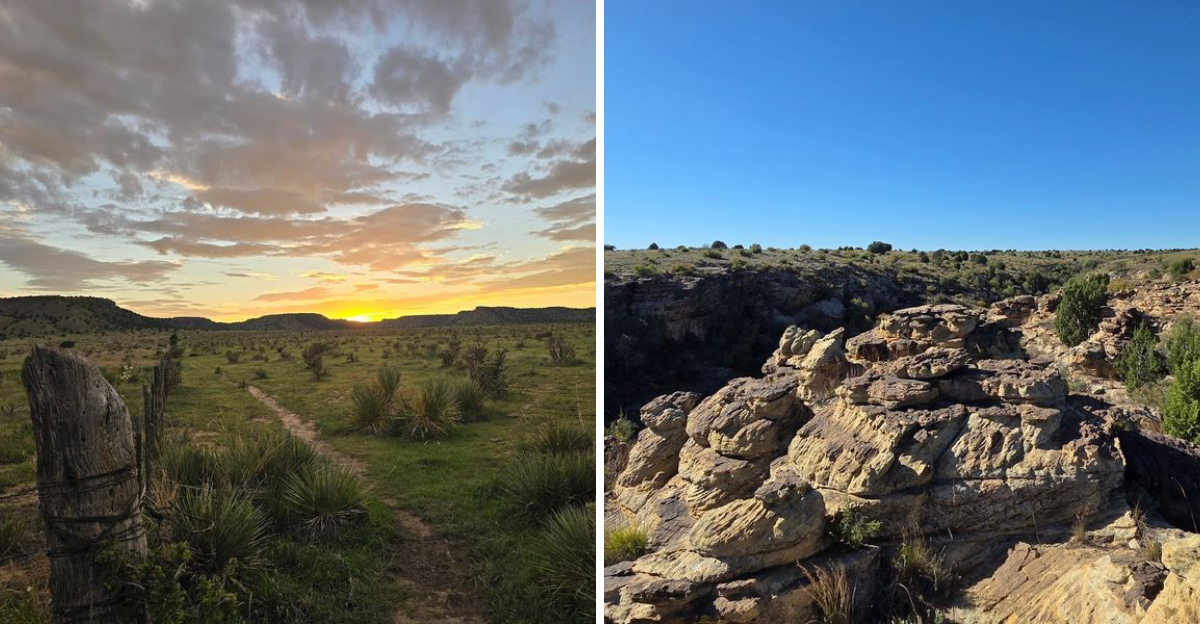
Out in the far western edge of Oklahoma, the landscape does something you don’t expect: it rises, cracks, and transforms into something that feels almost prehistoric. Flat plains give way to towering mesas and ancient rock layers that have been sitting there for hundreds of millions of years.
This place isn’t just scenic, it’s a full-on step back in time. You can walk right up to exposed rock beds older than most things on Earth and spot fossils and even dinosaur tracks pressed into stone like nature just left them there waiting.
It’s quiet, remote, and a little surreal, like you’ve stumbled into a part of the country people forgot to talk about. The question is, how is something this wild, this old, and this real still flying under the radar?
The Ancient Rock Beds That Put Black Mesa on the Map
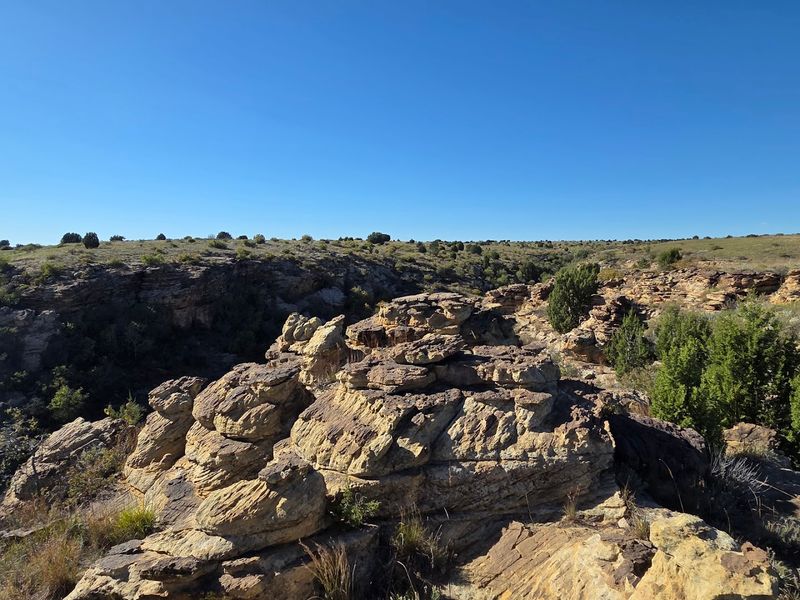
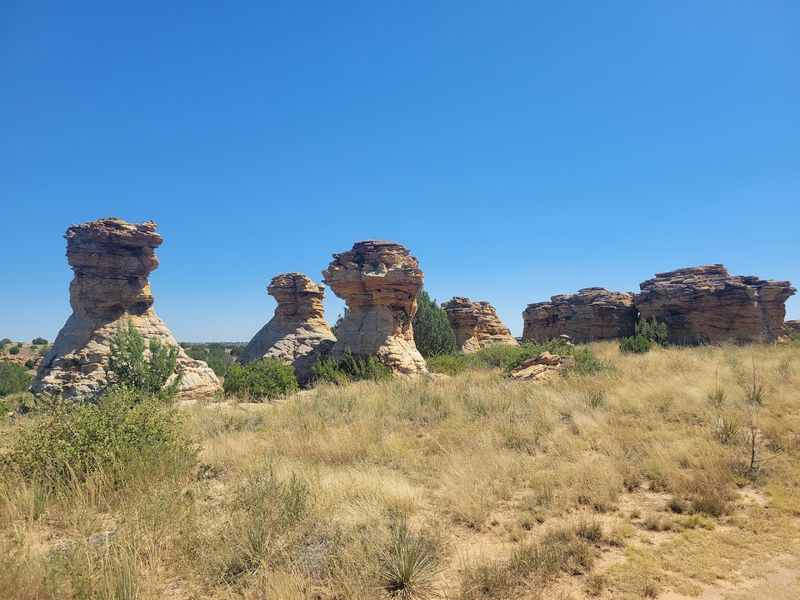
Stand at the base of Black Mesa and the first thing that hits you is the sheer age of everything around you. The exposed rock layers here represent hundreds of millions of years of Earth history, and they are not hidden behind glass in a museum.
The mesa itself is a flat-topped volcanic remnant capped by basalt from lava flows that occurred roughly 30 million years ago. Beneath that cap, the sedimentary layers tell an even older story, with some formations dating back well over 300 million years to the Pennsylvanian period.
Walking along the base, you can see how each band of rock tells a different chapter. Some layers are rich in plant fossils, others hold marine creature imprints from ancient shallow seas that once covered this region.
The geology here is genuinely rare for Oklahoma, making this corner of the panhandle feel more like New Mexico or Colorado than the rolling prairies most people associate with the state.
Every crack and ledge holds a potential discovery, and that sense of possibility keeps you moving forward with your eyes wide open.
Hiking to Oklahoma’s Highest Point
Reaching the highest point in Oklahoma is more satisfying than it sounds, mostly because the trail to get there is genuinely scenic and surprisingly demanding for a panhandle hike.
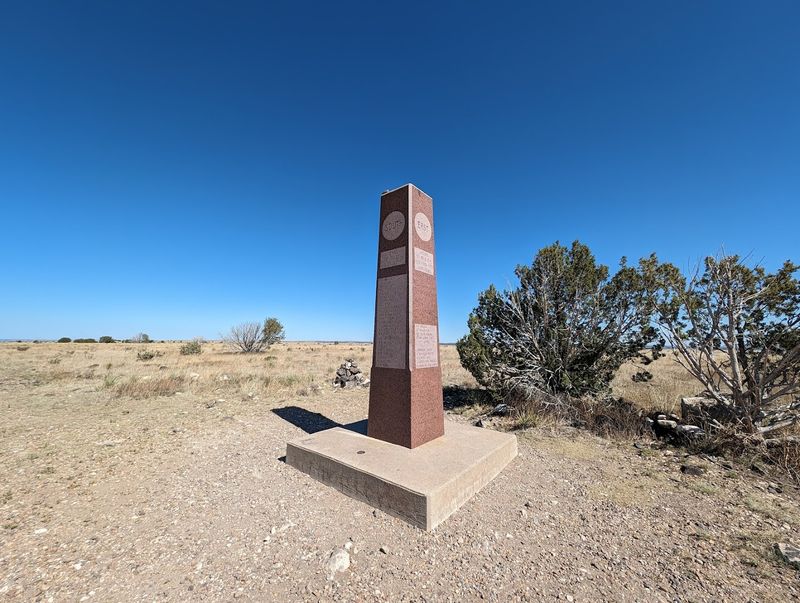
The Black Mesa summit trail is roughly four miles one way, stretching across open grassland and rocky terrain before finishing at an obelisk marking the highest elevation in the state at 4,973 feet.
The trail starts at the Nature Preserve trailhead, which is a short drive from the main campground. Along the way, you pass through classic high plains scenery with juniper trees, wildflowers in season, and occasional wildlife darting across the path.
The obelisk at the top is a modest but meaningful landmark. It marks a point where Oklahoma, Colorado, and New Mexico nearly converge, adding a geographic thrill to the physical accomplishment of reaching the top.
Views from the summit stretch for miles in every direction, giving you a rare perspective on just how vast and varied this part of Oklahoma truly is.
The return hike feels different somehow, like you are walking back down through layers of your own experience, carrying the landscape with you in a way you did not expect when you first laced up your boots that morning.
Fossil Hunting and What You Can Actually Find
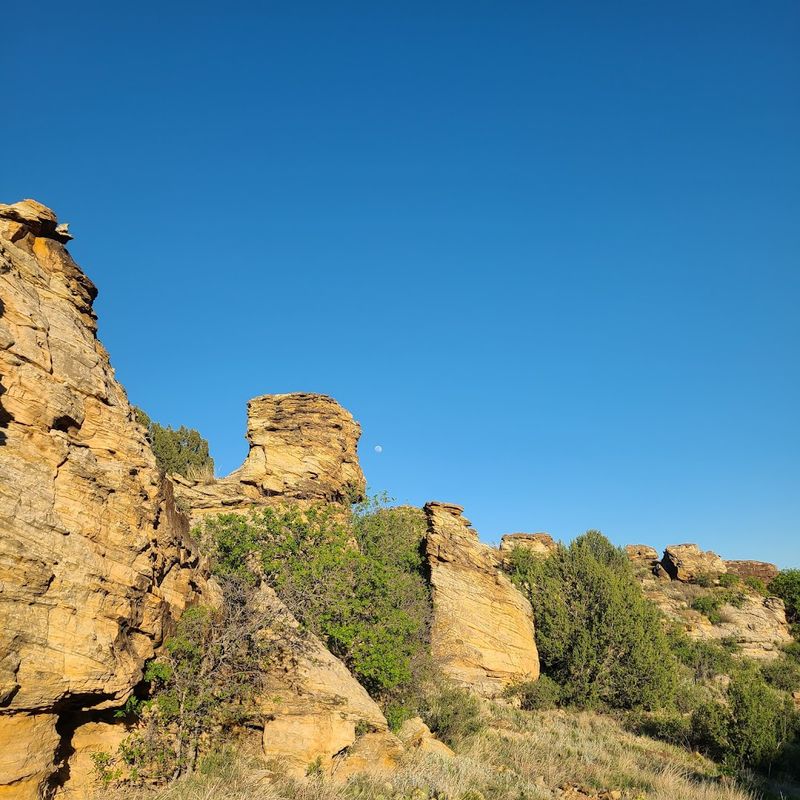
Black Mesa is one of those rare places where fossil hunting feels within reach, even if you are not actually digging into the ground.
The exposed rock beds across the landscape do most of the work for you, with erosion constantly revealing ancient plant imprints, marine fossils, and traces of a world that existed hundreds of millions of years ago.
Walking through the area feels a bit like a slow-motion dig site, where every step invites you to look closer at the rocks beneath your feet.
You are not pulling fossils out of the earth, but you are uncovering them in your own way, scanning layers of shale and stone for patterns that suddenly resolve into something ancient and real.
It is important to know that collecting fossils is not allowed here, and anything you find needs to stay exactly where it is. The experience is about spotting, identifying, and appreciating what is already exposed.
That shift in perspective turns the entire landscape into an open-air museum, where the thrill comes not from taking something with you, but from recognizing it in the first place.
Dark Sky Stargazing That Borders on Unreal
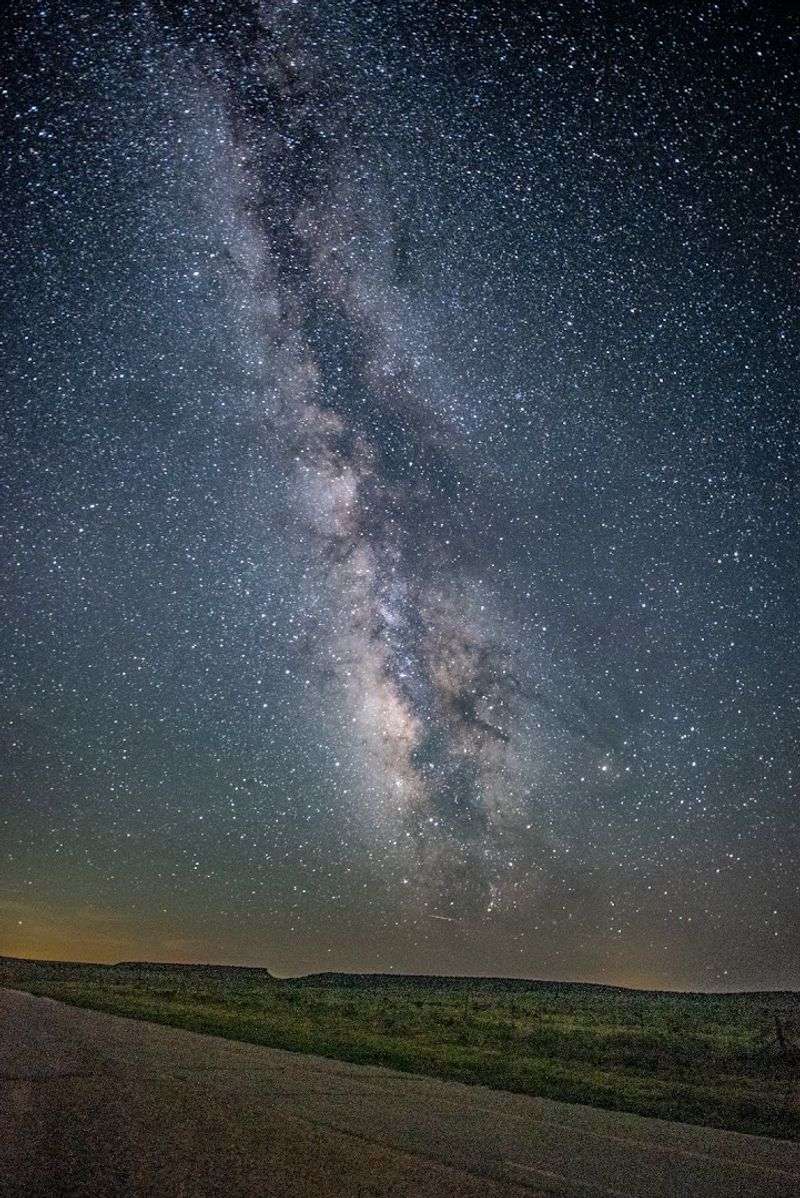
There are not many places left in the continental United States where the night sky looks the way it did before electric lights existed. Black Mesa State Park happens to be one of them, and the stargazing here is the kind that makes you stop mid-sentence and just stare upward in silence.
The park sits in one of the darkest areas in the country, far from major cities, with minimal light pollution in every direction. On a clear night, the Milky Way appears as a dense, glowing band that stretches from horizon to horizon in a way that photographs struggle to fully capture.
The park even designates specific dark sky camping areas where ground lighting is kept to a minimum so that guests can enjoy the fullest possible view. Bringing a red-light headlamp instead of a white flashlight is one of the smartest moves you can make before settling in for the night.
Planets, meteor showers, satellite passes, and deep sky objects are all visible with the naked eye on nights with good transparency.
If you own a telescope or even a basic pair of binoculars, this place becomes something close to a private observatory, and the silence around you makes the whole experience feel almost sacred.
Wildlife That Roams the Mesa and Surrounding Plains
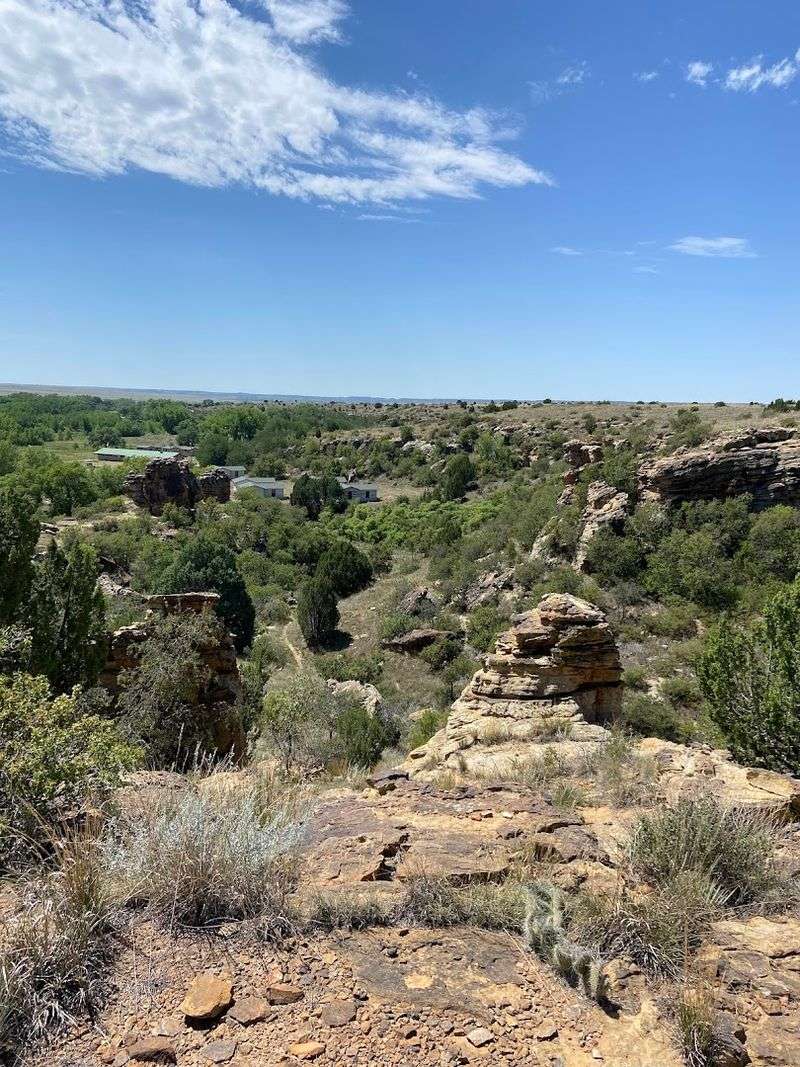
Wildlife watching at Black Mesa State Park is not something you have to schedule or plan around. It tends to find you on its own, especially in the early morning and evening hours when the animals are most active.
Deer are a constant presence throughout the park, often grazing on the hillsides near the campsites as the sun goes down. Wild turkeys strut through the grasslands with the kind of confidence that suggests they know exactly who owns this place.
Roadrunners, which are far more common here than in most other parts of Oklahoma, dart across trails and dirt roads with surprising speed.
Birdlife in the area is exceptionally rich due to the park’s position along migratory flyways and its unique mix of plains, mesa, and riparian habitats. Raptors including hawks and golden eagles regularly patrol the thermals rising off the mesa walls.
Foxes and coyotes are also regular sightings, particularly at dawn.
The variety of species in such a compact area reflects the ecological diversity of the Oklahoma Panhandle, where Great Plains grassland, Chihuahuan Desert influence, and Rocky Mountain foothills all converge in one fascinating and surprisingly lush corner of the state.
Camping Options and What to Expect Overnight
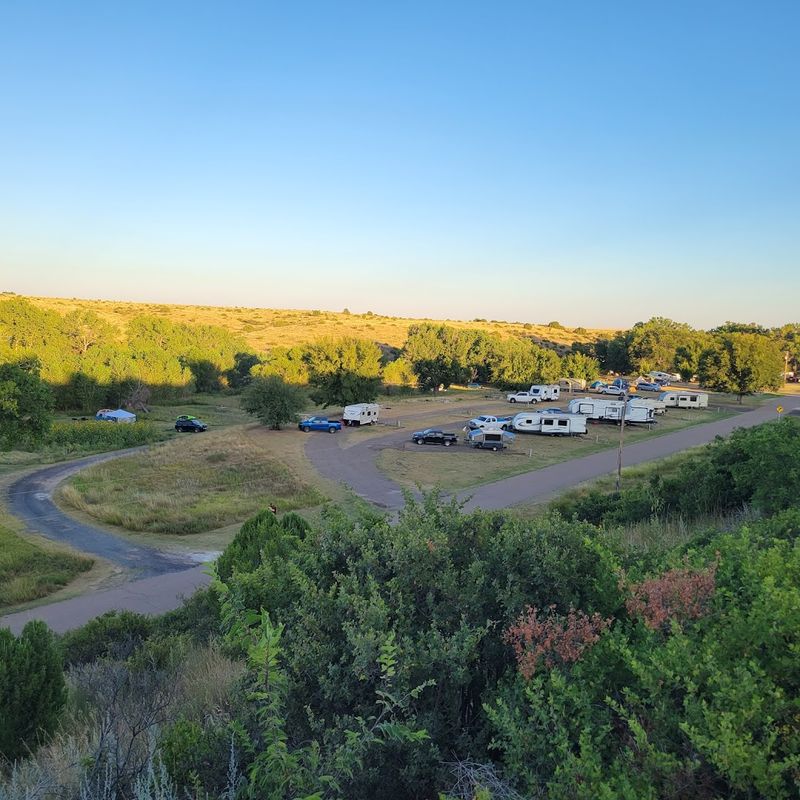
Spending a night at Black Mesa State Park is a completely different experience from camping at a crowded, amenity-heavy resort park. The setting here is remote, rugged, and refreshingly quiet, with a landscape that feels untouched in all the right ways.
The main campground offers both electric and water hookup sites for RVs and trailers, as well as primitive tent sites set closer to the creek for those who prefer a more immersive outdoor feel.
Restrooms and showers are available and are kept in genuinely good condition, which is a pleasant surprise given how far off the beaten path this place sits.
A small camp store carries basic supplies and snacks, so you do not need to panic if you forget something essential. There is also a playground on site, which makes the campground a workable option for families traveling with younger kids.
The dark sky tent sites are set slightly apart from the main loops to reduce ambient light, and they are a strong choice for anyone coming specifically for the night sky experience.
Reservations are recommended, especially on summer weekends, since the park’s reputation has grown steadily and the best sites fill up faster than you might expect for a destination this remote.
The Lake, the Creek, and Fishing Opportunities
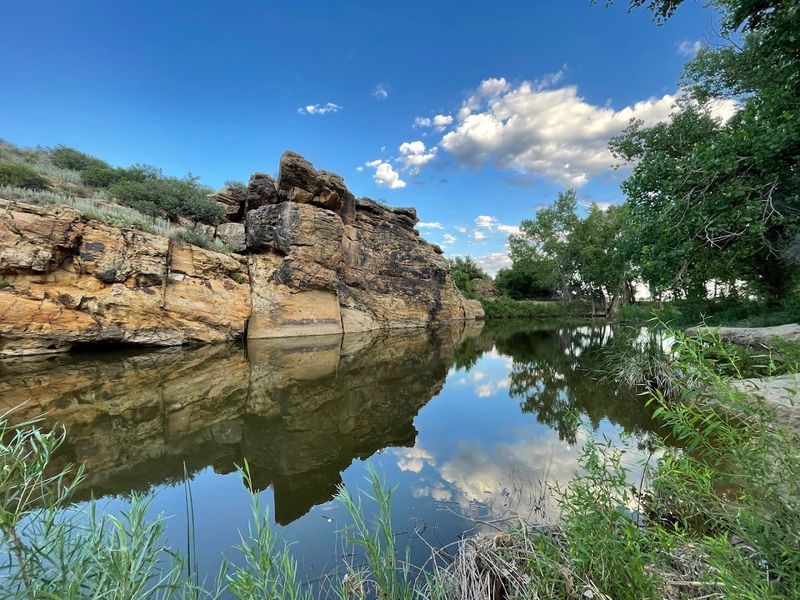
Water is not what most people picture when they think about the Oklahoma Panhandle, but Black Mesa State Park has it in a couple of genuinely appealing forms. A small lake sits within the park boundary and offers calm, quiet fishing in a setting that feels miles away from anything resembling ordinary life.
The lake is not large, but it holds fish and the surrounding scenery makes even a slow fishing day feel worthwhile.
The drive down to the lake from the main campground is short, and the lakeside area has a peaceful, almost meditative quality, especially in the early morning hours when the light is soft and the water is still.
The creek running through the park adds another layer of appeal, particularly for tent campers who set up in the sites along its banks. Creek fishing here can be surprisingly productive, and during warmer months, the shallower stretches are popular for wading and cooling off.
Bringing your own gear is the way to go since there is no formal rental setup at the park. A basic rod and reel with a few simple lures or bait options is all you really need to have a genuinely enjoyable afternoon on the water in one of Oklahoma’s most scenic and undervisited corners.
The Three Corners Monument and Regional Exploration
One of the more quirky geographic highlights near Black Mesa State Park is the Three Corners Monument, which marks the point where Oklahoma, Colorado, and New Mexico approach their closest proximity.
It is not a true four-corners monument, but it is close enough to feel like a genuine geographic curiosity worth visiting.
The monument itself is a modest stone marker set into the open landscape, and reaching it involves a short drive from the park followed by a bit of exploration on foot. The scenery around it is spectacular in its own understated way, with wide open skies and rolling mesa terrain stretching in every direction.
Pairing a visit to the monument with the Black Mesa summit hike and the dinosaur tracksite makes for a full day of exploration that covers geology, history, and geography all in one sweep. The area around Kenton, Oklahoma has a density of interesting landmarks that consistently surprises first-time visitors.
The town of Kenton itself is tiny and remote, but it carries a frontier energy that feels authentic rather than performed. Stopping in and taking a look around before heading back to camp adds a layer of local color to the trip that rounds out the experience in a satisfying and memorable way.
Best Times to Visit and Practical Tips for the Trip
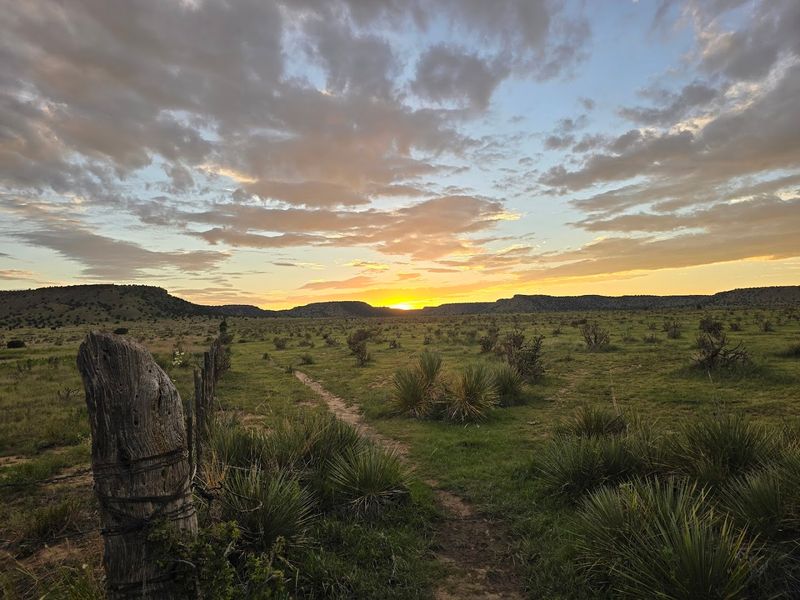
Planning a trip to Black Mesa State Park requires a little more thought than a typical weekend getaway, mostly because of how remote the location is.
The park sits near Kenton in the Oklahoma Panhandle, roughly four to five hours from Oklahoma City, so arriving prepared makes a meaningful difference in how enjoyable the trip turns out to be.
Spring and fall are the strongest seasons for a visit. Spring brings wildflowers, milder temperatures, and active wildlife, while fall offers cooler hiking conditions and stunning color from the cottonwood trees along the creek.
Summer is doable but can be intensely hot and windy, so early morning starts are essential for any serious hiking.
Cell service is essentially nonexistent in this area, so downloading offline maps and a weather app before leaving your last town with reliable signal is a smart move. The park phone number is available at 580-665-8396 if you need to confirm reservations or ask questions ahead of arrival.
Pack more water than you think you need, bring layers for cool nights even in summer, and leave your campsite cleaner than you found it. The remoteness of this park is exactly what makes it special, and treating it with care ensures it stays that way for everyone who comes after you.
Dear Reader: This page may contain affiliate links which may earn a commission if you click through and make a purchase. Our independent journalism is not influenced by any advertiser or commercial initiative unless it is clearly marked as sponsored content. As travel products change, please be sure to reconfirm all details and stay up to date with current events to ensure a safe and successful trip.
