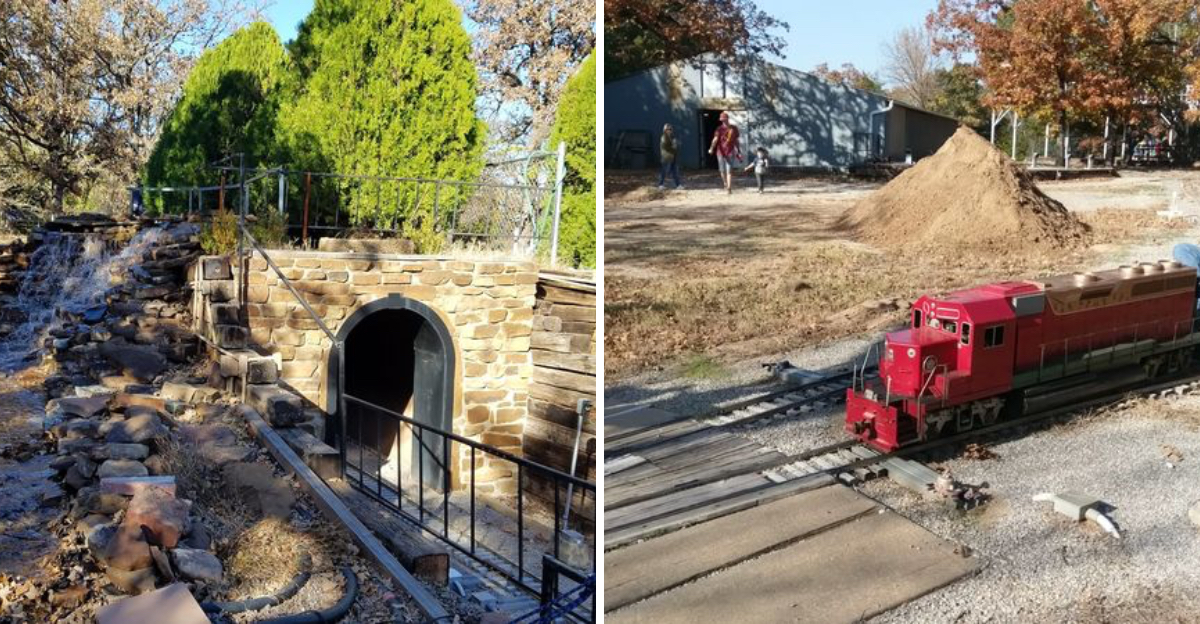
Sometimes I think the best way to understand history is to get close enough to feel it move. That’s exactly what happens in McLoud, just east of Oklahoma City, where Locomotive Operators of Central Oklahoma brings railroad history to life in the most unexpected way.
On the first Sunday of each month, I’ve watched families line up as these small scale trains fire up and start rolling down the track. The moment you climb aboard, it stops feeling like a display and starts feeling real.
Wind in your face, the steady rhythm of the rails beneath you, and wide open Oklahoma scenery stretching out on both sides. This isn’t a place where you read plaques and move on.
It’s a place where you sit down, hold on, and ride straight through a piece of living history.
The First Whistle Stops You in Your Tracks
You hear it before you see it. A sharp little train whistle cuts across the open Oklahoma air, and suddenly you are ten years old again.
Families gather near the boarding area. Volunteers move with quiet focus.
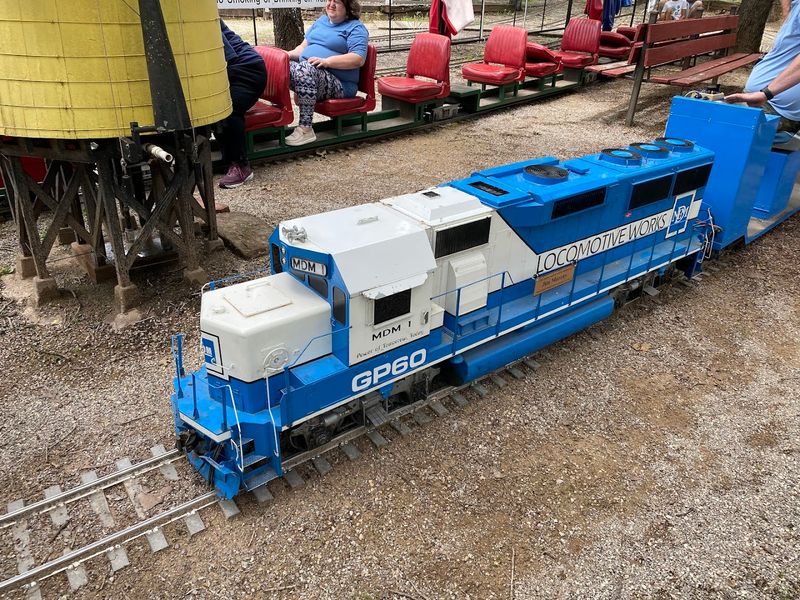
And there, circling the track, are beautifully maintained miniature trains pulling passenger cars low to the ground.
It feels simple. It feels joyful.
And it feels very real.
The sound carries across the grounds with a clarity that modern life rarely offers. No car horns.
No digital notifications. Just that single, pure note announcing something good is about to happen.
Kids tug at their parents’ sleeves. Adults crane their necks to catch the first glimpse of the approaching engine.
Even people who arrived skeptical find themselves grinning.
That whistle does something to you. It bypasses your adult brain and speaks directly to the part of you that still believes in adventure.
Before you even board, you know this experience will be different from anything else you have done lately.
These Are Not Toys But Working Railroads in Miniature
The scale is smaller. The passion is not.
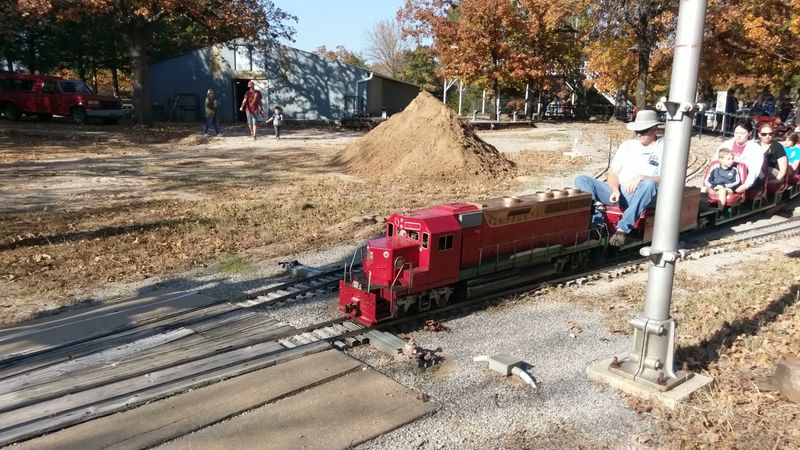
The trains are privately owned and operated by club members who build, restore, and maintain them with serious dedication. You sit astride the open passenger cars, close enough to the rails to watch every curve and switch pass beneath you.
As the engine pulls forward, you feel the gentle sway and hear the steady rhythm of wheels on track. It is a scaled-down version of classic railroading, but nothing about it feels cheap or staged.
These machines are engineering marvels. Real steam engines.
Actual coal or propane fuel. Working brakes and throttles.
Every component functions just like its full-sized counterpart, only proportionally reduced.
The craftsmanship shows in the polished brass fittings, the carefully painted bodies, the precise alignment of every rail joint. Some of these locomotives took years to build.
Others are lovingly restored antiques.
Watching them operate, you realize you are seeing genuine railroad technology in action. The physics are identical.
The challenges of operation remain. Only the size has changed.
The Setting Is Pure Small-Town Oklahoma
McLoud does not try to impress anyone. That is what makes it perfect.
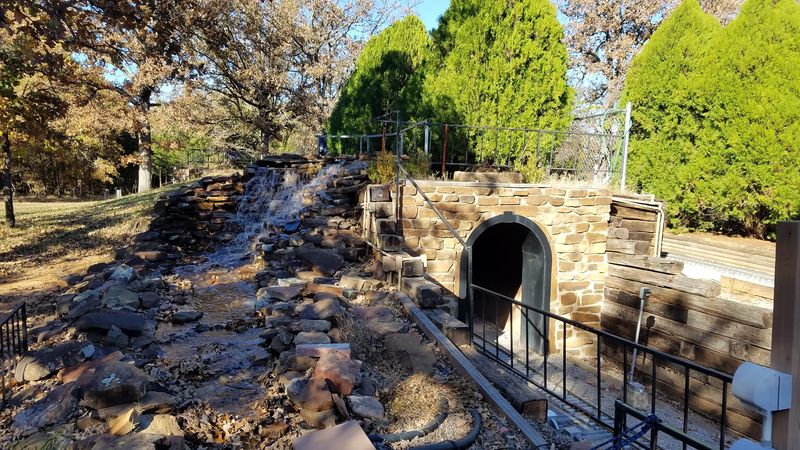
The railroad runs on club grounds surrounded by open land and wide skies. There are no towering buildings, no heavy traffic, just the hum of engines and the murmur of people enjoying a Sunday afternoon.
It feels local in the best possible way. Neighbors chatting.
Kids waving. Volunteers answering questions without scripts or rehearsed lines.
The landscape here is honest. Flat stretches interrupted by gentle rises.
Trees clustered where they chose to grow. Grass that looks like grass, not manicured turf.
You can see weather coming from miles away. Clouds build slowly across the horizon.
Wind moves freely without buildings to block it. The light has that particular quality you only find in places without much competing for attention.
Standing on these grounds, you understand why someone would choose this spot for a railroad. It has room to breathe.
Space to hear yourself think. Distance enough from city noise to let the whistle carry.
Volunteers Keep the Past Rolling Forward
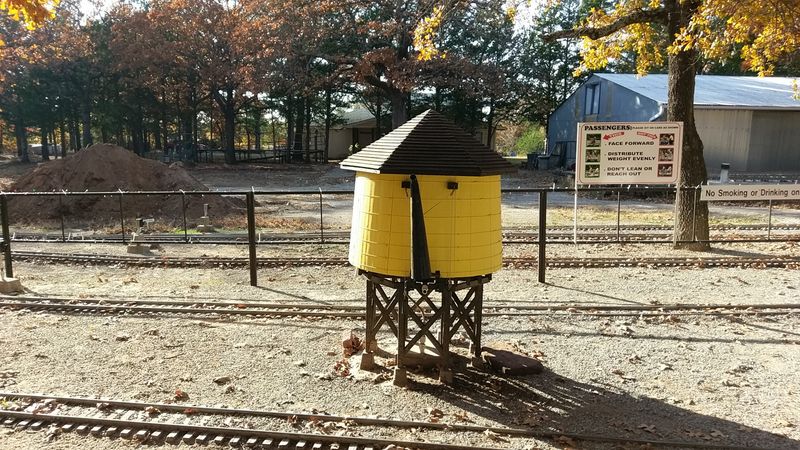
This experience exists because people care enough to keep it alive.
The Locomotive Operators of Central Oklahoma is a nonprofit club made up of train enthusiasts who give their time to maintain tracks, operate locomotives, and host public ride days. You can see the pride in how they check the engines, help riders board, and talk about the equipment.
It is not corporate. It is personal.
That changes the whole tone of the day.
These volunteers know the history of each locomotive. They can tell you which member built what, how long it took, what challenges came up during construction.
They share stories without being asked, happy to have an interested audience.
Nobody here is getting rich. Nobody is angling for tips or upsells.
They show up on Sundays because they love trains and want others to experience that love firsthand.
You see it in the careful way they oil moving parts. The patience they show with curious kids.
The genuine smile when someone asks a technical question. This is community effort at its finest.
Every Loop Feels Like a Gentle Time Machine
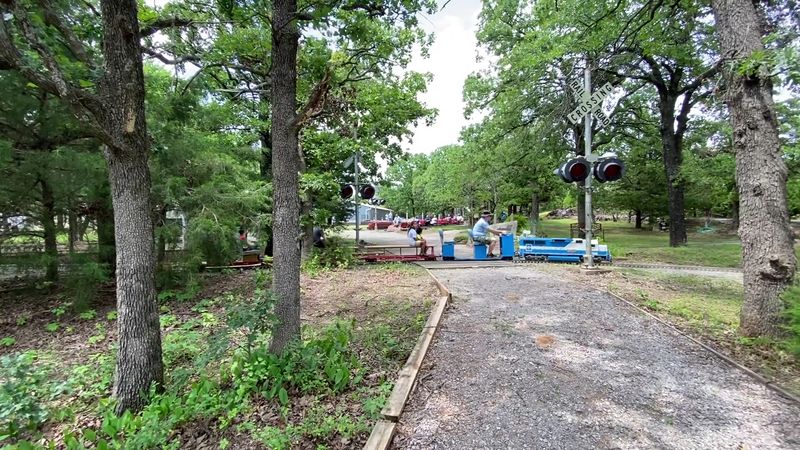
The track curves through trees and open stretches, offering a surprisingly scenic ride for something so compact.
You pass small bridges and bends that make the short journey feel layered. Even though the ride lasts only a few minutes per loop, it slows you down.
You notice the wind on your face. The smell of warm metal and cut grass.
The soft click of wheels on rails.
Time moves differently here. Not slower exactly, but more deliberately.
Each curve reveals a new angle on the landscape. Each straightaway lets you settle into the rhythm.
The track design is thoughtful. Whoever laid these rails understood pacing.
There are moments of gentle acceleration and careful braking. Spots where the view opens up and others where trees create a canopy overhead.
You find yourself looking at details you would normally miss. The way sunlight hits the rails.
How shadows shift as the train moves. The expression on the face of the person riding ahead of you.
It is simple, and that simplicity is exactly the point.
Kids Light Up and Adults Do Too
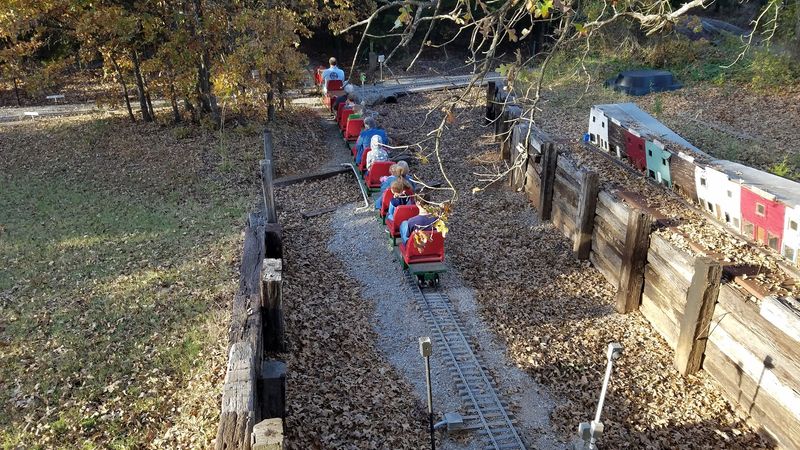
There is no age limit on delight.
Children lean forward, gripping the sides of the car, eyes wide. Adults try to act composed and fail within seconds.
I saw more than one grown person laughing as the train rounded a curve.
It strips away the usual distractions. No one is scrolling.
Everyone is watching the tracks ahead.
Something about being low to the ground changes your perspective. You feel the speed differently when you are closer to the rails.
Every bump and sway registers more clearly. It is simultaneously thrilling and completely safe.
Parents point things out to their kids, but you can tell they are just as engaged. Grandparents ride with grandchildren and seem to forget the generational gap.
Teenagers who arrived looking bored find themselves grinning.
The experience is universally accessible in a way few activities manage. You do not need special knowledge or physical ability.
You just need to show up and be willing to enjoy something uncomplicated. That openness is what makes the magic possible.
Affordable and Accessible for Everyone
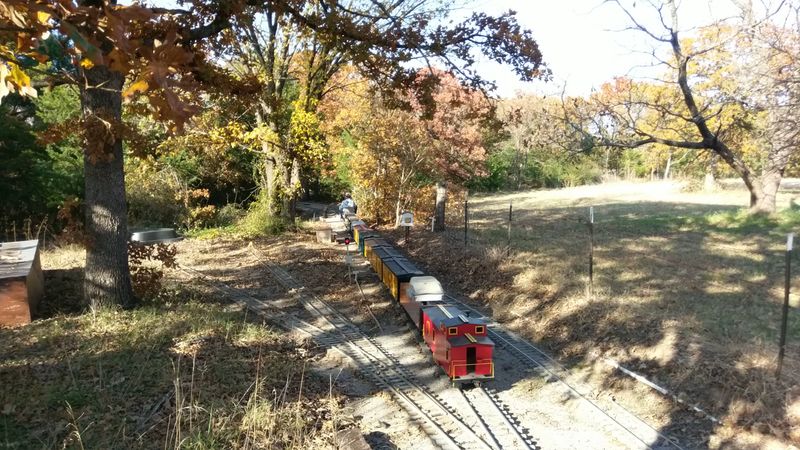
Public ride days are typically held on the first Sunday of each month, weather permitting, and rides are offered for a flat fee that keeps the experience accessible to families.
That consistency makes it easy to plan. Show up, buy a ticket, climb aboard.
No complicated reservations. No overwhelming crowds.
Just a straightforward rail experience that honors the spirit of classic American train culture.
The pricing reflects the nonprofit nature of the organization. This is not a commercial venture trying to maximize revenue.
It is a club sharing its hobby with the community at a cost that covers expenses.
You do not need to budget heavily or save up for months. A family can enjoy the afternoon without financial stress.
That accessibility matters, especially in a world where entertainment often comes with premium price tags.
The schedule is posted online and remains reliable. First Sunday means first Sunday.
Mark your calendar and show up. The simplicity of that arrangement feels refreshing compared to attractions that require advance booking and surge pricing.
The Real Magic Lives in the Details
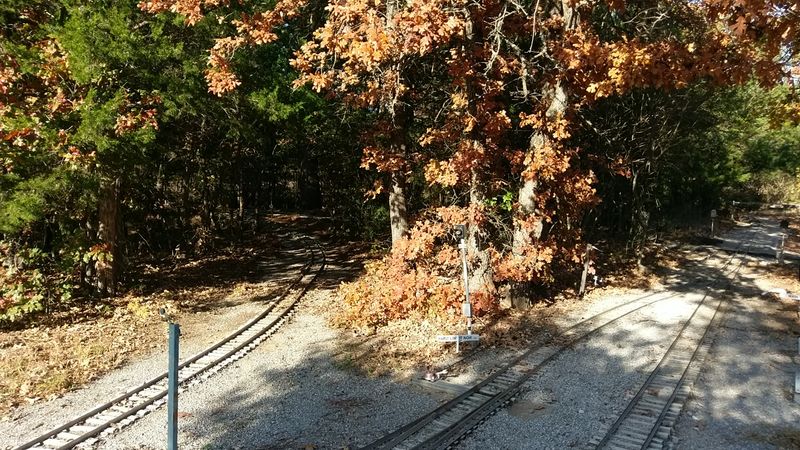
Look closely and you start noticing craftsmanship.
Polished metal components. Carefully painted engines.
Track switches operated by hand. It is a living hobby turned community event, and the attention to detail shows.
Standing beside the rails, watching a miniature locomotive glide past, you realize something important.
The rivets are individually placed. The paint schemes match historical prototypes.
The wooden passenger car benches are sanded smooth. Someone spent hours, maybe months, getting each element right.
This level of care is rare. Most modern experiences are mass-produced, designed for efficiency over artistry.
Here, every locomotive represents hundreds of hours of focused work by someone who refuses to cut corners.
You see it in the way sunlight catches polished brass. In the smooth operation of a throttle lever.
In the perfectly aligned couplers that connect cars without a hitch. These details do not happen by accident.
They happen because people care.
That dedication transforms a simple train ride into something memorable. You are not just riding a miniature railroad.
You are experiencing the result of passion made tangible.
History Survives When People Keep It Moving
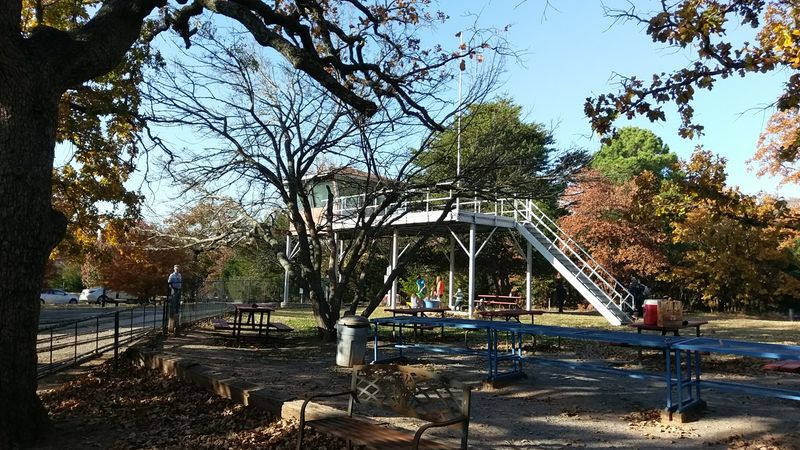
Preserving history does not always require grand buildings or huge budgets.
Sometimes it takes a small track, a handful of dedicated people, and a whistle that still knows how to echo across an Oklahoma field. This is not just a train ride.
It is a reminder that history survives when people choose to keep it moving.
The railroad industry shaped America. It connected communities, moved goods, and made modern life possible.
But full-sized trains are increasingly rare outside commercial freight lines.
Places like this keep that heritage alive in a way anyone can experience. You do not need to read about steam engines in a textbook.
You can ride behind one. You do not need to imagine what early rail travel felt like.
You can feel it yourself.
That hands-on connection matters. It makes history tangible instead of abstract.
It shows younger generations that the past was built by real people doing real work, not just dates and names in a book.
Address: Locomotive Operators of Central Oklahoma, 16001 South Midwest Boulevard, McLoud, Oklahoma 74851
Dear Reader: This page may contain affiliate links which may earn a commission if you click through and make a purchase. Our independent journalism is not influenced by any advertiser or commercial initiative unless it is clearly marked as sponsored content. As travel products change, please be sure to reconfirm all details and stay up to date with current events to ensure a safe and successful trip.
