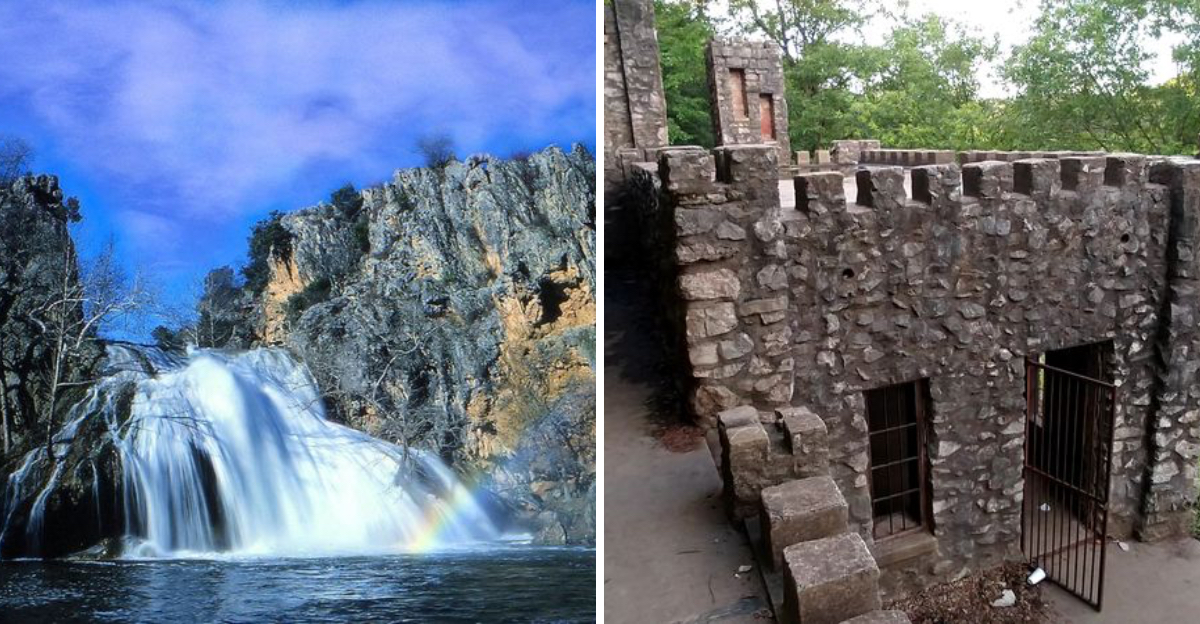
Nobody warned me that Oklahoma could look like something straight out of a storybook. I expected flat plains and dusty highways, and instead I got towering waterfalls, stone castles, and mountain roads that curl through cedar forests like they have somewhere magical to be.
A scenic drive through the Arbuckle Mountains, anchored by the legendary Turner Falls, is one of those road trips that quietly rewires your idea of what this state is all about.
Pack your curiosity and leave your assumptions at the state line, because this drive delivers wonder at every turn.
Turner Falls: Oklahoma’s Most Spectacular Waterfall
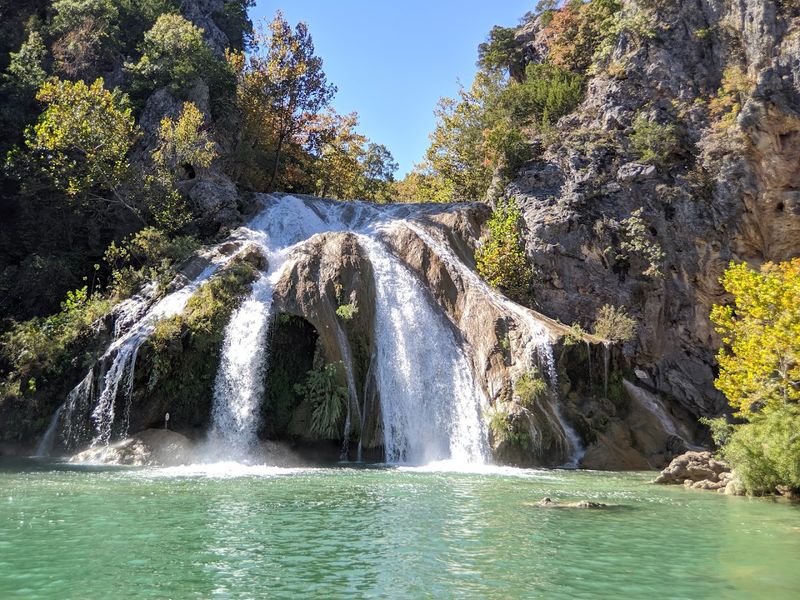
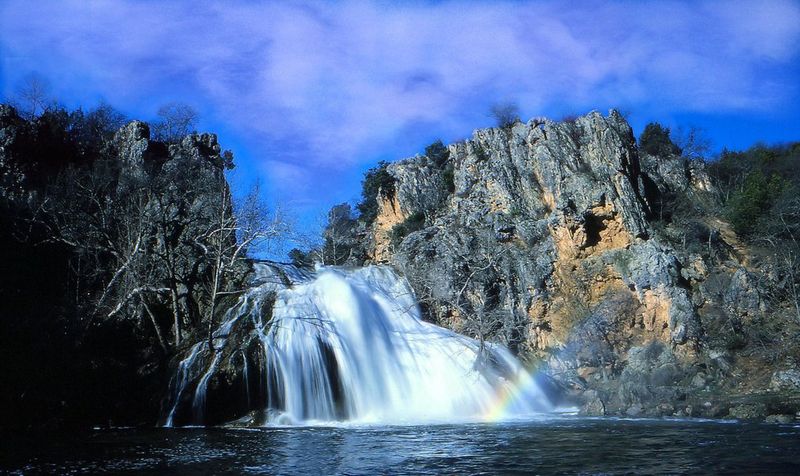
Seventy-seven feet of roaring, crystal-clear water crashing into a natural pool below, and somehow this place still surprises people. Turner Falls is the kind of waterfall that makes you stop mid-sentence and just stare.
The mist hits your face before you even get close, and the sound alone is enough to shake off whatever stress you carried in from the highway.
The falls sit at the heart of Turner Falls Park in Davis, Oklahoma. The water flows from Honey Creek, which winds through the Arbuckle Mountains before making that dramatic plunge.
On a bright day, the pool below shimmers in shades of green and blue that feel almost tropical. It is genuinely one of the most photogenic spots in the entire state.
Swimming is allowed in the natural pool beneath the falls, which makes this more than just a viewpoint. Families wade in with kids on their shoulders.
Couples find quiet rocks near the edges. Solo travelers just sit and breathe it all in.
The water stays cool even in summer, which feels like a miracle when the Oklahoma heat is at full force.
Getting to the main falls requires a short walk from the parking area. The path is well-marked and not too steep.
Even so, wear shoes with grip because the rocks near the water get slippery fast. Early morning visits reward you with softer light and far fewer crowds.
This is one stop worth slowing down for completely.
Address: Turner Falls Park, I-35 & US Highway 77, Davis, OK 73030
Collings Castle: A Real Stone Castle in the Oklahoma Wilderness
There is a castle in Oklahoma. A real one.
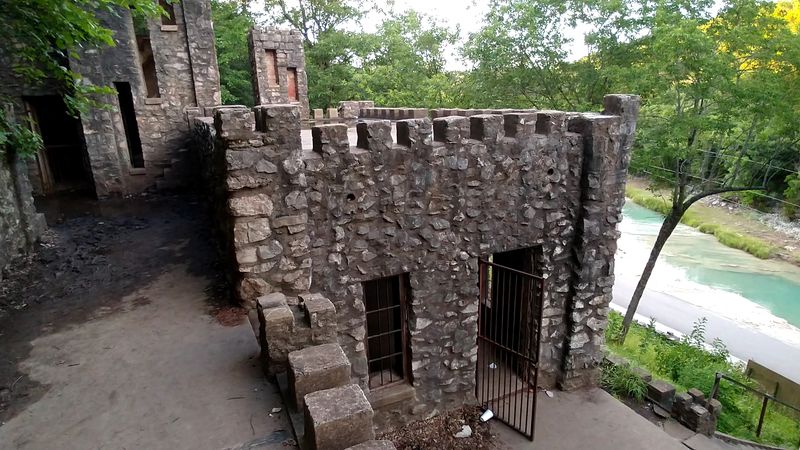
Built from local stone, with turrets, narrow hallways, and staircases that twist upward like something from a medieval novel. Collings Castle sits inside Turner Falls Park, and it is one of those places that genuinely stops you cold the first time you see it through the trees.
Dr. Ellsworth Collings, a professor at the University of Oklahoma, built the castle in the 1930s as a summer residence. He designed it himself, drawing inspiration from Old English architecture.
The walls are thick and rough-hewn. The doorways are low.
Every corner feels like it belongs in a different century entirely.
Today the castle stands as a ruin open for exploration. You can walk through its maze-like corridors, peer into crumbling rooms, and climb the steep internal stairs to the rooftop.
From up top, the view stretches across the park and out toward the rolling Arbuckle Mountains. It is the kind of panorama that earns every step of the climb.
The castle has a quiet, haunted quality that photography loves. Morning light filters through the open windows and turns the stone walls gold.
Afternoon visits catch dramatic shadows in the archways. Kids absolutely lose their minds exploring it, and honestly, so do adults who let themselves get swept up in it.
No special ticket is needed beyond general park admission. Just walk the marked trail from the falls area and follow the signs uphill.
The castle rewards the curious.
Address: Collings Castle, Turner Falls Park, Davis, OK 73030
The Arbuckle Mountains Scenic Loop: A Drive That Earns Its Name
Some roads are just roads. This one feels like a reward.
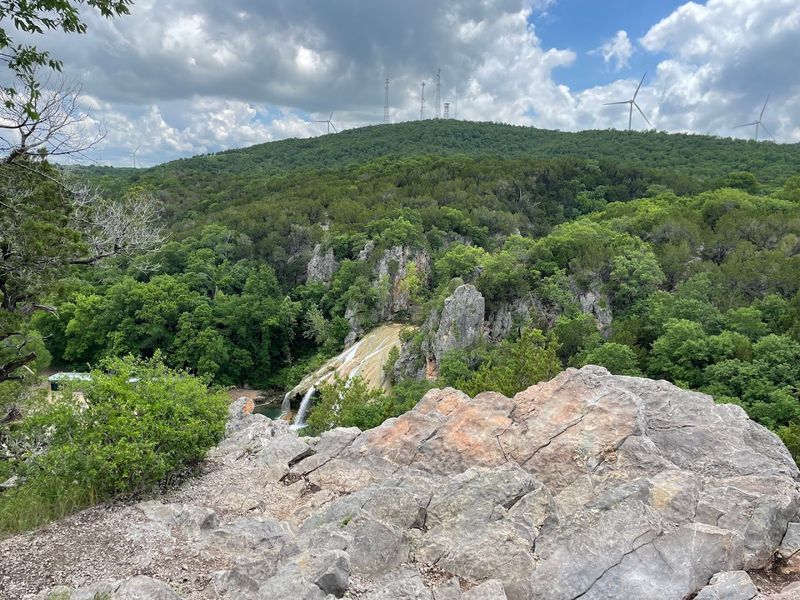
The Arbuckle Mountains Scenic Loop covers roughly 20 miles of winding highway through thick cedar and oak forest, past creeks, over ridgelines, and alongside some of the oldest exposed rock formations in North America. The geology alone is wild, with layers of limestone and granite that date back hundreds of millions of years.
The route starts in Davis and heads south on US-77 toward Turner Falls. From there it swings west on Highway 7 toward Sulphur Springs, then south on US-177 down to the Chickasaw National Recreation Area.
The whole loop can be driven in under an hour, but stopping constantly is the whole point. Pull over whenever something catches your eye, because it will.
The forest along this stretch is denser than most people expect from Oklahoma. Cedars crowd both sides of the road and create a canopy effect in certain stretches.
Wildlife sightings are common, especially deer in the early morning or near dusk. The air smells different here, earthy and cool, even in July.
This loop works beautifully as the backbone of a full-day road trip. Pair it with stops at Turner Falls, the Chickasaw National Recreation Area, and a few roadside overlooks, and you have a genuinely full itinerary.
The road is well-maintained and easy to navigate without a GPS, though having one never hurts.
Route Start: Davis, OK 73030, heading south on US-77
Chickasaw National Recreation Area: Where Springs and Streams Surprise You
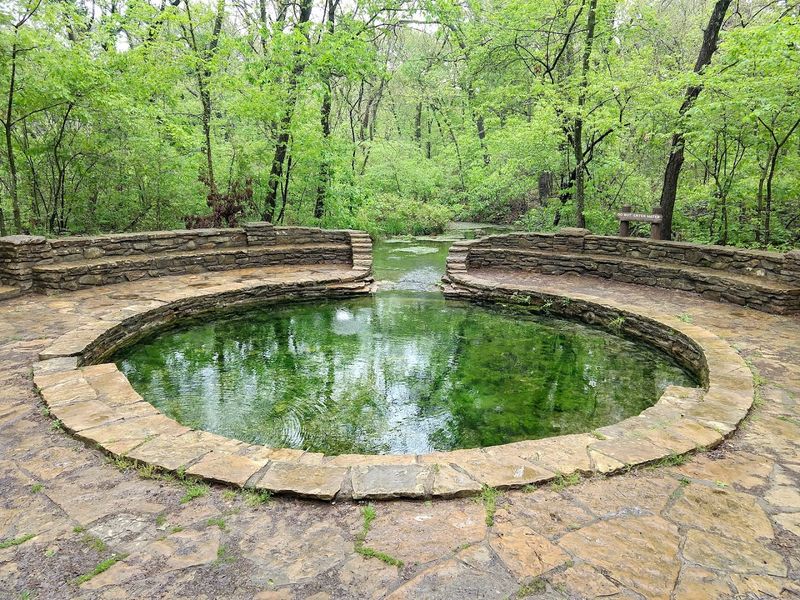
Cold water bubbling straight out of the earth sounds like something from a fantasy novel, but that is exactly what happens at the Chickasaw National Recreation Area near Sulphur, Oklahoma.
Natural mineral springs push up through the ground at multiple spots throughout the park, and the effect is both strange and completely mesmerizing.
The park covers nearly 9,900 acres and offers a huge range of activities. Hiking trails wind through wooded hills and along stream banks.
The Travertine Creek area is especially popular, where the water runs clear and cold year-round over smooth limestone beds. It is the kind of place where you sit down for five minutes and realize an hour has passed.
What makes this park different from most is the combination of freshwater and mineral springs in one area. Some springs carry a faint sulfur smell, which is a small price for the novelty of watching water appear from solid ground.
The park has been a gathering place for people for thousands of years, and that long history gives it a quiet, almost ceremonial weight.
Bison roam a dedicated section of the park, which adds an unexpected layer of awe to any visit. Seeing them from the road is common if you time your drive right.
The park also has campgrounds, picnic shelters, and multiple trailheads for all fitness levels.
This is the kind of stop that seems like a bonus but ends up being a highlight. Plan at least two to three hours here.
Address: Chickasaw National Recreation Area, 901 W 1st St, Sulphur, OK 73086
Honey Creek: The Hidden Stream Behind the Magic
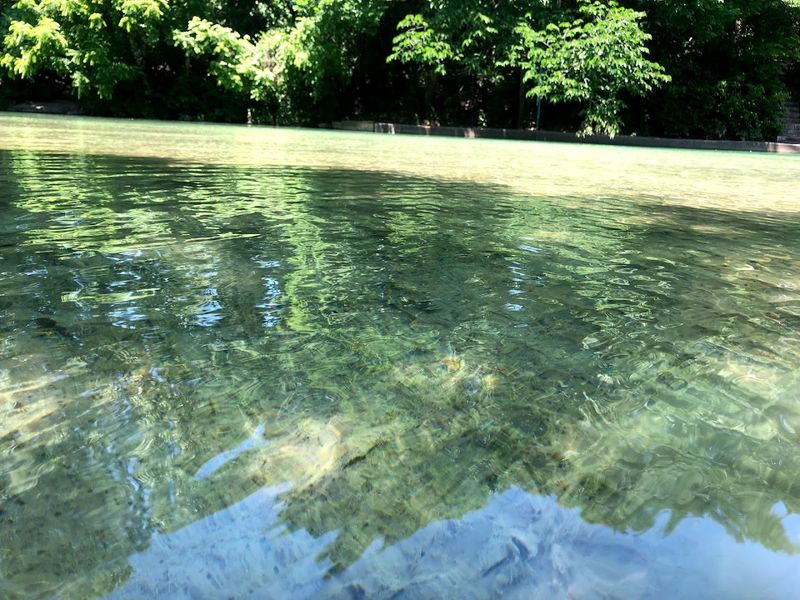
Before Turner Falls can be Turner Falls, Honey Creek has to do its job. This winding, rocky creek is the source of the entire spectacle, flowing down from the Arbuckle Mountains through cedar canyons before launching off that famous 77-foot ledge.
Following the creek upstream from the falls reveals a completely different side of the park.
The creek bed itself is made up of smooth limestone and scattered boulders that create natural wading pools and small cascades. Kids love scrambling across the rocks, and adults find themselves doing the same thing once they stop pretending to be dignified.
The water is cold and clear, fed by underground springs throughout the mountain range.
Wildflowers grow along the banks in spring and early summer, adding bursts of color to the already-vivid green of the cedar forest. Sycamore trees spread wide over the water in certain stretches, creating natural shade tunnels that feel almost enchanted.
The light filters through differently at each bend, making every step feel like a new photograph.
Wildlife is active along the creek throughout the day. Herons stand motionless in the shallows.
Turtles sun themselves on flat rocks. The occasional deer picks its way carefully across the stream just ahead of you.
It is the kind of quiet, slow-paced nature experience that resets something in your brain.
Exploring the creek requires some scrambling and rock-hopping. Water shoes are a smart call.
The payoff for going upstream is a series of smaller falls and pools that most visitors never find.
The Natural Swimming Holes of the Arbuckle Mountains
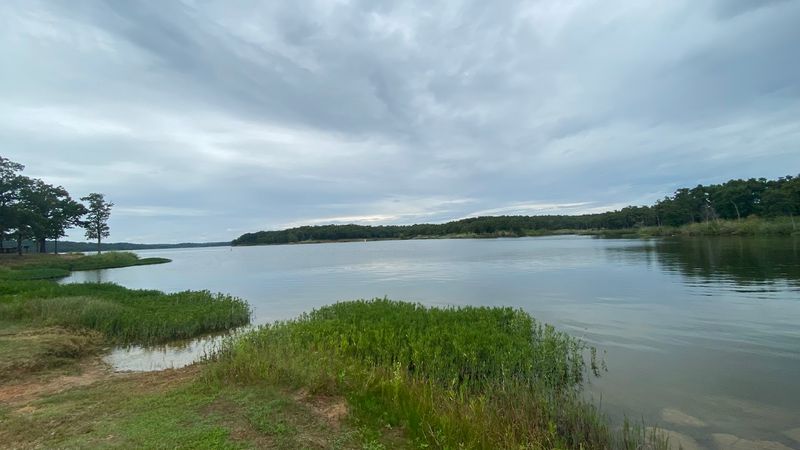
Oklahoma in July is not subtle about its heat. The sun is relentless, the air barely moves, and the asphalt shimmers in a way that feels almost personal.
That is exactly why the natural swimming holes scattered through the Arbuckle Mountains feel like survival, not just recreation.
Turner Falls has the most famous pool, fed directly by the waterfall and naturally cooled by the spring-fed creek. But the park and surrounding area offer additional spots where the water gathers in wide, calm pools over flat limestone.
Some require short hikes to reach. Others are right beside the road, practically begging you to pull over.
The rock formations around these swimming holes are part of what makes them so visually striking. Limestone shelves create natural diving platforms and sunbathing ledges.
The water color shifts from pale green in shallow areas to deep teal in the pools below small drops. On a clear day with sunlight hitting the surface, the effect is almost unreal.
Swimming in these natural pools requires some common sense. The current picks up after rain, and some areas have slippery algae on submerged rocks.
Sandals or water shoes with grip are worth every penny. Life jackets are smart for younger kids, especially in deeper sections near the main falls.
The experience of floating in a cold limestone pool while a waterfall roars nearby and cedar-covered mountains rise above you is one that is very hard to explain to someone who has not done it. Come and find out for yourself.
Davis, Oklahoma: The Small Town That Starts the Adventure
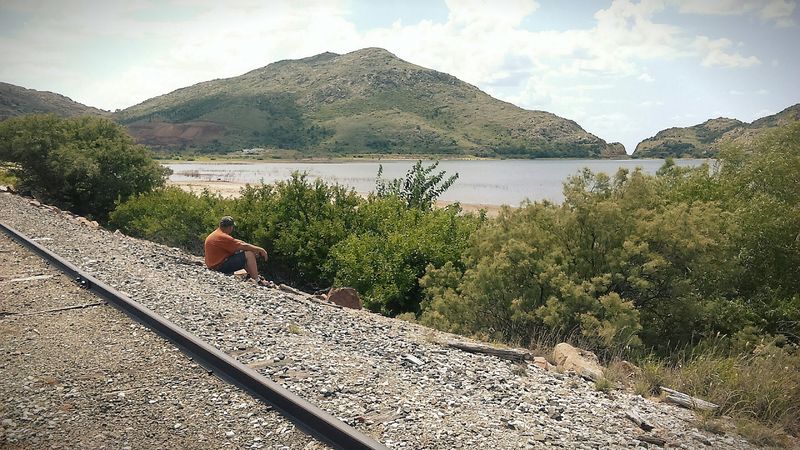
Davis is the kind of town that does not try to impress you, and that is precisely what makes it charming. With a population of just a few thousand, this small southern Oklahoma community sits at the northern gateway to the Arbuckle Mountains, and it punches well above its weight as a road trip base.
The downtown area has a handful of local diners and cafes that serve exactly the kind of food you want after a morning of hiking. Plates are generous, coffee comes fast, and the locals are genuinely happy to point you toward their favorite spots in the park.
There is an unhurried quality to Davis that feels refreshing after city life.
The town has deep ties to the surrounding natural landscape. Locals grew up swimming at Turner Falls and hiking the mountain trails.
That familiarity shows in how casually they talk about the park, as if a 77-foot waterfall in their backyard is just a Tuesday thing. In a way, it is.
Practical note: fuel up in Davis before heading into the park. Gas stations are limited once you get into the Arbuckle Mountains, and the scenic loop takes you far enough out that you want a full tank.
The same goes for snacks and water, especially in summer when the heat can sneak up on you.
Davis also has a few small shops worth browsing if you want to bring home something that is not a magnet. Local crafts and Oklahoma-made goods pop up in unexpected places around town.
Caves and Canyon Trails: The Underworld Side of Turner Falls
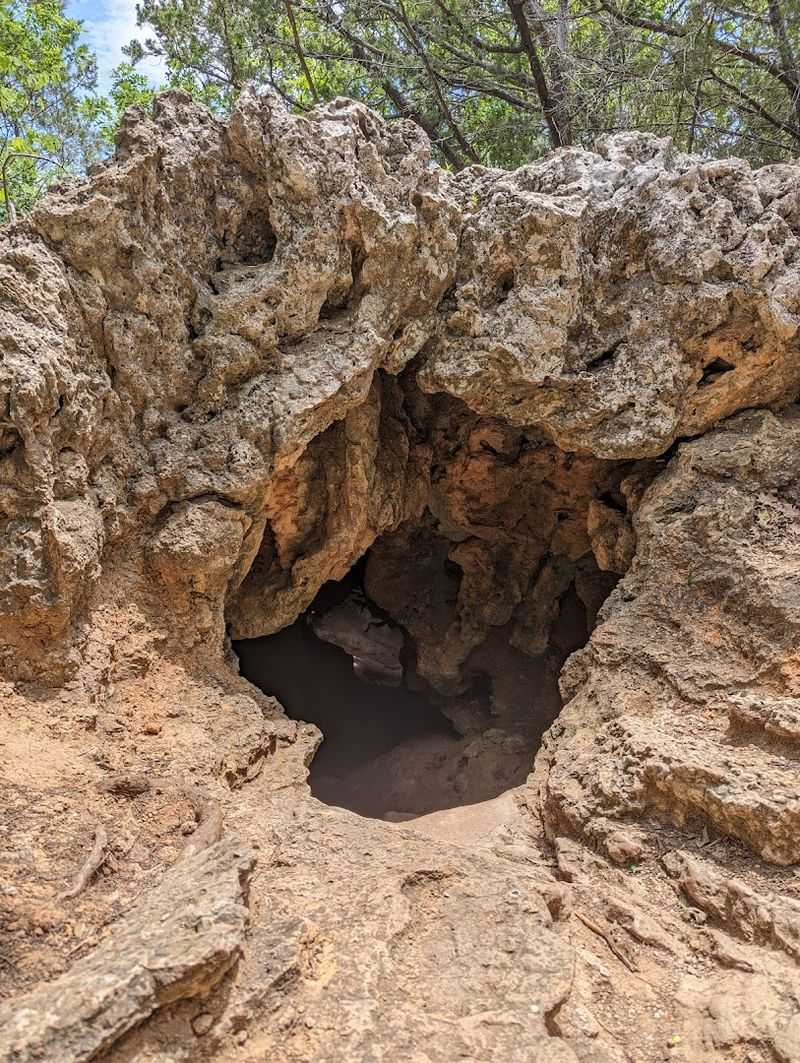
Most people come to Turner Falls for the waterfall and leave having only seen half the park. Beneath the dramatic surface scenery, there is a cave system and a network of canyon trails that feel like a completely separate adventure waiting to happen.
The cave at Turner Falls Park is a natural limestone formation that visitors can explore on their own. It is not a guided tour cave with handrails and light shows.
It is raw, dark, and genuinely cool in both temperature and atmosphere. A flashlight is essential, and so is a sense of humor when you bump your head on a low ceiling.
The canyon trails surrounding the falls wind through some of the most dramatic terrain in the park. Limestone walls rise on both sides of the creek in certain sections, creating narrow gorge-like passages that feel ancient.
Ferns grow in the shaded crevices. Mossy rocks line the trail edges.
The sound of moving water is almost constant.
These trails are not heavily trafficked compared to the main falls area, which means you can often walk for twenty minutes without seeing another person. That kind of solitude in a public park is rare and worth seeking out.
The trails vary in difficulty, with some requiring careful footing over loose rock.
Bring a headlamp for the cave, closed-toe shoes for the canyon trails, and more water than you think you need. The combination of cave and canyon exploration makes for a full half-day of adventure that most visitors completely miss.
Sulphur and the Springs That Shaped It: A Quirky, Calming Detour
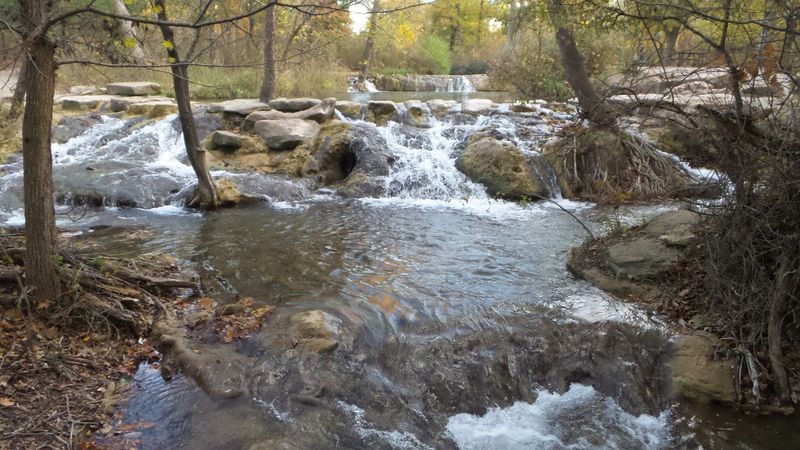
The town of Sulphur, Oklahoma has a personality all its own. Named for the mineral springs that bubble up throughout the area, it sits right at the edge of the Chickasaw National Recreation Area and serves as a relaxed, unhurried counterpoint to the more dramatic scenery at Turner Falls.
Walking through Sulphur feels like stepping back a few decades in the best possible way. The downtown has a preserved, vintage quality with local shops, murals, and the kind of unhurried pace that makes you wonder why you ever thought rushing anywhere was a good idea.
People wave from porches. Dogs nap in patches of shade.
Nobody is in a particular hurry.
The mineral springs themselves are spread throughout the town and the adjacent recreation area. Some flow right beside walking paths, and you can hear the gentle gurgling as you pass.
The sulfur smell is mild in most areas, barely noticeable unless you get very close to the source. The water is cold and surprisingly clear given its mineral content.
Sulphur also hosts a small but well-regarded arts community. Local galleries and studios occasionally open to visitors, and public art appears in unexpected spots around town.
It adds a creative layer to what might otherwise feel like just a pass-through stop on the scenic loop.
Plan to spend at least an hour in Sulphur proper before or after your time in the recreation area. It earns its spot on the itinerary and provides a genuine change of pace from the more active sections of the road trip.
Sunrise at the Arbuckles: Why the First Hour of the Day Changes Everything
Set your alarm. That is the advice.
Not because you have to be anywhere by a certain time, but because the Arbuckle Mountains at sunrise are a completely different world from the Arbuckle Mountains at noon. The difference is almost unfair to describe to someone who slept in.
The light comes in low and golden over the eastern ridgelines, painting the cedar forest in shades of amber and rose. Mist often sits in the valleys below the higher points, especially in spring and early fall, creating a layered, atmospheric effect that looks like something a fantasy illustrator invented.
It does not look real, and yet there you are, standing in it.
Turner Falls in the early morning is a revelation. The parking areas are nearly empty.
The mist from the waterfall catches the first light and creates soft rainbows that last maybe twenty minutes before the sun climbs too high. The sound of the falls echoes differently in the quiet morning air, fuller and more resonant somehow.
Wildlife is most active at this hour. Deer move through the tree line near the park entrance.
Birds fill the cedar canopy with sound. The creek seems louder, the colors more saturated, the whole scene more alive than it will be at any other point in the day.
Camping inside Turner Falls Park makes this easy. Wake up, walk out, and you are already there.
Day visitors who make the drive early are rewarded just as generously. The Arbuckle Mountains at dawn are an experience that stays with you long after the road trip ends.
Dear Reader: This page may contain affiliate links which may earn a commission if you click through and make a purchase. Our independent journalism is not influenced by any advertiser or commercial initiative unless it is clearly marked as sponsored content. As travel products change, please be sure to reconfirm all details and stay up to date with current events to ensure a safe and successful trip.
