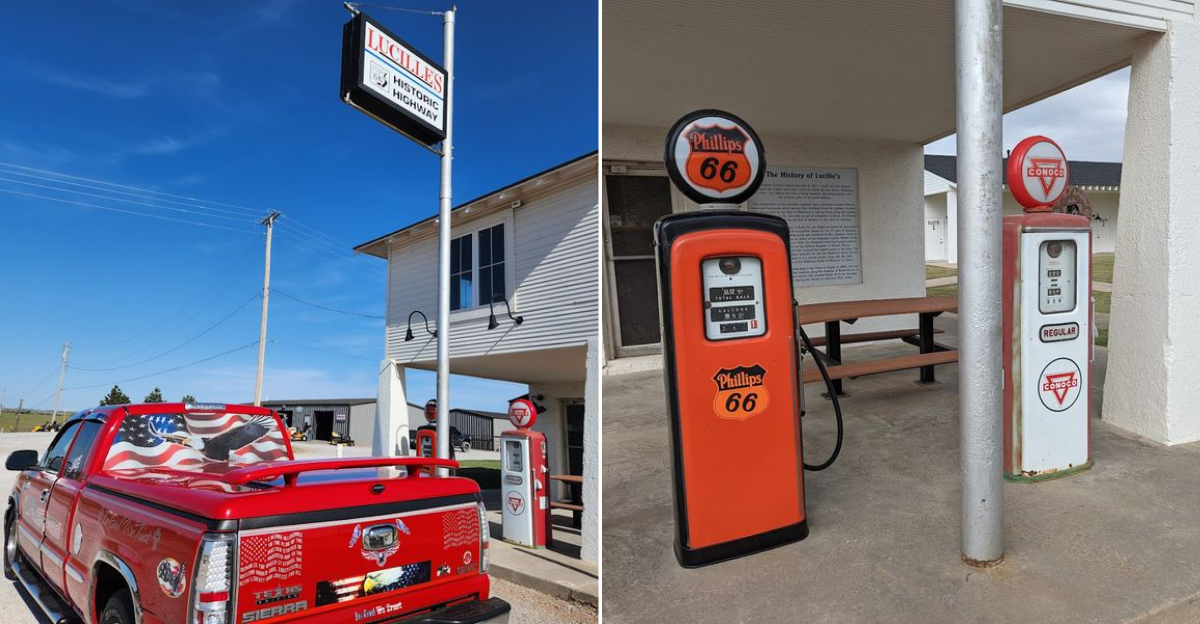
A two-story Craftsman-style filling station sits along a stretch of Oklahoma highway that used to carry the dreams of cross-country travelers.
The building was built in the late nineteen twenties, and it is one of only two of its kind still standing on the state’s route.
A woman ran the station for decades, feeding travelers from a hotplate in the front room and earning the nickname “Mother of the Mother Road.”
The gas pumps still show prices from a bygone era. The station is no longer open for business, but it remains a stop worth making for anyone who wants to feel what the road used to be.
It is quiet and still, and standing there, you can almost hear the echo of the cars that once rolled through. A place where the past sits out in the open, waiting for someone to stop and take a look.
The Building That Stops You Mid-Drive
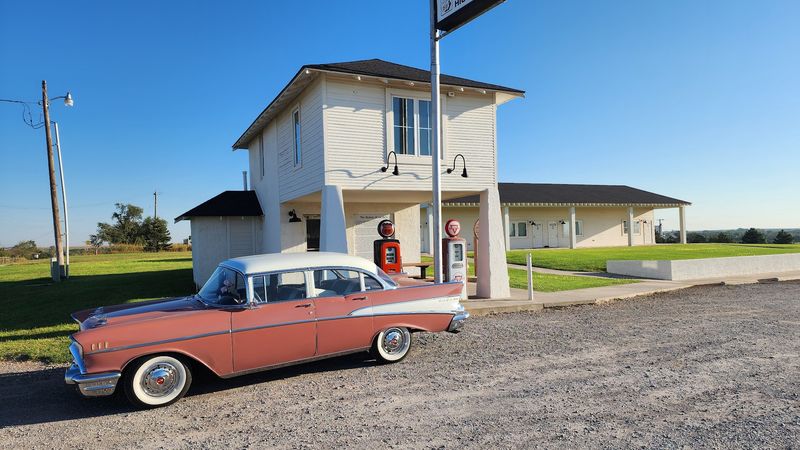
You know that feeling when something by the side of the road makes you slow down before your brain has even caught up? That is exactly what this place does.
Lucille’s Service Station has that rare look where the building feels familiar even if you have never seen it before.
From the road, it does not come off like a museum piece trying too hard to look old. It just stands there with total confidence, like it knows it has already outlived a lot of passing traffic and does not need to impress anybody.
That calm, lived-in presence is what makes it land so hard.
I think that is why it feels like such a real Route 66 stop in Oklahoma instead of a polished recreation. The lines of the structure, the porch, and the station front all still carry the shape of daily life, not just nostalgia.
You can picture drivers easing in, stretching their backs, and asking for directions before heading west again.
Even if you have seen plenty of roadside history, this one catches you in a more personal way. It feels less like a sight you check off and more like a conversation that has been waiting on the shoulder of the highway for a very long time.
The Address That Carries So Much Story
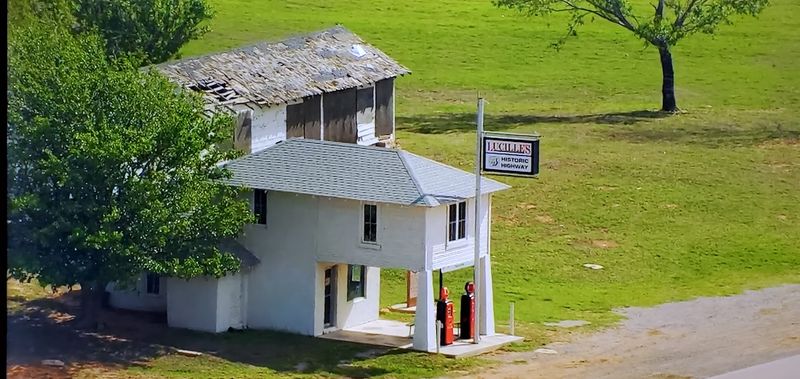
Here is the part that really gets me: this whole legend sits at 204 Route 66, Hydro, OK 73048, and somehow the place still feels humble when you pull up. Officially, it is the Provine Service Station, but almost nobody talks about it that way.
Around here and across Route 66 circles, it is simply Lucille’s.
That nickname tells you everything, because this stop is tied to a person as much as a building. You are not just looking at an old station in Oklahoma.
You are standing in a place where hospitality became the whole point, and that makes the history feel warm instead of distant.
It also helps that the setting still fits the story. Hydro is not trying to drown the site in noise or distractions, so the station gets room to breathe and look like itself.
You can actually take it in without fighting a wall of modern clutter.
When people say Route 66 is about more than pavement, this is what they mean. An address becomes a landmark because real life happened there, travelers remembered it, and the memory stayed attached to the place long after the gas pumps quit doing their original job.
The Vintage Pumps That Seal The Mood
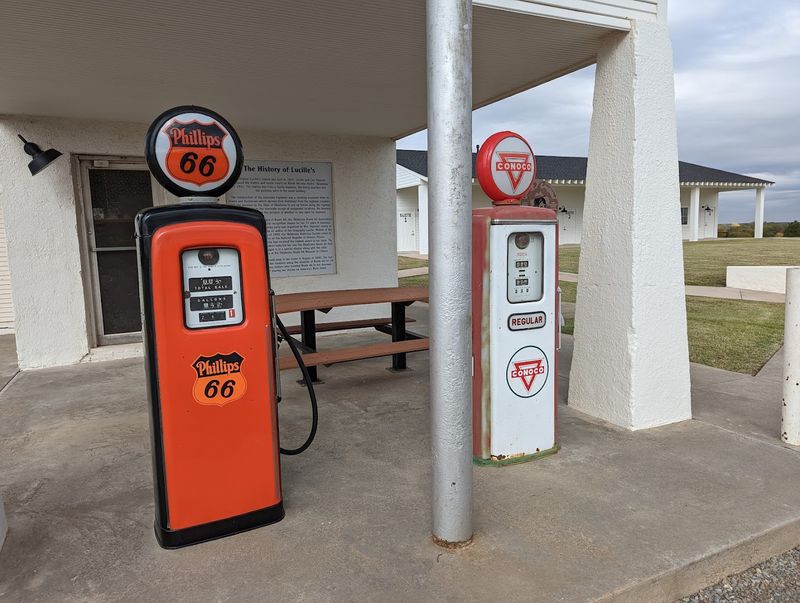
Let me be honest, the pumps are part of the spell. You can admire the history, read the markers, and appreciate the architecture, but the second you see those vintage-style pumps out front, the whole scene clicks into place.
Suddenly it looks like the road might send a rumbling sedan around the bend at any moment.
They work visually because they do not overpower the building. Instead, they finish the picture the way the right frame finishes an old photograph.
You get that classic service station silhouette without feeling like the place has been dressed up for a costume party.
If you like taking photos, this is probably where you start circling for angles without even meaning to. The pumps give the exterior that unmistakable Route 66 rhythm, especially when the light falls softly across the station front.
Every direction seems to offer some new little composition.
What I appreciate most is that the look still feels grounded in Oklahoma rather than generic nostalgia. These details support the station’s story instead of distracting from it.
They help you imagine the business as it once operated, while still letting the building itself remain the real star of the stop.
The Upstairs Life You Can Still Picture
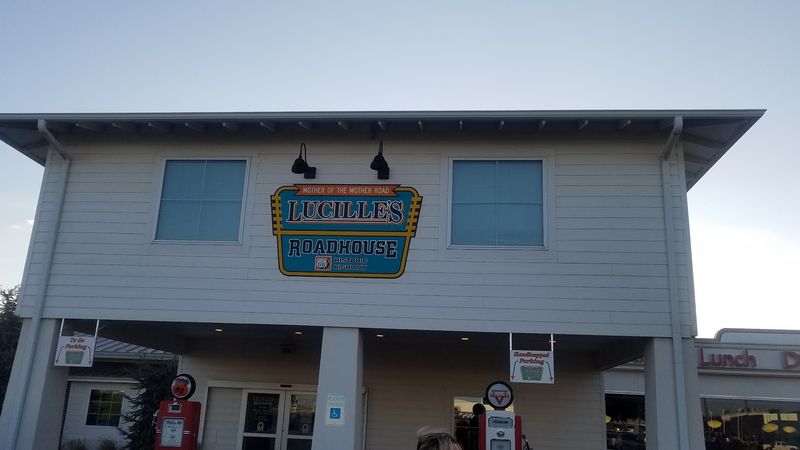
This part always makes the station feel more intimate to me. Lucille and Carl Hamons lived upstairs with their children, which means the place was never just a roadside business with closing hours and a lock on the door.
It was home, layered right on top of work.
When you know that, the building starts reading differently. The upper story is not just an architectural quirk anymore.
It becomes the quiet proof that family routines, meals, conversations, and ordinary evenings happened right above the comings and goings of the road.
I think that mix is why the station still feels so alive in memory. Travelers were not pulling into some detached operation run by faceless people.
They were entering a place where the owners were deeply rooted, where hospitality came from real life and not some marketing idea.
There is something especially moving about that on Route 66, where so many stories blur into movement and distance. At Lucille’s in Oklahoma, the road met a household, and that gives the site an emotional weight you do not always expect from an old service station.
You can almost picture lights upstairs after sunset while another car rolled in below looking for help and a friendly voice.
The Landmark Status That Feels Deserved
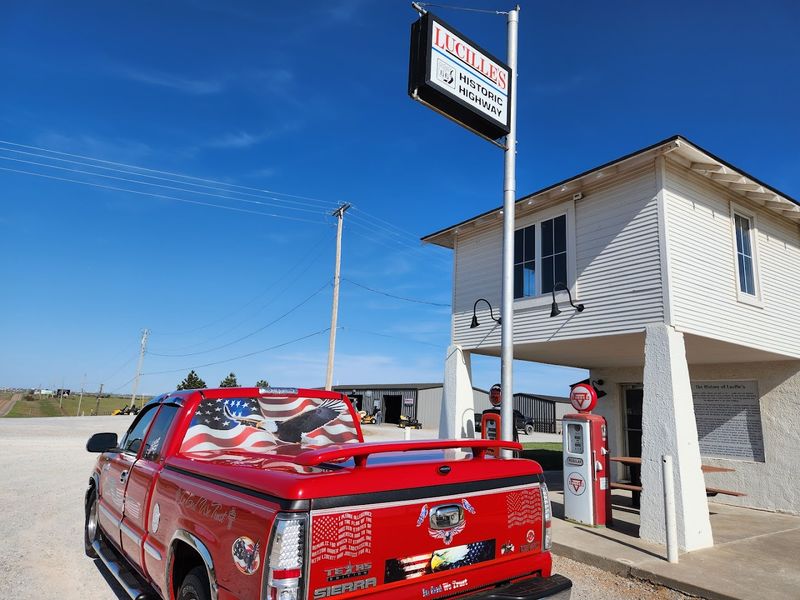
Some historic designations feel formal and distant, but this one makes perfect sense the moment you see the station. Lucille’s is listed on the National Register of Historic Places, and honestly, it would be hard to argue otherwise once you spend even a few minutes there.
The place carries its significance without needing a sales pitch.
What matters is not just age or rarity, though those certainly count. It is the way the station still tells a complete story about travel, work, family, and the culture that grew around Route 66.
You are looking at a structure that still explains a piece of American road life in plain view.
I also like that the recognition helps protect the site without draining it of personality. Sometimes preservation can make a place feel sealed off, but that is not the vibe here.
Lucille’s still feels approachable, like it belongs to curious travelers as much as to historians.
That balance is a big reason this stop stays with people. In Oklahoma, where Route 66 history runs deep, this station holds its ground as something more than a roadside relic.
It feels preserved for a reason, and that reason is easy to understand when you are standing there, quietly taking it all in.
The Care That Keeps It From Fading Away
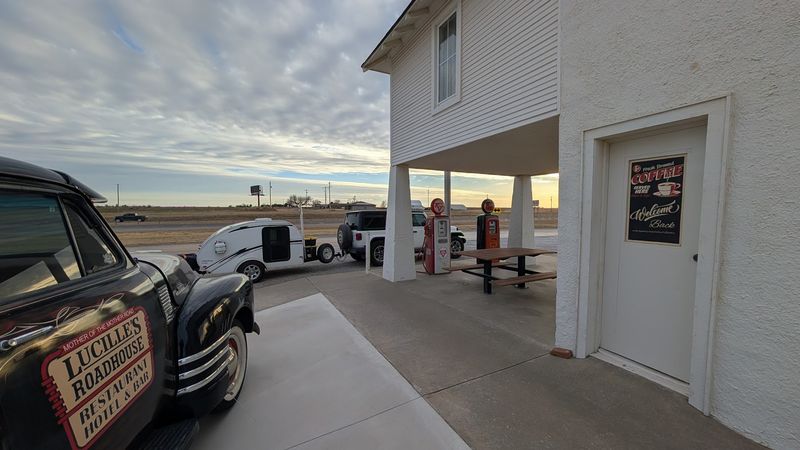
Places like this do not survive by accident, and I think that is worth saying out loud. Lucille’s still looks cared for because people chose not to let it slip into the background and disappear.
That kind of steady attention matters more than visitors sometimes realize.
The restoration and ongoing upkeep help the station stay legible, if that makes sense. You are not squinting through neglect trying to imagine what used to be there.
The essential character is still visible, which lets the story come through clearly without turning the place into something overly polished.
I appreciate that balance so much, especially on old road corridors where preservation can go in awkward directions. Here, the care feels respectful rather than theatrical.
The station remains photogenic, yes, but it also still feels grounded, like a real piece of Oklahoma that was looked after by people who understood what made it special.
That is a gift to everybody who comes along later. You get to stop, linger, and connect with the site instead of just mourning what was lost.
In a way, the upkeep becomes part of the story too, because Route 66 has always depended on people who believed these roadside places were worth saving before they slipped quietly out of view.
The Legacy That Shows Up Down The Road
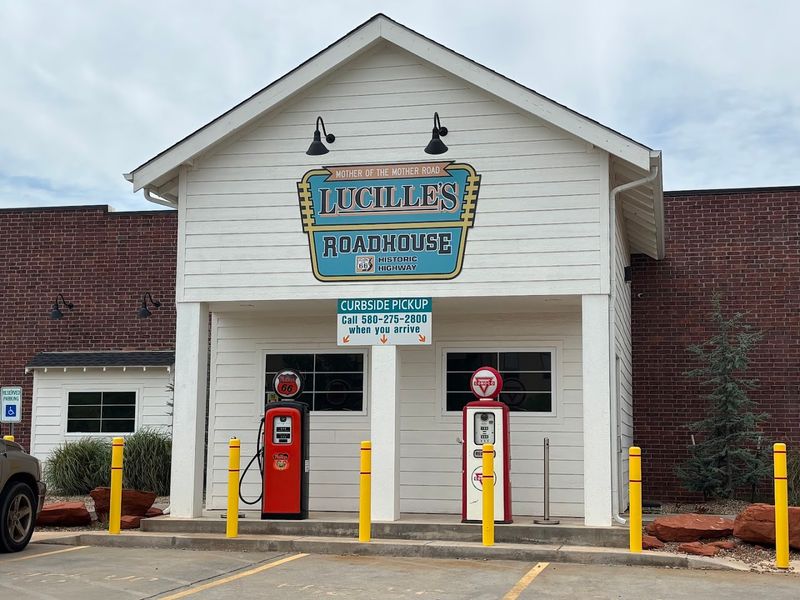
What is nice about Lucille’s is that the story does not stop at the edge of the property. You can see its influence ripple outward, including in Weatherford, where Lucille’s Roadhouse takes inspiration from the station’s memory and hospitality.
That kind of afterlife feels fitting for a place so tied to human warmth.
I am usually a little cautious when old roadside history gets turned into a theme, but this connection lands differently. It feels more like a tribute than a gimmick.
The reason is simple: Lucille’s legacy was never just visual, it was about how people were treated when they showed up needing a break from the road.
That idea still resonates because every long drive eventually becomes about more than mileage. You remember where somebody was kind, where a place felt sincere, and where the stop itself became part of the trip.
Lucille’s story has that kind of staying power, and Oklahoma has clearly kept space for it.
By the time you leave the original station, you understand why the name kept traveling. Some places generate stories, and some places become a shorthand for a feeling people want to recreate.
Lucille’s belongs in that second category, which may be the clearest sign that its spirit never really left Route 66 at all.
The Marker That Tells You To Slow Down
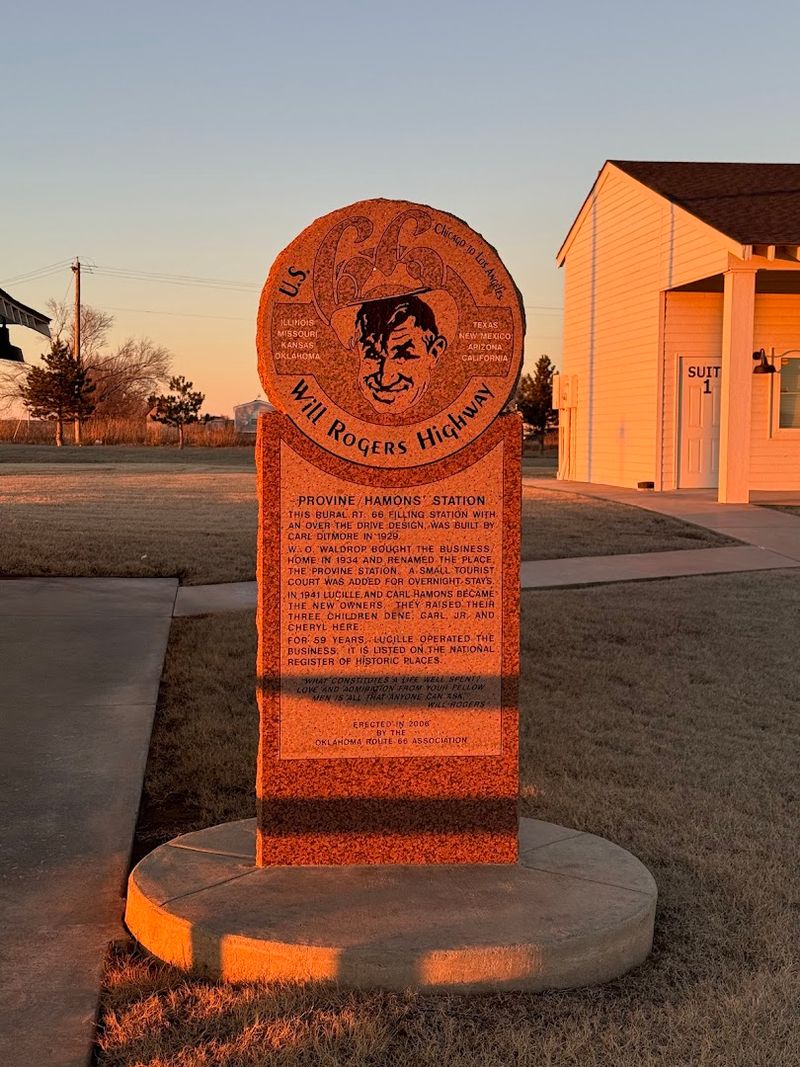
By the end of the visit, the historical marker almost feels like a friend catching you before you leave. It gives shape to everything you have been sensing while standing there, filling in the names and context behind the building’s quiet presence.
Instead of flattening the experience, it deepens it.
I always like when a marker does more than toss out facts, and this one works because the station already feels alive before you read a word. Then the stories click into place.
You start connecting the family, the travelers, and the road itself in a way that turns a simple stop into something much more personal.
There is also a Will Rogers Highway marker nearby, which adds another layer to the setting without stealing focus. Together, they remind you that this stretch of Oklahoma carries a lot of memory in a relatively small space.
The road may keep moving, but the past still knows how to stand still here.
That is probably the best reason to visit Lucille’s Service Station. You do not leave with the feeling that you merely looked at an old building.
You leave feeling like you briefly stepped into the everyday heart of Route 66, and for a little while, the Mother Road sounded human again.
