You know that feeling when you walk into a place and your brain just short-circuits for a second? Like, wait, am I still in Oklahoma?
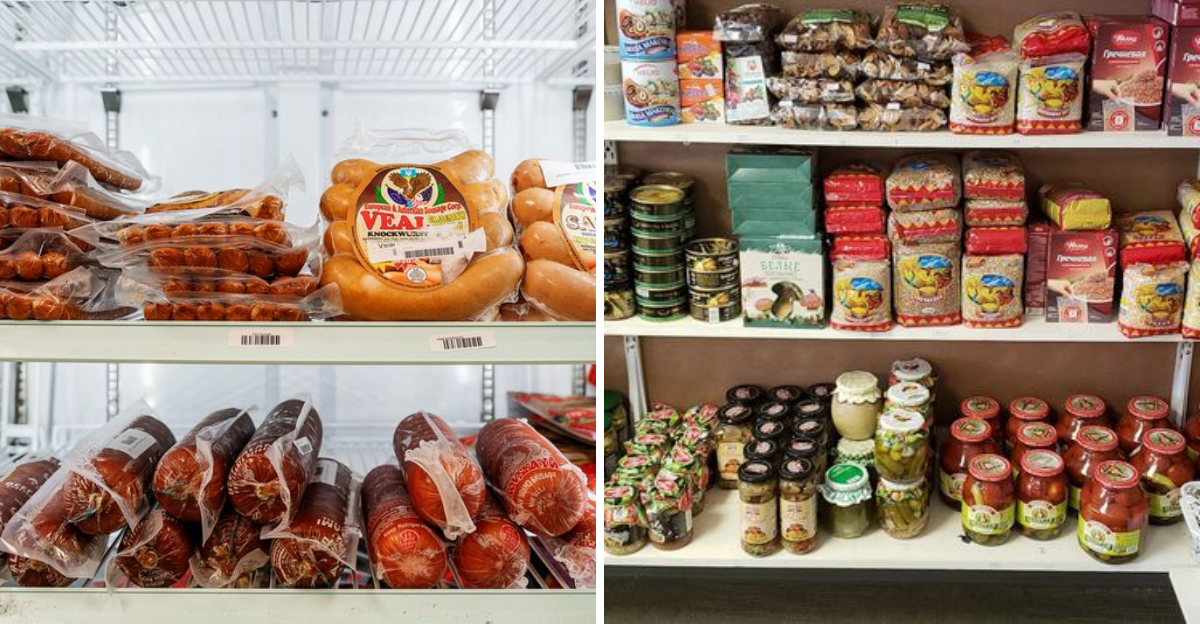
That was exactly my reaction the first time I stepped through the door of a small family-owned grocery store in Oklahoma City. Shelves packed with Eastern European chocolates, cured meats, pickled everything, and soft drinks I had only ever seen in photos from my friends’ home countries.
It felt less like a grocery run and more like an accidental passport stamp. This is not your average corner store, and it is absolutely worth the detour.
Keep reading, because every single section of this article is going to make you want to drop what you are doing and drive there right now.
The First Step Inside Feels Like Teleportation
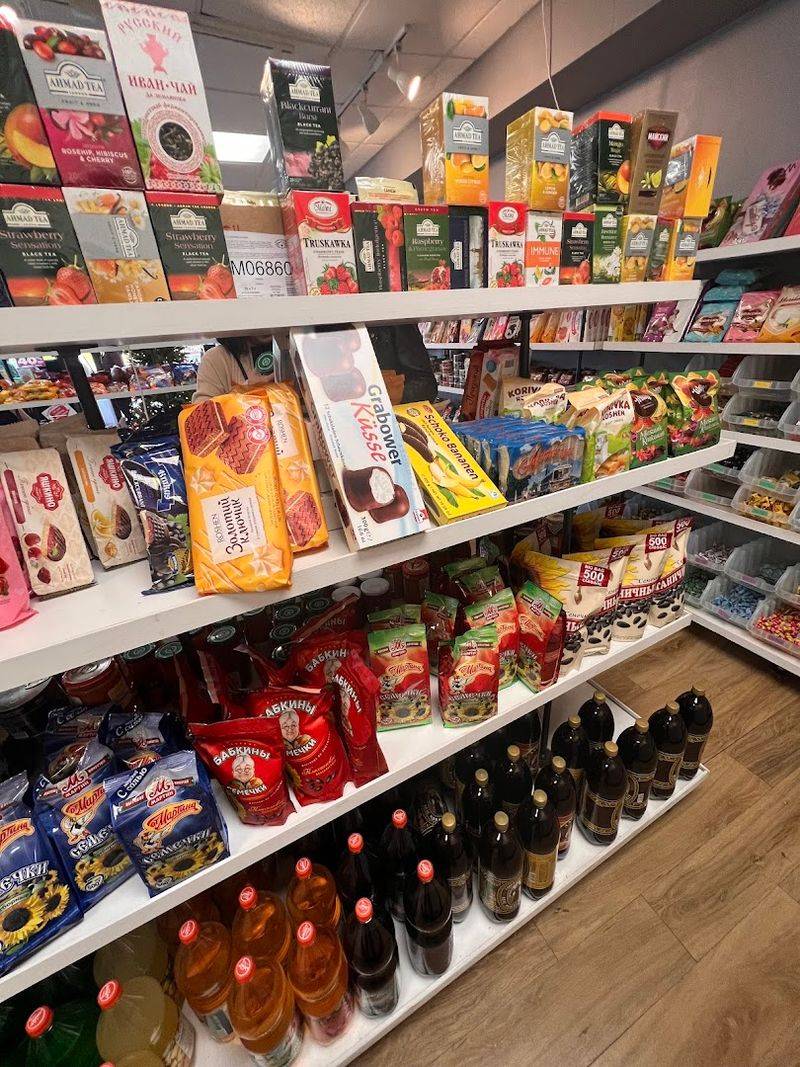
Walking in European Store for the first time, you half expect someone to stamp your wrist and hand you a boarding pass. The shelves are stacked floor to ceiling with products you cannot find at any major supermarket chain.
Labels in Ukrainian, Polish, and Romanian face you from every direction.
It is compact, yes. But compact in the best possible way, like a really good short story.
Every inch of space is used intentionally. There are no empty shelves here, no sad clearance sections, no dusty corners.
The smell hits you first. It is warm, faintly sweet, and earthy all at once.
Smoked meats, imported chocolates, and something baked linger in the air. You slow down automatically because your senses need a moment to catch up.
This is a grocery store that doubles as a cultural experience. You are not just picking up food.
You are getting a geography lesson, a history bite, and a flavor adventure all in one small room. First-timers tend to stand near the entrance for a beat too long, just taking it all in.
Go ahead and do it. Nobody will judge you.
It is genuinely one of those spaces that earns its wow moment before you even touch a single product on the shelf.
The Chocolate Selection Deserves Its Own Passport
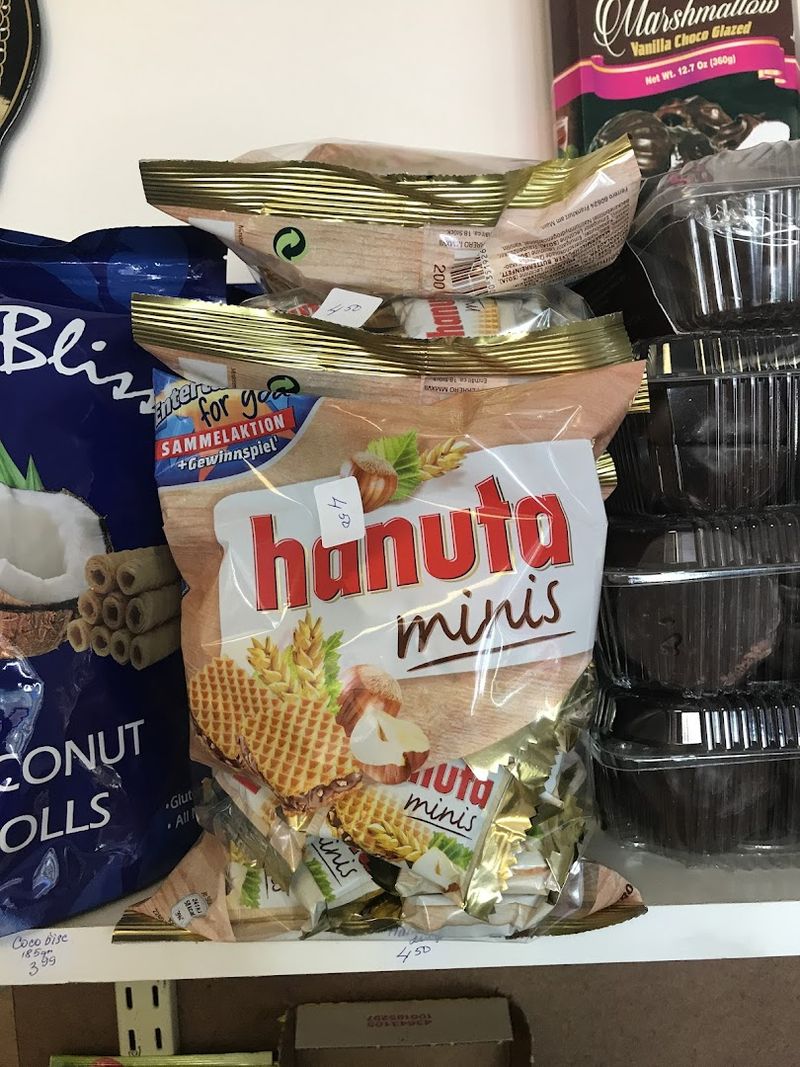
Forget everything the candy aisle at your local supermarket ever taught you. The chocolate at European Store operates on a completely different level.
Eastern European chocolate has a richness and depth that most American brands simply do not match, and this store carries a wide variety of it.
There are individually wrapped candies sold by the pound, which is dangerous information to have. You can mix and match flavors, textures, and fillings without committing to a full box.
It is the kind of freedom that turns a five-minute errand into a thirty-minute tasting session.
Some of the chocolates have wafer layers inside. Others are filled with fruit jam, nuts, or creamy praline.
A few are simple dark chocolate bars with barely any frills, and somehow those are the ones you end up eating in the parking lot before you even get home.
People who grew up in Eastern Europe often talk about how food from their childhood carries a specific emotional weight. This chocolate selection seems to understand that.
For visitors who are new to these flavors, it is a wonderful entry point. For those reconnecting with their roots, it is something much more personal.
Either way, leave room in your bag. You will want to take more than you planned.
Cured Meats and Sausages Straight From the Old Country
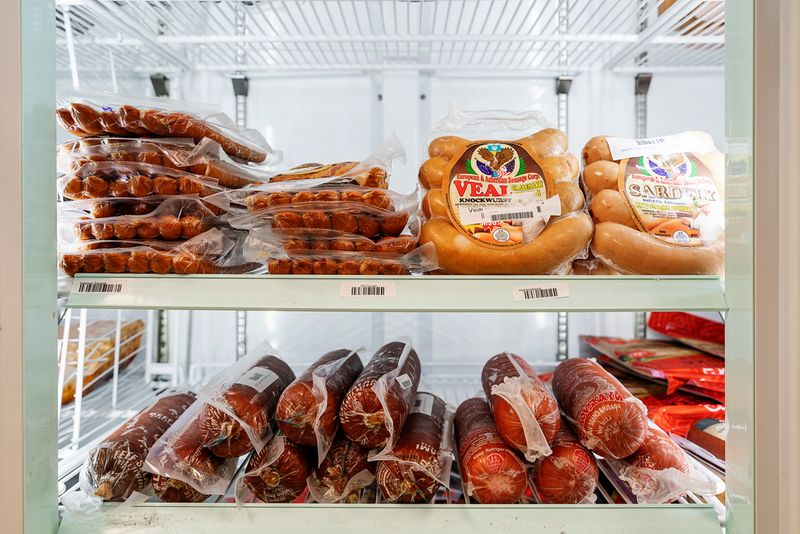
There is something almost theatrical about a well-stocked deli case. And the one here does not disappoint.
Sausages, smoked meats, and cured selections line the display in a way that makes you want to point at everything and ask what each one is.
Kielbasa is probably the name most people recognize walking in. But the selection goes well beyond that.
There are smoked links with a deep paprika color, pressed meats with visible herbs and spices, and cuts that carry a smokiness so specific it almost tells you exactly which region they came from.
Eastern European charcuterie has centuries of tradition behind it. The curing techniques, the spice combinations, the specific cuts chosen for preservation all reflect a culinary history that predates refrigeration.
Eating one of these sausages is not just a snack. It is a connection to something much older.
For those who love building a proper European-style open-faced sandwich at home, this is the place to source your proteins. Pair one of these meats with the store’s imported rye bread and a smear of something pickled, and you have yourself a meal with actual soul.
No fancy kitchen equipment required. Just good ingredients and a little curiosity about flavors you may have never tried before.
Pickled and Brined Goods Are a Whole Mood
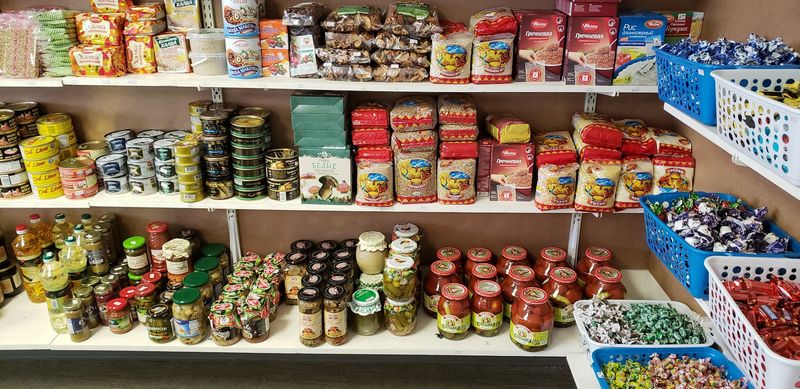
Pickling is not just a preservation method in Eastern European cuisine. It is practically a love language.
And the selection at this store takes that philosophy seriously. Brined pickles, pickled green tomatoes, fermented cabbage, and preserved vegetables fill an entire section of the shop.
Brined green tomatoes are a particular standout for first-timers. If you have never tried one, the flavor is sharp, tangy, and deeply savory in a way that is hard to describe but impossible to forget.
They are not for the faint of heart, but they convert skeptics fast.
The pickled goods here come in sizes ranging from small personal jars to larger quantities for serious home cooks. Many of the products are imported directly, which means the brine recipes reflect authentic regional traditions rather than a watered-down commercial version.
That difference matters more than you might expect.
Fermented and pickled foods have had a huge moment in food culture recently, with more people paying attention to gut health and probiotic benefits. But these products were not made trendy by a wellness influencer.
They were made by grandmothers in Eastern Europe who understood long before anyone else that food preserved with care is food worth eating. Grab a jar.
Or three. You will find yourself coming back for more faster than you planned.
The Bread Section Might Change Your Life
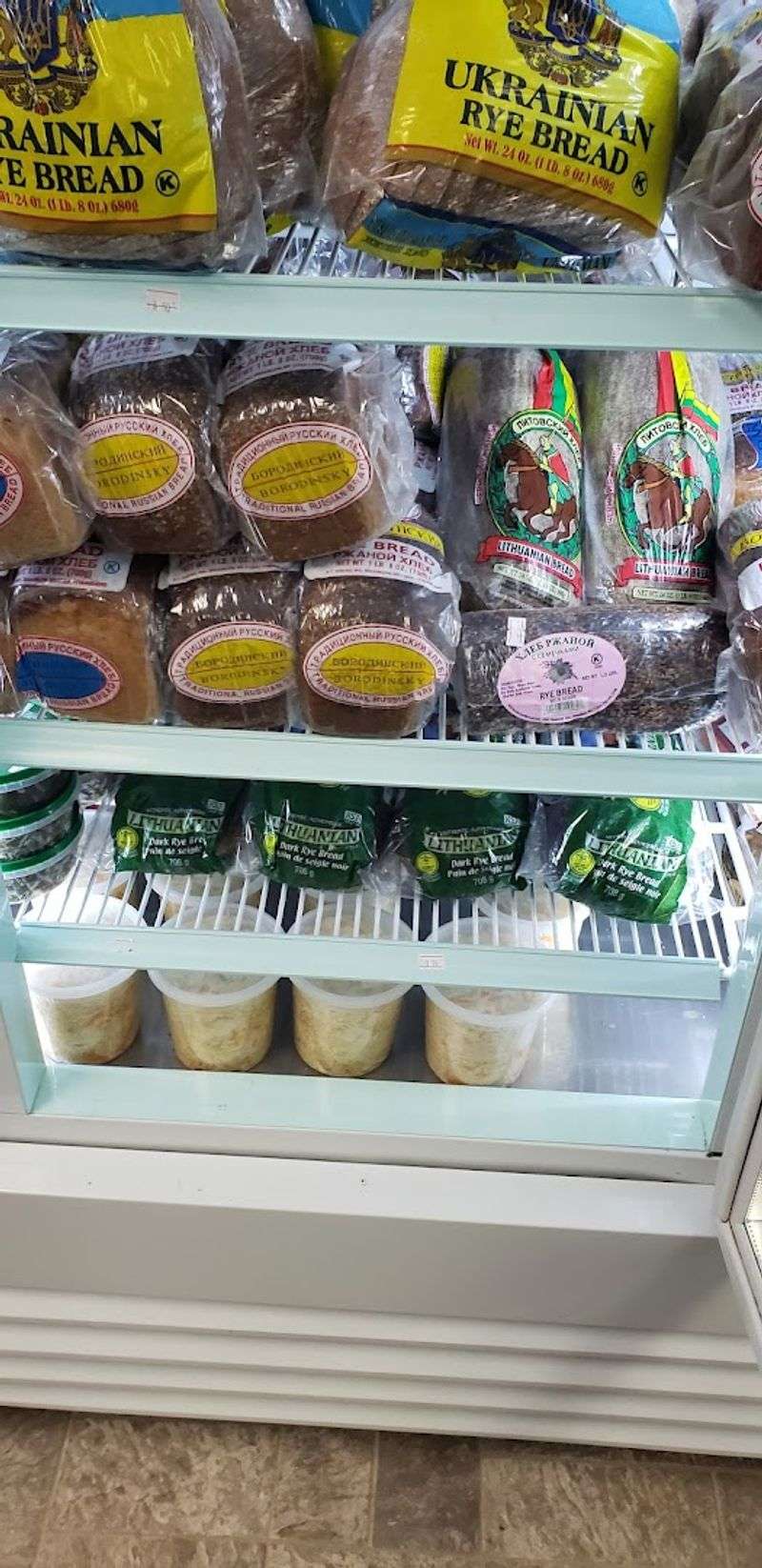
Here is something that surprises almost every first-time visitor: the bread is kept in the fridge. That might seem strange at first, but it makes complete sense once you understand the product.
Dense, dark, rye-based Eastern European loaves have a moisture content and a fermentation profile that keeps best when chilled.
This is not the fluffy white sandwich bread that dissolves in your mouth in two seconds. Eastern European bread has substance.
It has a tight crumb, a slightly sour flavor from long fermentation, and a crust with real bite. It holds up under toppings without turning soggy, which makes it perfect for the classic butterbrot style open-faced sandwich.
Butterbrot, for the uninitiated, is essentially a thick slice of dark bread topped with butter and layered with whatever your heart desires. Smoked fish, cured meat, cheese, pickles.
It is a simple concept executed with ingredients that have actual flavor. The bread from this store makes it work the way it is supposed to.
Rye bread has deep roots in Eastern European food culture, particularly in Ukraine, Russia, and the Baltic states. It was a staple long before artisan baking became fashionable.
Eating a slice here feels like a small act of connection to that history. And honestly, it just tastes really, really good.
Dairy Products and Cheese Worth Every Bite
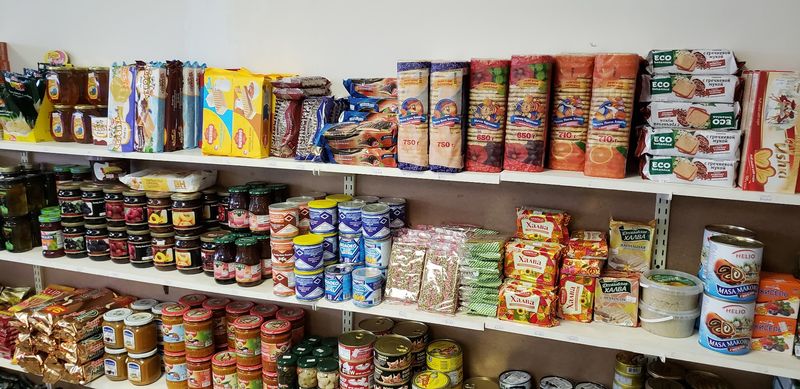
Dairy in Eastern European cuisine is a serious business. Smetana, which is a thick cultured sour cream far richer than anything you find in American supermarkets, is a staple.
So is tvorog, a soft farmers cheese with a crumbly, slightly grainy texture and a clean milky flavor.
The dairy section here carries products that many Eastern European immigrants describe as the hardest thing to find in the United States. Not because they are exotic, but because the commercial versions available in mainstream stores just do not taste the same.
The fat content, the culturing process, the texture all differ in ways that matter enormously when you are cooking traditional recipes.
Tvorog on its own with a drizzle of honey is a snack worth making time for. Mixed into blintzes or used as a filling for pelmeni or varenyky, it becomes something even more special.
The store carries it in quantities suitable for home cooking, not just tasting.
For visitors who have never explored Eastern European dairy, this is a low-risk, high-reward starting point. The flavors are familiar enough to be approachable but distinct enough to feel like a discovery.
Cheese lovers especially tend to linger in this section longer than anywhere else in the store. Fair warning: the basket fills up fast here.
Frozen Foods Section Is a Shortcut to a Home-Cooked Meal
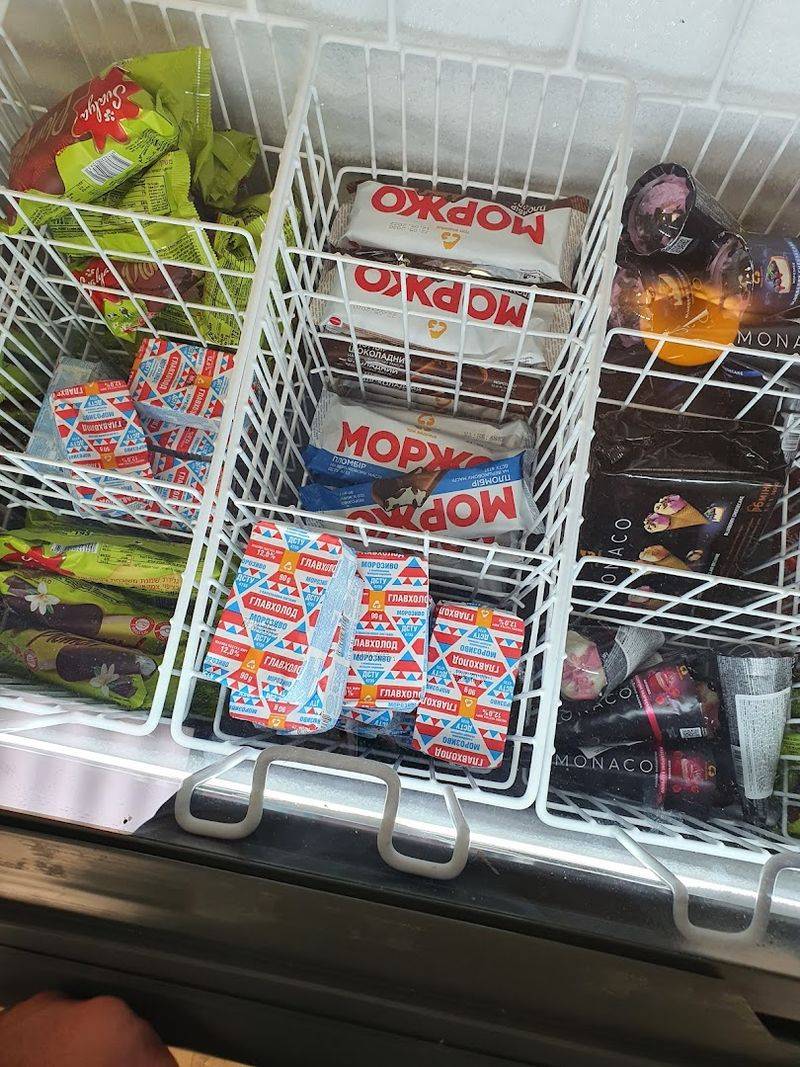
Not everyone has the time or the skill set to make pelmeni from scratch. And honestly, even people who do sometimes just want dinner on the table in twenty minutes without the whole production.
The frozen foods section here understands that completely.
Pelmeni are small Russian dumplings filled with meat, traditionally pork and beef, and they cook in boiling water in about ten minutes. Served with smetana and a little butter, they are comfort food in its most efficient form.
Varenyky, the Ukrainian version often filled with potato or cheese, are equally satisfying and just as easy to prepare.
The frozen section also carries other ready-to-cook items that reflect the breadth of Eastern European home cooking. These are commercially produced but often based on traditional recipes.
For people who grew up eating these foods, finding them in a freezer section in Oklahoma City is a moment that lands somewhere between relief and joy. For newcomers, it is an invitation to try something new with minimal effort and maximum reward.
The learning curve for cooking any of these items is almost zero. Boil water.
Add dumplings. Wait ten minutes.
Eat well. That is the kind of cooking anyone can get behind on a busy weeknight.
Soft Drinks and Beverages You Will Not Find Anywhere Else
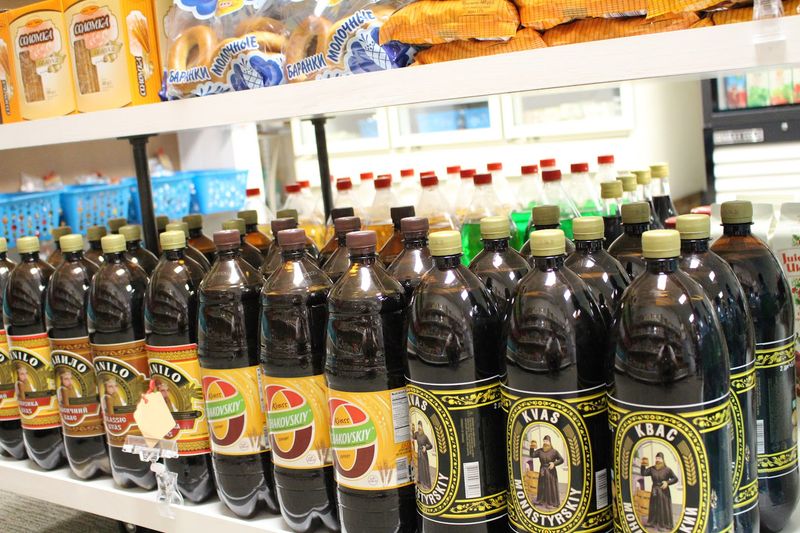
The beverage aisle here is its own adventure. Eastern European soft drinks are a category that most people in Oklahoma have simply never encountered, and the lineup on these shelves is legitimately fascinating.
Kvas is probably the most iconic of the bunch. It is a fermented beverage made from bread, dark and slightly tangy with a yeasty undertone that does not taste like anything else on earth.
It sounds strange. It is worth trying anyway.
People who grew up drinking it describe it as deeply nostalgic. People trying it for the first time usually end up finishing the bottle out of curiosity.
Beyond kvas, there are fruit-flavored sodas with flavor profiles that lean tart rather than sweet, imported juices in flavors like sea buckthorn and black currant, and dairy-based drinks like kefir that blur the line between beverage and light meal.
Black currant in particular is a flavor that runs all through Eastern European food culture. It shows up in jams, candies, drinks, and desserts.
If you have never tasted it, it is somewhere between tart berry and floral complexity. One sip and you start understanding why it is such a staple.
The beverage section alone could justify the trip for anyone with a curious palate and a love for flavors outside the usual cola and lemon-lime routine.
Sweets and Snacks Cover Every Corner of Eastern Europe
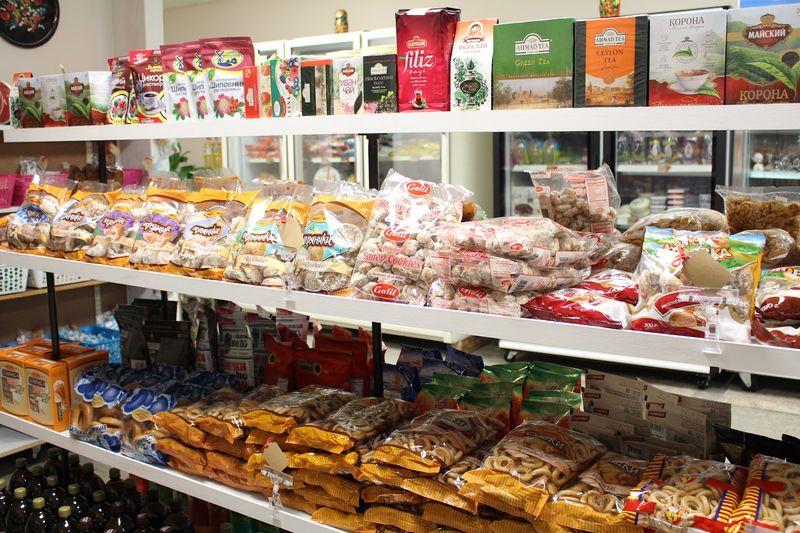
The snack section is where things get truly unpredictable in the best way. Eastern European sweets are not just one thing.
They span an enormous range of textures, flavors, and regional traditions. This store pulls from multiple countries, which means the variety on display is genuinely impressive for such a compact space.
Wafer cookies filled with hazelnut cream, honey cakes layered with sour cream frosting, caramel-filled chocolates wrapped in twist papers, sesame candies, and sunflower seed snacks all share shelf space here. The sunflower seeds in particular have their own loyal following among regular customers.
They are roasted and salted in a way that makes the commercial versions you find at gas stations seem forgettable by comparison.
Jams are another highlight. Eastern European fruit preserves tend to have a higher fruit-to-sugar ratio than what most American brands offer.
That means you actually taste the fruit. Sour cherry, plum, and apricot varieties are common, and each one works beautifully spread on a thick slice of rye bread.
Browsing this section without picking up at least five things is nearly impossible. Everything has a story behind it, a region, a season, a grandmother who made it a certain way for decades.
The snacks here are not just food. They carry culture in their packaging, and that makes every bite a little more interesting.
Why This Store Matters More Than You Might Expect
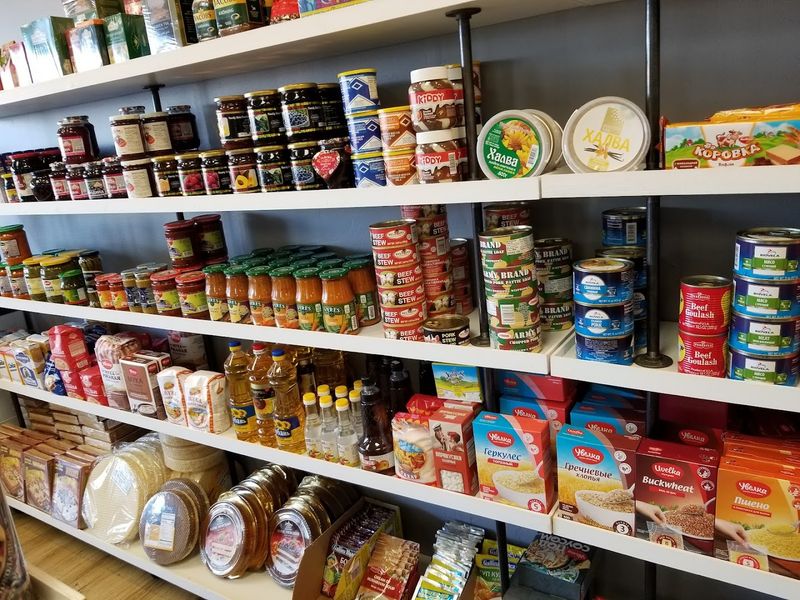
A store like this one does not exist by accident. It exists because there is a community that needs it.
Oklahoma City has a growing Slavic population, and for many families, having access to the foods they grew up with is not a luxury. It is a lifeline to identity and memory.
Food is one of the most powerful ways humans maintain connection to their culture. When you are thousands of miles from the place where you were born, finding a jar of the jam your grandmother used to make or the bread you ate every morning before school carries a weight that is hard to put into words.
This store provides that for people every single day.
For visitors who come out of curiosity rather than nostalgia, the experience is still meaningful. Spending time in a space that reflects a culture different from your own, handled with care and authenticity, is a kind of education that no textbook can replicate.
You leave knowing a little more than you did when you arrived.
European Store Oklahoma is located at 3604 N May Ave Suite B, Oklahoma City, OK 73112. It is open Tuesday through Saturday from 11 AM to 7 PM and Sunday from 11 AM to 5 PM.
Monday is the one day it stays closed. Plan accordingly, and go hungry.
You will want to eat something in the parking lot before you even make it home.
Dear Reader: This page may contain affiliate links which may earn a commission if you click through and make a purchase. Our independent journalism is not influenced by any advertiser or commercial initiative unless it is clearly marked as sponsored content. As travel products change, please be sure to reconfirm all details and stay up to date with current events to ensure a safe and successful trip.
