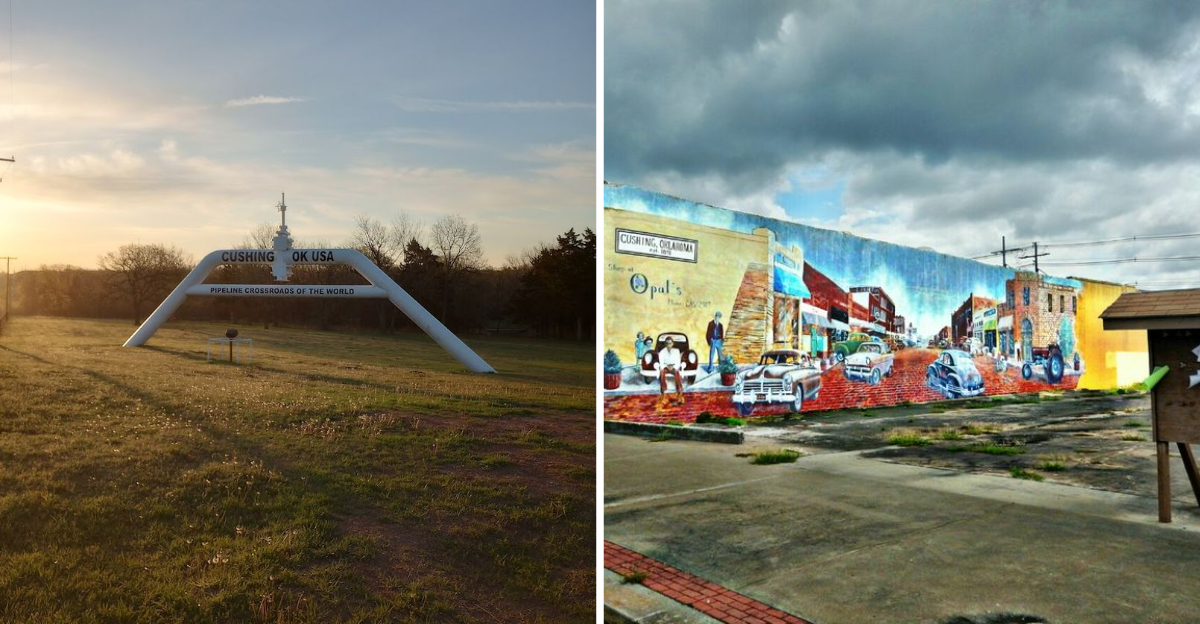
That town in Oklahoma that stops you mid step and makes you look around a little more carefully. The streets feel lived in, the kind that hold stories in their cracks and corners.
I first came through here on a road trip across the state, not expecting much from a small north-central Oklahoma town, and left genuinely fascinated. Old infrastructure pokes out from behind modern storefronts, pump jacks still nod slowly in churchyards and empty lots, and roadside signs made of actual pipe and valve tell you exactly where you are.
This is a place where the oil boom did not just pass through, it settled in, rearranged everything, and never fully left.
A rare small town that earned its place in history and still wears it every single day.
From Farmland to Oil Fields: How Cushing Got Its Big Break

Before the oil came, Cushing was just a quiet farming community that had grown up after the Land Run of 1891. There were no paved streets, no telephones, and no electric lines.
It was the kind of place travelers passed through without stopping.
Then 1912 happened. The discovery of the Cushing oil field changed everything almost overnight, turning a sleepy agricultural town into one of the most talked-about places in the entire country.
The speed of that transformation is honestly hard to wrap your head around even now.
High-quality crude oil was being pulled from the ground in massive quantities, and the town had the good fortune of sitting near major rail lines that made transporting it easy. By 1914, Cushing became the first U.S. oil field to produce over one million barrels in a single year.
That is not a small footnote, that is a defining moment. The boom brought workers, money, chaos, and ambition all at once.
The town scrambled to keep up with the demand for housing, roads, and basic services. That frantic energy is baked into the identity of Cushing even today, and you can feel traces of it just by paying attention to how the town is laid out.
The Pipeline Crossroads of the World Title That Actually Means Something
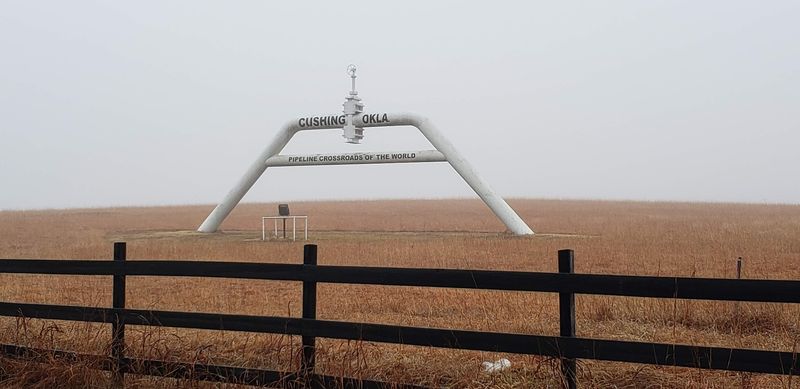
Most towns have a nickname slapped on a water tower or a welcome sign that nobody really thinks about. Cushing earned its title the hard way.
The sheer volume of oil being produced here in the early twentieth century required an enormous amount of storage and transportation infrastructure, and the town delivered.
The first oil storage tank was built in Cushing in 1914. More than fifty additional tanks followed in the years after that.
Today, the area holds somewhere between 91 and 100 million barrels of crude oil storage capacity across roughly 350 aboveground tanks packed into a surprisingly small geographic footprint.
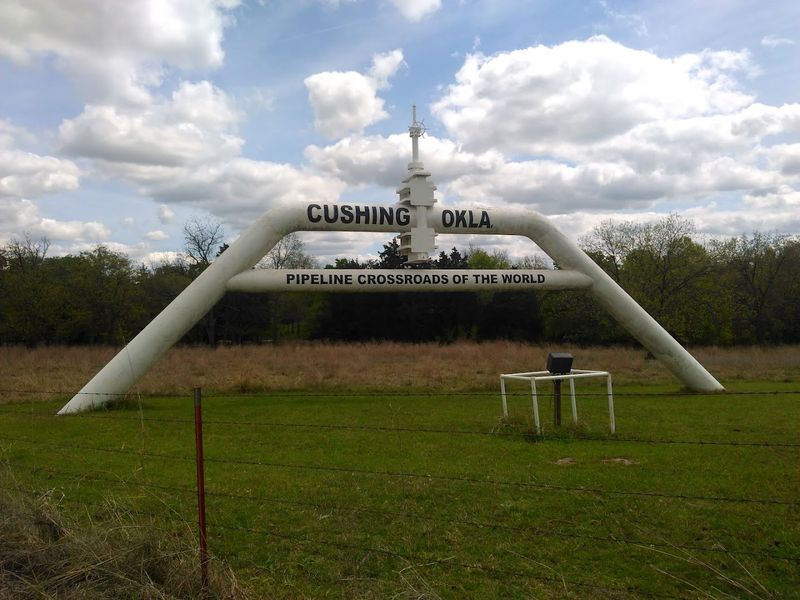
That makes Cushing the largest onshore oil storage facility in the world, and the signs near the major highways are literally constructed from pipe and valve to drive that point home. I remember seeing one of those signs and thinking it was a quirky local art installation before realizing it was completely serious.
Pipelines flow in from oil fields all across North America and flow out to refineries and export terminals. The infrastructure is staggering in scale.
For a town of around 8,000 people, the weight of what Cushing handles for the global energy market is genuinely mind-blowing.
West Texas Intermediate and the Trading History That Started Here
Not many small Oklahoma towns can say they helped shape the global oil market, but Cushing can. In 1929, the world’s first oil futures contract for delivery from Cushing’s storage tanks was traded on the New York Mercantile Exchange.
That single transaction planted a seed that grew into something enormous.
Cushing eventually became the official price settlement point for West Texas Intermediate crude oil, which is one of the primary benchmarks used in global oil pricing today. When energy traders around the world talk about WTI prices, they are talking about oil tied directly to this town.
It is the kind of connection that makes you pause when you are standing on a quiet street in a small Oklahoma city. The financial decisions happening in high-rise offices in New York and London have a direct line back to the tank farms sitting just outside Cushing’s city limits.
That is a remarkable kind of influence for any place to hold, let alone one that started as a farming settlement. The history here is not just local color, it is genuinely woven into how the world buys and sells energy.
Knowing that context makes every pump jack you spot around town feel a lot more significant.
Pump Jacks in the Churchyard: Oil Living Side by Side with Everyday Life
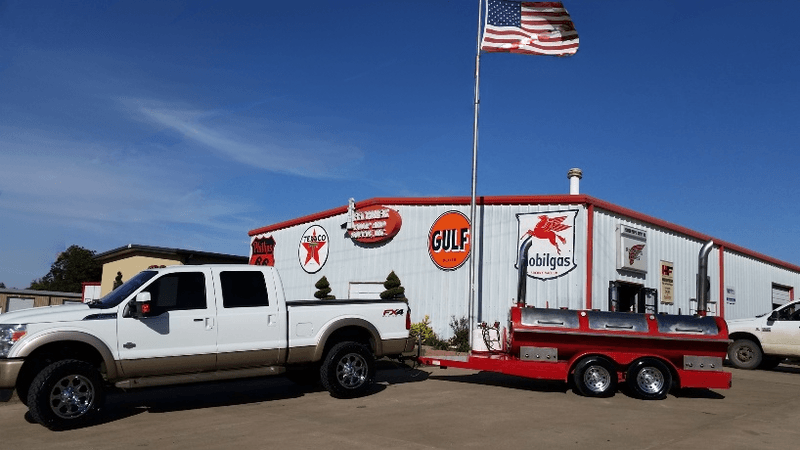
One of the strangest and most memorable things about Cushing is how casually the oil industry coexists with daily life. Pump jacks are not tucked away in remote industrial zones out here.
They operate in backyards, schoolyards, churchyards, and vacant lots right in the middle of town.
There is something almost surreal about watching one of those slow, nodding machines work away next to a swing set or a parking lot. You get used to it quickly, but the first time you see it, it genuinely stops you cold.
It is a living reminder that the oil boom did not just reshape Cushing economically, it physically embedded itself into every corner of the community.
The town has hosted over fifty different refineries throughout its history, and the landscape reflects that layered industrial past in ways both obvious and subtle. Old infrastructure blends with newer construction, and the rhythm of the pump jacks gives the whole town a kind of slow, mechanical heartbeat.
There is no pretending the oil era is over here because the evidence is literally swinging in someone’s front yard. That transparency is oddly refreshing.
Cushing does not dress up its history or hide its working parts, and that honesty is a big part of what makes it worth visiting.
The Boomtown Chaos That Shaped a Community’s Character
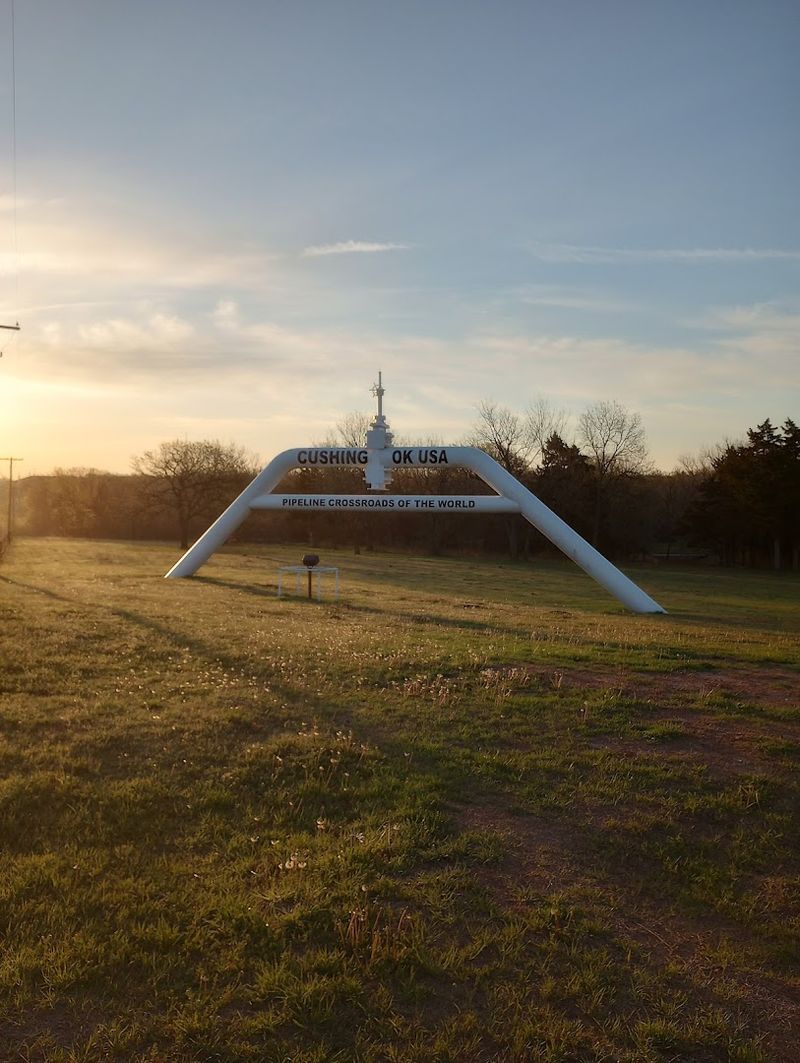
Growth that comes too fast always leaves marks, and Cushing’s boom era was no exception. When oil workers flooded in after the 1912 discovery, the town was completely unprepared.
There was not enough housing, not enough sanitation, and not nearly enough order to manage the sudden surge of people and money.
Crime increased. Conditions in worker camps were rough.
The streets that had been quiet farm paths suddenly had to handle the weight of an industrial rush. There is something almost cinematic about imagining what Cushing looked and felt like during those chaotic early years.
But communities that survive that kind of pressure tend to come out the other side with a toughness and resilience that quieter towns never develop. Cushing did survive it, and the character that emerged from those messy, disorganized years is still present in the way locals talk about their town.
There is a pride here that is not performative. It is the kind of pride that comes from knowing your community went through something genuinely hard and kept going anyway.
The boomtown chaos was real, but so was the community that formed in its wake. That combination of grit and history is what gives Cushing its particular kind of depth.
Exploring the Streets: What Downtown Cushing Looks Like Today
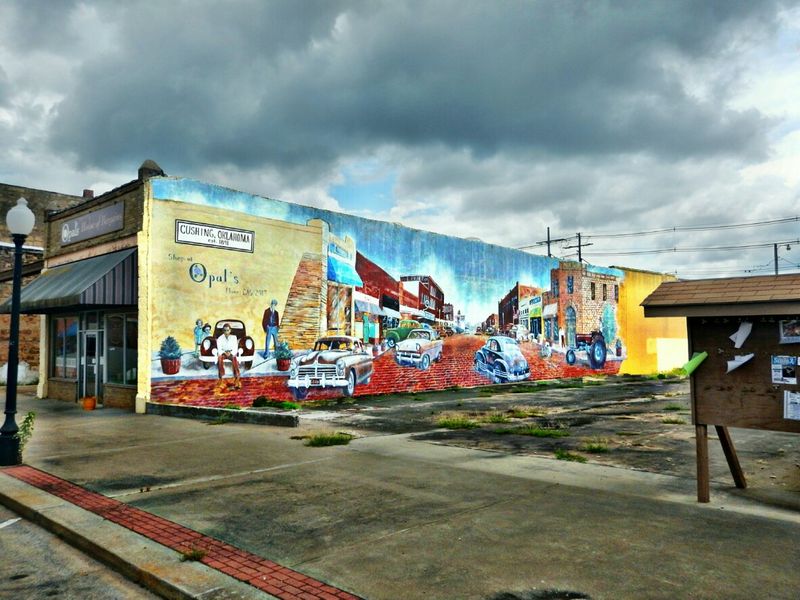
Downtown Cushing has that specific small-town energy that feels both familiar and a little frozen in time. The brick storefronts along the main streets carry the bones of a much busier era, and there are enough original architectural details left to make a slow walk genuinely interesting.
Local shops, diners, and community spaces fill the spaces between the echoes of the boom years. It is not a polished tourist destination with curated experiences around every corner, and that is honestly part of the appeal.
What you get instead is a real town doing real things, which is refreshing in its own way.
The layout of the streets reflects the rapid growth that happened during the early twentieth century, with blocks that expanded quickly to accommodate a booming population. You can still trace that history in the way certain areas feel more intentional than others.
Spending a morning just walking around without a specific agenda is one of the better ways to absorb what Cushing is actually about. The details reveal themselves slowly, a carved facade here, an old business sign there, a pump jack visible at the end of a residential street.
The town rewards curiosity, and that makes it a genuinely satisfying place to explore at your own pace.
Why Cushing Deserves a Spot on Your Oklahoma Road Trip List
Road trips through Oklahoma tend to follow the same well-worn routes, and a lot of travelers skip over the smaller towns without a second thought. Cushing is exactly the kind of place that gets overlooked, and that is a genuine shame because what it offers is surprisingly layered.
The combination of real industrial history, a tangible connection to global energy markets, and a small-town atmosphere that has not been scrubbed clean for tourism makes it stand out from more obvious destinations. There is substance here, not just scenery.
For anyone interested in American history, the story of how a farming settlement became the pipeline crossroads of the world in just a few decades is worth the detour on its own. Add in the visual interest of tank farms, pump jacks, and vintage architecture, and you have a destination that rewards the kind of traveler who likes to think while they explore.
Cushing sits in Payne County in north-central Oklahoma, easy to reach and often overlooked, which means you get the experience without the crowds. It is the kind of stop that you mention to people afterward and they say they have never heard of it, and you get to tell them they are missing out.
That is a good feeling.
Address: Oklahoma 74023, Cushing, Oklahoma
