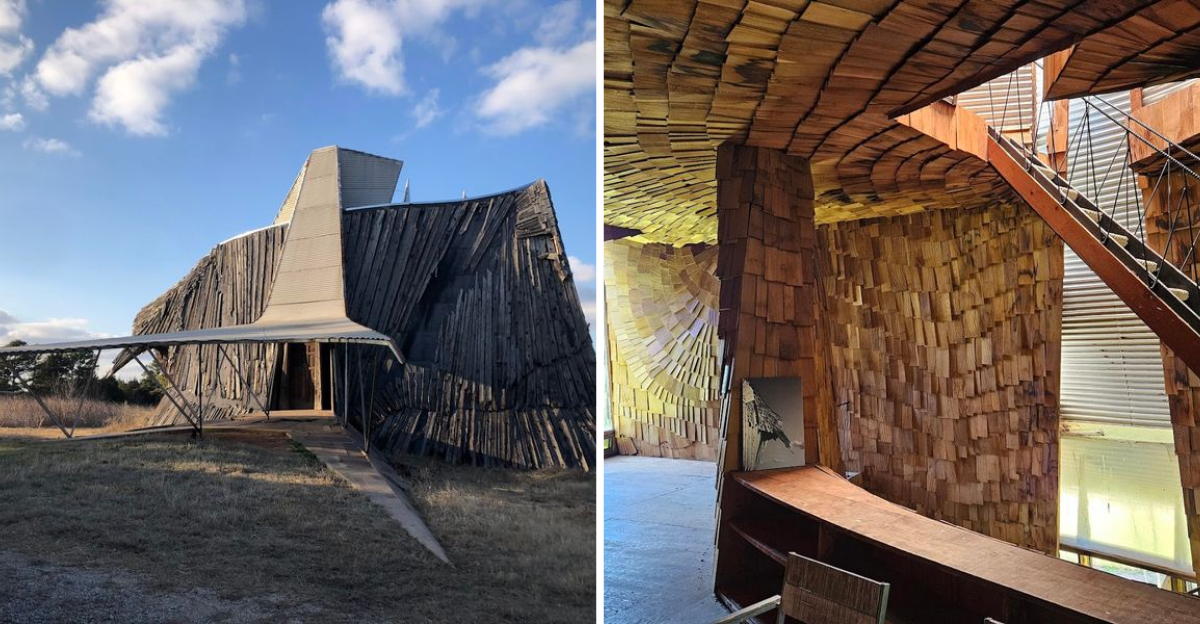
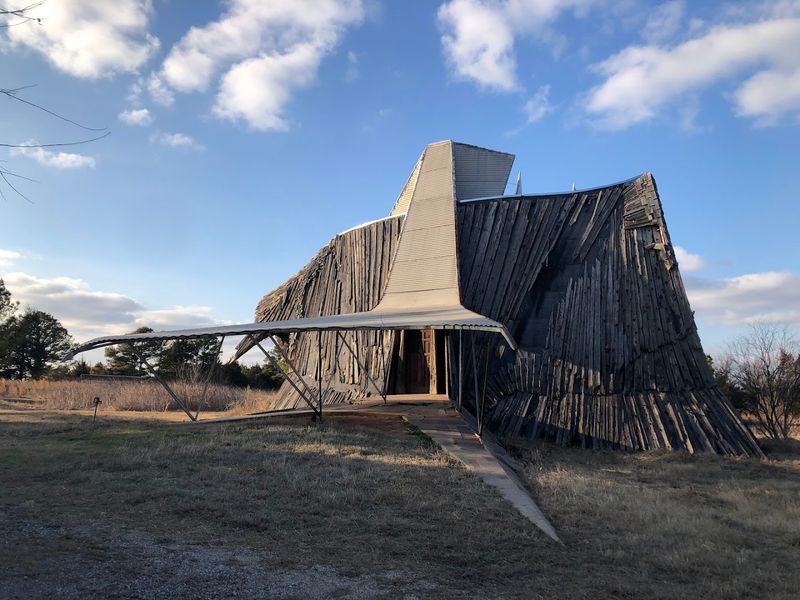
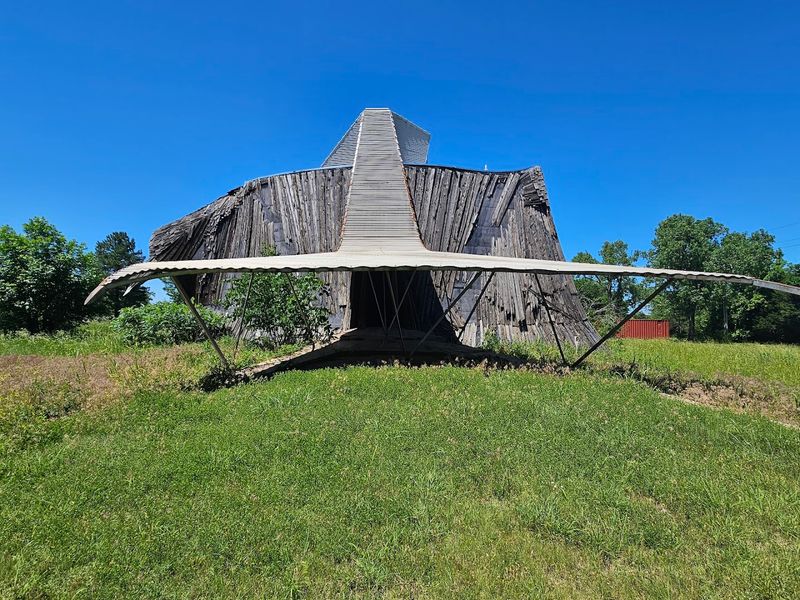
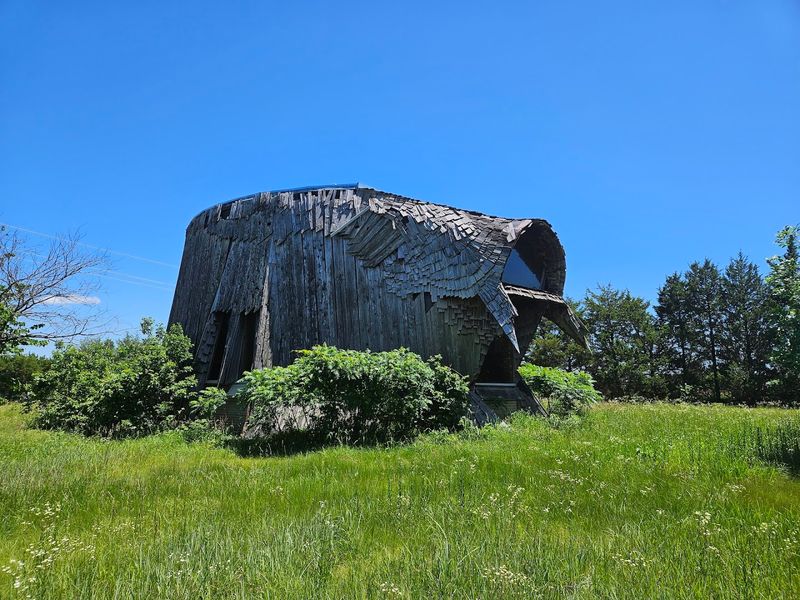
Places that stop you cold the moment you lay eyes on them. The first time I saw this Oklahoma building from the road, I genuinely thought I was looking at a living creature crouched in the landscape. Covered entirely in cedar shingles that ripple like feathers in the sun, this nineteen sixties architectural masterpiece blurs the line between structure and nature in the most extraordinary way.
Designed by a local architect, it has earned nicknames like the Prairie Chicken House and has been compared to a bison, a bird, a boat, and even a haystack. It sits quietly on a local road, holding decades of history and a kind of wild, organic beauty that photographs simply cannot capture. If you have ever wondered whether a building can feel truly alive, this is the one that will make you a believer.
The Architect Behind the Dream: Herb Greene’s Vision
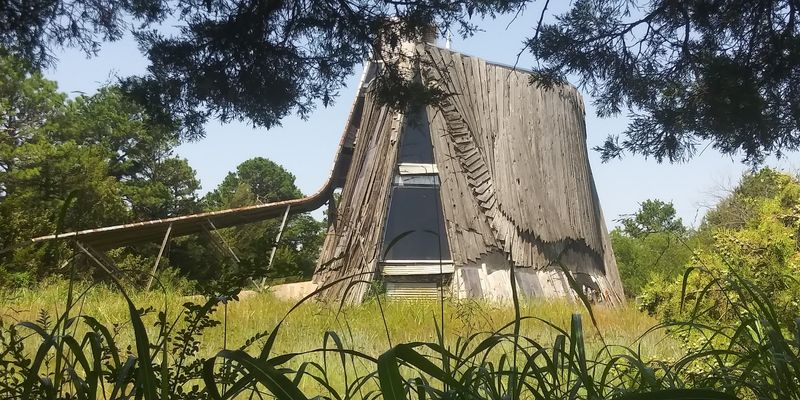
There are architects who design buildings, and then there are architects who seem to channel something deeper. Herb Greene was the second kind.
A professor at the University of Oklahoma, he completed Prairie House between 1960 and 1961, pushing organic architecture far beyond the boundaries his own mentors had set.
Greene studied under Bruce Goff and absorbed the principles of Frank Lloyd Wright, but Prairie House was never a copy of anyone else’s ideas. It was something entirely new.
Greene developed what became known as the American School of Architecture, a philosophy that treated buildings as extensions of the natural world rather than impositions on it.
What makes his vision so remarkable is that he was not just solving a design problem. He was asking what a building could feel like, what it could communicate, what kind of emotional experience it could create for the person standing inside it.
Prairie House was his answer to all of those questions at once. The result is a structure that feels less like a house and more like a philosophical statement made from wood and light.
Greene’s work here remains unlike anything else built before or since.
Cedar Shingles That Look Like Feathers Up Close
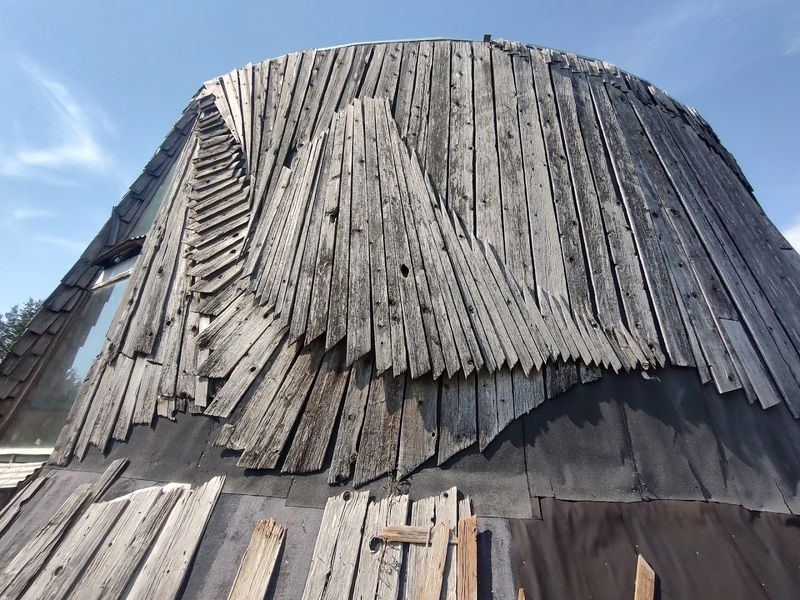
Up close, the exterior of Prairie House does something unexpected to your brain. Your eyes keep trying to decide whether you are looking at scales, feathers, or the rough texture of a prairie animal’s hide.
The entire surface, walls and ceiling alike, is covered in unfinished cedar shingles and boards arranged in patterns that ripple and shift depending on where you stand.
Greene deliberately chose cedar for its warmth, its organic color, and the way it ages naturally without demanding much upkeep. Over decades, the wood has taken on a soft silvery-brown tone that blends into the Oklahoma landscape as if the house grew there on its own.
The patterns are not random. They were carefully designed to create what Greene called complex rhythms, fractures, and metaphors of scales and feathers, giving the surface a sense of motion even when everything is completely still.
Running your eye along those overlapping layers, you start to understand what he meant. The building breathes visually.
It vibrates in a way that flat surfaces never could. This is not decoration for decoration’s sake.
It is storytelling through material, a quiet conversation between human craft and the natural world happening right there on the surface of the walls.
How the Interior Flows Like a Living Space Should
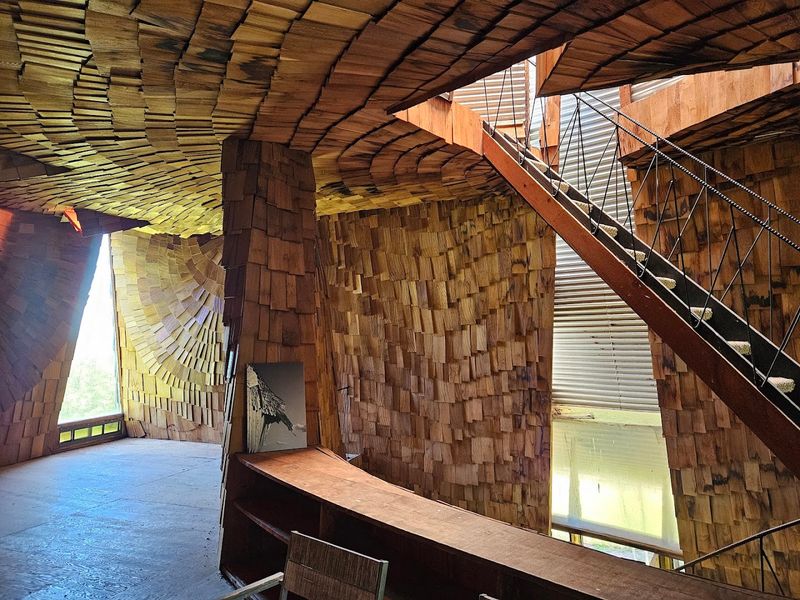
The inside of Prairie House surprises you all over again. After taking in the wild exterior, you might expect the interior to feel dark or cave-like, but it does not.
Floor-to-ceiling windows pull in natural light and connect the living spaces directly to the Oklahoma sky outside.
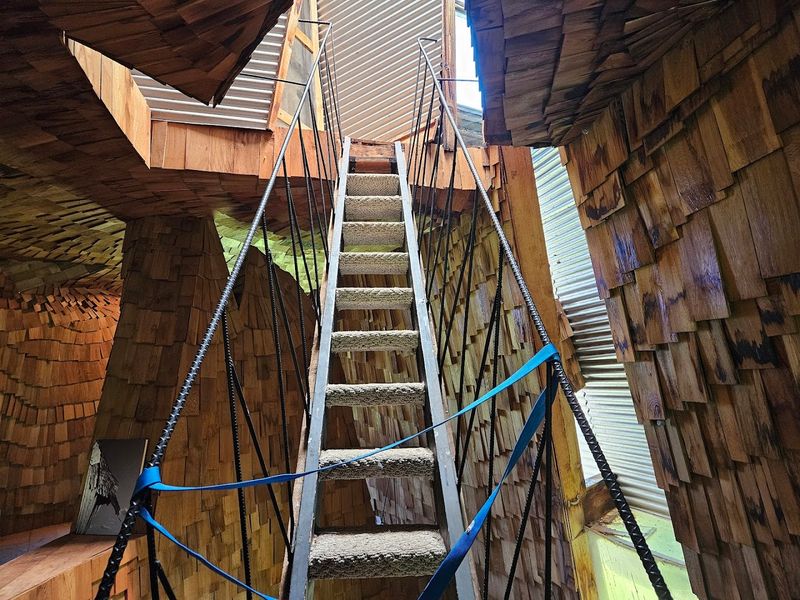
The layout spans roughly 2,100 square feet across two floors, and nothing about it follows a straight line. Spaces flow into each other organically, shaped more like a landscape than a floorplan.
A central catwalk runs through the upper level, and a winding iron-rod staircase connects the floors with a kind of sculptural elegance that feels handmade in the best possible way.
There is also a rooftop balcony, which gives visitors a completely different perspective on the surrounding prairie. From up there, the relationship between the house and its environment becomes even clearer.
Greene designed every element to reinforce the same idea: that this building belongs to this land, not just on it. The interior does not feel like rooms you move through.
It feels like spaces you inhabit, each one shaped with intention and warmth. Visitors on tours often say they could spend hours just sitting quietly inside, absorbing the atmosphere.
Life Magazine Fame and the Julius Shulman Photos
Not every remarkable building gets the audience it deserves. Prairie House was lucky.
Shortly after its completion, it caught the attention of Life magazine, which featured it with photographs taken by Julius Shulman, one of the most celebrated architectural photographers of the twentieth century.
Shulman had a gift for making buildings look mythic. His images of Prairie House captured the structure’s layered texture and strange organic silhouette in a way that made it impossible to ignore.
The feature gave the house worldwide visibility almost overnight, introducing it to architects, artists, and curious readers far beyond Oklahoma.
Life’s editors gave it an unforgettable nickname too: the Prairie Chicken House. That name stuck around for decades, and you can still hear people use it today with obvious affection.
There is something charming about a house so unusual that even its nickname becomes part of its identity. The Shulman photographs remain some of the most striking images ever taken of an American residential structure, and they helped cement Prairie House as a landmark of organic modernist architecture.
For anyone interested in mid-century design history, tracking down those original images is genuinely worth the effort. They show the house at its most dramatic and alive.
The Prairie House Preservation Society Keeping It Alive
Old buildings need champions, and Prairie House found its champions in January 2022 when the Prairie House Preservation Society was officially formed. This nonprofit organization, operating as a 501(c)(3), took on the responsibility of restoring, preserving, and sharing this irreplaceable structure with the public.
Before the society stepped in, the house faced real uncertainty. Decades of exposure to Oklahoma weather had taken a toll, and without organized effort, a building this unique could easily slip into irreversible decline.
The PHPS changed that trajectory with purpose and community energy behind it.
Their work is not just about keeping old wood from rotting. It is about maintaining a living piece of architectural history and making it accessible to people who might never have heard of Herb Greene or organic modernism before.
The society also programs creative events at the site, including stargazing nights, sketching sessions, watercolor workshops, music performances, and writing gatherings. These events turn Prairie House into an active cultural space rather than a static relic.
The community response has been genuinely moving. People who visited the house in the 1960s and 70s are now bringing their grandchildren to see it, which says everything about the lasting impression this place leaves on anyone who encounters it.
Monthly Tours and What to Expect When You Visit
Getting inside Prairie House is not something you can do on a whim, and honestly, that makes it feel even more special. The Prairie House Preservation Society opens the building to the public on the third Saturday of each month at 2:00 PM, and tickets are available through their official website at prairiehouseok.org.
Tours are guided, which means you get real context for what you are seeing rather than just wandering through on your own. Past visitors have described the experience as genuinely eye-opening, especially for those who arrive without much background in architecture.
The guides bring the story of Herb Greene and the building’s history to life in a way that makes the whole visit feel personal and meaningful.
If you cannot make a scheduled tour, the PHPS also arranges special access for groups and events, so it is worth reaching out directly if your schedule does not line up with the monthly dates. From the road, you can see the exterior clearly, but the driveway is gated, so booking a tour is the only way to experience the full magic of the interior.
Arriving a few minutes early is a good idea. The approach along 48th Ave NE through the open Oklahoma landscape sets the mood perfectly before you even step out of the car.
National Register of Historic Places Recognition in 2024
In October 2024, Prairie House received recognition that many architectural enthusiasts had been hoping for over many years. The building was officially listed on the National Register of Historic Places, acknowledging its significance both as a work of architectural art and as a monument to Herb Greene’s legacy.
This designation matters for more than symbolic reasons. Listing on the National Register opens doors to preservation funding and grants that can support the ongoing restoration work the PHPS is carrying out.
It also signals to the wider world that this building deserves serious attention and care.
For a structure that spent decades known mainly to architecture students and dedicated enthusiasts, this recognition feels like a long-overdue moment of mainstream acknowledgment. The house has always been extraordinary.
Now it has the official stamp to prove it. The listing also helps protect the building from future threats by anchoring it legally and culturally within Oklahoma’s heritage landscape.
For anyone planning a visit, knowing that Prairie House now holds this status adds another layer of meaning to the experience. You are not just looking at an unusual old building.
You are standing in front of a formally recognized piece of American architectural history, one that earned its place on that list through sheer originality and vision.
