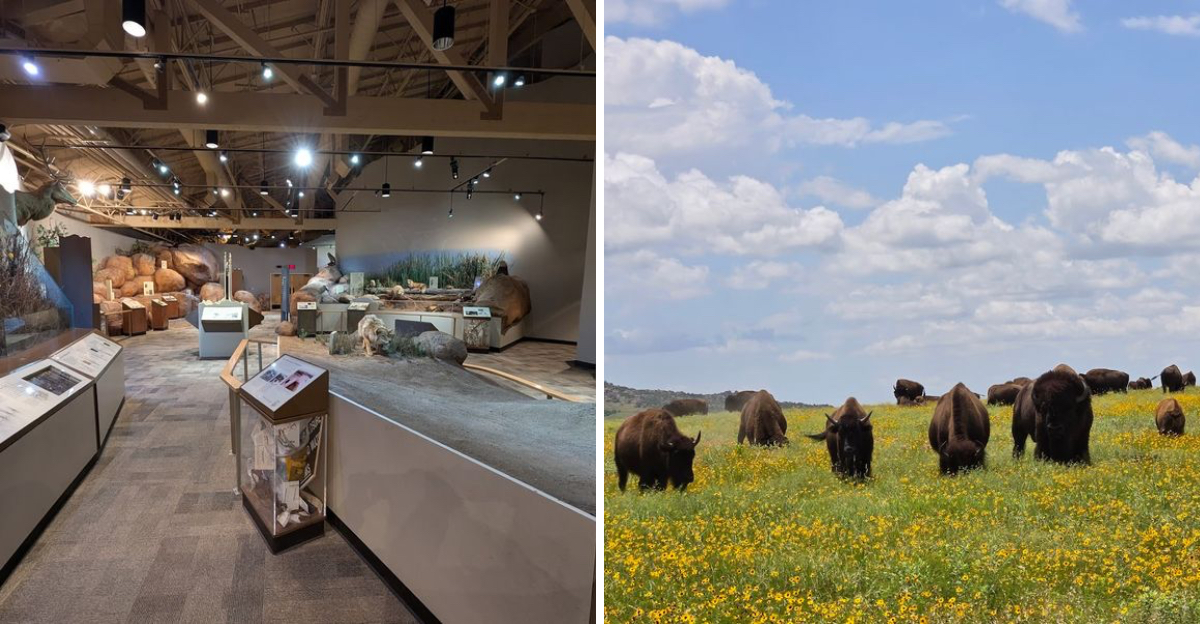
I used to think I had Oklahoma figured out. Flat horizons, steady wind, long highways.
Then I pulled off a road in southwest Oklahoma and just sat there staring at granite peaks rising straight out of the prairie like they had no business being there. Wichita Mountains Wildlife Refuge completely changed my perspective.
The landscape feels ancient and rugged, with bison roaming and rocky ridgelines that look carved from another era. Before I explored any of it, I stopped at the visitor center on the edge of the refuge, and it turned out to be the perfect starting point.
Maps, history, and just enough context to make those mountains feel even more impressive once I stepped back outside. If this place has never been on your radar, I get it.
It wasn’t on mine either. Until it was.
The Visitor Center That Actually Delivers
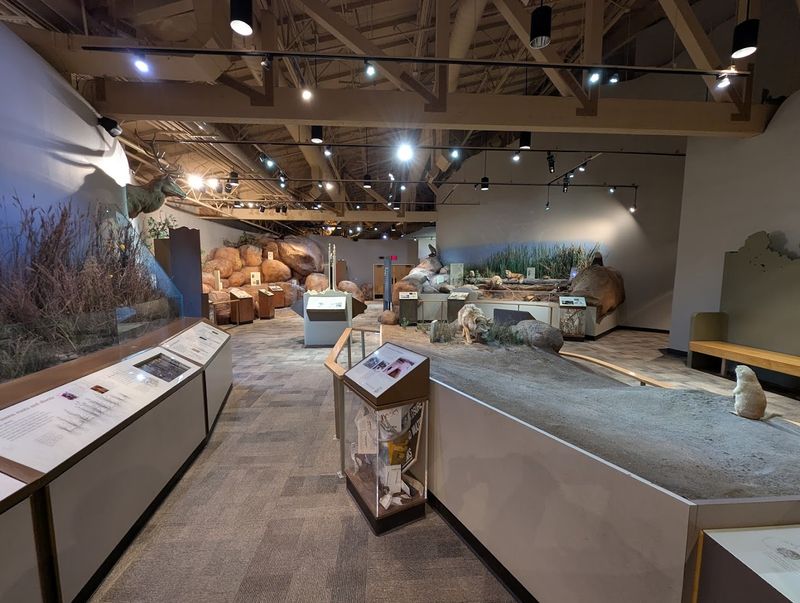
Nobody expects much from a visitor center. You walk in, grab a brochure, maybe glance at a laminated map, and head back out.
The Wichita Mountains Wildlife Refuge Visitor Center completely rewrites that script from the moment you step through the door.
The building is clean, cool, and genuinely welcoming. There are interactive exhibits about the refuge’s wildlife, geology, and history that could keep a curious person busy for a solid hour.
A small theater screens a documentary about the refuge that is surprisingly well-made and emotionally stirring.
The staff here are the real standout. Rangers and volunteers greet you like neighbors, not tourists.
One staffer reportedly drew personalized route maps for visitors, marking exactly where to stop for wildlife sightings. That kind of human touch is rare and refreshing.
The gift shop is stocked with tasteful, useful items, and the restrooms are spotless. Open daily from 9 AM to 5 PM, this is your first and most important stop before exploring the refuge.
Parking is ample, and the whole experience is completely free.
Ancient Granite Peaks Most People Have Never Heard Of
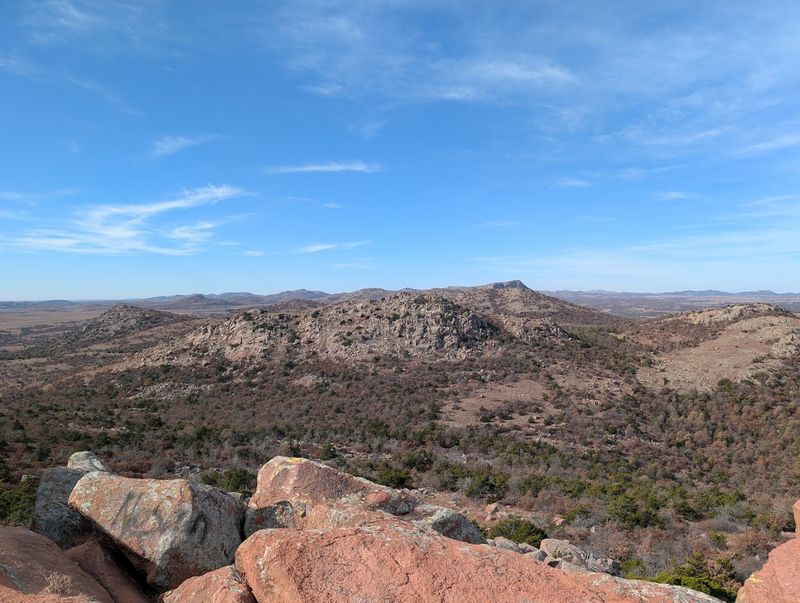
Here is something that genuinely blew my mind: the Wichita Mountains are older than the Rocky Mountains. We are talking about granite formations that have been sitting here for roughly 500 million years, slowly worn down by time until they look like enormous boulders scattered by a giant hand.
They are not towering alpine peaks. They are something more intimate and strange.
Rounded, rust-colored domes of granite push up from flat grassland, creating a landscape that feels almost prehistoric. Standing among them, you get this odd sensation that the earth is breathing slowly beneath your feet.
Mt. Scott is the crown jewel, and driving or hiking to its summit rewards you with a sweeping 360-degree view of the refuge below.
On a clear day, the visibility stretches for miles in every direction. The staff at the visitor center will mark it on your map and explain that weekdays are far better for driving to the top since weekends require hiking.
Knowing that one detail can completely change your experience, so ask before you head out.
Bison, Longhorns, and Prairie Dogs Roaming Free
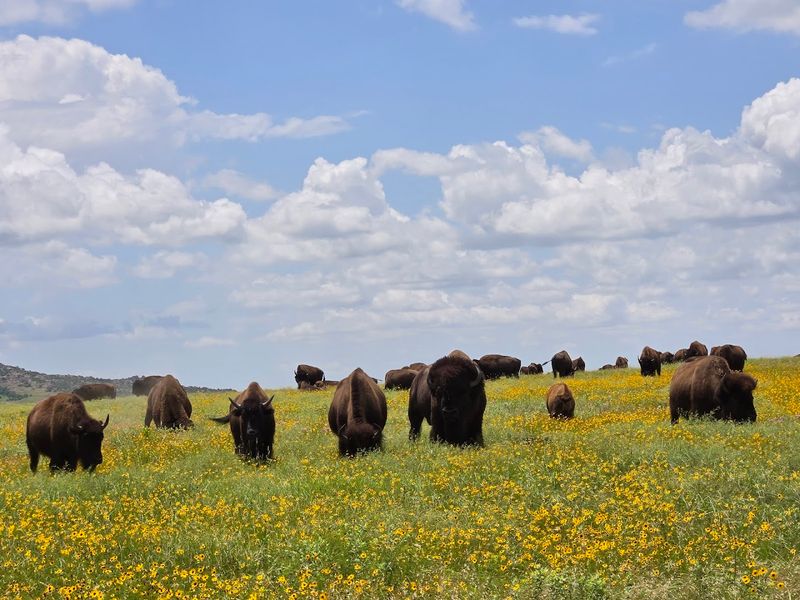
You are driving a regular road, windows down, and suddenly a bison the size of a small car is standing three feet from your bumper. That is not a zoo moment.
That is a genuine, heart-thumping encounter with wild America, and it happens regularly inside the Wichita Mountains Wildlife Refuge.
The refuge is home to free-roaming bison, Texas longhorn cattle, white-tailed deer, elk, and one of the most entertaining creatures on the planet: the black-tailed prairie dog. These little guys pop up from their burrows, bark at you, and disappear in a flash.
Visitors have also reported spotting tarantulas crossing the road, which is either thrilling or terrifying depending on your perspective.
The visitor center staff will tell you exactly where wildlife tends to gather and at what times of day. Morning and late afternoon are your best bets for active sightings.
Do not just stick to the main road. The rangers will point you toward the quieter routes where you are more likely to have a slow, uninterrupted encounter with a longhorn or a grazing elk.
This is wildlife viewing at its most raw and unhurried.
Hiking Trails That Reward the Curious
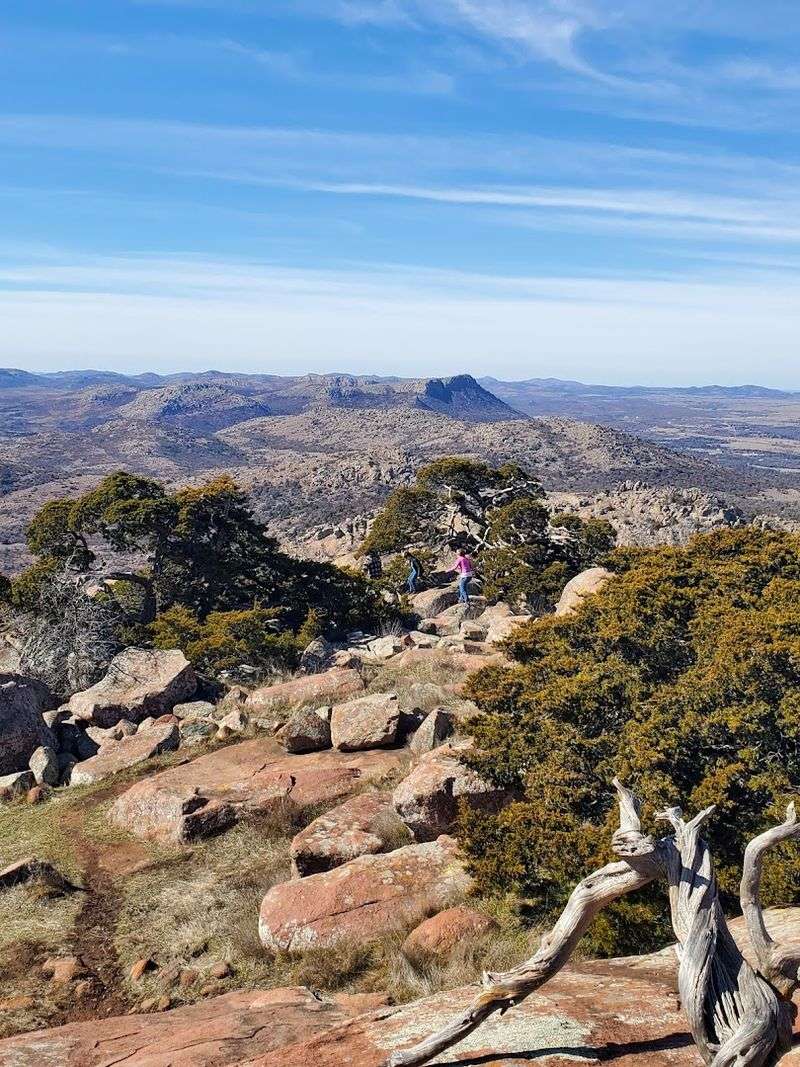
Plenty of visitors drive through the refuge, snap a few photos from the car window, and call it a day. That is honestly a missed opportunity of the highest order.
The real magic of this place reveals itself only when you get out and start walking.
The refuge has a solid network of hiking trails ranging from easy strolls to more challenging routes over rocky granite terrain. Wildflowers bloom with spectacular intensity in spring, and early June visitors have described the color explosions along the trails as something out of a painting.
In summer, the rangers at the visitor center will remind you firmly to start early and carry plenty of water, because Oklahoma heat is not something to underestimate.
Some trails lead to seasonal waterfalls tucked into the rocky hillsides, which feel like secret rewards for those willing to put in the effort. The visitor center has field guides available that make the hike more educational, helping you identify plants, birds, and geological features along the way.
Pick up a trail map before you head out, ask the staff which routes are currently accessible, and plan to spend at least half a day on foot. You will not regret it.
The Holy City and the Christ of the Wichitas
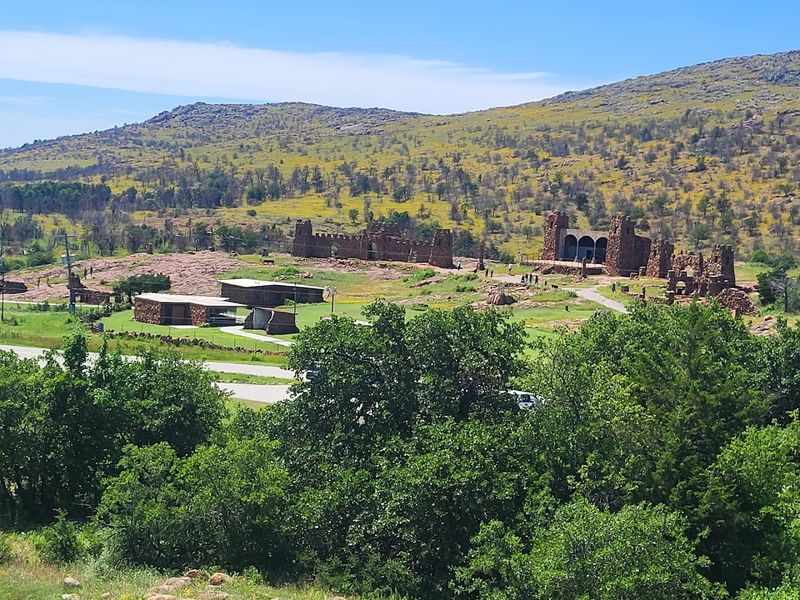
Few things are as unexpected as rounding a curve in a wildlife refuge and suddenly spotting a stone city built to resemble ancient Jerusalem. The Holy City of the Wichitas is a collection of rough-cut stone buildings constructed in the 1930s and used annually for an outdoor Easter Passion Play.
It sits quietly in the refuge year-round, open for visitors to walk through and absorb.
Perched on a nearby rocky hillside stands the Christ of the Wichitas, a large statue that overlooks the landscape with quiet authority. Visitors with no particular religious connection still describe the scene as moving and deeply atmospheric.
Something about the combination of ancient stone, open sky, and rugged mountains creates a feeling that is hard to put into words but easy to feel.
The visitor center staff can give you directions and context before you visit. Knowing the history behind the site makes the experience far richer.
This is one of those places where you stand in the middle of it and think, “Why did nobody tell me about this?” It does not feel like a tourist attraction. It feels like stumbling onto something genuinely sacred and quietly extraordinary, in the best possible way.
Lakes, Kayaking, and Fishing in the Heart of the Refuge
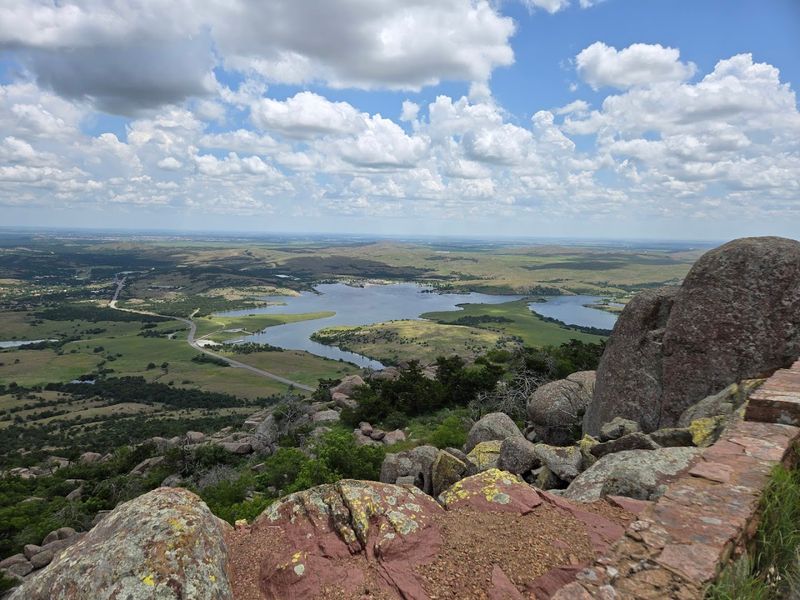
Most people do not associate Oklahoma with kayaking, but the Wichita Mountains Wildlife Refuge quietly offers some genuinely lovely water experiences. Several lakes sit within the refuge boundaries, and on a calm morning with mist still sitting on the surface, they look absolutely stunning.
Fishing is popular here, and the lakes attract anglers who appreciate the peaceful, uncrowded atmosphere. The refuge does not feel overrun or commercial, so you can actually find a quiet spot along the bank and settle in without fighting for space.
Kayaking is another great option when water levels cooperate, and the surrounding mountains create a dramatic backdrop that makes paddling feel almost cinematic.
It is worth checking in at the visitor center before heading to the water, because lake levels can vary significantly depending on rainfall and season. One visitor mentioned that the lake was quite low during their visit, making bank access tricky.
The staff will give you a straight answer about current conditions rather than sending you on a wasted trip. That kind of practical honesty is exactly what a good visitor center should offer, and this one consistently delivers it.
Pack a fishing rod and a sense of patience, and the lakes will reward you generously.
Camping Under Oklahoma Stars at Doris Campground
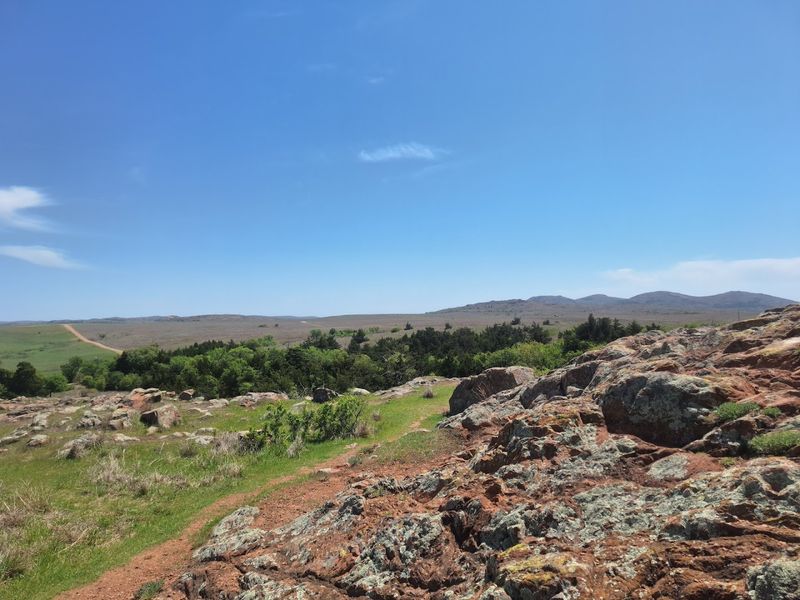
Spending one day in the Wichita Mountains is fine. Spending the night is transformative.
The Doris Campground inside the refuge gives you access to the landscape after the day visitors have gone home, and what happens in those quiet hours is genuinely special.
Wildlife moves differently at dusk. Deer appear at the edges of the meadows.
The bison become silhouettes against a fading orange sky. And once darkness settles in fully, the stars over southwest Oklahoma are staggering.
There is very little light pollution out here, and the Milky Way shows up on clear nights in full, brilliant detail.
The campground is primitive, meaning water sources are in the parking area rather than at individual sites, so plan accordingly. Squirrels and raccoons are active and persistent, so keep food secured at all times.
Visitors who have camped here recommend choosing sites away from trail convergence points to avoid constant foot traffic through your space. The visitor center can point you toward which sites tend to offer the most privacy and the best access to wildlife viewing at dawn.
Arriving early on weekends is essential because spots fill up fast. This is camping the way it should feel: close to nature, a little raw, and completely worth it.
Practical Tips Before You Head Out the Door
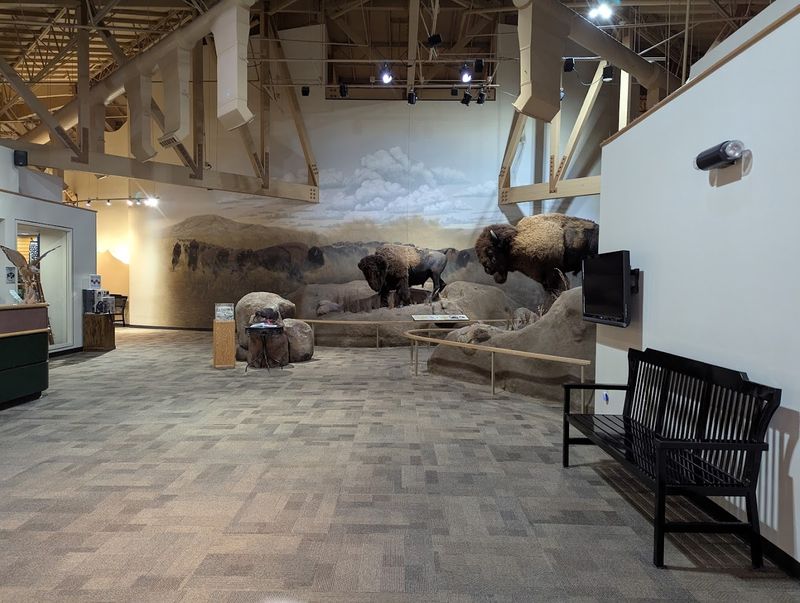
The visitor center at the Wichita Mountains Wildlife Refuge is not just a pretty building with brochures. It is genuinely the smartest first stop you can make before exploring the refuge, and skipping it would be a real mistake.
The staff here know this land inside and out.
The center is open every day from 9 AM to 5 PM, so plan your arrival accordingly. If you show up early and have a few minutes to wait, that is perfectly normal and worth it.
Entry to the refuge and the visitor center is completely free, which makes the whole experience feel almost too good to be true. There is no ATM on site, so bring cash if you plan to shop in the gift shop.
The building is wheelchair accessible, has clean restrooms, a water fountain, and vending machines. A small theater inside screens an educational documentary that is worth your time, especially if you are visiting with kids.
Ask the staff to mark your map with current wildlife hotspots, trail conditions, and any ongoing prescribed fire activity that might affect access. The Wichita Mountains Wildlife Refuge Visitor Center is located at OK-49, Lawton, Oklahoma 73507.
You can reach them at +1 580-429-3222 or visit fws.gov/refuge/wichita-mountains for current information before your trip.
Dear Reader: This page may contain affiliate links which may earn a commission if you click through and make a purchase. Our independent journalism is not influenced by any advertiser or commercial initiative unless it is clearly marked as sponsored content. As travel products change, please be sure to reconfirm all details and stay up to date with current events to ensure a safe and successful trip.
