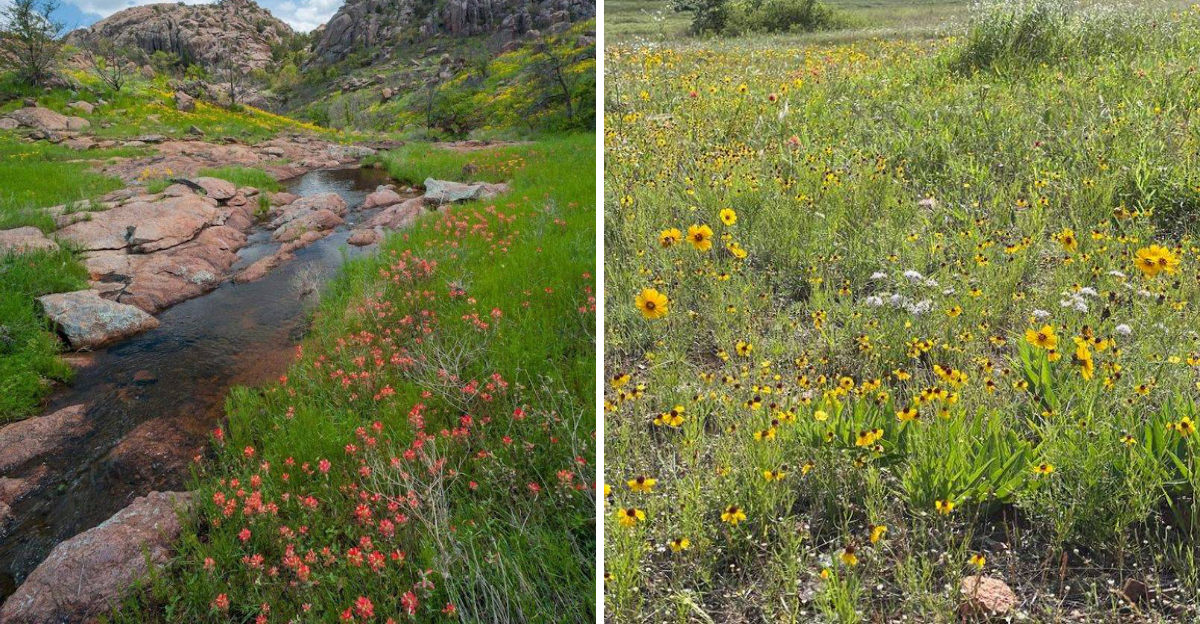
You think you know what Oklahoma looks like until spring proves you wrong. Out here, the landscape suddenly shifts, and you find yourself standing in the middle of something that does not feel real at first glance.
Wildflowers take over everything. Bright reds, deep blues, soft yellows, all layered across open fields while massive granite boulders rise up in the distance like they have been there forever.
It feels less like a prairie and more like you somehow stepped into a painting. You can try to take it in quickly, but it does not really work that way.
The longer you stand there, the more details you notice, and the harder it becomes to leave.
The Wildflower Landscape That Steals Every Frame
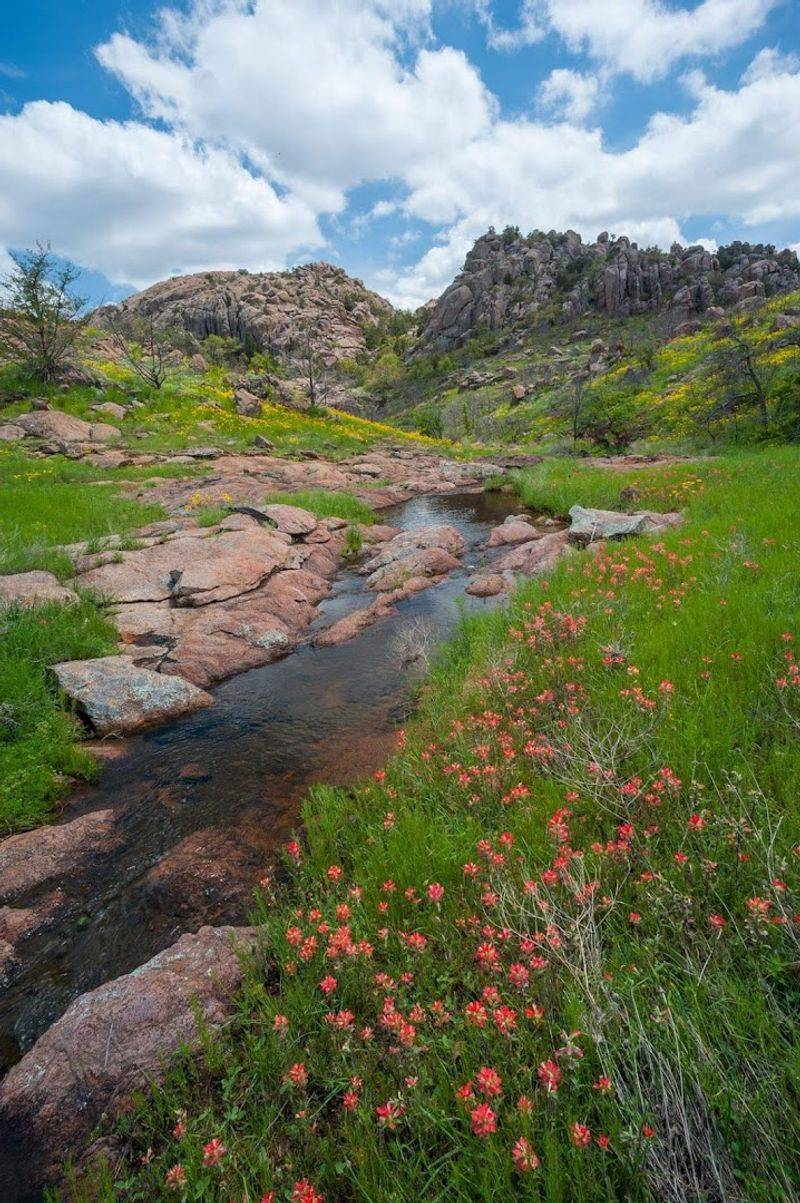
Few places in Oklahoma can match the sheer visual drama of the Wichita Mountains Wildlife Refuge in full spring bloom.
The refuge sits in Comanche County, near the town of Lawton, and covers nearly 60,000 acres of rolling granite hills and open grasslands.
From late March through May, the meadows transform into something that genuinely makes you stop and stare.
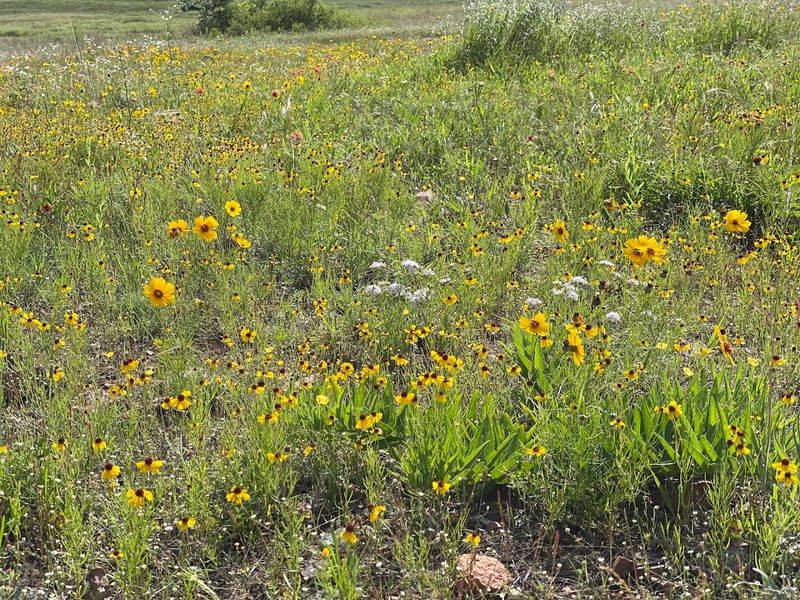
Indian paintbrush splashes bright red across the green hillsides. Prairie phlox adds soft purple hues, and golden coreopsis fills the low ground like scattered sunshine.
The flowers do not grow in tidy rows or planted beds. They spread naturally across the landscape, mixing with native grasses in a way that feels completely wild and unplanned.
That organic quality is exactly what gives this place its painterly atmosphere.
Standing at the base of a granite outcrop with flowers stretching in every direction around you is a genuinely moving experience.
The colors shift depending on rainfall and temperature each year, so no two spring seasons look exactly the same here.
That unpredictability keeps the place feeling fresh and worth returning to, season after season.
Ancient Granite Boulders Add Drama to Every View
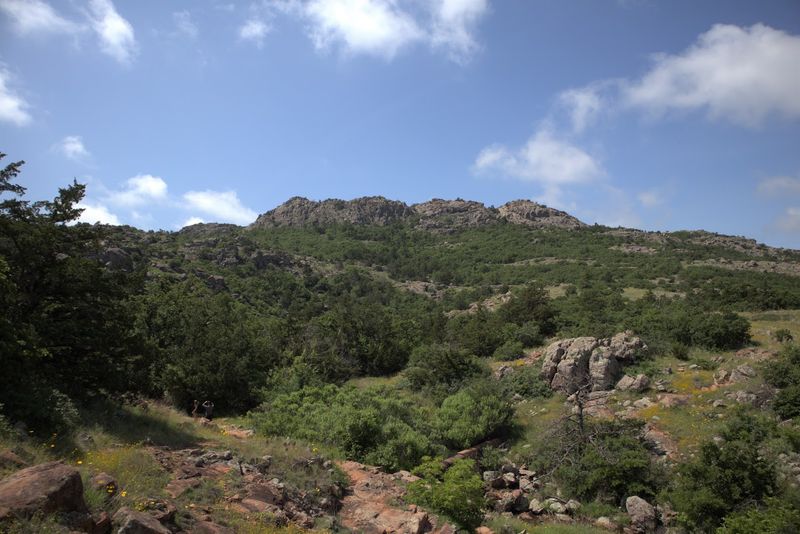
Long before the wildflowers arrived each spring, the granite was already here, and it has been here for about 500 million years.
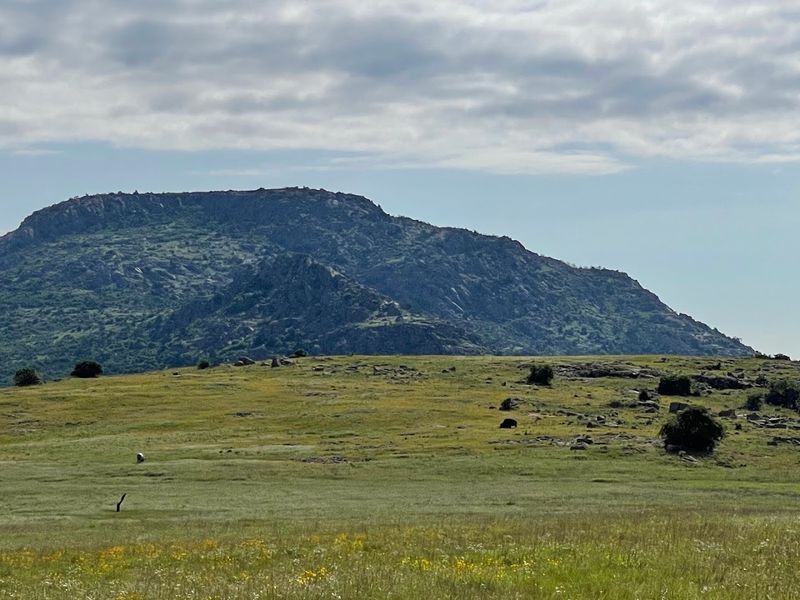
The Wichita Mountains are among the oldest exposed rock formations in North America, and that geological age gives the landscape a sense of permanence that few places can match.
The boulders are not just old, they are enormous. Some rise 40 feet or more straight out of the prairie floor, completely unannounced.
Walking through the refuge in spring means constantly turning a corner and finding a new granite wall draped in wildflowers at its base.
The contrast between the rough, dark stone and the delicate petals of spring blooms is visually striking in a way that photographs honestly struggle to capture.
Mount Scott is the most prominent peak in the refuge, reaching 2,464 feet above sea level. A paved road leads to the summit, and the panoramic view from the top is one of the best in all of Oklahoma.
On a clear spring morning, you can see wildflower meadows stretching for miles in every direction below you.
It is the kind of view that makes the drive feel completely worth it.
Bison Roaming Free Through Fields of Color
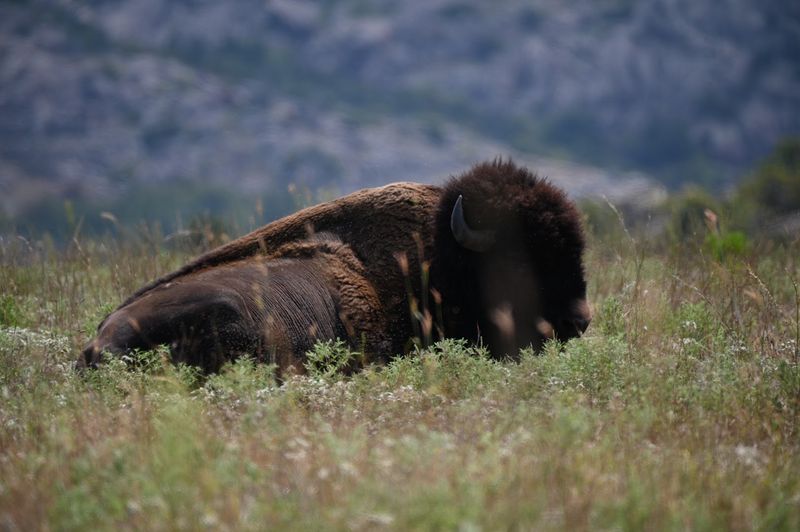
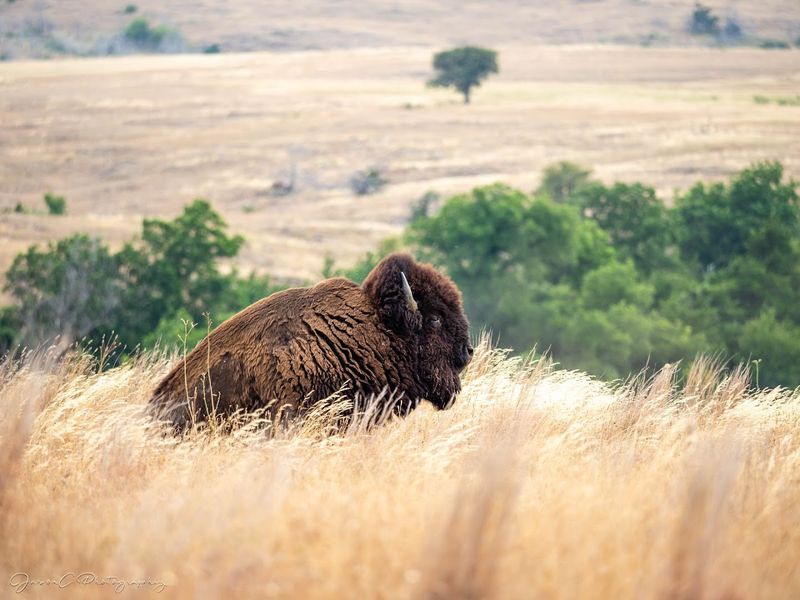
There is something almost surreal about watching a bison graze slowly through a field of wildflowers with granite mountains behind it.
The Wichita Mountains Wildlife Refuge has maintained a free-ranging bison herd since 1907, making it one of the earliest conservation efforts for the species in the United States.
The herd numbers around 650 animals today, and they roam the refuge freely alongside longhorn cattle and elk.
Spotting bison in spring is especially rewarding because the calves are often born between March and May. The rusty-orange calves stand out sharply against the green and flowering landscape.
The refuge has designated wildlife viewing areas, but honestly, bison can appear almost anywhere along the main roads and trails.
Driving slowly through the refuge in the early morning is one of the best ways to encounter them up close.
Keep a respectful distance, because these animals are large and wild, and the refuge takes their safety seriously.
Seeing a bison calmly moving through a sea of Indian paintbrush in full Oklahoma sunshine is one of those moments that stays with you long after the drive home.
The Holy City of the Wichitas Is Unlike Anything Else
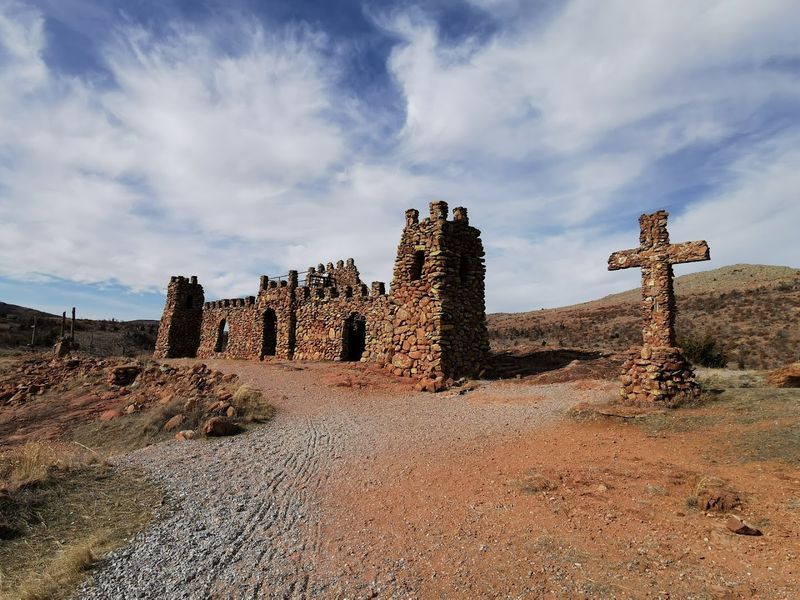
Nestled inside the refuge is one of the most unexpected landmarks in all of Oklahoma: the Holy City of the Wichitas.
This outdoor stone village was built in the 1930s to serve as a stage for the annual Easter Pageant, a tradition that has continued for nearly 90 years.
The structures are made from native granite and blend naturally into the surrounding rocky landscape.
In spring, wildflowers grow right up to the edges of the stone walls, softening the ancient-looking architecture with bursts of color.
Walking through this area feels like stepping into a different time entirely. The stone buildings, the open-air theater, and the quiet surrounding hills create a deeply peaceful atmosphere.
The site is open year-round for self-guided exploration, and spring is the best time to visit because the flowers frame every structure beautifully.
Even without the pageant, the Holy City is a fascinating place to spend an hour. The craftsmanship of the stonework is impressive, and the setting inside the refuge adds an extra layer of meaning to the visit.
It is a place that manages to feel both historic and completely alive at the same time.
Prairie Dog Town Is a Crowd-Pleasing Stop
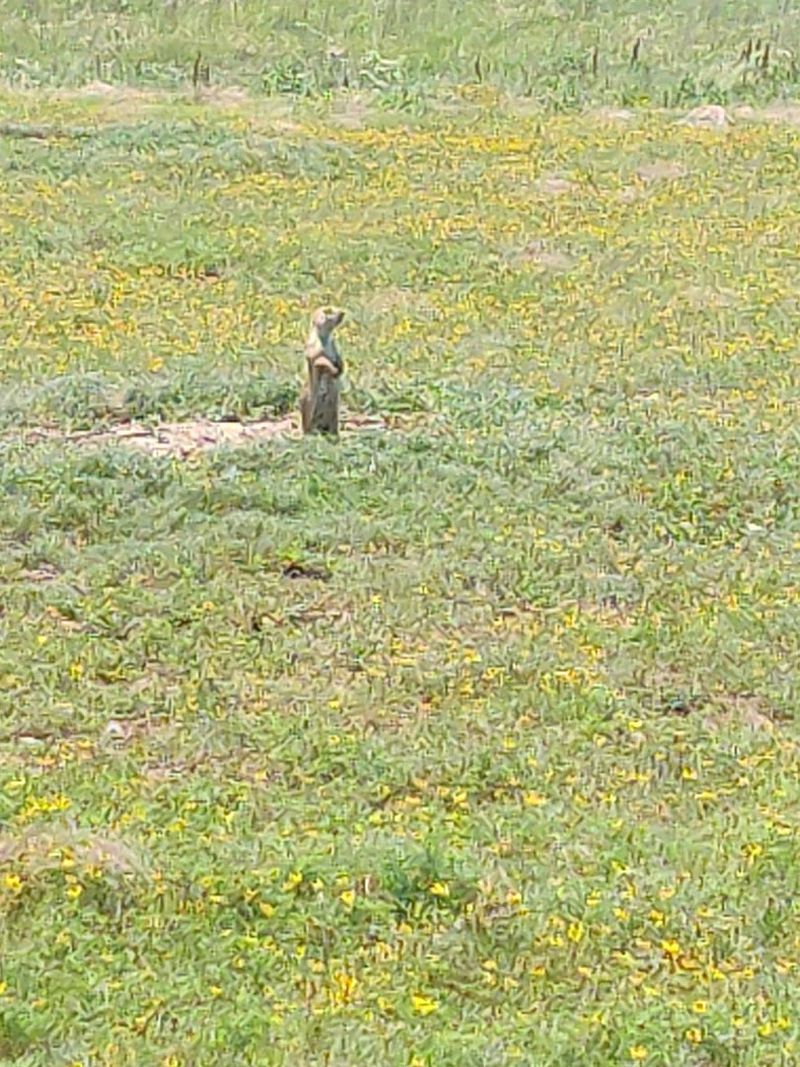
Right along one of the main refuge roads, a thriving prairie dog town has been entertaining visitors for decades.
These small, round-faced rodents are endlessly entertaining to watch, and they seem completely unbothered by slow-moving vehicles stopping nearby.
In spring, the colony is especially active. Young prairie dogs emerge from their burrows and chase each other across the mounds in a way that is genuinely hard to look away from.
The colony is large enough that you can pull over and spend a solid 20 to 30 minutes just watching the social activity happening in front of you.
Prairie dogs communicate through a series of barks and chirps, and the whole town seems to be in constant conversation.
The grassy area around the burrows is often dotted with small wildflowers in spring, adding a colorful backdrop to the whole scene.
This stop works well for families, solo hikers, and wildlife photographers alike. Bring a longer lens if you want sharp detail shots without getting too close.
The prairie dog town is one of those simple, completely free experiences that somehow ends up being one of the highlights of an entire Oklahoma road trip.
Hiking Trails Wind Through the Heart of the Refuge
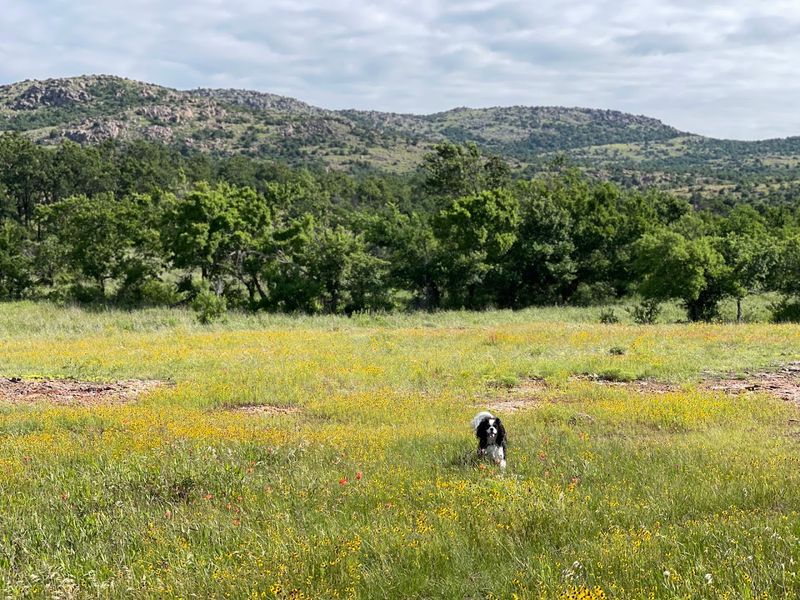
Getting off the road and onto the trails is where the Wichita Mountains truly reveal themselves.
The refuge has a network of trails ranging from short, easy walks to more challenging full-day hikes across rocky terrain.
The Charon’s Garden Wilderness Area is one of the most rewarding sections for serious hikers. It covers about 5,000 acres of rugged granite landscape with no maintained trails inside, meaning you navigate by map and instinct.
For a more accessible option, the Elk Mountain Trail offers great views and passes through open meadows that are spectacular with wildflowers in spring.
Most trails are well-marked and easy to follow, but the terrain can be uneven in places, so sturdy footwear is a smart choice.
Spring mornings on the trails are especially pleasant. The air is cool, the light is golden, and the wildflowers are at their freshest before the midday heat sets in.
Wildlife sightings on foot are more frequent and more intimate than anything you get from a car window.
Walking quietly through a flower-filled meadow and suddenly finding yourself ten feet from a grazing longhorn is the kind of Oklahoma moment you simply cannot plan for.
Lakes and Waterways Reflect the Spring Colors
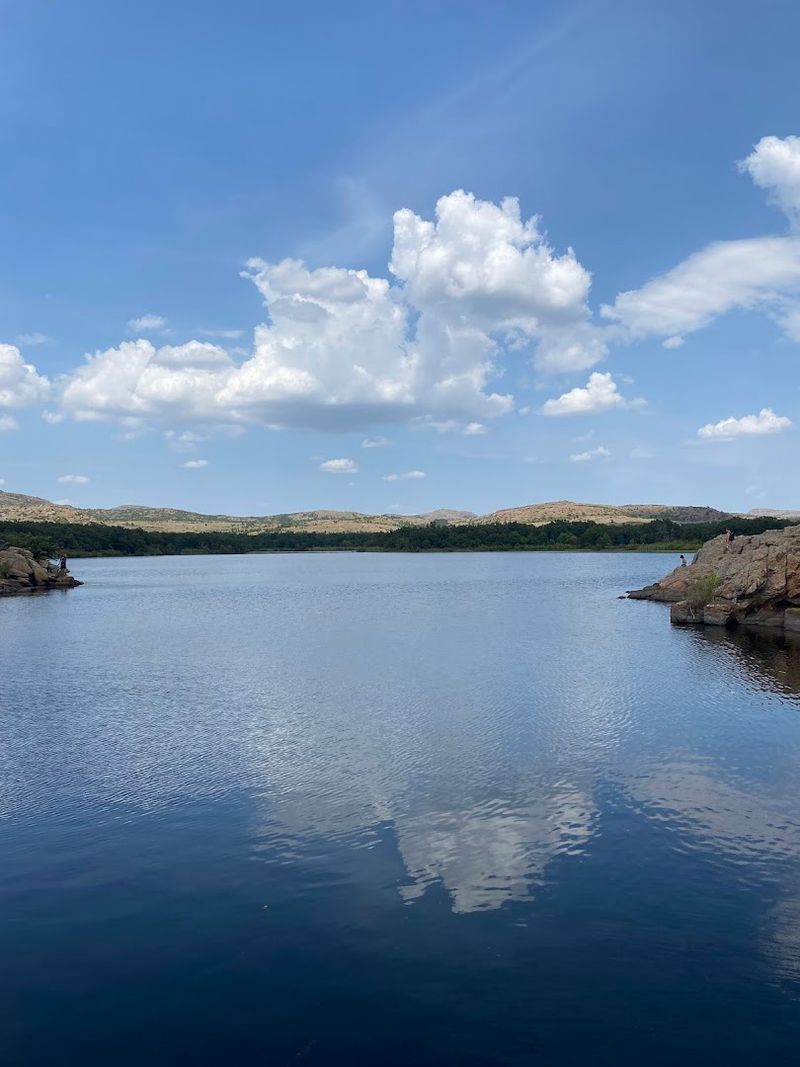
Water is a quieter but equally beautiful part of the Wichita Mountains experience.
The refuge contains several lakes, including Lake Lawtonka, Lake Elmer Thomas, and Quanah Parker Lake, each offering a different atmosphere and set of activities.
In spring, the shorelines of these lakes are often lined with blooming wildflowers, and the still water mirrors the surrounding hills and sky in a way that doubles the visual impact.
Fishing is permitted in designated areas, and the lakes contain species like bass, catfish, and crappie. Early morning fishing along a wildflower-lined bank is about as peaceful as Oklahoma gets.
Quanah Parker Lake near the visitor center is a good spot for a short walk with excellent scenery. The trail around part of the lake gives you both water views and open prairie, often with bison visible in the distance.
Kayaking and canoeing are allowed on some of the refuge waters, and paddling through a spring morning with granite peaks reflected around you is a genuinely calming way to spend a few hours.
The lakes add a reflective stillness to the refuge that balances perfectly with the wide-open energy of the flower-covered hillsides.
Best Times to Catch Peak Wildflower Season
Timing your visit to the Wichita Mountains for wildflower season takes a little planning, but it is well worth the effort.
The bloom typically begins in late March and builds through April, with the peak usually falling somewhere between mid-April and early May depending on rainfall and winter temperatures.
Indian paintbrush tends to peak in April, while spiderwort and coreopsis often carry the color into May.
Checking Oklahoma wildflower reports or the refuge’s official updates in the weeks before your visit helps narrow down the best window.
Morning visits are strongly recommended during bloom season. The light is softer, the air is cooler, and the flowers hold their best shape before afternoon heat sets in.
Weekday mornings are quieter than weekends, which matters more than you might expect on popular trails and at scenic overlooks.
Late April is generally considered the sweet spot for combining peak wildflower color with mild hiking weather and active wildlife.
If your schedule allows flexibility, plan to stay at least two days. One day is never quite enough to cover the full range of what the refuge has to offer during its most colorful season.
Wildlife Photography Opportunities Are Exceptional Here
For anyone who carries a camera, the Wichita Mountains Wildlife Refuge in spring is close to a dream location.
The combination of dramatic granite backdrops, native wildflowers, and large free-ranging wildlife creates layered compositions that are hard to find anywhere else in Oklahoma.
Golden hour, which falls in the hour after sunrise and before sunset, turns the granite boulders a warm amber and makes the wildflower colors glow with an intensity that midday light simply cannot match.
Bison, elk, longhorns, and prairie dogs are all photogenic subjects, and in spring the young animals add an extra level of visual interest.
Patience is the most important tool you can bring. Spending time at one location and waiting for the right light or animal movement produces far better results than rushing between spots.
The refuge roads are mostly paved and allow for slow driving, which makes vehicle-based photography a practical option for those who prefer not to hike.
A wide-angle lens handles the sweeping landscape views well, while a telephoto lens is essential for wildlife at safe distances.
Every season has its own photographic rewards here, but spring is undeniably when the refuge puts on its most colorful and dynamic show.
Planning Your Visit to the Refuge Practically
The Wichita Mountains National Wildlife Refuge Headquarters is located near Indiahoma, Oklahoma 73552, in the southwestern part of the state.
The closest major city is Lawton, which sits about 25 miles to the east and offers a full range of accommodations, dining, and fuel.
The refuge is open year-round, and there is no entrance fee for general wildlife viewing and hiking. Some specific recreation areas may require permits or have designated hours.
The visitor center near the main entrance is a great first stop. Staff there can provide current wildlife sighting reports, trail conditions, and bloom updates.
Cell service inside the refuge can be spotty in places, so downloading an offline map before you arrive is a practical step worth taking.
Bring more water than you think you need, especially if hiking in late spring when temperatures in Oklahoma can climb quickly by midday.
Pets are allowed in some areas of the refuge but must remain on a leash at all times, and they are not permitted in certain wildlife zones.
The refuge is large enough that a single visit only scratches the surface. Most people who make the trip to this corner of Oklahoma end up planning a return before they even leave.
Dear Reader: This page may contain affiliate links which may earn a commission if you click through and make a purchase. Our independent journalism is not influenced by any advertiser or commercial initiative unless it is clearly marked as sponsored content. As travel products change, please be sure to reconfirm all details and stay up to date with current events to ensure a safe and successful trip.
