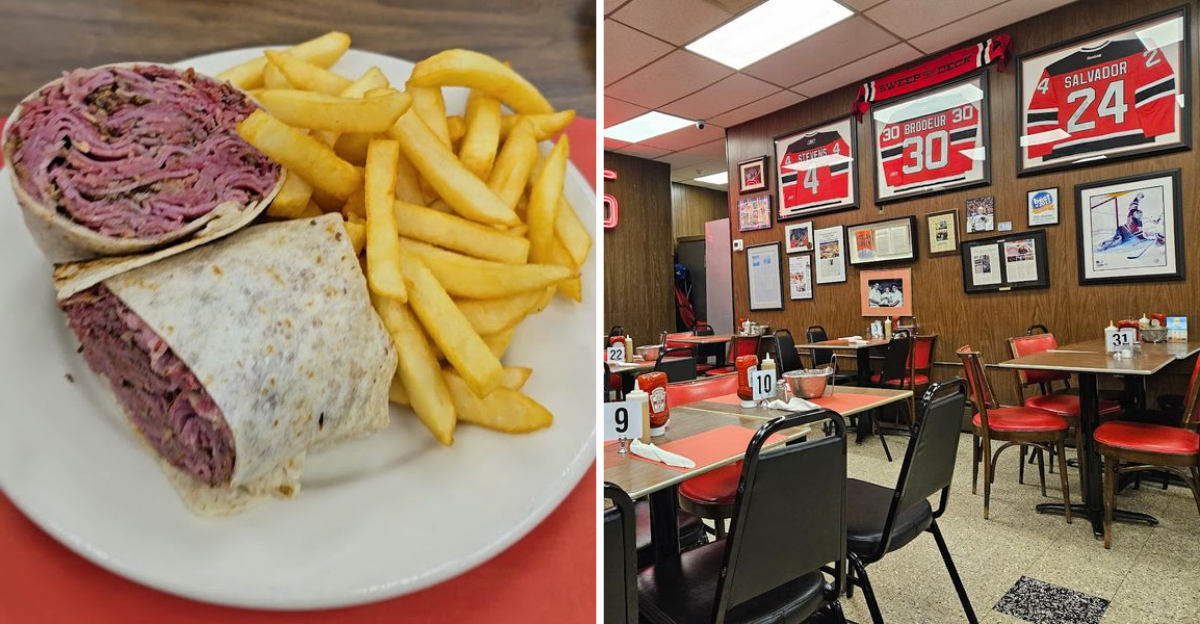
An old school New Jersey deli has been stacking pastrami since 1962.
You walk in and the meat speaks first.
Smoky, peppery, sliced right in front of you.
The booths are old. The menu does not try to impress you with fancy words.
It just piles meat between bread like it is the most natural thing in the world.
Corned beef. Brisket. Matzo ball soup that fixes whatever is broken.
This is not a trend. It is a tradition.
A sandwich here is not lunch. It is a time machine.
Go take a bite out of history. Just bring a napkin. It gets messy.
A Legacy That Started Long Before You Were Born
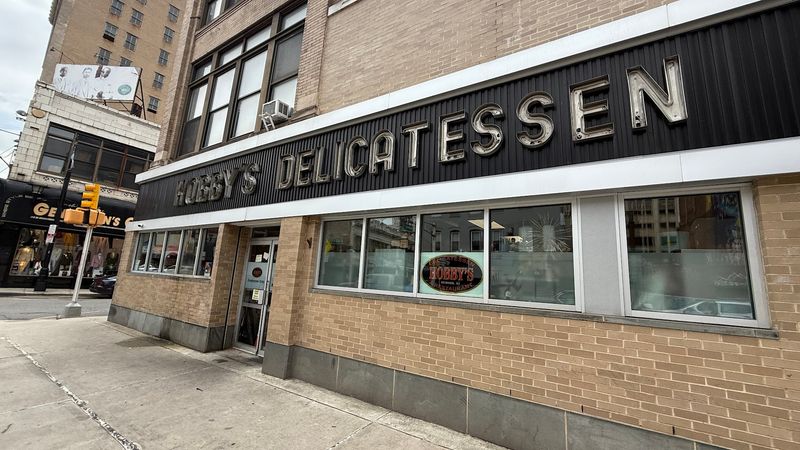
Walking into Hobby’s Delicatessen feels like stepping through a time portal where the best parts of the past are still very much alive. This place has been feeding Newark since 1962, when the Brummer family first took over and made it their own.
That is not just history on a plaque. That is over six decades of recipes, relationships, and really good pastrami.
The deli itself sits at 32 Branford Place, a spot so well-loved that the City of Newark officially named the surrounding corner “Hobby’s Plaza” back in 2014. Not many lunch spots earn their own plaza.
The kind of loyalty that creates a corner dedication takes generations to build, and Hobby’s has done exactly that.
Brothers Marc and Michael Brummer now run the operation, carrying forward everything their family built. The traditions stay intact, the recipes stay true, and the sandwiches stay enormous.
Some legacies fade with time. This one just keeps getting better.
Pastrami So Good It Has Its Own Reputation
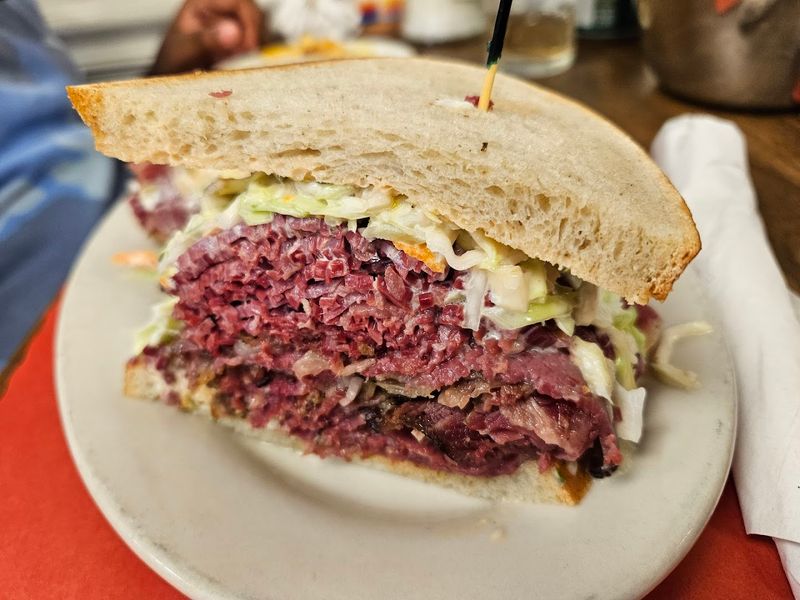
Food and Wine Magazine called Hobby’s one of the top ten delis in America. Farandwide.com went ahead and gave their pastrami the title of best in the entire country.
That is a bold claim, and yet somehow, after one bite, it feels completely reasonable.
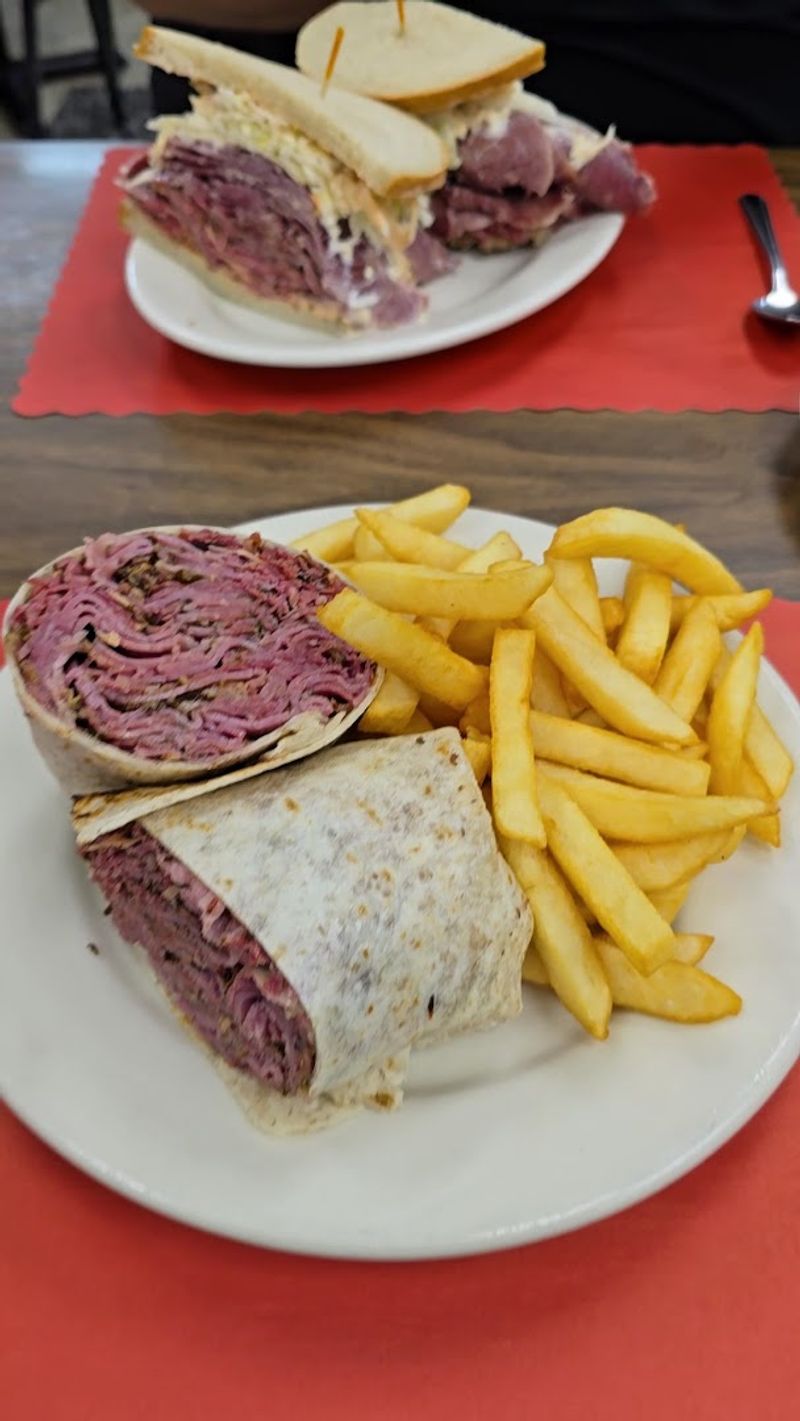
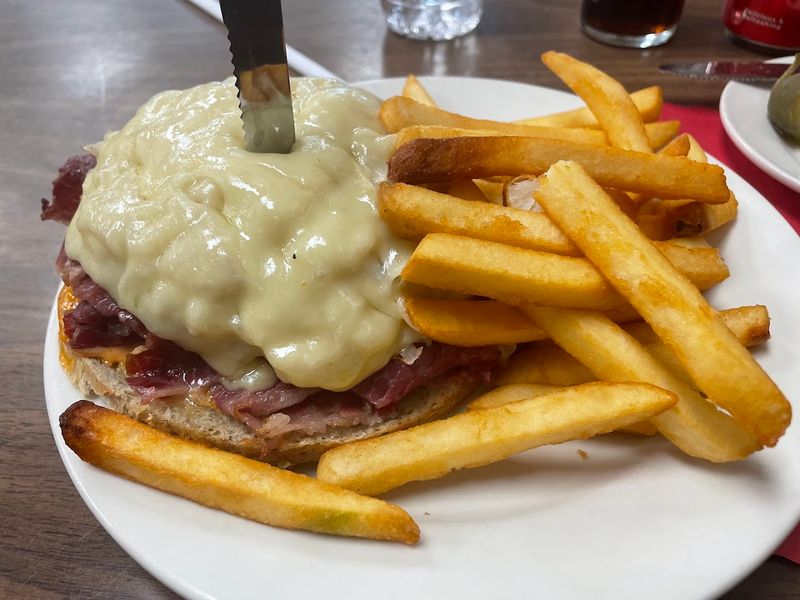
The pastrami here is house-made, slow-cured, and piled onto rye bread in a way that borders on architectural. It is not just thick.
It is tender, deeply seasoned, and the kind of meat that practically dissolves the second it hits your tongue. People have driven hours just for this sandwich.
Some of them do it regularly without apology.
The New York Times described Hobby’s as outstanding, which, coming from a city that takes its deli culture very seriously, means a great deal. Earning that kind of recognition from New Yorkers about a New Jersey deli is basically winning the Super Bowl of sandwiches.
The pastrami is the star, and it knows it.
The Number Five Sandwich Is Its Own Category
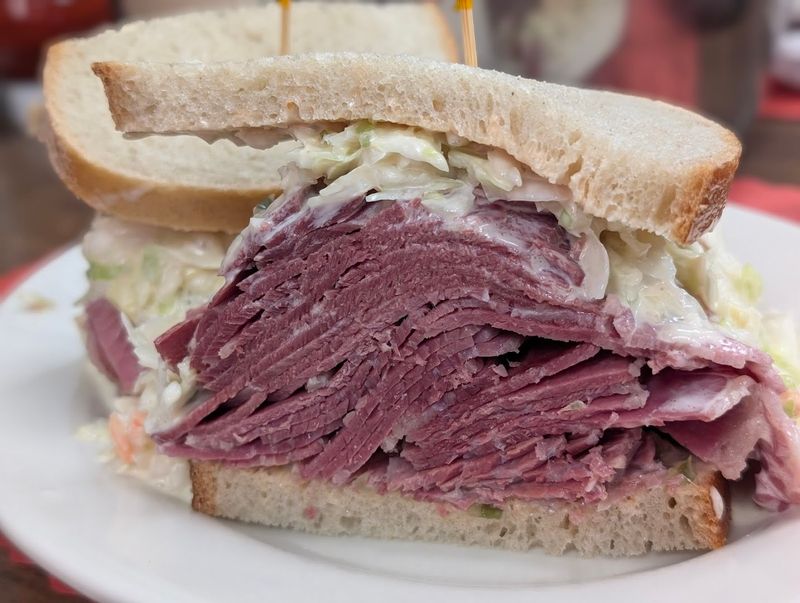
Some menu items become famous for a reason. The number five at Hobby’s combines pastrami and corned beef with coleslaw and Russian dressing, all stacked between slices of rye bread that hold on for dear life.
It is the sandwich people talk about on the drive home and dream about the following week.
The portion size is genuinely legendary. One sandwich is often described as a two-person meal, which either means you share it like a reasonable adult or you commit fully and go solo.
Both choices are valid. The meat quality is what sets it apart, though.
Every layer is fresh, flavorful, and clearly made with actual care rather than shortcuts.
Ordering the number five for the first time feels like a rite of passage. You look at it when it arrives and wonder briefly if the table is strong enough.
Then you stop overthinking and take a bite, and everything else just falls away. That is the Hobby’s experience in one sandwich.
Corned Beef That Takes Its Time
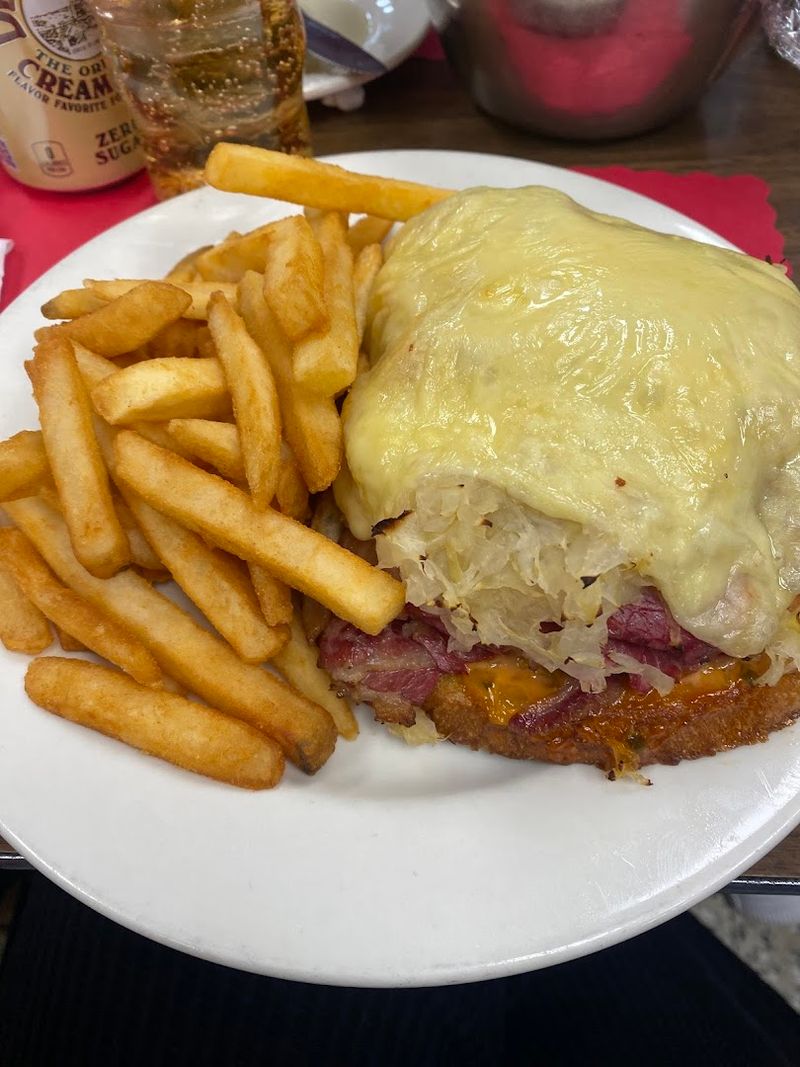
Good corned beef does not happen by accident. At Hobby’s, the corned beef is pickled in fifty-gallon stainless steel vats using a process that has been refined over decades.
There is no rushing it. The result is meat that is tender, flavorful, and completely different from anything that comes pre-packaged at a grocery store.
This commitment to doing things the old-fashioned way is exactly what separates Hobby’s from the competition. Most places have moved toward convenience.
Hobby’s moved toward consistency instead, which takes more effort but produces something far more memorable. Every bite reflects that patience.
Corned beef done right has a particular softness that almost melts against the roof of your mouth. Paired with rye bread and a good dressing, it becomes something greater than the sum of its parts.
The process behind it might be invisible to the average customer, but the taste makes it obvious that something intentional is happening back in that kitchen. It is the kind of craft that deserves serious appreciation.
Soups That Taste Like Someone’s Grandmother Made Them
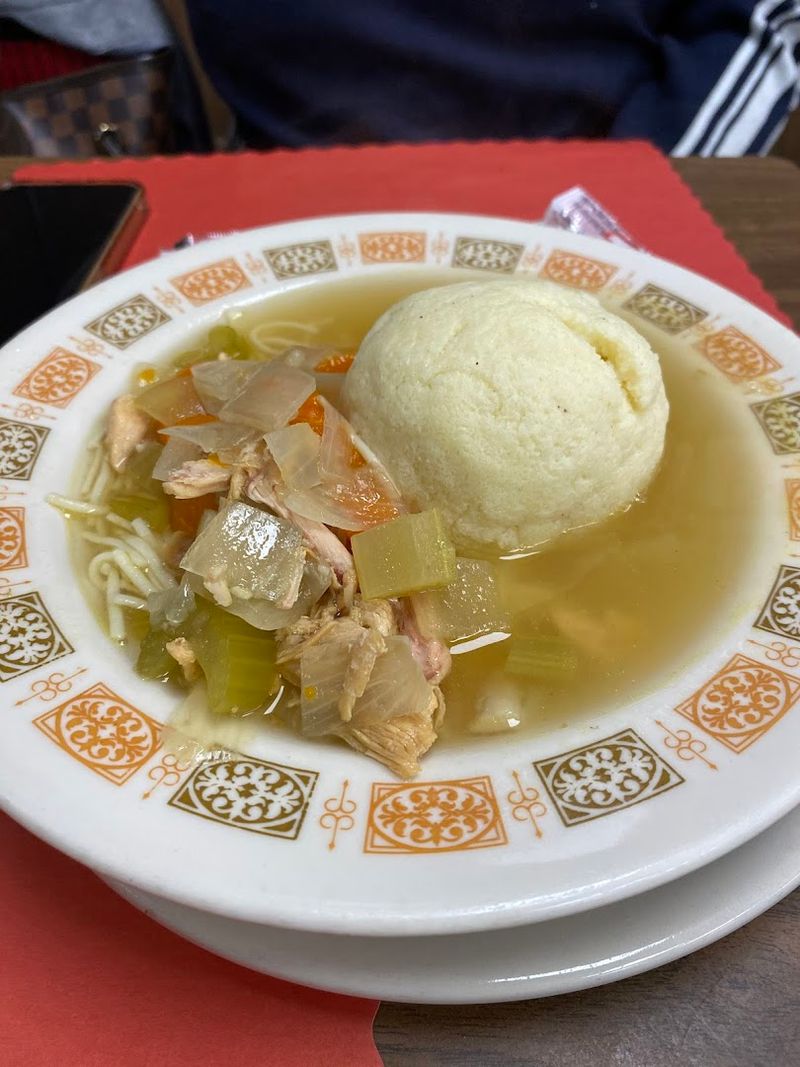
Matzo ball soup at Hobby’s is not an afterthought on the menu. It is a full commitment to comfort, served in a bowl with a matzo ball that is light, fluffy, and suspended in broth that tastes like it has been simmering since early morning.
The kind of soup that makes you feel better even when nothing was wrong to begin with.
The mushroom barley is another fan favorite, earthy and thick and deeply satisfying in the way that only truly homemade soups can be.
Both options reflect the same philosophy that runs through everything at Hobby’s: use good ingredients, take your time, and do not cut corners just because no one will notice.
Someone always notices.
Starting a meal with a cup of soup here sets the tone for everything that follows. The warmth, the flavor, the sense that real effort went into what is sitting in front of you.
It is a small thing that says a lot about the kind of place Hobby’s actually is.
The Atmosphere Hits Different Than Any Modern Restaurant
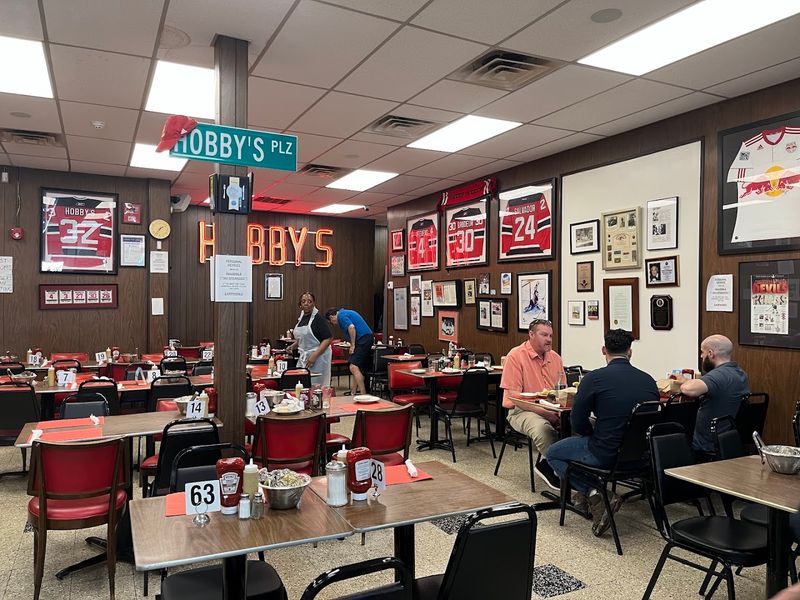
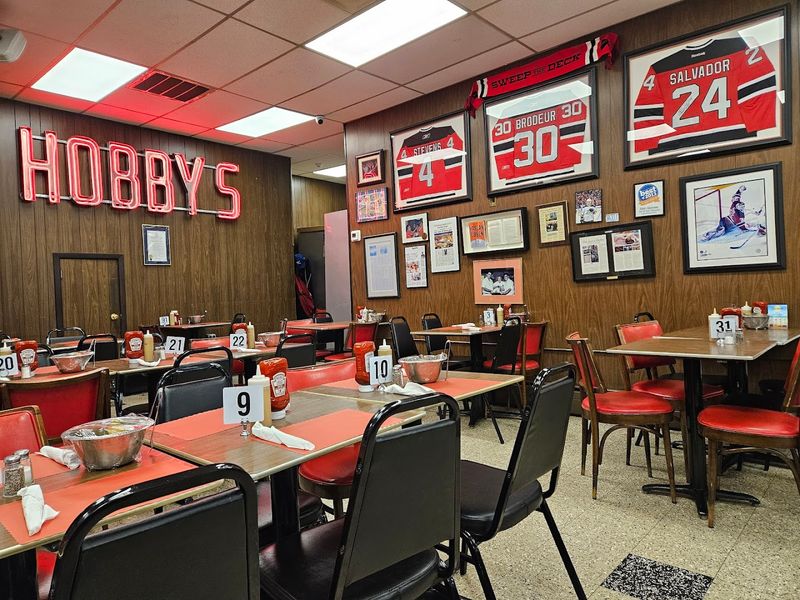
The moment you step inside Hobby’s, the aesthetic does something to your brain that no amount of trendy interior design can replicate. The walls carry decades of personality.
Sports memorabilia, old photographs, and the kind of decor that says this place has actual history rather than a carefully curated brand identity. It feels earned.
Customers frequently describe the vibe as straight out of the fifties, sixties, or seventies, and that is absolutely a compliment. There is a warmth here that comes from the physical space as much as from the people in it.
The lighting, the layout, the worn-in quality of everything around you. It all adds up to something genuinely comfortable.
Modern restaurants spend enormous amounts of money trying to manufacture this kind of atmosphere. Hobby’s never had to try.
It just kept being itself for over sixty years, and the result is a room that feels alive with memory and meaning. Eating here feels less like dining out and more like being welcomed somewhere that actually matters.
Sides and Extras That Complete the Whole Picture
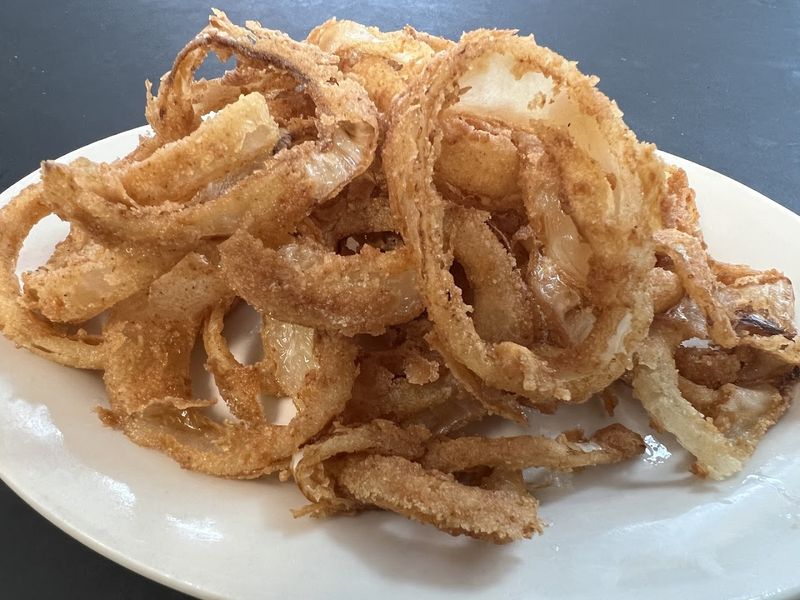
Ordering a sandwich at Hobby’s and skipping the sides would be like watching the first half of a great movie and walking out.
The homemade potato pancakes are crispy on the outside and soft in the middle, the kind of side dish that makes you wonder why every restaurant does not serve them.
The onion rings follow the same logic: simple, done right, completely satisfying.
Free pickles arrive at the table without asking, which is the kind of small gesture that tells you a lot about a place. Half-sour pickles, full-sour pickles, the kind of briny crunch that cuts through the richness of a thick sandwich perfectly.
It is a detail that sounds minor until you realize how much it adds to the overall experience.
The knishes deserve their own mention. Stuffed with unexpected fillings and served hot, they have surprised more than a few first-time visitors who ordered them on a whim.
Sides at Hobby’s are not filler. They are part of the reason people keep coming back long after the main event is finished.
Desserts That Bring the Whole Meal Home
Ending a meal at Hobby’s with dessert is not optional, it is practically required. The pastry selection feels like it was assembled by someone who genuinely loves baking rather than someone filling a display case out of obligation.
Fresh, varied, and made with the same attention to quality that defines everything else on the menu.
Regulars describe the desserts with the kind of enthusiasm usually reserved for main courses. There is a reason for that.
When the base ingredients are good and the technique is honest, even a simple pastry becomes something memorable. A few bites in and you start understanding why people make special trips just for the sweets.
The vanilla coke, a house specialty, has its own following among customers who discovered it almost by accident. It is the kind of unexpected detail that turns a good meal into a great one.
Hobby’s desserts do not shout for attention. They just quietly deliver, which is exactly the kind of confidence that comes from knowing your product is genuinely worth eating.
A Menu That Grew Without Losing Its Roots
Staying relevant for over sixty years requires a certain kind of flexibility, and Hobby’s has managed it without betraying what made it special in the first place. The classic deli staples remain exactly as they should be.
The pastrami, the corned beef, the soups, the pickles. None of that has changed in any way that matters.
What has expanded is the range of options available to customers who might have different dietary needs. Fresh salads, vegetarian dishes, vegan-friendly choices, and genuine gluten-free options with dedicated prep spaces to prevent cross-contamination.
That last detail is not a small thing for people who have to think carefully about what they eat. It reflects a real commitment to making everyone feel welcome.
The balance between tradition and accessibility is not easy to strike. Plenty of old-school restaurants have tried to modernize and lost whatever made them worth visiting.
Hobby’s kept its identity firmly intact while opening the door wider. That takes thoughtfulness, and it shows in every part of the menu.
Why People Drive Hours Just to Eat Here
There is something powerful about a restaurant that earns loyalty across state lines. Hobby’s regularly draws customers from hours away, people who plan their entire day around making it to 32 Branford Place before the kitchen closes.
That kind of dedication does not happen by accident and cannot be manufactured through marketing.
Part of it is the food, obviously. But part of it is also the feeling of the place, the owners who come out to greet tables, the staff who treat every customer like a regular even on their first visit, and the sense that something genuine is happening here.
Authenticity is hard to fake, and Hobby’s has never needed to try.
The deli has survived a fire, a global pandemic, and decades of change in the restaurant industry. It is still standing, still packed, still earning five-star reviews from people who drove four hours and would do it again next weekend.
Some places earn their reputation slowly and then keep it forever. Hobby’s is exactly that kind of place.
Address: 32 Branford Pl, Newark, NJ
