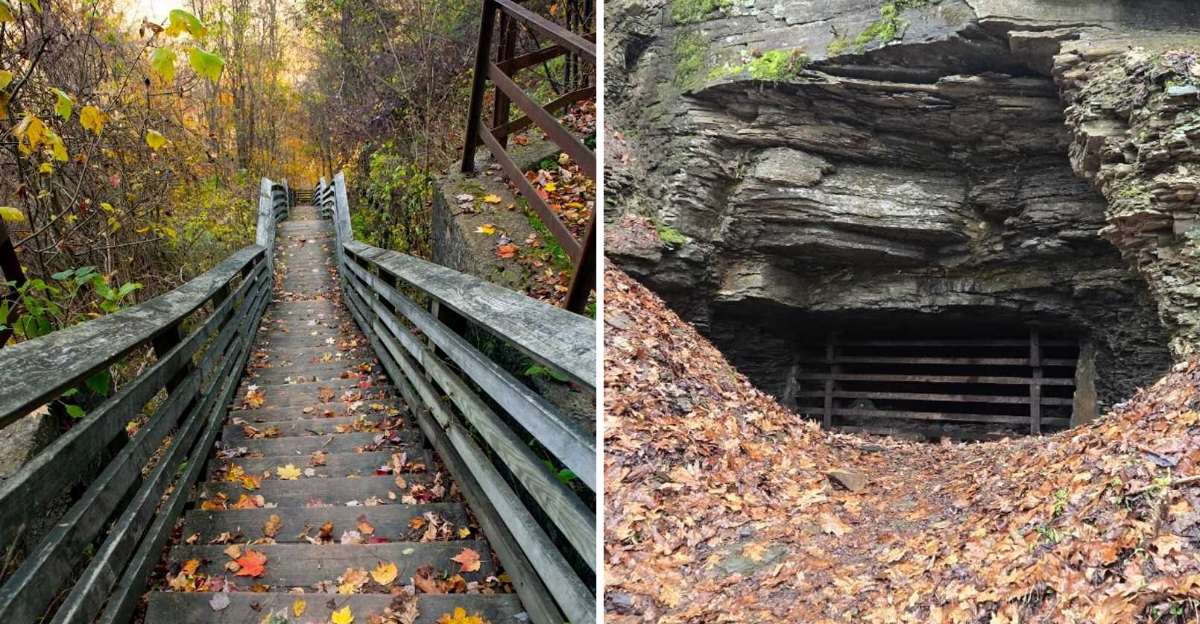
This is not a casual stroll. This is a one-mile vertical plunge into West Virginia history that will test your knees.
The trail drops hundreds of feet in elevation, using rocky switchbacks and wooden steps built for miners.
At the bottom, a coal empire’s ghost waits, a sprawling complex of ovens and processing plants that fell silent decades ago.
You can explore where miners once vanished, then descend further to river level ruins where only leaves and your breathing break the silence.
The climb back up will make you question your life choices.
West Virginia has steep trails, but this one comes with a history lesson that makes every step worth the burn.
Are your legs ready for this?
A One-Mile Hike That Drops You Into History
Stepping onto the Kaymoor Miners Trail feels like crossing a threshold between two entirely different worlds. The trailhead is modest, almost understated, giving little indication of the dramatic historical journey waiting just ahead.
Within the first few minutes, the forest closes in around you, and the sounds of the parking area fade completely.
The path begins with a series of gentle switchbacks, easing you into the descent before the real challenge begins. Interpretive signs appear early, offering context about the Kaymoor coal mine complex that operated here from 1899 to 1962.
These details set the tone, reminding you that this is not just a nature walk but a living history lesson carved into the mountainside.
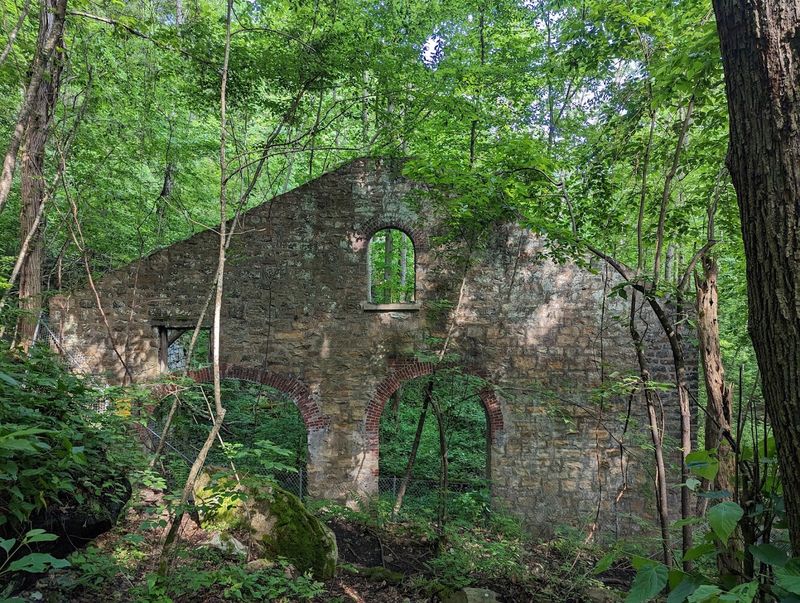
At roughly half a mile long before the staircase begins, this initial stretch rewards curiosity at every turn. Remnants of the lamp house and ventilation fan house appear along the upper section, offering your first tangible glimpse of the industrial past.
The trail wastes no time making its intentions clear: this is a place where history and wilderness exist as one inseparable thing.
Nine Hundred Feet Down And Every Step Counts
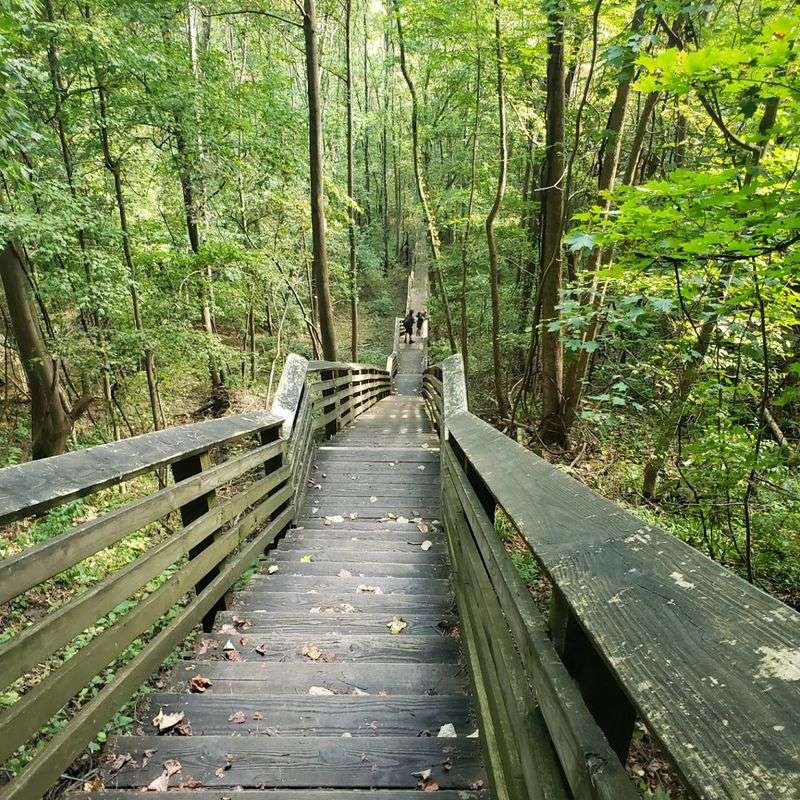
The moment the wooden staircase comes into view, everything changes. Stretching downward through the dense forest canopy, 821 steps drop roughly 900 feet into the gorge below, and the sheer scale of it stops you in your tracks.
Your brain does a quick calculation, and your legs immediately file a formal complaint.
Each step is deliberate, the kind of descent that demands full attention and steady footing. Midway down, the rusted remains of a cable car track and what appears to be an old boiler emerge through gaps in the trees, teasing the ruins waiting at the bottom.
These mid-descent discoveries keep the momentum going, turning a grueling physical challenge into an ongoing archaeological reveal.
The ascent back up is the part nobody fully prepares for. Every hiker who has done this trail knows the climb out earns its reputation honestly.
Bringing plenty of water and planning extra time for the return journey is not optional advice; it is essential strategy. The 900-foot elevation change is the trail’s way of ensuring you earn the history it shares.
The Gorge Trail That Leads Straight To The Past
The New River Gorge provides one of the most dramatic natural settings imaginable for a historical trail, and the Kaymoor Miners Trail uses every inch of that drama effectively.
Towering sandstone cliffs frame the descent, their ancient faces indifferent to the human story that unfolded at their base for over six decades.
The gorge itself feels enormous, the kind of landscape that makes you instinctively speak more quietly.
As the trail winds downward, the ecosystem shifts noticeably. The air grows cooler and damper, carrying the rich scent of moss and wet stone.
Ferns crowd the rocky edges of the path, and the light filters differently here, softer and more diffuse, filtered through multiple layers of forest canopy.
What makes this trail genuinely distinct is how the gorge environment amplifies the historical experience. The isolation that protected Kaymoor from outside development after its 1962 closure is the same isolation that makes the ruins feel so startlingly preserved today.
The gorge did not just frame the mining operation; it effectively sealed it in time, creating the remarkable site that hikers encounter at the trail’s end.
Coal Country Stories Written In Steel And Stone
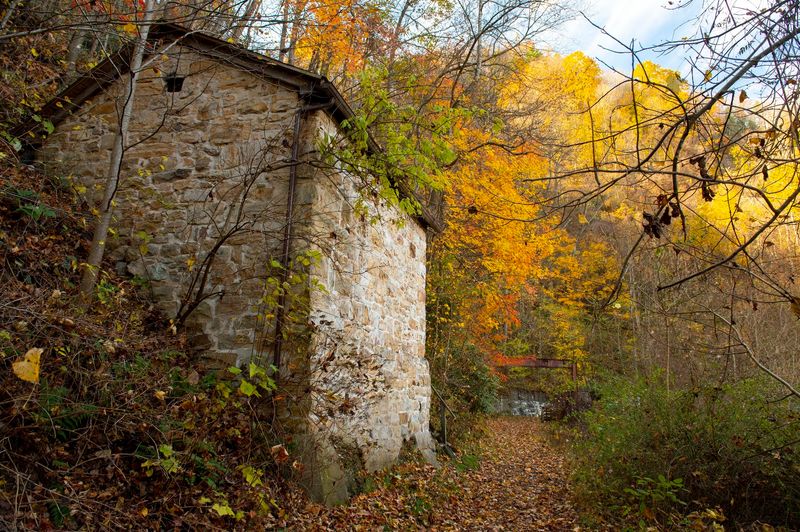
Between 1899 and 1962, the Kaymoor mine extracted over 16 million tons of coal from the depths of this gorge, a staggering figure that becomes almost tangible when you stand among the remnants of the machinery that made it possible.
The heavy equipment left behind, now motionless and weather-beaten, carries a certain gravity that photographs struggle to convey.
Steel corrodes slowly here in the damp gorge air, preserving the shapes of gears and housings in remarkable detail.
The stone powder house, built to safely store the explosives used in mining operations, still stands in notably good condition, its solid construction outlasting nearly every wooden structure on the site.
The hoist house for the incline tramway, which once transported both coal and workers down the steep 1,000-foot slope, remains another key surviving structure.
These buildings speak to the engineering ambition that went into establishing a full-scale industrial operation in such a rugged and remote location.
The coke ovens are perhaps the most visually striking element of the complex. Their dark, cavernous interiors and arched brick entrances line up in rows, creating a surreal and haunting visual rhythm.
Each one represents thousands of hours of labor and an era when this hidden gorge was anything but quiet.
A Stairway To The Forgotten World Below
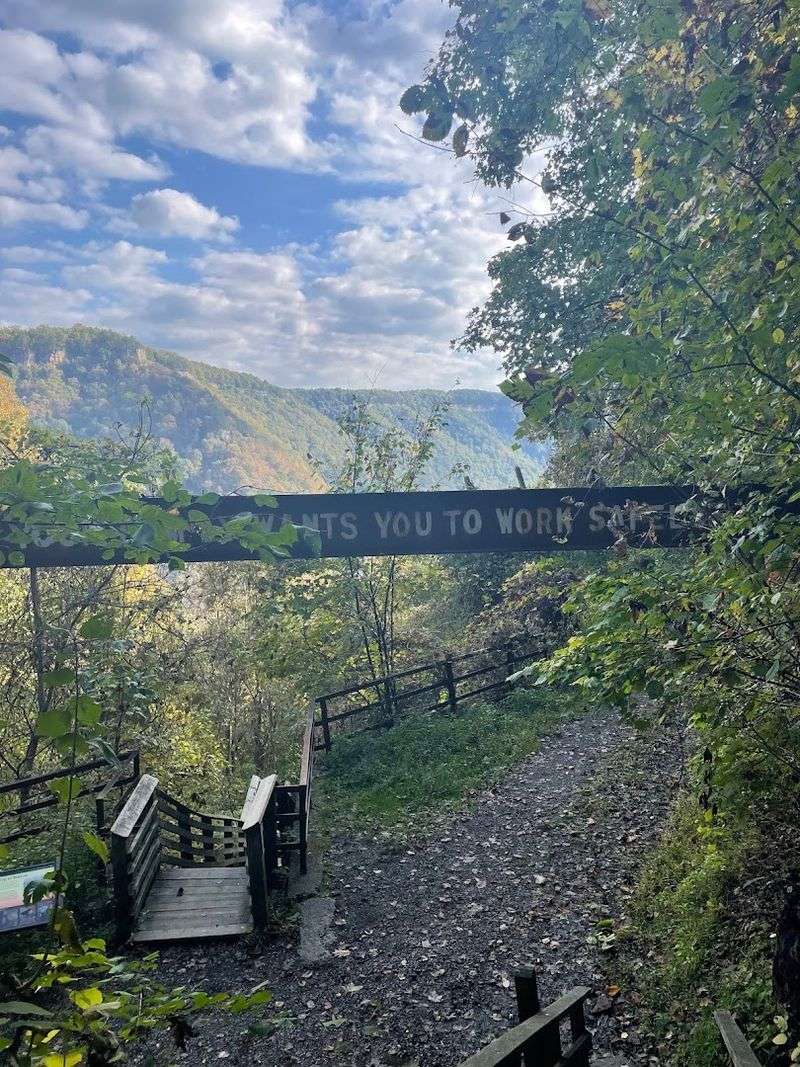
The wooden staircase on the Kaymoor Miners Trail is not just a trail feature; it is the trail’s defining character.
Over 800 steps plunge through the forest in a near-continuous cascade, following roughly the same route as the original steam-powered incline tramway that transported miners and coal along this very slope for decades.
Standing at the top of the staircase and looking down creates a genuinely vertiginous feeling.
Midway through the descent, the stairs offer fleeting views through breaks in the canopy, revealing glimpses of the gorge walls and the industrial remnants below.
The wooden steps creak softly underfoot, and that sound, rhythmic and slightly hollow, adds an unexpected layer of atmosphere to the whole experience.
It makes the descent feel less like exercise and more like a slow, deliberate entry into another era.
The original incline operated until the mine’s closure in 1962, and the current staircase essentially honors that route by making it accessible to modern visitors. Walking it connects you physically to the daily experience of workers who navigated this same steep slope.
That sense of shared physical effort across generations is one of the trail’s most quietly powerful qualities, something that settles in long after the burn in your thighs has faded.
Where Nature And Industry Collide In The Gorge
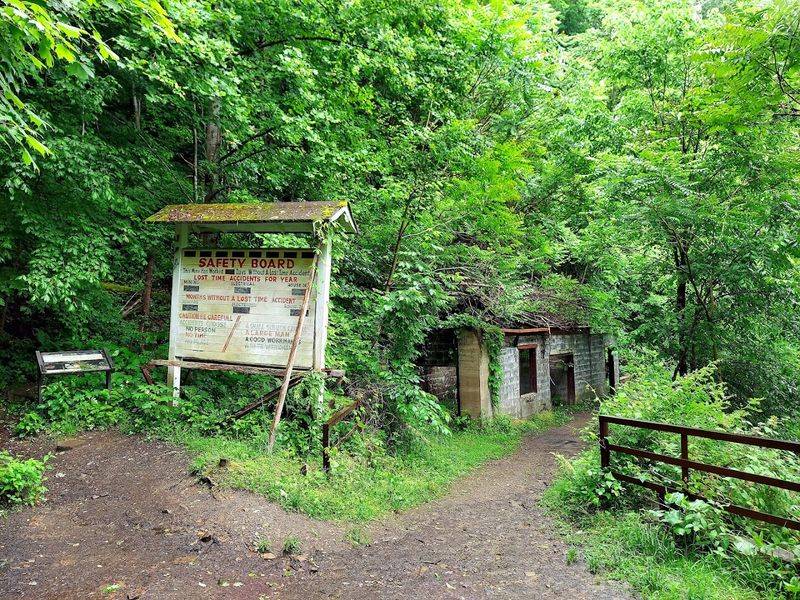
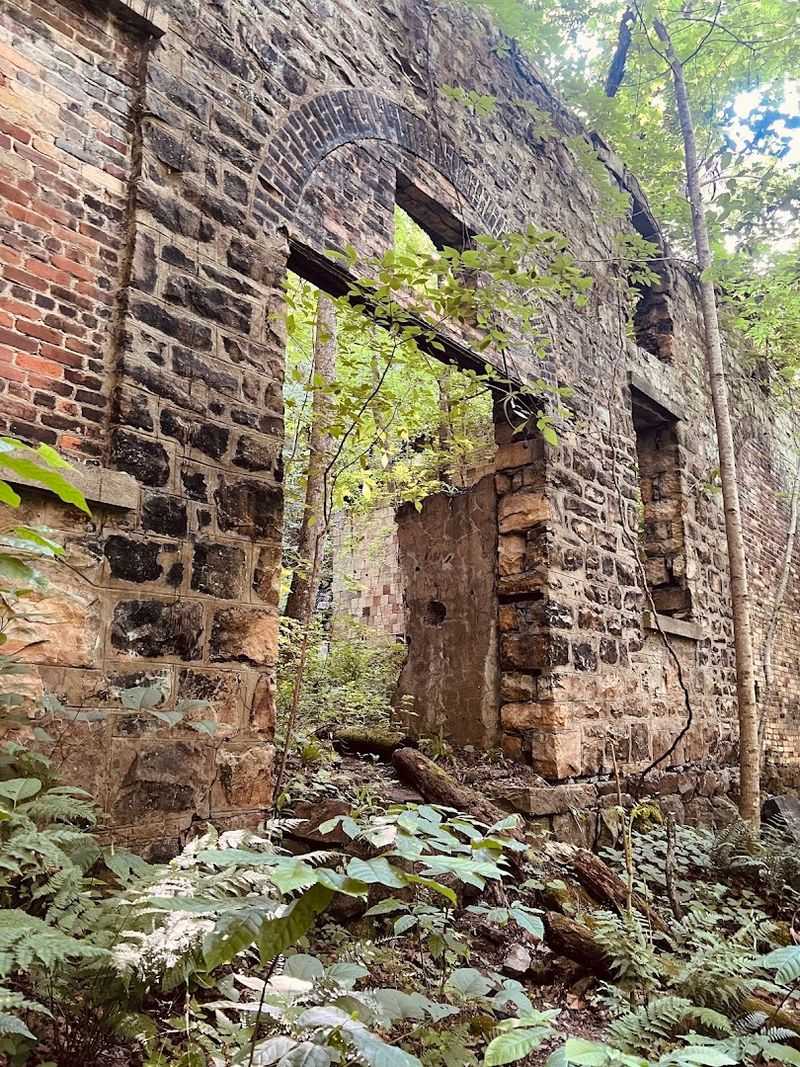
Few places illustrate the relationship between human industry and natural resilience quite like the lower section of the Kaymoor Miners Trail. The ruins here are not simply decaying; they are being actively absorbed.
Vines thread through broken windows, mosses soften the angular edges of rusting metal, and young trees push through cracked concrete foundations with quiet determination. Nature is not in a hurry, but it is winning.
The gorge environment itself played a crucial role in shaping the Kaymoor operation from the very beginning. The New River provided both a transportation corridor and a natural boundary, while the steep gorge walls created the topography that made the incline tramway system necessary.
Industry adapted to the landscape here rather than flattening it, which is part of why the site feels so organically embedded in its surroundings even today.
The isolation that the gorge provided after the mine’s 1962 closure is also what makes Kaymoor one of the most intact mining complexes in the entire New River Gorge National Park and Preserve. Without easy road access to the lower site, development and salvage operations largely bypassed it.
The gorge protected these ruins by making them inconvenient, and hikers today benefit enormously from that inconvenience.
The Trail That Tests Your Legs And Rewards Your Curiosity
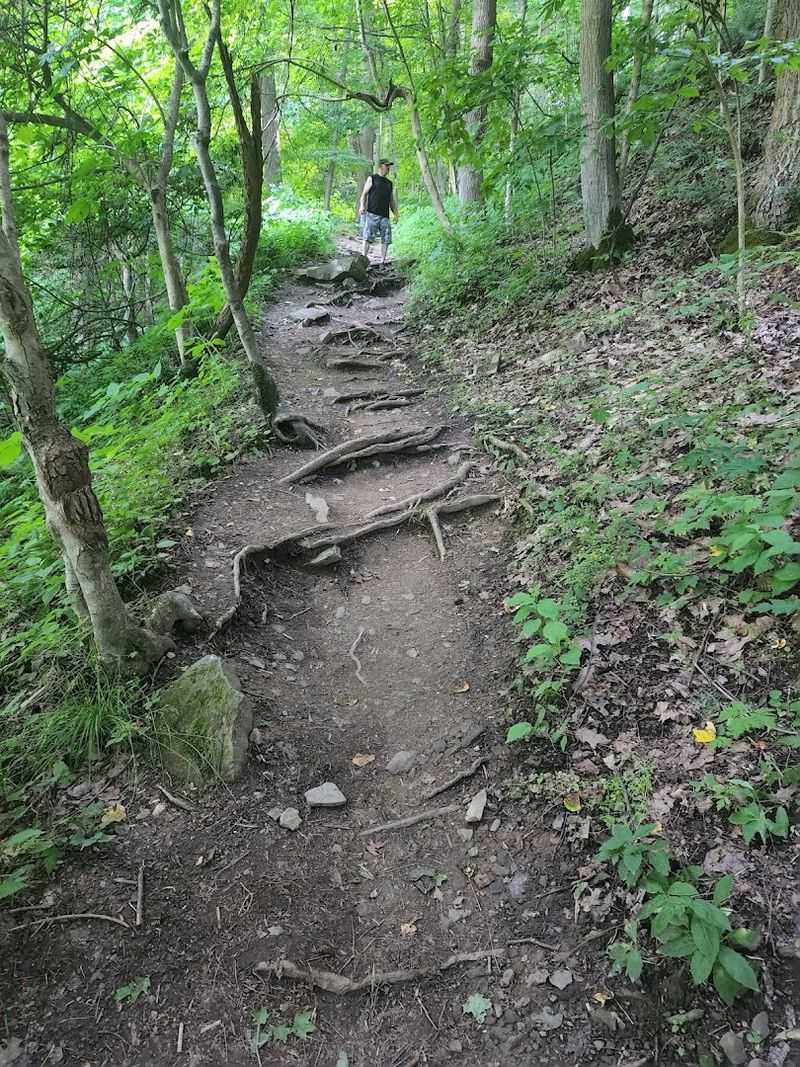
The Kaymoor Miners Trail does not pretend to be something it is not. From the moment the switchbacks begin their earnest descent, the trail communicates clearly that it expects something from you.
The rocky sections demand careful foot placement, and the sustained elevation loss keeps your legs engaged throughout. Even experienced hikers find the return climb genuinely taxing, especially in warmer months when the gorge traps heat effectively.
That physical honesty is actually part of what makes the experience so rewarding. Arriving at the mining complex after navigating the descent feels meaningfully different from simply driving to a historical site.
The effort creates investment, and investment sharpens attention. Details that might be overlooked on an easy stroll become fascinating when you know you worked to reach them.
Practical preparation makes a significant difference on this trail. Bringing more water than you think you need is consistently the most important piece of advice from those who have done it.
Solid footwear with good grip handles the rocky terrain and wooden steps far better than casual sneakers. Starting early in the day keeps temperatures manageable and provides the best lighting for exploring the ruins.
The trail is demanding but fully accessible to reasonably fit hikers who come properly equipped and allow themselves adequate time.
Echoes Of Miners Still Haunt These Hidden Walls
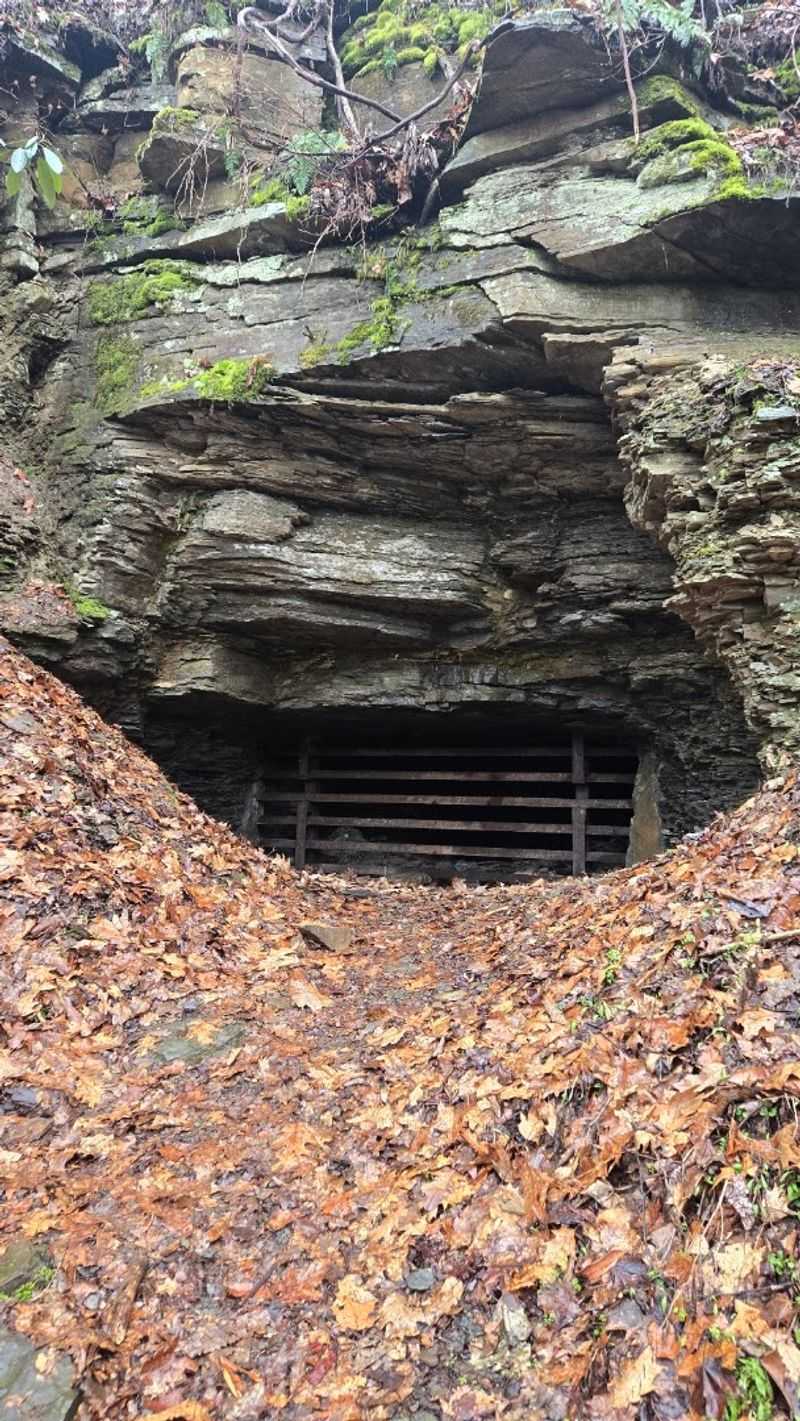
At the Kaymoor complex’s peak in 1923, approximately 560 people called this gorge home, spread across two distinct communities known as Kaymoor Top and Kaymoor Bottom.
Miners arrived from diverse backgrounds, forming a tight-knit industrial village in one of the most geographically isolated settings imaginable.
The foundations of their homes and community buildings are still visible in places, subtle outlines in the earth that carry enormous human weight.
The mine openings, now gated for safety, are among the most evocative features of the lower site. Standing near them, the cool air emanating from within carries a faint mineral scent, an atmospheric reminder of the thousands of hours spent working in darkness by the people who built their lives here.
Those gated entrances feel less like safety barriers and more like punctuation marks, a firm period at the end of a long and demanding chapter.
The Kaymoor site is listed on the National Register of Historic Places and is actively managed by the National Park Service as part of New River Gorge National Park and Preserve.
Interpretive signage throughout the complex helps contextualize the ruins, connecting specific structures to specific functions and specific lives.
The history here is not abstract; it is written directly into the landscape in concrete, stone, and rusting steel.
One Mile Down Into A Place Time Left Behind

One mile is not a long distance on paper. But the Kaymoor Miners Trail proves definitively that distance and experience are two entirely separate measurements.
That single mile compresses geology, industrial history, human perseverance, and natural beauty into a journey that feels far larger than its physical length suggests. The trail earns its reputation not through mileage but through depth.
The abandonment of Kaymoor in 1962 after six decades of continuous operation left the site to the gorge’s slow, patient processes.
The National Park Service has since worked carefully to stabilize key structures and install interpretive materials, ensuring the site communicates its history clearly to visitors.
That stewardship has transformed what could have been a forgotten pile of ruins into one of the most compelling historical destinations in West Virginia.
Coming back up those 821 steps after exploring the complex is the final chapter of the experience, and it is a memorable one. The climb is demanding, but it also offers a different perspective on the descent route, revealing details missed on the way down.
Reaching the trailhead again feels like surfacing from something genuinely significant. The Kaymoor Miners Trail is a one-mile hike that leaves a much longer impression.
Address: Kaymoor Miners Trailhead, Kaymoor Rd, Fayetteville, WV
