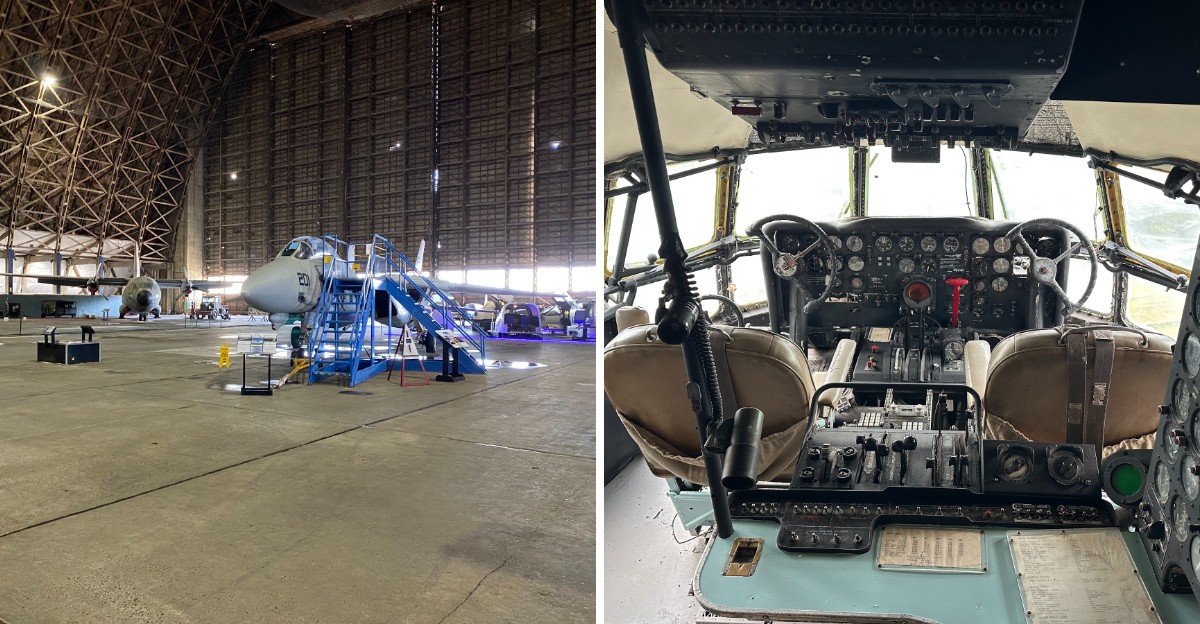
A building made of wood stands 192 feet tall and stretches longer than three football fields. It was built to hold Navy blimps during World War II. Today it holds fighter jets instead.
A December 2025 windstorm tore into the roof and shut the doors for about ten months. Then a nonprofit bought the whole thing for one dollar. Yes, one single dollar.
I like how this Oregon landmark refuses to quit. I believe some buildings carry stories too big to lose, and this one is literally too big to ignore. Its six doors each weigh 30 tons.
The Doors Swing Open Again This October
Good news travels slowly on the coast, but this bit is worth shouting about. The Tillamook Air Museum plans a grand reopening on Thursday, October 29, 2026. Doors open at 10 a.m. and stay open until 7 p.m. that day.
After the big day, winter hours kick in. The museum will run Tuesday through Sunday from 10 a.m. to 4 p.m.
So why the long break? A windstorm in December 2025 badly damaged the roof of Hangar B. The museum stayed closed for roughly ten months while its future hung in the balance.
The Port of Tillamook Bay decided the roof repairs cost too much. That could have been the end of the story. Instead, it became a plot twist.
The Utah-based nonprofit Vintage Aviation Museum purchased historic Hangar B for just $1 and acquired the remaining Tillamook Air Museum assets for another $20. It now owns and runs the place. The group plans to restore the visitor experience and keep improving the exhibits.
That reopening date feels like a homecoming for a true Oregon icon. If you missed it before, this is your fresh start. If you loved it already, you get to see what new hands bring to an old favorite.
You Will Feel Tiny Under This Record-Setting Wooden Roof
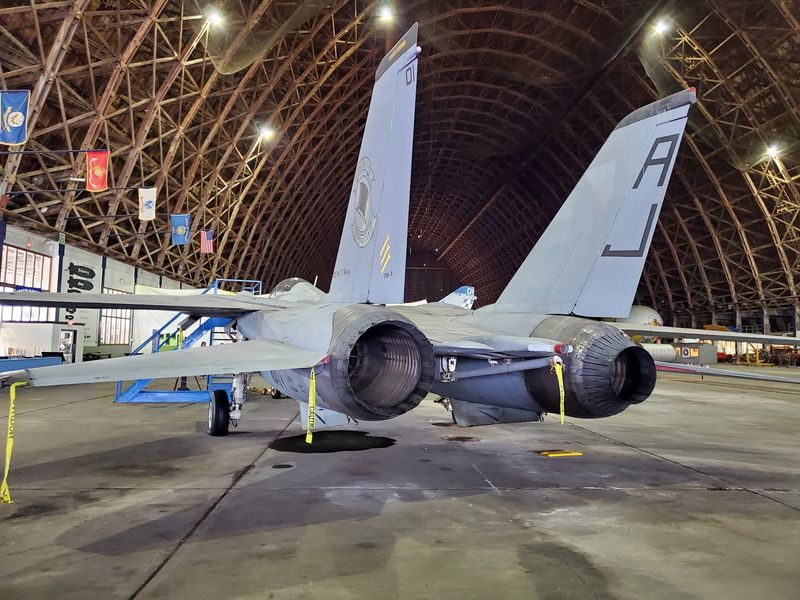
Over seven acres sit under one roof here. Hangar B measures 1,072 feet long, 296 feet wide, and 192 feet high. That height is roughly equivalent to a 15- to 19-story building, depending on the height of each floor.
It’s widely considered the largest clear-span wooden structure in the world. Clear-span means no posts hold up the middle. The whole interior stays wide open from wall to wall.
Look up and you’ll see a lattice of sweeping catenary arch trusses. The wooden curves overlap in patterns that look almost woven. It’s honestly one of the prettiest ceilings you’ll ever crane your neck to admire.
Builders used over two million board feet of lumber, with some sources saying 3.3 million board feet of Oregon lumber. Either way, that’s a whole lot of trees with a second career.
Two catwalks run the full length of the building. They hang 137 feet above the floor. Just picturing workers up there might make your knees wobble a little.
Then there are the doors. Six of them, each weighing 30 tons and standing 120 feet tall. Next time your front door sticks, you’ll feel a little better about it.
Blimps Once Patrolled the Coast From Right Here
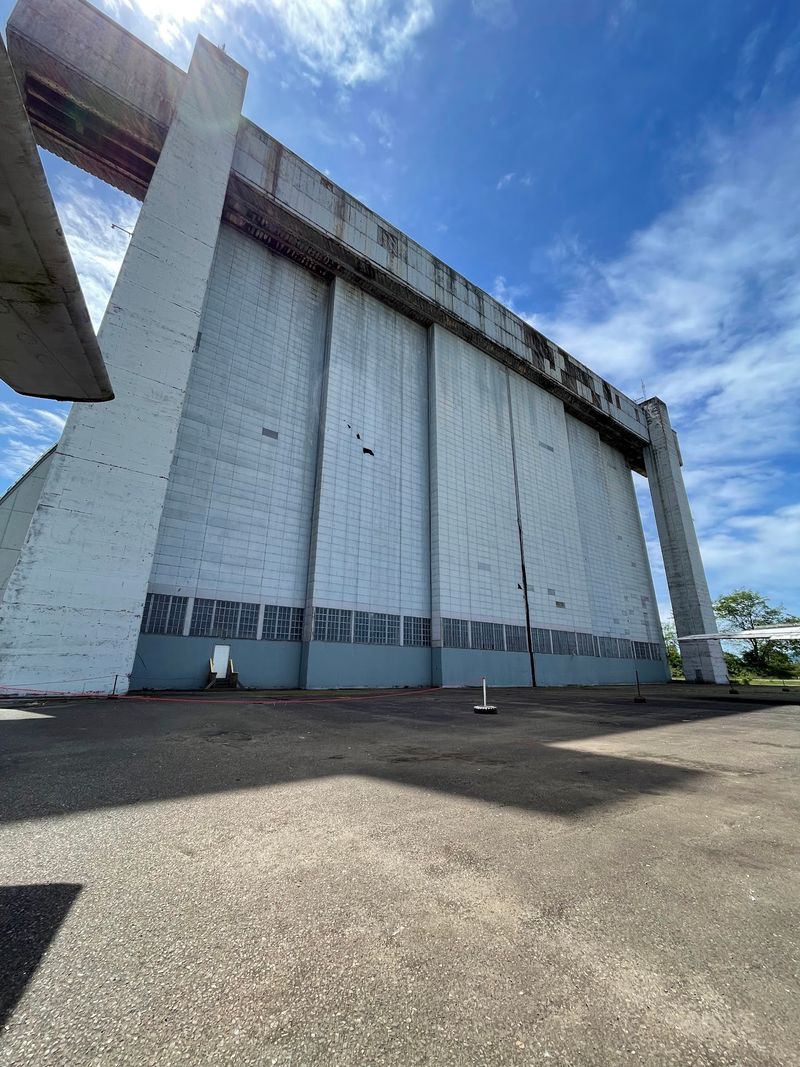
Steel was precious during World War II. So the Navy built these hangars from wood to save it for the war effort.
Naval Air Station Tillamook was commissioned in December 1942. Construction on Hangar B started in October 1942 and wrapped up in August 1943. The station stayed active until 1948.
The base housed Squadron ZP-33 and its eight K-class airships. Each blimp stretched 252 feet long and 80 feet across. According to the museum, these K-class blimps could remain airborne for up to three days.
Their job was serious. The airships watched for submarines and escorted ships along the coast. They could cover a radius of about 500 miles.
Hangar B once had a twin. Hangar A was built in just 27 days, which still sounds unbelievable. Sadly, it was lost to a fire in 1992.
Hangar B earned a spot on the National Register of Historic Places in 1989. The museum moved in five years later, in 1994. Its mission is to preserve and honor the history of the air station, the hangar, and aviation as a whole. Standing inside, you’re surrounded by that story on every side.
Go Ahead and Climb Into a Real Cockpit
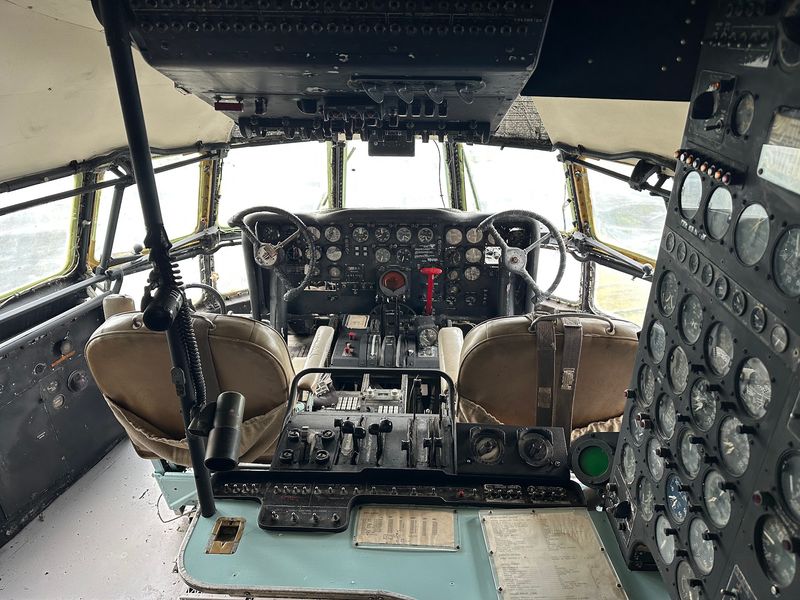
Most museums ask you to keep your hands to yourself. This one practically hands you the controls.
Visitors can hoist themselves into the cockpits of smaller fighter planes. Once inside, you can work the buttons and levers. Kids light up, and grown-ups somehow forget they’re grown-ups.
The cockpit lineup is impressive. You’ll find sections from a Boeing B-52G Stratofortress and a Boeing 727. There’s also an F-4 Phantom cockpit used in the movie Sully. Many of them let you sit right inside.
Jet simulators add another layer of fun. They’re a great way to test your flying skills without a single real-world risk. Your pride might take a hit, though.
A short film room tells the story of the hangar’s history. Watching it early helps the rest of your visit click into place. A virtual reality exhibit called A Journey through the Architectural Legacy of Hangar B takes the building story even further.
Here’s a smart move. Let kids burn energy in the cockpits first, then visit the quieter exhibits. Everyone stays happier that way, including you.
A Tomcat, a Mini Guppy, and Plenty of Famous Friends
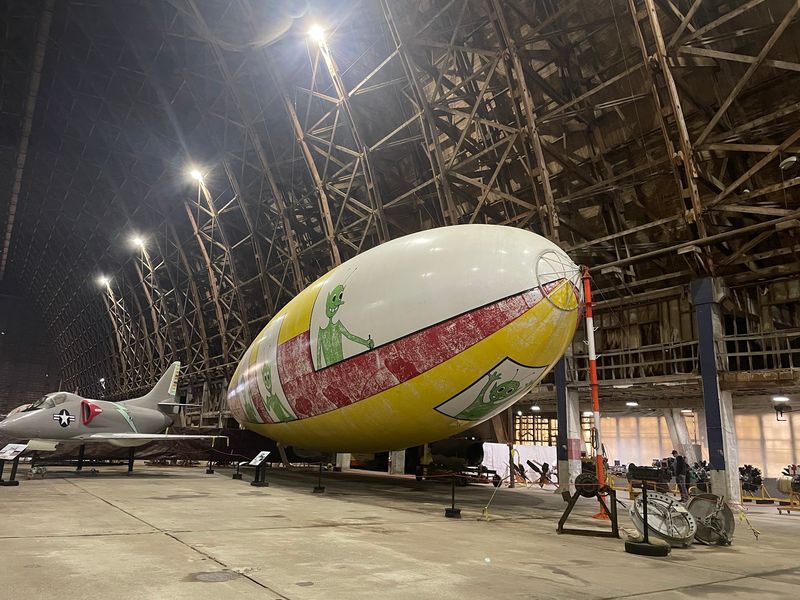
Some aircraft just have star power. The Grumman F-14A Tomcat sits here, and fans of fighter jets tend to make a beeline for it.
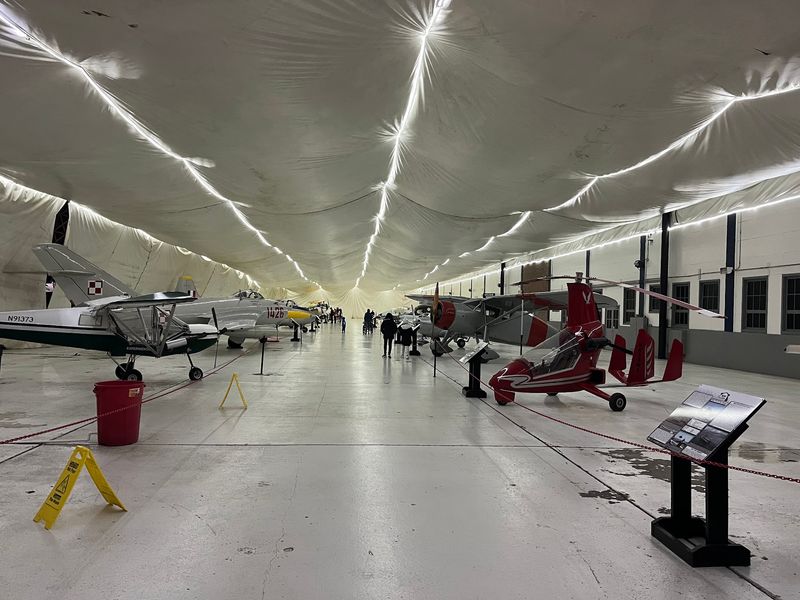
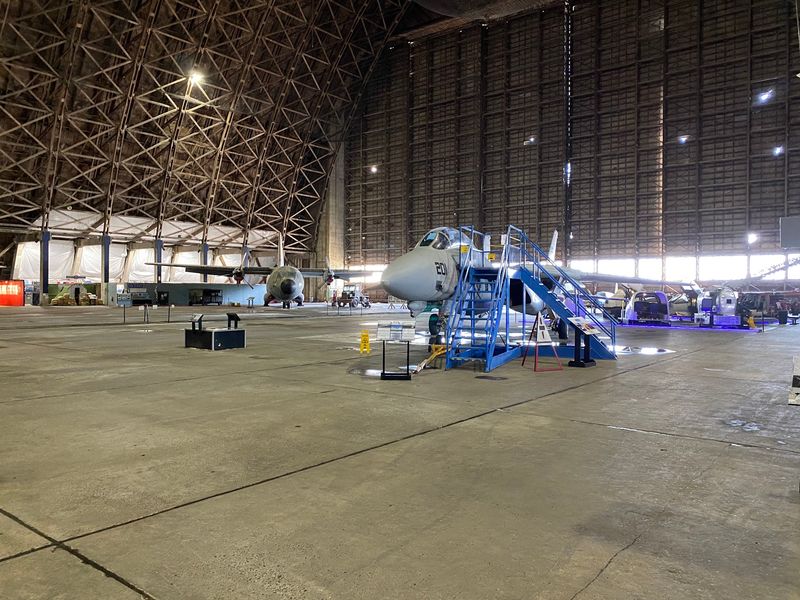
The museum displays more than 25 historic aircraft. With seven acres of floor, they have room to breathe. Nothing feels crammed together.
The Aero Spacelines Mini Guppy is a showstopper. Its bulging body looks like a plane that swallowed another plane. It was built to haul oversized cargo, and it definitely looks the part.
Other highlights include the LTV A-7E Corsair II and the Douglas A-4B Skyhawk. The PZL-Mielec Lim-6bis is a Polish version of the MiG-17. A Bell helicopter rounds out the mix nicely.
Having so many eras in one place is a treat. You can stroll from a classic propeller fighter to a sleek jet in a few minutes. It’s like a time machine with wings.
Take your time reading the signs. Comparing shapes, engines, and sizes helps you see how fast aviation changed. And with that wooden ceiling soaring above, even the biggest planes look surprisingly small. That’s a sight you won’t find in many other places.
Pieces of the Hindenburg Hide in the Exhibit Hall
Actual fragments of the German airship LZ-129 Hindenburg rest inside the exhibit hall. For an airship hangar, that feels perfectly fitting.
The hall holds a large collection of rare wartime and aviation artifacts. You’ll spot a World War II Luftwaffe flight jacket. There’s also a WWII Japanese Army winter flight suit.
Medals, helmets, and uniforms fill out the displays. Each one belonged to a real person with a real story. That personal side makes history feel much closer.
A model air raid shelter shows how families prepared during the war years. It’s a small space with a big message. Kids often have plenty of questions afterward.
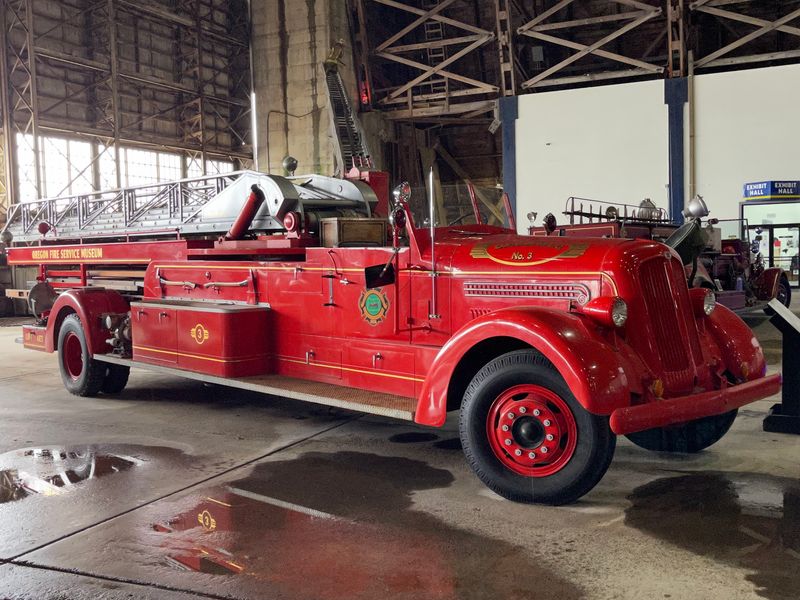
Wheeled history joins the party too. Wartime-era vehicles include antique fire trucks and a 1931 Ford AA. The old trucks look sturdy enough to start right up.
The space also plays 1940s pop and big band hits. That soundtrack drifts through the giant hangar and sets a mood that some describe as almost haunting. It pairs well with slow wandering.
Give this hall real time. The planes grab attention, but the small objects often stick with you longest.
Pack a Jacket Because the Hangar Plays by Outdoor Rules

Wood is beautiful, but it doesn’t make a cozy blanket. Hangar B is uninsulated, so treat your visit like an outdoor activity.
Bring layers, even if the sun is out. Oregon coast weather changes its mind often. A warm jacket and comfy shoes will make the day much easier.
Finding the museum is simple. It sits at 6030 Hangar Rd, Tillamook, OR 97141, south of town beside the Tillamook Municipal Airport. The hangar is so huge you’ll spot it long before you arrive.
Parking is ample. There’s room for cars, motorcycles, buses, and RVs. Overnight dry camping for aircraft and RVs is available at the Tillamook Airport and RV Park.
Traveling with a dog? Only service animals can go inside the museum. A large dog walk area outside gives pups a place to stretch.
Groups of 10 or more can book guided tours. Reserve at least two weeks ahead to lock in a spot. A guide can bring out stories you might otherwise miss.
A little planning goes a long way here. Then you can focus on the fun part, staring at the ceiling.
Turn One Stop Into a Full Coastal Day Trip
Cheese lovers, good news. The Tillamook Creamery sits roughly five miles away, which makes a perfect second stop.
Pairing planes with cheese might sound odd. In practice, it’s a winning combo for families. Everyone gets something they love.
Nature fans have options too. Munson Creek Falls State Natural Site offers a lovely forest setting. The Tillamook Forest Center adds a deeper look at the region’s woods.
That forest connection feels extra meaningful after the museum. You just stood inside a building made from millions of board feet of lumber. Seeing living trees afterward closes the loop nicely.
Beaches are also close by in Tillamook County. A walk along the sand is a great way to end the day. The Tillamook County Fairgrounds rounds out the local lineup.
Start with the Tillamook Air Museum in the morning. Then let the rest of the day unfold along the coast. You’ll head home with cheese, sandy shoes, and plenty of stories.
Oregon has many scenic drives, but few lead to a wooden giant like this. With the doors reopening, there’s never been a better excuse to go.
