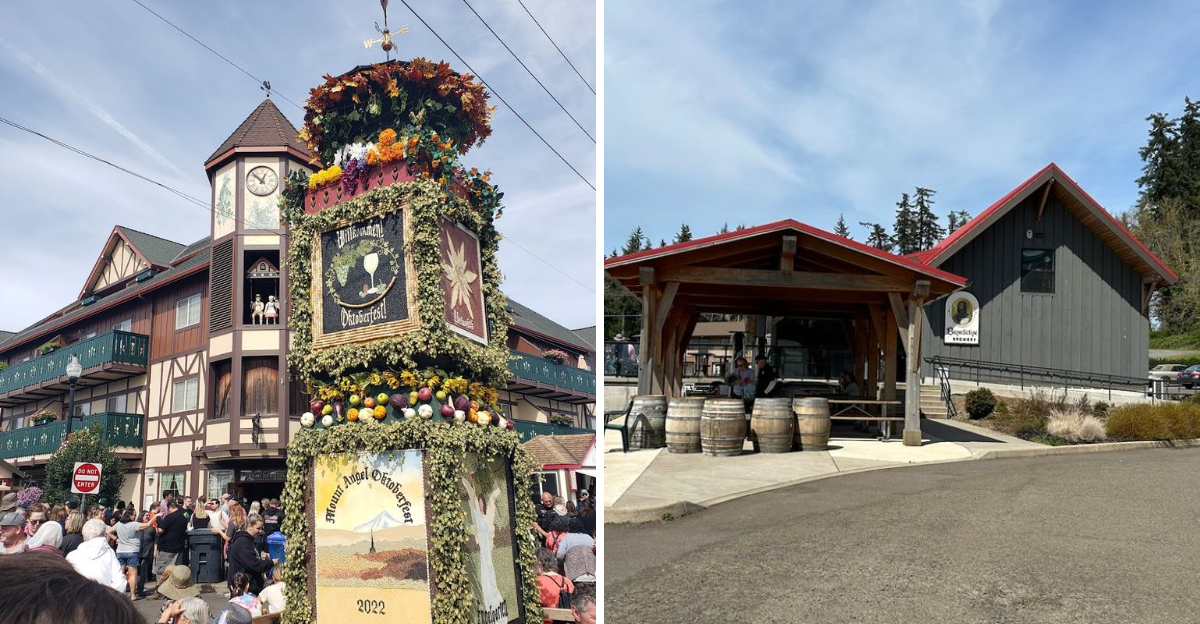
Mount Angel sits in Oregon’s Willamette Valley like a postcard from the Alps that somehow got delivered to the wrong continent.
Walk down the main street and you’ll swear you’ve stepped into a Bavarian village, complete with glockenspiel melodies drifting through the air and half-timbered buildings that look like they were airlifted straight from Switzerland.
This tiny town of just over 3,000 residents has managed to preserve its Germanic heritage so thoroughly that visiting feels like international travel without the passport hassle. Founded by Swiss and German immigrants in the 1800s, Mount Angel has turned its Old World roots into a living, breathing experience that draws visitors from across the Pacific Northwest and beyond.
A Name Borrowed from Swiss Peaks
Back in 1883, settlers looked at the rolling hills around their new community and felt homesick for the jagged peaks of Engelberg, Switzerland. They anglicized the name to Mount Angel, creating a linguistic bridge between their adopted home and the Alpine valleys they’d left behind.
The name wasn’t just nostalgia talking, it was a declaration of intent about the kind of community they wanted to build.
Today, that name serves as your first clue that this Oregon town operates by different cultural rules. Unlike neighboring communities named after Native American tribes or pioneer families, Mount Angel wears its European identity right in its title.
The choice reflected the settlers’ determination to transplant their traditions rather than simply adapt to American norms.
When you arrive and see how thoroughly the town has maintained its Swiss-German character over 140 years, the name makes perfect sense. Mount Angel didn’t just borrow a title from Switzerland; it borrowed an entire aesthetic philosophy that still guides the community’s development and cultural programming.
The Tallest Glockenspiel in America
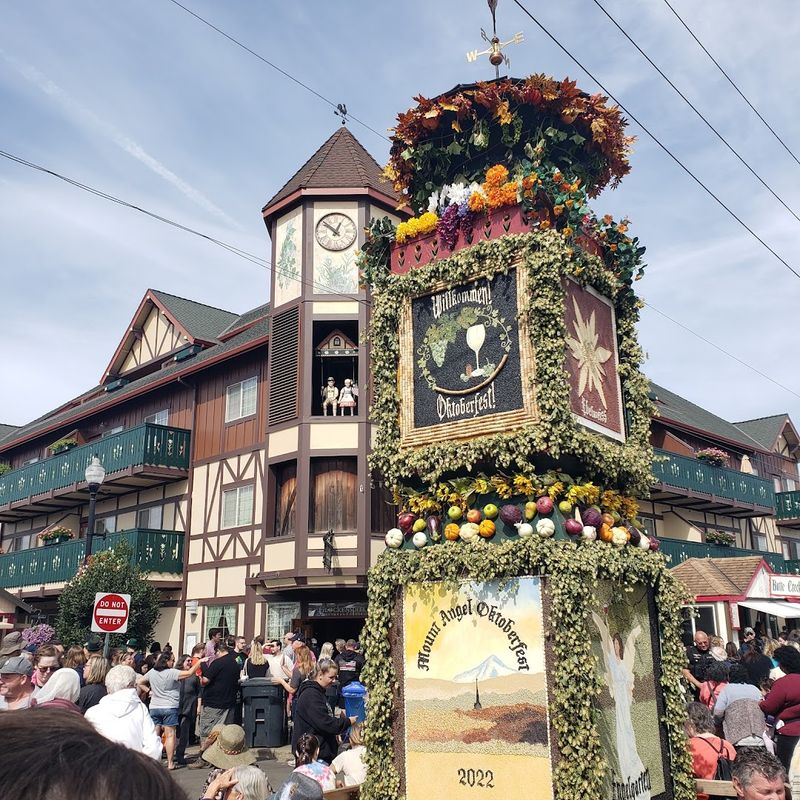
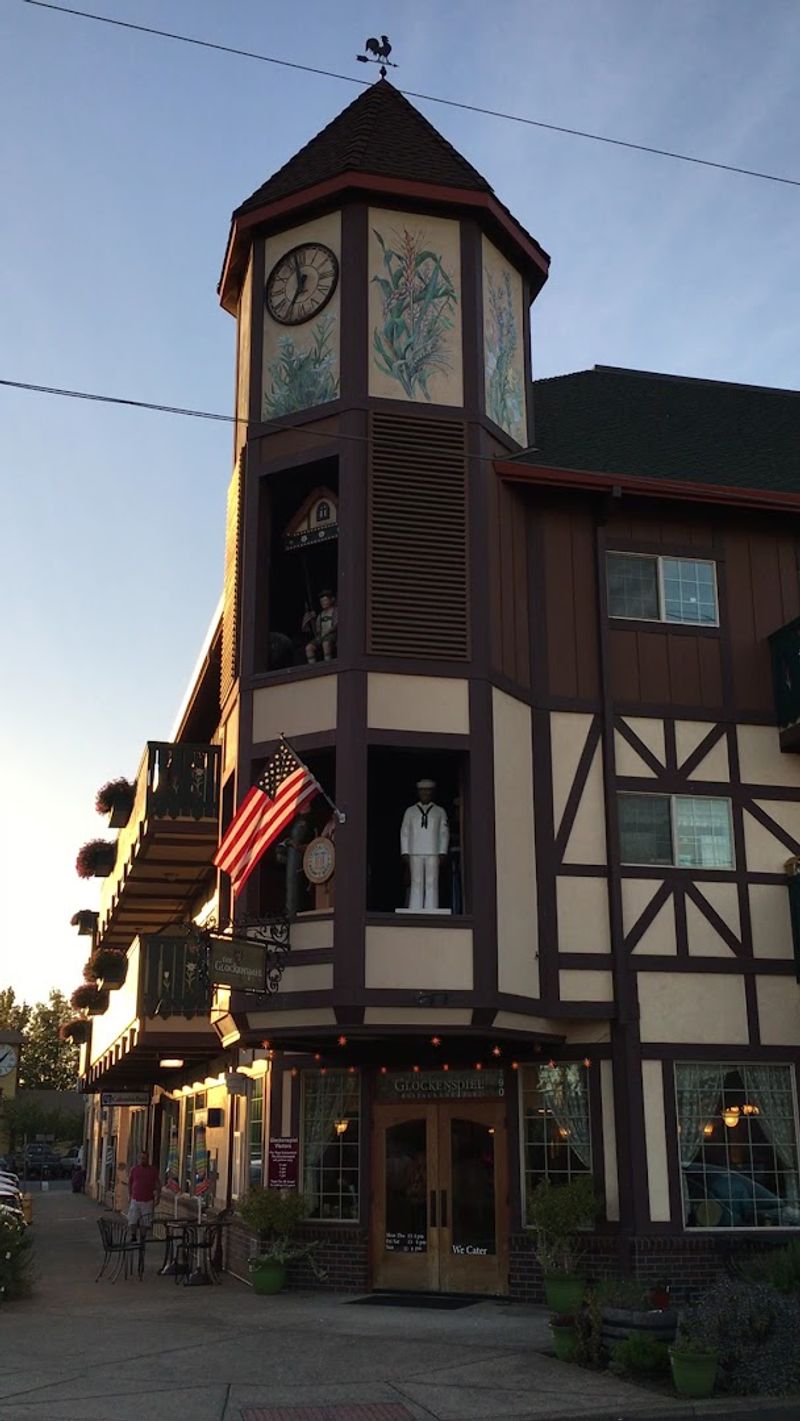
Rising above the town center, Mount Angel’s glockenspiel stands as the tallest in the United States, a mechanical marvel that turns timekeeping into performance art. The clock tower features animated figurines that dance and rotate while traditional melodies echo through the streets, drawing crowds who gather to watch the hourly spectacle.
Built to authentic German specifications, this isn’t some miniature novelty, it’s a full-scale timepiece that could hold its own in Munich.
The glockenspiel often plays “Edelweiss,” that quintessentially Alpine tune that instantly transports listeners to mountain meadows and Swiss chalets. Hearing it ring out over Oregon farmland creates a delightful cognitive dissonance, like discovering a piece of Bavaria that got wonderfully lost on its way across the Atlantic.
Locals use the glockenspiel as a meeting point and reference marker, the way other towns might use a courthouse or fountain. For visitors, it serves as the perfect introduction to Mount Angel’s commitment to authentic Germanic culture rather than theme-park approximations.
The tower doesn’t just tell time; it announces that you’ve entered a place where European traditions genuinely thrive.
Oktoberfest That Rivals Munich
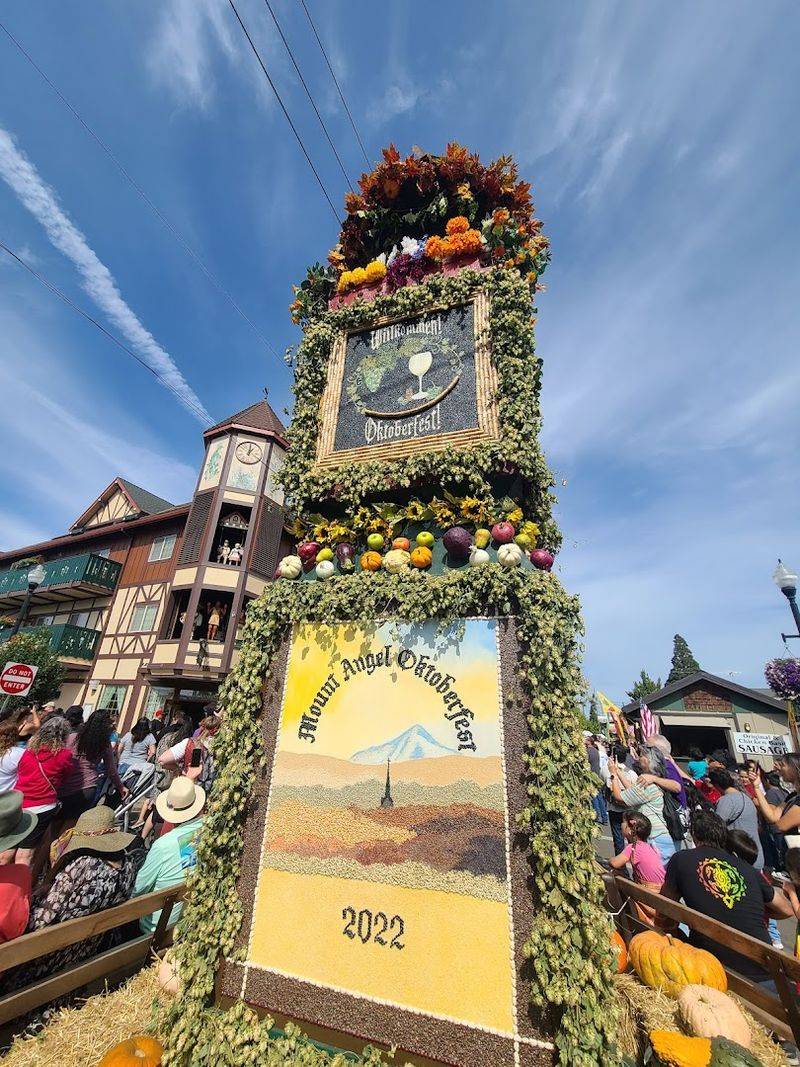
Every September, Mount Angel transforms into one giant party that attracts over 350,000 visitors across four days, making it one of the largest Oktoberfest celebrations in North America. This isn’t some watered-down American interpretation with plastic lederhosen and novelty hats.
The festival features authentic German music performed by bands imported from Bavaria, traditional folk dancing, and enough bratwurst to feed a small European nation.
The fest hall becomes the beating heart of the celebration, where long communal tables encourage strangers to become friends over shared plates of schnitzel and sauerkraut. Vendors sell everything from hand-carved cuckoo clocks to intricate Christmas ornaments, turning the event into a cultural immersion experience rather than just a food festival.
What makes Mount Angel’s Oktoberfest special is its genuine connection to the town’s heritage rather than manufactured tourism appeal. The families running food booths and organizing events are often descendants of the original German and Swiss settlers, bringing generations of tradition to their roles.
Walking through the festival, you’re not watching a performance of German culture, you’re participating in its living continuation on Oregon soil.
A Hilltop Benedictine Abbey
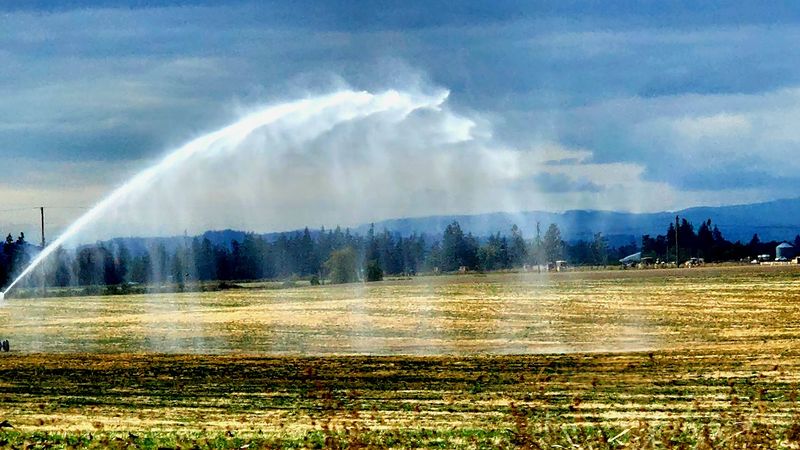
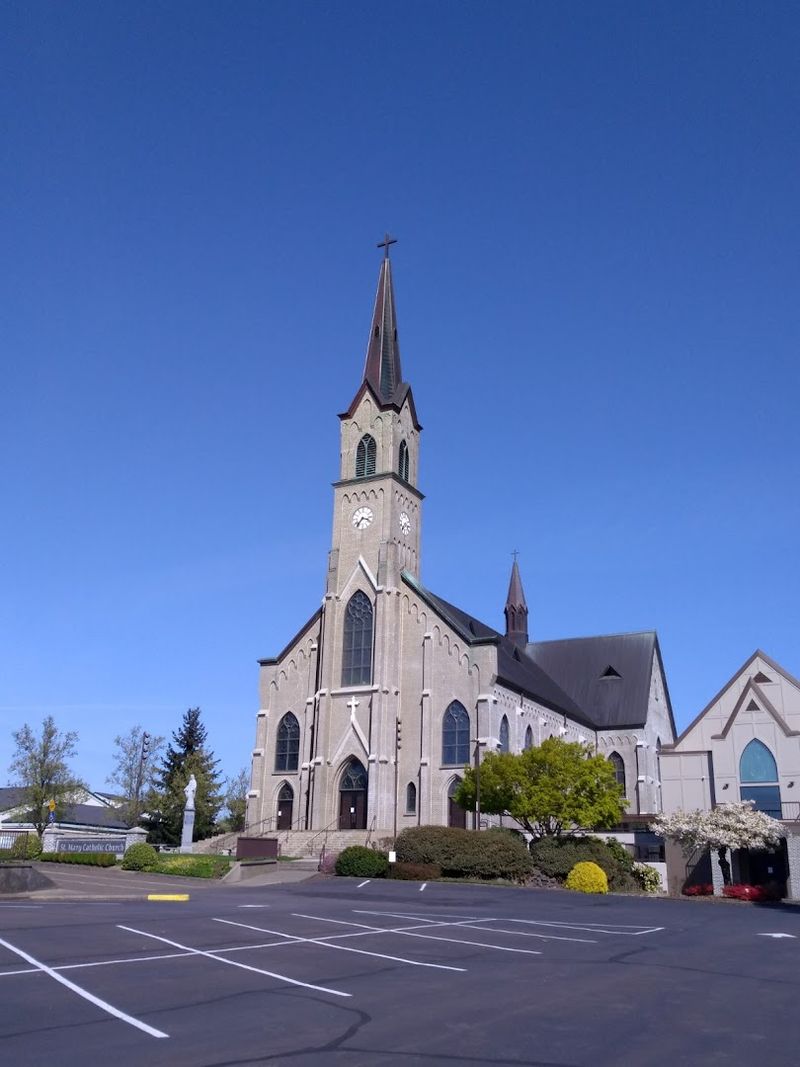
Perched on a hill overlooking the Willamette Valley, Mount Angel Abbey provides the Swiss Alpine backdrop that gives the town its distinctive European silhouette. The Benedictine monastery was established in 1882, actually predating the town’s official naming, and served as the spiritual and cultural anchor around which the community developed.
Monks still live and work here, maintaining centuries-old traditions of prayer, scholarship, and hospitality.
The abbey’s architecture echoes the monasteries of Switzerland and southern Germany, with a library designed by renowned Finnish architect Alvar Aalto that’s considered a modernist masterpiece. Visitors can tour the grounds, attend services in the basilica, or simply enjoy panoramic views that stretch across farmland to the Cascade Mountains.
This isn’t a museum piece or historical recreation, it’s a functioning religious community that happens to look like it belongs in the Alps. The abbey’s presence gives Mount Angel a spiritual dimension that goes beyond tourist appeal, grounding the town’s European character in active religious practice rather than mere nostalgia.
When you see the abbey’s bell tower rising above the valley, the Switzerland comparisons suddenly make geographical sense.
Bavarian Architecture on Every Corner
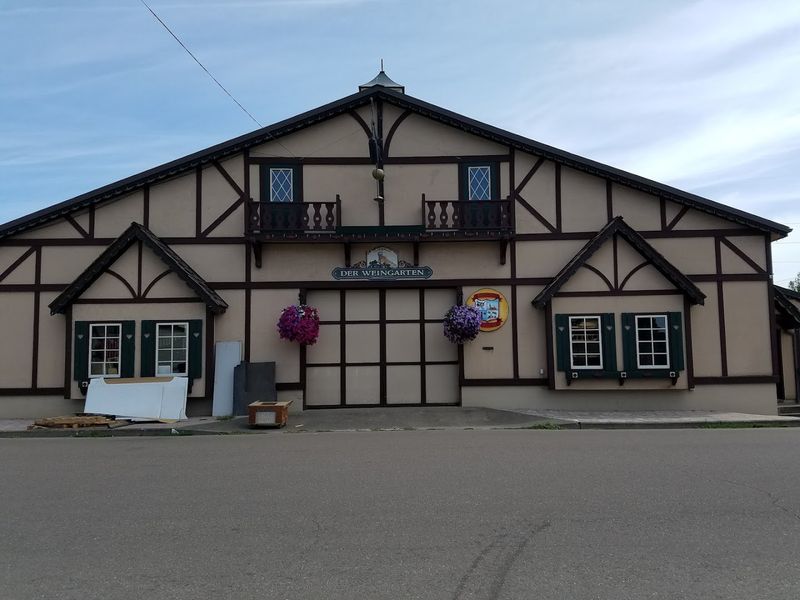
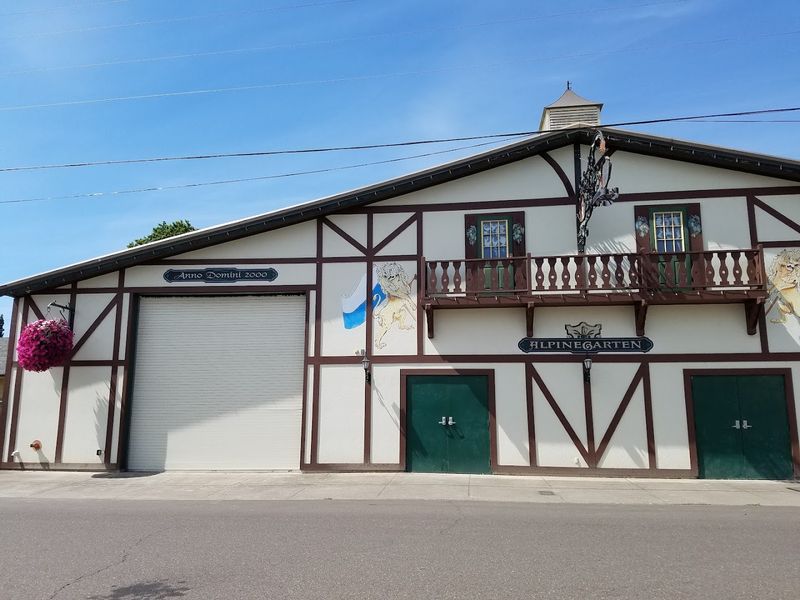
Downtown Mount Angel looks like a film set for a German village, except everything is real and functional rather than decorative facades. Half-timbered buildings line the main street, their distinctive cross-braced wooden frames and white stucco walls creating the visual signature of Alpine architecture.
Flower boxes overflow with geraniums in summer, adding splashes of red that would look perfectly at home in a Swiss canton.
The fest hall stands as the architectural centerpiece, a massive structure that could host village gatherings in Bavaria without anyone questioning its authenticity. Storefronts feature hand-painted signs in Gothic script, carved wooden details, and steep-pitched roofs designed for snow loads that Oregon rarely delivers but that maintain the aesthetic integrity.
What’s remarkable is how the town has maintained architectural consistency even in newer construction, refusing to let strip malls and generic commercial buildings dilute the European character. Building codes and community standards ensure that even modern additions respect the Bavarian theme, creating a cohesive visual experience that strengthens the illusion of having traveled to another continent.
Walking these streets, you’re not looking at themed decoration but at a community that takes its architectural heritage seriously.
Germanic Roots Run Deep
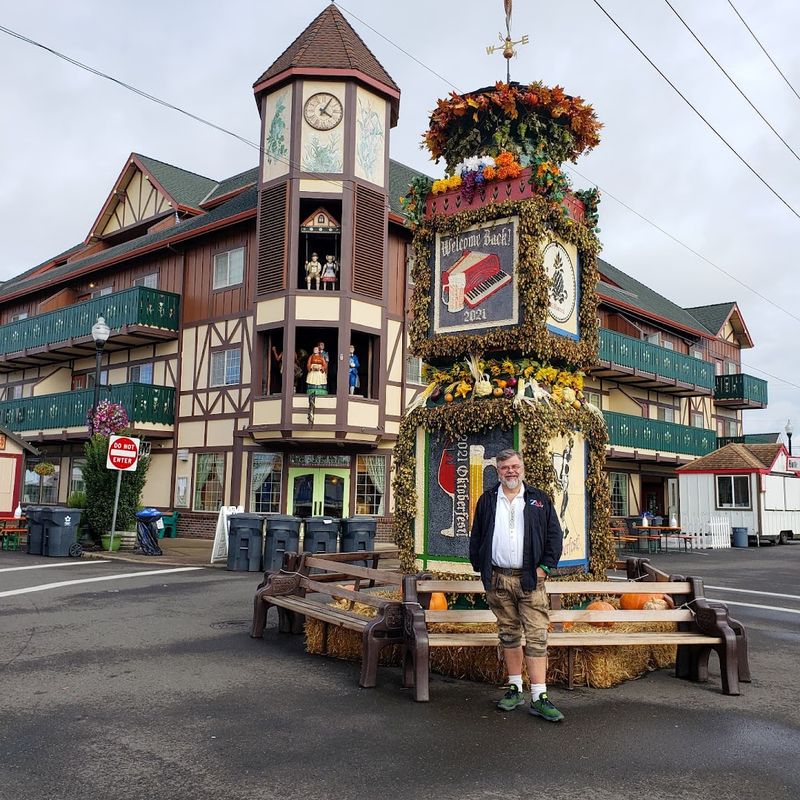
Mount Angel’s European character isn’t a marketing gimmick adopted to attract tourists; it’s the direct result of German and Swiss immigration patterns that shaped the town from its founding. Settlers from Engelberg, Switzerland, and various German regions arrived in the 1880s, bringing their language, customs, religious practices, and building traditions.
They didn’t assimilate into American culture so much as transplant their own culture to Oregon soil.
For generations, German was spoken as commonly as English in Mount Angel homes and businesses. The town’s Catholic church conducted services in German well into the 20th century, and many residents maintained close ties to their European relatives, reinforcing cultural connections across the Atlantic.
Today, you’ll still find families with Swiss and German surnames who can trace their lineage back to the original settlers. The town’s cultural institutions, from its historical society to its festival committees, are often led by descendants who grew up hearing stories about the old country and learning traditional recipes and customs.
This generational continuity gives Mount Angel’s European identity an authenticity that can’t be manufactured or imitated by towns trying to create tourist appeal from scratch.
Shops and Cafes Straight from Europe
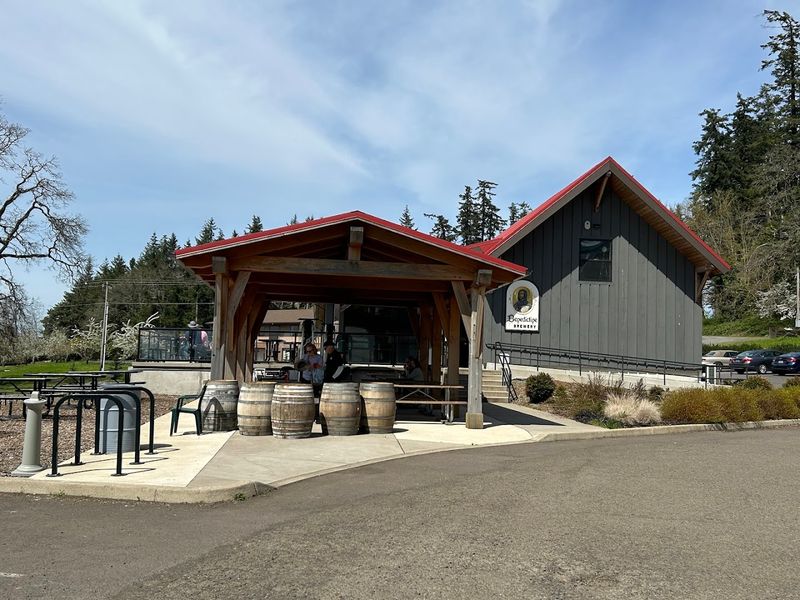
Step into Mount Angel’s shops and you’ll find merchandise that looks imported directly from German and Swiss suppliers because much of it actually is. Stores specialize in cuckoo clocks that tick with Swiss precision and Christmas ornaments that would fit perfectly on a tree in Nuremberg.
These aren’t tourist trinkets manufactured overseas; they’re authentic European goods that locals purchase for their own homes.
The cafes and bakeries serve pastries and breads made from recipes that have been passed down through families for generations. You can order a proper German breakfast with house-made sausages, fresh-baked rolls, and strong coffee served in sturdy ceramic cups.
The baristas and shopkeepers often have personal connections to the products they sell, whether through family heritage or regular buying trips to Europe.
What makes shopping in Mount Angel special is the absence of manufactured quaintness. These businesses exist to serve the local community’s genuine taste for European goods, not just to capitalize on tourist interest.
The shops stay open year-round because residents actually shop there regularly, creating an authentic commercial ecosystem rather than a seasonal tourist trap.
Traditional German Cuisine Done Right
Mount Angel’s restaurants serve German food that would satisfy diners in Frankfurt or Munich, prepared by cooks who learned their techniques from grandmothers who immigrated from Europe. The bratwurst snaps with proper casing texture, the sauerkraut achieves that perfect balance of tang and sweetness, and the potato salad follows recipes that have remained unchanged for over a century.
This is comfort food for people whose comfort food happens to be Central European.
During Oktoberfest, food vendors multiply, but the quality standards remain high because the community wouldn’t tolerate subpar versions of their heritage dishes. You’ll find authentic spätzle, properly crispy schnitzel, and dense German rye bread that requires serious chewing.
The portions are generous in the Old World tradition of hospitality through abundance.
Beyond festival time, several year-round establishments maintain the culinary traditions, serving meals that attract diners from across Oregon who crave authentic European flavors. The menus often include seasonal specialties tied to German and Swiss holiday traditions, creating an eating calendar that follows European rather than American patterns.
For food lovers, Mount Angel offers a genuine taste of Alpine cuisine without the transatlantic flight.
Willamette Valley’s Unexpected Gem
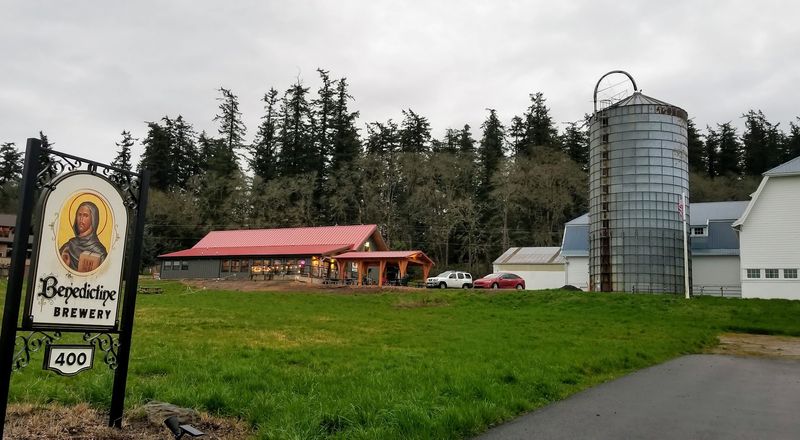
Located just 18 miles northeast of Salem, Mount Angel occupies prime Willamette Valley farmland, surrounded by the hazelnut orchards and hop fields that characterize this fertile Oregon region. The juxtaposition of Bavarian architecture against Pacific Northwest agricultural landscapes creates a visual contradiction that somehow works perfectly.
You’ll drive past typical Oregon scenery, rolling fields and distant mountains, then suddenly encounter a European village that seems to have materialized from another continent.
The town’s location makes it an easy day trip from Portland or Eugene, yet it remains relatively undiscovered compared to Oregon’s coastal towns or mountain resorts. This accessibility without overcrowding means you can actually experience the town’s character without fighting tourist crowds except during major festivals.
Being nestled in the Willamette Valley gives Mount Angel a temperate climate that’s actually more moderate than the Alps, with milder winters and warm, dry summers. The surrounding farmland provides fresh, local ingredients for the town’s restaurants and a pastoral beauty that complements rather than conflicts with the European architectural theme.
Mount Angel proves that you don’t need actual mountains to create an Alpine atmosphere.
A Living European Village Experience
What sets Mount Angel apart from theme parks or festival grounds is that people actually live here year-round, maintaining European traditions as part of daily life rather than special occasions. Children grow up learning German folk dances, families attend abbey services that incorporate Swiss and German liturgical traditions, and community events follow a calendar shaped by European rather than purely American holidays.
This isn’t performance; it’s genuine cultural continuity.
The town’s small size, just over 3,000 residents, creates an intimacy where everyone knows their neighbors and traditions get passed along through personal relationships rather than institutional programs. When you visit, you’re not observing a preserved historical site but participating in a living community that happens to operate with strong European cultural influences.
Mount Angel demonstrates that ethnic heritage communities can thrive in America without assimilating into homogeneous suburban development. The town has found economic sustainability through its distinctive character, attracting visitors and new residents who appreciate its unique identity.
Walking through Mount Angel, you experience what immigration looked like when newcomers transplanted entire cultural systems rather than just adding ethnic restaurants to generic American towns.
Dear Reader: This page may contain affiliate links which may earn a commission if you click through and make a purchase. Our independent journalism is not influenced by any advertiser or commercial initiative unless it is clearly marked as sponsored content. As travel products change, please be sure to reconfirm all details and stay up to date with current events to ensure a safe and successful trip.
