I still remember the first time a harbor seal looked me straight in the eye through the glass at the Oregon Coast Aquarium. There’s something electric about that moment when you realize you’re not just observing these animals but connecting with them in a way that feels almost personal.
Located in Newport, Oregon, this 23-acre facility has been bringing visitors face-to-face with Pacific Northwest marine life since 1992.
What sets this place apart is its focus on creatures that actually live along the Oregon coastline, not tropical fish from distant oceans.
You’ll walk through shark tunnels, watch sea otters crack open shellfish, and maybe even touch a sea star in the tide pool exhibit, all while learning why conservation matters for these remarkable animals right in our backyard.
Passage of the Deep Tunnel
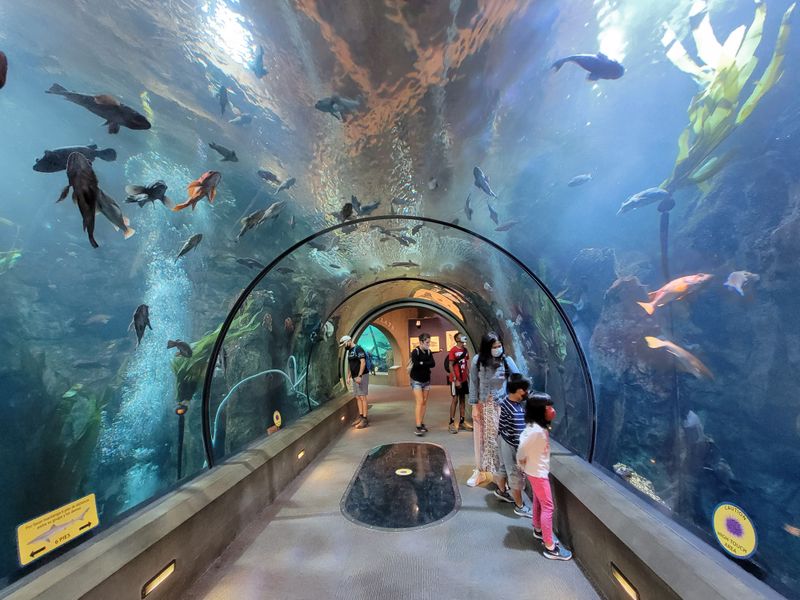
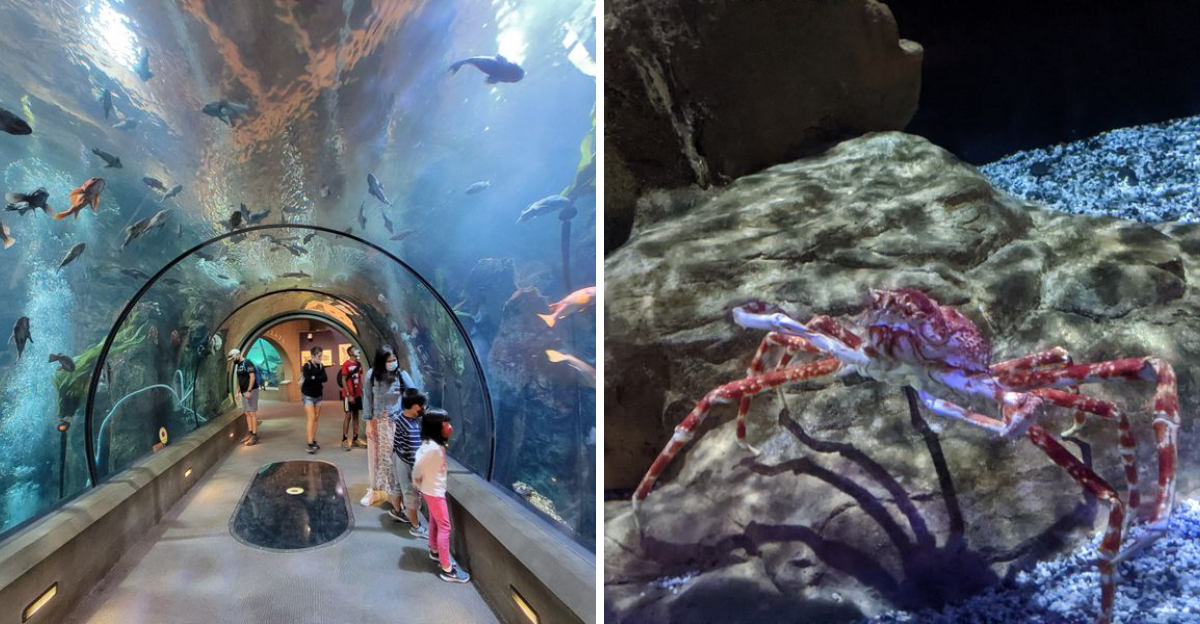
Walking beneath thousands of gallons of seawater while sharks glide inches from your face isn’t something you forget quickly.
The 360-degree acrylic tunnel at the Oregon Coast Aquarium puts you right in the middle of the action, surrounded by seven-gill sharks, bat rays, and schools of rockfish that seem curious about the strange land creatures passing below them.
I found myself stopping multiple times just to look up and watch a shark’s belly pass overhead. The tunnel design means there’s no bad angle.
Every direction offers a different perspective on how these animals move through their world.
What surprised me most was how peaceful it felt despite being surrounded by predators. The sharks weren’t interested in us at all.
They moved with purpose, elegant and unhurried, reminding me that we’re the visitors in their space.
Photographers love this spot because the lighting creates dramatic silhouettes. But even if you don’t have a camera, the experience of standing still while an entire ecosystem swirls around you is worth the visit alone.
It’s the closest most of us will ever get to diving without getting wet.
North America’s Largest Seabird Aviary
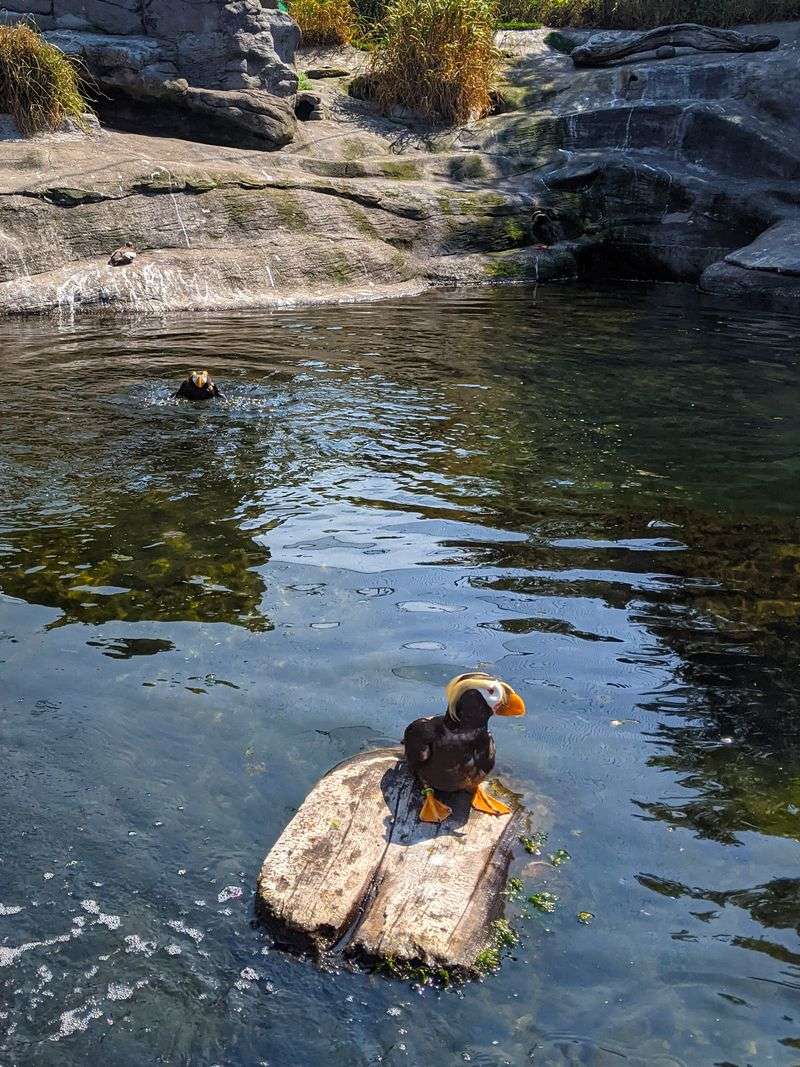
Stepping into the seabird aviary feels like entering a different world entirely. The sound hits you first: squawks, chirps, and the flutter of wings as puffins and murres navigate the rocky terrain designed to mimic their natural coastal habitat.
This is the largest outdoor seabird aviary in North America, and it shows.
Tufted puffins with their distinctive orange beaks and dramatic facial plumes steal the spotlight. I spent twenty minutes watching one repeatedly dive into the pool, its wings beating underwater like a penguin’s flippers.
These birds are built for swimming as much as flying, and seeing them in action makes that clear.
Common murres crowd the artificial cliffs, practicing the same dense colony behavior they’d display on Oregon’s offshore rocks. Auklets dart between perches, smaller and more skittish than their puffin cousins but equally fascinating to observe up close.
The double-door entry system keeps the birds safely contained while allowing visitors to walk freely inside. Unlike typical zoo exhibits where you peer through glass or wire, you’re actually in their space, separated only by air and the occasional curious bird passing overhead.
Interactive Tide Pool Touch Tanks
There’s a huge difference between seeing a sea star behind glass and actually feeling its tube feet grip your hand. The tide pool touch tanks give visitors that hands-on connection with intertidal creatures that live along Oregon’s rocky shores.
Knowledgeable volunteers stand by to answer questions and make sure everyone treats the animals gently.
I touched my first sea cucumber here, expecting something slimy but finding it surprisingly firm and muscular. Anemones feel sticky when you gently brush a finger across their tentacles, triggering the same stinging cells they use to capture prey.
Don’t worry, human skin is too thick to feel the sting.
Hermit crabs scuttle around in their borrowed shells, and if you’re patient, you might see one poke its head out to investigate. The touch tanks aren’t just for kids, though children absolutely love them.
Adults often spend just as much time here, rediscovering the tactile wonder of marine life they may have last touched during childhood beach trips.
Staff members regularly rotate which animals are available for touching, ensuring the creatures get breaks and aren’t stressed by constant handling. It’s a thoughtful approach that prioritizes animal welfare while still offering meaningful interactions.
Seven-Gill Shark Exhibit
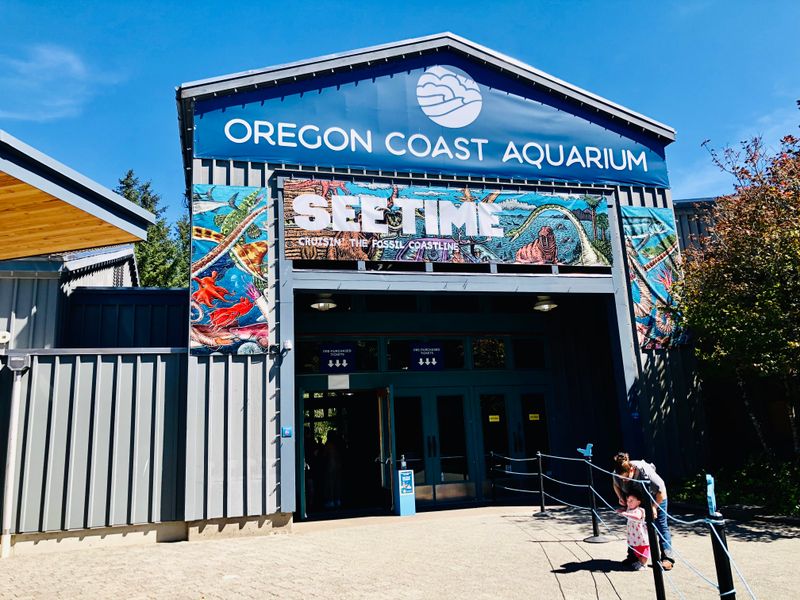
Most sharks have five gill slits. Seven-gill sharks, as their name suggests, have seven, making them one of the more primitive shark species still swimming in modern oceans.
At the Oregon Coast Aquarium, these broad-nosed predators share the massive open sea tank with other local species, giving visitors a sense of the diversity that exists just offshore.
Seven-gill sharks can grow up to ten feet long, and seeing one cruise past at eye level commands respect. They’re not aggressive toward humans in the wild, preferring to hunt fish, seals, and even other sharks in the deep waters along the Pacific coast.
But their size and prehistoric appearance make them genuinely impressive.
What fascinated me most was watching how different species in the tank maintained their own territories and swimming patterns. The sharks seemed to follow specific routes, almost like they were patrolling, while rays hugged the bottom and schools of smaller fish darted through the middle water column.
The aquarium’s focus on regional species means you won’t find tropical reef sharks or hammerheads here. Instead, you’ll meet the actual neighbors of Oregon’s coastal waters, the animals swimming just beyond the breakers when you visit the beach.
Giant Pacific Octopus Habitat
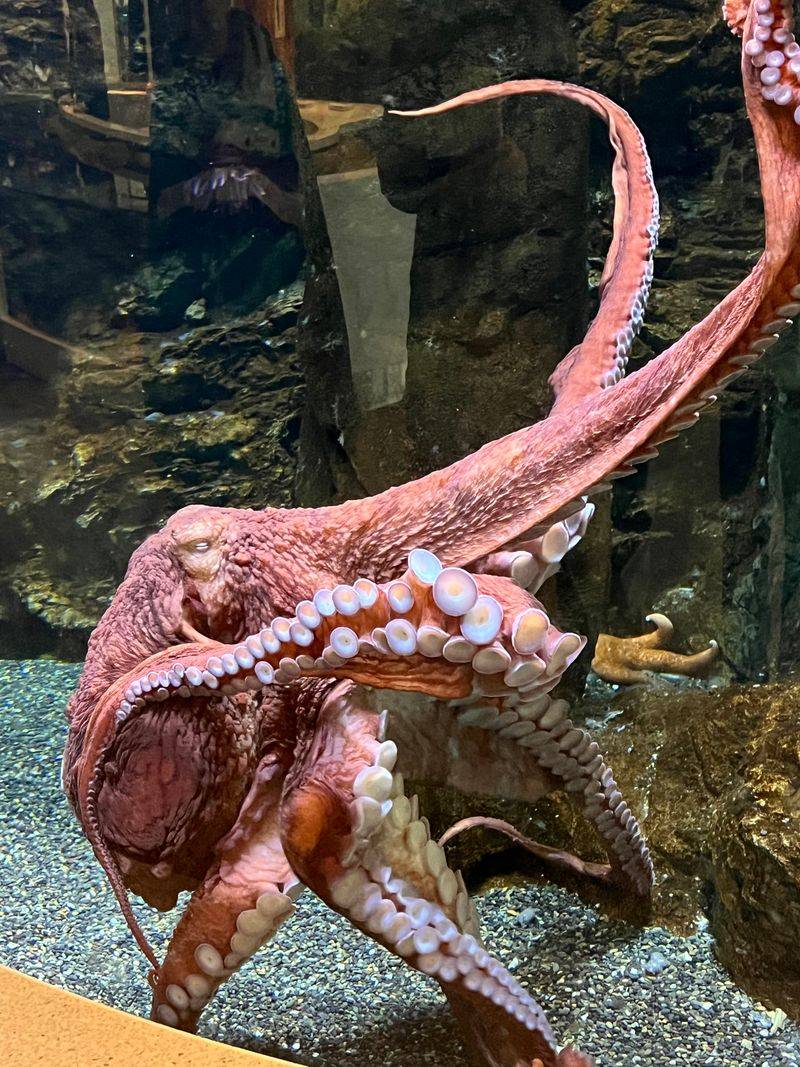
Finding the Giant Pacific Octopus can feel like a game of hide-and-seek. These masters of camouflage can change color and texture in seconds, blending seamlessly with rocks, kelp, or even the tank floor.
When you do spot one, you’re looking at one of the most intelligent invertebrates on the planet.
Giant Pacific Octopuses are the largest octopus species in the world, with arm spans that can reach over fifteen feet. The specimens at the aquarium are smaller than that but still impressively sized, especially when they stretch out to explore their enclosure or investigate enrichment items the staff provides.
I watched one manipulate a jar with its arms, using suction cups to grip and turn it with surprising dexterity. Each arm contains hundreds of suckers, and each sucker can taste what it touches.
Imagine having taste buds covering your hands and you’ll get a sense of how an octopus experiences its environment.
These creatures are notoriously shy, often hiding in dens during the day and emerging at night to hunt. If you visit and don’t see the octopus right away, ask a volunteer when feeding time is scheduled.
That’s when you’re most likely to see it in action.
Steller Cove Sea Lion Habitat

The barking reaches you before you even see the animals. Steller sea lions are vocal, boisterous, and absolutely massive.
Adult males can weigh over a ton, making them the largest member of the eared seal family. Watching them haul out onto the rocks at Steller Cove gives you a real appreciation for their size and power.
Harbor seals share this space, and the contrast is striking. While sea lions are loud and social, harbor seals tend to be quieter and more reserved.
Sea lions have external ear flaps and can rotate their rear flippers forward to walk on land. Seals lack external ears and must wiggle on their bellies when out of water.
I caught a feeding demonstration where trainers explained how they monitor each animal’s health through training sessions. The sea lions performed voluntary behaviors like opening their mouths for dental checks or presenting flippers for examination.
It’s not a circus act but rather a practical way to provide medical care without stressing the animals.
The underwater viewing windows at Steller Cove show these pinnipeds at their most graceful. What looks clumsy on land becomes balletic underwater as they twist, dive, and rocket through the water with effortless speed.
Jellyfish Galleries
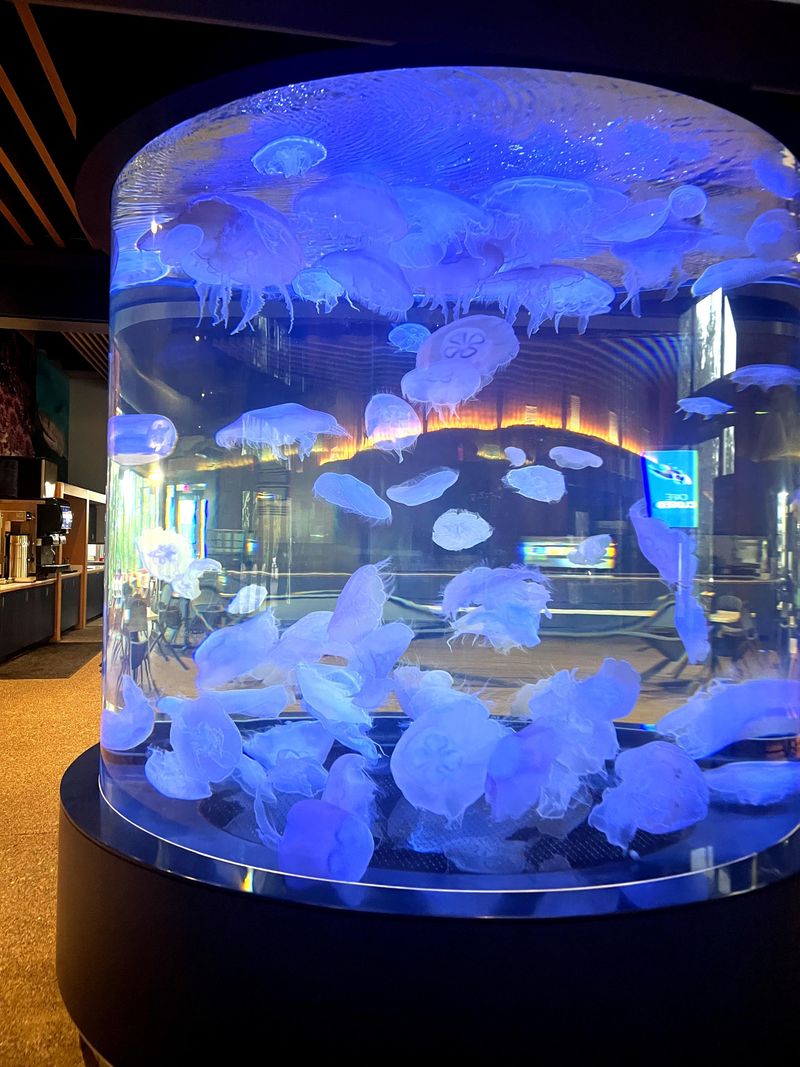
Jellyfish move like living lava lamps, pulsing and drifting in ways that seem almost hypnotic. The jellyfish galleries at the Oregon Coast Aquarium showcase multiple species in specially designed tanks with gentle currents that keep them suspended and healthy.
Dramatic lighting turns each tank into a work of living art.
Moon jellies dominate several displays, their translucent bells revealing the four horseshoe-shaped gonads inside. They’re the most common species visitors recognize, but the aquarium also features more unusual varieties depending on what’s been collected from local waters or bred in their on-site jellyfish nursery.
I could have spent an hour just watching how they move. Each pulse of the bell propels them forward slightly before they drift back down, creating an endless cycle of rise and fall.
There’s something meditative about it, a reminder that not everything in nature moves with purpose or urgency.
The galleries also explain the jellyfish life cycle, which is far stranger than most people realize. These animals alternate between polyp and medusa stages, and some species can essentially reverse their aging process under certain conditions.
They’re ancient, alien, and absolutely mesmerizing to observe up close.
Conservation Education Programs
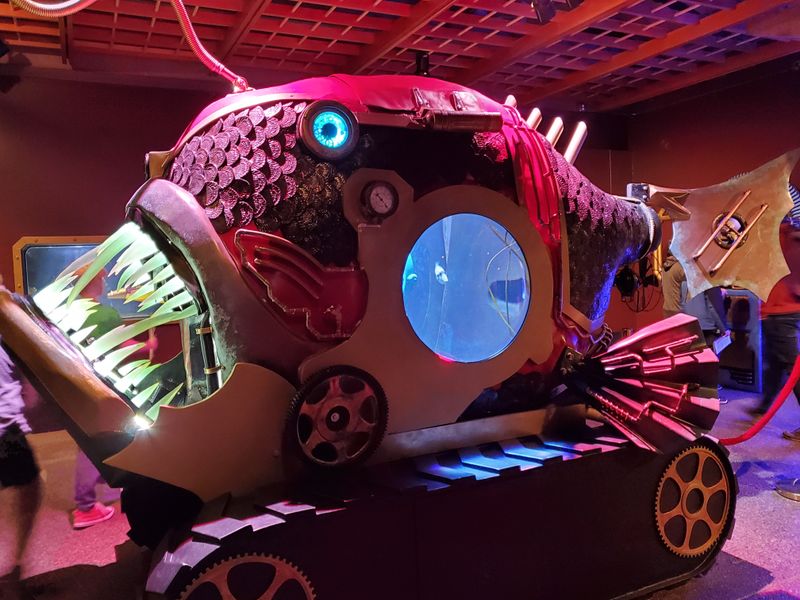
As a nonprofit 501(c)3 organization, the Oregon Coast Aquarium puts education and conservation at the center of everything it does. Throughout the facility, detailed signage explains not just what you’re looking at but why it matters.
The focus stays firmly on regional habitats and the challenges facing Pacific Northwest marine ecosystems.
One of the most striking educational elements is the series of sculptures made entirely from ocean plastic and trash. These life-sized recreations of marine animals make a powerful statement about pollution without saying a word.
Seeing a sea turtle constructed from discarded bottles and fishing nets drives home the message in a way that statistics alone cannot.
The aquarium offers various programs for different age groups, including junior aquarist activities where kids complete challenges and earn badges. School groups regularly visit for guided tours that align with science curriculum standards.
Even casual visitors benefit from the knowledgeable volunteers stationed throughout the exhibits, ready to answer questions and share fascinating details about animal behavior.
During my visit, I overheard a volunteer explaining to a child why sea otters are considered a keystone species and how their presence affects entire kelp forest ecosystems. That kind of engagement turns a fun outing into genuine learning.
Practical Visitor Information
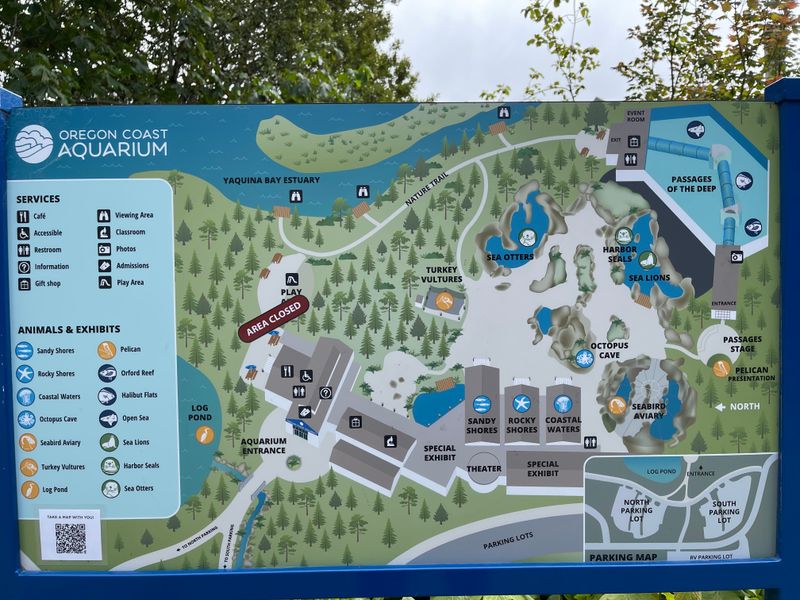
Planning your visit to the Oregon Coast Aquarium, located at 2820 SE Ferry Slip Road, takes just a little preparation to maximize your experience. The facility opens at 10 AM daily and closes at 5 PM, giving you seven hours to explore if you arrive right when the doors open.
Most visitors spend between two and four hours here, depending on whether they catch scheduled feedings and presentations.
Admission costs around thirty dollars per adult, which some reviewers noted feels steep for a smaller aquarium. However, considering this is a nonprofit focused on conservation and animal care, the price supports important work.
They offer discounted tickets for individuals with financial need documentation and annual memberships for frequent visitors or locals.
The facility includes a cafe serving items like clam chowder and a coffee bar for morning visitors. A gift shop near the exit offers souvenirs ranging from five dollars to over a hundred, with proceeds supporting the aquarium’s mission.
Parking is ample and free, though it requires a short walk to the entrance.
One important note for visitors with mobility concerns: several reviews mentioned that outdoor paths are covered in gravel that isn’t fully hard-packed, making wheelchair navigation difficult. The aquarium has acknowledged this and plans to pave pathways as part of future improvements.
Dear Reader: This page may contain affiliate links which may earn a commission if you click through and make a purchase. Our independent journalism is not influenced by any advertiser or commercial initiative unless it is clearly marked as sponsored content. As travel products change, please be sure to reconfirm all details and stay up to date with current events to ensure a safe and successful trip.
