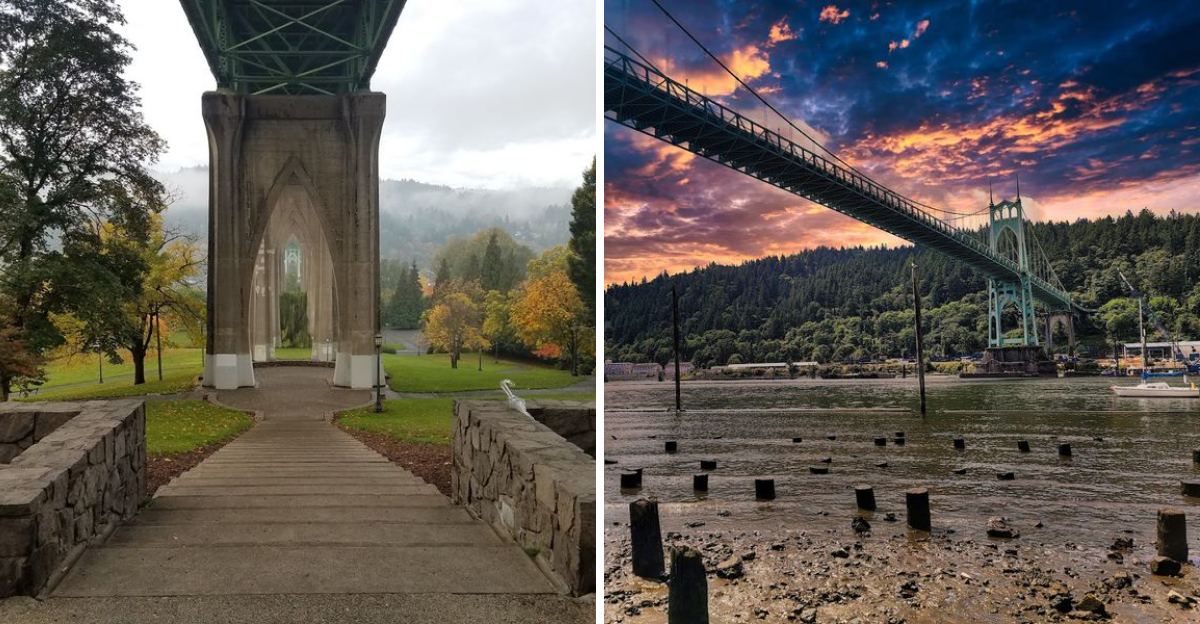
I just stumbled on a hidden spot in Oregon that anyone can visit without paying a dime, yet it feels like a secret only a few locals know about. The moment I walked in, I was surprised by how polished everything seemed – like an art gallery you’d have to reserve a ticket for.
The quiet paths, the thoughtful design, and the careful lighting make you feel special, even though there’s no line or ticket stub. I spent an afternoon there, just wandering and soaking up the vibe, and it reminded me how the best experiences don’t always come with a price tag.
If you love discovering places that feel exclusive without the cost, this is the kind of hidden gem that makes a day feel truly memorable in Oregon.
The Gothic Arches That Stop You Cold
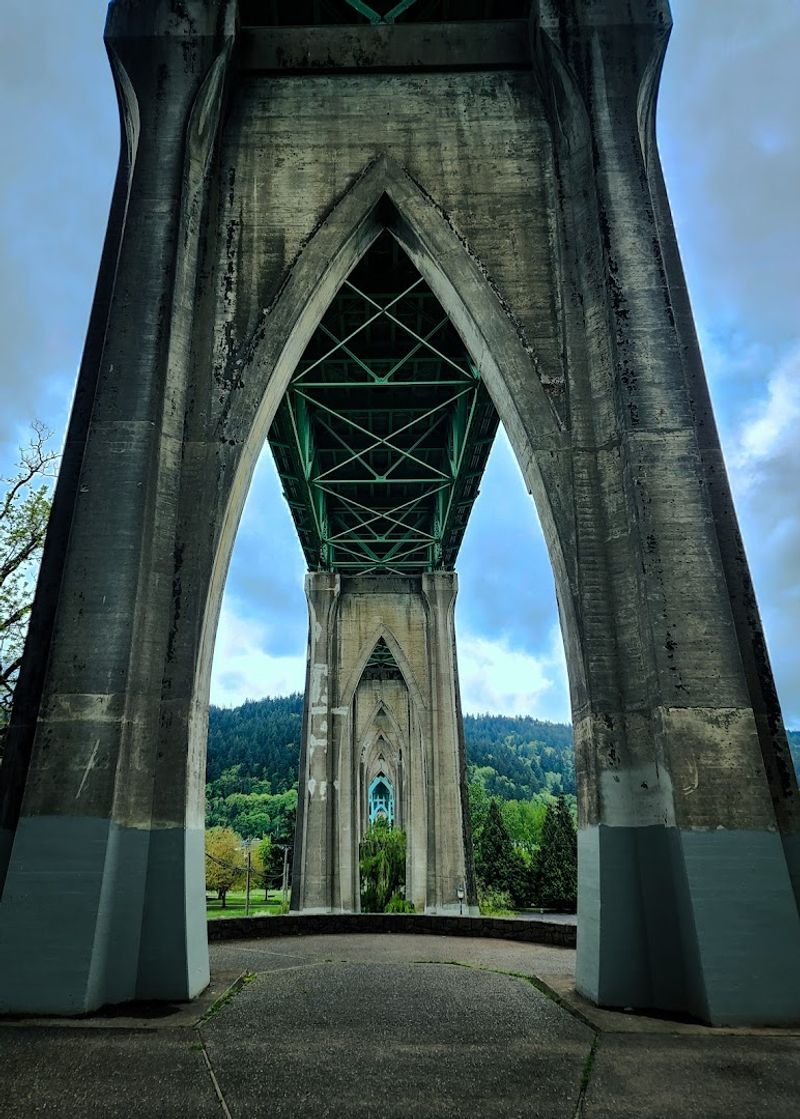
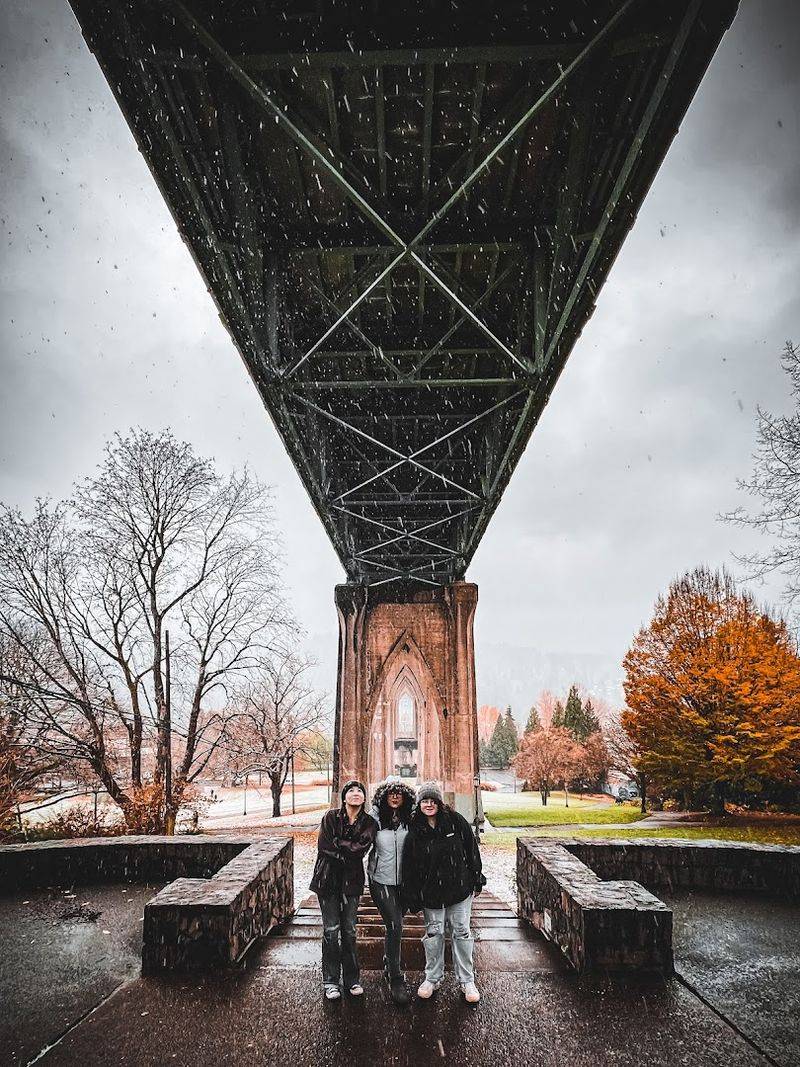
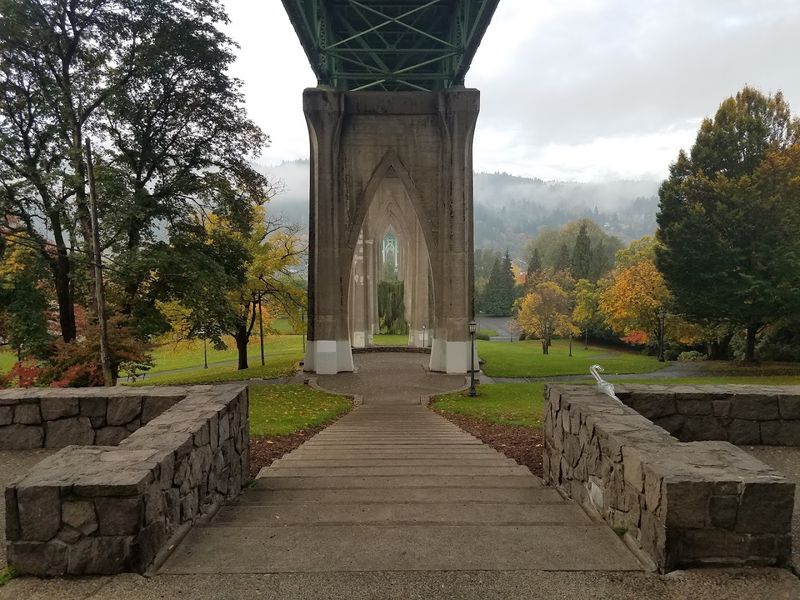
Nothing in a photo fully captures what it feels like to stand directly beneath the St. Johns Bridge and look straight up. The Gothic arches fan outward in perfect symmetry, and for a moment, your brain genuinely struggles to process whether you are standing in Portland or somewhere along the Rhine River in Germany.
The bridge was completed in 1931 and remains one of the most architecturally distinctive bridges in the entire Pacific Northwest. Its design was intentional, meant to evoke grandeur, and it absolutely delivers on that promise.
The park takes its name from those arches, and honestly, the name fits better than most park names do. Standing underneath them on a misty morning, with the river moving quietly nearby, feels almost ceremonial.
You find yourself speaking a little softer, moving a little slower, the way you might inside a cathedral.
A Riverside Escape That Costs Absolutely Nothing
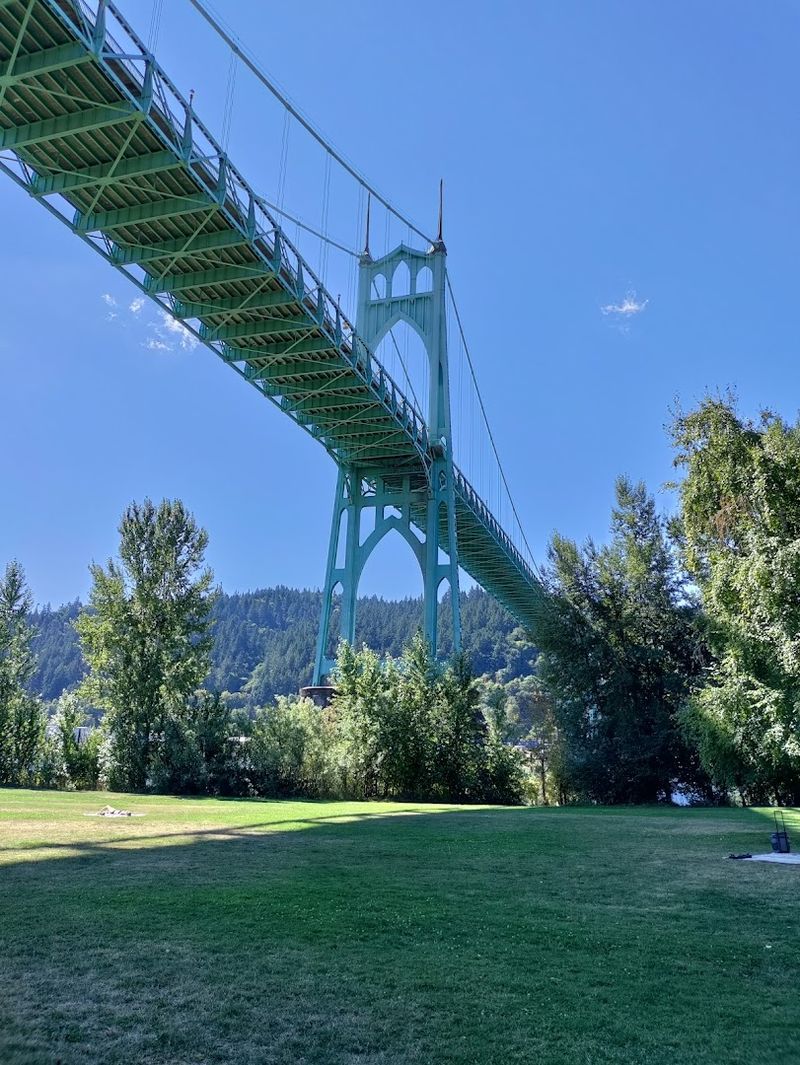
Free public parks are everywhere, but Cathedral Park manages to feel like a curated experience despite charging zero dollars for admission. The wide grassy lawn stretches generously along the east bank of the Willamette River, giving visitors plenty of room to spread out a blanket and simply exist for a while.
On a warm afternoon, you will find people reading, playing frisbee, and watching kayakers drift past. The park never feels crowded in a suffocating way, even on busy weekends.
Part of what makes it feel exclusive is the setting itself. The combination of the dramatic bridge overhead, the river glittering in front of you, and the mature trees framing everything creates an atmosphere that most paid attractions struggle to manufacture.
Bring a picnic, wear comfortable shoes, and plan to stay longer than you originally intended. That is the Cathedral Park effect, and it gets almost everyone who visits for the first time.
Morning Mist and the Magic Hour Light
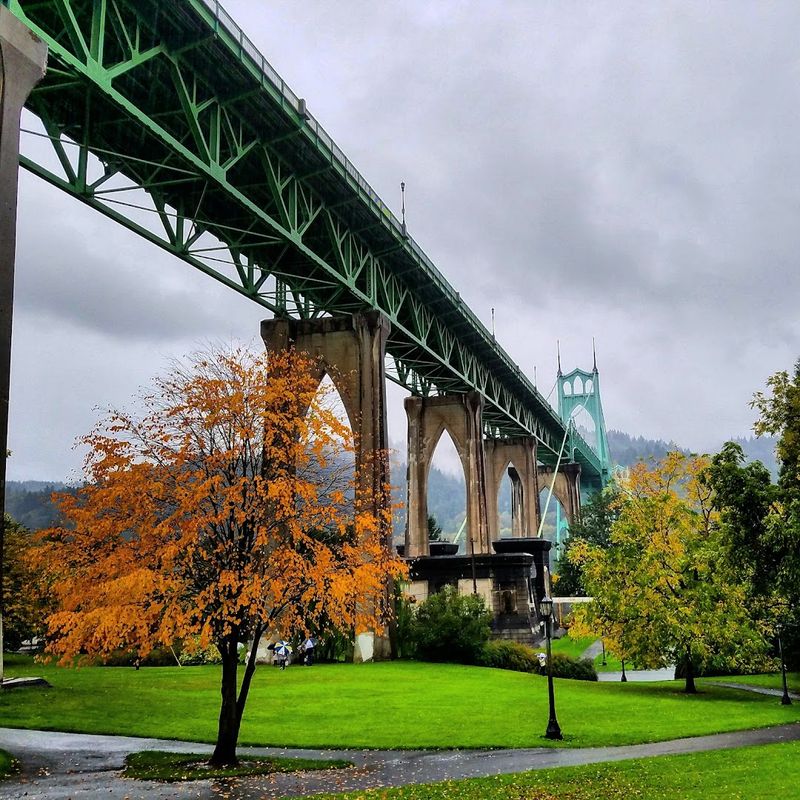
Arriving at Cathedral Park just after sunrise is a completely different experience than visiting midday. The river releases a low morning mist that drifts through the Gothic arches in slow, cinematic ribbons.
The light at that hour is golden and diffused, landing on the bridge stonework in a way that makes everything look slightly unreal.
Photographers make pilgrimages here specifically for this window of time. It is easy to understand why once you see it firsthand.
The park is quiet at that hour, populated mainly by dog walkers, joggers, and the occasional person sitting alone on the riverbank with a coffee thermos. There is a meditative quality to the place in those early moments before the day fully wakes up.
If you are the kind of traveler who does not mind setting an alarm for a spectacular view, Cathedral Park at sunrise will absolutely reward the effort. Pack layers because the river air carries a real chill even in summer.
The St. Johns Bridge Story Worth Knowing
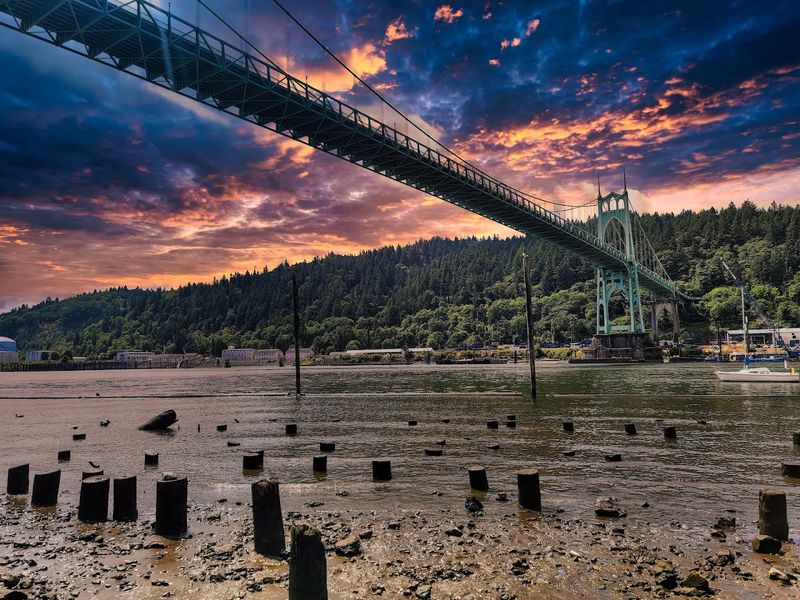
The St. Johns Bridge did not appear by accident. It was designed by engineer David Steinman and opened in 1931 after years of planning and community advocacy in the St. Johns neighborhood.
At the time of its completion, it was the longest suspension bridge on the West Coast, a genuine engineering achievement that the city celebrated with real pride.
The Gothic styling was a deliberate aesthetic choice, unusual for a utilitarian bridge, and it transformed what could have been a purely functional structure into a landmark.
Standing in the park and knowing even a little of that history adds a layer to the experience. You are not just looking at a pretty bridge.
You are looking at something the community fought for and built during one of the hardest economic periods in American history. That context gives the view a certain weight.
The arches feel less decorative and more like a statement of resilience when you know the story behind them.
Picnicking With a View That Rivals Paid Venues
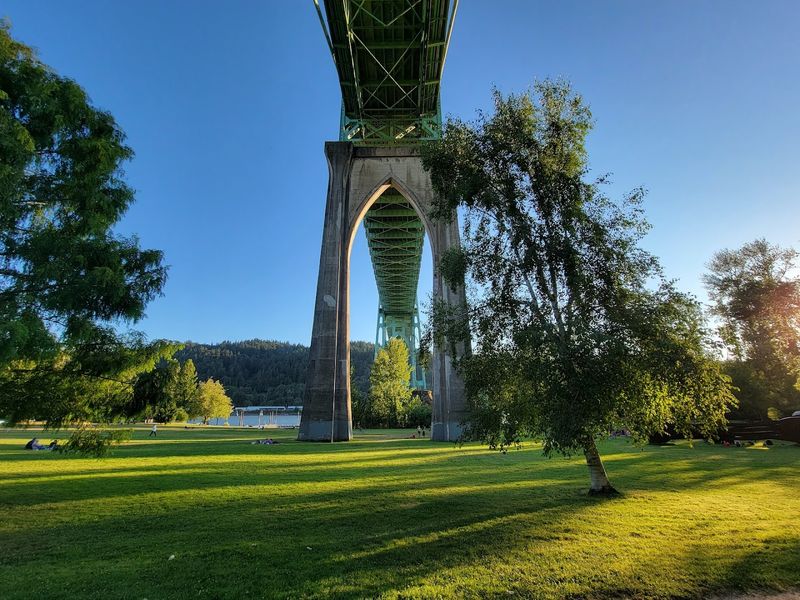
Picnicking at Cathedral Park feels genuinely elevated in a way that most outdoor dining spots cannot match without charging for the privilege. Lay out a blanket anywhere on the main lawn and you have an unobstructed view of the river, the bridge, and the tree-lined banks stretching into the distance.
The grass is well maintained and there is enough shade along the tree line to escape the afternoon sun when summer gets serious about being warm.
Tables and benches are scattered through the park for those who prefer a more structured setup. Families with kids tend to gravitate toward the flatter open sections while couples and solo visitors often find their way closer to the water’s edge.
Bring good food and take your time. The park rewards slowness in a way that busy tourist attractions rarely do.
There is no rush here, no next tour group arriving, no time slot to honor. Just the river, the bridge, and whatever you packed for lunch.
A Neighborhood With Real Character Around the Park
Cathedral Park sits within the St. Johns neighborhood, and that context matters because St. Johns has a personality that feels genuinely distinct from the rest of Portland. The commercial strip along N Lombard Street and Philadelphia Avenue is full of independently owned shops, casual eateries, and the kind of low-key coffee spots where regulars actually know each other.
The neighborhood has a slightly old-school Portland energy that feels refreshing compared to more polished parts of the city. It is lived-in and real.
After spending time in the park, walking up into the neighborhood feels like a natural extension of the visit. You can grab a bite, browse a bookstore, or just wander the residential streets where old Craftsman houses sit behind tidy gardens.
St. Johns does not perform for visitors. It just goes about its business, which somehow makes it more appealing.
The park and the neighborhood together make for a half-day visit that feels complete without any itinerary pressure.
Wildlife and River Life Along the Willamette
The Willamette River at Cathedral Park is not just a backdrop. It is an active ecosystem that rewards patient observers.
Great blue herons are a regular presence along the shoreline, standing motionless in the shallows with that ancient, unhurried posture they carry so well. Osprey are spotted overhead during warmer months, circling and occasionally diving toward the water.
River otters have been seen near the bank on quieter mornings, though they require a little luck and a lot of stillness to spot.
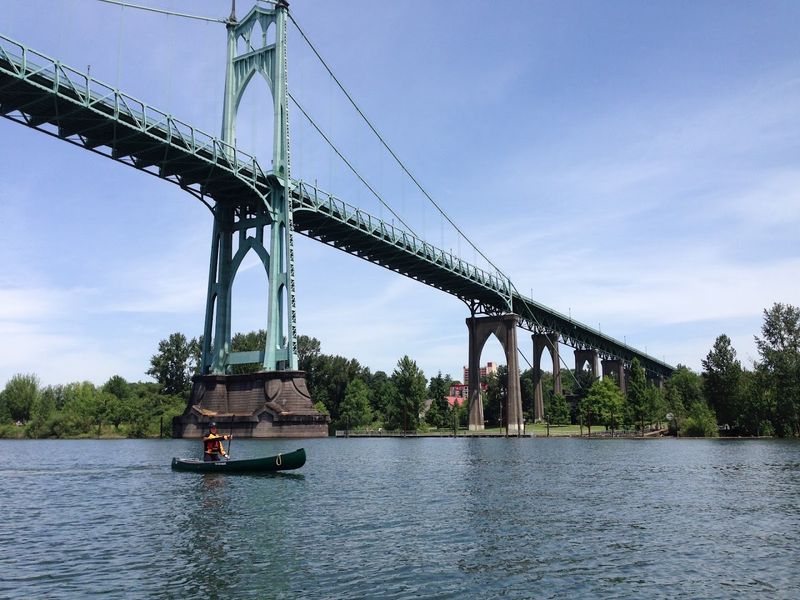
Kayakers and paddleboarders pass through the view regularly, adding a human element to the river scene without disrupting the natural rhythm of the place. The water itself changes character depending on the season, running fast and greenish in spring and calming to a broader, slower flow by late summer.
Bringing binoculars is genuinely worth the minor inconvenience if wildlife watching is your thing. The river here has more going on than most visitors initially expect.
The Park After Dark and Evening Atmosphere
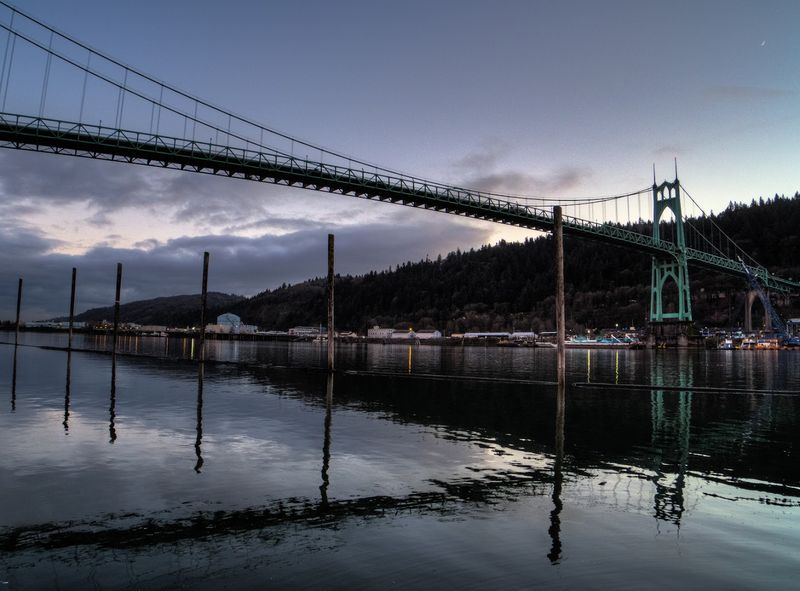
Cathedral Park transforms as the sun drops behind the West Hills. The St. Johns Bridge lights up against the darkening sky, and the reflection stretches across the river in long, shimmering lines.
The Gothic towers take on a different quality in artificial light, more dramatic, slightly mysterious, and undeniably photogenic.
Evening visitors tend to be quieter and more contemplative than the afternoon crowd. The energy shifts noticeably.
Couples walk along the riverbank path as the light fades. Small groups gather on the lawn to watch the bridge illumination as if it were a scheduled event, which in a way, it is every single night.
The park does not have extensive lighting of its own, so bringing a small flashlight for the paths is a practical idea if you plan to stay past full dark. The evening visit is a different experience entirely from the daytime one, and doing both on the same trip gives you a much fuller sense of what makes this place so quietly magnetic.
Seasonal Changes That Make Every Visit Different
Cathedral Park is one of those places that genuinely shifts personality with the seasons. Spring brings soft green grass, blooming trees along the riverbank, and the kind of fresh air that makes you want to stay outside longer than planned.
Summer fills the lawn with activity and warmth, and the river becomes a hub for watercraft of all kinds.
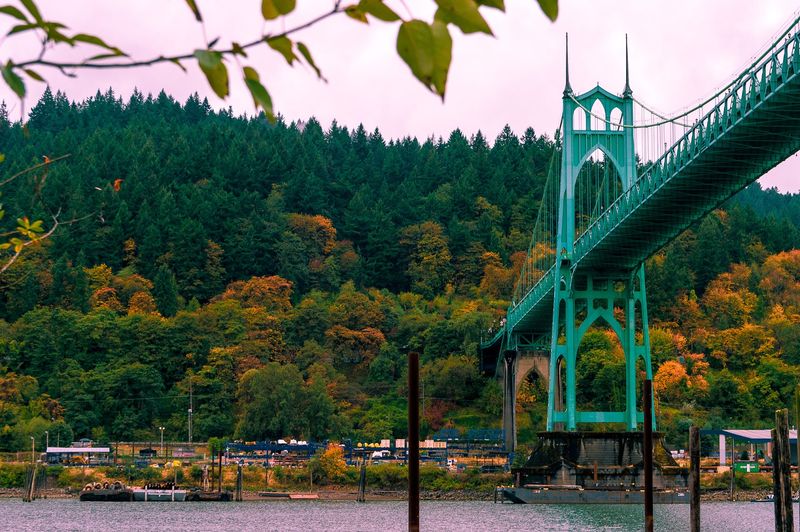
Autumn is arguably the most visually striking season here. The trees along the park perimeter turn gold and rust-red, framing the bridge in a palette that feels almost too beautiful to be accidental.
Winter visits are quieter and colder but carry their own appeal. The park empties out considerably, and on a clear winter day, the bridge and river have a stark, clean beauty that is hard to describe without sounding overly dramatic.
Locals often prefer the park in the off-season for exactly that reason. Each visit to Cathedral Park feels like a slightly different place, which is a rare quality in any destination.
Why Cathedral Park Belongs on Every Portland Itinerary
Portland has no shortage of parks, but Cathedral Park earns a category of its own. The combination of architectural drama, natural beauty, river access, and neighborhood character creates something that most parks simply do not have.
It is a place that works for solo travelers, families, photographers, and anyone who just needs somewhere beautiful to think for a while.
The fact that it is free makes it accessible to everyone, but it never feels like a compromise. It feels like a gift.
Many visitors to Portland spend their time in the Pearl District or along Mississippi Avenue without ever making it to North Portland, which means Cathedral Park stays genuinely uncrowded compared to its quality level. Getting there requires a short drive or a bus ride, but the effort is minimal and the payoff is significant.
If your Portland itinerary does not currently include this park, rearranging your schedule to fit it in is one of the better travel decisions you can make.
Address: N Pittsburg Ave, Portland, OR
Dear Reader: This page may contain affiliate links which may earn a commission if you click through and make a purchase. Our independent journalism is not influenced by any advertiser or commercial initiative unless it is clearly marked as sponsored content. As travel products change, please be sure to reconfirm all details and stay up to date with current events to ensure a safe and successful trip.
