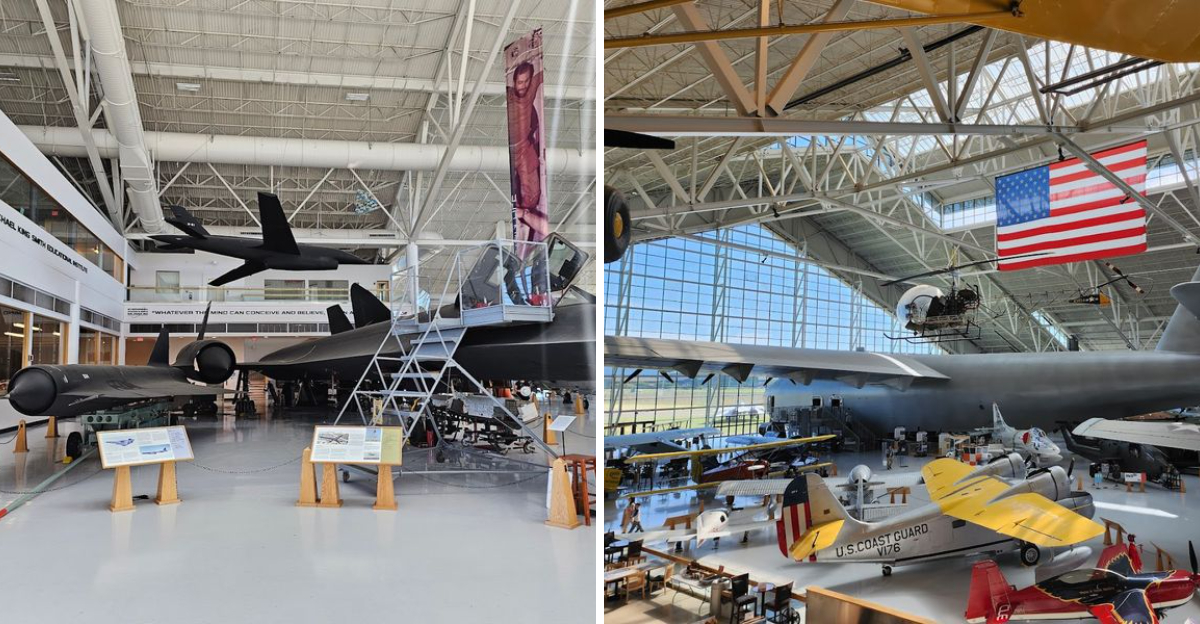
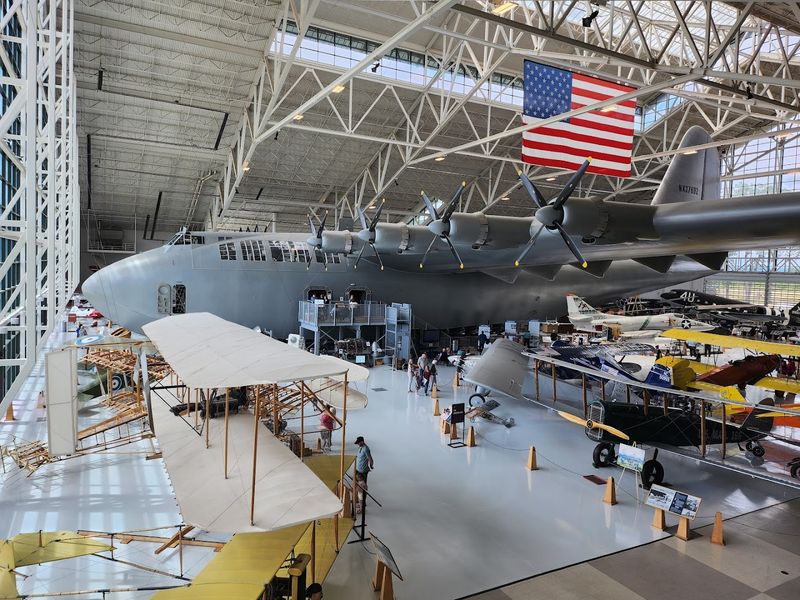
Oregon’s aviation museum feels like stepping into a giant hangar of history. I walk in and immediately spot the legendary Spruce Goose, massive and almost unbelievable in real life.
It doesn’t look like something that should fit indoors, but there it is, stealing the whole room.
The air feels charged with stories of flight, innovation, and bold experiments. Locals move through like it’s familiar ground, while I keep circling the aircraft like it might suddenly take off.
Every angle makes it feel even more impressive.
It’s part museum, part time machine, and part “how is this even real?” moment. And by the end, you don’t just see aviation history – you feel it standing right in front of you.
The Legendary Spruce Goose Up Close
Standing underneath the Spruce Goose is one of those moments that stops you cold. The sheer size of this aircraft is almost impossible to process at first.
It fills the entire hangar like nothing else could.
Officially called the Hughes H-4 Hercules, this flying boat was built by Howard Hughes during World War II. It was constructed mostly from birch wood, not spruce, despite the famous nickname.
Hughes flew it only once, in 1947, skimming just above the water for less than a mile.
Today, visitors can walk right up to it. The museum offers guided tours that take you up to the flight deck.
Standing at the controls, you get a real sense of how bold and ambitious this machine truly was. It remains the largest flying boat ever built.
Seeing it in person changes how you think about aviation history entirely. This aircraft alone is worth the drive to McMinnville.
The Aviation Museum Building
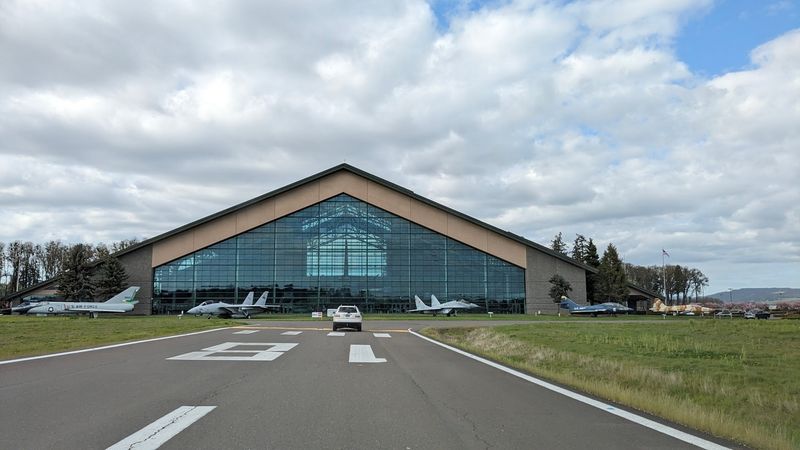
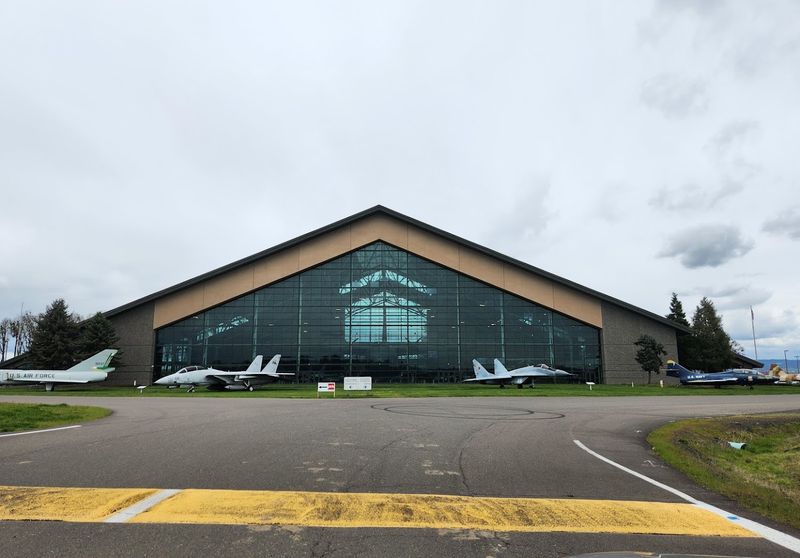
The main aviation building is absolutely massive. Walking through the front doors feels like stepping into a world where time moves differently.
Historic aircraft stretch in every direction, demanding your attention at every turn.
The collection spans nearly every era of powered flight. World War II fighters, Cold War jets, and civilian aircraft all share the same enormous floor space.
Each exhibit includes detailed informational panels that explain the aircraft’s history and how it was sourced.
Upstairs, there are cutaway models tucked into a conference area that serious aviation fans should not miss. The layout rewards curious visitors who wander and look up, down, and around every corner.
Volunteers stationed throughout the building are knowledgeable and genuinely enthusiastic. They share stories that no sign could ever fully capture.
Plan to spend at least two full hours here just to absorb the main floor. The aviation building alone justifies making this museum a dedicated day trip.
The Space Museum Building
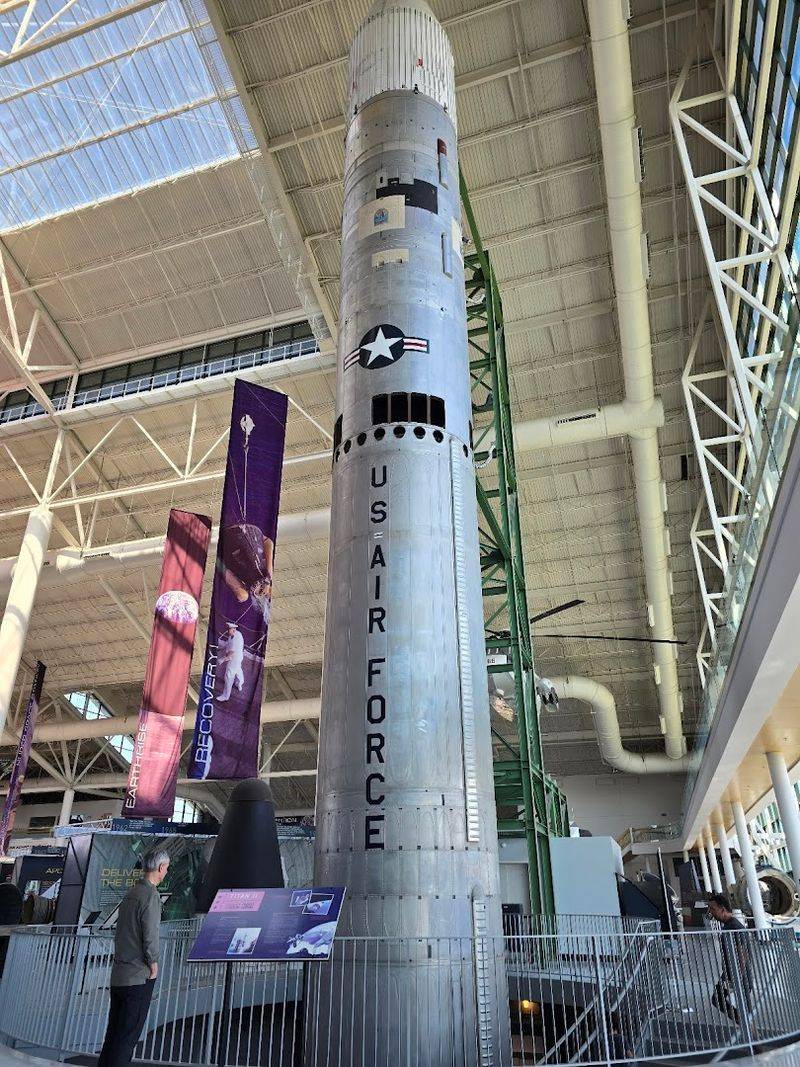
A short walk from the aviation hangar sits the Space Museum building, and it carries a completely different energy. The moment you step inside, rockets and capsules pull your gaze upward immediately.
It feels less like a museum and more like a launchpad.
The space section covers everything from early rocketry to modern aerospace technology. There is a dedicated wing focused entirely on vertical flight and helicopters.
The presentation is sharp, organized, and surprisingly engaging for all ages.
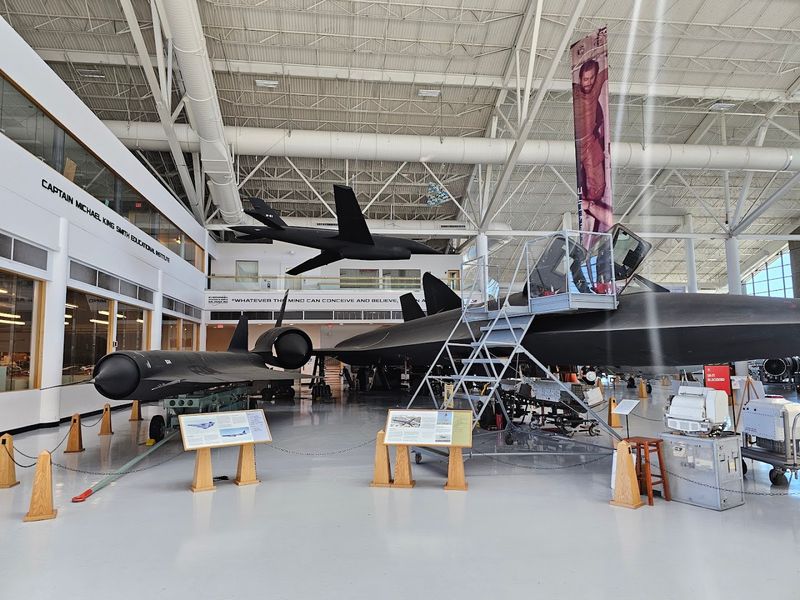
One of the standout pieces is the SR-71 Blackbird, a sleek reconnaissance aircraft that looks almost alien in person. The F-117 Nighthawk stealth jet is another jaw-dropper nearby.
Visitors often spend just as much time here as in the aviation building. The interactive elements, though some were temporarily inactive during certain visits, still add real value.
Budget another two hours for this building if you want to read everything carefully. Rushing through it would genuinely be a shame.
The Incredible Volunteer Staff
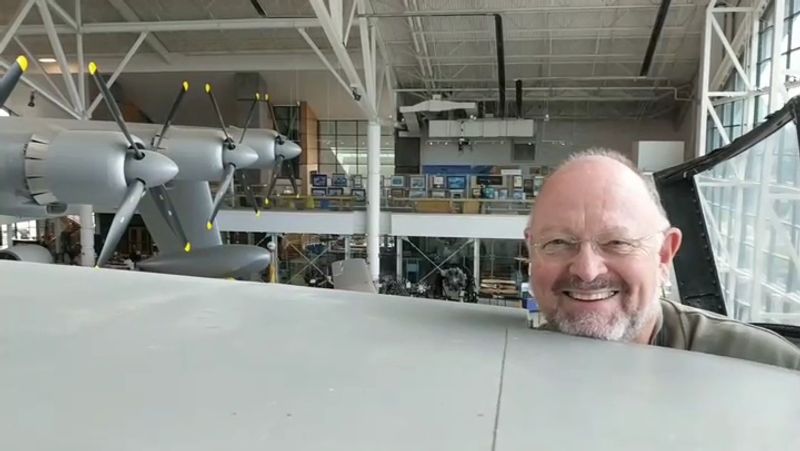
Some of the best parts of this museum are the people wearing the volunteer badges. Many of them are retired veterans or lifelong aviation professionals.
Their stories carry a weight that no exhibit label ever could.
These volunteers roam both buildings freely, ready to answer questions or simply share a story. One visitor described a volunteer named Sylvia who went completely out of her way to make sure a family’s kids had a memorable experience.
That kind of personal touch is rare in any museum setting.
The staff working the main desks are equally warm and helpful. Nobody here feels like they are just doing a job.
There is a genuine passion for aviation history that radiates from nearly every person on the floor. Tour guides will walk you through the Spruce Goose flight deck with real enthusiasm.
If you ask questions, expect thoughtful and detailed answers. The human element here genuinely elevates the entire visit beyond what the exhibits alone could achieve.
The Spruce Goose Flight Deck Tour
Getting up to the flight deck of the Spruce Goose is a bucket list moment that sneaks up on you. The tour is timed, so planning ahead makes a real difference.
Once you are up there, the experience is completely worth every bit of effort.
Standing at the original controls of an aircraft this historically significant is surreal. The cockpit is enormous, built to house a full crew for a massive wartime transport mission.
You can almost feel the ambition of Howard Hughes echoing through every rivet.
Tour guides bring the history alive with details you would never find just reading a plaque. The view from up top also gives you a new perspective on just how wide the fuselage truly is.
Many visitors call this the single best moment of their entire trip. It is a timed experience, so checking the schedule at the front desk early in your visit is a smart move.
Missing it would be a genuine regret.
The Flight Simulator Experience
Not every great moment at this museum involves standing still and looking up. The flight simulator is one of those experiences that gets your heart pumping in the best possible way.
Family members watching from outside can see everything happening on a screen.
The simulator puts you in control of an aircraft and does not hold back. Going upside down is apparently very much on the menu.
Visitors who tried it described it as surprisingly intense and completely worth the experience.
It is a perfect break between the two main museum buildings. Kids love it, but plenty of adults come out looking equally thrilled and slightly dizzy.
The simulator adds a layer of physical engagement that pure exhibit viewing cannot match. It transforms a passive museum visit into something genuinely participatory.
If you are traveling with a mixed group of ages and interests, this feature helps keep everyone energized and entertained throughout the day. Do not walk past it without at least taking a look.
World War II Aircraft Collection
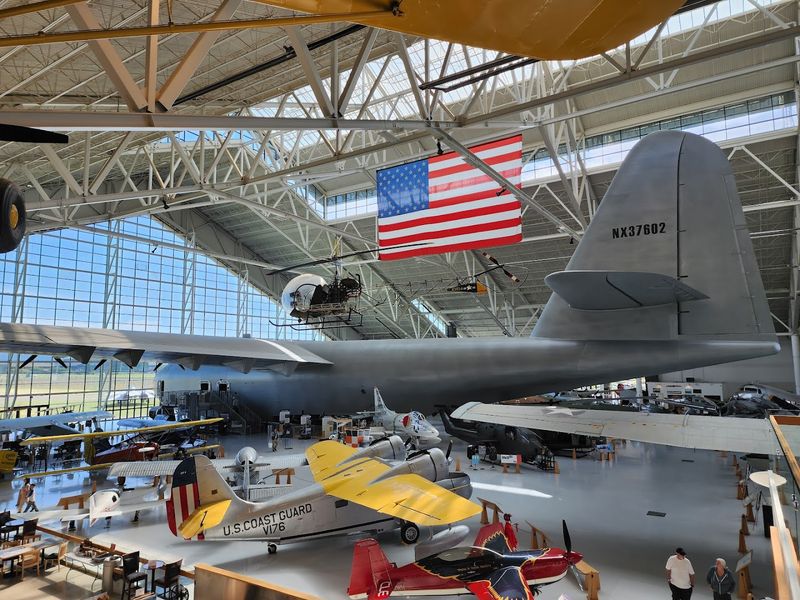
For anyone who grew up reading about the Second World War, this section of the museum hits differently. The WWII aircraft collection is extensive and beautifully preserved.
Each plane carries a story that feels personal and immediate.
Fighters, bombers, and transport aircraft from multiple nations are represented here. The informational displays explain not just what each aircraft did, but how it was acquired and restored.
That sourcing context adds a layer of depth that makes the collection feel curated rather than just accumulated.
Standing next to a P-51 Mustang or a B-17 Flying Fortress, you feel the weight of history pressing in around you. These were not props or replicas.
They were real machines flown by real people in the most intense conflict the world has ever seen. The museum treats them with appropriate reverence.
Aviation enthusiasts often linger here the longest of any section. It is the kind of exhibit that turns casual visitors into dedicated history readers on the drive home.
The 3D Theater and Educational Programs
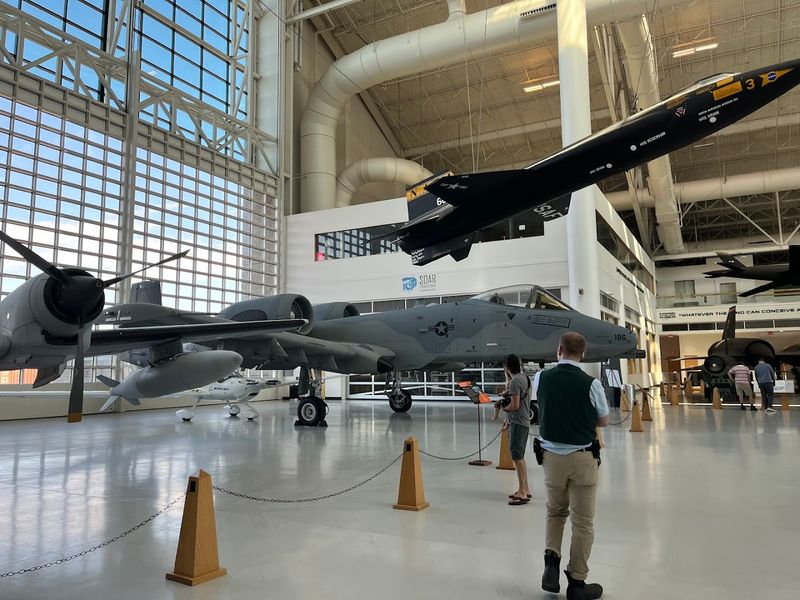
Tucked inside the museum complex is a 3D theater that offers a genuinely fun change of pace. After hours of walking and looking, sitting down for an immersive film feels like a natural next step.
The programming leans toward aviation and space themes, which fits the setting perfectly.
Educational programs at the museum go beyond passive film watching. Interactive displays scattered through both buildings invite visitors to engage with the science behind flight.
The museum clearly takes its role as an educational institution seriously.
Teachers and parents traveling with school-age kids will appreciate how thoughtfully the educational content is layered. You can learn something new at every age level here.
Even adults who thought they knew aviation history tend to walk away with fresh perspective. The museum also hosts special events throughout the year, including a stunning Christmas lights display during the holiday season.
Planes decorated with lights create an atmosphere that is both magical and unexpected. It is the kind of seasonal touch that brings visitors back more than once.
Outdoor Aircraft and the Evergreen 747
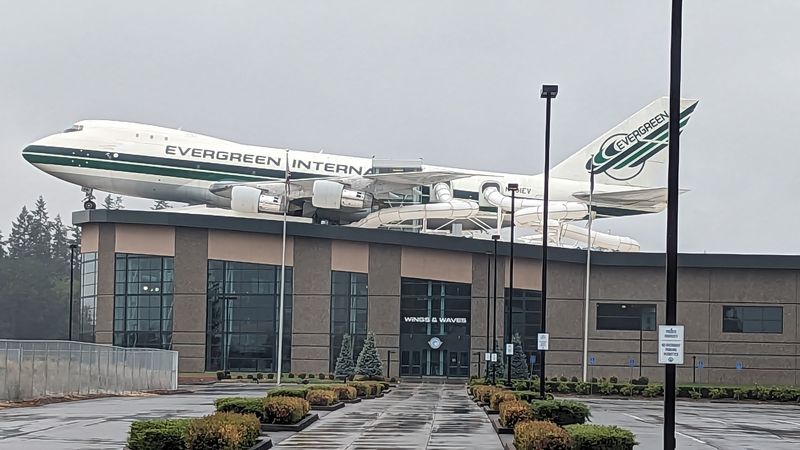
Stepping outside the main buildings reveals another layer of the museum experience entirely. A retired Evergreen Airlines 747 sits on the grounds like a monument to commercial aviation’s golden era.
It is massive and impossible to ignore.
The outdoor display area also includes several other aircraft that have been preserved in the open air. Behind the space museum, additional static displays are maintained with surprising care given the outdoor exposure.
Walking between the buildings becomes its own little adventure.
On the right day, visitors have even spotted U.S. Air Force Thunderbirds practicing overhead due to a nearby airshow venue.
That kind of unexpected bonus is the sort of thing that turns a good visit into an unforgettable one. The 747 itself tells the story of Evergreen International Airlines, the Oregon-based cargo carrier whose legacy is deeply tied to this museum.
Understanding that connection adds real meaning to the entire complex. The outdoor walk between buildings is well worth taking slowly.
Planning Your Visit to McMinnville
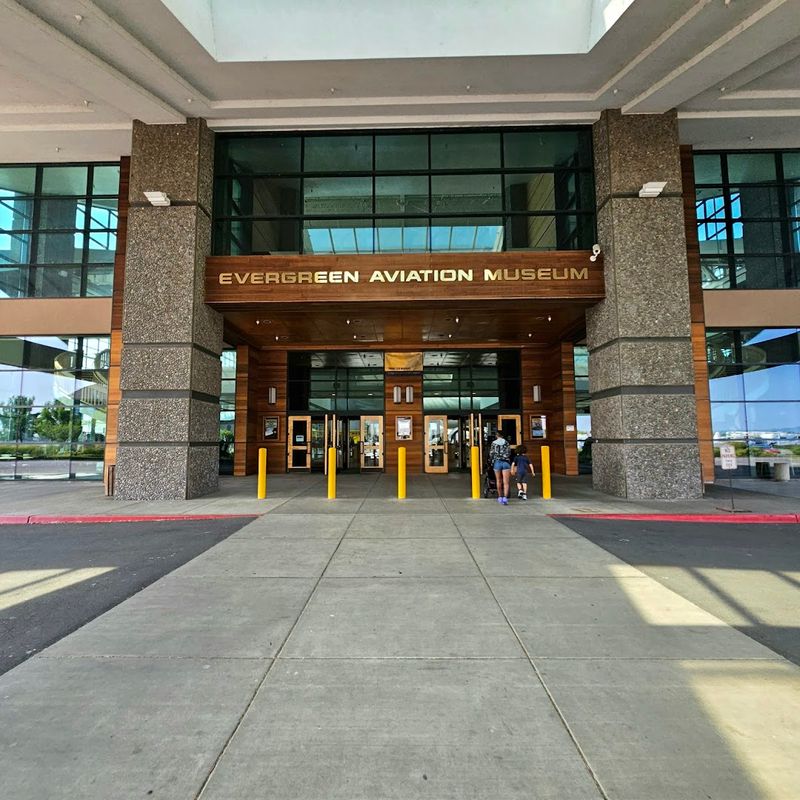
Getting the most out of a visit here takes just a little bit of planning. The museum opens at 9 AM every day of the week and closes at 5 PM.
Arriving early gives you the best chance to book a Spruce Goose flight deck tour before slots fill up.
Plan to spend at least four hours total if you want to cover both buildings at a relaxed pace. The walk between the aviation and space buildings is manageable but worth wearing comfortable shoes for.
There is ample parking on site, which makes arrival stress-free.
A gift shop and restaurant are located on the property, so you do not need to leave for a meal break. McMinnville itself is a charming small town worth exploring before or after your museum visit.
The museum grounds also include a water park nearby, making it a natural full-day destination for families. Restoration projects happening on site mean there is often something new to notice even on a return visit.
Address: 500 NE Captain Michael King Smith Way, McMinnville, OR 97128
Dear Reader: This page may contain affiliate links which may earn a commission if you click through and make a purchase. Our independent journalism is not influenced by any advertiser or commercial initiative unless it is clearly marked as sponsored content. As travel products change, please be sure to reconfirm all details and stay up to date with current events to ensure a safe and successful trip.
