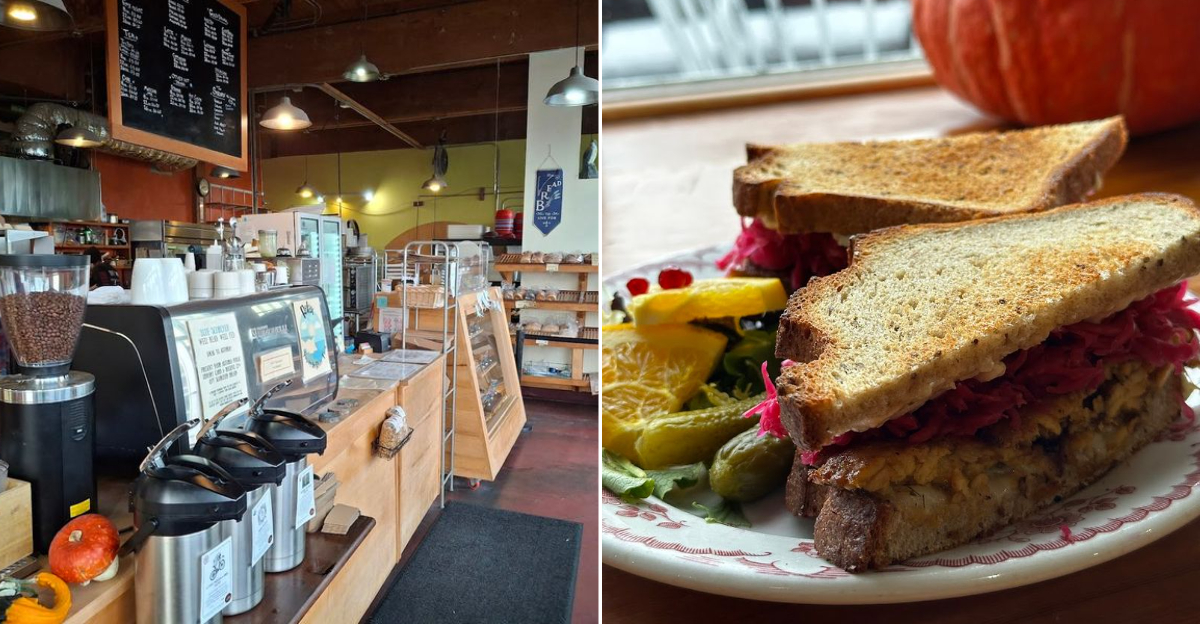
Walking into this Oregon bakery feels like stepping into a friend’s cozy kitchen, if that kitchen had soaring ceilings and warm wooden beams overhead. The exposed architecture gives the space a rustic charm that photographs never quite capture.
Long community tables stretch across the room, inviting strangers to sit side by side and share a quiet morning with their coffee and pastries. Then you look up and notice the paper snowflakes dangling from the ceiling, each one cut by local children and hung with care.
Those little handmade touches turn a simple bakery into something that feels woven into the neighborhood. The air smells like butter and sugar, and every corner seems to hold a small surprise.
You come for the baked goods, but you stay for the feeling of belonging.
The Room That Pulls You In
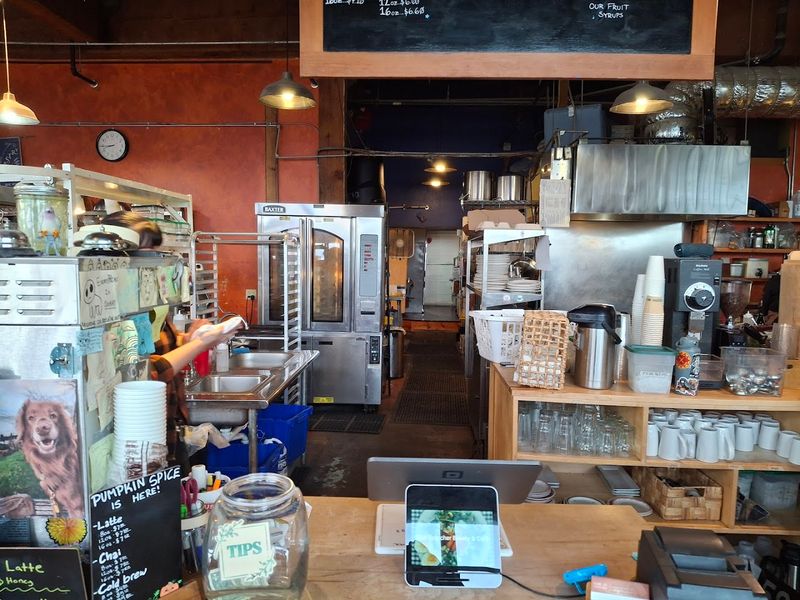
The first thing that gets you is how the room settles you down before you even reach the counter. Blue Scorcher has that old Astoria building feeling, with exposed beams overhead and light moving softly across wood, brick, and people who look like they actually want to stay awhile.
Nothing feels staged, and that is exactly why it works so well.
I loved the community tables because they change the whole mood of the place without making a big speech about togetherness. You sit down with your coffee, and suddenly the bakery feels less like a transaction and more like part of the neighborhood, which is honestly a rare thing now.
Even when it is busy, the room keeps this calm, unhurried rhythm.
Then you notice the paper snowflakes, and that is when the place really starts to feel personal. They hang there with all the slight imperfections that make handmade things better, and they soften the whole space in a way expensive design never could.
You can almost picture local kids carefully folding and cutting them at a table somewhere nearby.
That mix of sturdy old architecture and small community touches is what stayed with me most. It feels deeply Oregon, but not in a showy way, and you walk out feeling like you were let in on something simple and real.
Where It Sits In Astoria
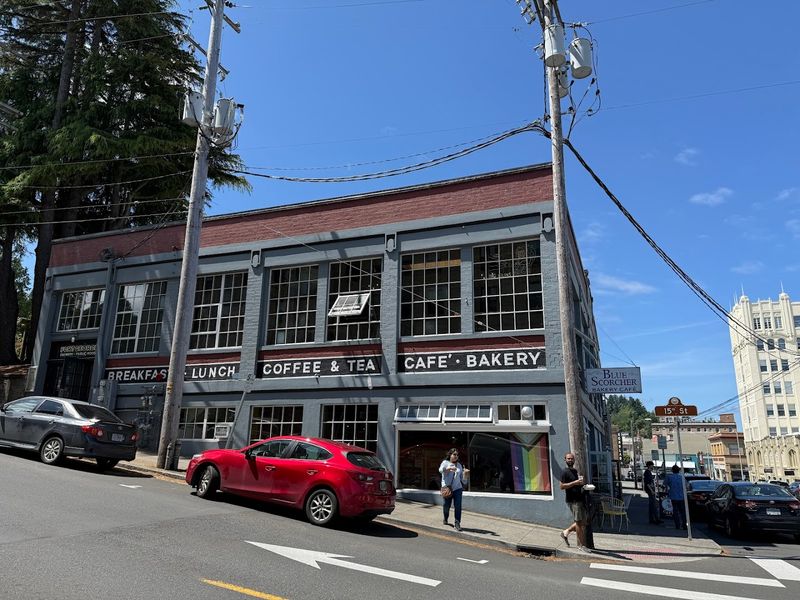
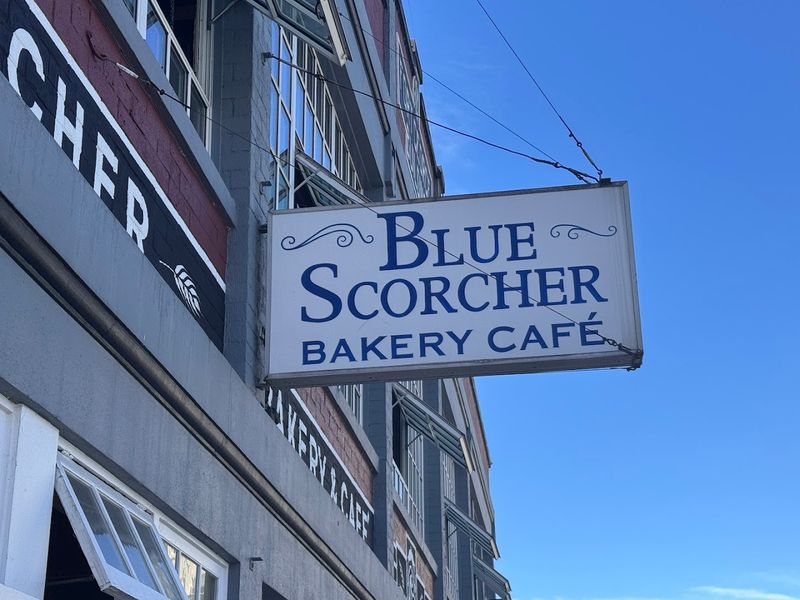
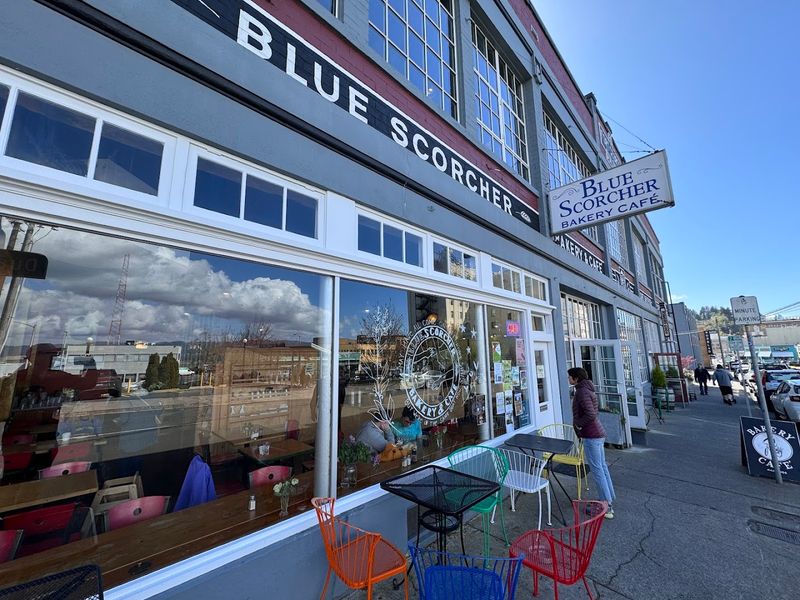
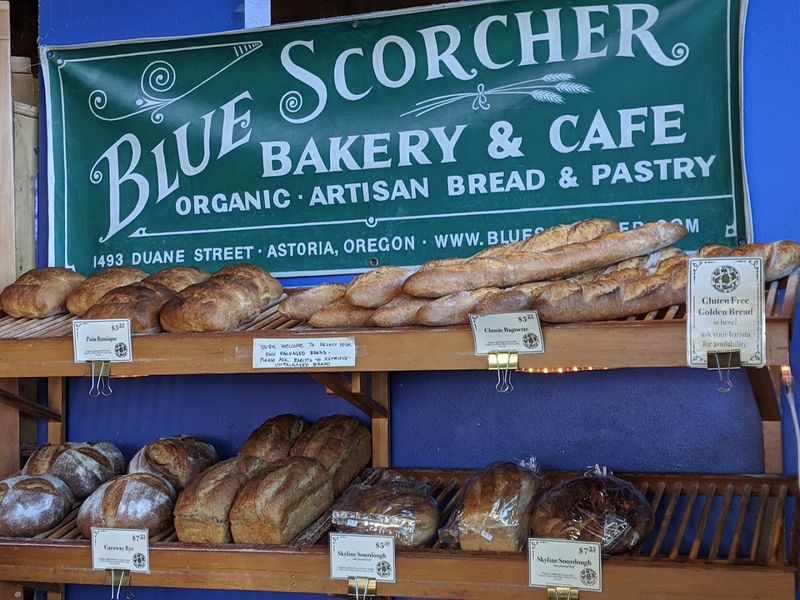
What I liked right away was how naturally Blue Scorcher fits into Astoria instead of trying to stand apart from it. You will find it at Blue Scorcher Bakery and Cafe, one four nine three Duane Street, Astoria, Oregon, and the location feels completely in step with the old downtown streets around it.
Walking up, you get that satisfying sense that you are about to enter a place with real local gravity.
Astoria already has that weathered, cinematic look, with hills, old buildings, and the river energy always hovering nearby. This bakery matches that mood without leaning too hard on nostalgia, which I appreciated because it lets the city stay itself.
The storefront feels welcoming in a grounded, everyday way, not in a polished, please photograph me way.
Once you step inside, the outside world drops back a little, and that contrast makes the bakery even nicer. It becomes this warm pocket inside coastal Oregon, where the pace changes and people seem willing to linger.
I think that matters when you are traveling, because some places feed you and some places actually hold you for a while.
Blue Scorcher really does the second one. It gives you a sense of Astoria that feels local, lived-in, and easy to trust.
Those Big Shared Tables
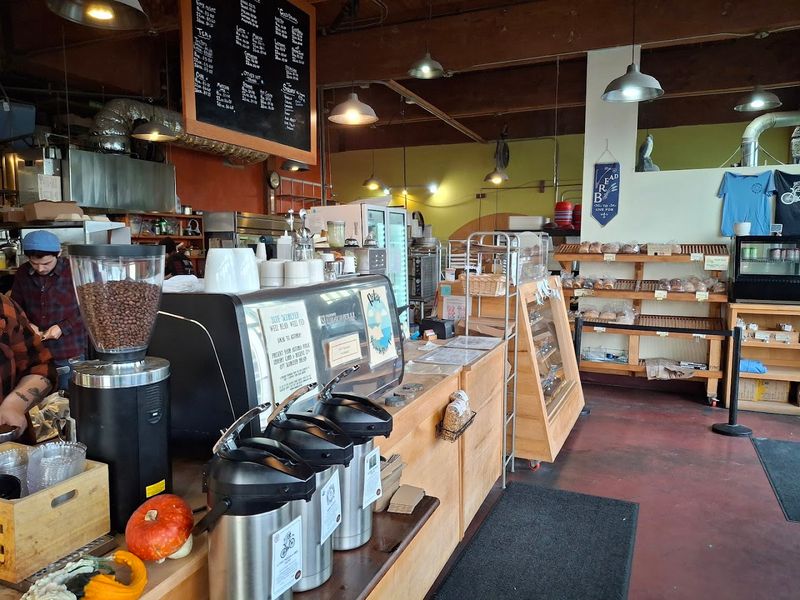
You know how some places put in a communal table and it feels like a design decision more than a real invitation. Here, the big shared tables actually make sense, and they quietly shape the whole experience in a way you notice almost immediately.
Instead of everyone tucking into separate corners, the room feels open, friendly, and a little more human.
I sat there watching people come in from the Astoria air, unwrap scarves, set down mugs, and slide into that easy bakery rhythm. Nobody seemed rushed, and nobody looked like they were guarding their little patch of table, which tells you a lot about the place.
It felt natural to spread out for a minute, read something, or just look around.
That setup also gives Blue Scorcher a kind of everyday generosity that is hard to fake. You are sharing space with neighbors, travelers, and regulars, and somehow it never feels awkward or crowded.
The table does what the best public places do, which is remind you that being around other people can still feel comfortable.
Honestly, I think the community tables are part of why the bakery lingers in your memory. They make the room feel less like a café and more like a local living room that happens to smell amazing.
The Beams Overhead
I am always paying attention to ceilings in old buildings, which might sound odd until you walk into a place like this. The exposed beams at Blue Scorcher do more than add character, because they give the room weight, history, and that slightly creaky sense that many years happened here before your pastry ever hit the plate.
They make the space feel held together by something sturdy and honest.
What I liked was that the beams are not treated like a museum piece or a branding trick. They are just part of the bakery, quietly doing their job while the rest of the room unfolds beneath them.
That simplicity keeps the whole place from feeling precious, and it lets the architecture support the mood instead of stealing it.
There is also something about old wood overhead that changes how a room sounds. Conversations seem softer, cups land with a gentler clink, and the whole bakery feels a little more grounded because of it.
You notice that kind of thing when you are traveling, especially in a town like Astoria where old spaces carry so much of the story.
By the time I left, those beams were one of the details I kept replaying. They give Blue Scorcher its backbone, and the warmth of the room starts right there.
A Bakery That Feels Lived In
Some bakeries feel beautiful in a hands-off way, like nobody has really used them yet, and that is not the case here. Blue Scorcher feels lived in, which is one of the nicest things I can say about a place serving food.
The room carries signs of daily life, regular routines, and the kind of wear that comes from people actually loving it.
You notice it in the seating, the movement around the counter, and the way folks seem to know exactly how to be there. Nothing about the atmosphere feels overmanaged, and that gives the bakery a kind of ease that is hard to replicate.
It feels like Astoria knows this place well, and the place knows Astoria right back.
I think travelers can sense the difference between a room designed to photograph well and a room designed to be used. This one clearly belongs to the second category, and it is better for it because comfort wins over presentation every time.
When I sat there, I never felt like I had to perform being on a trip.
That lived-in quality also makes Blue Scorcher feel especially grounded in Oregon, where some of the best spots still value function, warmth, and community over polish. You walk in as a visitor, but the room does not keep you at arm’s length.
Why The Light Feels So Good
Maybe this sounds overly specific, but the light inside Blue Scorcher is part of the whole experience. It lands gently across the tables and walls, and it works with the old materials in the room instead of flattening them.
That soft glow makes everything feel calmer, which is probably why people seem to settle in so quickly.
Astoria light is its own thing, especially near the coast where the sky can shift from bright to muted without much warning. Inside the bakery, that changing light feels almost like another layer of decoration, except it is obviously better because it is real.
The paper snowflakes, wood beams, and shared tables all seem warmer when that daylight moves through the space.
I found myself slowing down just because the room encouraged it. There is no harshness to the way the interior comes together, and that matters more than people sometimes realize when they are choosing where to linger.
A good bakery should make you want to stay through the second half of your coffee, and this one definitely does that.
That kind of light also makes the bakery feel deeply tied to its place in Oregon. You are not just indoors somewhere nice, you are indoors in this particular coastal town, and the room lets you feel that.
What It Says About Astoria
If you want to understand Astoria without overcomplicating things, spending time in Blue Scorcher tells you plenty. The bakery reflects the town’s mix of history, creativity, practicality, and neighborly warmth in a way that feels natural rather than curated.
You walk in for something to eat, and you end up getting a clearer sense of the place itself.
The old building gives you that durable coastal backbone, while the handmade decorations and communal seating bring in the softer local side. It feels connected to everyday life instead of standing apart from it, and that connection is what makes it memorable.
Places like this remind you that atmosphere is often just community made visible.
I also think Blue Scorcher captures something real about Oregon. There is a straightforwardness to the space, but there is also care, personality, and a refusal to smooth out every rough edge.
That balance is part of what makes the state so appealing, especially in smaller cities where people still shape businesses with their own habits and values.
By the end of my visit, the bakery felt like more than a nice room with good energy. It felt like one of those places where a town quietly explains itself if you are willing to sit still long enough.
Why I Would Send You Here
If you told me you were heading to Astoria and wanted one place that felt genuinely local, this is where I would send you. Not because it is flashy, and not because it tries to sum up the whole town in one neat package, but because it feels real from the moment you walk in.
That kind of honesty is what stays with you on a trip.
Blue Scorcher gives you all these small, specific details that add up to something much bigger. The exposed beams make the room feel rooted, the shared tables make it feel open, and those paper snowflakes bring in this sweet, unmistakably human touch.
Put together, they create a bakery that feels warm in the truest sense, not just the decorative sense.
I think that is why it works so well as a recommendation. You are not sending someone to a checklist stop, you are sending them into a room that actually says something about Astoria, Oregon, and the people who live there.
There is a difference, and most travelers can feel it right away.
So yes, I would absolutely tell you to go. Find a seat, look up at the beams, notice the snowflakes, and let the place do what it does best, which is make you feel gently included.
