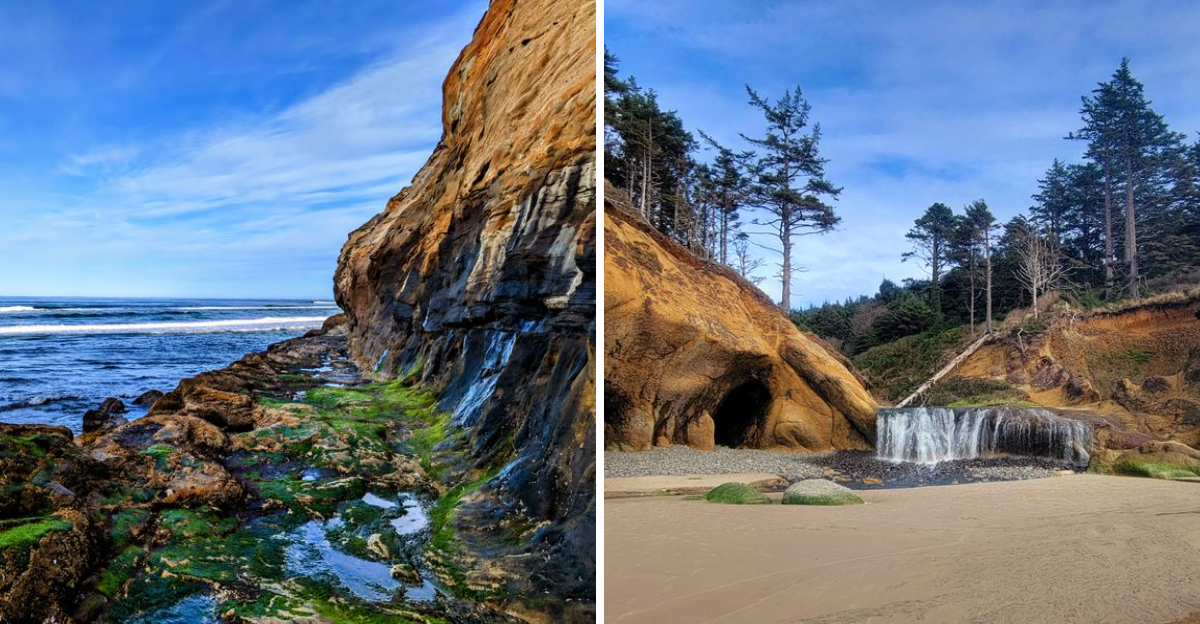
I still remember rounding that bend south of Cannon Beach and glancing down at the stretch of coastline below the highway, not fully prepared for what I was about to see. The name had always intrigued me, sounding dramatic and a little mysterious.
I half imagined desperate travelers clinging to cliffs while waves slammed the rocks beneath them. What I found was even better.
It was a place where Oregon’s wild history is literally carved into stone.
This is not your typical sandy beach day with snack shacks and umbrellas. Long before highways, this shoreline acted as Oregon’s roadway.
Stagecoach drivers had to plan their routes around the tides or risk being swallowed by the ocean. You can still see the grooves they left behind, etched into the sandstone cliffs like permanent proof of their nerve.
Walking along the sand feels like stepping through history while standing in one of the most photogenic places on the coast. That place is Hug Point State Recreation Site, and once you see it in person, the name makes perfect sense.
The Road Carved in Stone
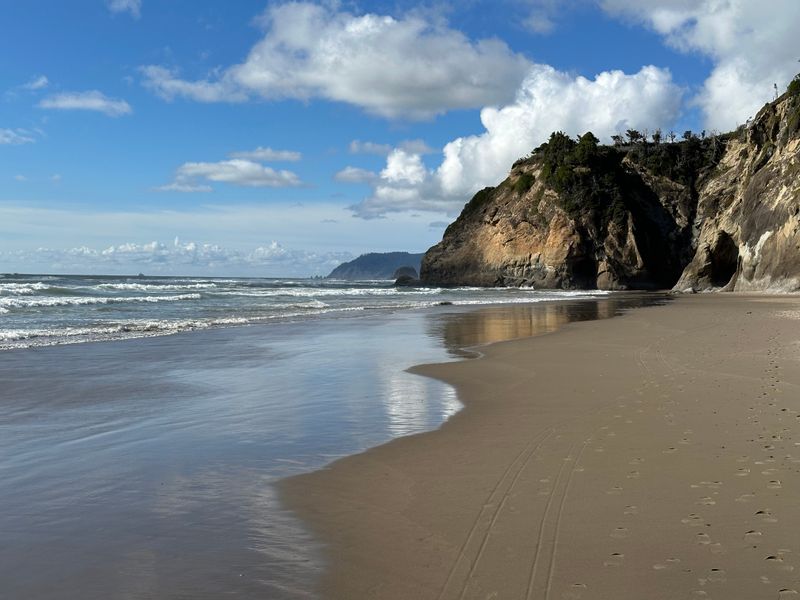
Walking along the beach at low tide, I ran my fingers along grooves cut deep into the cliff face and felt history beneath my hands. These aren’t natural formations but the deliberate work of 19th-century road builders who blasted and chiseled a passage through solid sandstone.
The roadbed curves around the point where the headland juts dramatically into the Pacific, creating what was once the only viable route between coastal settlements.
Stagecoach drivers would wait for low tide, then race their teams along this narrow shelf before the ocean reclaimed it.
You can still see the wheel ruts worn into the stone, testament to decades of heavy wagons grinding over the same path. During my visit, I watched families exploring this historical artifact, kids excitedly pointing out where wheels once rolled while waves lapped just feet away.
The preservation of this roadbed offers something rare: tangible proof of how dramatically different coastal travel once was.
Standing there, imagining the nerve it took to guide horses and passengers along that precarious route, gave me genuine appreciation for modern Highway 101 running safely above.
Why They Called It Hug Point
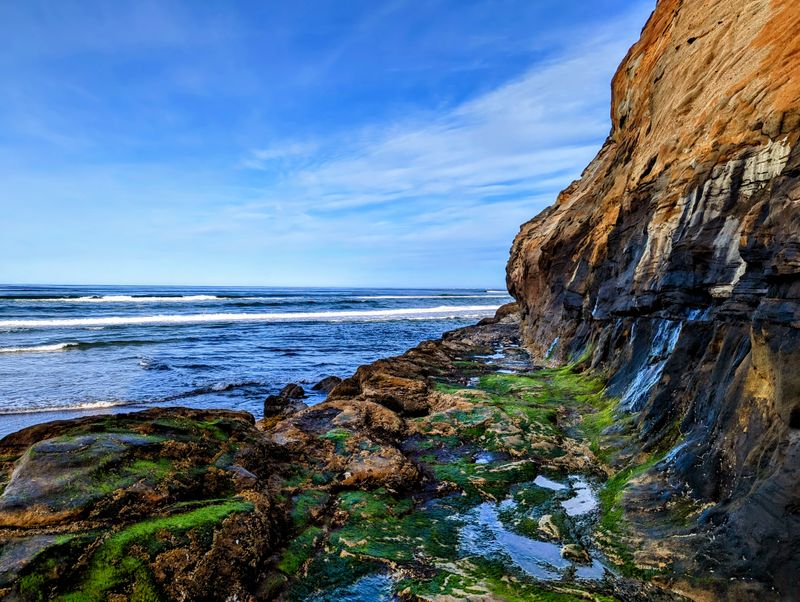
The name tells you everything about the experience early travelers faced here. Coaches, wagons, and eventually early automobiles had to literally hug the cliff face to squeeze past the rocky headland without getting swept into the churning Pacific below.
I tried to imagine what passengers must have felt, pressed against one side of a swaying stagecoach while waves crashed mere inches from the wheels on the other side.
The margin for error was essentially nonexistent, making this one of the most nerve-wracking stretches along the entire Oregon coast route.
Local historians have documented numerous close calls and occasional disasters when drivers misjudged the tides or encountered unexpected swells. The point juts out far enough that there was simply no way around it except to embrace the cliff and hope for calm seas.
Standing at the base of those cliffs today, with the carved road visible above me, the name suddenly made perfect sense.
This wasn’t poetic license or tourism marketing but an accurate description of survival technique that travelers employed for generations before safer routes were established inland.
The Waterfall That Flows to the Sea
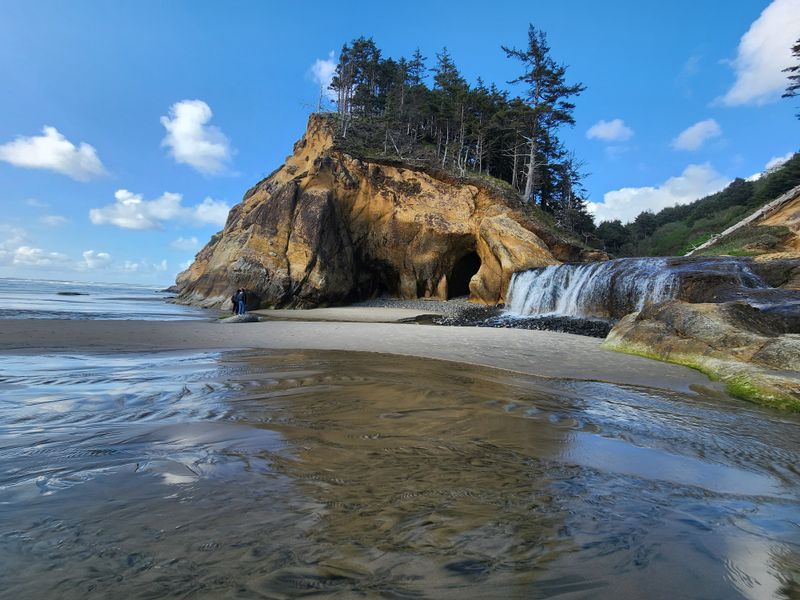
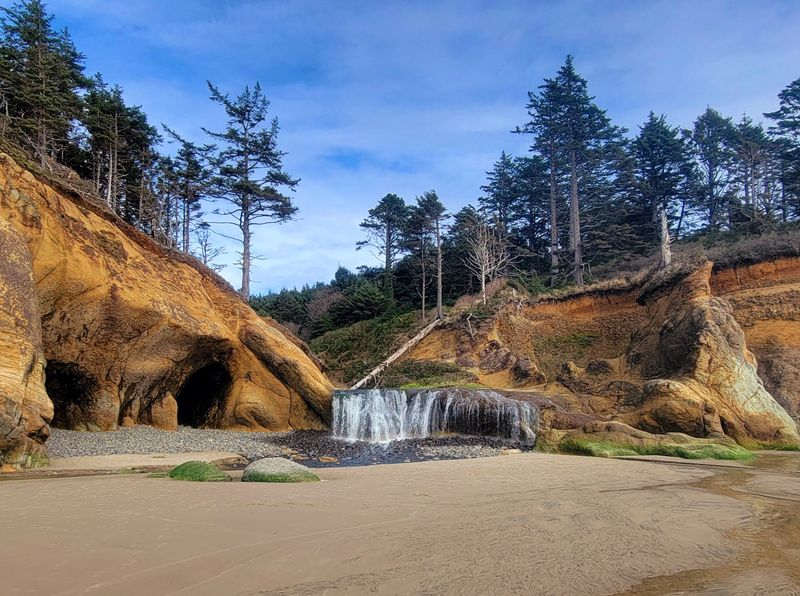
One of Hug Point’s most photogenic features appears seasonally, transforming the beach into something magical during winter and spring months. A small waterfall spills directly from the cliff top onto the sand below, creating a freshwater stream that winds its way across the beach to meet the saltwater waves.
I visited during March and found the waterfall flowing strong, its cool water creating a striking contrast against the gray sand.
Kids were splashing in the shallow stream while photographers set up tripods to capture the unusual sight of fresh water tumbling onto a beach.
The waterfall’s height isn’t impressive by cascade standards, maybe twenty feet at most, but its location makes it special. You can walk right up to it, even stand beneath the flow if you don’t mind getting soaked, creating interactive photo opportunities you won’t find at most Oregon beaches.
During summer, the flow often reduces to a trickle or disappears entirely, so timing matters if witnessing this feature ranks high on your visit priorities.
The unpredictability adds to its charm, making each winter appearance feel like a seasonal gift from the coastal ecosystem.
Sea Caves Carved by Time
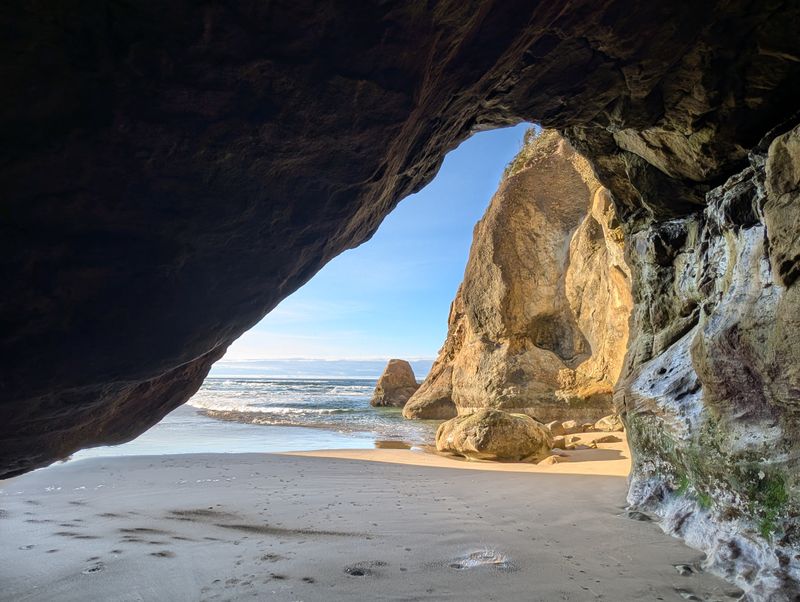
Erosion has sculpted the sandstone cliffs into a series of dramatic sea caves that beckon exploration during low tide. These aren’t small hollows but substantial caverns, some large enough to walk deep inside while staying completely dry.
I spent over an hour exploring these geological wonders, marveling at how thousands of years of wave action had created such perfectly formed chambers.
The sandstone walls show beautiful layering and color variations, from deep rust to pale cream, telling the story of ancient sediment deposits.
The caves remain accessible and safe to explore, unlike many coastal caverns that require dangerous scrambling or technical skills. Families with young children can venture inside, though I recommend bringing flashlights since the interiors grow quite dark beyond the entrance chambers.
Each cave has its own character: some feature smooth, water-polished walls while others display rough, honeycomb textures where softer stone has eroded faster.
During my exploration, I discovered that sound behaves wonderfully inside these spaces, with wave crashes amplifying into deep, resonant booms that vibrate through your chest.
Tide Pool Treasures at Your Feet
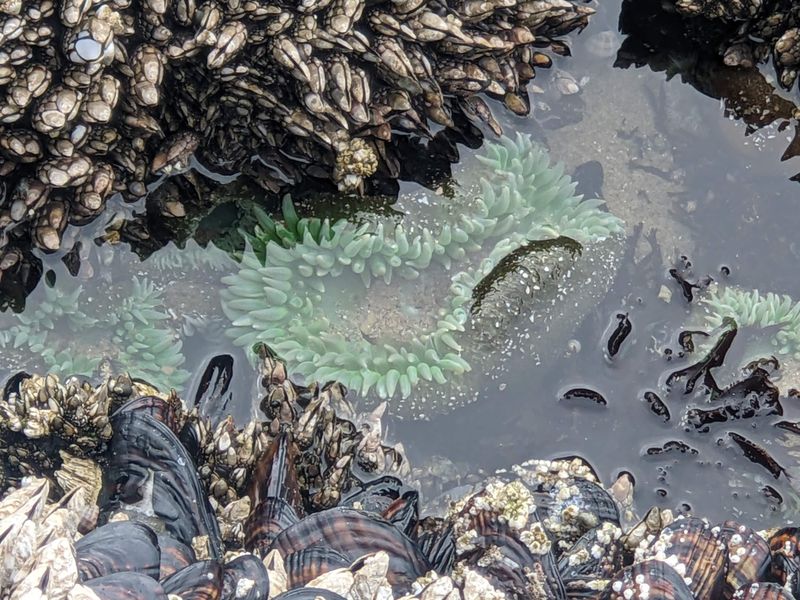
The rocky shoreline transforms into an outdoor aquarium during low tide, revealing tide pools teeming with marine life that delights visitors of all ages. I found myself crouched beside these miniature ecosystems for far longer than planned, completely absorbed in watching their inhabitants.
Sea stars in vibrant purples and oranges cling to rocks alongside bright green anemones that wave their tentacles in the remaining water.
Small crabs scuttle between crevices while tiny fish dart through the shallow pools, creating a living display that rivals any aquarium exhibit.
The Oregon coast’s tide pool etiquette is important here: look but don’t touch, and never remove anything from its habitat. I watched a park ranger gently educating visitors about this, explaining how even brief handling can harm these delicate creatures adapted to very specific conditions.
Timing your visit for low tide is essential, as high tide completely submerges these areas under several feet of churning ocean.
I checked tide charts before my trip and arrived two hours before the lowest point, giving myself plenty of exploration time before the Pacific reclaimed these temporary windows into underwater life.
Just South of Cannon Beach
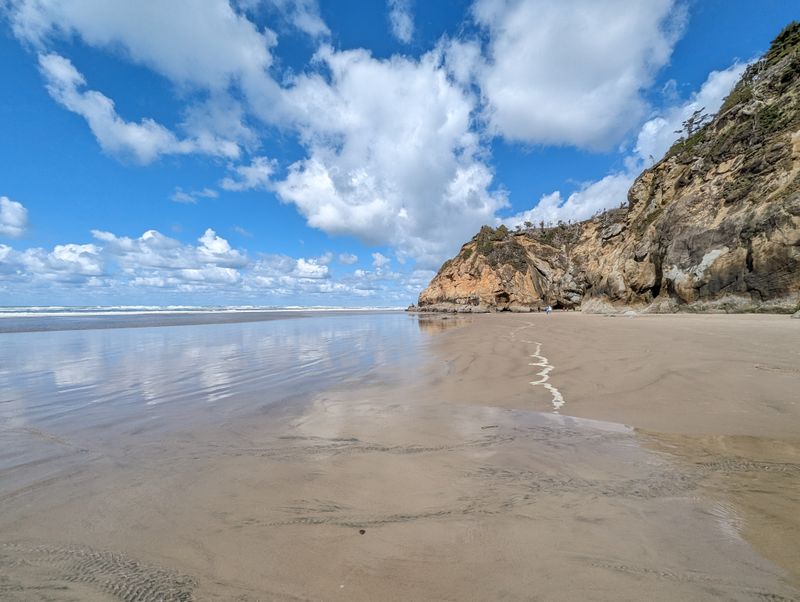
Geography matters when planning your visit, and Hug Point’s location five miles south of Cannon Beach in the small community of Arch Cape offers distinct advantages. You get the stunning Oregon coastline without the crowds that pack Cannon Beach’s famous Haystack Rock area during peak seasons.
I appreciated this positioning during my summer visit, when Cannon Beach’s parking lots were overflowing but Hug Point remained relatively peaceful.
The short drive south takes you away from the commercial district into a more natural, undeveloped stretch of coastline that feels worlds apart despite the minimal distance.
The site sits along Beach Access Road, easily spotted from Highway 101 with clear signage directing visitors to the parking area. From Portland, you’re looking at roughly 90 minutes of driving, making Hug Point perfect for day trips or as part of a longer coastal exploration.
This location also positions you ideally for visiting multiple attractions in a single day.
I combined Hug Point with stops at Cannon Beach and Oswald West State Park further south, creating a full day of diverse coastal experiences without excessive driving between sites.
Temporary Closure and Erosion Challenges
Coastal erosion represents an ongoing challenge for Oregon’s beach parks, and Hug Point currently faces temporary closure due to severe erosion affecting beach access. The Oregon Parks and Recreation Department has closed the site with no definitive reopening date as they assess solutions.
During my research for this article, I discovered that the same natural forces that carved those beautiful sea caves and the historic roadbed continue shaping the landscape today.
The access path down to the beach has become unstable, creating safety concerns that necessitated the closure.
This situation highlights the dynamic nature of coastal environments, where human infrastructure must constantly adapt to geological processes operating on much longer timescales. What made this location dramatic and appealing also makes it challenging to maintain safe public access.
Before planning your visit, I strongly recommend checking the Oregon State Parks website or calling their information line at 800-551-6949 for current status updates.
The closure is intended as temporary while engineers develop solutions, but coastal repair projects can take considerable time given the challenging conditions and environmental considerations involved in such work.
Planning Your Low Tide Adventure
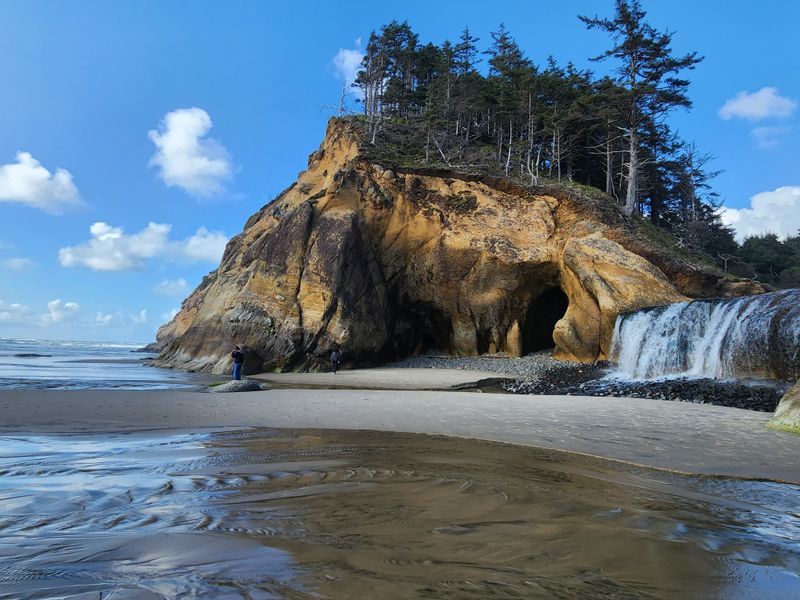
Success at Hug Point depends almost entirely on understanding and planning around tidal cycles, just as those early stagecoach drivers had to do over a century ago. The difference between high and low tide here can exceed eight feet, dramatically changing what you can access and experience.
I learned to check NOAA tide predictions before every coastal visit, and for Hug Point this practice proves absolutely essential.
The historic roadbed, best tide pools, and innermost sea caves only become accessible during the lowest tides, typically occurring twice daily with timing shifting gradually throughout the month.
Plan to arrive at least an hour before the predicted low tide to give yourself maximum exploration time before the ocean begins reclaiming the beach. I made this mistake on my first attempt, arriving as the tide was already rising and missing the roadbed entirely as waves crashed against the cliff base.
Bring appropriate footwear since you’ll be walking on wet rocks, sand, and potentially through shallow water.
I wore sturdy water sandals that provided good traction while allowing my feet to get wet without consequence, which proved perfect for the varied terrain and occasional stream crossings.
Contact Information and Practical Details
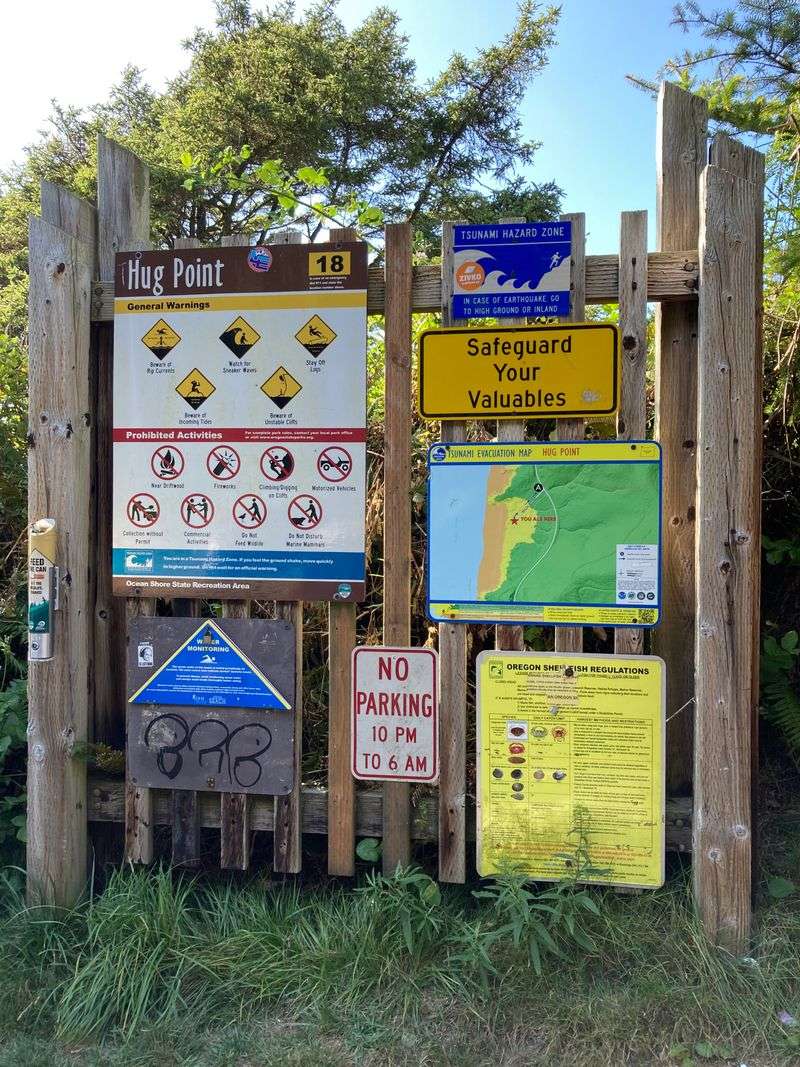
Having accurate contact information and location details makes trip planning considerably easier, especially given the current closure status affecting Hug Point. The site’s official address is Beach Access Road, Arch Cape, Oregon 97102, though GPS coordinates of 45.8287018, -123.9625061 may prove more reliable for navigation systems.
The Oregon Parks and Recreation Department manages this location and can be reached at 800-551-6949 for current status updates, tide information, and general questions.
Their website at oregonstateparks.org provides detailed information about facilities, regulations, and temporary closures affecting access.
When the park is open, you’ll find the typical state park amenities including parking areas and basic facilities, though this is definitely a more rustic site compared to heavily developed beaches. The emphasis here is on natural and historical features rather than modern conveniences.
Visitor reviews consistently rate Hug Point at 4.8 stars across over 2,500 reviews, reflecting the site’s appeal when accessible.
That rating places it among Oregon’s top-rated coastal destinations, with visitors particularly praising the unique combination of natural beauty and tangible history that makes this location so memorable and worth the effort to visit properly.
Dear Reader: This page may contain affiliate links which may earn a commission if you click through and make a purchase. Our independent journalism is not influenced by any advertiser or commercial initiative unless it is clearly marked as sponsored content. As travel products change, please be sure to reconfirm all details and stay up to date with current events to ensure a safe and successful trip.
