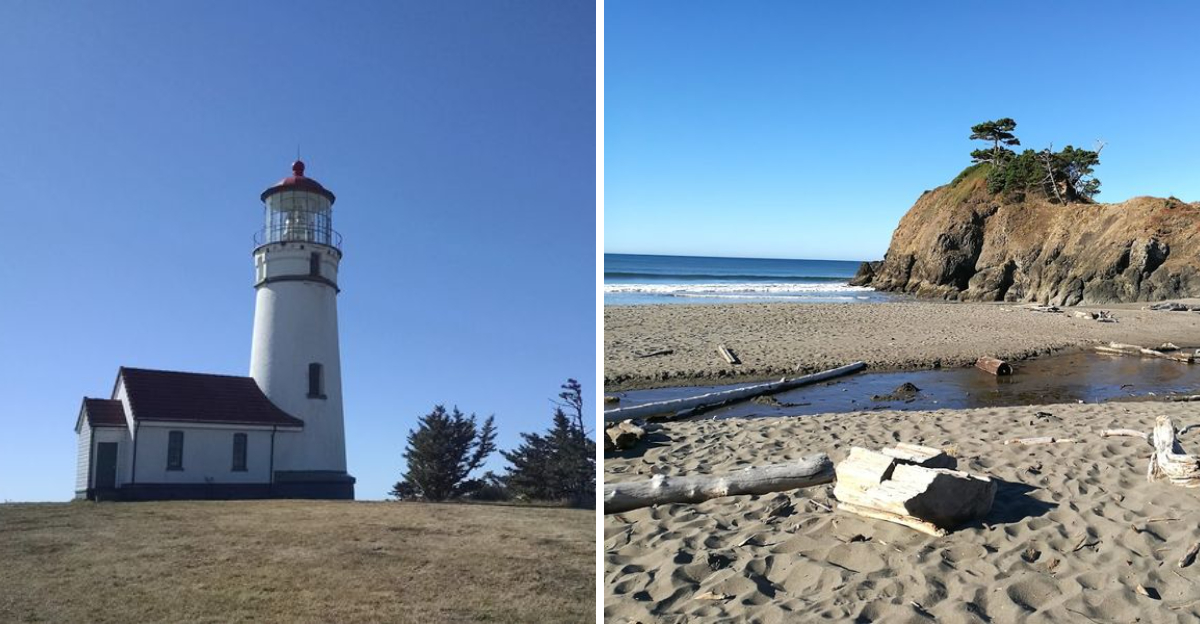
Pulling into Port Orford for the first time, I genuinely thought I had taken a wrong turn somewhere along Highway 101 and landed in a small Norwegian fishing village tucked into the Pacific coast.
The fog was rolling in low over the rocky headlands, the boats were stacked high on their cradles above the harbor, and everything felt wonderfully unhurried.
Port Orford sits quietly on the southern Oregon coast with a population of just over a thousand people, making it one of the smallest and most overlooked gems on the entire coastline. There are no chain restaurants here, no neon signs, no crowds jostling for parking.
What you get instead is raw coastline, salt-tinged air, and a community that has stayed true to itself for generations.
If you have ever wanted to visit a place that feels genuinely untouched by modern tourism, this is it.
The Dock That Defies Convention
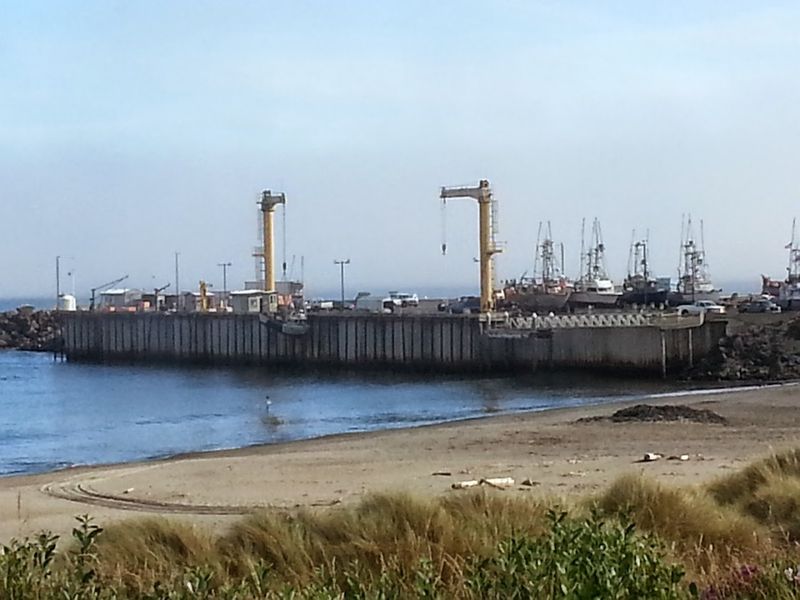
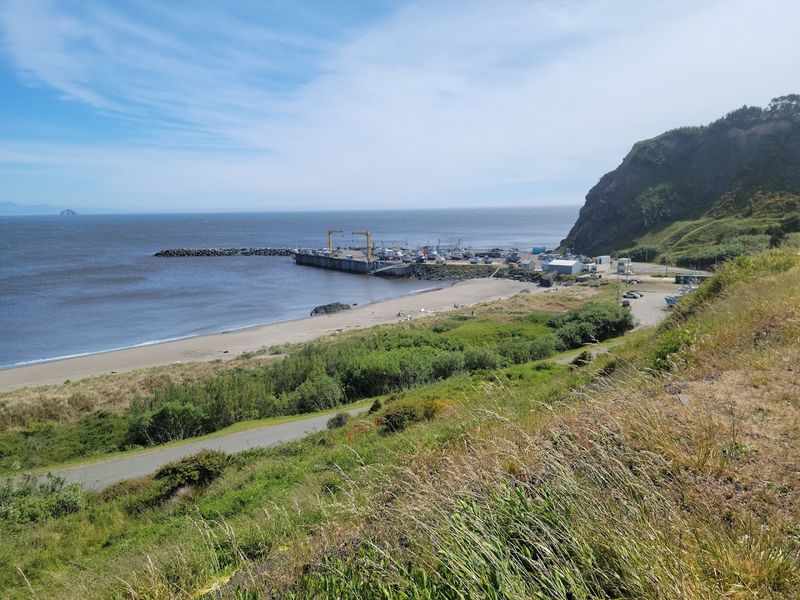
Port Orford has the only open-water boat launch on the entire Oregon coast, and once you see it, you understand immediately why it looks so different from every other harbor you have ever visited. There is no sheltered marina here.
Instead, fishing boats are hoisted out of the water by large cranes and parked on wheeled dollies up on the dock. It is genuinely unlike anything else.
The whole system exists because there is no natural bay deep or calm enough to keep boats moored overnight safely. So the fishermen adapted, and what they built is both practical and oddly beautiful to watch.
Seeing a full fishing vessel dangling from a crane over the Pacific is a sight that stays with you.
The dock area is open to visitors, and wandering around it during the morning hours when crews are preparing their boats is one of the best free experiences Port Orford offers. Bring a camera and comfortable shoes.
The planks get slippery.
Battle Rock Wayfinding Point
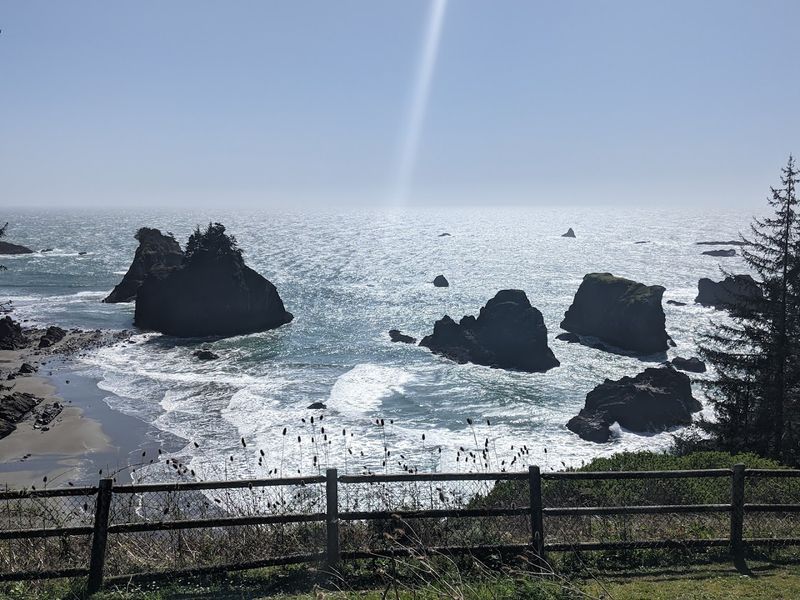
Standing at the base of Battle Rock on a blustery afternoon, with waves crashing hard against its ancient volcanic sides, you feel the full weight of this coastline’s history. The rock earned its name in 1851 when a group of settlers used it as a defensive position during a tense standoff with the Qatawas people of the local Tututni tribe.
It is a complicated history worth sitting with.
Today, Battle Rock is the centerpiece of a small beachside park right at the entrance to town. You can scramble up the rock itself during lower tides, and the views from the top stretch up and down the coast in both directions.
The beach below is wide, windswept, and mostly empty even on weekends.
Battle Rock Wayfinding Point also serves as a kind of orientation spot for first-time visitors. There are interpretive signs explaining the area’s Indigenous history and early settlement.
It is one of those places that rewards a slow, thoughtful visit rather than a quick photo stop.
Cape Blanco State Park and Its Storied Lighthouse
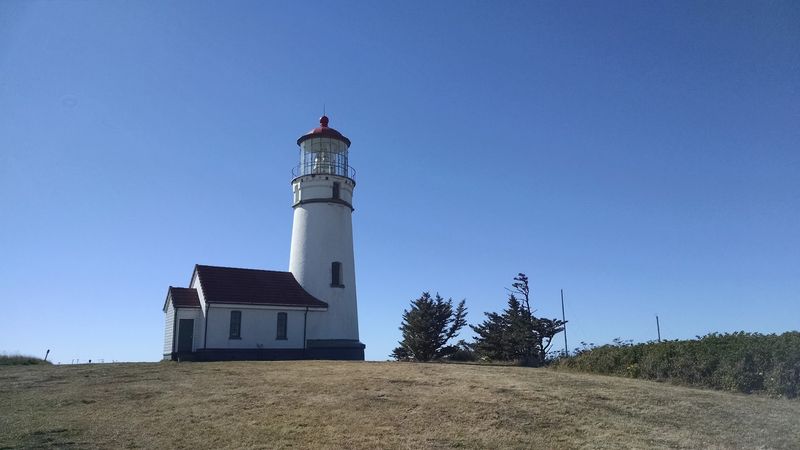
Cape Blanco is the westernmost point in Oregon and one of the windiest places on the entire Pacific coast. Driving out to it from Port Orford takes about fifteen minutes, and the landscape shifts quickly from coastal town to open, windswept headland.
The lighthouse out here has been guiding ships since 1870, making it one of the oldest continuously operating lighthouses in the state.
Tours of the lighthouse are available during warmer months, and climbing up inside the tower to look out at the Pacific from that height is genuinely thrilling. The lens still works.
The keeper’s house next door has been restored and is worth a look on its own.
The surrounding state park has campgrounds, trails, and access to a beach that sits below the bluffs. Hughes House, a Victorian farmhouse on the property, tells the story of the family that ranched this land for decades.
Cape Blanco feels like a place where Oregon’s past is still physically present, not just documented in a museum somewhere far away.
Humbug Mountain and the Trail That Earns Its Views
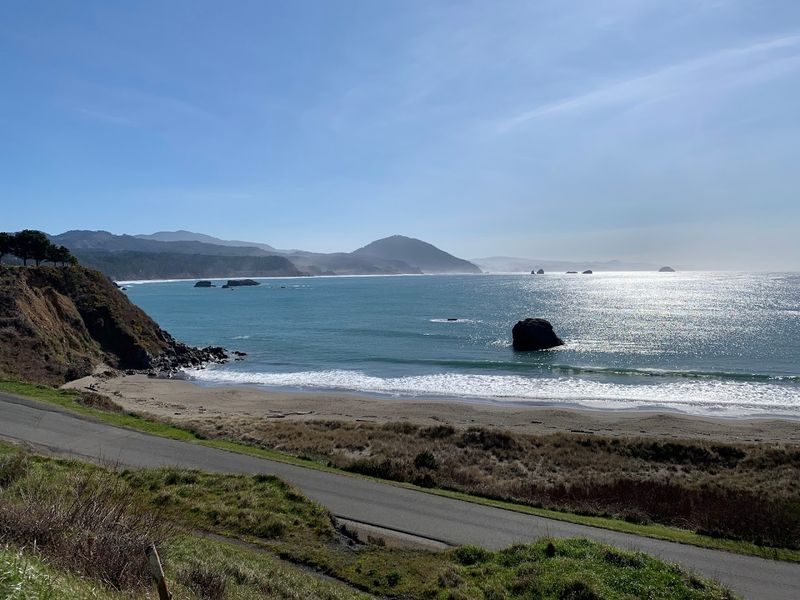
Humbug Mountain rises dramatically from the coastline just south of Port Orford, and the trail to its summit is one of those hikes that makes you work hard before rewarding you generously. The loop trail climbs through old-growth forest thick with ferns, rhododendrons, and towering myrtlewood trees.
The air inside the forest is cool and damp even on sunny days.
The summit sits at about 1,756 feet, which sounds modest until you remember you are starting essentially at sea level. The views from the top open up across a long stretch of southern Oregon coastline, with the Pacific glittering in the distance and forested ridges rolling inland.
It is the kind of panorama that makes the burning legs feel entirely worth it.
The trailhead is located within Humbug Mountain State Park, which also has a campground for those wanting to stay overnight. The hike itself takes two to three hours at a comfortable pace.
Go on a weekday morning if you want the forest mostly to yourself, because the birdsong alone is worth the early alarm.
The Fishing Culture That Still Runs Deep
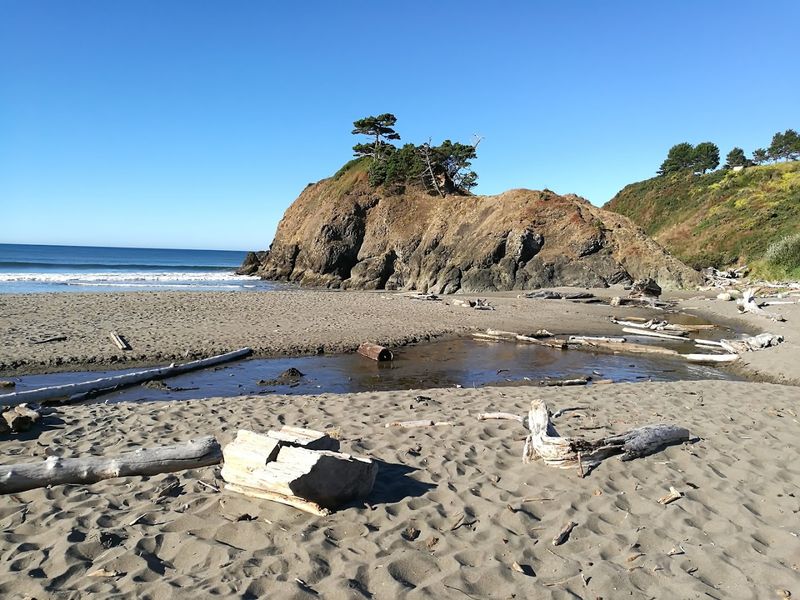
Port Orford is not a town pretending to have a fishing heritage. It actually has one, and it shows in the small details everywhere you look.
The conversations at the local coffee counter often turn to what the sea has been doing lately. The trucks in the parking lots are practical, not polished.
The fishery here focuses largely on Dungeness crab, black cod, and albacore tuna, depending on the season. Watching the boats come in and the catch get sorted and loaded is a reminder that this is still a working waterfront, not a themed attraction.
The smell of salt and diesel and fresh fish is very much part of the experience.
Local seafood finds its way onto menus around town with a directness that larger coastal tourist spots rarely manage. When a restaurant tells you the fish is local here, they genuinely mean it came off a boat you can probably see from the parking lot.
That kind of supply chain is increasingly rare, and it makes the food taste different in a way that is hard to explain until you try it.
Elk and Wildlife Along the Coast
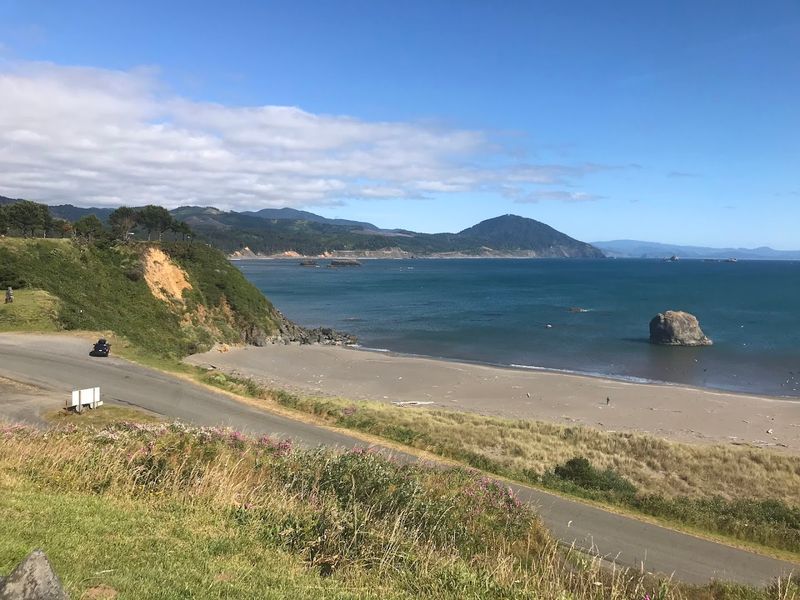
One morning driving south from Port Orford toward Cape Blanco, a herd of Roosevelt elk appeared in a field right beside the road, barely fifty feet from the car. Nobody else was around.
The elk were completely unbothered, grazing slowly in the low morning mist like they owned the place, which in a meaningful sense they do.
Roosevelt elk are the largest subspecies of elk in North America, and the southern Oregon coast has a healthy population of them. Seeing them near the coast, with the ocean visible in the background, is a genuinely surreal combination that you do not get in many places.
Early morning and late afternoon are the best times to spot them.
The meadows around Cape Blanco and the river valleys just inland are prime elk habitat. Deer are common too, and the area attracts serious birdwatchers because of its position along the Pacific Flyway migration route.
Port Orford sits in a pocket of biodiversity that rewards anyone willing to slow down and pay attention to the world around them.
Arts and the Small-Town Creative Scene
Port Orford has quietly developed a creative community that feels genuine rather than manufactured for tourism. Artists, writers, and craftspeople have been drawn here for decades by the dramatic landscape, the affordable living, and the kind of solitude that a town of a thousand people naturally provides.
The result is a local arts scene with real roots.
Several small galleries operate in town, showing work that reflects the coastal environment in direct and personal ways. The paintings tend to be moody, textured, and honest about what this coastline actually looks like, which is not always postcard-perfect but is always compelling.
You can often meet the artists themselves on a quiet afternoon.
The Port Orford Arts Council organizes events and exhibitions throughout the year, keeping the creative community connected and visible. There is something refreshing about an arts scene that exists primarily because the people involved love making things, not because a marketing team decided it would attract visitors.
That authenticity comes through clearly in the work on the walls.
The Quiet Rhythm of Small-Town Life
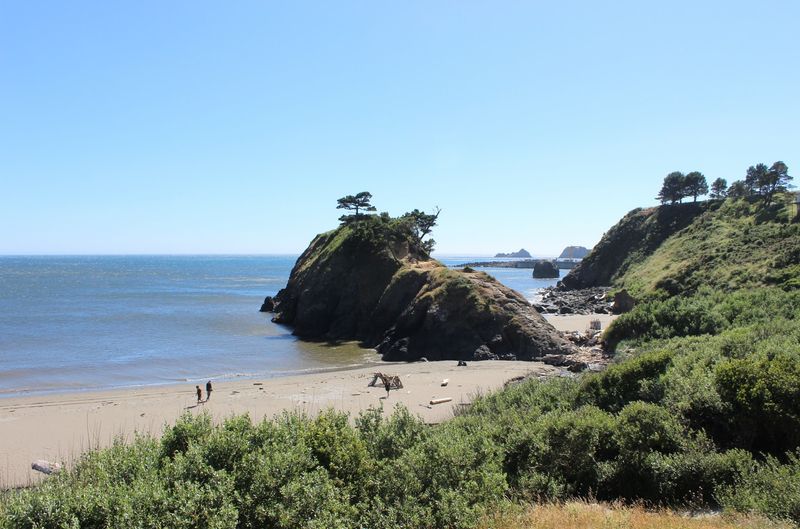
There is a pace to life in Port Orford that takes about half a day to fully settle into. The first few hours, you might find yourself wondering where everything is, why the streets are so quiet, and whether you have arrived on an unusual day.
Then you realize this is just how it is, and it starts to feel like a relief.
The town has a small grocery, a post office, a hardware store, and a handful of local restaurants and cafes. Everything you need is here, just without the noise and rush that tends to accompany larger places.
People wave at each other from across the street. Conversations happen at a natural pace.
Sitting on a bench near Battle Rock with a cup of coffee, watching the fog burn off the headlands while a few locals walk their dogs along the beach, is one of the most genuinely restorative experiences this coastline offers. Nothing is happening, and that is precisely the point.
Port Orford reminds you that slowing down is not the same as missing out.
Storm Watching and the Wild Pacific
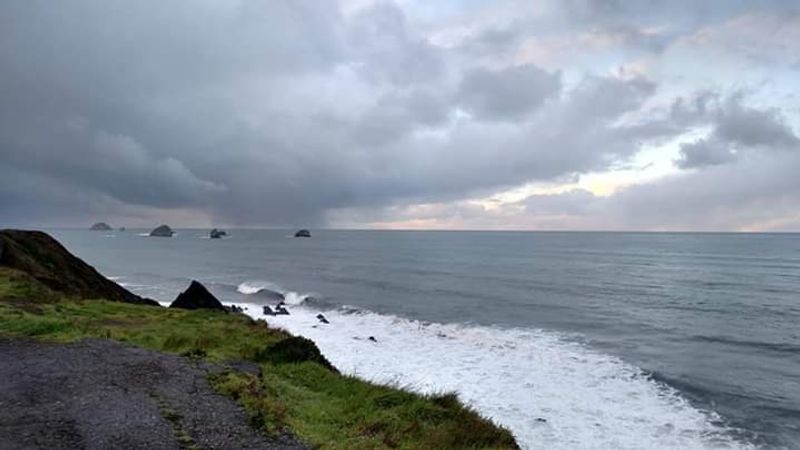
Winter on the southern Oregon coast is not a time most people think of as travel season, but Port Orford during a Pacific storm is one of the most viscerally exciting natural experiences available anywhere on the West Coast. The swells come in from thousands of miles away and hit the rocky headlands with a force that you feel in your chest.
The best storm-watching spots are along the bluffs near the dock and up at Cape Blanco, where the lighthouse has withstood over 150 years of exactly this kind of weather. Standing up there in a good rain jacket with the wind pushing hard against you and the sea roaring below is genuinely exhilarating.
It is also a good reminder of why those old lighthouse keepers earned their keep.
Storm season typically runs from November through March, and accommodations in town are easy to find during those months. The trade-off for the wild weather is uncrowded roads, dramatic skies, and a sense of having the coast almost entirely to yourself.
Some people find this the most honest version of Oregon’s coastline.
Why Port Orford Stays With You
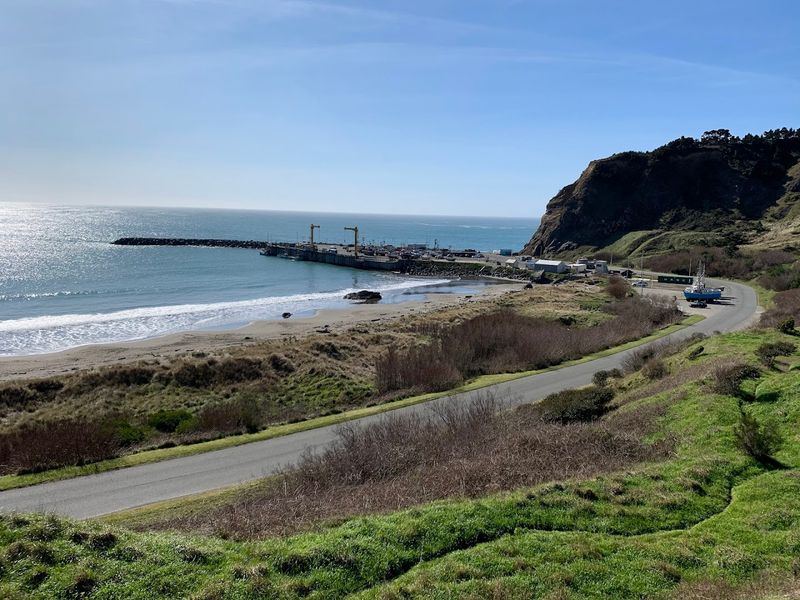
Most places you visit leave a general impression. Port Orford leaves specific memories, the exact angle of light on the water at a certain hour, the sound of the crane lowering a fishing boat, the way the forest closes in around you on the Humbug Mountain trail.
It is a place that communicates through details rather than grand gestures.
Part of what makes it linger is the feeling that it has not been optimized for visitors. The town exists for its residents first, and travelers are welcome but not catered to in ways that strip away the authenticity.
That balance is increasingly hard to find on popular coastlines, and Port Orford has maintained it remarkably well.
Coming back here feels less like returning to a destination and more like checking in on a place you genuinely care about. The fog, the cranes, the elk in the meadow, the cold Pacific wind at Cape Blanco, all of it adds up to something that is harder to explain than it is to feel.
Some places simply get under your skin, and this is one of them.
Dear Reader: This page may contain affiliate links which may earn a commission if you click through and make a purchase. Our independent journalism is not influenced by any advertiser or commercial initiative unless it is clearly marked as sponsored content. As travel products change, please be sure to reconfirm all details and stay up to date with current events to ensure a safe and successful trip.
