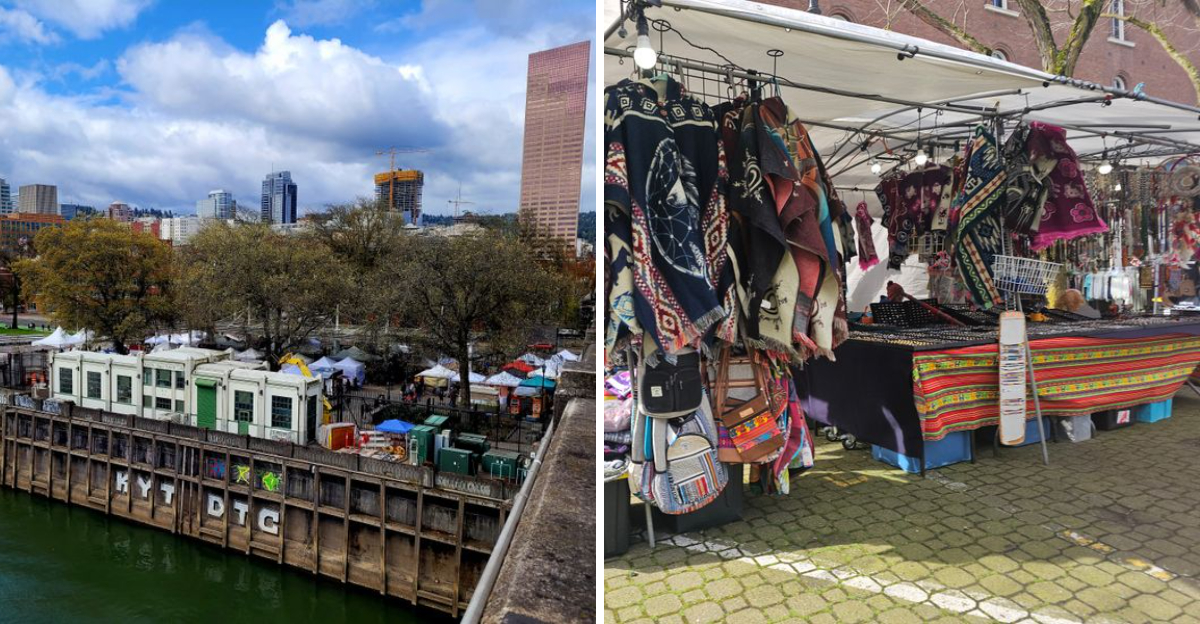
Walking through the Portland Saturday Market feels like stepping into a world where creativity lives on every corner and discovery waits around every booth. Located at 2 SW Naito Pkwy in Portland, Oregon, this open-air gathering has been drawing treasure hunters since it first opened its stalls decades ago.
I found myself wandering past vendors selling handmade jewelry, stopping to watch street performers, and sampling food from carts that smelled like heaven.
Every visit brings something different because the artists rotate, the seasons change, and the energy shifts with each weekend.
Spring transforms this market into something magical, with fresh blooms decorating booths and lighter crowds making it easier to chat with the makers themselves. Whether you’re hunting for unique gifts or just soaking up the creative atmosphere along the Willamette River, this market delivers an experience you won’t find anywhere else in Oregon.
One-of-a-Kind Handcrafted Creations
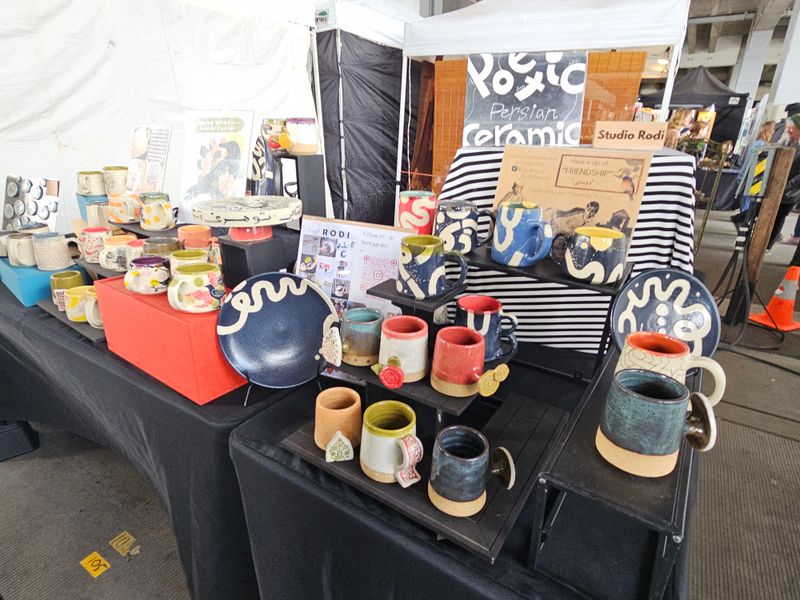
Forget mass-produced items that everyone else owns. Walking through the Portland Saturday Market means discovering pieces that exist nowhere else on earth.
I watched a ceramicist explain how she fires each mug using a technique passed down through her family. The glaze pattern on every piece came out slightly different, making each one truly unique.
Jewelry makers twist wire into intricate designs while you watch. Woodworkers carve bowls from Oregon timber.
Soap makers blend essential oils into bars that smell like the Pacific Northwest forest.
The thrill comes from knowing that when you buy something here, you’re taking home a piece of someone’s artistic vision. No factory replicated it.
No warehouse stored thousands of identical copies.
I’ve bought gifts here that people still talk about years later because they’ve never seen anything quite like them. The market operates March through December, giving you plenty of chances to hunt for treasures.
Supporting these artists means keeping traditional crafts alive while adding character to your home that big-box stores simply cannot provide.
Spring’s Fresh Seasonal Offerings
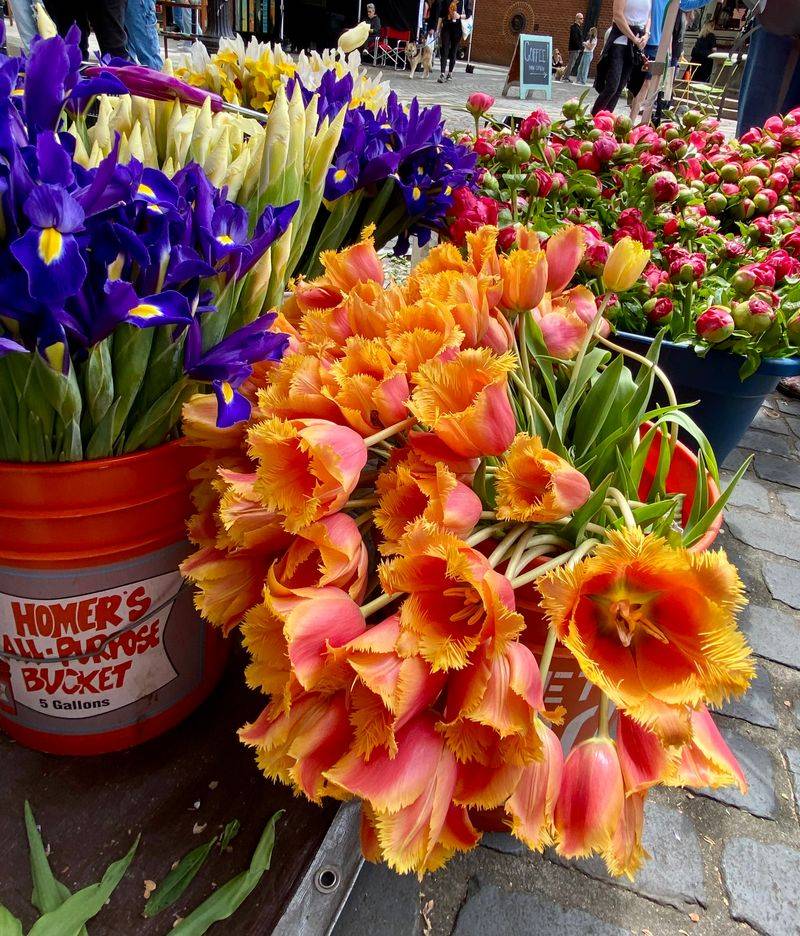
When spring arrives at the Portland Saturday Market, the entire atmosphere shifts toward renewal and growth. Vendors respond to the season with products that celebrate warmer days ahead.
I noticed flower vendors setting up earlier in the season, selling fresh bouquets and potted plants perfect for Portland gardens. Handmade planters in ceramic and wood appeared at multiple booths, each designed to showcase spring blooms.
Clothing vendors switch their inventory to lighter fabrics. I found hand-dyed scarves in pastel shades and cotton dresses perfect for Oregon’s unpredictable spring weather.
Garden decorations become popular items as people prepare their outdoor spaces. Wind chimes, garden stakes, and decorative stones fill booths with color and whimsy.
The food vendors adapt their menus too, incorporating seasonal ingredients into their offerings. Fresh fruit becomes more prominent, and lighter fare replaces winter’s heavier comfort foods.
Spring also brings better weather for browsing, making it easier to spend hours exploring without battling rain or cold. The energy feels optimistic as vendors and shoppers alike shake off winter’s heaviness.
Timing your visit for spring means catching the market at its most vibrant moment.
Waterfront Views While You Shop
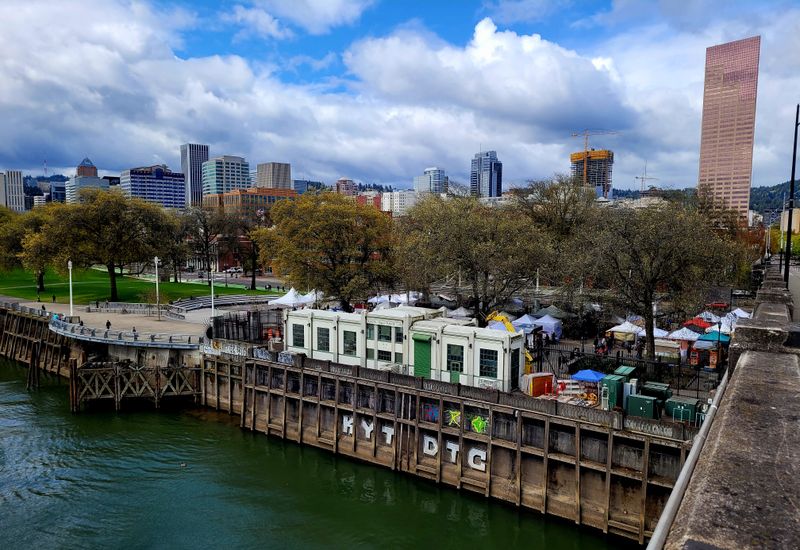
Most markets set up in parking lots or bland convention centers. Portland Saturday Market spreads along the Willamette River, offering scenery that makes shopping feel like an outing rather than an errand.
I found myself stopping between booths just to watch boats drift past and seagulls circle overhead. The Burnside Bridge creates a dramatic backdrop that photographers love capturing.
The market’s location at 2 SW Naito Pkwy puts you right on the waterfront promenade. Between purchases, you can stroll to the river’s edge and watch the water flow toward the Columbia River.
Old brick streets add historical character beneath your feet. The area maintains its connection to Portland’s past while hosting this thoroughly modern celebration of creativity.
Street performers choose spots with river views as their backdrop, adding music to the visual feast. I listened to a guitarist while watching kayakers paddle past, creating a moment that felt quintessentially Portland.
The setting transforms shopping into a full sensory experience where natural beauty complements human creativity. You’re not just buying art but experiencing Oregon’s outdoor culture simultaneously.
Incredible Variety Across Craft Categories
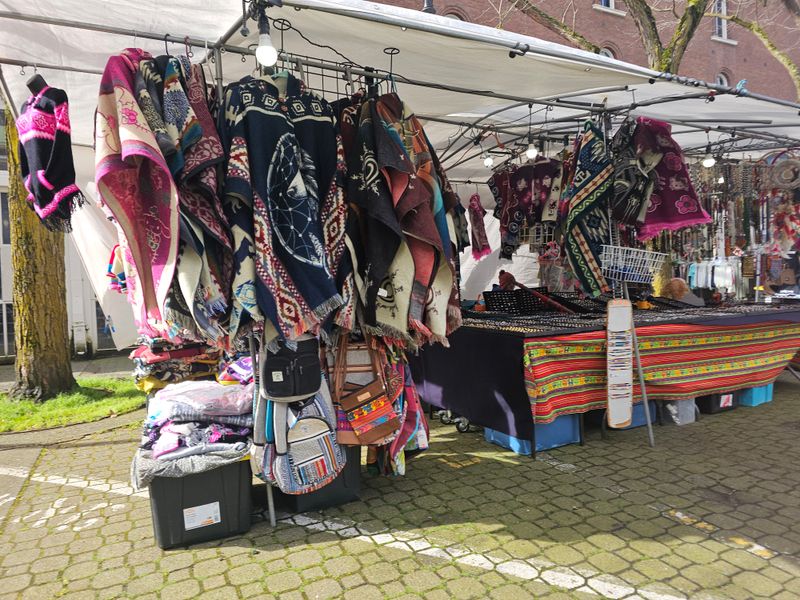
The sheer range of crafts available here exceeds what most people expect from a market. I counted over twenty different craft categories during my last visit, each represented by multiple skilled artists.
Ceramics booths showcase everything from functional dinnerware to sculptural pieces that belong in galleries. Jewelry vendors work in silver, copper, glass beads, and semi-precious stones, creating pieces that range from delicate to bold.
Textile artists sell hand-woven scarves, quilts, and clothing. Woodworkers craft furniture, cutting boards, and intricate boxes.
Soap and skincare makers offer products infused with Oregon lavender and other local ingredients.
I discovered vendors specializing in metalwork, creating garden sculptures and decorative pieces. Glass artists sell everything from ornaments to functional bowls.
Painters and photographers display work capturing Oregon landscapes and urban scenes.
The variety means you can furnish an entire home with handmade items from this single market. I’ve found kitchen tools, bedroom decor, bathroom accessories, and living room art all in one visit.
This diversity also means return visits never feel repetitive because you’ll notice booths you missed before or discover vendors who’ve recently joined.
Food Cart Heaven for Hungry Shoppers
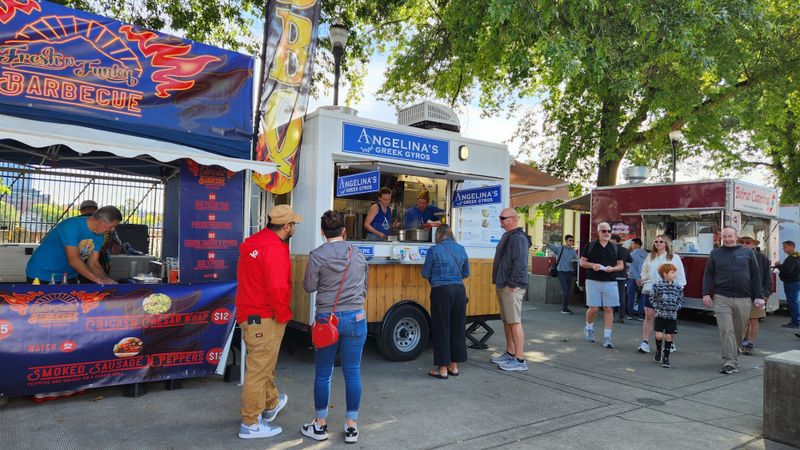
Shopping builds an appetite, and the Portland Saturday Market delivers with food options that rival the craft quality. The food cart pod here actually represents Portland’s first permanent food cart gathering, still going strong after decades.
I sampled pupusas from Dona Lola Authentic Food that customers rave about in reviews. The handmade tortillas arrived hot and stuffed with ingredients that tasted genuinely authentic.
Food vendors prepare everything from scratch using local ingredients whenever possible. I watched a cart owner slice fresh vegetables for stir-fry while another grilled skewers that cost just $2.50 each but tasted incredible.
The variety spans cuisines from around the world. African, Indian, Polish, and Mexican options sit alongside American comfort food and Asian fusion.
Soft pretzels draw crowds, and the smells alone could guide you to the food area.
Fresh fruit vendors offer healthy snacks perfect for munching while you browse. Coffee carts provide fuel for longer shopping sessions.
The food scene here isn’t an afterthought but an integral part of the experience. Many visitors plan their trips around trying specific vendors they’ve heard about from friends or online reviews.
Supporting Local Independent Businesses
Every dollar spent here flows directly to independent creators rather than corporate shareholders. The market’s structure ensures that artists keep the majority of their sales, making your purchases genuinely impactful.
I talked with a soap maker who explained how market sales allow her to maintain her small-batch production without compromising quality for mass appeal. She doesn’t answer to investors demanding higher profit margins.
These vendors often operate without the safety net of regular paychecks. Your purchase might cover their booth fee, buy materials for next week’s inventory, or help them afford health insurance.
The market charges vendors for space, but those fees support the infrastructure that makes the event possible. Security, advertising, and logistics all require funding that comes from vendor contributions rather than outside corporate sponsorship.
Shopping here means voting with your wallet for the kind of economy you want to support. Small businesses create community character that chain stores cannot replicate.
I’ve watched vendors recognize regular customers by name and remember their preferences from previous visits. That personal connection represents capitalism at its most human scale, where relationships matter as much as transactions.
Connecting with Portland’s Creative Community
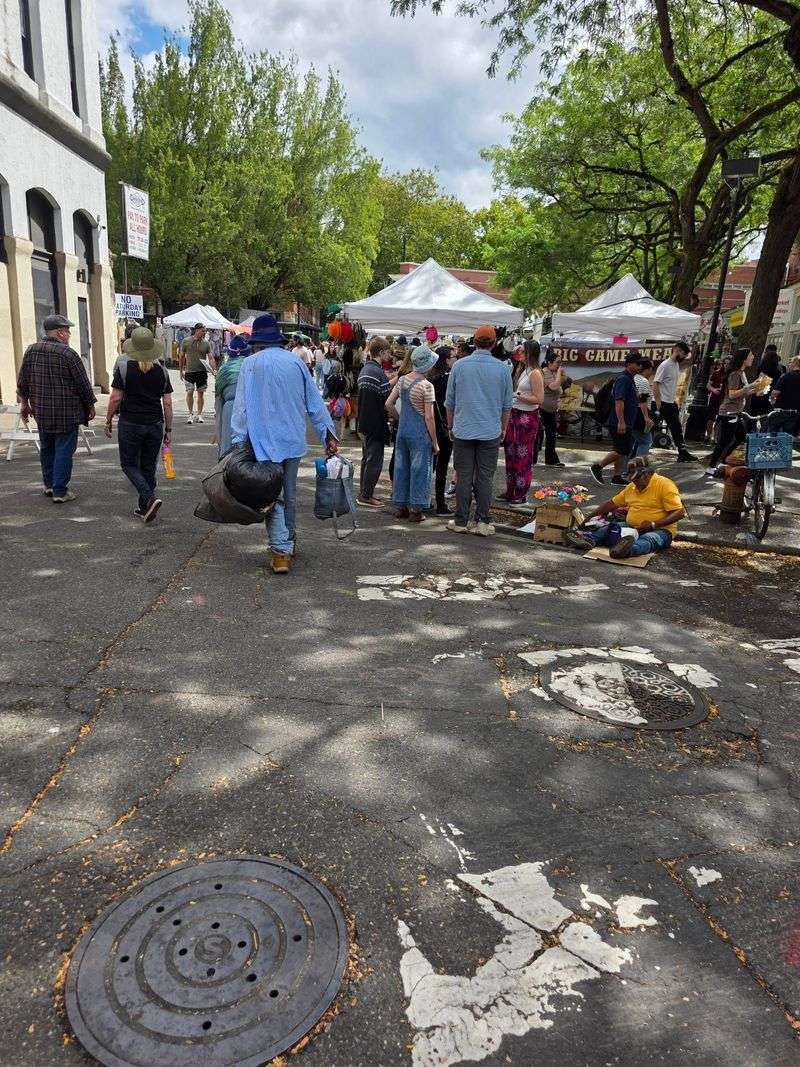
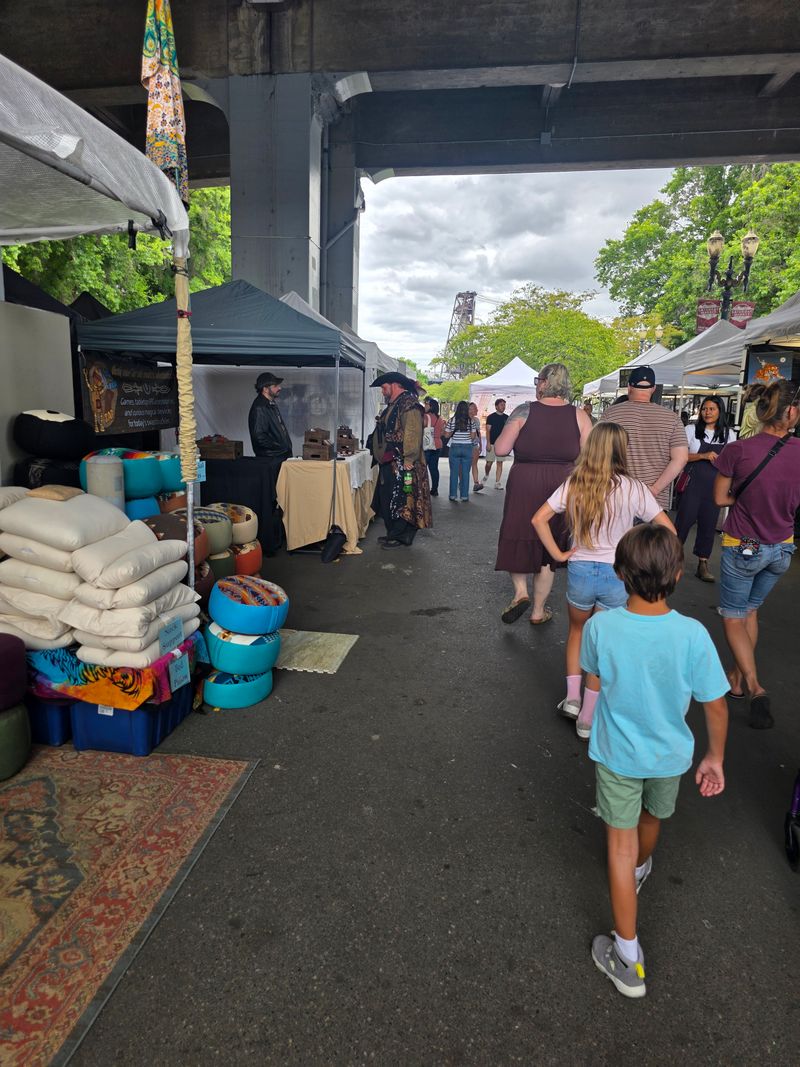
The market functions as a gathering place where Portland’s creative community intersects with residents and visitors. You’ll find artists networking with each other, locals catching up with favorite vendors, and newcomers discovering what makes this city special.
I overheard vendors discussing upcoming art shows and collaborations between booths. The market creates opportunities for artists to build relationships that extend beyond individual sales.
Regular shoppers develop connections with specific vendors, returning week after week to see new inventory and maintain relationships. I watched a customer and jewelry maker discuss custom order details like old friends catching up.
The market attracts people who value handmade goods and artistic expression, creating a self-selecting community of like-minded individuals. Conversations flow easily because shared interests provide natural starting points.
Street performers and drum circles invite participation, breaking down barriers between performer and audience. I’ve seen shy visitors pick up percussion instruments and join in, welcomed by encouraging smiles.
This sense of community distinguishes the Portland Saturday Market from anonymous shopping experiences. You’re not just buying objects but joining a network of people who prioritize creativity, sustainability, and human connection over convenience and uniformity.
The Thrill of Unexpected Discoveries
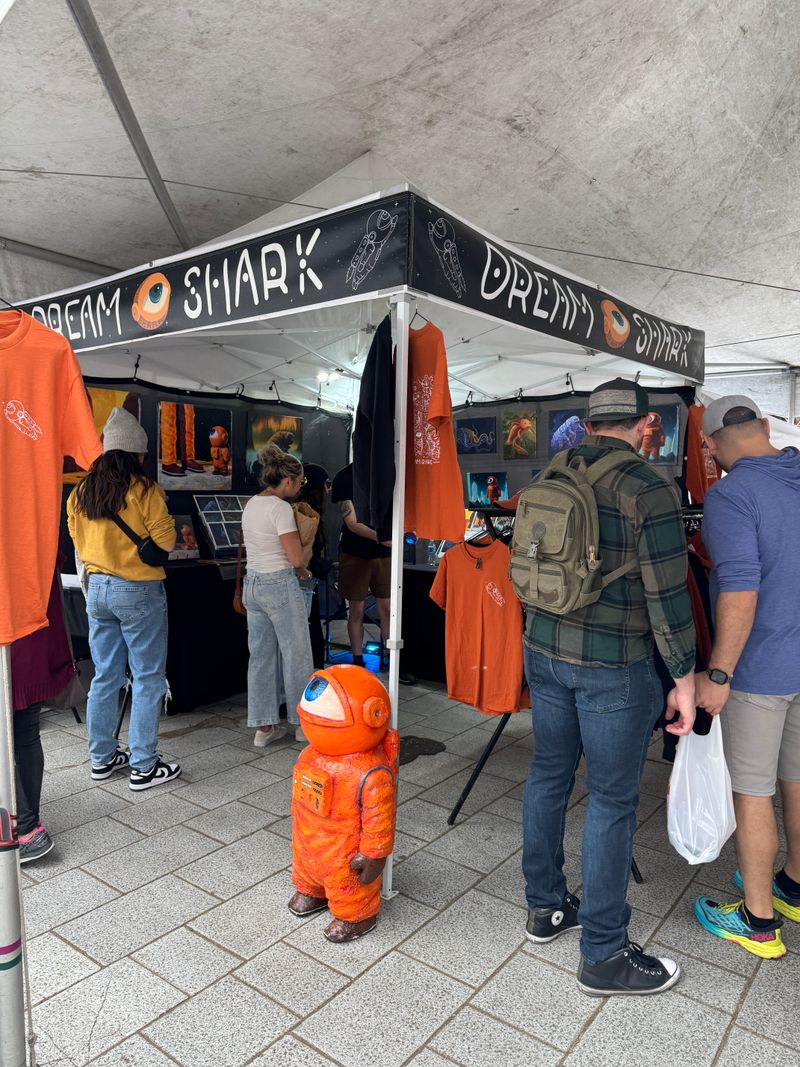
The best finds at this market happen when you’re not looking for anything specific. I’ve stumbled upon items I didn’t know I needed until they appeared before me, sparking immediate desire.
A vendor selling 3D-printed dragons caught my attention during one visit. The intricate designs and unexpected subject matter represented exactly the kind of surprise that makes treasure hunting exciting.
The rotating vendor lineup means inventory constantly changes. Artists bring new creations each week, responding to inspiration or customer feedback.
You might see something one Saturday that’s gone the next weekend.
I’ve discovered entire craft categories I never knew existed. Hand-carved wooden spoons that function as art.
Jewelry made from recycled materials that looks more elegant than precious metals. Soaps crafted with Oregon-grown ingredients that transform daily routines into sensory experiences.
The physical layout encourages wandering rather than efficient shopping. Booths sprawl along the waterfront without rigid organization, meaning you’ll circle back and discover sections you missed on the first pass.
This element of surprise keeps the experience fresh even for regular visitors. You never know what you’ll find, and that uncertainty creates the treasure hunt feeling that makes each visit an adventure worth taking.
Practical Tips for Your Treasure Hunt
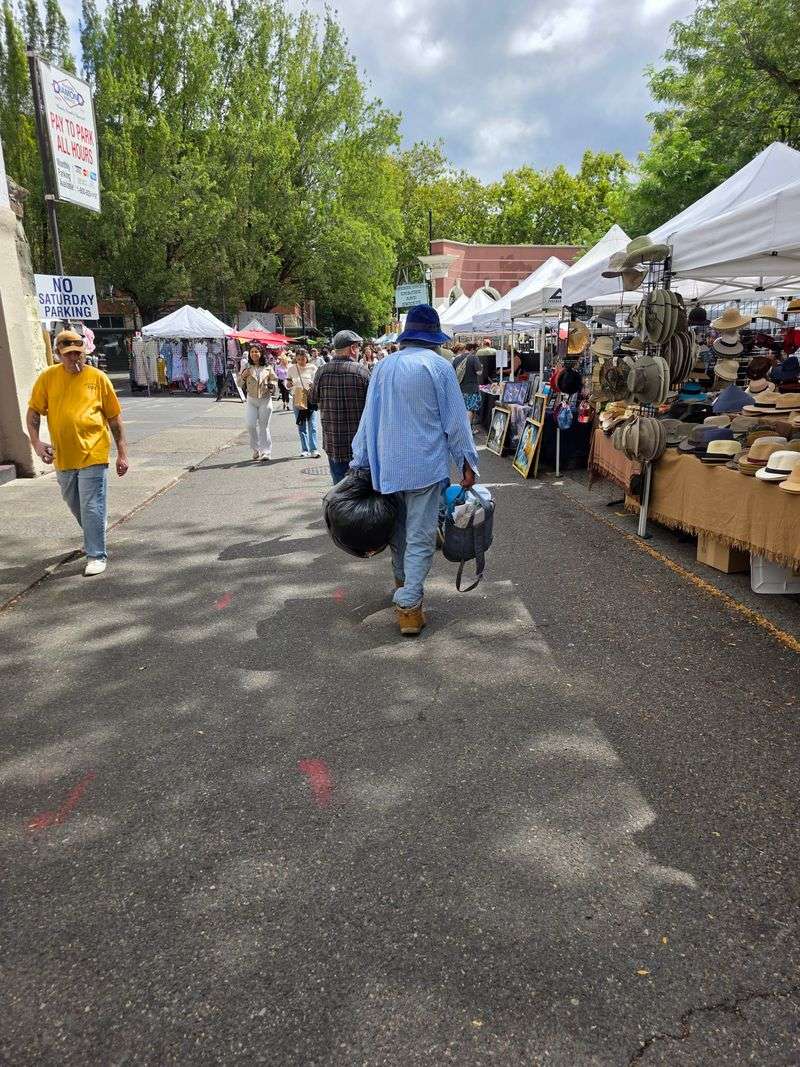
Maximizing your market experience requires some strategic planning. I’ve learned tricks through multiple visits that help me discover more while avoiding common frustrations.
Arrive earlier in the day for smaller crowds and first pick of inventory. The market opens at 10 AM on Saturdays, and vendors are freshest and most energetic in morning hours.
By afternoon, popular items may have sold out.
Bring cash because while many vendors accept cards, some remain cash-only. ATMs exist nearby but avoiding that errand saves time for browsing.
Wear comfortable shoes because you’ll walk more than expected. The market stretches along the waterfront, and backtracking to revisit interesting booths adds distance.
Consider bringing reusable shopping bags since purchases accumulate quickly. Juggling multiple vendor bags becomes awkward as you continue exploring.
Don’t rush through on your first lap. I make mental notes of booths I want to revisit, then circle back after seeing everything.
This prevents buying the first interesting item only to find something better later.
The market operates March through December at 2 SW Naito Pkwy. Check their website at portlandsaturdaymarket.com for exact seasonal hours and special events that might enhance your visit.
Dear Reader: This page may contain affiliate links which may earn a commission if you click through and make a purchase. Our independent journalism is not influenced by any advertiser or commercial initiative unless it is clearly marked as sponsored content. As travel products change, please be sure to reconfirm all details and stay up to date with current events to ensure a safe and successful trip.
