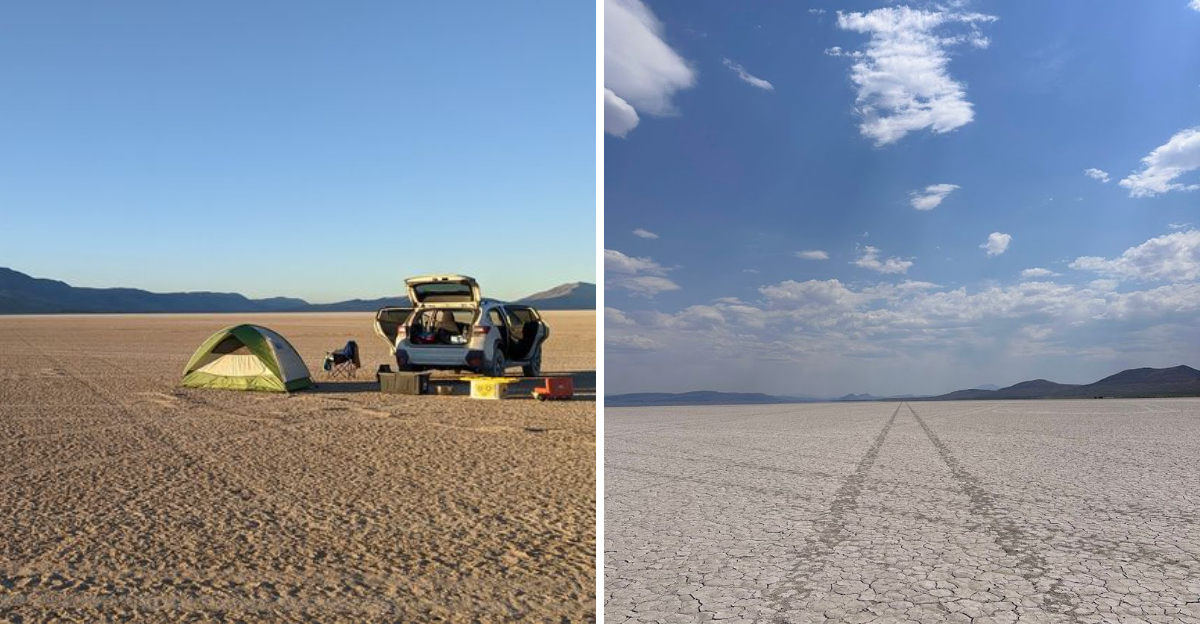
Most people picture Oregon as a land of endless green forests, misty coastlines, and rain-soaked valleys. But tucked away in the southeastern corner of the state lies something completely unexpected: a vast, cracked desert that stretches for miles under an impossibly wide sky.
The Alvord Desert feels more like Nevada or Utah than anything you’d expect to find in Oregon, and that’s exactly what makes it so captivating.
This ancient lake bed, measuring twelve miles long and seven miles wide, sits at the base of Steens Mountain in one of the most remote corners of the Pacific Northwest.
It’s a place where silence isn’t just quiet but almost tangible, where the night sky explodes with more stars than you knew existed, and where the landscape seems to belong to another planet entirely.
Ancient Lake Bed Turned Playa
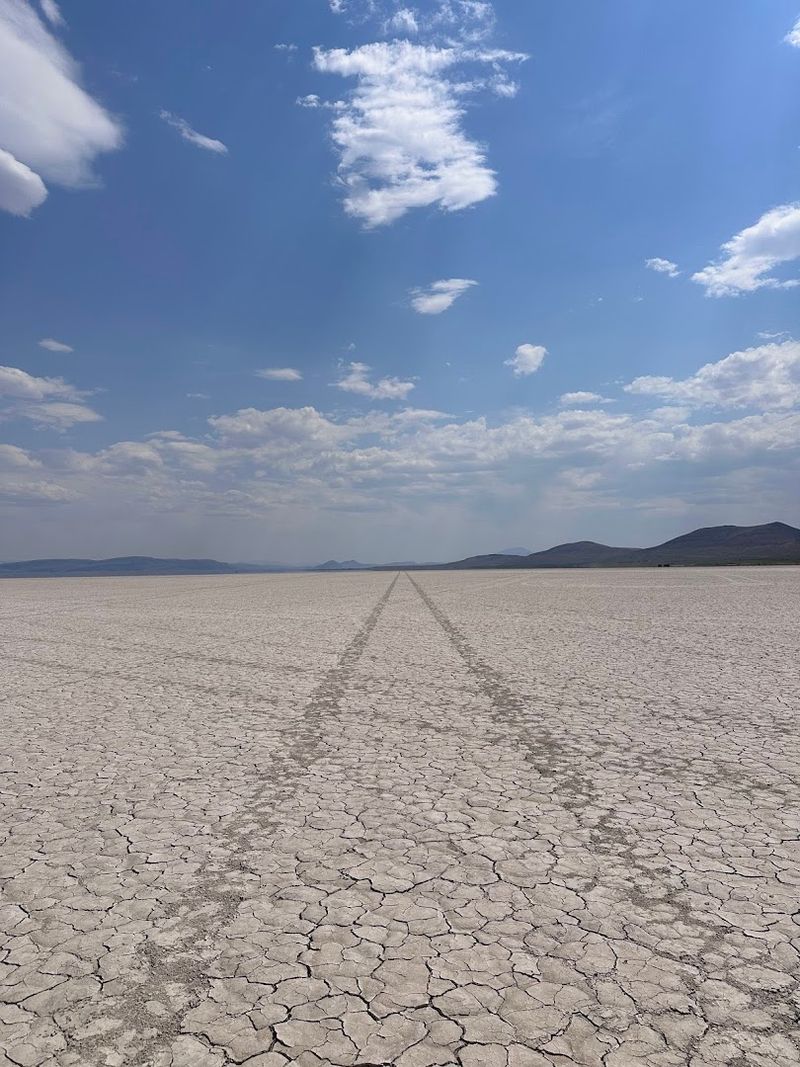
Walking onto the Alvord Desert feels like stepping back millions of years. This isn’t just any stretch of sand and rock.
It’s the remnant of an ancient lake that once filled this basin, leaving behind a perfectly flat expanse of cracked earth that geologists call a playa.
The surface tells stories written in mud. During dry seasons, the ground splits into intricate geometric patterns, creating a mosaic that looks almost intentional.
These cracks form as the clay-rich soil contracts under the relentless sun, creating polygons that can measure several feet across.
What makes this place remarkable is its depth of history compressed into 200 feet of sediment. Over thousands of years, water filled and evaporated repeatedly, leaving layer upon layer of mineral deposits.
Today, you can drive right onto this surface during dry months, your tires crunching over the hardened crust.
The playa transforms with the seasons. Spring rains occasionally create a temporary shallow lake, turning the desert into a massive mirror reflecting the surrounding peaks.
By summer, it returns to its characteristic cracked moonscape, ready for adventurers.
Rain Shadow Phenomenon
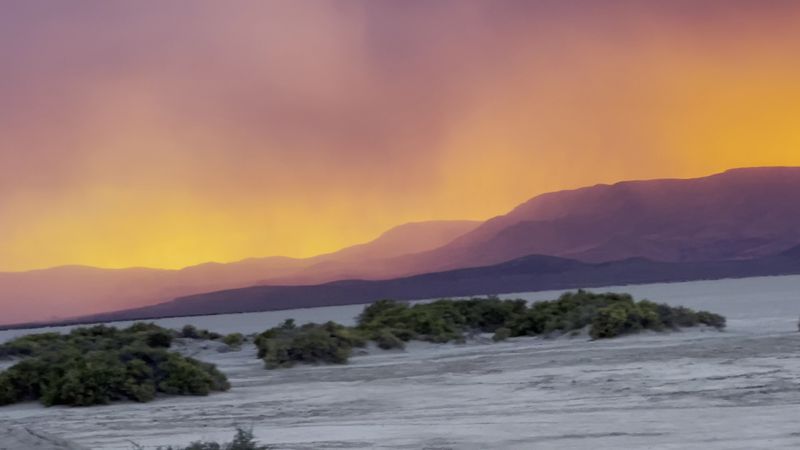
Geography created something special here, and Steens Mountain is the architect. Rising nearly 10,000 feet above sea level, this massive fault-block mountain acts as a colossal wall that intercepts moisture-laden clouds traveling eastward.
By the time those clouds pass over the summit, they’ve already dropped their precipitation on the western slopes.
This rain shadow effect makes the Alvord Desert the driest location in all of Oregon. While Portland drowns in 36 inches of annual rainfall, the Alvord barely receives seven inches.
That’s less than many classic desert regions across the American Southwest.
Standing on the playa, you can actually see this phenomenon at work. Clouds gather and darken over Steens Mountain to the west, sometimes releasing rain that evaporates before reaching the ground.
Meanwhile, the desert floor remains parched, baking under intense sunshine that feels completely un-Oregonian.
This microclimate creates conditions that seem impossible for this latitude. Summer temperatures soar past 90 degrees, while winter nights plunge below freezing.
The extreme temperature swings and minimal moisture produce an environment that supports only the hardiest desert vegetation.
Stargazing Paradise
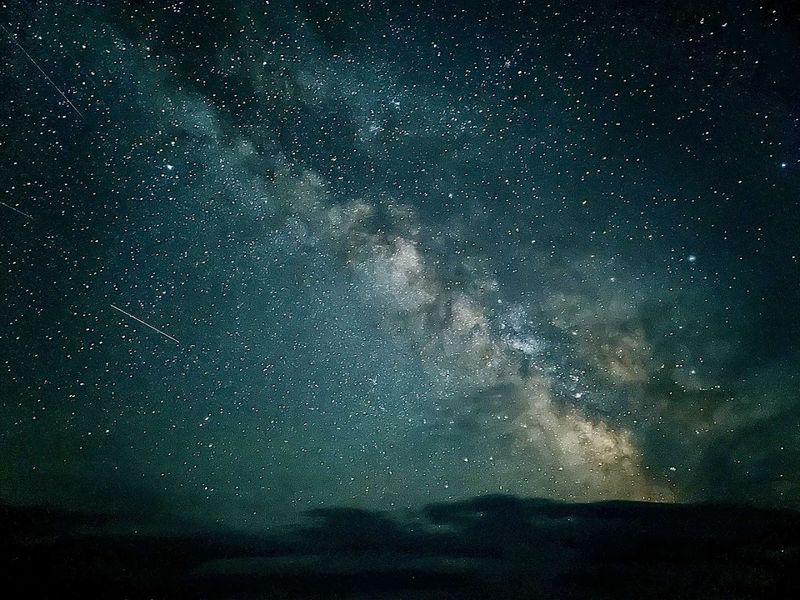
Darkness has become rare in modern America, but the Alvord Desert offers something increasingly precious: true night. This ranks among the darkest spots in the entire lower 48 states, rivaling famous dark sky locations like Big Bend National Park in Texas.
Light pollution simply doesn’t exist here. The nearest town of any size sits over 100 miles away, and even tiny Fields, the closest settlement, contributes almost nothing to the night sky.
When the sun drops behind Steens Mountain, darkness descends like a curtain, revealing a celestial show that most people have never witnessed.
The Milky Way doesn’t just appear overhead. It dominates the entire sky, stretching from horizon to horizon in a river of light so bright you can see your shadow by its glow alone.
Planets shine like searchlights, and meteor showers become spectacular displays where you might count dozens of shooting stars per hour.
Photographers drive hundreds of miles specifically for these skies. The combination of minimal atmospheric interference, zero light pollution, and interesting foreground elements creates perfect conditions for astrophotography.
On new moon nights, the darkness becomes so complete that you can see the zodiacal light and even faint nebulae with just your eyes.
Remote Location and Solitude
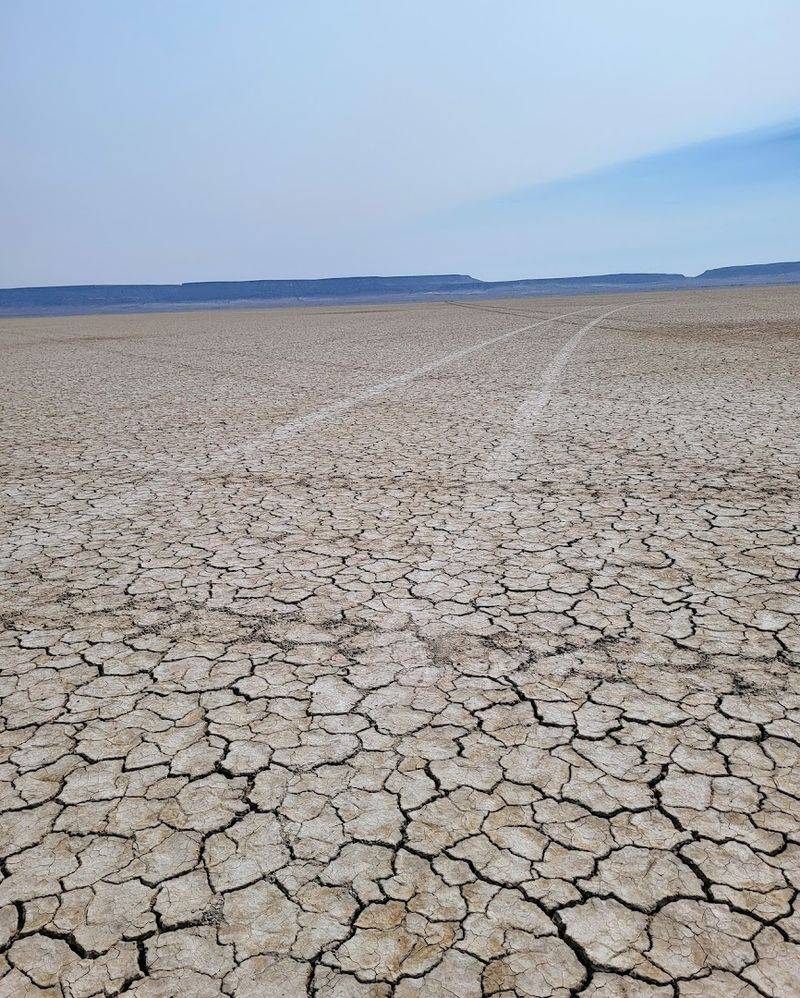
Getting to the Alvord Desert requires commitment. This isn’t a place you stumble upon accidentally.
Located 105 miles from Burns on Oregon Route 78, it sits in one of the most sparsely populated regions of the Pacific Northwest.
The journey itself becomes part of the experience. You’ll drive for miles without seeing another car, passing through landscapes that grow increasingly stark and beautiful.
Cell phone service vanishes long before you arrive, and the last gas station sits dozens of miles behind you.
This remoteness creates something magical: genuine solitude. During weekdays and off-season periods, you might spend an entire day without encountering another human being.
The silence becomes almost overwhelming, broken only by wind whistling across the playa or the distant call of a coyote at dusk.
Even during busier summer weekends, the sheer size of the desert means crowds never feel crowded. With twelve miles of drivable playa, groups naturally spread out.
You can set up camp and feel like you own the entire desert, with your nearest neighbor just a distant speck on the horizon.
This isolation demands preparation. Bring everything you need because there’s nowhere to buy forgotten supplies.
Dispersed Camping Freedom
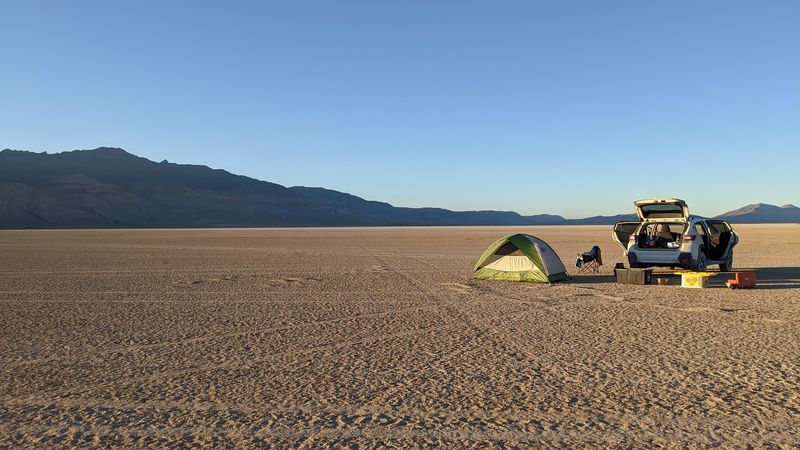
Forget designated campsites and reservation systems. The Alvord Desert operates on a simple principle: camp anywhere your heart desires, completely free of charge.
This level of freedom has become increasingly rare in modern America, where public lands face growing restrictions and fees.
You can literally drive onto the playa and set up camp wherever the view strikes your fancy. Want to wake up with Steens Mountain filling your entire windshield?
Done. Prefer a spot near the edge where desert vegetation meets the open playa?
That works too. There are no rules about where you can or cannot pitch your tent.
This freedom comes with responsibilities and challenges. Wind becomes your primary adversary, sometimes gusting past 40 miles per hour.
Smart campers stake everything down securely, including gazebos, tents, and even camping chairs. Loose items become tumbleweeds in these conditions, potentially rolling for miles across the flat expanse.
The primitive nature means no amenities whatsoever. Bring your own portable toilet, pack out all trash, and carry sufficient water for your entire stay.
Some campers refill water jugs at nearby Alvord Hot Springs by asking the camp host nicely, but don’t count on it.
Extreme Weather Conditions
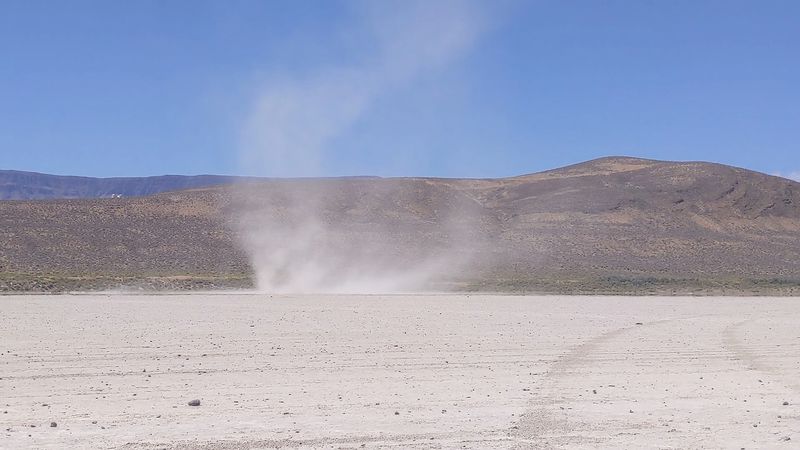
The weather here doesn’t mess around. Summer temperatures regularly climb north of 90 degrees, and without any shade whatsoever, the sun beats down relentlessly.
The desert floor absorbs and radiates heat, creating an oven-like environment that can catch unprepared visitors off guard.
But temperatures tell only part of the story. The dry air sucks moisture from everything it touches.
Skin becomes parched within hours, lips crack, and you’ll drink more water than seems possible. Experienced desert campers bring copious amounts of skin moisturizer and lip balm, applying them multiple times daily to combat the desiccating effects.
Wind presents another challenge entirely. The flat, unobstructed terrain allows air to move freely, and gusts exceeding 40 miles per hour occur regularly.
These winds kick up dust, make cooking nearly impossible, and can turn a pleasant camping trip into an endurance test. Setting up camp inside a staked gazebo provides crucial protection.
Nights bring dramatic temperature swings. Even after scorching days, temperatures can plunge 40 or 50 degrees once the sun disappears.
Winter visits require serious cold-weather gear, as overnight lows drop well below freezing under crystal-clear skies.
Land Speed Testing Ground
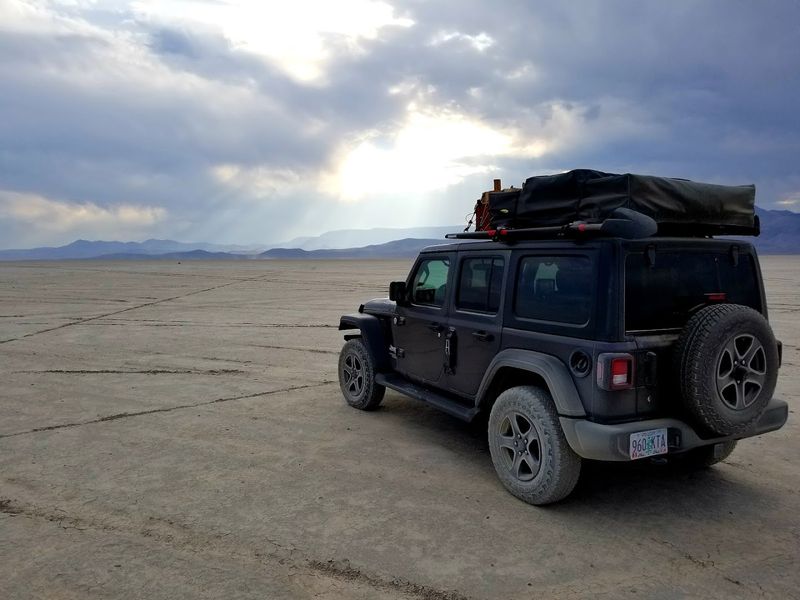
Speed demons have discovered something special about the Alvord Desert. That perfectly flat, hard-packed surface extending for miles creates ideal conditions for pushing vehicles to their absolute limits.
Land speed record attempts happen here regularly, taking advantage of the natural straightaway that nature spent millennia creating.
The comparison to Bonneville Salt Flats isn’t accidental. Both locations offer vast, flat surfaces where visibility extends for miles and obstacles simply don’t exist.
Motorcyclists, car enthusiasts, and even land sailing enthusiasts converge here to test their machines and skills in conditions that allow for sustained high-speed runs.
You can legally drive as fast as you dare across the playa during dry conditions. There’s no posted speed limit, no highway patrol, and nothing to hit except possibly another vehicle miles away.
This freedom attracts everyone from casual thrill-seekers to serious racers documenting their top speeds.
Safety requires awareness despite the open space. Other people do use the desert, including pedestrians who can be surprisingly difficult to spot at high speeds.
The flat terrain and heat create mirages that distort distance perception, making that person or motorcycle farther away than they appear.
Nearby Hot Springs
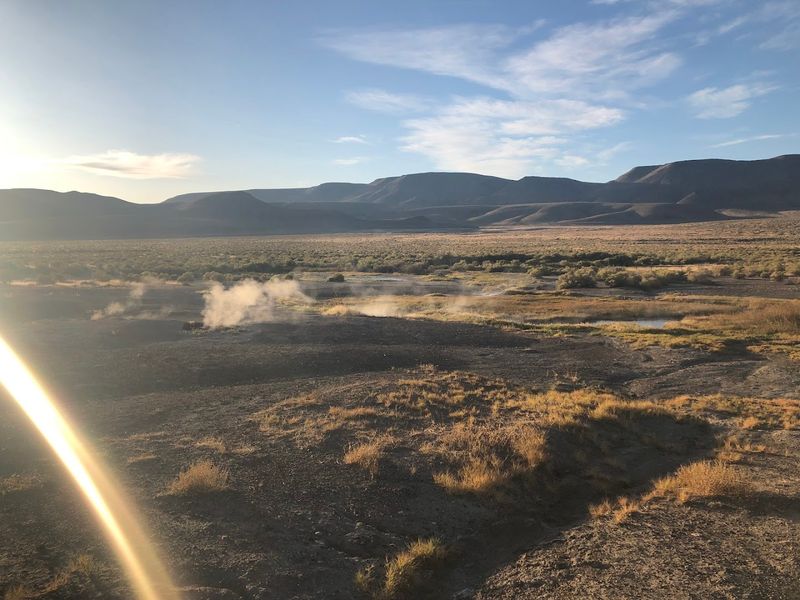
The same geological forces that created Steens Mountain also gifted this region with multiple thermal springs. Alvord Hot Springs, Mickey Hot Springs, and Borax Lake all sit within easy driving distance of the desert, offering the perfect counterpoint to the harsh, dry environment of the playa.
Alvord Hot Springs provides the most accessible soaking experience. Located just up Fields-Denio Road, this privately owned facility offers day passes and overnight camping that includes access to their private road onto the desert.
The springs themselves consist of simple concrete pools filled with naturally heated water, basic but wonderfully relaxing after a dusty day exploring.
Mickey Hot Springs presents a wilder experience. These natural pools bubble up in a more primitive setting, though flies can be numerous and the surrounding ground stays perpetually muddy from spring runoff.
That soft, wet ground has claimed vehicles, resulting in expensive tow bills for those who venture too close without proper caution.
The thermal activity reveals the volcanic nature of this landscape. Underground heat sources warm the water to comfortable temperatures year-round, creating oases that attract wildlife and provide relief for weary travelers crossing this unforgiving terrain.
Access Points and Navigation
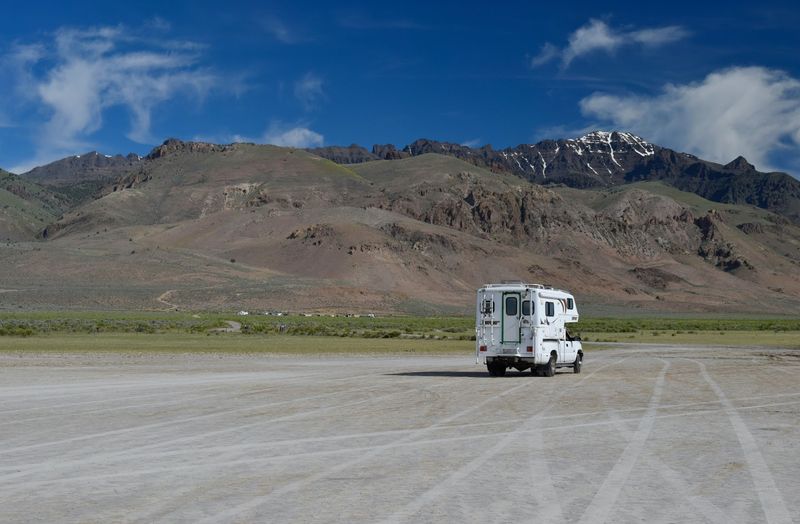
Multiple routes lead onto the desert, each with different characteristics and requirements. Frog Springs Road provides free access but demands higher vehicle clearance due to rougher conditions.
This route attracts those willing to trade convenience for zero cost and a more adventurous approach.
The Alvord Hot Springs route offers easier access that even sedans can typically handle, though it requires purchasing a day pass or camping permit. This private road stays better maintained, making it the preferred choice for those driving lower-clearance vehicles or towing trailers.
Fields-Denio Road transforms from pavement to dirt as you approach the desert, becoming dusty and washboarded in sections. The bumpy ride and clouds of dust become part of the experience, though some find it less charming after several miles of rattling teeth and coating everything in fine powder.
Navigation on the playa itself requires awareness despite the open terrain. The vastness can be genuinely disorienting, and it’s surprisingly easy to lose track of your starting point.
Setting a GPS waypoint before exploring prevents the embarrassment of wandering the desert trying to relocate your camp. The flat, featureless expanse offers few landmarks for orientation.
Dear Reader: This page may contain affiliate links which may earn a commission if you click through and make a purchase. Our independent journalism is not influenced by any advertiser or commercial initiative unless it is clearly marked as sponsored content. As travel products change, please be sure to reconfirm all details and stay up to date with current events to ensure a safe and successful trip.
