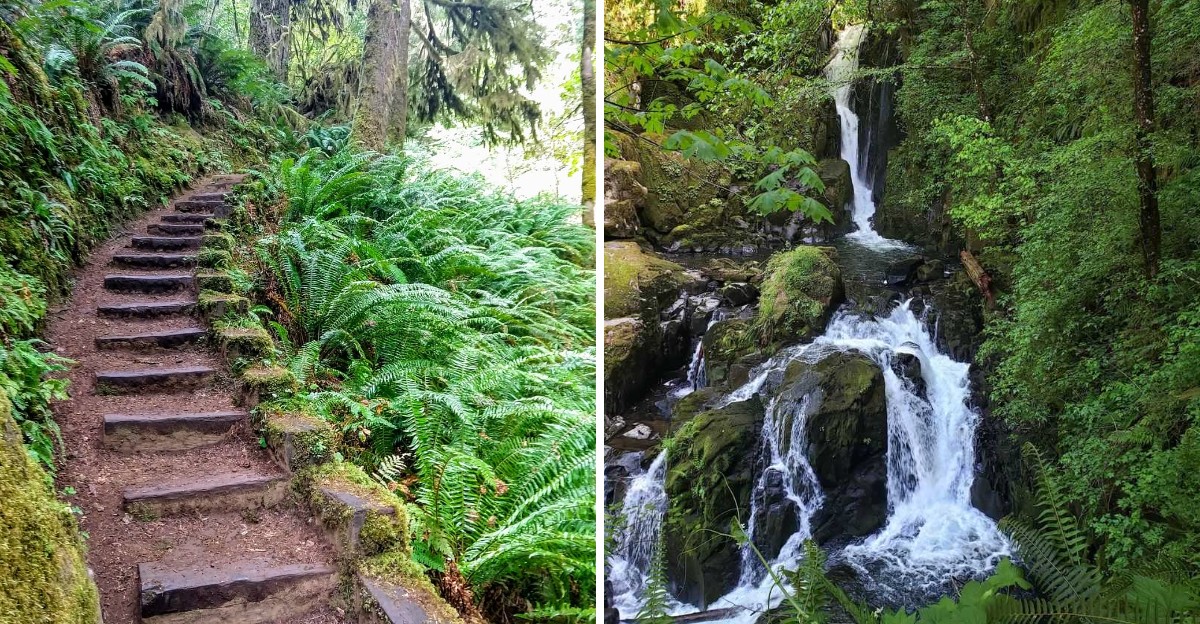
Metal catwalks bolted to a cliff wall let you walk right above a rushing creek. Below your boots, water tumbles over ledge after ledge of rock. Count them up and you get about 11 waterfalls on one easy forest trail.
The biggest one drops 70 feet in four separate tiers. Another cascade nearby falls about 35 feet. Moss covers almost everything else, from boulders to tree trunks to the canyon walls.
I like how this place hides deep in the Oregon Coast Range, far from the busy highway crowds. The forest stays shady and green, even on warm summer days.
I believe some trails are made for photos, and others are made for wandering slowly. This one manages both.
A Creek Full Of Waterfalls Is Waiting At The End Of A Long Road
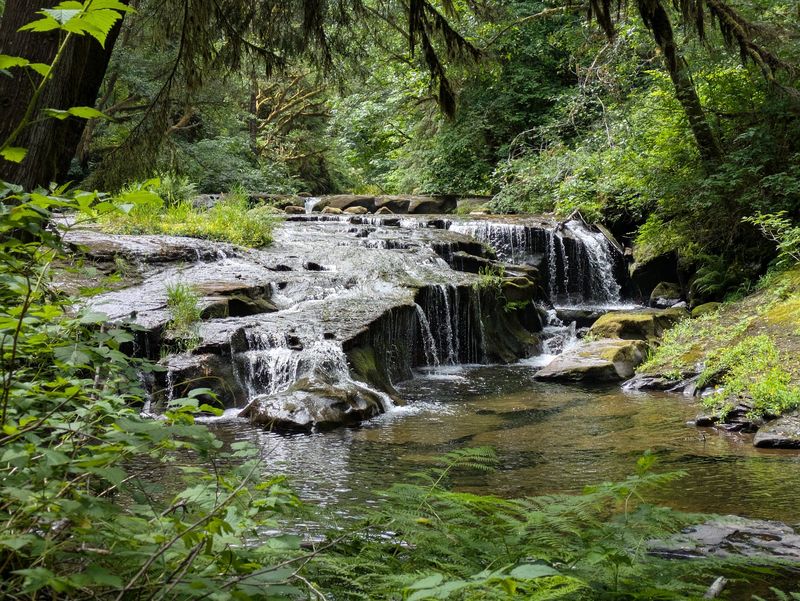
Eleven waterfalls on one short trail sounds like a typo. At Sweet Creek Falls Trail, it’s simply the main attraction.
The trail sits in the Siuslaw National Forest, inland from Florence in the Oregon Coast Range. Sweet Creek tumbles down a narrow canyon here, dropping over ledge after ledge of rock.
Some falls are tiny, just a few feet of splashing white water. Others are tall enough to make you stop mid-step and stare.
The whole trail complex runs roughly three miles, split into segments with different trailheads. Most hikers rate it easy, with modest climbing along the way.
That mix makes it a great trip for families, casual walkers, and waterfall fans. You won’t need fancy gear or serious training to enjoy it.
The pace here works best when you slow down. Each bend in the creek seems to reveal another small cascade or another clear pool.
Good shoes still matter, though. Roots and rocks pop up across the path, and moss can turn slippery after rain.
Think of it as a stroll through a waterfall gallery. The exhibits just happen to be loud, wet, and covered in green.
Watch Your Step On Catwalks That Hang Right Over The Water
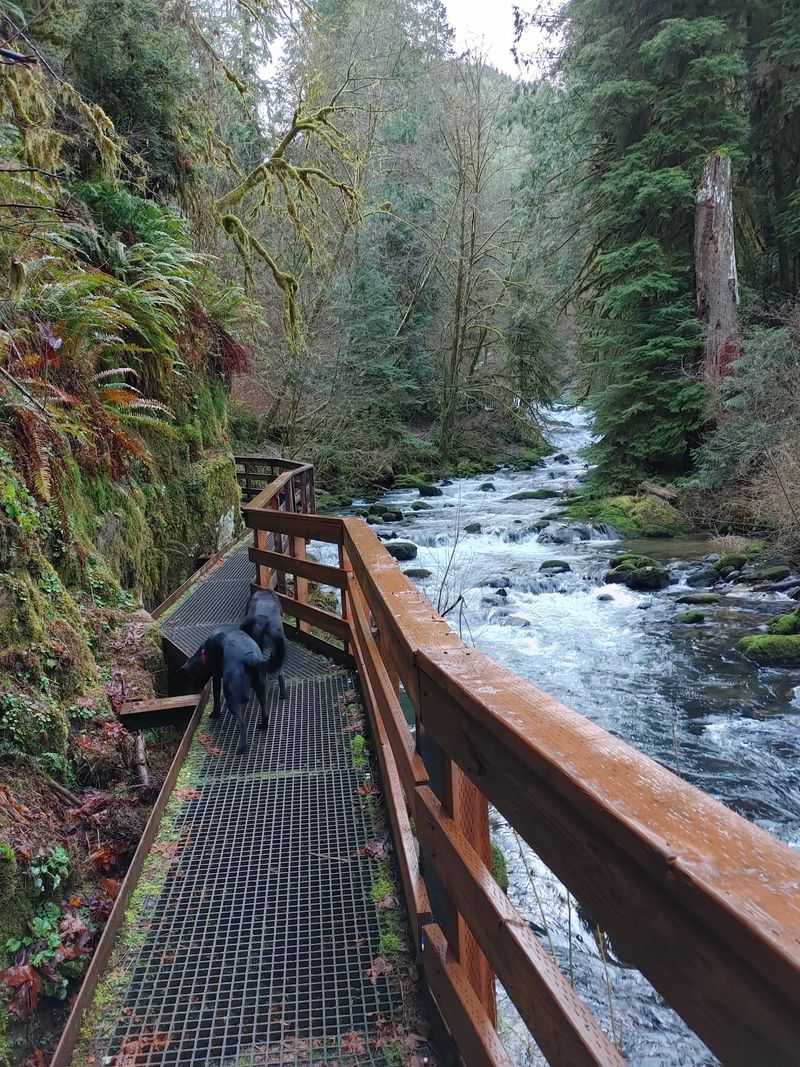
Most trails stay politely beside the creek. This one climbs onto the cliff and hangs right over it.
Wooden boardwalks and metal catwalks hug the canyon walls along parts of the route. They let you walk directly above Sweet Creek as it rushes below.
The metal sections use open grates. Look down and you can see water churning under your feet, which is either thrilling or a little nerve-racking.
Dogs sometimes feel the same way. Leashed pups are welcome, but some aren’t fans of walking on those see-through grates.
The design solves a real problem. The canyon is too steep and narrow for a normal dirt path in some spots.
Instead of skipping the best views, builders brought the trail right to them. The result feels part hike, part balcony tour.
Railings are missing on many stretches of the trail. Keep younger kids close and move carefully when others need to pass.
Some narrow spots leave little room for two-way traffic. A friendly pause usually sorts things out.
Take a moment on the catwalks to listen. The roar of the creek bounces off the rock walls and fills the whole canyon.
Moss Covers Nearly Everything, And It Feels Like Another World
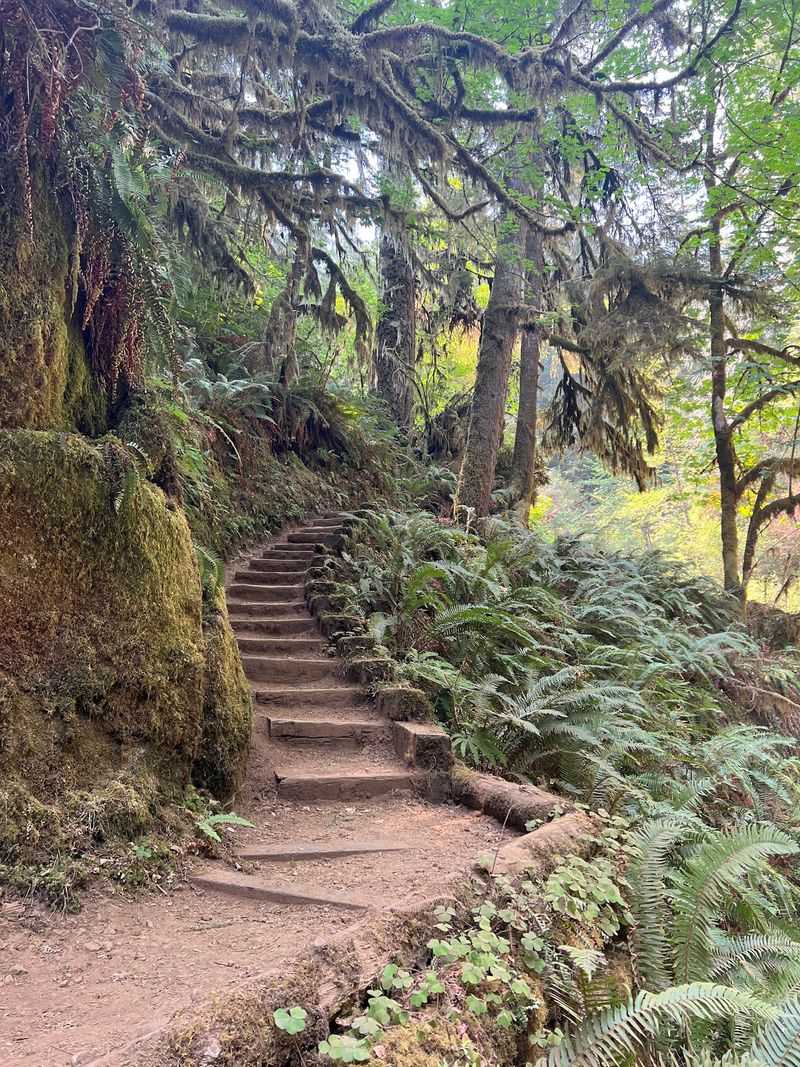
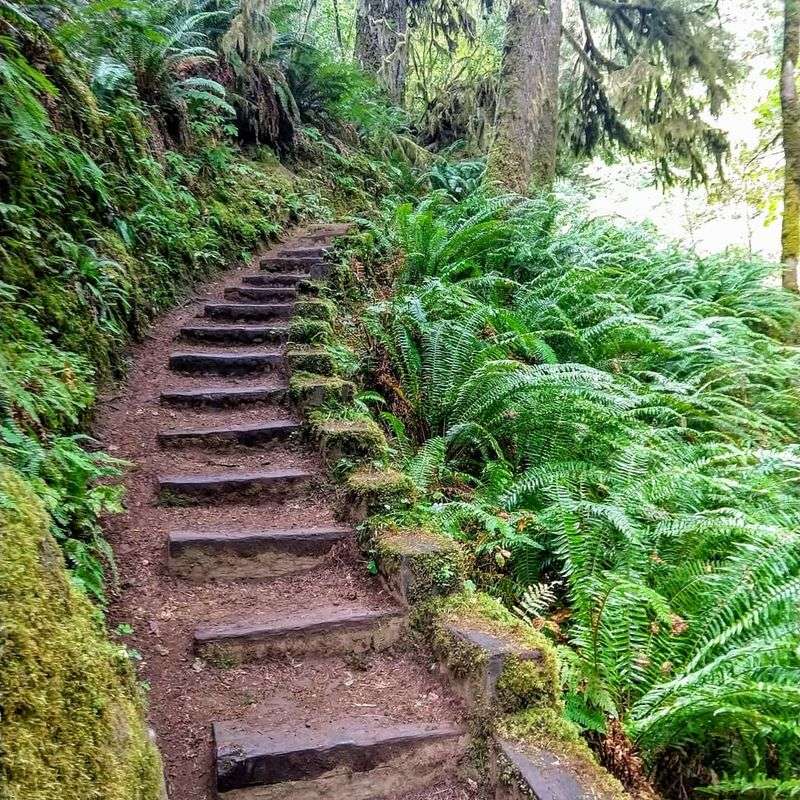
Green is the official color of this canyon. Moss coats rocks, logs, branches, and cliff walls in thick, soft layers.
Tall Douglas-fir, alder, and bigleaf maple trees form a deep canopy overhead. Their shade keeps the forest cool and damp, which moss absolutely loves.
In places, water seems to weep right out of the mossy rock. Tiny trickles slide down the walls and join the creek below.
The effect feels quiet and a bit magical. It’s the kind of forest that makes you lower your voice without thinking about it.
Spring brings even more color to the scene. In April and May, white trilliums and pink fawn lilies can bloom along the trail.
Keep your eyes on the creek, too. Water ouzels, small dark birds about the size of a robin, bob along the rocks here.
These little birds actually walk underwater to hunt for food. Watching one disappear beneath the current is pretty wild.
Banana slugs may also share the path on damp days. Step around them gently, since they’re part of what makes this forest tick.
Pack Water Shoes Because The Creek Is Hard To Resist
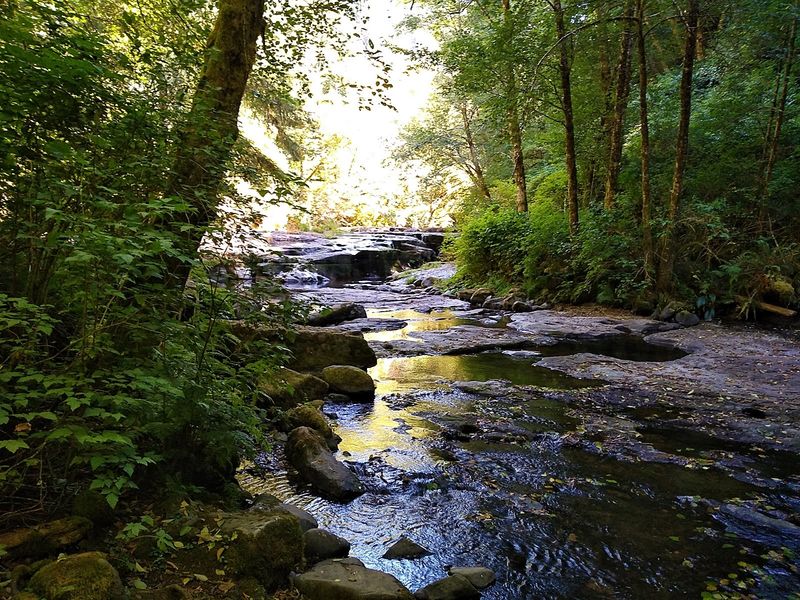
Flat rock shelves line long stretches of Sweet Creek. Water slides across them and settles into small, clear pools.
Those pools turn a simple hike into a full summer outing. Wading is popular when the creek runs lower during the warmer months.
Water shoes are a smart idea here. Rocks can be slick, and bare feet don’t love sharp edges.
A towel and a dry change of socks won’t hurt either. Once your toes touch that cool water, staying dry gets harder.
Safety still comes first. Currents can move fast, especially after rain, and mossy rocks get very slippery.
Spring flows are much stronger than summer ones. What looks calm in August can be powerful in April.
Keep a close watch on kids near the water at all times. A quick slip on wet stone can happen in a blink.
Bring your own drinking water too, since none is available on the trail. Snacks are a good plan, and a backpack picnic by the creek makes the trip feel longer in the best way.
The Grand Finale Drops 70 Feet In Four Big Steps
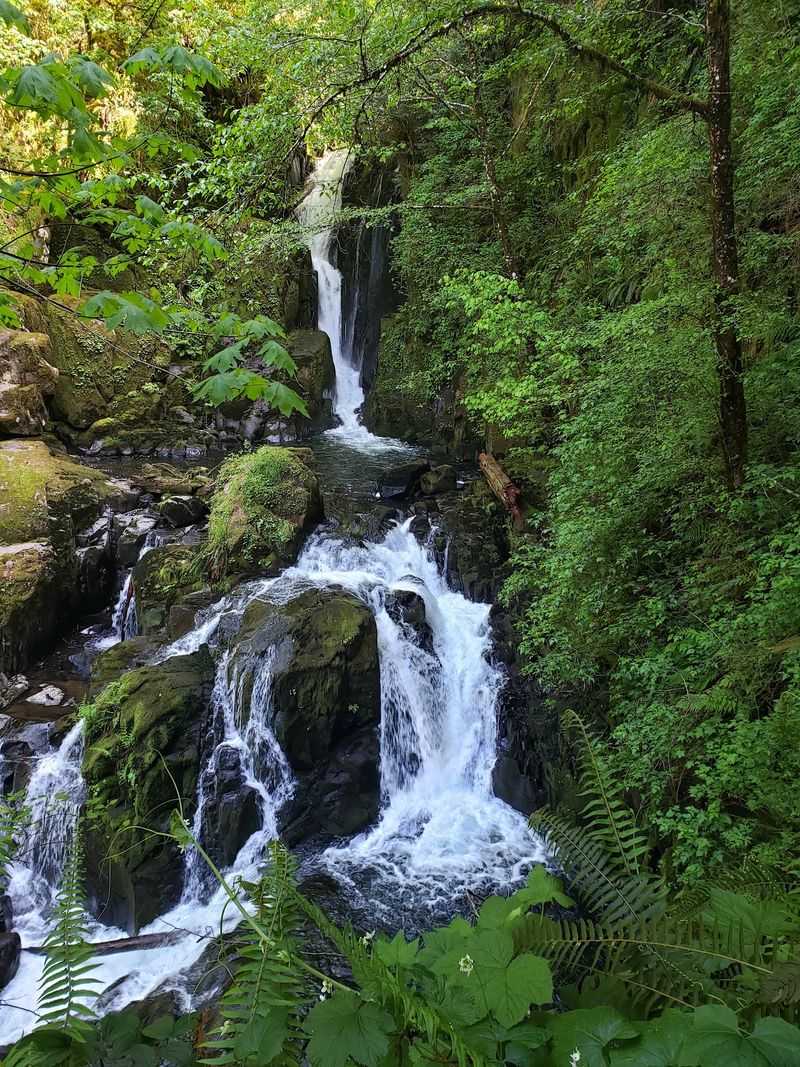
Save some energy for the star of the show. The main Sweet Creek Falls plunges about 70 feet total.
It doesn’t fall in one long drop, though. The water spills down four separate tiers, with each plunge ranging from roughly 10 to 30 feet.
That stair-step shape gives the falls tons of character. White water fans out, gathers in pools, then leaps again.
Along the way, keep an eye out for Annice Falls. This cascade drops about 35 feet and makes a fine warm-up act.
The rock here has an interesting backstory. Mudstone, sandstone, and basalt in this part of the Coast Range came from the old Pacific seafloor.
About 30 million years ago, that seafloor buckled upward to form the land. So yes, these waterfalls are pouring over ancient ocean bottom.
Photographers often find softer light on cloudy days. The shade of the canyon also helps keep bright spots from washing out pictures.
Bring a lens cloth if you have one. Mist near the bigger falls can coat your camera quickly.
Even without photos, this spot deserves a long pause. It’s the moment the whole hike builds toward.
Plan Around The Closed Boardwalk Before You Go
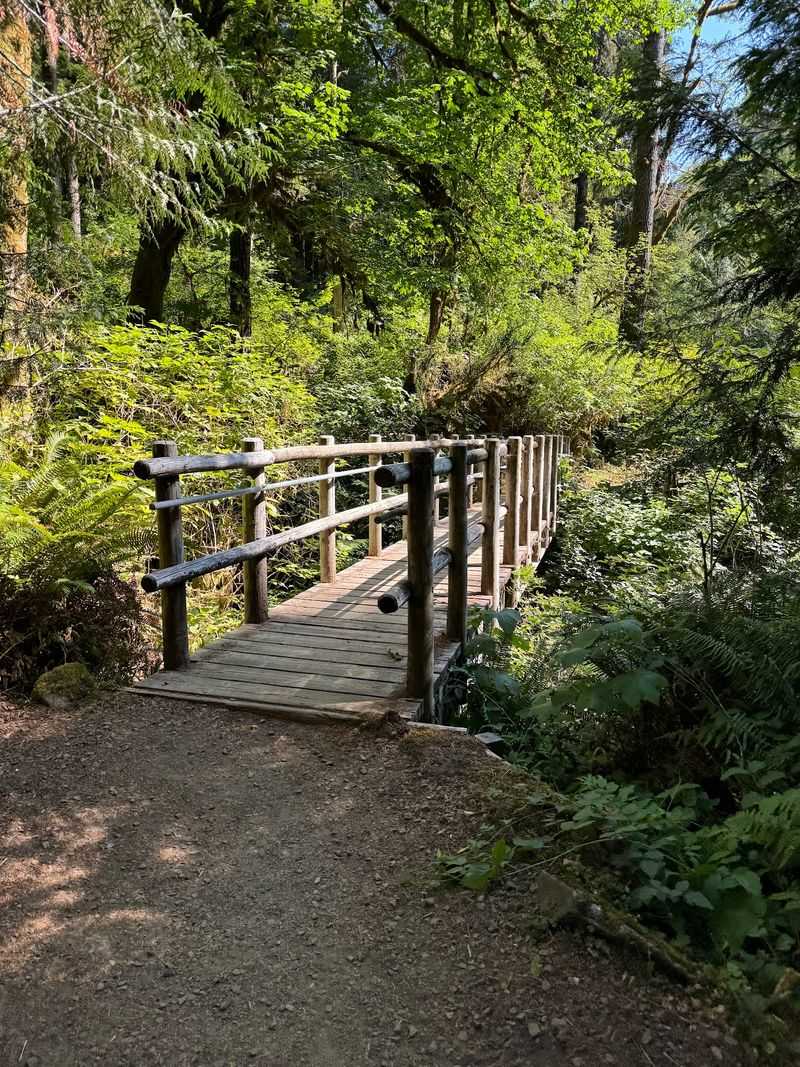
Here’s a heads-up that can save you some confusion. A vehicle accident in 2025 damaged the boardwalk between the Homestead Trailhead and the Sweet Creek Trailhead.
That section remains closed, so you can’t hike straight through from Homestead right now. The closure remains in effect under an updated Forest Service order through March 31, 2027, unless lifted earlier.
The fix is simple. Drive a little farther up the road and start from the Sweet Creek Trailhead instead.
Its location is Sweet Creek Rd, Mapleton, OR 97453. From that lot, you can reach the southern portion of the trail and the big falls.
The Sweet Creek Trailhead doesn’t have restrooms. The Homestead Trailhead has vault toilets and picnic tables, but the trailhead is currently closed to visitors.
Parking at Sweet Creek Falls Trailhead is free, with no recreation pass required. Visitors can park without purchasing a day pass or annual recreation pass.
Leave valuables at home or out of sight in your car. Trailhead break-ins can happen at remote lots like this one.
Check the Siuslaw National Forest for updates before you head out. Trail conditions can change, and a quick look avoids surprises.
The Drive In Is Part Of The Adventure
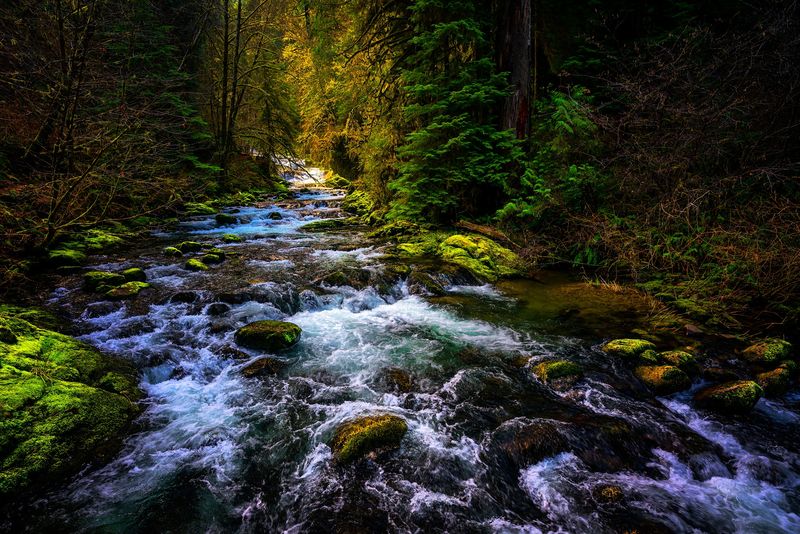
Getting there takes a little patience and a lot of curves. The reward is a road that slowly pulls you deeper into the forest.
Start on Highway 126 and head to the Siuslaw River Bridge in Mapleton. Cross the bridge, then turn west right away onto Sweet Creek Road.
From there, it’s about 10 to 11 miles to the trailheads. The road twists through the woods and narrows in places.
Take it slow, especially in winter. Frost and ice can show up on shady stretches early in the morning.
Cell signal can be spotty out here. Download directions before you leave town so you aren’t guessing at turns.
Parking lots are small, so timing matters. Arriving earlier in the day gives you better odds of grabbing a spot.
Mapleton itself sits along the Siuslaw River, inland from the Oregon coast. Florence and its beaches aren’t far, which makes this an easy add-on to a coastal trip.
Pair the waterfalls with ocean views and you’ve got a pretty great day. Forest in the morning, sand in the afternoon sounds like a solid plan.
Pioneers Walked This Valley Long Before The Hikers Did
Back in 1879, a pioneer family arrived in this quiet valley. Zarah T. Sweets and his family had traveled the Oregon Trail before settling here.
The creek, and eventually the trail, picked up their name. Sweet Creek may sound like a cute nickname, but it’s really a piece of family history.
Parts of an old wagon road from that era are still around. They’ve been worked into the modern trail system.
That means some of your steps follow routes used well over a century ago. Not bad for a casual weekend walk.
Interpretive signs near the restrooms share more about the area’s past. They’re worth a quick read before or after your hike.
Picture the work it took to build a homestead in a canyon this steep and wet. Every board and every bushel had to come in by hand or wagon.
Today the valley feels peaceful rather than rugged. Still, a little history adds weight to all that scenery.
Next time you cross a quiet stretch of trail, look around. Someone may have hauled supplies along that same ground in the 1800s.
Every Season Gives This Trail A Different Personality
Spring is when the waterfalls show off the most. From March through May, heavy flows make every cascade louder and wider.
That’s also wildflower season, with trilliums and fawn lilies brightening the forest floor. The green feels almost electric after months of rain.
Summer brings a calmer creek. Lower water makes it the best time for wading and lounging by the pools.
The canopy shade helps on hot days, too. It often feels noticeably cooler beside the water.
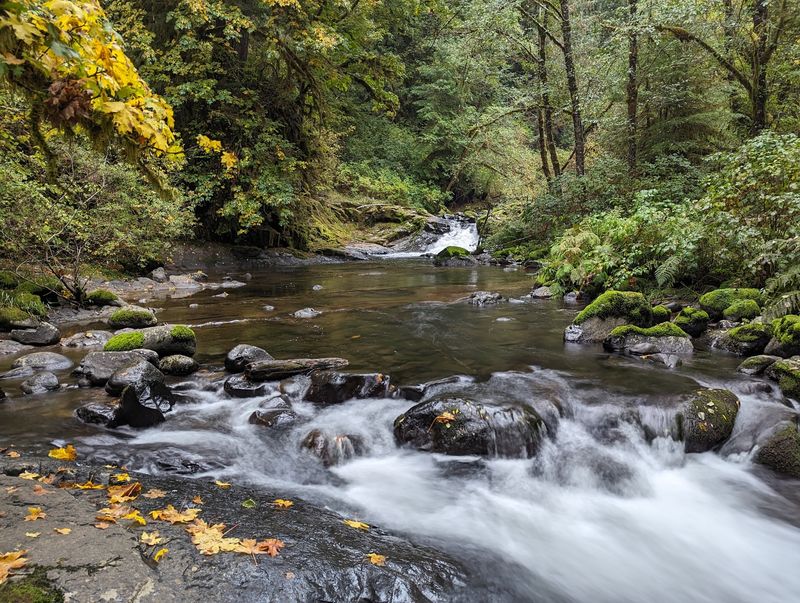
Autumn swaps some of the green for gold. Bigleaf maples add color along the trail as the leaves turn.
Winter has its own appeal for Oregon hikers. When the valleys feel gray or the mountains get snowy, this low trail stays open year-round.
Muddy patches are common in the wet months, so waterproof boots help. Trekking poles can make rocky, rooty stretches easier any time of year.
Honestly, there’s no wrong season to visit. Each one just hands you a slightly different version of the same mossy, waterfall-filled canyon.
Pick your favorite, then come back for the others. This trail rewards repeat trips.
