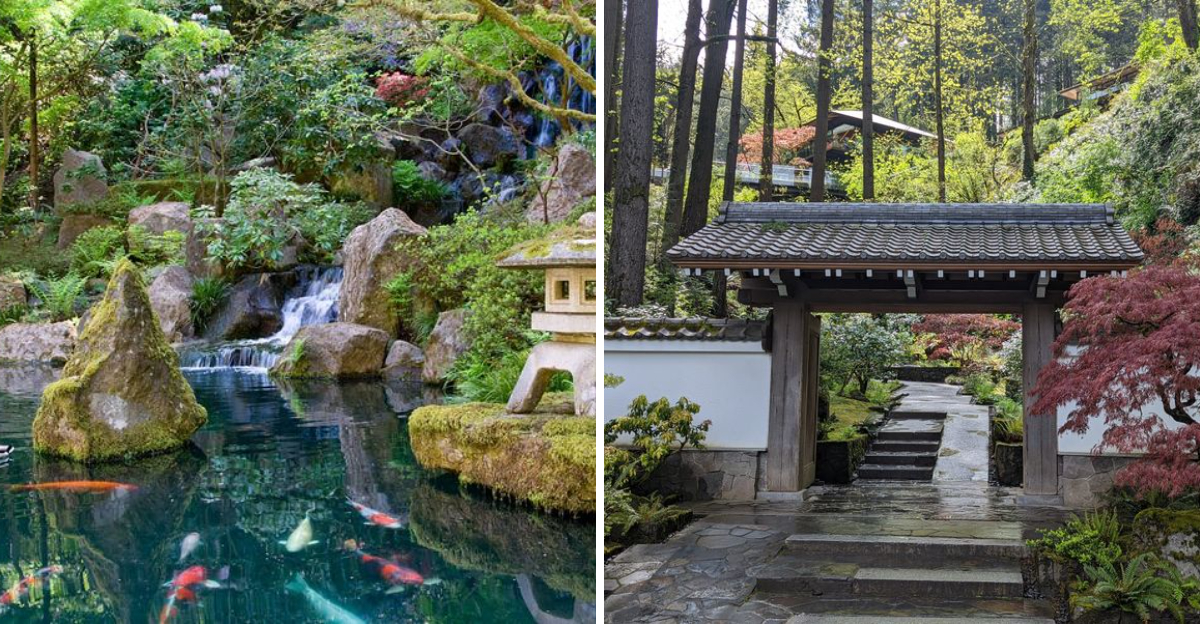
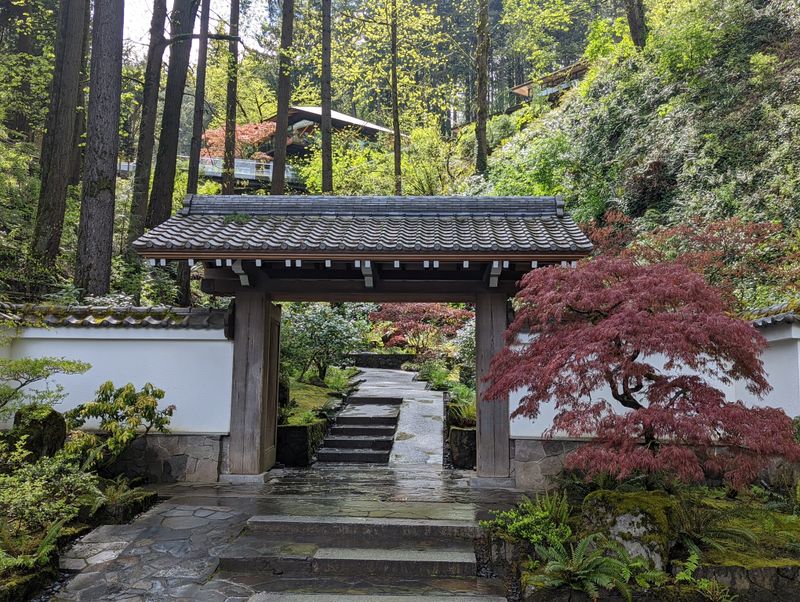
I still remember the moment I stepped through the entrance at 611 SW Kingston Avenue in Portland, Oregon, and felt the entire world quiet down around me. The Portland Japanese Garden isn’t just another pretty place to snap photos.
It’s a living, breathing masterpiece that’s earned worldwide recognition as one of the most authentic Japanese gardens outside of Japan itself.
Now it’s snagged a spot on the 2026 World’s Most Stunning Gardens list, and honestly, I’m not surprised one bit. This 12-acre sanctuary tucked into Washington Park has been turning heads and calming minds for over six decades.
Whether you’re a garden enthusiast or just someone who needs a break from the chaos, this Oregon treasure delivers something truly special that you won’t find anywhere else in the United States.
Five Garden Styles in One Breathtaking Space
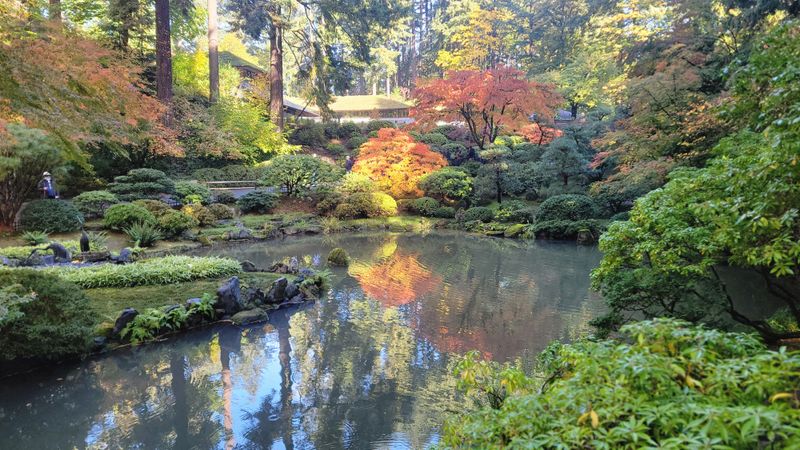
Walking through this place feels like flipping through five different chapters of Japanese garden history. Each of the five distinct styles tells its own story, and I found myself completely absorbed in the details.
The Flat Garden hits you first with its simple elegance, while the Strolling Pond Garden takes you on a journey around tranquil water features that mirror the sky.
The Tea Garden prepares your spirit for contemplation, and the Natural Garden lets Oregon’s native beauty shine through a Japanese lens.
Then there’s the Sand and Stone Garden, where meticulously raked patterns in the sand create a meditation all on their own. Large stones rise from the carefully groomed surface like islands in a calm sea.
What blew my mind was how seamlessly these five styles flow together across the 12 acres. You never feel like you’re jumping between disconnected spaces.
Instead, each garden style reveals itself gradually as you wander the pathways, creating one cohesive experience that showcases centuries of Japanese garden design philosophy in a single afternoon visit.
The Cultural Village Designed by Kengo Kuma
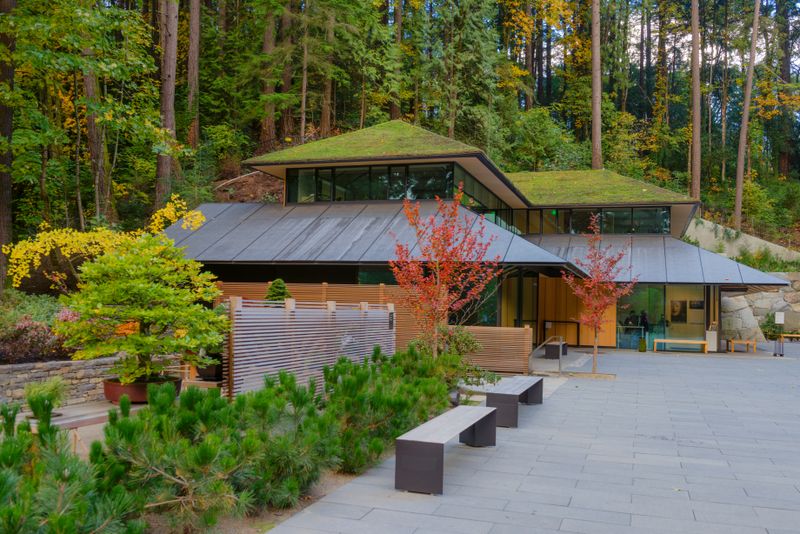
Architecture nerds, prepare to geek out. The Cultural Village represents a stunning marriage of traditional Japanese design principles and contemporary vision, all thanks to world-renowned architect Kengo Kuma.
The Jordan Schnitzer Japanese Arts Learning Center anchors this area, and it’s not your typical museum building. Kuma’s signature style brings natural materials like wood into conversation with modern spaces that feel both expansive and intimate.
The exhibitions inside rotate regularly, showcasing everything from bamboo artistry to traditional textiles.
I spent way more time here than I’d planned, drawn in by the way the buildings themselves become part of the garden experience. Floor-to-ceiling windows frame living paintings of the landscape outside, blurring the line between indoor and outdoor spaces.
The Cultural Village isn’t just about looking at art behind glass. It’s about understanding how Japanese design philosophy extends beyond gardens into architecture, craft, and daily life.
Educational programs and workshops happen here regularly, giving visitors hands-on opportunities to engage with Japanese culture in meaningful ways that stick with you long after you leave Oregon.
Umami Café Suspended Over the Hillside
Hunger hit me about halfway through my visit, and I couldn’t have planned it better. The Umami Café literally hangs over the hillside, creating this incredible floating sensation as you sip your tea.
Those floor-to-ceiling windows aren’t just for show. They frame the forest outside like a constantly changing work of art, bringing the Oregon wilderness right to your table.
I grabbed a seat by the window and watched the light filter through the trees while enjoying traditional Japanese snacks.
The menu keeps things simple but authentic, focusing on quality tea and light bites that complement the garden experience rather than overshadowing it. Everything tastes fresh and thoughtfully prepared, with presentation that matches the aesthetic beauty surrounding you.
What makes this café special isn’t fancy cuisine or an extensive menu. It’s the way the space itself enhances your experience of being present in the moment.
The architectural design, the view, the quiet murmur of conversation, and the ritual of tea all combine to create a pause in your day that feels necessary and restorative in our rushed modern world.
Bonsai Terrace Collection of Living Sculptures
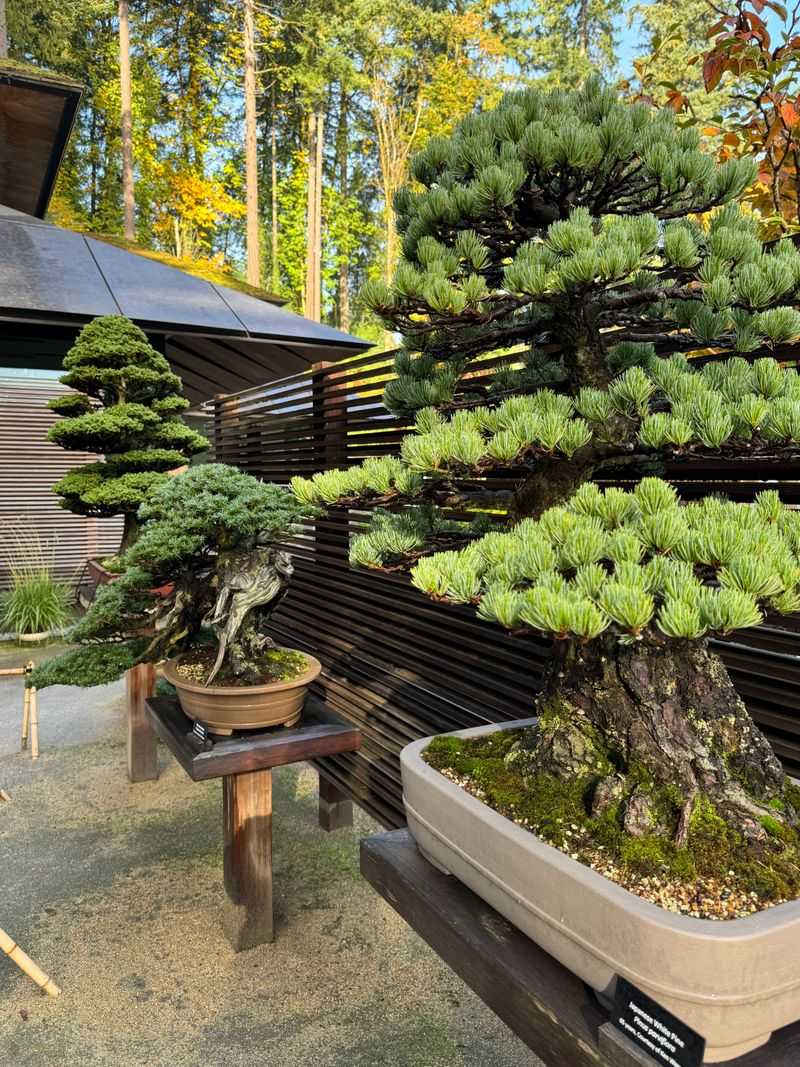
Some of these bonsai trees are older than my grandparents, and you can see every year of their lives written in their weathered trunks. The Bonsai Terrace houses roughly ten specimens, but each one deserves its own novel.
I’d seen bonsai before in photos and even in stores, but standing in front of these mature trees completely changed my understanding of the art form. Trunks as thick as my leg twisted into shapes that seemed impossible for something grown in a container.
The bark showed decades of careful cultivation and natural aging.
These aren’t houseplants. They’re living sculptures that represent generations of patient work and deep understanding of how trees grow and respond to training.
Each branch placement tells a story of artistic vision meeting natural growth patterns.
The terrace setting lets you get up close to examine the details without feeling crowded. I found myself returning to certain trees multiple times during my visit, noticing new aspects of their form and character each time.
It’s this kind of repeated observation that Japanese garden design encourages, teaching us to slow down and really see what’s in front of us.
Strolling Pond Garden Inspired by 17th Century Aristocracy
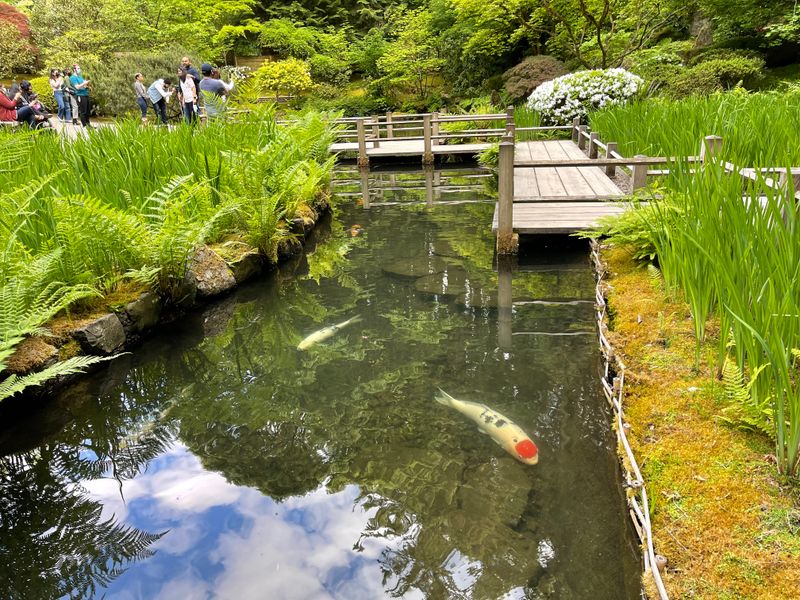
Ever wondered how Japanese nobility spent their afternoons four hundred years ago? This garden section gives you a pretty good idea, and honestly, they had it figured out.
The Strolling Pond Garden recreates the atmosphere of 17th-century aristocratic gardens, where the wealthy would take leisurely walks around carefully designed water features. Two ponds connect via a tranquil stream, and the path around them reveals new compositions at every turn.
Koi fish glide through the water like living jewels, their orange and white patterns creating moving art beneath the surface. Stone bridges cross the water at strategic points, offering different vantage points to appreciate the reflections and plantings.
What struck me most was how the design uses borrowed scenery. The garden doesn’t feel enclosed or separate from the surrounding landscape.
Instead, it incorporates views of the forest and distant mountains, making the space feel both intimate and expansive at the same time. This principle of shakkei transforms the entire Oregon hillside into part of the garden composition, showing how traditional Japanese design works with nature rather than against it.
Sand and Stone Garden Celebrating Empty Space
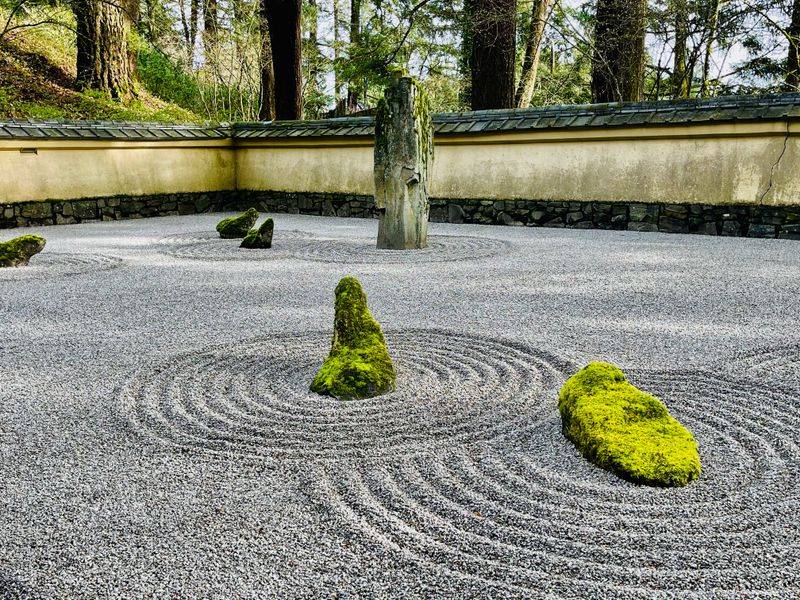
Most gardens scream at you with color and abundance. This one whispers with carefully raked sand and the beauty of what’s not there.
The Sand and Stone Garden embraces the concept of ma, the Japanese appreciation for negative space and intervals. Large stones rise from the raked sand like mountains from clouds, while low-growing shrubs provide just enough green to emphasize the empty spaces around them.
I sat on the viewing platform for a solid twenty minutes, watching how the raked patterns caught the light differently as the sun moved. The parallel lines in the sand create a sense of flow and movement even though nothing actually moves.
It’s like watching frozen water.
This style of garden, called karesansui or dry landscape, originated in Zen Buddhist temples as a tool for meditation. The simplicity forces your mind to settle and focus rather than jumping from one colorful distraction to another.
In our overstimulated world, this kind of visual quietness feels almost revolutionary. It proves that beauty doesn’t always need to be loud or complicated to make a lasting impression on the human spirit.
Year-Round Beauty Through Seasonal Design
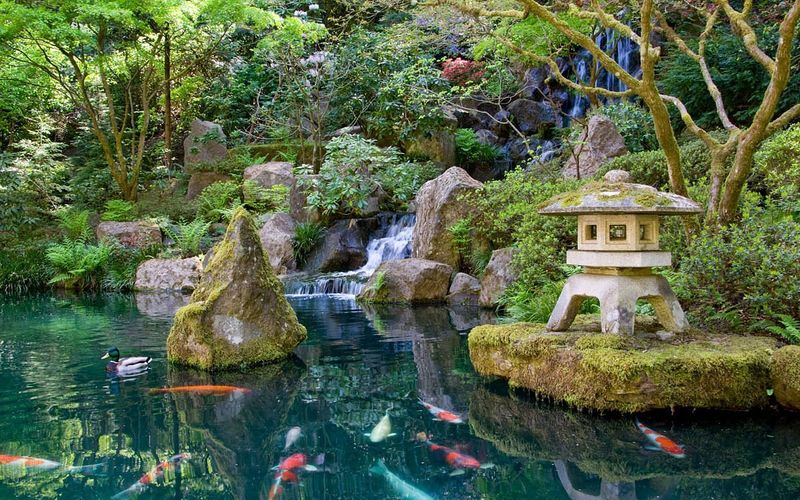
Japanese garden design doesn’t peak in one season and then fade away. It orchestrates beauty across the entire year, and Portland’s version nails this concept perfectly.
Spring brings cherry blossoms that create pink clouds above the pathways, while summer fills the space with lush green growth and the sound of water features. Autumn transforms the garden into a fiery display of red and gold maple leaves that people travel across the country to photograph.
But here’s what surprised me most. Winter might actually be the best time to visit.
When the leaves fall and occasional snow dusts the stones and structures, the garden’s bones reveal themselves. The architectural elements, the rock placements, and the essential design become visible in ways that summer foliage conceals.
This seasonal rotation means you could visit four times and have four completely different experiences. Each season emphasizes different aspects of the design and different emotional tones.
It’s a living demonstration of impermanence and natural cycles, core concepts in Japanese aesthetic philosophy that resonate even more deeply when you experience them firsthand rather than just reading about them in books.
Location Within Washington Park’s Cultural Hub
Finding this garden means entering one of Portland’s richest concentrations of natural and cultural attractions. Washington Park serves as home to multiple world-class destinations all within walking distance of each other.
The International Rose Test Garden sits right across the street, offering a completely different but equally stunning garden experience. Hoyt Arboretum spreads across the hillside nearby, showcasing tree collections from around the world.
The Oregon Zoo anchors the park’s eastern side.
This clustering of attractions means you could easily spend an entire day in Washington Park without running out of things to see. A MAX light rail stop at the zoo connects the area to downtown Portland, making the garden accessible even without a car, though parking is available if you drive.
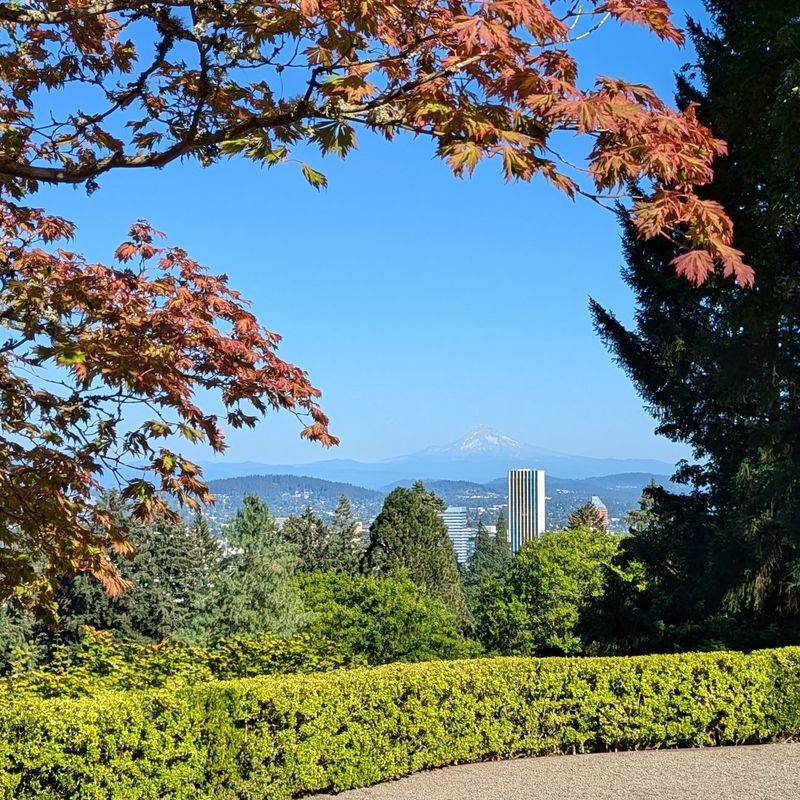
The garden’s elevation on the hillside provides bonus views of downtown Portland and Mount Hood on clear days, adding Pacific Northwest scenery to the Japanese aesthetic. This integration of local landscape with traditional Japanese design principles creates something unique that couldn’t exist anywhere else.
It’s distinctly Oregon while remaining authentically Japanese, a cultural bridge that enriches both traditions through thoughtful combination and mutual respect.
Dear Reader: This page may contain affiliate links which may earn a commission if you click through and make a purchase. Our independent journalism is not influenced by any advertiser or commercial initiative unless it is clearly marked as sponsored content. As travel products change, please be sure to reconfirm all details and stay up to date with current events to ensure a safe and successful trip.
