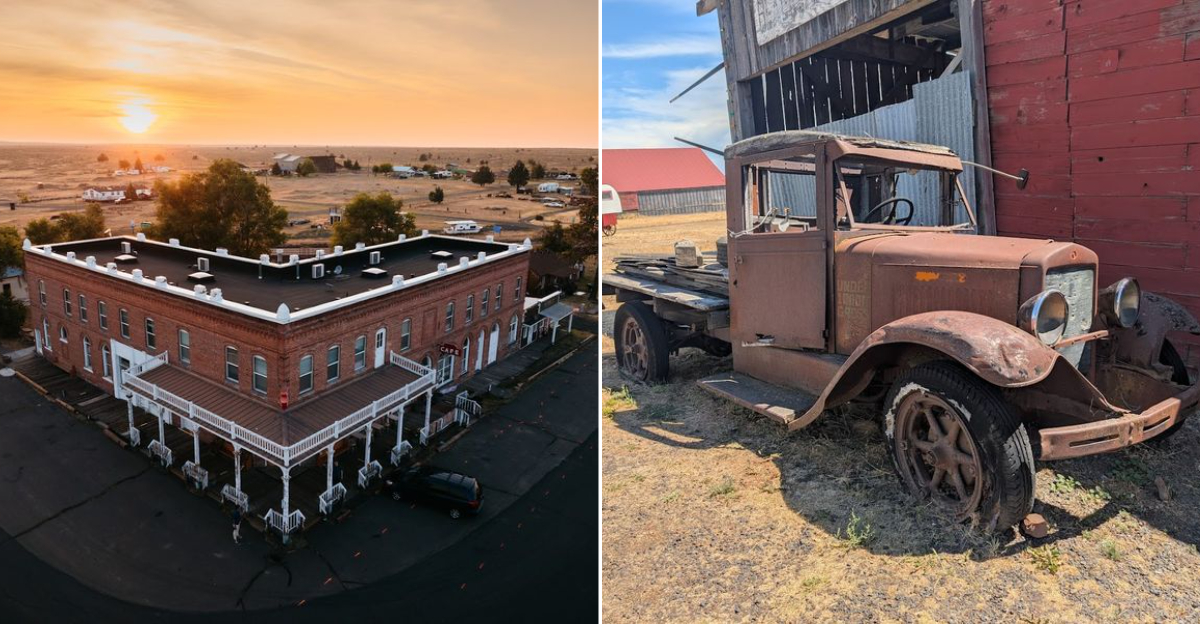
The cells are tiny, the door is heavy iron, and your bed for the night is a wooden bench. You have just checked into a working jail in Oregon’s high desert.
This ghost town once called itself the “Wool Capital of the World,” with 600 residents and a rowdy main street. The boom ended when the railroad bypassed the town, but the jail never closed.
Locals still use it sometimes, mostly for drunks who need to sleep it off. Now you can too.
For twenty dollars, you can lock yourself in an actual historic cell, listen to the wind through the sagebrush, and pretend you are a cowboy who got a little too wild. The metal cot is not comfortable, but that is the point.
This is not a resort. It is a chance to spend a night in a place where time stopped decades ago.
So which Oregon ghost town offers a real jail cell for twenty bucks? Pack a sleeping bag and a sense of humor. The cell door closes at dark.
The Old Jail At City Hall
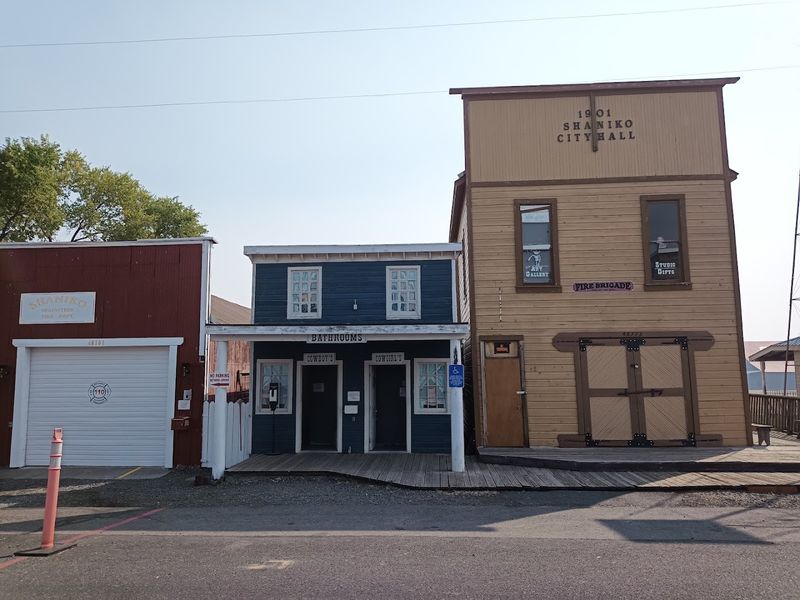
The first thing that gets you in Shaniko is that little jail beside city hall, because it looks almost too storybook to be real. You walk up expecting a prop, and then the iron bars, worn wood, and cramped rooms make it feel surprisingly grounded.
It sits right in the middle of this tiny Oregon town like a reminder that daily life here once had rules, routine, and a sheriff nearby.
Inside, the space is small enough to make you instinctively lower your voice, which says a lot about how well the place still holds its mood. There is an office area and a pair of tight cells that feel more human than theatrical once you stand there a minute.
You can easily picture someone pacing, someone waiting, and someone outside pretending not to stare through the bars.
Locals have long shared stories about tourists getting jokingly locked in there, and that playful streak somehow fits the town perfectly. Even with the laughs, the place never feels cheap or fake, because the building itself carries so much texture.
Every hinge, wall, and shadow gives you something real to notice.
If you come to Shaniko hoping for one unforgettable stop, this is probably it. The jail is quick to see, but it stays with you longer than expected.
There is something about a tiny locked room in the middle of huge open country that just lingers.
The Shaniko Hotel
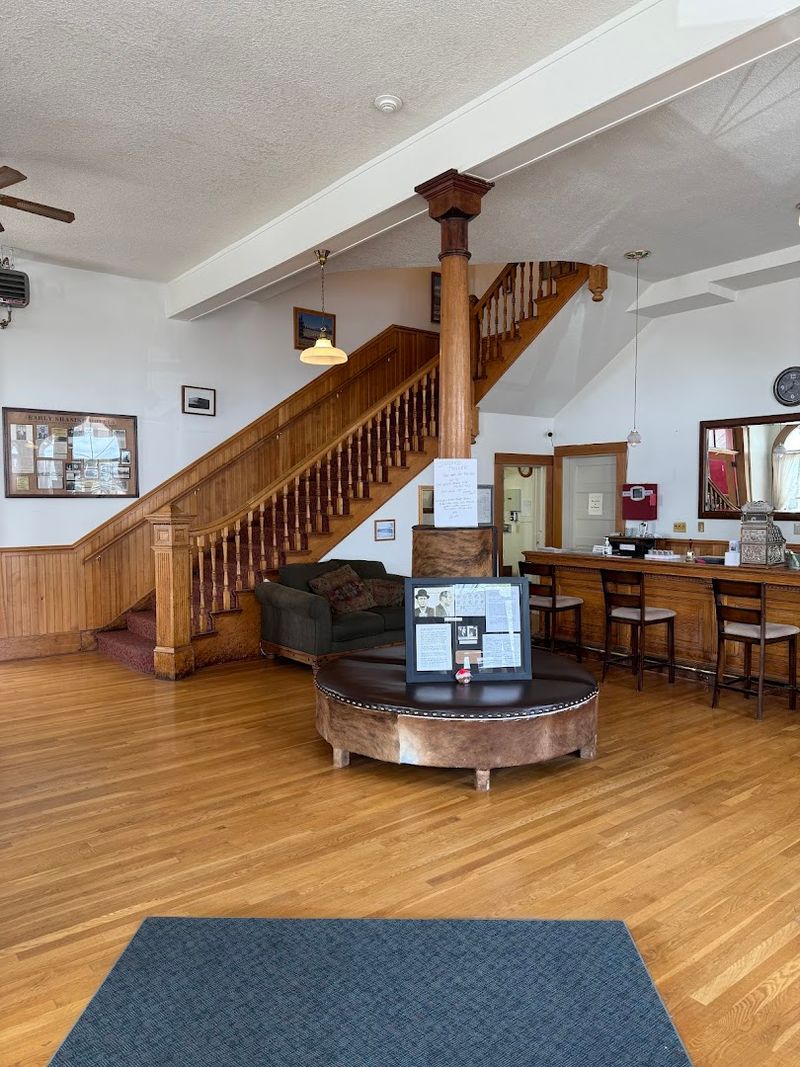
What surprised me most was how the Shaniko Hotel instantly softens the whole ghost town idea, because it feels welcoming instead of eerie. You look at the old facade and expect distance, then the place gives off that lived-in warmth old buildings sometimes have.
Right away, Shaniko feels less like a ruin and more like a town still having a conversation with itself.
The hotel is one of those landmarks that anchors everything around it, especially on a quiet street where every board and window matters. From outside, it has that sturdy Oregon high desert look, weathered but upright, almost like it knows people are still curious.
Standing near it, you get why travelers have always needed somewhere solid to land out here.
Even if you are not staying overnight, it is worth lingering nearby and taking in how much atmosphere the building carries. The porch, the trim, and the sense of age all work together without feeling overdone.
Nothing about it needs polishing in your mind, because the character is already doing the job.
I liked that the hotel gives Shaniko a center of gravity, not just a photo stop. It reminds you this place was built for real traffic, real sleep, and real ordinary evenings.
That makes the whole town feel more personal, which honestly is the part that sneaks up on you.
The Boardwalk Along Main Street
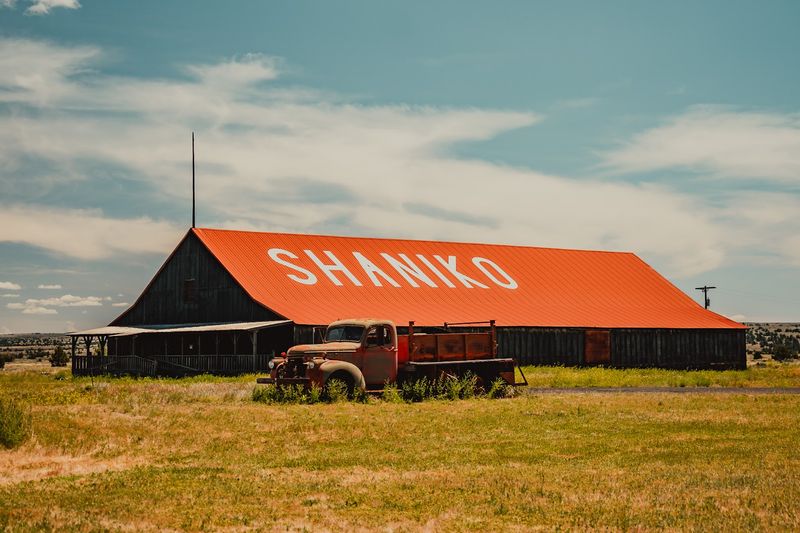
You know that feeling when a street makes you slow down without asking, and suddenly you are looking at every little detail? That is exactly what happened to me on the boardwalk along Main Street, where the wood creaks, storefronts lean slightly, and the whole scene feels stubbornly preserved.
It is not flashy at all, which is probably why it works so well.
Walking there, I kept noticing how the buildings sit close enough together to suggest busier days without turning sentimental about it. The facades still frame the street in a way that makes your imagination do a lot of the work.
In Oregon, places like this can easily feel staged, but Shaniko somehow avoids that trap.
There is also something about being up on those wooden planks that changes the pace of the visit. You are not rushing from sight to sight, because the sidewalk itself becomes part of the experience.
Every step feels like it belongs to the town instead of to you.
If you like travel moments that are more about atmosphere than action, spend time here and do not apologize for it. Look in the windows, listen to the quiet, and let the empty space tell its own story.
Main Street is simple, but it has a way of pulling you fully into Shaniko.
The Old Schoolhouse
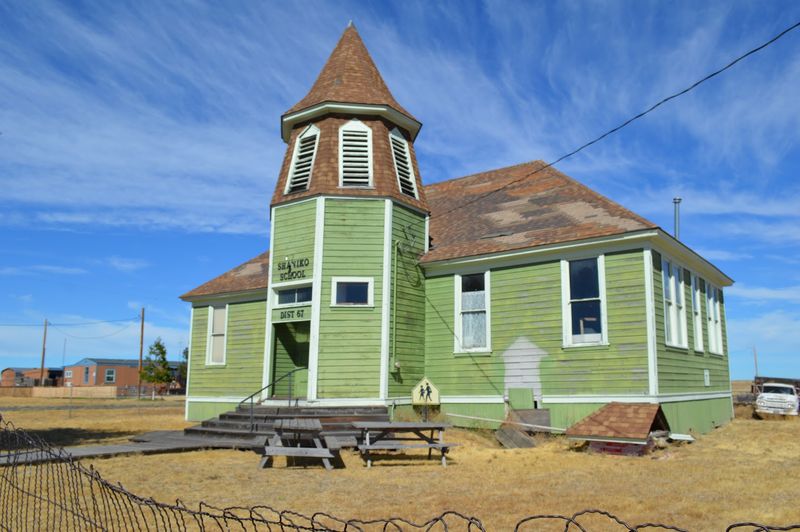
The old schoolhouse made me pause in a different way, because it carries a softer kind of history than the jail or hotel. You see a building tied to ordinary routines, young voices, and the daily shape of a town trying to raise itself.
That kind of place can hit harder than grand landmarks, especially in somewhere as quiet as Shaniko.
From the outside, the schoolhouse feels plain in the best possible sense, like it never needed embellishment to matter. It belongs to the landscape and to the story of Oregon settlement without asking for much attention.
I always think buildings like this tell you more about real life than dramatic monuments do.
Standing near it, I kept imagining coats hung by a door, desks scraped across floors, and the general buzz of a school day. Even if you cannot step into all of that physically, the atmosphere still gives you enough to work with.
The place feels grounded, useful, and deeply human.
That is why I would not skip it, even though it is quieter than some of Shaniko’s more talked-about stops. It adds emotional texture to the town and rounds out the story.
Without the schoolhouse, you would understand the setting, but you might miss the people who actually lived it.
The Wool Warehouse Legacy
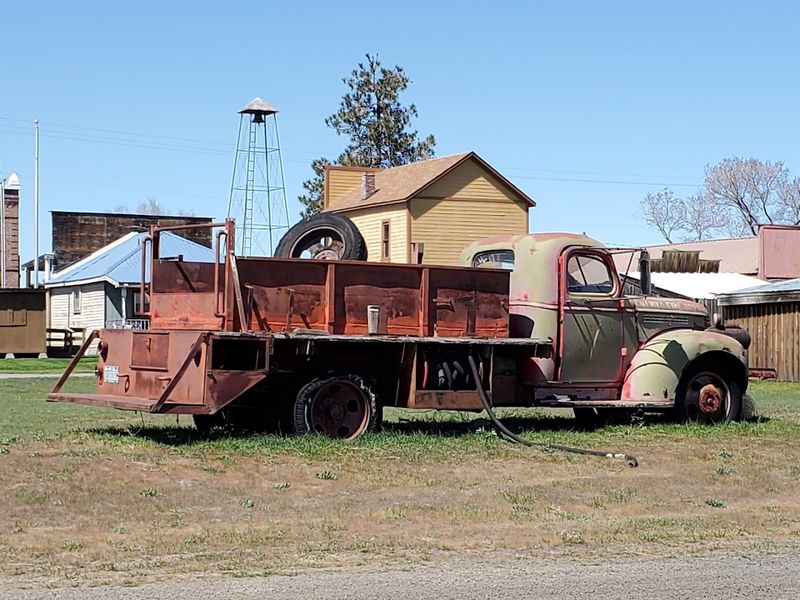
Once you remember Shaniko was tied to wool, the town starts making a lot more sense, and that changed everything for me. It stops being just an old western-looking stop and becomes a place built around work, movement, and regional importance.
You can feel that legacy most clearly around the old warehouse spaces and commercial bones still standing.
The wool history is not some side note either, because it shaped why this place mattered in Oregon in the first place. Looking at the larger utility-style buildings, you get a sense of scale that the quieter streets sometimes hide.
They suggest labor, storage, shipments, and a whole network beyond what is visible now.
I always like when a town leaves behind clues about what kept it alive, and Shaniko does that very well. The warehouse feel adds muscle to the softer nostalgia of the hotel and boardwalk.
Suddenly the town is not only picturesque, it is practical, ambitious, and a lot easier to imagine at full speed.
Even if industrial history is not usually your thing, this part still lands because it explains the place in a very direct way. It gives the wooden facades context and the silence a little edge.
Without that wool legacy, Shaniko would look interesting, but it would feel much flatter.
The Railroad Story In Town
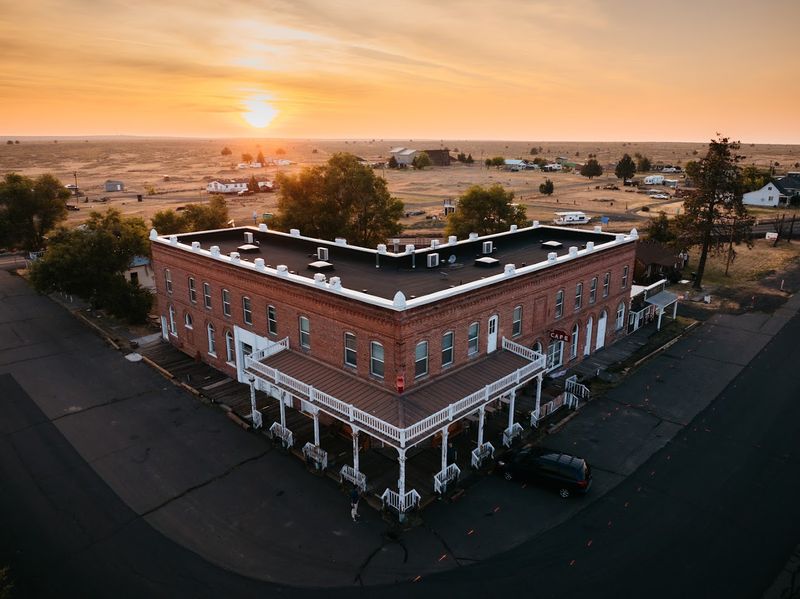
If you want to understand why Shaniko changed, you have to think about the railroad, because the town’s rise and slowdown are tied to it. That story hangs over the place even when you are just wandering the street and looking at buildings.
You can feel a kind of pause in the town that makes more sense once the rail history clicks.
Shaniko grew as an important shipping point, and that old transportation energy still shapes how the place feels today. The town seems arranged around movement, commerce, and expectation, even though the pace is now completely different.
I found that contrast oddly moving, because it is history you can sense without needing a plaque every few steps.
There is something about former rail towns in Oregon that always feels a little bittersweet without becoming sad. They remind you how quickly routes change and how a place can be central until it suddenly is not.
Shaniko carries that truth with unusual clarity.
I would spend a little time just thinking about how many arrivals and departures this town once knew. That mental picture makes the quiet street feel fuller, almost layered with old motion.
The railroad story is not a separate chapter here, because it explains the rhythm of nearly everything you see.
The Quiet Around U.S. Route
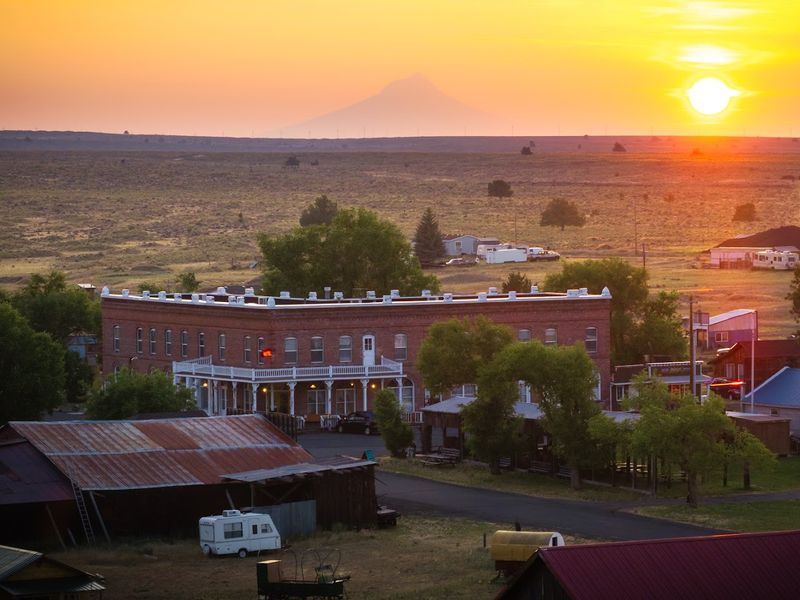
Coming into Shaniko from the highway is half the experience, because the town seems to appear out of the landscape almost by accident. You are in open country, then suddenly these historic buildings start gathering themselves into view.
That entrance sets the tone perfectly, and it makes Shaniko feel earned rather than convenient.
I always notice how a place introduces itself, and this one does it with restraint instead of spectacle. The road through this part of Oregon gives you enough emptiness that the town’s outline lands with real impact.
By the time you pull in, you already understand that isolation is part of the story.
There is also a nice shift that happens emotionally when you leave the highway pace behind and start moving at town speed. Your shoulders drop, your eyes settle, and little details begin to matter more than distance.
It is one of those arrivals that quietly resets how you pay attention.
That is why I would not rush the approach or the departure, even if Shaniko looks tiny on a map. The road around it helps explain the town just as much as the buildings do.
Sometimes the best part of a place is how the surrounding quiet prepares you to actually see it.
The Feeling Of A Living Ghost Town
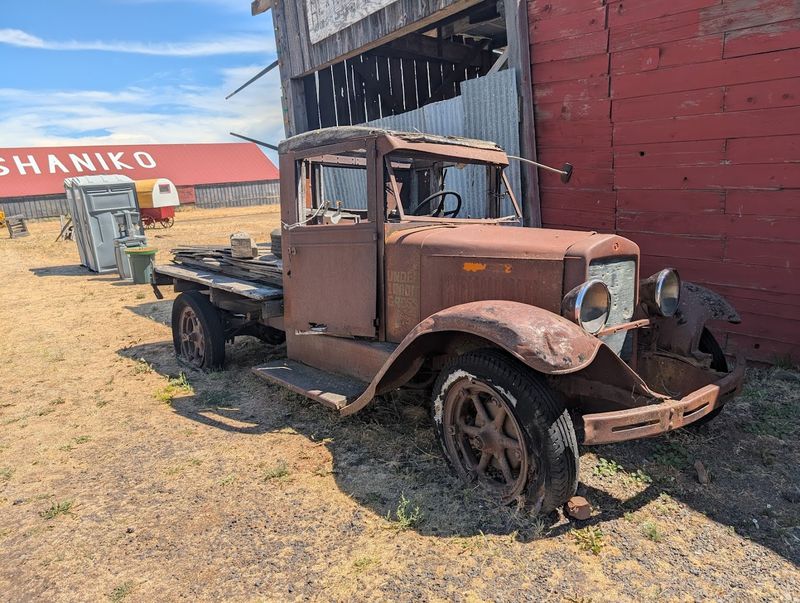
Maybe the most interesting thing about Shaniko is that it really does feel like a living ghost town, which sounds contradictory until you stand there. The buildings hold onto the past, but the place does not feel abandoned in the dramatic movie sense.
It feels cared for, lightly inhabited, and still willing to meet you halfway.
That balance is what makes the town more memorable than many old western stops across Oregon. You are not looking at a sealed museum piece, and you are not walking through a bustling attraction either.
Shaniko sits in that in-between space where history is visible but daily life has not fully stepped aside.
I found that mix surprisingly comforting, because it lets you connect without feeling like you are intruding on something fragile. The quiet is real, the buildings are real, and the little signs of upkeep matter more than you expect.
They tell you this place still has people who believe it is worth tending.
By the time I left, that was the feeling that stayed with me more than any single structure. Shaniko is not trying to impress you, and that is exactly why it works.
It stands there in the Oregon high desert, a little weathered and a little stubborn, and somehow that honesty is the whole draw.
