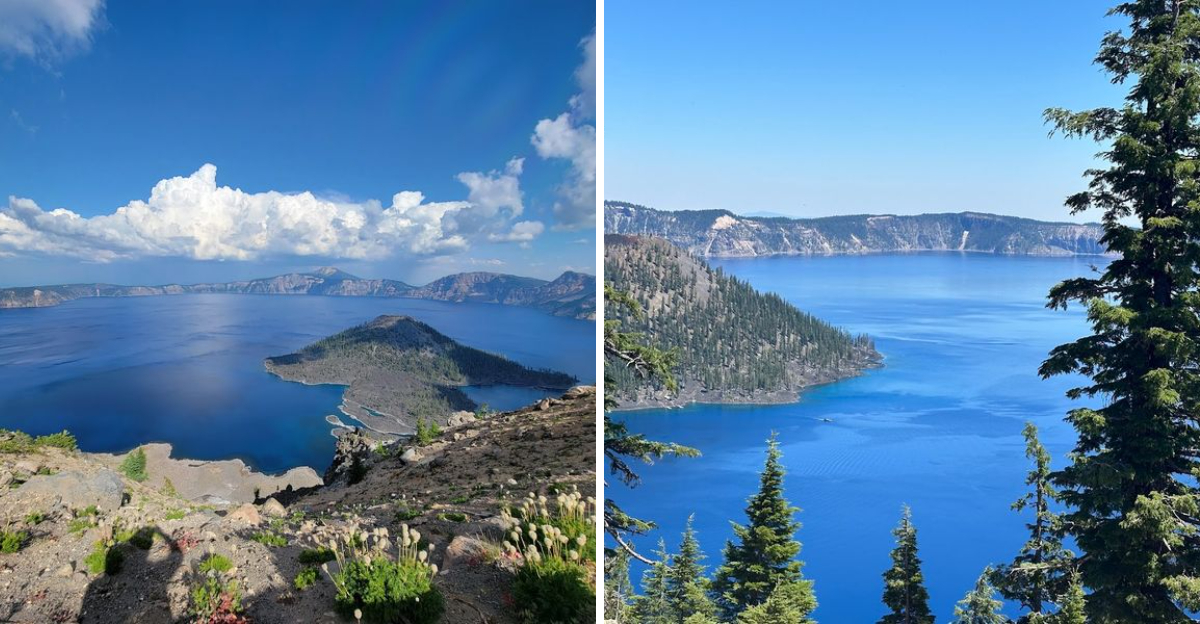
A vast, almost unreal blue stretches out in Oregon, and at first glance it doesn’t even look like it belongs to this world.
This lake isn’t just beautiful – it holds the title of the deepest in the United States, and that alone changes how you see it.
I stood there for a moment just trying to process how something so still could feel so powerful. The water is so crystal-clear it almost plays tricks on your eyes, like depth and distance don’t quite work the same way here.
There’s a quiet intensity to the whole place, the kind that makes you naturally slow down without thinking about it. I kept staring at the color, half convinced it must shift depending on how you look at it.
And honestly, it’s the kind of natural wonder that doesn’t just impress you – it completely resets your idea of what “blue” looks like.
The Deepest Lake in the United States
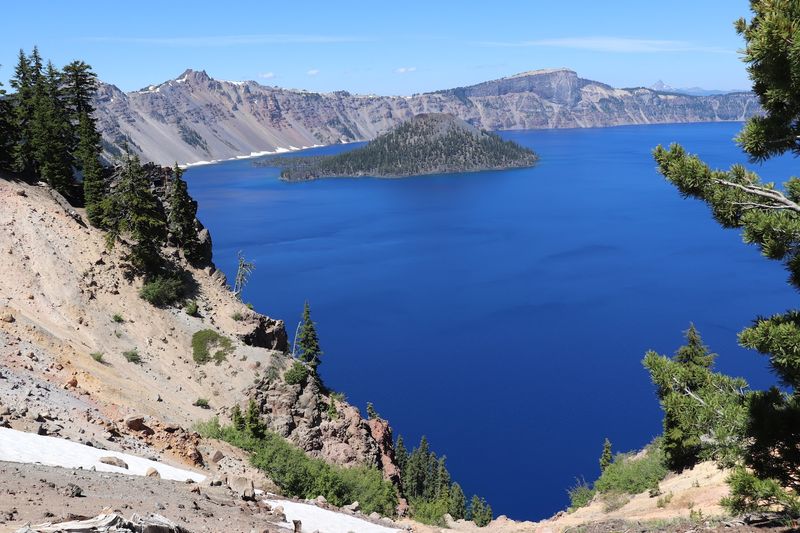
Most people know Crater Lake is deep. But standing at the rim and actually thinking about that depth is a completely different feeling.
The lake reaches 1,943 feet at its lowest point, making it the deepest lake in the entire country.
That record has held for a long time. No other lake in the U.S. even comes close.
The sheer volume of water sitting inside this ancient volcanic bowl is hard to wrap your head around.
Because there are no inlet rivers carrying sediment, and no outlet rivers draining it, the water stays almost perfectly still. It collects mainly from snowmelt and rainfall.
That isolation is exactly what keeps it so clean.
Scientists have studied the lake for decades. They have found very few nutrients and almost no algae, which is rare for a body of water this size.
The clarity is astonishing. Visibility can reach over 100 feet below the surface.
That kind of purity takes thousands of years to develop naturally.
That Unforgettable Blue Color
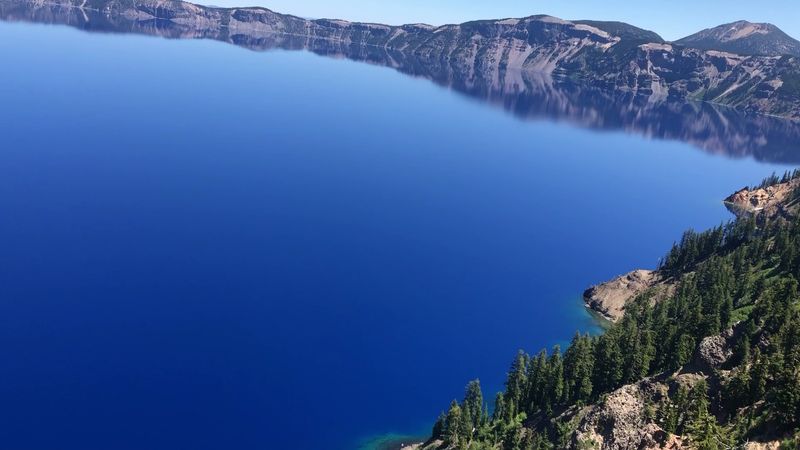
The first thing that hits you is the color. It is not just blue.
It is a shade of blue so rich and saturated that your brain almost refuses to accept it as water. Visitors consistently describe it as the most vivid blue they have ever seen in nature.
The science behind it is actually fascinating. Because the water is so deep and so pure, it absorbs almost all wavelengths of sunlight except blue.
That blue bounces back up toward the surface, creating the intense color you see from the rim.
On a sunny day, the lake almost glows. On a cloudy day, it shifts to a deeper, moodier shade of indigo.
Either way, it stops people in their tracks.
I kept taking photos and none of them looked quite right. No camera filter I tried matched what my eyes were seeing.
Some things just need to be experienced in person, and the blue of Crater Lake is absolutely one of them.
The Volcanic History Behind the Lake
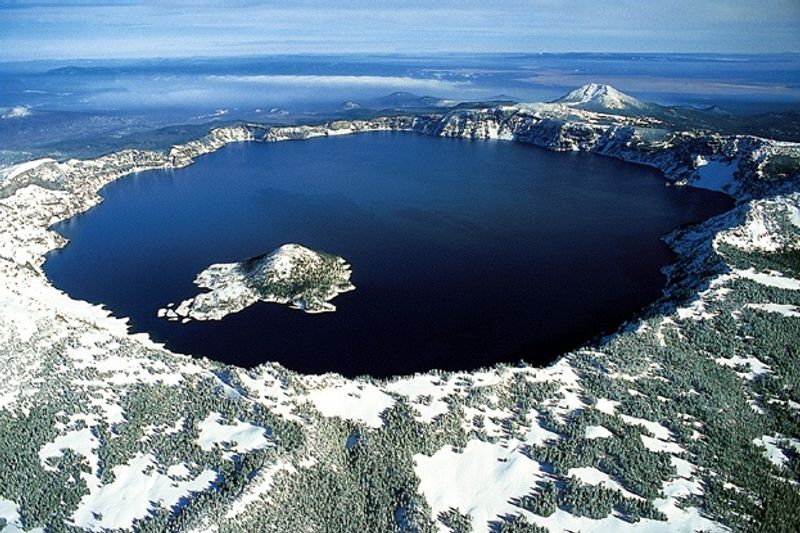
Crater Lake did not always exist. Around 7,700 years ago, a massive volcano called Mount Mazama erupted with tremendous force.
The eruption was so powerful that the entire summit collapsed inward, creating a giant bowl called a caldera.
Over centuries, rain and snowmelt slowly filled that bowl. No rivers fed it.
No outside water source touched it. The lake formed entirely from precipitation, which is part of why it stays so clean.
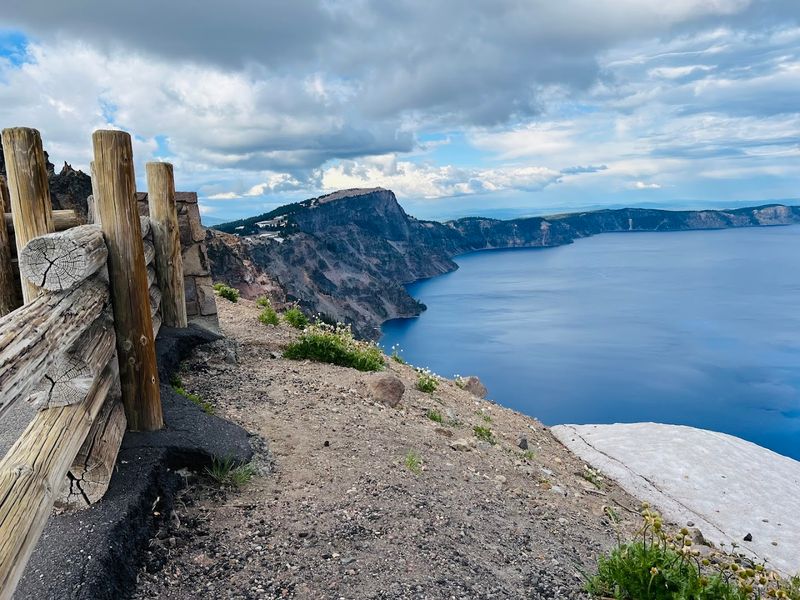
Looking at the rim walls, you can actually see layers of volcanic rock stacked like pages in a book. Each layer tells a different chapter of the mountain’s eruptive history.
Geologists love this place for exactly that reason.
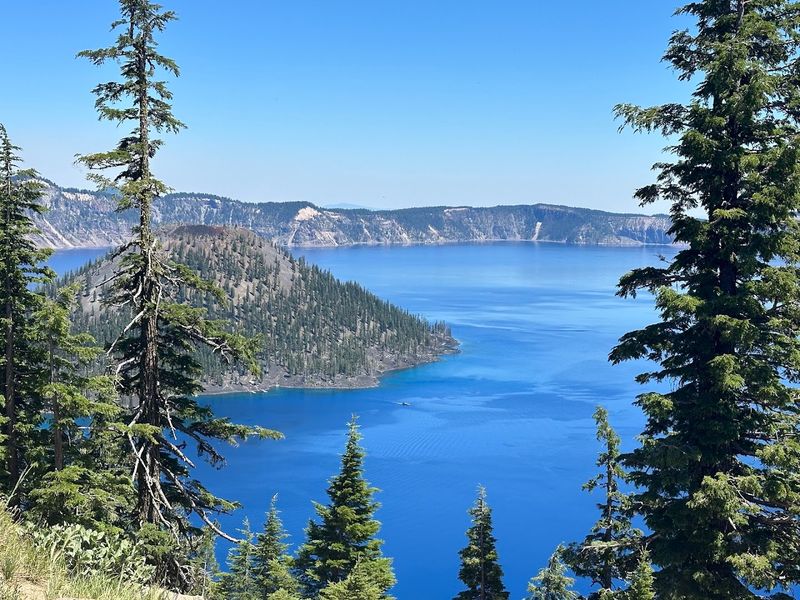
Wizard Island, the small forested cone rising from the lake’s surface, is a cinder cone that formed after the caldera collapse. It is a reminder that volcanic activity did not stop all at once.
The landscape here is alive with geological storytelling, and every cliff face holds evidence of something extraordinary that happened long before humans arrived.
Rim Drive: The Scenic Route Around the Lake
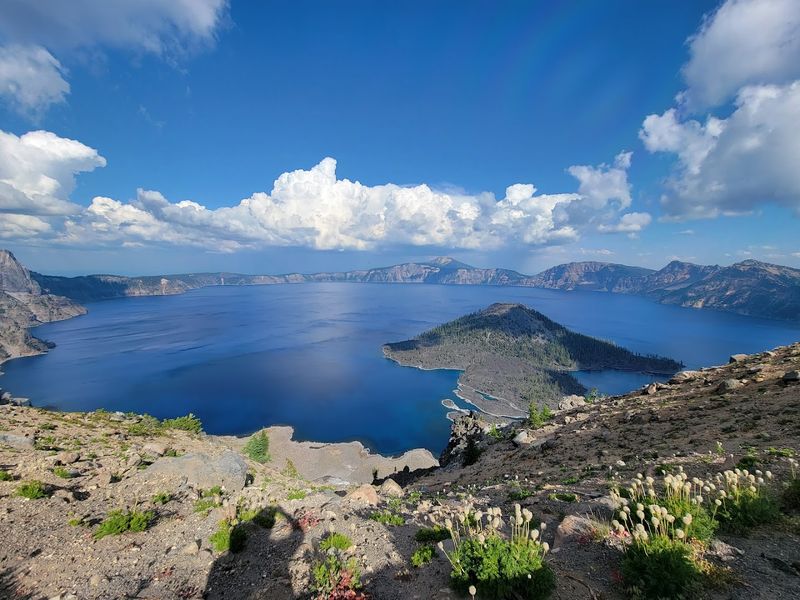
Rim Drive is the road that circles the entire lake, stretching about 33 miles around the caldera. It is one of those drives where you genuinely cannot go more than a few minutes without pulling over to stare.
Every bend reveals a new angle of the lake.
The road opens fully in summer, usually from July through October. Snow closes large sections in winter and spring, so timing matters.
Checking road conditions before you go is always a smart move.
There are dozens of scenic pullouts along the route. Some offer sweeping panoramic views.
Others give you a closer look at the cliffs dropping into the water below. The trolley tour is a popular option for visitors who want a guided experience without driving themselves.
I took my time on the west rim section, which felt less crowded and offered some of the most dramatic viewpoints. The cliffs there are especially steep and rugged.
Give yourself at least half a day just for Rim Drive. Rushing it would be a shame.
Wizard Island: The Lake’s Hidden Gem
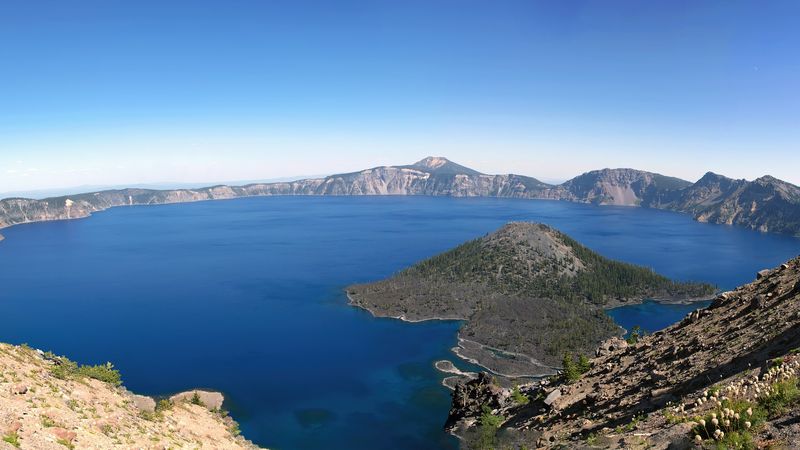
Sitting right in the middle of Crater Lake is a small volcanic island called Wizard Island. It looks like something from a fantasy novel, a forested cone rising quietly from impossibly blue water.
Getting there requires a boat tour, which makes the experience feel genuinely adventurous.
The boat tours launch from Cleetwood Cove, the only area where visitors can legally access the water’s edge. The trail down to the cove is steep and takes about 50 minutes round trip.
It is worth every step.
Once on Wizard Island, hikers can climb to the summit crater at the top. The views from up there look back across the lake toward the rim, and the perspective completely changes how you see the whole park.
It feels remote and wild up there.
Plan ahead if you want the combo tour that includes a stop on the island. Tickets sell out quickly during summer.
Bringing a swimsuit is encouraged, though the water is genuinely cold. Brave swimmers say the experience is unforgettable.
Crystal-Clear Water You Can Actually Drink
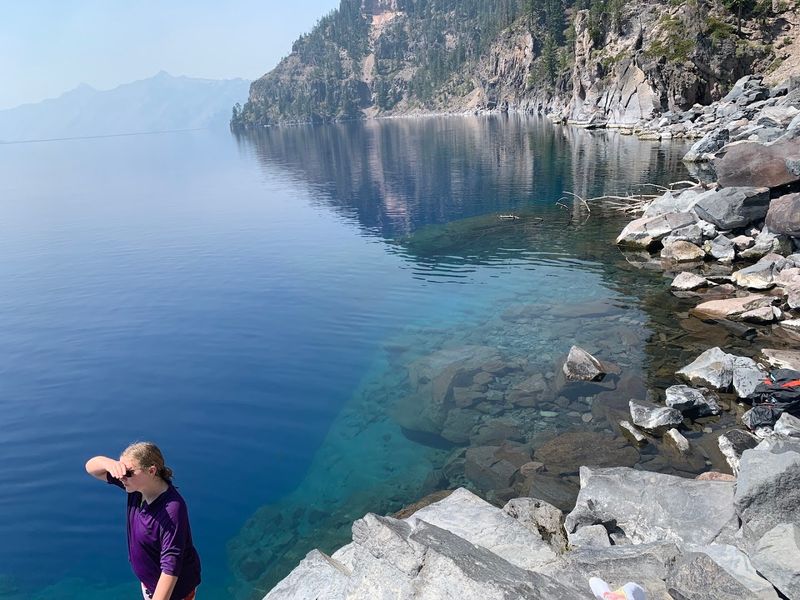
Crater Lake water is among the clearest and purest in the world. Underwater visibility can exceed 100 feet, which is almost unheard of in a natural lake this size.
The water contains very little sediment, almost no pollutants, and minimal biological material.
Because no rivers flow into the lake, nothing carries outside contamination into it. The water comes directly from snowmelt and rain, filtered through layers of volcanic rock before it ever reaches the surface.
That natural filtration system is remarkably effective.
Some boat tour guides let visitors taste the lake water directly. People describe it as some of the cleanest water they have ever tasted.
It is cold, clean, and carries almost no flavor at all.
Swimming is allowed at the base of Cleetwood Cove trail, though the water temperature hovers around 55 degrees Fahrenheit in summer. Wearing goggles is highly recommended.
The underwater view looking down into that deep blue clarity is one of those moments that genuinely takes your breath away.
Best Hiking Trails in the Park
Crater Lake National Park has trails for almost every experience level. Some are short and paved.
Others are steep, rugged, and take most of the day. The variety is one of the reasons people return again and again.
Cleetwood Cove Trail is the most famous. It is the only path that leads down to the water’s edge, and it drops about 700 feet in just over a mile.
The climb back up is the challenge, but the reward is touching that legendary blue water yourself.
Plaikni Falls Trail is a gentler option. The nearly two-mile round trip through meadows and forest leads to a quiet 20-foot waterfall.
It is lovely and much less crowded than the rim trails.
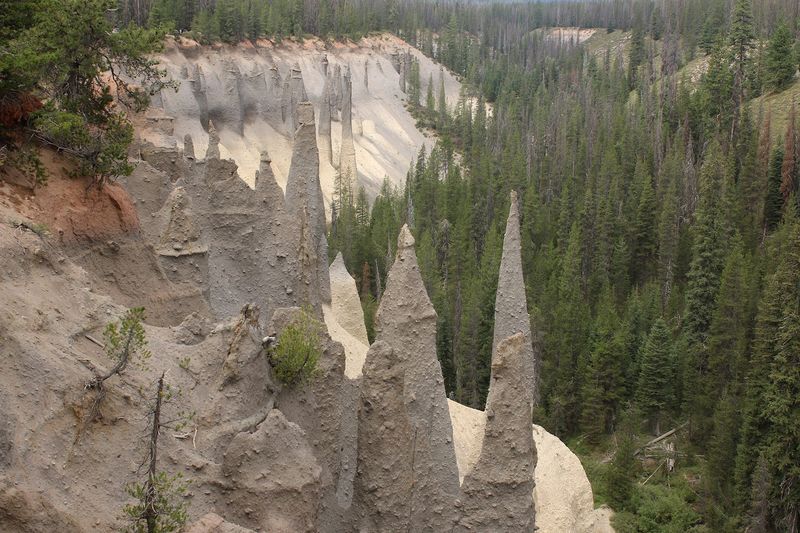
The Pinnacles area offers a completely different landscape. Tall spires of volcanic rock called fumarolic pipes rise from the canyon floor like natural sculptures.
A short 0.4-mile trail loops around the viewpoint. Vidae Falls is another roadside highlight, easy to access and worth a five-minute stop.
When to Visit for the Best Experience
Timing your trip to Crater Lake makes a huge difference in what you actually get to see. The park is open year-round, but full access to Rim Drive and most trails only happens during summer, roughly July through September.
July through early September is peak season. The weather is warm enough for hiking, the road is fully open, and boat tours are running.
That said, the park gets busy. Weekends especially fill up fast, and parking near popular viewpoints can get competitive by mid-morning.
Late June can still have significant snow on trails. Some viewpoints are closed or partially blocked.
Early fall, around late September and October, brings fewer crowds and stunning color changes in the surrounding forest. The lake itself stays beautiful well into autumn.
Winter visits are possible but require preparation, as snow can be very heavy and access is limited to certain areas only.
Wildlife and Nature Around the Lake
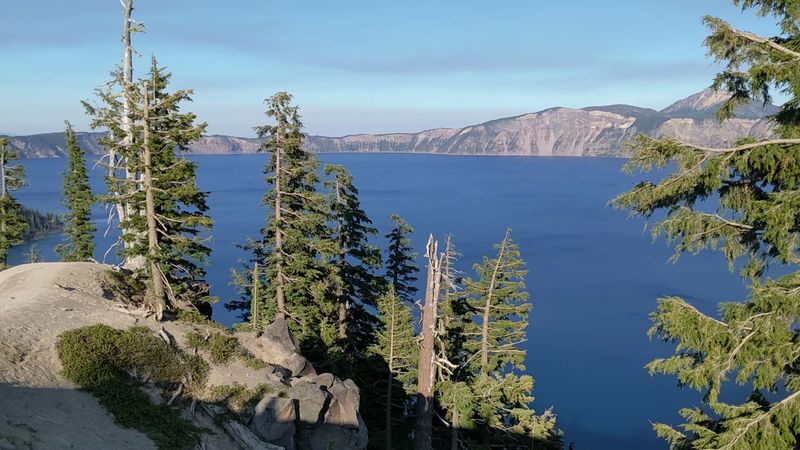
The park surrounding Crater Lake is full of life. Dense forests of pine, fir, and hemlock cover the slopes around the caldera.
Wildflowers bloom across open meadows in summer, adding bursts of color to an already dramatic landscape.
Black bears live in the park, though sightings are not guaranteed. Deer are much more commonly spotted near the roadsides, especially in the early morning and evening hours.
Birds are everywhere, from Steller’s jays hopping around picnic areas to hawks circling the rim thermals.
The lake itself supports a small ecosystem. Rainbow trout and kokanee salmon were introduced decades ago and now live in the cold, clear depths.
Fishing is allowed in the lake without a license, which surprises many visitors.
The park also has interesting plant life adapted to harsh volcanic soil and heavy snowfall. Old-growth trees near the rim look twisted and weathered from decades of winter storms.
That rugged character gives the whole park a wild, untamed feeling that no amount of trail maintenance can fully tame.
Practical Tips Before You Go
Getting to Crater Lake takes some planning. The park sits in a fairly remote part of southern Oregon, and the nearest large city is Medford, about 80 miles away.
Budget at least two hours of driving from there, and more if you hit summer traffic near the entrance.
The park entrance fee covers your vehicle for seven days. The visitor center near Rim Village is a great first stop.
Staff there are genuinely helpful and can point you toward the best viewpoints based on current weather and trail conditions.
Cell service inside the park is limited. Downloading offline maps before you arrive is a smart move.
Bringing layers of clothing is also wise, since temperatures near the rim can drop quickly, even on summer afternoons.
Camping nearby is available and highly recommended for those who want to see the lake at different times of day. Morning light and evening light both transform the color of the water in stunning ways.
Staying overnight gives you a completely different and much quieter experience of this remarkable place.
Dear Reader: This page may contain affiliate links which may earn a commission if you click through and make a purchase. Our independent journalism is not influenced by any advertiser or commercial initiative unless it is clearly marked as sponsored content. As travel products change, please be sure to reconfirm all details and stay up to date with current events to ensure a safe and successful trip.
