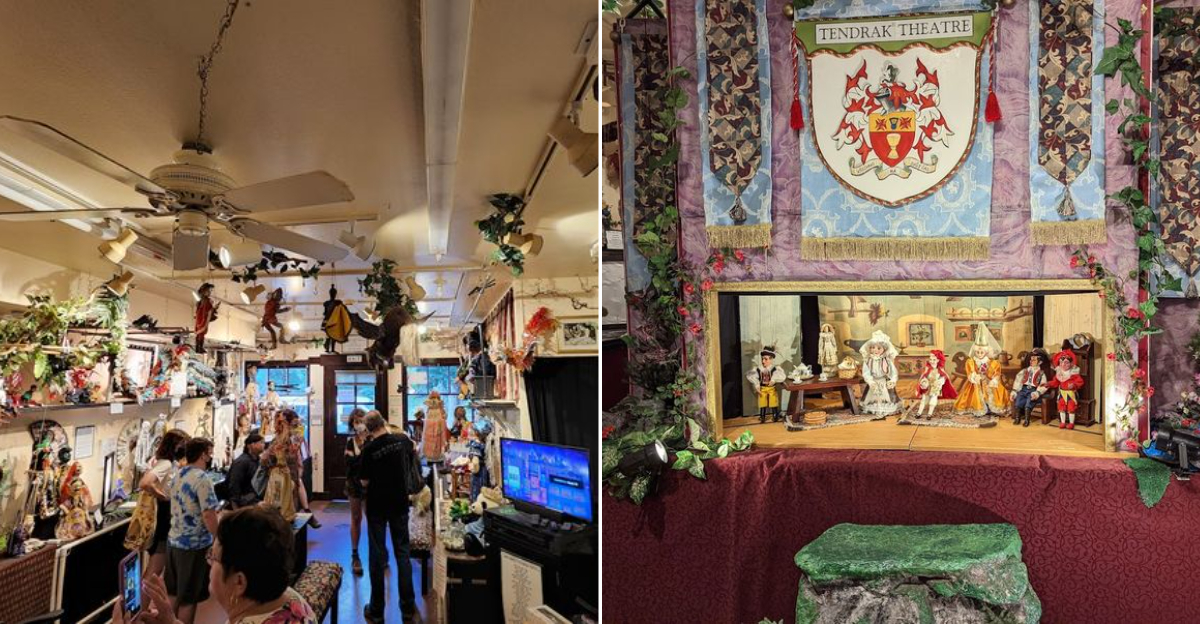
You have never seen a museum quite like this. Two thousand puppets from 38 countries fill every corner, from shadow figures and marionettes to hand puppets and folk art treasures.
The building itself is unassuming, tucked in a Portland neighborhood, but inside, the walls are alive with characters from across the globe.
You can spend hours wandering through displays of Indonesian wayang kulit, Burmese string puppets, and vintage American television favorites.
The best part? You do not just look. You can make your own puppet in a hands-on workshop, learning the basics of design and movement from skilled artists.
Children and adults alike leave with a creation they built with their own hands. The museum also hosts performances, so you might catch a show while you visit.
So which Oregon gem holds thousands of puppets from dozens of countries and invites you to craft your own?
Step inside, let your imagination run, and discover a world where string and cloth come to life.
It Feels Like Walking Into Someone’s Imagination
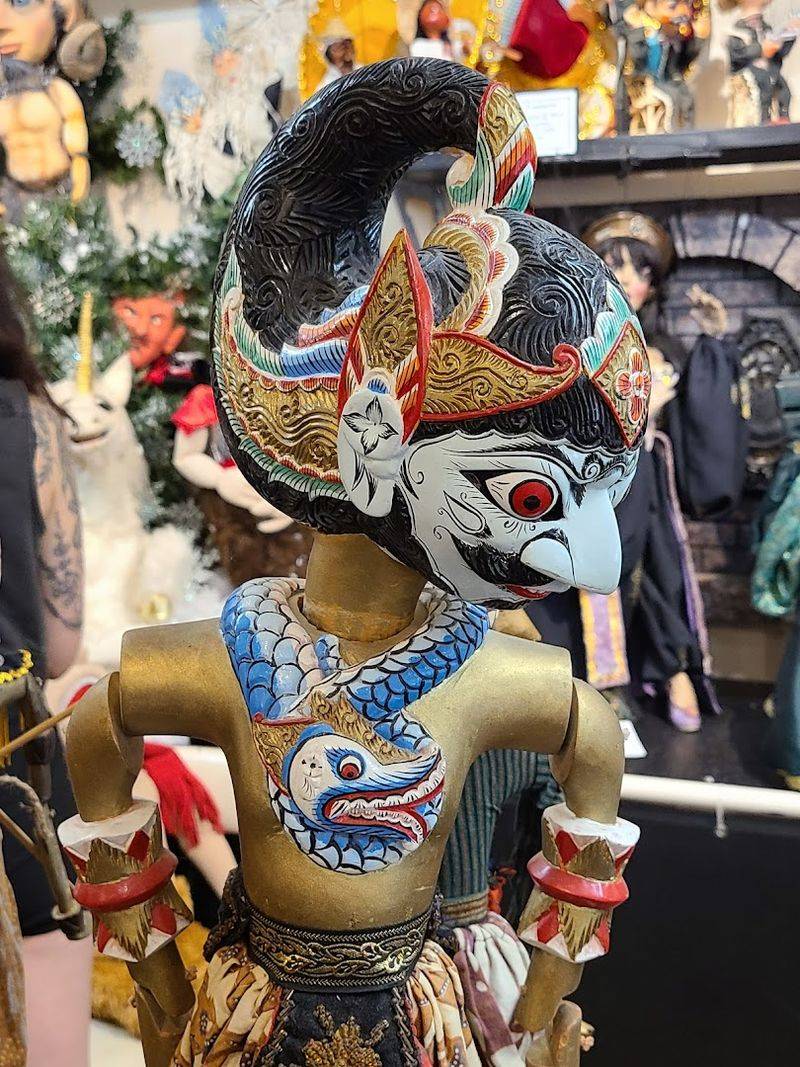
The first thing that hits you is how personal this place feels, like you have stepped into somebody’s lifelong fascination and they are genuinely happy to show you around. Nothing about it feels distant or overly polished, and that is exactly why it works so well.
You are surrounded by puppets with wildly different faces, textures, costumes, and moods, and somehow the whole room feels alive without becoming chaotic.
What I liked most was the way the collection keeps your attention moving, because every shelf seems to hold a completely different story. One minute you are looking at a delicate figure that feels theatrical and old world, and the next you are staring at something playful, strange, or unexpectedly moving.
It is hard not to lean in closer when the details are that good.
There is also something really refreshing about finding a museum in Oregon that does not ask you to pretend to be serious the whole time. You can be curious here, laugh a little, and let yourself get drawn into the weirdness without overthinking it.
By the time you finish your first loop through the room, you will probably already want to go back and look again.
The Neighborhood Sets The Tone Right Away
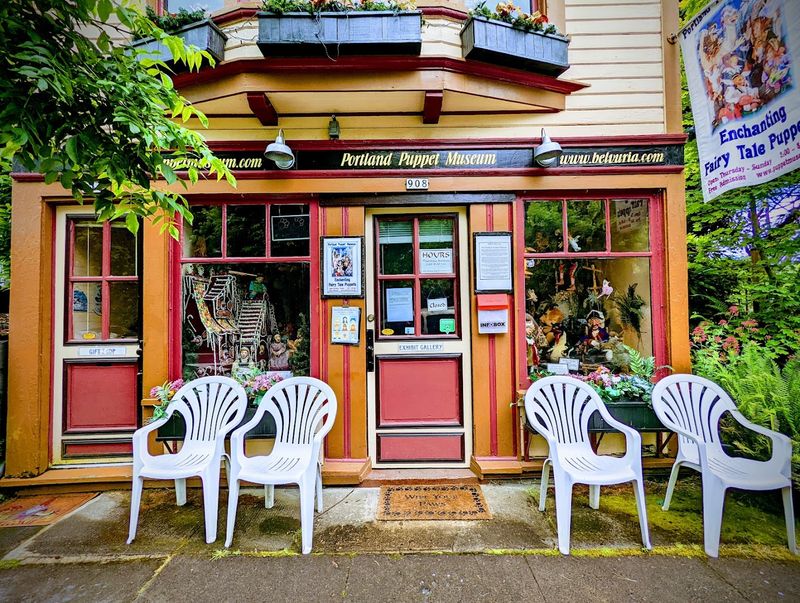
Before you even step inside, the setting tells you a lot about the kind of visit this will be. The Portland Puppet Museum sits at 906 SE Umatilla Street, Portland, Oregon, in the Sellwood-Moreland neighborhood, and that location suits it perfectly.
This part of town has an easygoing rhythm that makes the museum feel less like a formal stop and more like a place you naturally wander into on a good afternoon.
I love when a museum matches its neighborhood, and that is exactly what happens here. Sellwood has that comfortable, lived-in feeling that lets small creative places stand out without needing to shout for attention.
By the time you reach the door, you already feel a little more open to surprise, which is honestly the best mindset for a puppet museum.
Once you are inside, the neighborhood mood carries through in a nice way, because nothing feels rushed or stiff. It feels local, thoughtful, and genuinely connected to the surrounding community rather than dropped in for effect.
If you are exploring Portland and want something that feels rooted in a real part of the city, this place gets that balance just right.
The Collection Is Way More Global Than You Expect
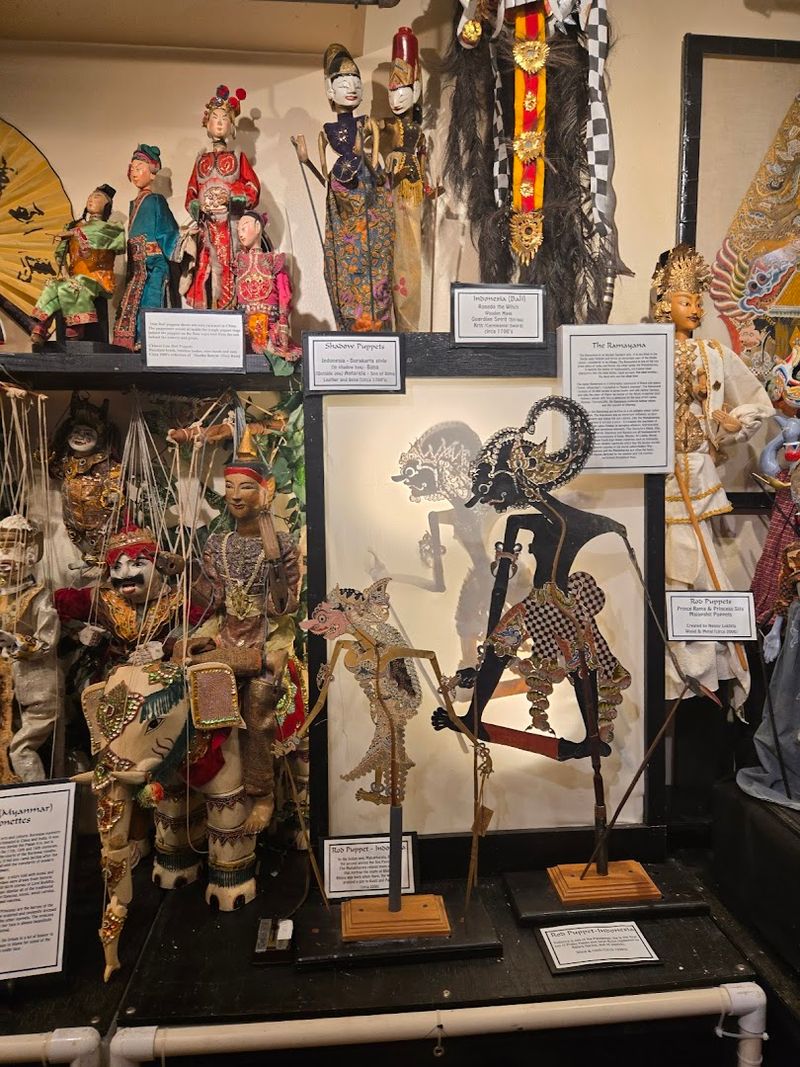
Here is where the museum really starts to mess with your expectations in the best way. You might walk in thinking you are about to see a niche local collection, and then you realize the scope reaches across a huge stretch of the world.
The puppets come from many different countries, and that variety gives the whole place a sense of movement, history, and exchange that feels much bigger than the room itself.
What makes that global range interesting is that it never feels like a dry lesson. You notice how different cultures shape faces, costumes, materials, and performance styles, and suddenly the collection starts showing you how people tell stories in completely different visual languages.
Some figures feel ceremonial, some feel theatrical, and some are so playful that you can almost picture the audience laughing along.
I found myself slowing down here more than I expected, because the contrasts are what make everything memorable. A puppet made for shadows sits in your mind differently than a carved marionette or a rod figure with dramatic costume details.
If you like museums that quietly open your perspective without sounding preachy, this corner of Oregon really delivers that kind of experience.
You Can Actually Make A Puppet Yourself
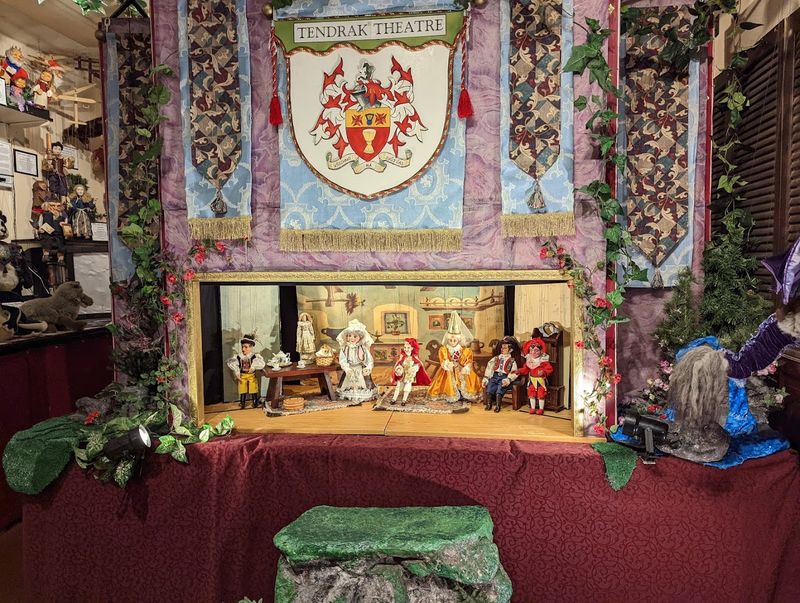
This is the part that makes the whole visit feel extra memorable, because you do not have to stop at looking. The museum offers puppet-building workshops for adults and children, and that changes the energy of the place in such a good way.
Instead of staying on the outside of the art form, you get to understand it through your own hands, which is always more fun than just reading a wall label.
I think that matters even if you do not consider yourself crafty, because puppets are naturally forgiving and full of personality. A slightly crooked face or an odd little costume choice usually makes the final piece better, not worse, and that takes a lot of pressure off.
You can relax, try things, and end up with something that feels personal rather than polished.
There is also something sweet about making a puppet in a museum that clearly respects the tradition behind it. You are not just doing a random activity to fill time, because the workshop connects directly to the collection around you.
If you have been craving something creative in Portland that feels playful without feeling childish, this is absolutely worth building your day around.
Every Puppet Style Changes The Mood
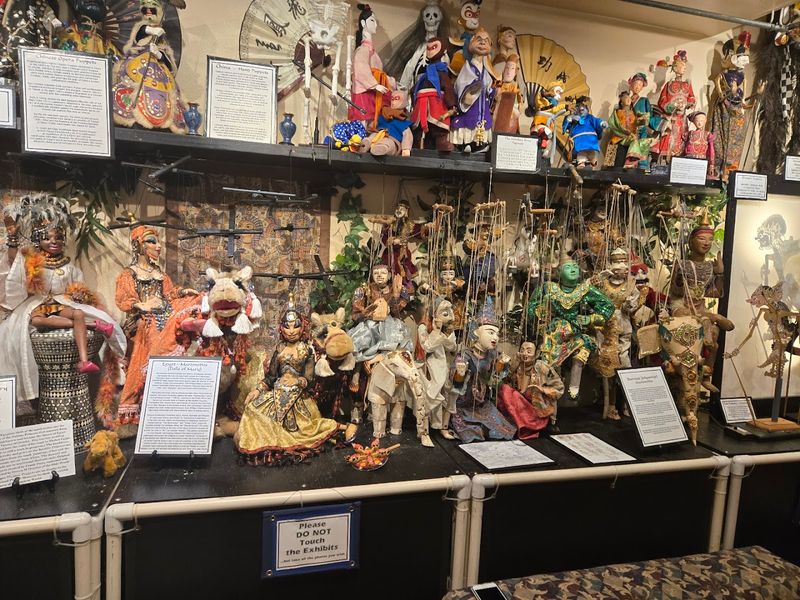
One thing I did not fully appreciate until I visited was how different puppet types completely change the feeling of a room. The museum includes dummies, shadow puppets, rod-and-arm figures, marionettes, and more, and each one carries its own kind of stage logic.
You can almost sense the movement built into them, even when they are standing still behind the display.
Shadow puppets have this quiet mystery that pulls you toward shape and silhouette, while marionettes make you think about balance, control, and tiny gestures. Then you look at a dummy or a rod puppet and the mood shifts again, because those forms feel more direct, more present, and sometimes a little mischievous.
It is such a nice reminder that puppetry is not one thing at all, and the museum does a great job letting that come through naturally.
I found myself imagining the sound, pace, and audience reaction that might go with each style, which is probably why the collection sticks with you. It invites your brain to animate everything, and that makes the experience feel unusually active for a museum visit.
In Oregon, where creative spaces can sometimes feel self-conscious, this one stays wonderfully curious and unpretentious.
The Rotating Exhibits Keep It From Feeling Static
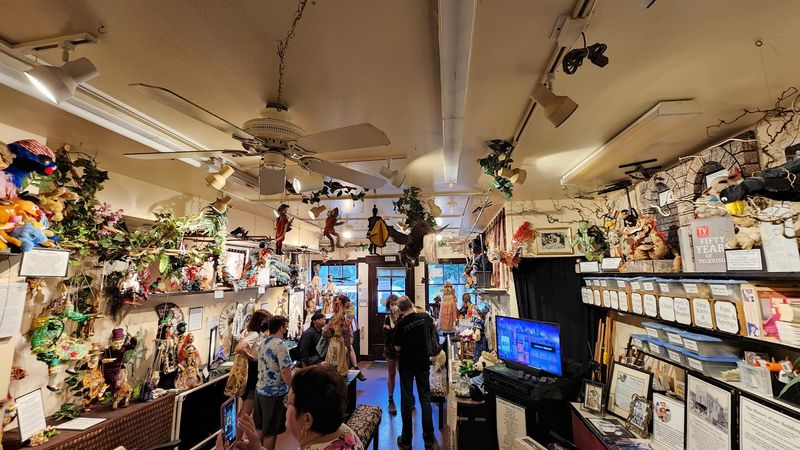
A big reason this museum stays interesting is that the exhibits rotate regularly, so the collection never feels frozen in place. That matters when you are dealing with a huge archive, because no single visit could possibly show everything in a meaningful way.
Instead, the displays shift over time and give different parts of the collection room to breathe.
I always appreciate that kind of curation, especially in a smaller museum where every choice feels visible. You can tell the team is not just putting objects out to fill shelves, because the changing exhibits shape the way you notice connections between styles, regions, and performance traditions.
It gives the visit a sense of freshness, which means even locals in Portland have a reason to come back and see what is different.
There is also something nice about knowing the museum is active rather than locked into one permanent setup forever. A rotating exhibit schedule suggests curiosity, care, and a willingness to keep the conversation going around puppetry as a living art form.
If you are the type who likes revisiting places once they have shifted a little, this Oregon museum makes that easy to imagine.
There Is Real History Behind The Rooms
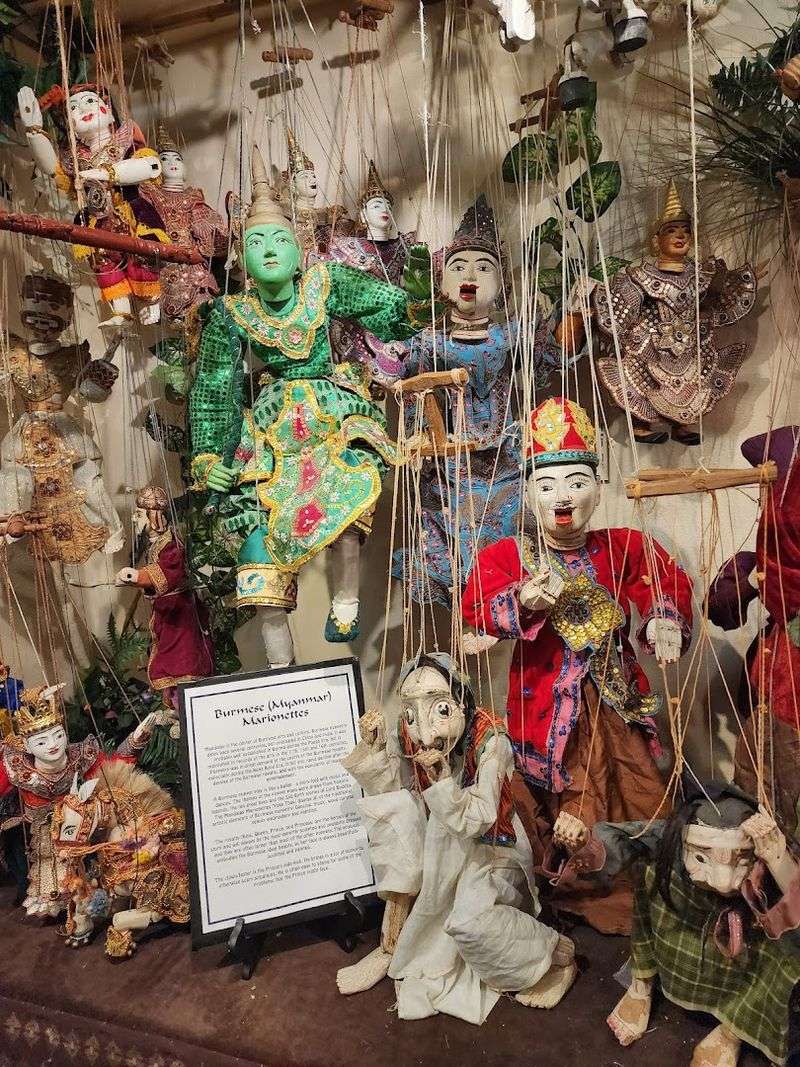
What gives this place its depth is the fact that the collection comes from a real lifetime of work and obsession. Founder and curator Steven Overton has spent decades collecting, designing, and building puppets, and you can feel that long relationship with the craft in every corner.
The museum does not read like a casual assortment of interesting objects, because it feels guided by somebody who understands how these figures live onstage and in memory.
That backstory changes the way you look at everything. Instead of seeing a room full of curiosities, you start seeing evidence of study, practice, and sustained affection for an art form that many people barely think about.
I liked that the museum never has to announce its importance too loudly, because the care in the collection already does the talking.
It is also worth knowing that this is the only permanent puppet museum on the West Coast, which honestly makes Portland feel even more delightfully specific. Places like this do not land with much force if they are built only for novelty, and this one clearly is not.
It feels rooted in expertise, but still welcoming enough that you never need special knowledge to enjoy what you are seeing.
Live Shows Make The Art Form Click

Looking at puppets is one thing, but seeing the art form in action is where everything suddenly clicks. The museum also hosts live puppet shows, and that performance side helps connect the objects in the gallery to what they are actually meant to do.
You stop thinking only about costume and craftsmanship, and start thinking about timing, voice, rhythm, and the strange little magic of making an object feel alive.
I really like that the museum does not separate display from performance too sharply, because puppetry works best when both sides inform each other. A figure that looks quiet in a case can become hilarious or moving once it is animated onstage, and that shift is part of the fun.
During warmer months, shows are often held in an outdoor theater, which adds an easy, communal feeling that suits Portland beautifully.
Even if you do not usually seek out live performance while traveling, this is the kind of setting that can win you over fast. It feels intimate instead of intimidating, and you do not need any special background to follow what is happening.
You just settle in, watch the movement take over, and remember how satisfying simple storytelling can be when it is done well.
The Small Scale Is Part Of The Appeal
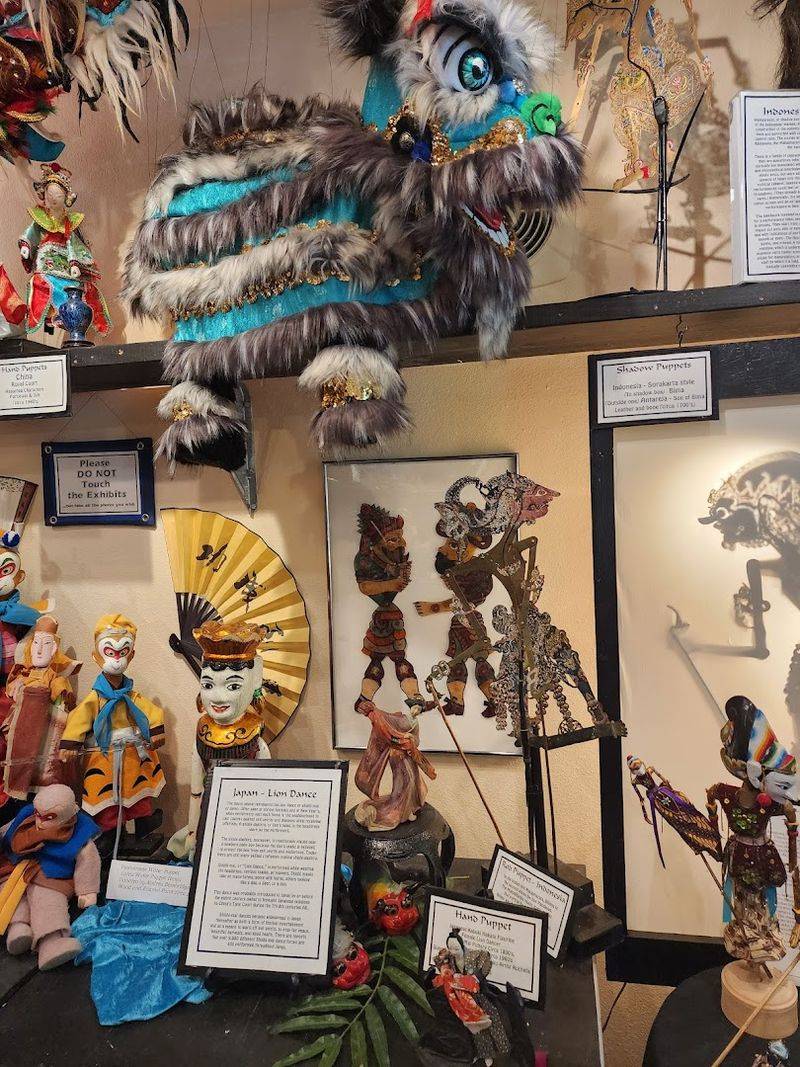
Honestly, I think the museum benefits from not feeling huge, because the small scale keeps the whole experience personal. You are close to the displays, close to the details, and close enough to notice how much character each figure carries in its face and posture.
Instead of racing through giant rooms, you move at a pace that lets your curiosity lead the way.
That intimacy also makes the visit feel less performative, which I mean in the best possible way. Nobody is pushing you through a grand narrative or trying to overwhelm you with spectacle, and that leaves room for your own reactions to matter.
You can linger on the puppets that feel funny, eerie, elegant, or unexpectedly emotional, and skip around without feeling like you are doing the museum wrong.
I have found that smaller places often stay with me longer, because they leave space for a real mood to settle in. This one definitely does that, especially if you are the kind of traveler who gets more excited by personality than scale.
In Oregon, where some of the best stops are the ones that feel locally loved rather than heavily packaged, this museum fits right into that sweet spot.
