We’ve all been there – staring at a map, wondering if there’s anything genuinely strange left to discover in this world. Oregon, as it turns out, has plenty.
This road trip winds through the state’s quirkiest corners, where roadside oddities and offbeat attractions remind us that not everything needs to make perfect sense.
A giant concrete Paul Bunyan stands sentinel in one town, while another spot boasts a mysterious underground tunnel system steeped in local legend.
There’s the house built entirely from recycled bottles, a cinder cone you can actually hike inside, and a museum dedicated entirely to the art of the chainsaw carving. Each stop feels less like a tourist trap and more like a treasure hunt for the wonderfully weird.
Pack some snacks, cue up a good playlist, and let curiosity be your guide. Oregon’s strangest sights are waiting just off the highway.
1. The Oregon Vortex and House of Mystery, Gold Hill
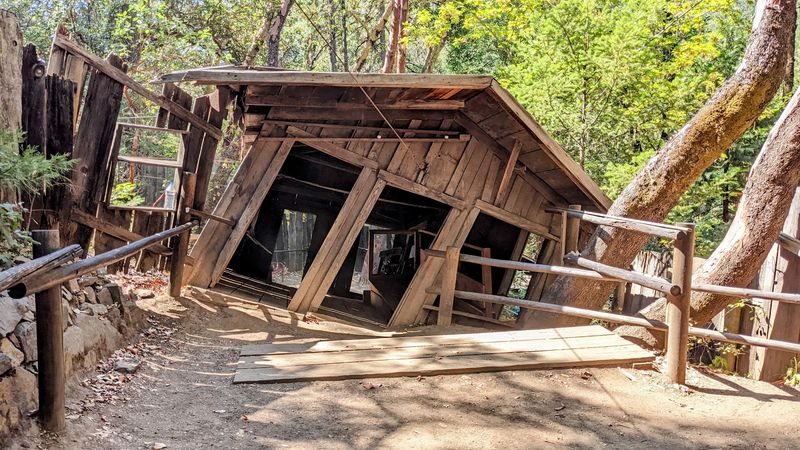
Some places mess with your head the moment you arrive, and the Oregon Vortex is absolutely one of them. Brooms stand upright on their own, people appear to change height depending on where they stand, and your sense of balance quietly stops cooperating. It’s disorienting in the best possible way.
The site has been drawing curious visitors since the 1930s, and the old wooden House of Mystery at its center looks like it was built by someone who had a complicated relationship with right angles.
Whether you believe in magnetic anomalies or not, the visual tricks here are genuinely hard to explain. I kept second-guessing my own eyes.
Guides walk you through each demonstration with a mix of scientific theory and local folklore, which keeps things interesting no matter your level of skepticism. Plan at least an hour here because you’ll want to try every station twice. It’s one of those rare roadside attractions that fully earns its reputation.
2. Crater Lake National Park, Crater Lake
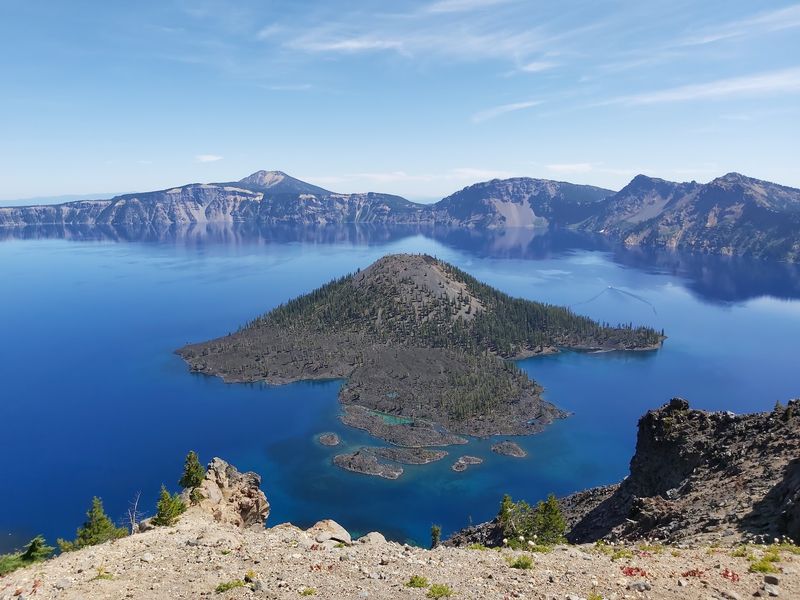
The color of Crater Lake doesn’t look real when you first see it. That shade of blue, so deep and vivid it almost looks painted, comes from the lake’s extraordinary clarity and depth. It’s the deepest lake in the United States, sitting inside the collapsed caldera of an ancient volcano called Mount Mazama.
There’s something genuinely eerie about standing at the rim and looking down into that water. No rivers flow in or out. It’s fed entirely by snow and rain, which means it’s one of the purest bodies of water on earth. The silence up there hits differently than regular quiet.
Wizard Island, a small cinder cone rising from the center of the lake, adds another layer of strangeness to the whole scene. You can hike the rim trail for miles, stopping at overlooks that each feel more dramatic than the last.
The weird part isn’t just the geology, it’s how otherworldly the whole place feels, even when it’s crowded.
3. Enchanted Forest, Turner
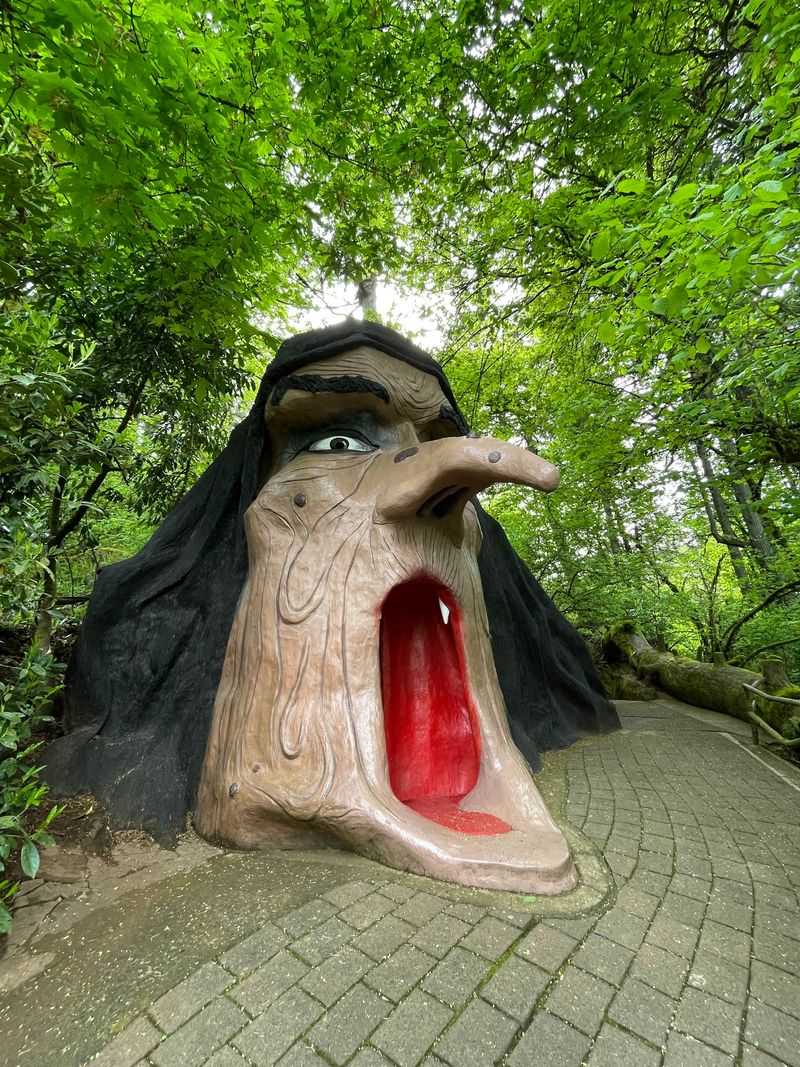
Roger Tofte spent years building the Enchanted Forest with his own hands before it opened in 1971, and that personal, handmade quality is exactly what makes it feel so different from anything you’d find today.
The whole park has a slightly off-kilter fairy tale atmosphere that’s somewhere between charming and wonderfully strange. Kids love it, and honestly, adults find it just as captivating.
There’s a crooked witch’s house, an Alice in Wonderland rabbit hole, a Western town, and a haunted house all packed into one forested hillside south of Salem. The trees are tall and mossy, the paths wind unexpectedly, and nothing quite lines up the way you’d expect. That’s the point.
It feels like stepping into someone’s very specific dream, one that’s been lovingly maintained for decades. The family still runs it, and that continuity shows in every painted detail and hand-carved figure. For a place built on imagination and stubbornness, it holds up remarkably well.
Address: 8462 Enchanted Way SE, Turner, Oregon
4. Shaniko Ghost Town, Shaniko
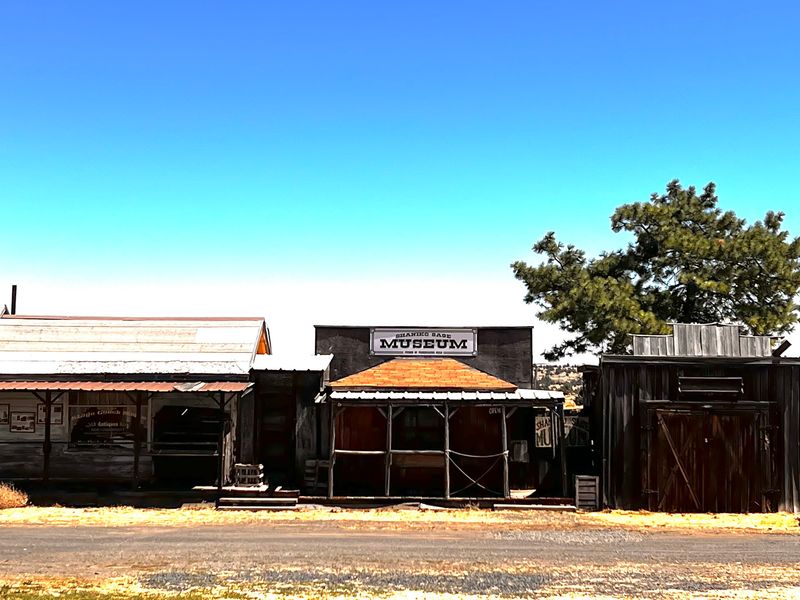
Shaniko once called itself the Wool Capital of the World, and for a brief stretch around the early 1900s, that wasn’t much of an exaggeration. Then the railroad shifted, the economy dried up, and the town slowly emptied out.
What’s left today is a beautifully preserved slice of high desert history that feels genuinely frozen in time.
Walking the main street here is a quietly strange experience. The buildings are still standing, some with original signage still visible, and the wind moves through them in a way that makes the whole place feel like it’s breathing. It’s not spooky exactly. More like respectfully abandoned.
A handful of residents still live in and around Shaniko, and a small hotel and a few shops operate seasonally. The old jail, the schoolhouse, and the water tower are all still there, giving the town enough structure to feel like a real place rather than a movie set.
If you’re driving through central Oregon, this is one stop you shouldn’t skip.
5. Prehistoric Gardens, Port Orford
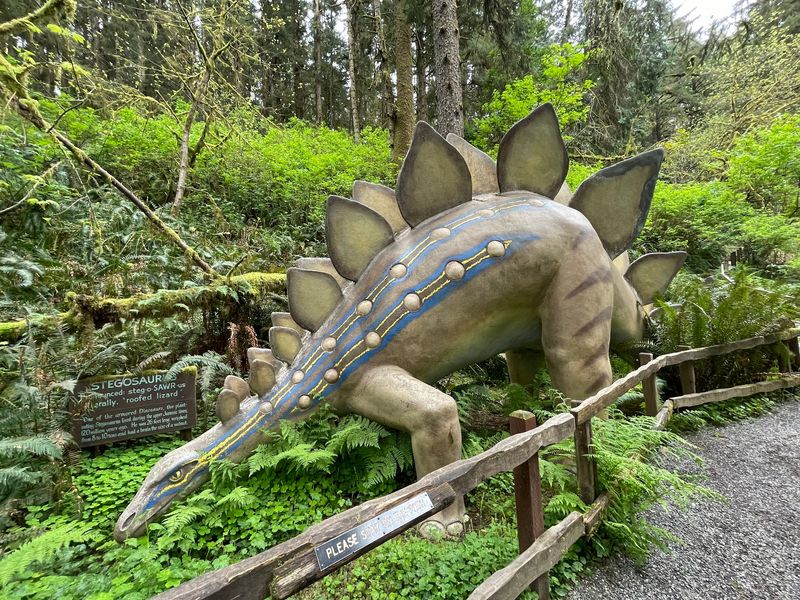
Tucked into the rainforest along the southern Oregon coast, Prehistoric Gardens might be the most charmingly unexpected stop on this entire route.
Life-size dinosaur sculptures emerge from the dense ferns and towering trees, each one painted in vivid color and positioned as if they just wandered in from another era. The contrast between the lush coastal forest and a full-size T. rex is genuinely something.
E.V. Nelson built the first sculptures here in the 1950s and kept adding to the collection over the decades. The attention to anatomical detail is impressive for a roadside attraction, and each dinosaur comes with an educational sign explaining what it was and when it lived.
The trail winds through the forest in a way that makes each new dinosaur feel like a discovery. The vegetation is so thick that some of the larger sculptures are almost hidden until you’re right in front of them.
It’s a short stop, maybe 45 minutes, but it’s the kind of place that sticks in your memory long after you’ve driven away.
Address: 36848 US-101, Port Orford, Oregon
6. Crack in the Ground, Christmas Valley
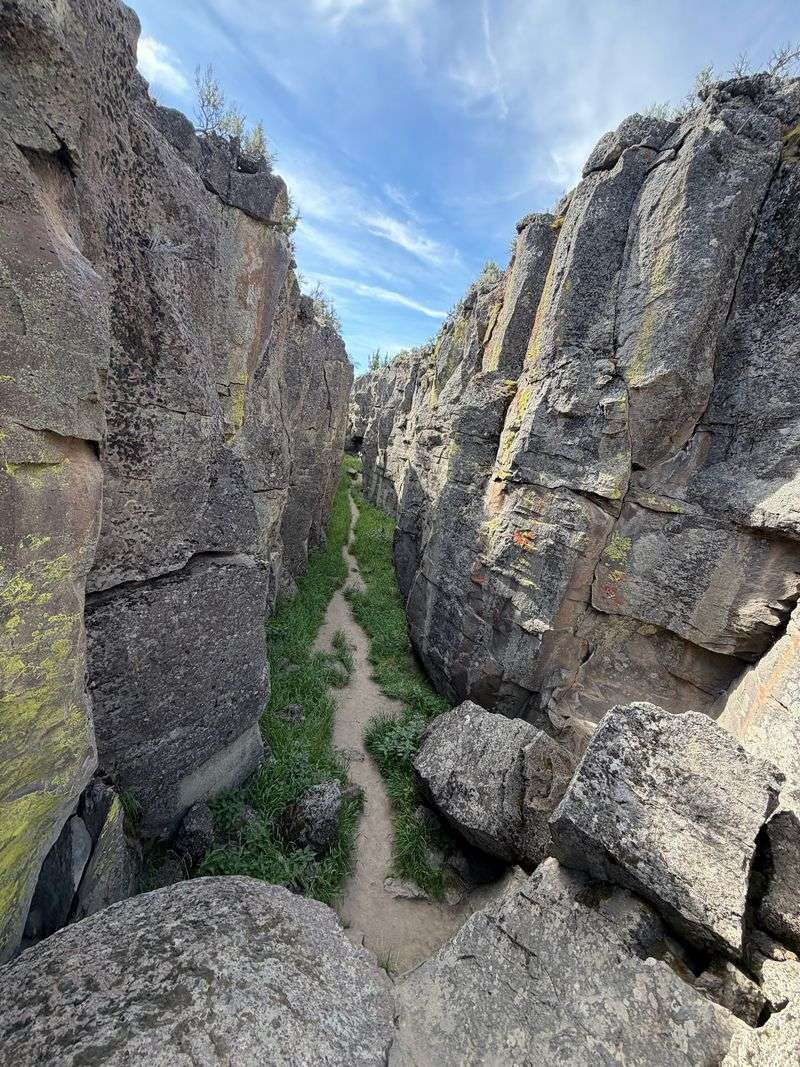
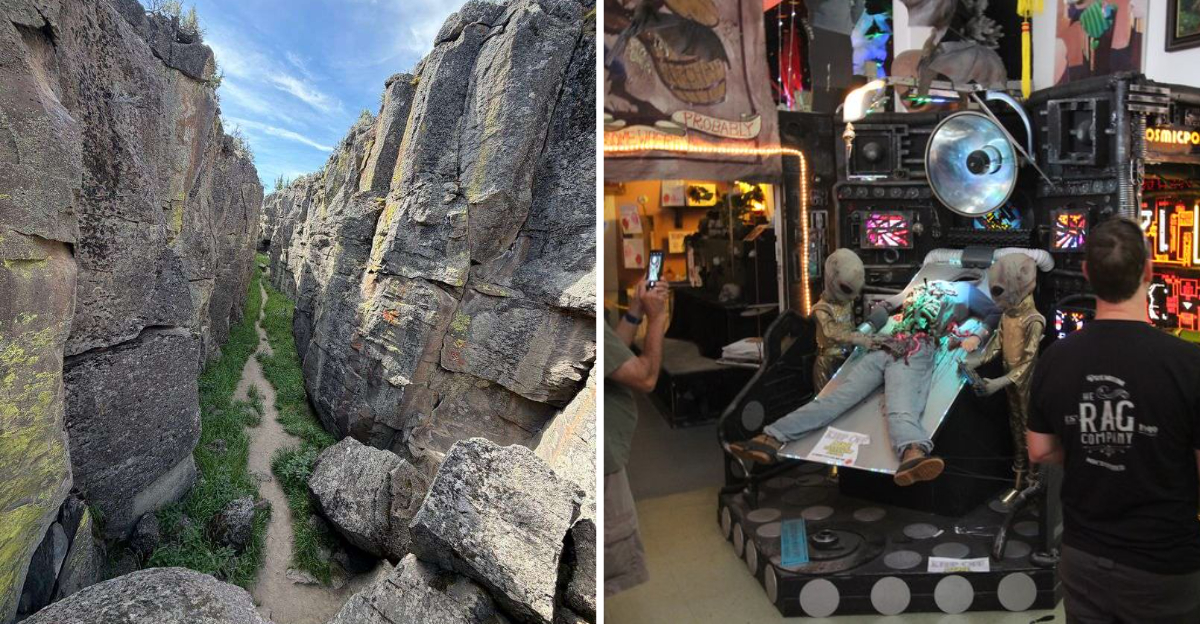
The name does not oversell it. Crack in the Ground is a volcanic fissure stretching roughly two miles through the high desert near Christmas Valley, dropping in some places more than 70 feet below the surface.
The desert floor just sort of splits open, and you can walk down inside it, which is an experience that feels genuinely surreal.
Down in the crack, the temperature drops noticeably and the light changes in a way that makes the whole thing feel like a different world. The walls are close enough to touch on both sides in some sections, and the rock formations are dark and dramatic.
Ice has been found at the bottom in warmer months, which adds another layer of strangeness.
It’s a free, undeveloped site managed by the Bureau of Land Management, which means there are no guardrails and no crowds. You just park off a dirt road and walk in. The surrounding landscape is flat, dry, and enormous, which makes the fissure feel even more improbable.
It’s one of those geological features that makes you feel like the earth has a sense of humor.
7. Klamath Falls Favell Museum of Western Art and Native American Artifacts
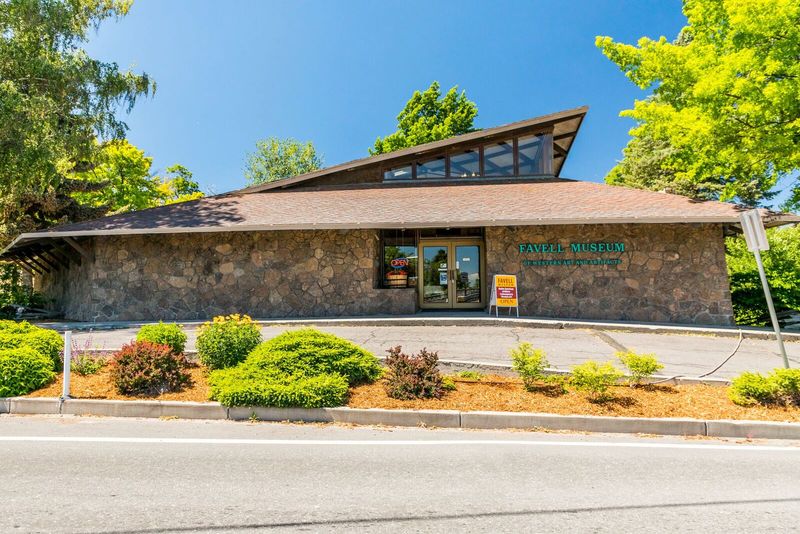
The Favell Museum doesn’t look like much from the outside, but once you’re in, it’s hard to know where to look first. The building is constructed from volcanic rock and designed to feel like a rustic lodge, and the collection inside is genuinely remarkable.
Over 100,000 Native American artifacts are on display, alongside a large collection of Western art that ranges from traditional paintings to tiny miniature firearms.
The miniature gun collection alone is worth the stop. There are hundreds of working scale replicas, some small enough to sit on a fingernail, built with a level of craftsmanship that’s hard to comprehend. It’s the kind of thing you have to see to believe.
The rest of the museum is just as dense with interesting objects.
What makes the Favell stand out is how personal and specific it feels. This isn’t a generic history museum. It’s a deeply curated collection built around one family’s passion for the American West and the Indigenous cultures that shaped it.
Plan more time than you think you need because the details reward slow looking.
Address: 125 W Main St, Klamath Falls, Oregon
8. Kam Wah Chung State Heritage Site, John Day
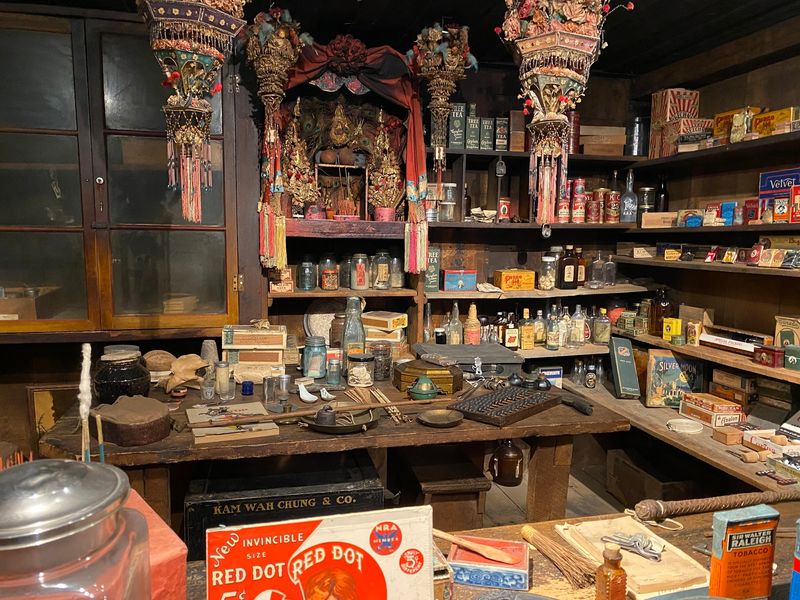
Hidden in a small town in eastern Oregon, Kam Wah Chung is one of the most unexpectedly moving places on this road trip.
The building itself is a squat, stone-and-wood structure that served as a trading post, herbal medicine shop, community center, and refuge for Chinese immigrants working in the gold mines of eastern Oregon during the late 1800s and early 1900s. It’s a piece of history that most people have never heard of.
The interior has been preserved almost exactly as it was when the last occupant, Ing Hay, left in 1948. Shelves are still lined with herbal remedies, tools, and goods. The space is dense with objects, and every corner tells a different story about the lives of the people who passed through.
Guided tours bring the history to life with real detail and genuine respect for the community the building served. The surrounding John Day landscape adds to the sense of isolation that would have defined life here a century ago.
It’s a quiet, important, and deeply human place that feels nothing like anything else on this route.
Address: 250 NW Canton St, John Day, Oregon
9. Painted Hills, Mitchell
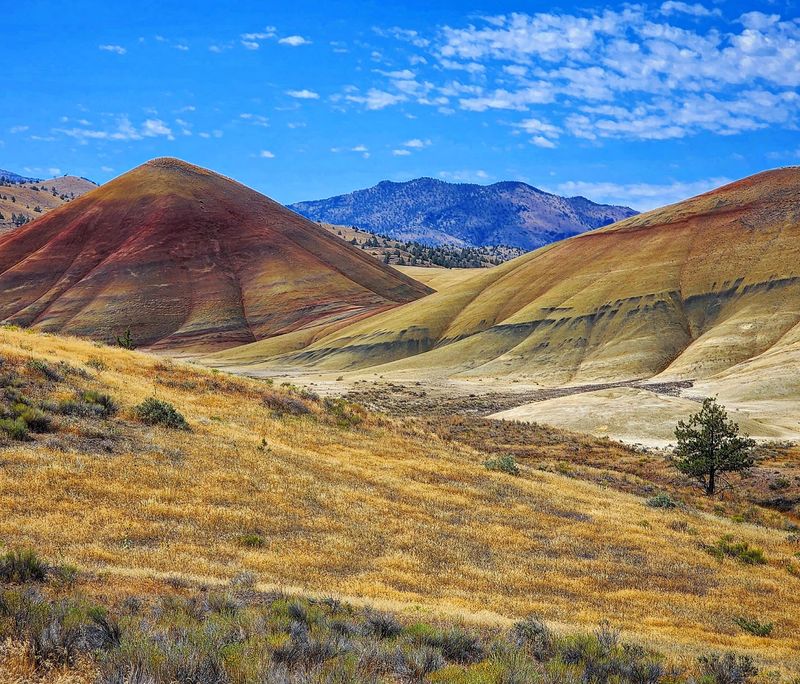
The Painted Hills look like something rendered by a computer with an unusual color palette. Bands of red, gold, black, and tan layer across smooth, rounded mounds in a way that seems almost too deliberate to be natural.
These colors come from different soil minerals deposited over millions of years, each layer representing a distinct geological era.
The hills are part of the John Day Fossil Beds National Monument, and the area has yielded some of the most significant fossil discoveries in North America. You can’t touch the hills, but the viewing paths get you close enough to appreciate the texture and scale.
Early morning and late afternoon light make the colors glow.
There’s a stillness here that’s hard to describe. The landscape is wide and dry, and the hills sit in it like something that arrived from somewhere else entirely. A few short trails loop around the main formations, and each angle reveals a different arrangement of color and shadow.
It’s one of those places where you keep taking photos and then realizing photos aren’t quite capturing it.
10. Heceta Head Lighthouse, Florence
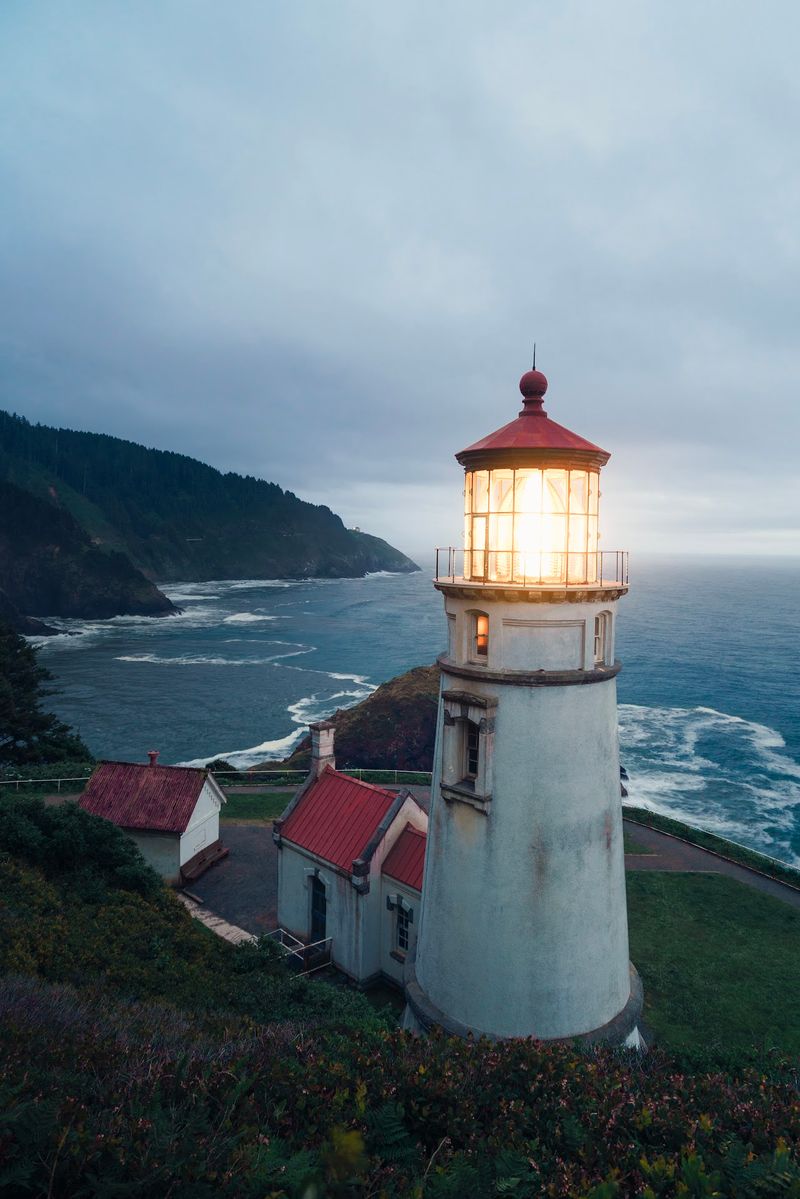
Heceta Head Lighthouse sits on one of the most dramatic stretches of the Oregon coast, perched on a forested headland above the Pacific with views that feel almost theatrical.
The lighthouse has been operating since 1894, and the keeper’s house next to it is now a bed and breakfast, which means you can actually stay the night here if you plan ahead. That’s a genuinely unusual option.
The hike up to the lighthouse is short but steep, and the views from the top of the headland are the kind that make you stop talking mid-sentence. Sea lions bark from the rocks below, and the forest around the path is thick with ferns and old growth trees. It feels wild and civilized at the same time.
The lighthouse itself is still active, managed by the Coast Guard, and the light is automated now. The keeper’s house is reportedly haunted by a ghost the locals call Rue, though the stories are part of the charm rather than anything frightening.
Whether you visit for the history, the scenery, or the ghost, Heceta Head delivers something memorable.
Address: 92072 US-101, Florence, Oregon
11. The Freakybuttrue Peculiarium and Museum, Portland
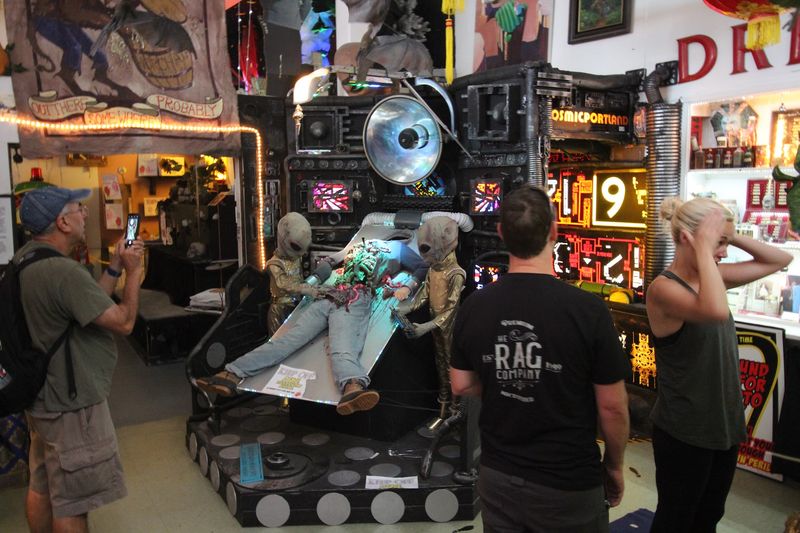
Portland’s reputation for embracing the unusual is well earned, and the Peculiarium is about as pure an expression of that spirit as you’ll find.
Part museum, part art installation, part ice cream shop, it’s a collection of oddities, medical curiosities, horror props, and handmade weirdness that somehow all coexists under one roof. The tone is playful rather than disturbing, which makes it accessible even if you’re not a horror enthusiast.
There’s a life-size Bigfoot display near the entrance, a room of alien memorabilia, and rotating exhibits that lean into the strange with obvious enthusiasm.
The people who work there are genuinely passionate about the collection and happy to explain the backstory behind pretty much anything you point at. That enthusiasm is contagious.
What makes the Peculiarium worth stopping for isn’t any single exhibit. It’s the overall commitment to celebrating the bizarre as something worth preserving and sharing. In a city full of interesting places, it manages to stand out by leaning fully into its own specific strangeness.
It’s the kind of stop that ends up being everyone’s favorite story from the trip.
Address: 2234 NW Thurman St, Portland, Oregon
