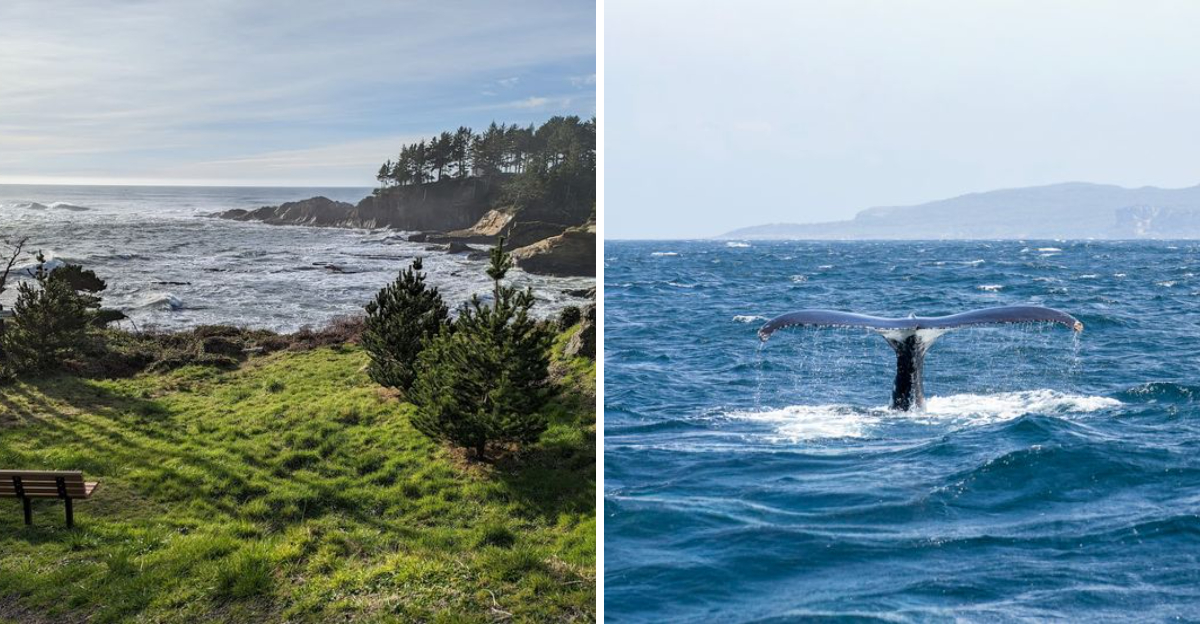
Forget the postcards, because this town lives and breathes the ocean in a way that few places can match. It has earned its famous title not through clever marketing, but because the whales themselves seem to have chosen it as their summer home.
A population of about two hundred grays breaks from their epic ten-thousand-mile migration to stay right here, feasting on tiny shrimp in the offshore kelp beds. You can watch these gentle giants from a state park center equipped with binoculars, often spotting a spout just a hundred yards from the shore.
The whole town leans into the maritime theme, from the museum to the fountain that spouts water like a playful welcome . Step away from the viewing deck and explore the world’s smallest navigable harbor, a tiny channel that is an attraction in itself.
Grab a seat at a local brewpub with a window view, or take a charter boat for an up-close encounter that feels truly intimate. This stretch of Oregon offers one of the most reliable wildlife experiences on the coast, and it is all thanks to a unique underwater ecosystem.
The World’s Smallest Navigable Harbor
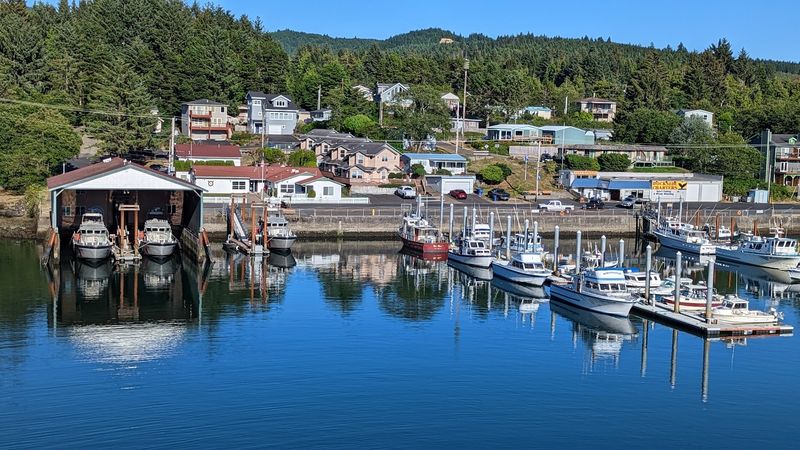
Standing at the edge of Depoe Bay’s harbor, you immediately notice how surprisingly compact the whole thing is. Six acres sounds like a lot until you see it surrounded by rock, town, and open ocean all at once.
It is officially recognized as the world’s smallest navigable harbor, and that title is not just a clever tourism slogan.
Fishing boats and whale watching vessels squeeze through a narrow channel that cuts straight through the basalt rock. Watching a boat navigate that passage for the first time is genuinely jaw-dropping.
The channel is so tight that the spray from waves sometimes hits the boats on both sides simultaneously.
The harbor has been a working port for decades, supporting commercial fishing and recreational boating. Charter companies launch daily whale watching tours right from this compact little basin.
The whole setup feels almost impossible until you realize it has been working beautifully for generations of fishermen and captains who know these waters well.
The Seawall Walkway and Ocean Spray Spouting Horns
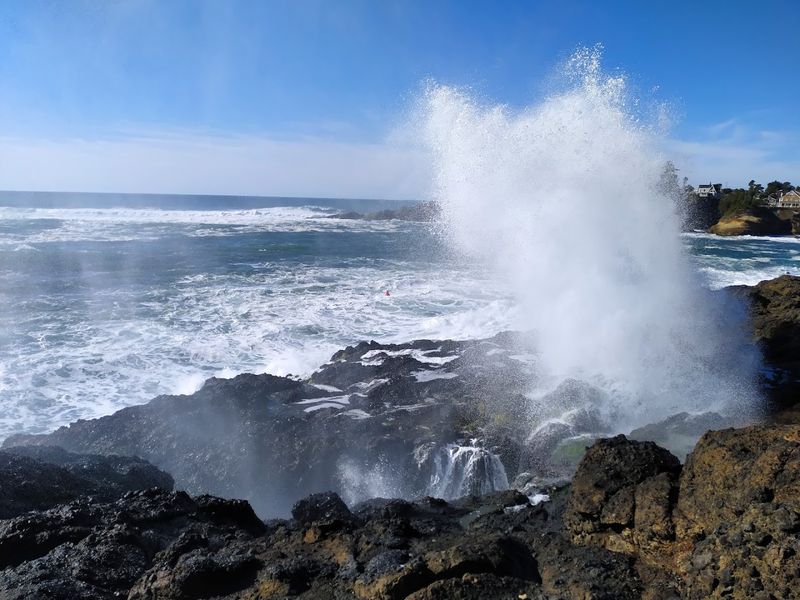
The seawall running along Highway 101 through Depoe Bay is one of those places where you stop walking and just stand there. Waves crash against the basalt below with a force that vibrates through the concrete under your feet.
On big swell days, the spray flies high enough to soak anyone standing too close.
Built into the rocky shoreline are natural formations called spouting horns. When a wave pushes water through a narrow crack in the rock, it shoots upward like a geyser.
The sound it makes is a deep, hollow boom that you feel as much as hear.
I watched a family completely lose their minds with excitement the first time a spout fired off near them. Kids screamed, adults grabbed phones, and everyone shuffled back a few feet laughing.
The seawall is free to walk, always open, and one of the most dramatic stretches of coastline in Oregon without requiring a single hike.
Whale Watching Charter Boat Experiences
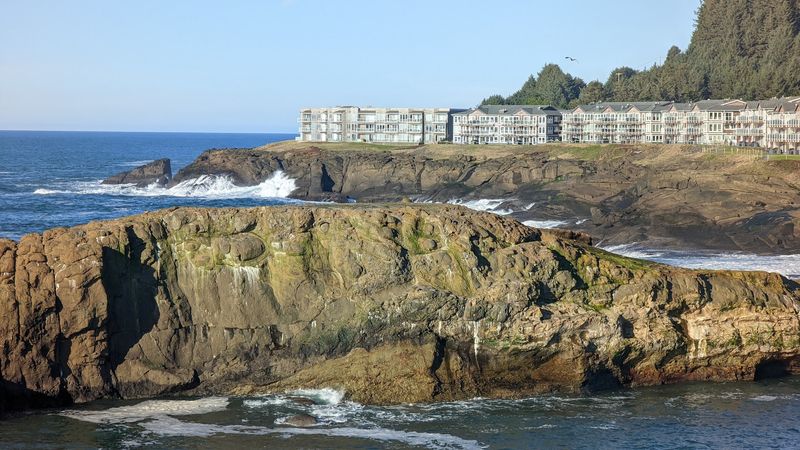
Getting on a charter boat out of Depoe Bay puts you at eye level with the Pacific in a way that the seawall simply cannot replicate. Several charter companies operate directly from the harbor, offering trips that range from one hour to a full morning on the water.
The boats are small enough to feel personal but sturdy enough to handle Oregon’s famously unpredictable swells. Captains on these tours carry years of local knowledge, and they know the feeding patterns of the resident whales better than almost anyone.
One captain I spoke with described reading the water surface the way others read a map.
Seeing a whale breach from a boat deck is a completely different experience than watching from shore. The scale becomes real when you realize the animal is longer than the vessel you’re standing on.
Layers of clothing are strongly recommended because the ocean air gets cold fast once you’re moving.
Depoe Bay Whale, Sealife and Shark Museum
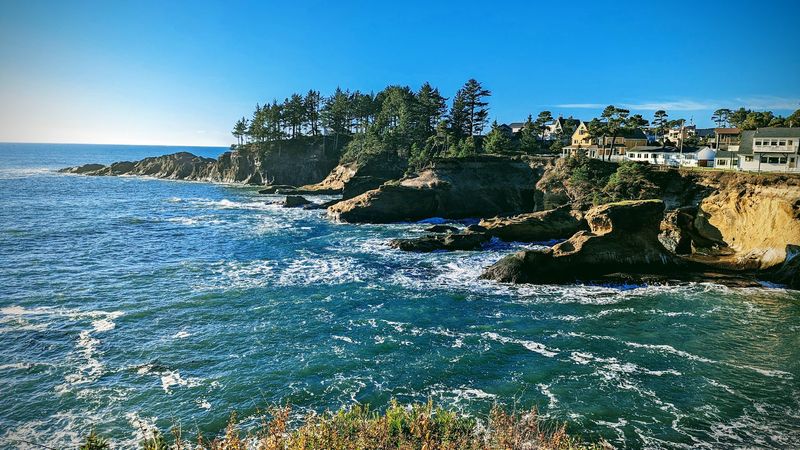
Tucked right along the main strip, the Depoe Bay Whale, Sealife and Shark Museum offers something that goes beyond the typical souvenir shop experience. The exhibits here focus on the marine life that actually lives off this coastline, not generic ocean facts from somewhere else.
Whale skeletons and detailed models help put the scale of gray whales into perspective. Most people are genuinely shocked by how large these animals are when seen in skeletal form.
The shark section draws particular interest from younger visitors who tend to linger longer than their parents expected.
The museum is compact but thoughtfully organized, making it easy to move through without feeling rushed or overwhelmed. Staff members are knowledgeable and willing to answer questions that go well beyond what the exhibit panels cover.
It is the kind of place that makes you want to get back on a boat the moment you walk out the door.
Gray Whale Migration and Year-Round Sightings
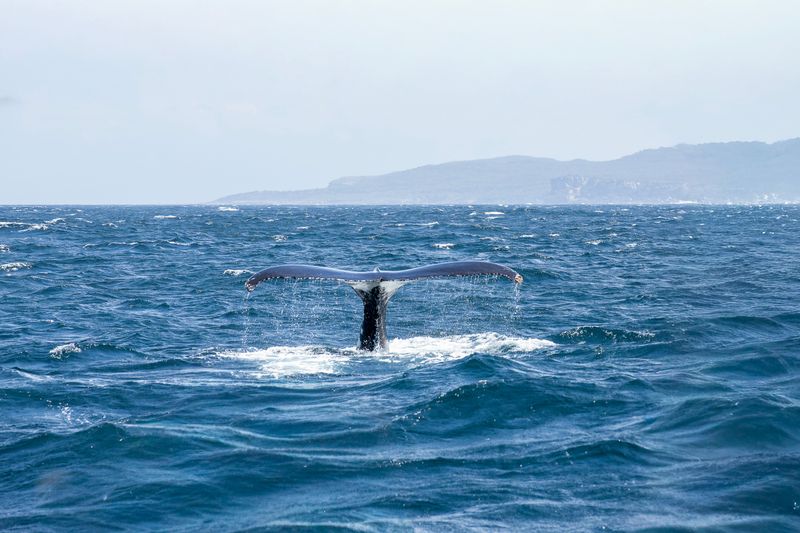
Most coastal towns celebrate whale season like a special event. Depoe Bay is different because the whales never really leave.
A resident population of gray whales sticks around the bay throughout the summer months, feeding in the nutrient-rich kelp beds just offshore.
During the larger migrations, the numbers swell dramatically. Pacific gray whales travel between Alaska and Baja California, and their route runs directly past this stretch of coastline.
I watched three spouts appear at the same moment one foggy morning, which felt almost surreal.
The Whale Watching Spoken Here program, run by Oregon State Parks, stations trained volunteers at key viewing spots during peak migration weeks. These volunteers carry binoculars and genuine enthusiasm, and they will help you spot a spout you might have completely missed on your own.
Spring and December migrations bring the largest numbers of whales passing through. Even outside those windows, resident whales make sightings remarkably common for a town this size.
Boiler Bay State Scenic Viewpoint
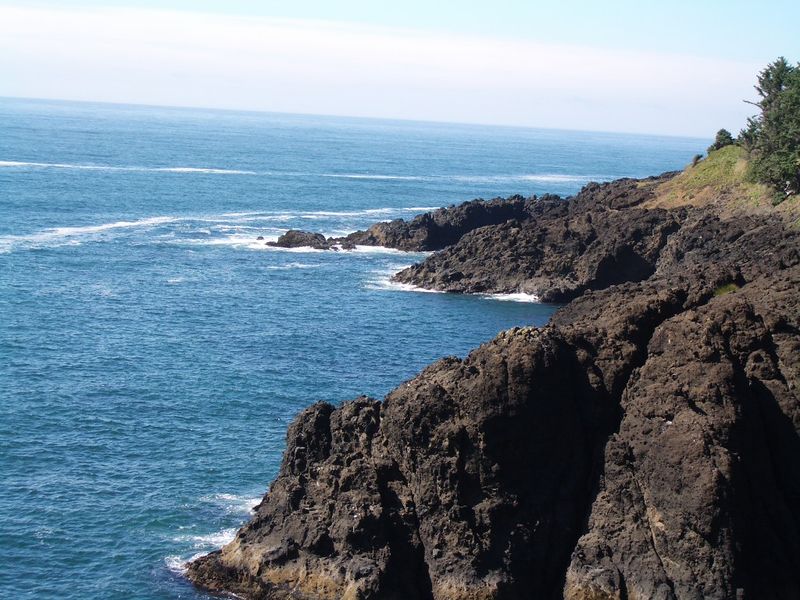
Just north of Depoe Bay sits Boiler Bay, a state scenic viewpoint that delivers some of the most dramatic coastal scenery in Oregon. The name comes from a shipwreck that occurred in 1910, and on very low tides, remnants of that old boiler are still visible in the rocks below.
The viewpoint sits on a clifftop with sweeping sightlines up and down the coast. Whale spouts are frequently spotted from here during migration season, and the rocky outcroppings below attract harbor seals year-round.
I spent nearly an hour here once without intending to, just watching waves reshape themselves against the rocks.
Shorebirds work the tidepools and rocky edges constantly, giving birdwatchers plenty to track alongside the marine mammal activity. There is a small parking area and easy walking access along the clifftop.
Boiler Bay feels wilder and less crowded than the main Depoe Bay waterfront, which gives it a completely different energy.
Rocky Creek State Scenic Viewpoint
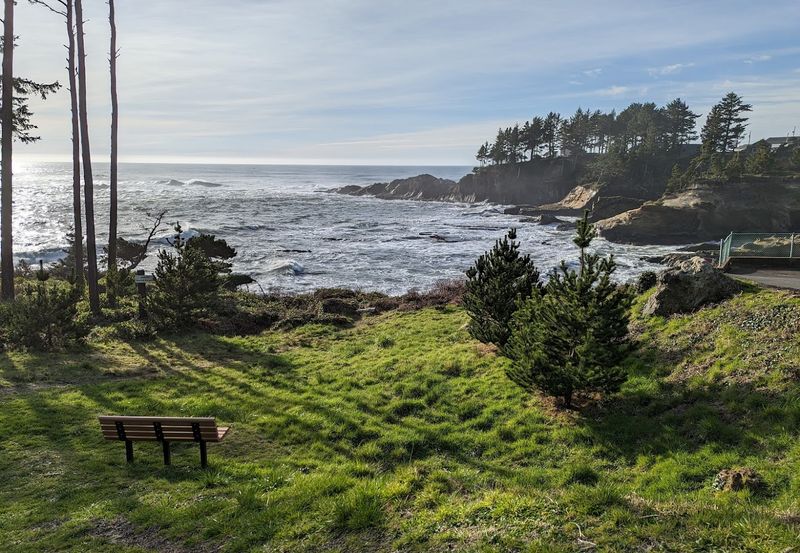
South of Depoe Bay, Rocky Creek State Scenic Viewpoint offers a quieter alternative to the busier spots along the main strip. The viewpoint sits back slightly from the cliff edge but still delivers unobstructed views of the Pacific stretching west to the horizon.
Picnic tables make it an easy stop for a slow lunch with an unreasonable view.
The surrounding vegetation gives Rocky Creek a greener, more sheltered feeling than the exposed seawall in town. Sitka spruce and shore pine frame the ocean view in a way that feels almost composed.
Whales are regularly spotted from here, especially during the gray whale migrations in spring and late fall.
Families often use this spot as a calmer alternative when the main Depoe Bay seawall gets crowded on busy weekends. The parking area is manageable, and the short walk to the viewpoint edge requires no special gear or fitness level.
It is the kind of place that rewards patience and slow mornings.
The Depoe Bay Farmers Market and Local Food Scene
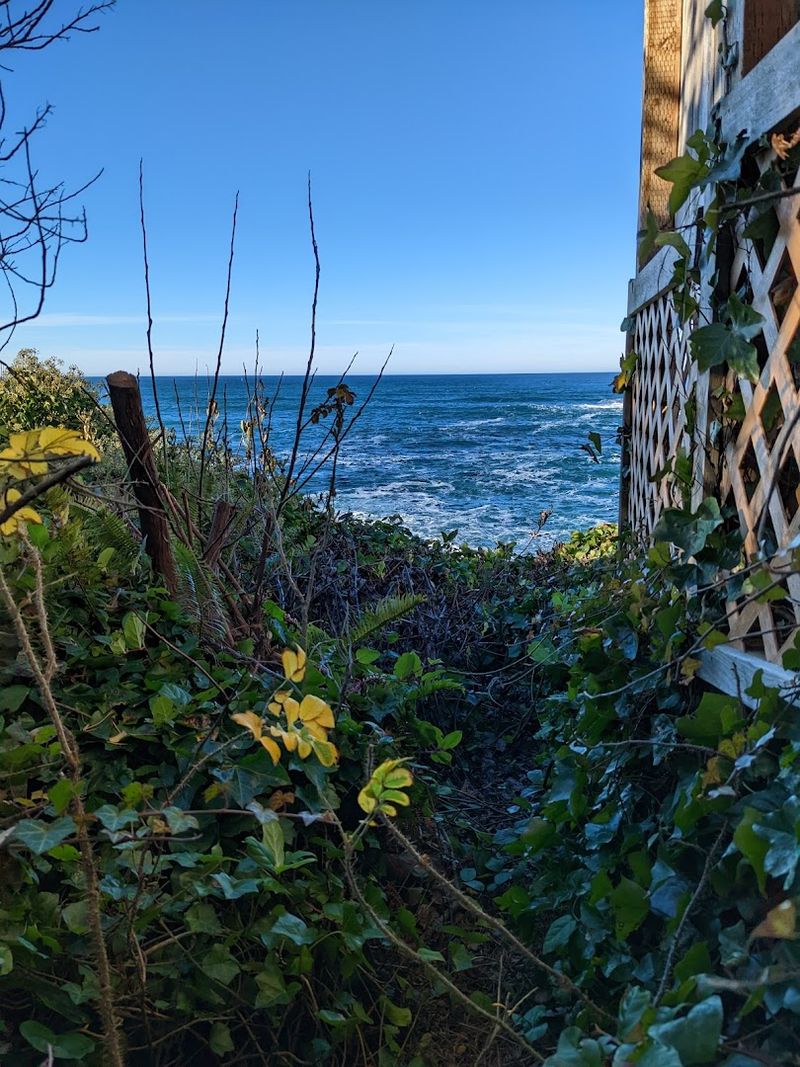
Food in Depoe Bay leans heavily on what the ocean provides, and that is not a complaint. Fresh Dungeness crab, razor clams, and locally caught fish show up in restaurants and market stalls throughout the season.
The town may be small, but the quality of its seafood reflects how close the source actually is.
The Depoe Bay Farmers Market brings local vendors together during the warmer months, offering produce, baked goods, and handmade items alongside fresh seafood. It has the relaxed rhythm of a small-town gathering where people actually talk to each other.
Grabbing a bag of fresh clams and finding a picnic table near the water is one of those experiences that sticks with you.
Several small restaurants and cafes line the main strip, each with its own personality and menu focus. Clam chowder is essentially mandatory at this point, and the versions served here tend to be richer and more honest than anything you find inland.
Eating well in Depoe Bay does not require a reservation or a formal plan.
Fishing Culture and Commercial Harbor Life
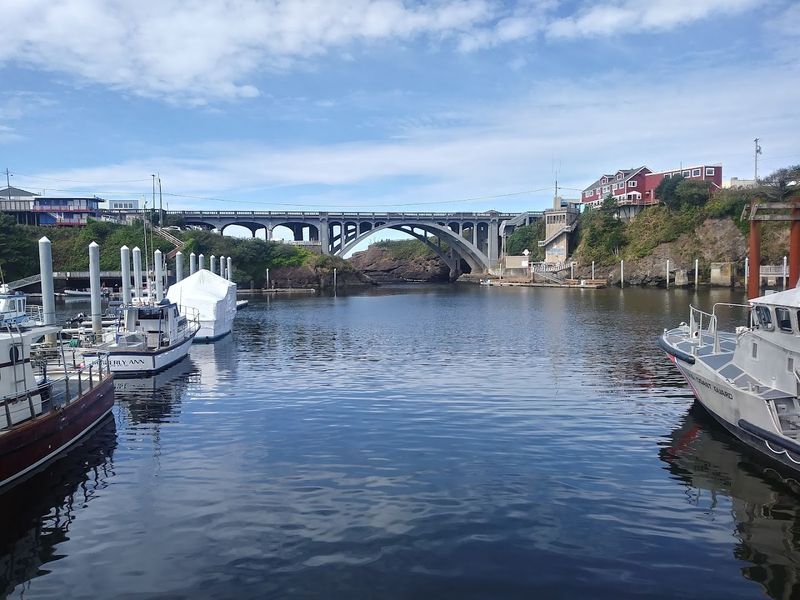
Long before whale watching put Depoe Bay on the map, fishing defined this community. Commercial fishing boats still work out of the harbor, and the culture around that work is woven into how the town feels and moves.
Early mornings at the harbor have a purposeful energy that is completely different from the afternoon tourist rhythm.
Salmon, halibut, and crab are the primary targets for both commercial and sport fishing operations based here. Charter fishing trips are available alongside the whale watching tours, giving visitors a chance to participate rather than just observe.
Catching a salmon off the Oregon coast and having it prepared the same day is the kind of experience that is hard to replicate.
The fishing heritage shows up in the architecture, the signage, and the conversations you overhear at the dock. There is a pride here that comes from generations of people who built their lives around reading tides and weather.
That history gives Depoe Bay a depth that purely tourist towns rarely develop.
Planning Your Visit to Depoe Bay
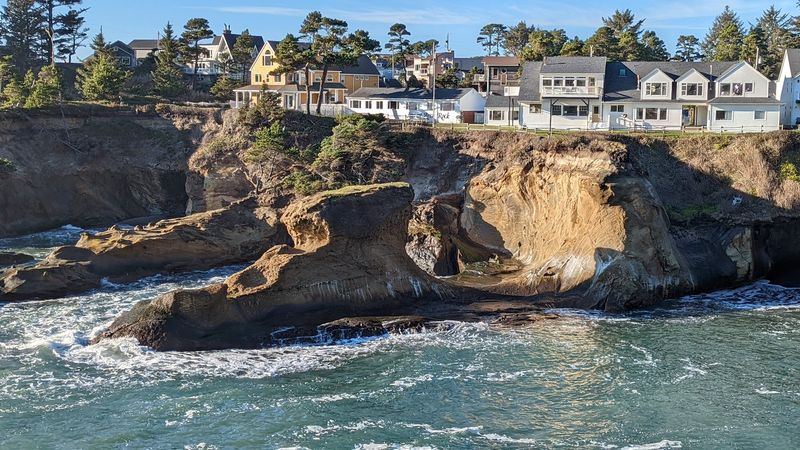
Depoe Bay sits directly on Highway 101, making it an easy stop on any Oregon coast road trip without requiring a detour. The drive north from Newport takes about fifteen minutes, while Lincoln City is just a short distance to the north.
Both directions offer their own coastal scenery worth slowing down for.
Spring migration season runs roughly from late March through early June, which is when gray whale numbers are at their peak. December migration brings another strong showing, though the weather is cooler and the days shorter.
Summer months offer the resident whale population plus warmer temperatures and longer daylight for exploring the seawall and viewpoints.
Accommodations in town are limited, so booking ahead during peak season is genuinely important. Nearby Lincoln City and Newport offer more lodging variety if Depoe Bay fills up.
The town’s website at ci.depoe-bay.or.us carries current event listings and visitor information worth checking before you arrive.
