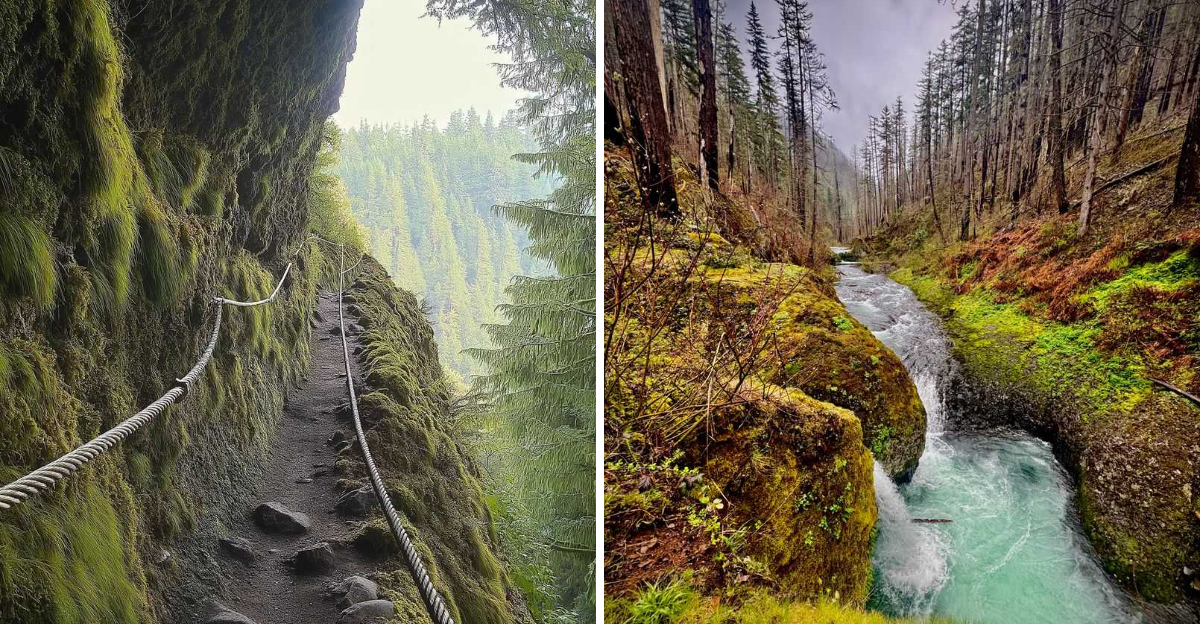
Hiking all over Oregon has made a lot of trails blur together for me, but Eagle Creek never does. The second I step onto those narrow ledges carved straight into the cliff, my heart starts racing.
This is not a peaceful walk in the woods. It feels raw, exposed, and thrilling, with basalt walls towering beside me and roaring water far below.
Deep in the Columbia River Gorge, Eagle Creek leans hard into drama. I find myself gripping safety cables, getting misted by waterfalls, and stepping through tunnels blasted straight through rock.
Built between 1915 and 1919, the trail still feels wild and unapologetic. Walking behind Tunnel Falls never gets old, and crossing the High Bridge always leaves my legs shaking in the best way.
This is the hike that reminds me why I fell in love with Oregon trails in the first place.
The Cliffside Path That’ll Make Your Palms Sweat
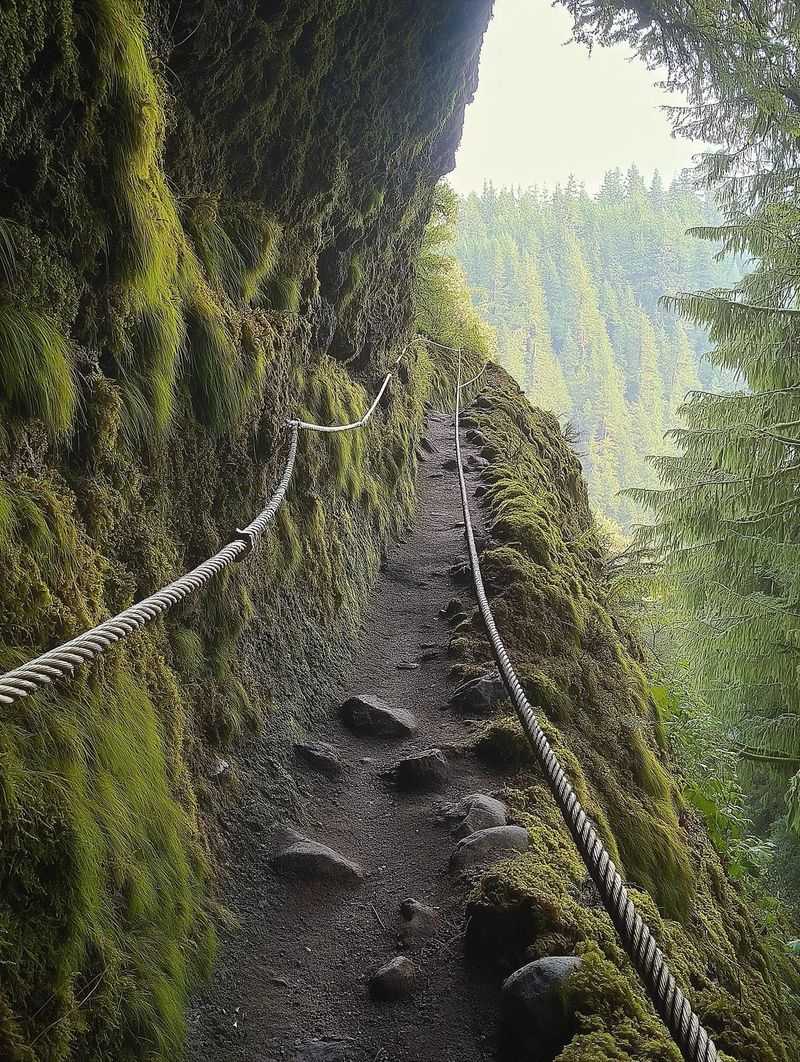
Walking along sections of trail that are literally chiseled into vertical basalt cliffs is an experience I’ll never forget. The path narrows to just a few feet wide in spots, with sheer rock rising on one side and a stomach-dropping view straight down to Eagle Creek on the other.
My first time here, I practically hugged that cliff wall.
The Forest Service installed steel cables bolted into the rock face back in the early 1900s, and they’re still there today, offering a literal lifeline when you need that extra security. These aren’t decorative touches.
They’re genuinely helpful when the trail gets slippery from mist or rain, which happens often in Oregon’s lush climate.
I love how this section makes you focus completely on each step, each handhold, each breath. There’s no room for distractions when you’re balancing on a narrow ledge with hundreds of feet of air beneath you.
The basalt rock is dark and textured, formed from ancient lava flows that created this dramatic gorge landscape.
Honestly, this is where the trail earns its reputation as one of the most thrilling hikes in the state.
Tunnel Falls: Walking Behind a Waterfall Like a Movie Scene
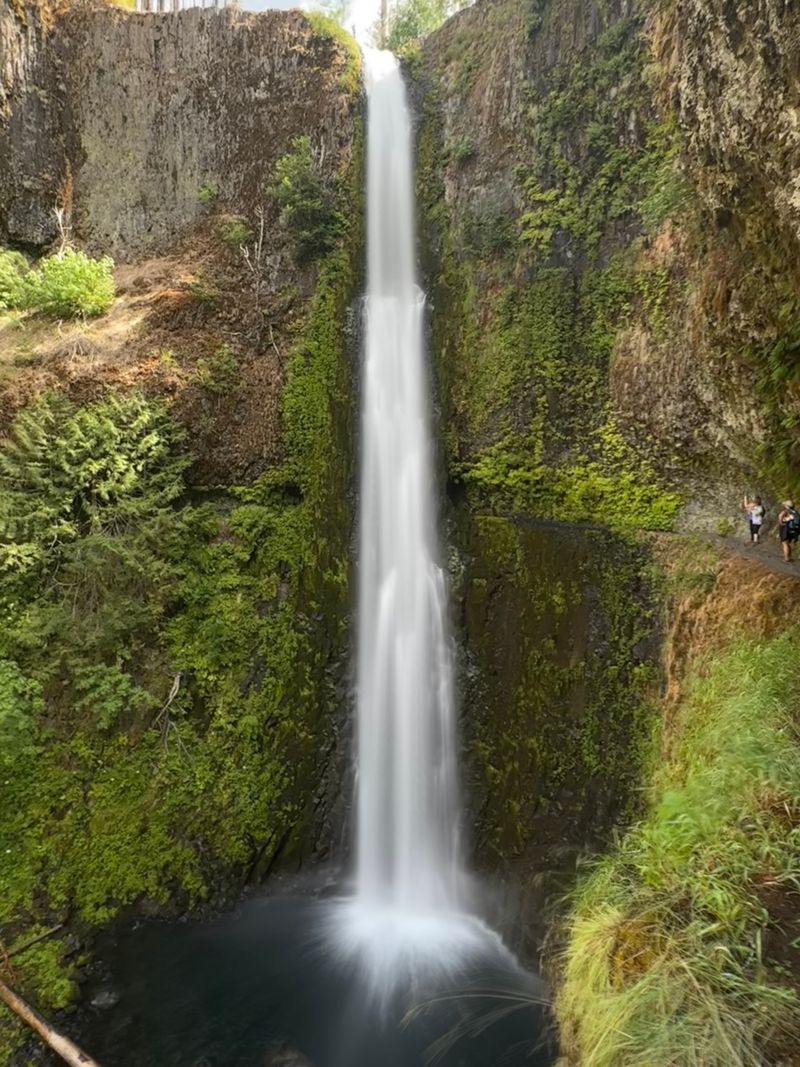
Tunnel Falls is the crown jewel moment that makes every single step of this hike worthwhile. At roughly 6 miles in, you’ll encounter a 175-foot waterfall thundering down the cliff, and here’s the wild part: the trail actually goes behind it.
I’m not exaggerating when I say it feels like walking through a movie set.
The tunnel was blasted through solid rock during the trail’s construction in the 1910s, creating a passage that lets hikers walk behind the falling water. The sound is absolutely deafening, and the mist soaks you completely, but standing there with water crashing just inches away is pure magic.
I’ve done this hike in different seasons, and each time offers something unique.
In spring, the waterfall roars with snowmelt, creating a powerful curtain that sprays everything within twenty feet. Summer brings lighter flow but better visibility through the water veil.
The basalt walls inside the tunnel are slick and dark, worn smooth by decades of hikers touching them for balance.
Bring a waterproof phone case if you want photos, because you will get drenched, and you’ll absolutely want to capture this moment.
High Bridge: The Suspension Crossing That Tests Your Nerve
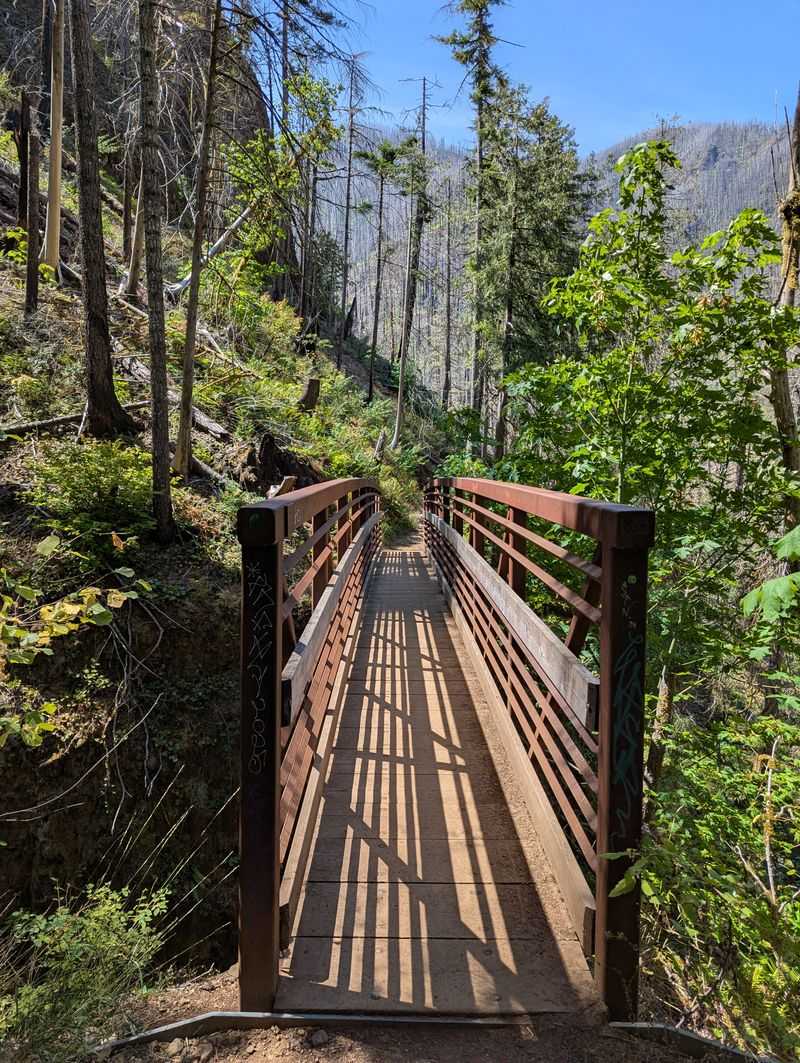
High Bridge appears suddenly after about 3 miles of hiking, and my stomach still does a little flip every time I see it. This suspension bridge spans Eagle Creek at a dizzying height of 150 feet above the churning water below.
The bridge sways slightly as you cross, which is completely normal but still makes your brain go into high alert mode.
Constructed to allow hikers safe passage across the deep gorge, the bridge offers unobstructed views straight down to the creek, where massive boulders and fallen logs look tiny from this height. I always pause in the middle, gripping the cables, forcing myself to look down and appreciate the engineering feat that makes this crossing possible.
The sound of the creek echoes up from below, mixing with the creak of the bridge cables and the whisper of wind through the gorge. Some hikers practically run across, eager to get back on solid ground, while others take their time, snapping photos and soaking in the adrenaline rush.
I recommend going early in the morning to avoid crowds, because having the bridge to yourself makes the experience even more intense and personal.
Punchbowl Falls: The Swimming Hole That Tempts Everyone
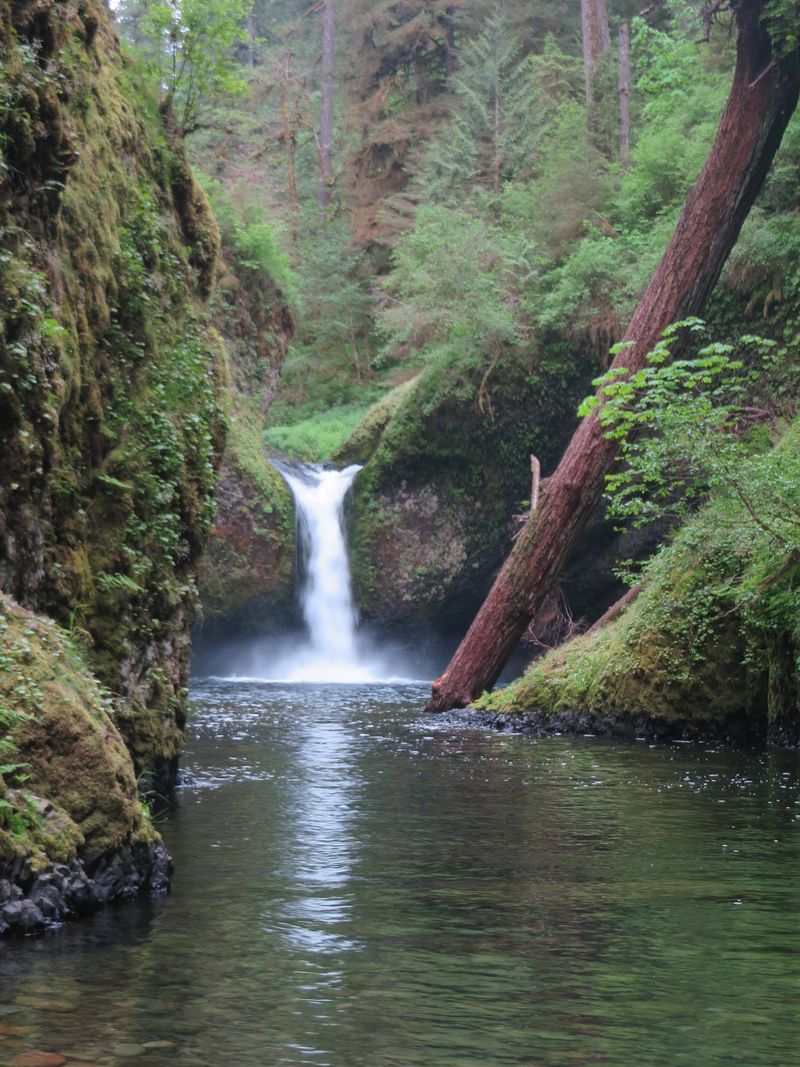
About 2 miles into the hike, Punchbowl Falls appears like an invitation you didn’t know you needed. This waterfall plunges into a perfectly round, emerald-green pool carved into the basalt bedrock over thousands of years.
The pool is deep, clear, and incredibly tempting on hot summer days.
I’ve watched countless hikers strip down to their swimsuits and leap into the cold water, shrieking with shock and delight. The water temperature stays frigid year-round, fed by snowmelt and mountain springs, but that doesn’t stop adventurous souls from taking the plunge.
The basalt bowl surrounding the pool creates natural amphitheater seating where you can rest and watch the waterfall.
Local legends say the pool is bottomless, though obviously that’s not true, but it is impressively deep, maybe 15 to 20 feet in the center. The waterfall itself drops about 35 feet, creating a constant mist that keeps the surrounding rocks slick and green with moss.
I always plan a snack break here, sitting on sun-warmed rocks and dangling my feet in the icy water while watching other hikers discover this spot for the first time.
The Historic 1910s Trail Construction Story
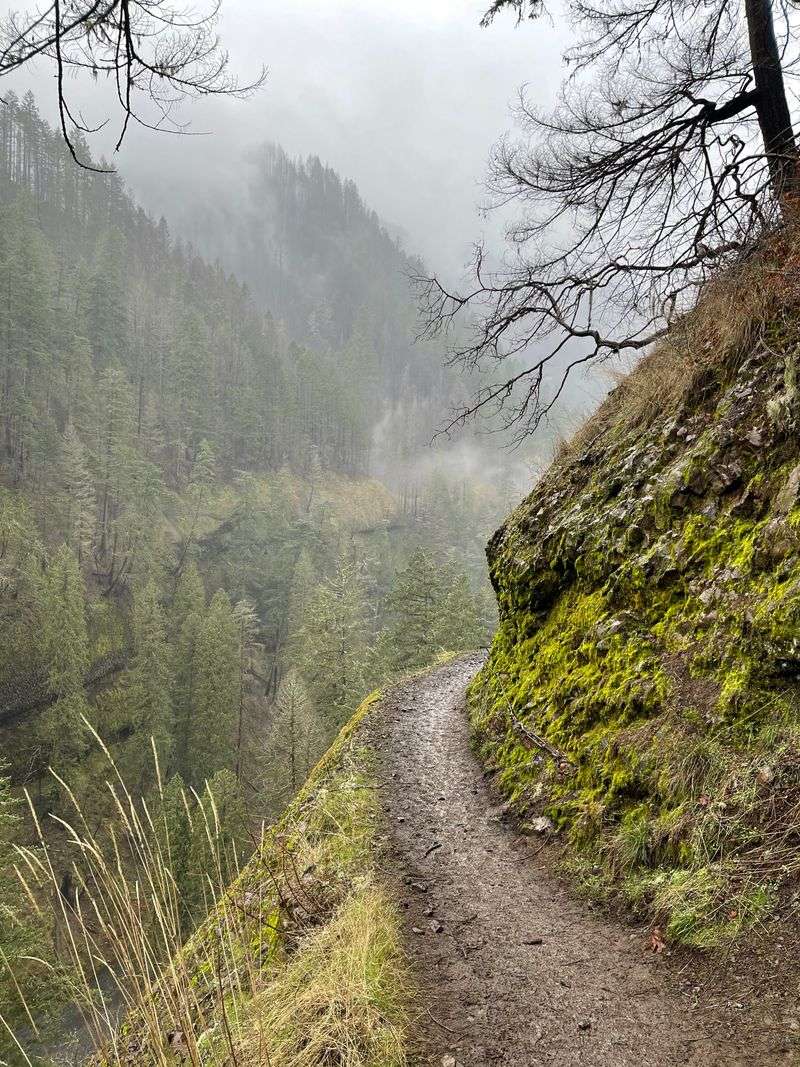
Between 1915 and 1919, crews armed with hand tools, dynamite, and incredible determination carved this trail into some of the most challenging terrain in Oregon. I think about those workers constantly when I’m hiking sections that seem impossible to have built without modern equipment.
They used hammers, chisels, and explosives to blast ledges into solid basalt.
This trail was part of the very first recreational Forest Service area in the Pacific Northwest, a visionary project that recognized the value of wilderness access for everyday people. The workers built wooden ladders, installed safety cables, and constructed bridges using materials they hauled in by hand or pack animal.
No helicopters, no power tools, just muscle and ingenuity.
The result is a trail that feels both rugged and carefully crafted, with details like hand-laid stone steps and strategically placed cables that show real thought and care. Many original features still exist today, maintained and occasionally replaced but following the same routes and designs from over a century ago.
Walking this trail is like following in the footsteps of those early 20th-century adventurers who believed wilderness should be accessible to everyone willing to make the effort.
The Cable Sections That Make You Feel Like a Mountaineer
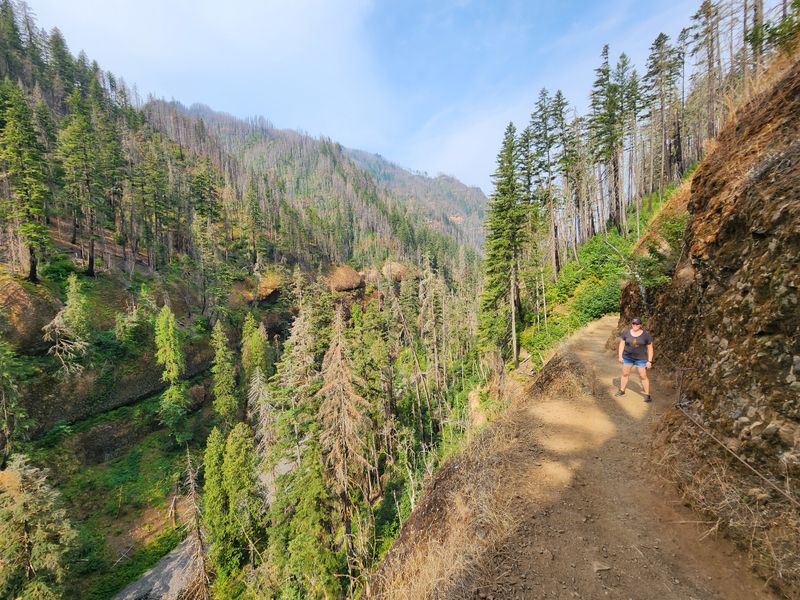
Multiple sections along Eagle Creek Trail feature steel cables bolted directly into the basalt cliffs, providing crucial handholds on the most exposed stretches. These aren’t climbing ropes or decorative features.
They’re permanent safety installations that have saved countless hikers from slips and falls over the decades.
I always grab these cables, even when the trail feels dry and secure, because conditions can change in an instant. The cables are cool to the touch, slightly rough from weather and use, and incredibly reassuring when you’re navigating a narrow ledge with serious exposure.
They’re positioned at about waist to chest height, perfect for maintaining balance without having to reach awkwardly.
Some sections have cables on both sides of the trail, creating a channeled path through particularly tricky spots. Other areas have them only on the cliff side, where the drop-off is most dramatic.
The installation and maintenance of these cables is ongoing work by Forest Service crews who rappel down cliffs to check bolts and replace worn sections.
Using them makes me feel connected to every hiker who’s gripped these same cables over the past hundred years, all of us sharing this thrilling experience.
The Moss-Covered Forest That Feels Prehistoric
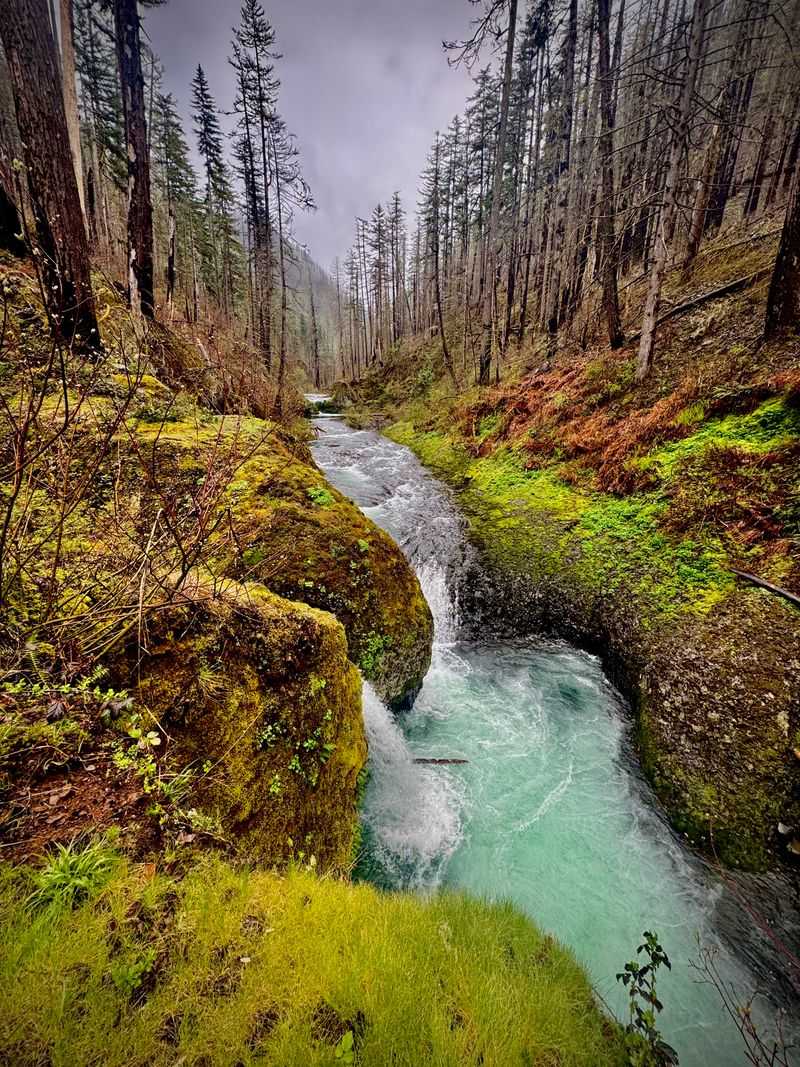
Oregon’s climate creates perfect conditions for moss, ferns, and lichens that cover every surface in a thick green carpet. Walking through sections of old-growth forest along Eagle Creek Trail feels like entering a different world, maybe even a different time period.
Giant Douglas firs and western hemlocks tower overhead, their trunks wrapped in velvet moss.
The understory explodes with sword ferns, some with fronds reaching five feet long, creating a prehistoric vibe that makes me half-expect to see dinosaurs around the next bend. The air smells rich and earthy, full of decomposition and growth happening simultaneously.
Everything feels alive and ancient at the same time.
During rainy periods, which are common in Oregon, the moss becomes incredibly vibrant, almost glowing with saturated green color. Water drips constantly from branches and leaves, creating a gentle percussion that mixes with bird calls and creek sounds.
The forest floor is soft and spongy, covered in layers of decomposing needles and moss.
I always take my time through these sections, breathing deeply and letting the forest work its calming magic on my trail-tired mind and body.
The Eagle Creek Gorge Views That Steal Your Breath
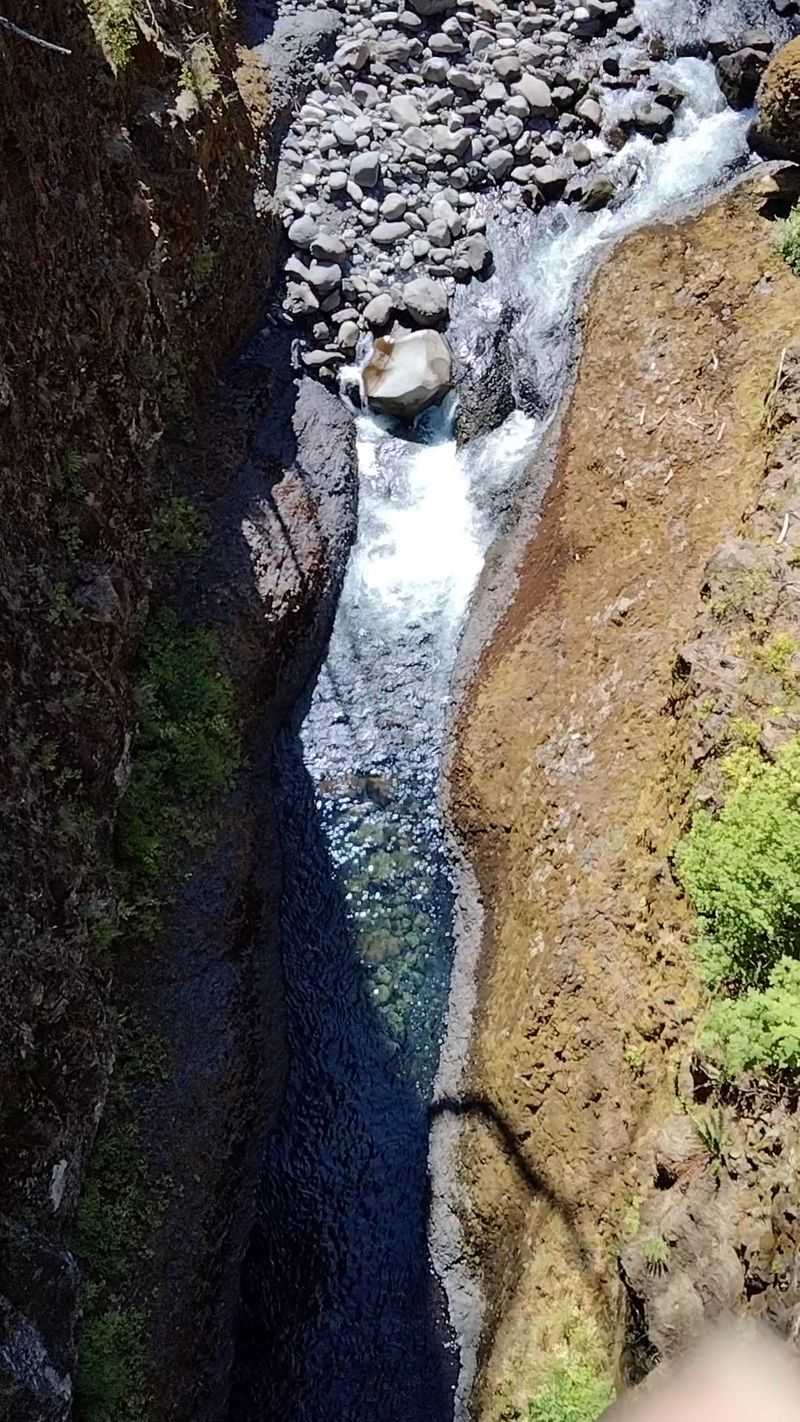
Multiple spots along the trail offer vertigo-inducing views straight down into the Eagle Creek gorge, where the water has carved a deep channel through layers of ancient lava flows. Standing at these overlooks, I’m always struck by the raw power of water to shape solid rock over millennia.
The creek appears tiny from these heights, but the sound of rushing water carries up clearly.
The basalt cliffs display distinct columnar jointing, those geometric patterns formed when lava cooled and contracted millions of years ago. The rock faces are streaked with mineral deposits, patches of orange, yellow, and green that add color to the dark stone.
Eagles and hawks often soar through the gorge, riding thermal currents rising from the creek below.
I’ve spotted them numerous times, which makes sense given the trail’s name. These viewpoints are perfect for taking breaks, catching your breath, and really appreciating the scale of the landscape.
The gorge walls rise hundreds of feet on both sides, creating a narrow corridor that funnels wind and amplifies sound.
Bring binoculars if you have them because wildlife spotting from these overlooks can be incredible, especially during early morning or late afternoon hours.
The 12-Mile Round Trip Challenge to Tunnel Falls
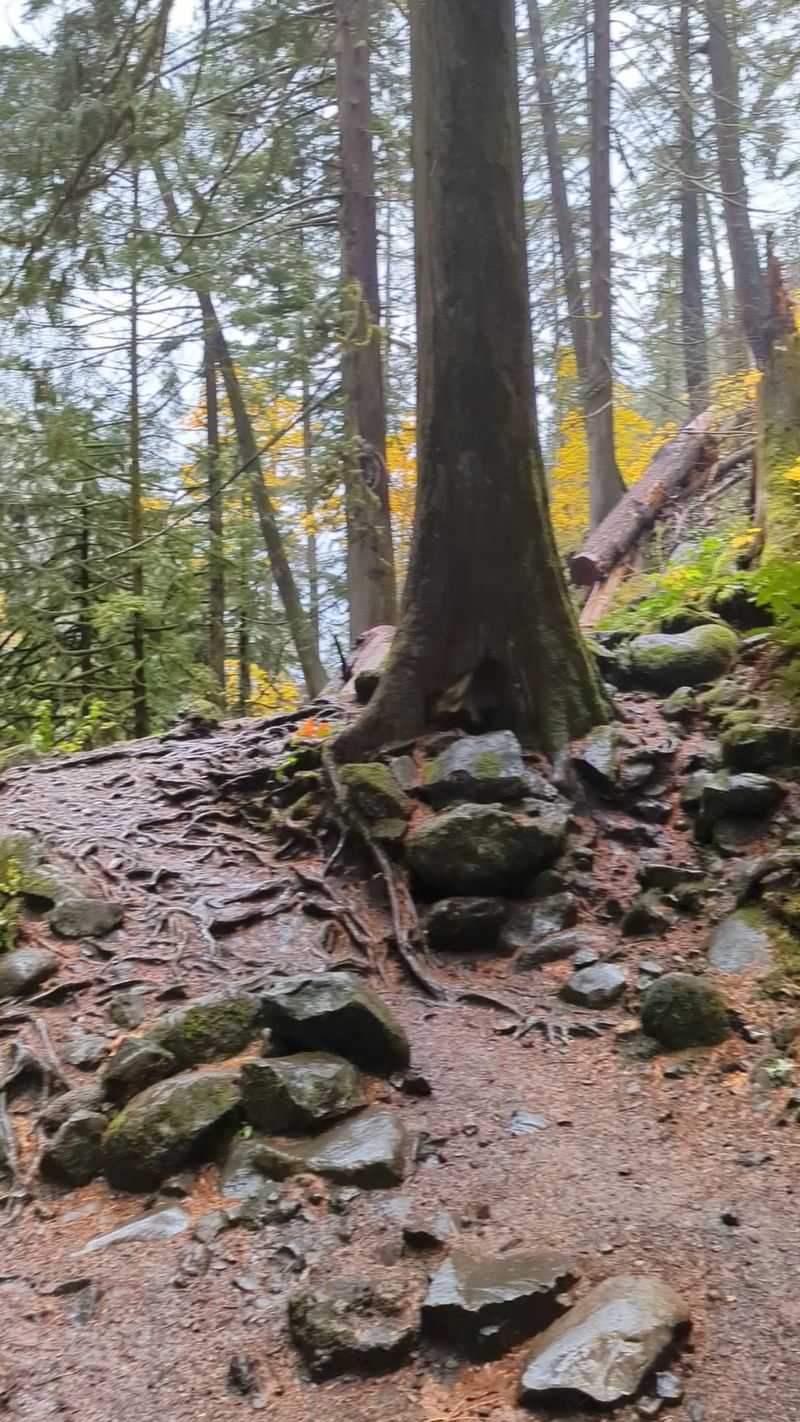
Reaching Tunnel Falls requires committing to roughly 12 miles round trip with about 1,200 feet of elevation gain, which sounds modest but feels significant when you’re navigating narrow ledges and focusing on every step. I typically budget six to eight hours for this hike, including breaks for snacks, photos, and just soaking in the scenery.
Starting early is crucial, both for parking availability and for having enough daylight.
The trail is rated as moderate to difficult, not because of extreme elevation but because of the exposure and technical nature of those cliff sections. You need decent fitness, good balance, and a reasonable comfort level with heights.
I’ve seen unprepared hikers turn back at various points, which is always the smart choice if you’re feeling overwhelmed.
The reward for pushing through to Tunnel Falls is absolutely worth every challenging moment. Standing behind that waterfall, soaked and exhausted and completely exhilarated, is an experience that stays with you forever.
The return hike feels faster, though your legs will definitely know they’ve worked hard.
Pack plenty of water, snacks, and a headlamp just in case you’re on the trail longer than planned, because this adventure demands respect and preparation.
Dear Reader: This page may contain affiliate links which may earn a commission if you click through and make a purchase. Our independent journalism is not influenced by any advertiser or commercial initiative unless it is clearly marked as sponsored content. As travel products change, please be sure to reconfirm all details and stay up to date with current events to ensure a safe and successful trip.
