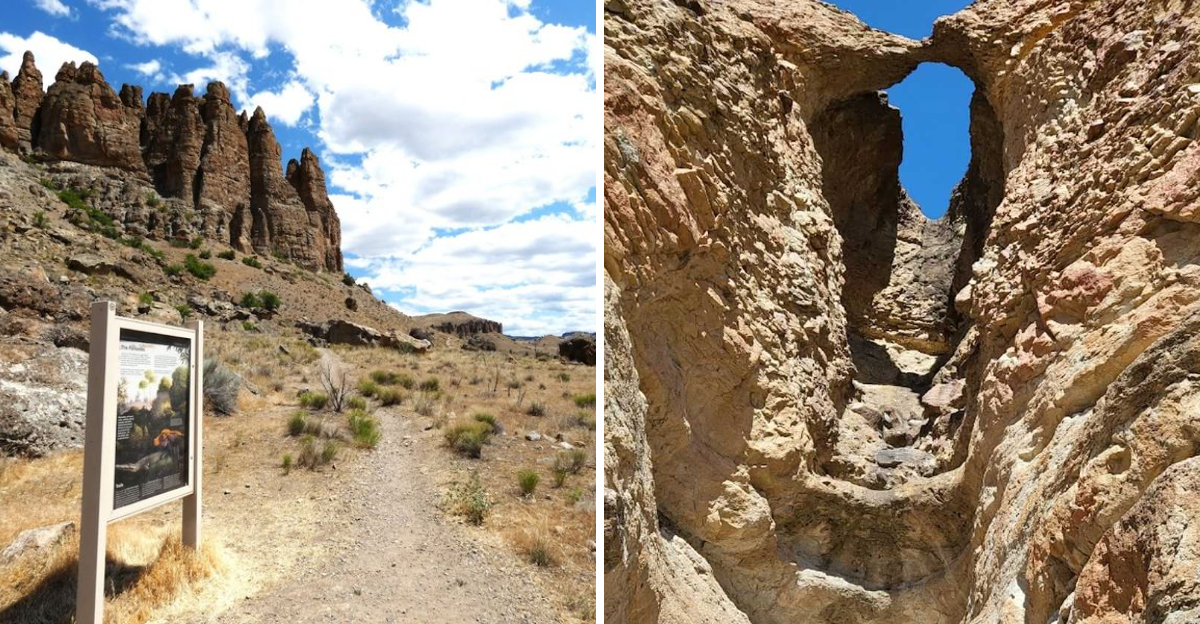
Ever wanted to walk in the footsteps of creatures that roamed the Earth millions of years ago? This Oregon trail leads straight to a hidden floor of perfectly preserved prehistoric fossils, and yes – it’s as amazing as it sounds.
I spent hours peering down at ancient bones and shells, half in awe, half whispering, “Did that really exist?”. The trail itself winds through quiet forests, making the final discovery feel like a secret only the lucky get to see.
Locals clearly know the spot, but stumbling upon it yourself makes it feel like your own personal time machine. Every fossil tells a story, and I couldn’t stop imagining the lives these creatures once led.
By the end of the hike, I was equal parts amazed, inspired, and fully hooked on prehistoric Oregon.
What Exactly Is the Trail of the Fossils?
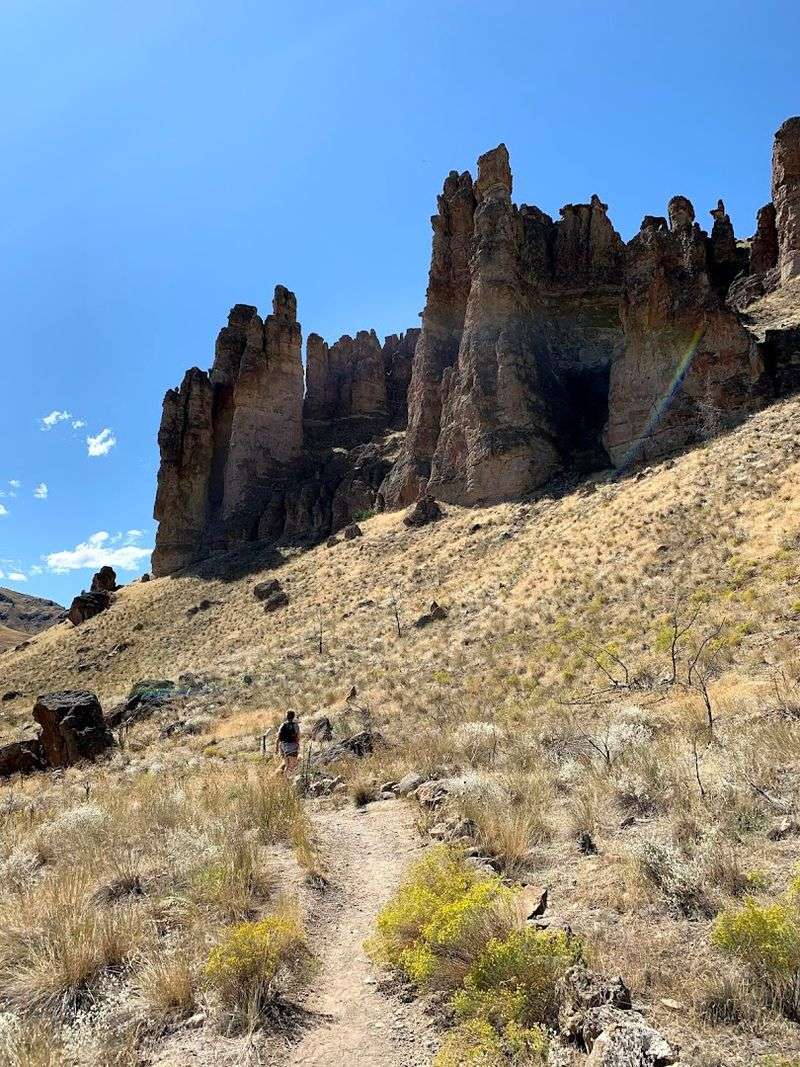
Most people have never heard of this trail, and that is honestly part of its charm. The Trail of the Fossils is a short loop path located within the Clarno Unit of John Day Fossil Beds National Monument in north-central Oregon.
It sits near the small town of Fossil, surrounded by wide open high desert scenery.
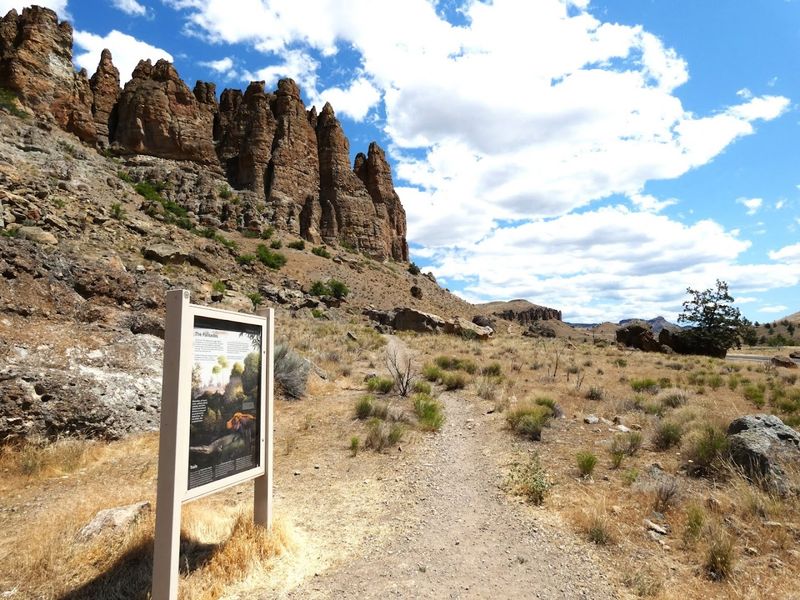
The trail winds along the base of dramatic palisade cliffs. Those cliffs are made entirely of hardened volcanic lahar, which is basically ancient mudflow from volcanic eruptions.
The mudflow buried everything in its path millions of years ago. Plants, animals, and entire ecosystems got locked inside.
What makes this trail special is that you can actually see the fossils embedded right in the rock walls. No glass case.
No museum lighting. Just raw prehistoric history staring back at you from the cliffside.
It feels completely unreal. The trail is short, accessible, and genuinely one of the most underrated natural experiences in the Pacific Northwest.
Ancient History Locked in Stone
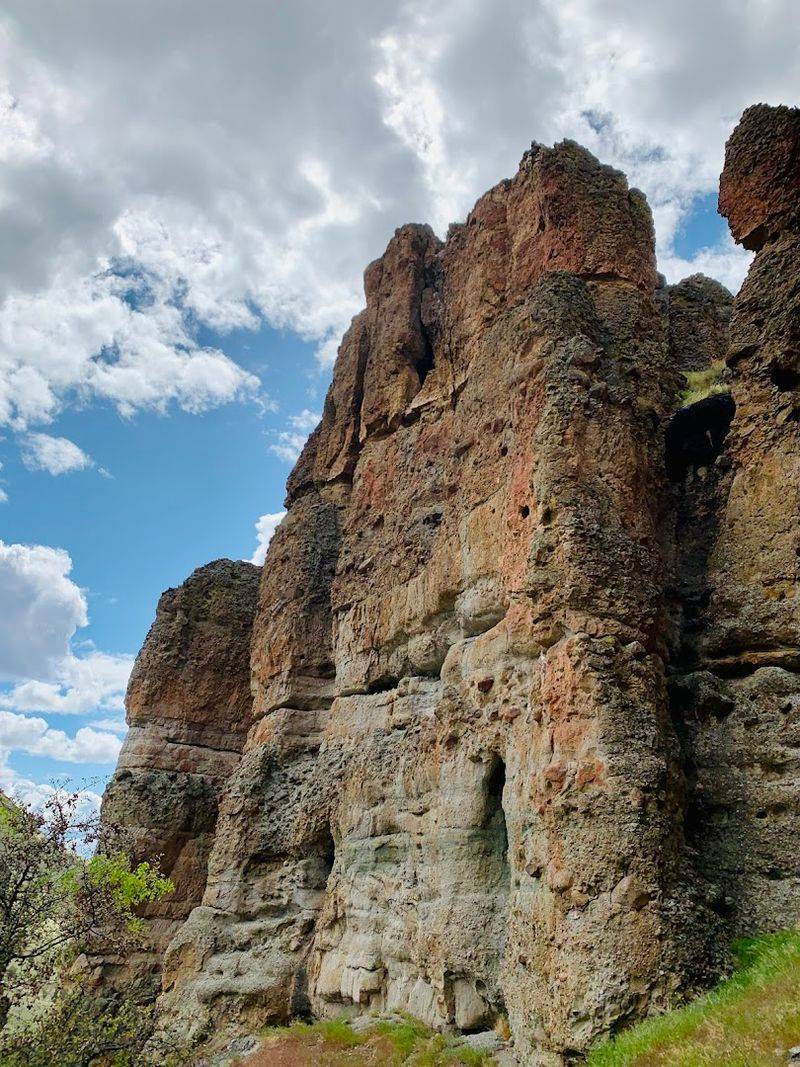
About 40 to 50 million years ago, this part of Oregon looked nothing like it does today. Massive volcanic eruptions sent lahars, fast-moving rivers of volcanic mud, rushing through a dense tropical rainforest.
Everything in the path of those mudflows got buried almost instantly.
That rapid burial is exactly why the fossils here are so well preserved. Leaves, seeds, nuts, wood, and animal bones all got sealed inside before they could decay.
The cliffs you walk along today are literally cross-sections of that ancient world. Each layer tells a different chapter of the story.
Fossils found here include the remains of four-toed horses, massive rhino-like brontotheres, crocodilians, and meat-eating creodonts. These creatures once roamed jungle floors in a landscape that felt nothing like Oregon.
Scientists have used this site to understand what early North American ecosystems looked like. Walking this trail means walking through one of the most significant fossil records on the continent.
Getting to the Trailhead
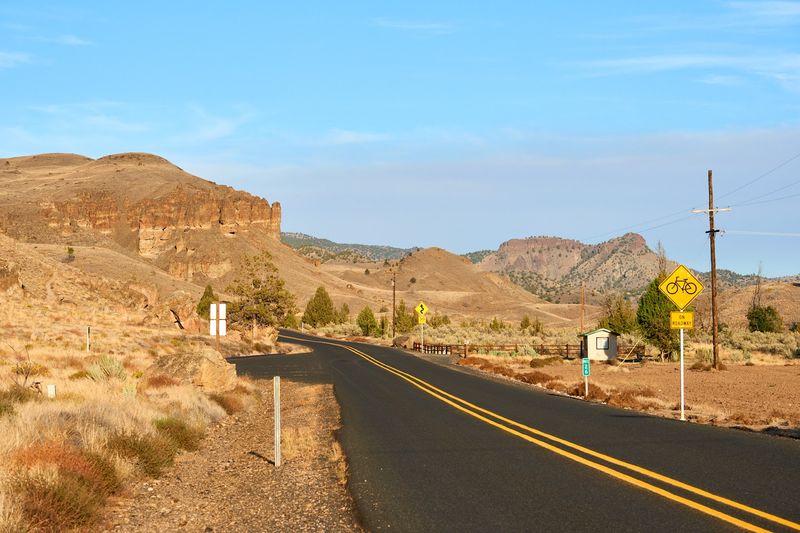
The drive out to the Clarno Unit is part of the experience. The unit sits along Highway 218, roughly between the towns of Fossil and Antelope in Wheeler and Wasco counties.
The road cuts through rolling hills and wide open rangeland. It feels remote in a way that most places do not anymore.
There are no big signs or flashy visitor centers screaming for attention. A small parking area and a modest trailhead marker are about all you get.
That low-key arrival actually adds to the feeling that you have found something real. You are not being funneled through a tourist machine here.
The address for the area is near Fossil, OR 97830. Cell service can be spotty, so downloading an offline map ahead of time is a smart move.
Fill your gas tank before heading out because services are limited in this stretch of Oregon. The isolation is peaceful, not inconvenient, once you embrace it fully and enjoy the quiet.
The Arch Trail and What to Expect
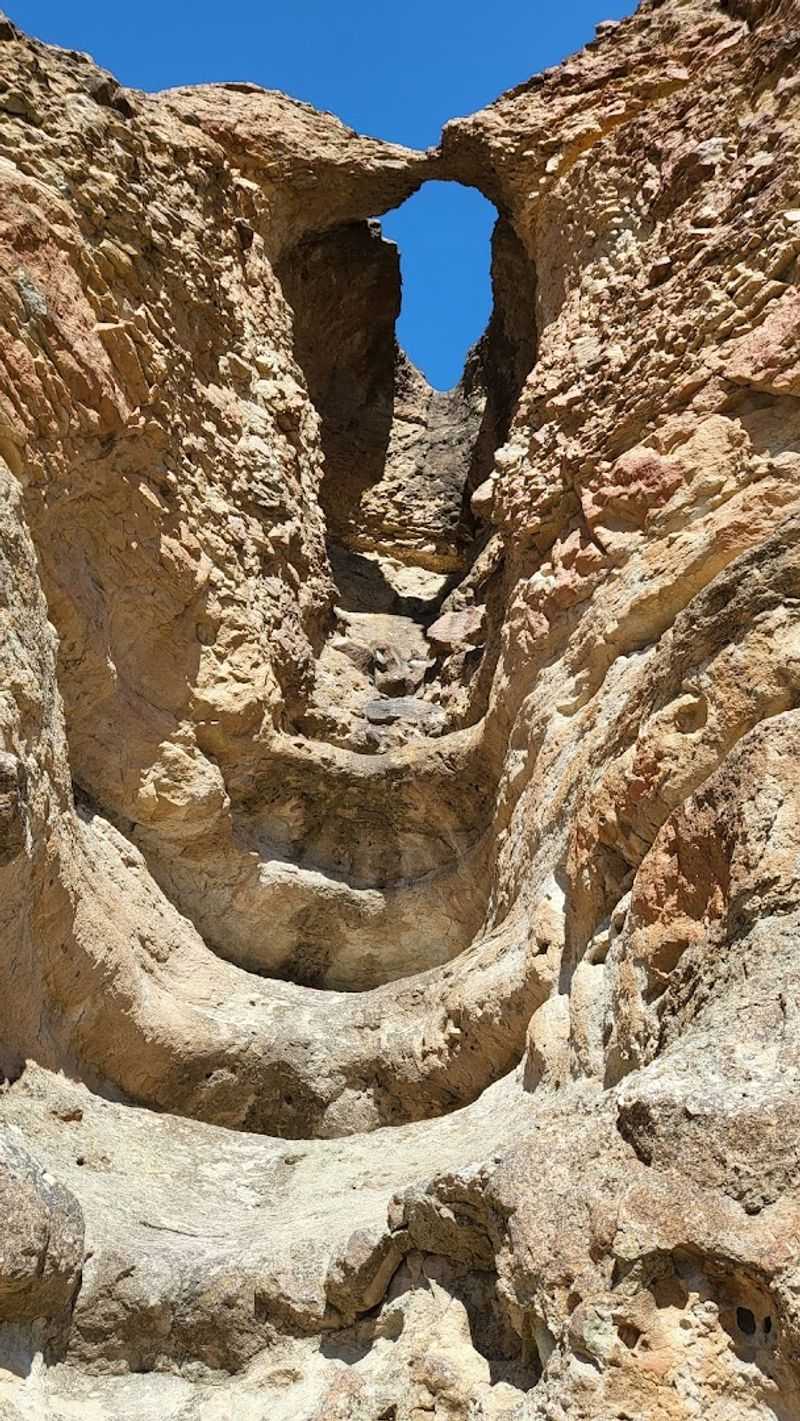
The Clarno Unit has two short trails, and the Arch Trail is the one most visitors tackle first. It is a brief but somewhat steep climb up to a natural arch formed in the volcanic rock.
The views from the top open up across the high desert in a way that feels quietly dramatic.
I will be honest, the trail markings are not the clearest. A few visitors have mentioned feeling uncertain about which direction to head.
Bring a trail map or screenshot the route before you lose signal. Once you find your footing, the path is manageable and very worth the effort.
The Trail of the Fossils loop runs along the base of the palisades and is flatter and easier than the Arch Trail. Both trails are short, each under a mile.
Plan for about an hour total to walk both and actually pause to look at things. Rushing through would miss the entire point of being here.
Reading the Fossil Wall Up Close
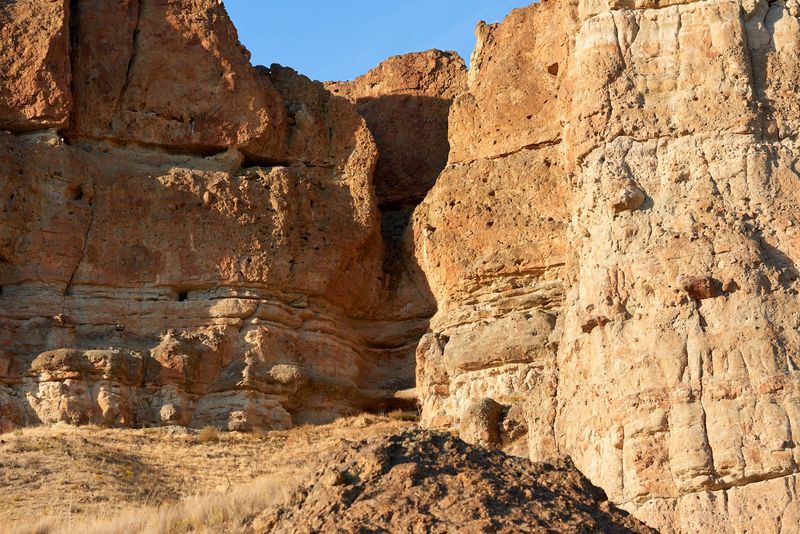
Walking along the base of the palisades is where the real magic happens. The cliff face is covered in fossil casts.
You can spot leaf impressions, seed pods, and even wood grain preserved in the stone. Some fossils are easy to pick out.
Others take a slower eye and a little patience.
The fossils here are mostly plant material, which makes sense given that this was once a dense tropical forest. Looking at a fossilized palm leaf pressed into volcanic rock in the middle of Oregon high desert is genuinely mind-bending.
The contrast between what was and what is now hits you in a quiet, unexpected way.
Some visitors mention that the fossils can be hard to spot at first. Give yourself time to adjust your eye.
Once you start seeing them, you cannot stop. Every few feet there is something new pressed into the stone.
Running your gaze slowly along the wall rather than walking fast makes a huge difference in what you actually notice and appreciate.
Best Time to Visit the Trail
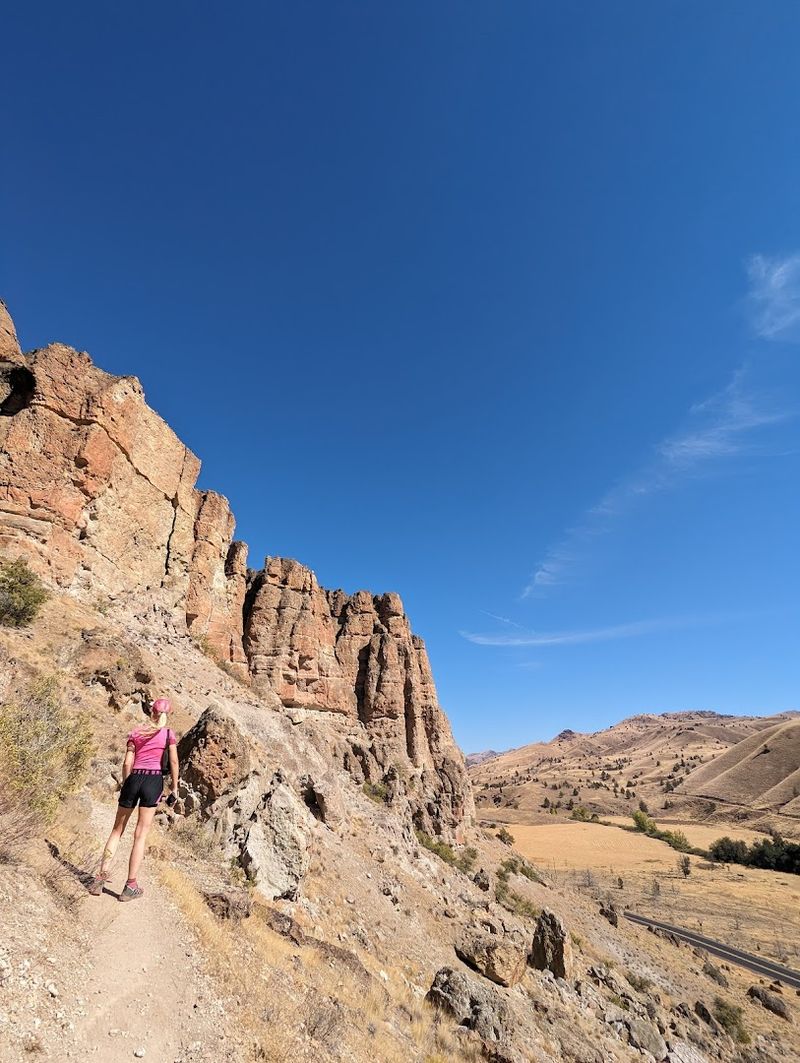
Timing your visit makes a real difference here. Summer mornings are the sweet spot.
The high desert heats up fast once the sun climbs, and there is very little shade along the trail. Starting early keeps the temperature comfortable and the light soft for photos.
Spring and early fall are also excellent windows. Wildflowers pop up across the surrounding landscape during spring.
Fall brings cooler air and a certain stillness that feels right for a place this ancient. Midday in July or August can be genuinely brutal, so plan around the heat if you visit in summer.
One visitor mentioned arriving on a Friday morning and having the entire place to themselves. That kind of solitude is rare and worth chasing.
Weekday visits almost always mean fewer people. Weekends in peak summer can bring more traffic, though it never gets crowded like popular coastal trails.
Bring more water than you think you need. The dry air and sun drain energy faster than expected out here.
Wildlife and Desert Scenery Around the Trail
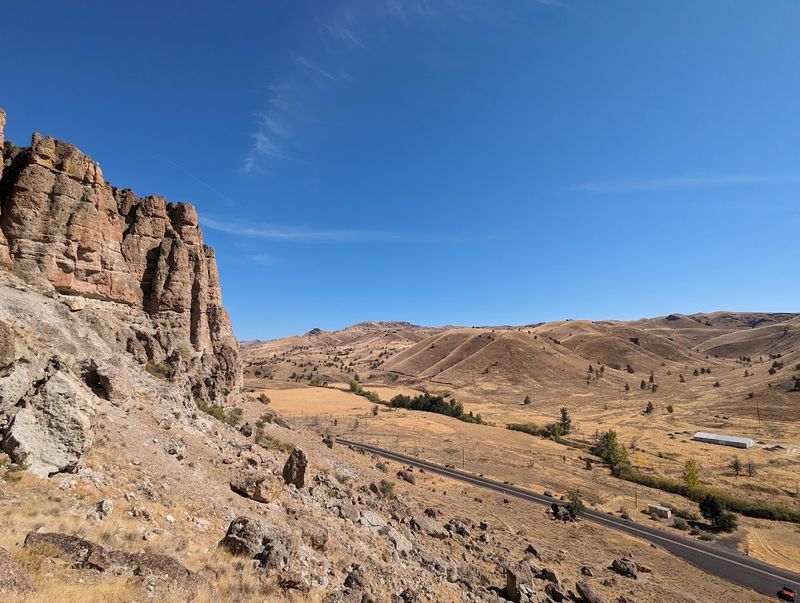
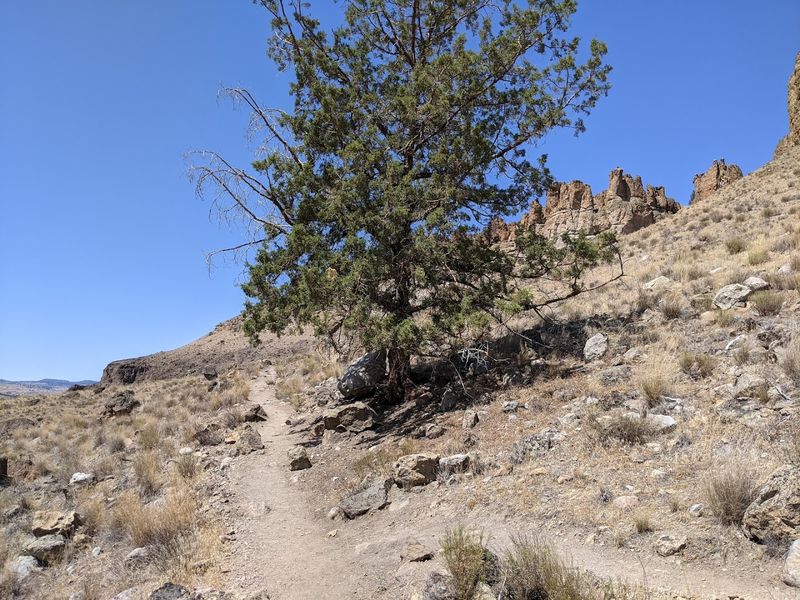
The landscape surrounding the Trail of the Fossils is striking in its own right. Rugged basalt formations rise above golden grasses.
The terrain feels ancient even beyond the fossils themselves. There is a raw, unpolished beauty to this part of Oregon that is easy to underestimate from photos.
Wildlife shows up quietly here. Raptors circle overhead in the thermals.
Lizards dart between rocks on warm mornings. Mule deer sometimes graze in the open areas near the parking lot at dawn or dusk.
The ecosystem is alive and active even though it looks sparse at first glance.
The silence is one of the most striking things about this place. One visitor put it simply: stop and listen.
There is almost no ambient noise out here. No traffic hum, no crowd buzz, just wind and birdsong.
That quiet is increasingly hard to find. It adds an extra layer to the experience that no guidebook can fully prepare you for until you actually stand there and feel it.
Practical Tips for Your Visit
A few small preparations go a long way at this trail. Water is the most important thing to bring.
There are no water stations at the trailhead, and the sun is relentless in warmer months. A minimum of two liters per person is a smart baseline.
A hat and sunscreen are equally non-negotiable.
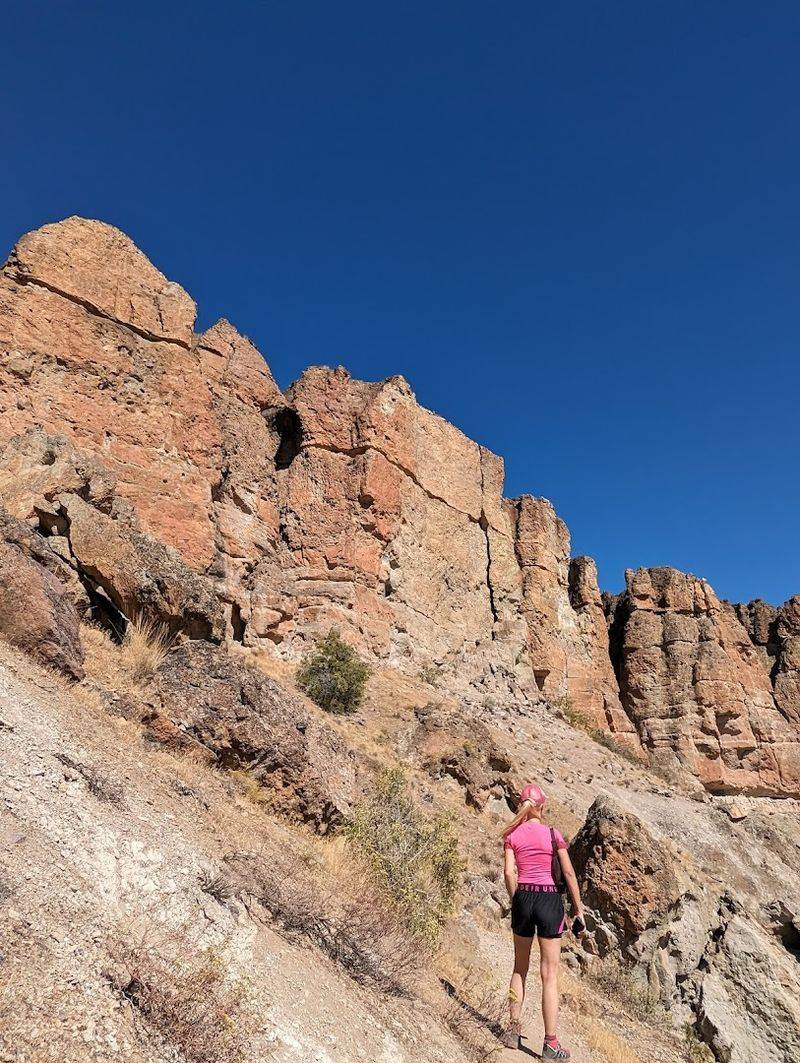
Wear sturdy shoes. The trail surface is rocky and uneven in places, especially on the Arch Trail climb.
Sandals work fine for some, but trail runners or hiking boots give better ankle support on the steeper sections. A small backpack keeps your hands free for scrambling and photography.
The site is managed by the National Park Service as part of John Day Fossil Beds National Monument. No fees are required to visit the Clarno Unit, which is a genuine bonus.
Dogs are allowed on leash. Do not touch or collect any fossils.
Removing them is illegal and genuinely harmful to the site. Leave everything exactly as you found it so the next person gets the same experience.
How the Clarno Unit Compares to Other John Day Sites
John Day Fossil Beds National Monument is divided into three separate units spread across a wide area of central Oregon. The Painted Hills unit is probably the most photographed, with its vivid banded hillsides.
The Sheep Rock unit has a full visitor center and extensive exhibits. Clarno is the quietest and most raw of the three.
Some visitors who have seen all three say Clarno is not as visually dramatic as the others on first impression. That is fair.
The payoff here is more intimate. You are standing inches from actual fossils in an open natural setting, not viewing them behind museum glass.
Each unit tells a different chapter of Oregon’s deep geological past. Clarno focuses on the oldest period, stretching back 40 to 50 million years.
The other units cover more recent geological eras. Visiting all three gives a fuller picture of how dramatically this landscape has transformed over time.
Clarno just happens to be the chapter that feels most like stepping into a lost world.
Why This Trail Deserves a Spot on Your Oregon Bucket List
There is no shortage of incredible places to visit in Oregon. The coast, the Cascades, Crater Lake, and the Columbia River Gorge all fight for attention.
The Trail of the Fossils at Clarno rarely makes the highlight reel, which is exactly why it should be on yours.
This is a place where the ground itself has a story millions of years in the making. You do not need to be a geology expert to feel the weight of that.
Standing in front of a cliff wall packed with prehistoric plant fossils, in the middle of quiet Oregon high desert, is a genuinely moving experience.
The trail is short, free, and accessible to most fitness levels. It rewards slow walkers and curious minds far more than speed.
I left feeling like I had found something most people drive right past without knowing it exists. That feeling is rare.
Seek it out. The drive is worth every mile, and the silence alone is something you will think about long after you leave.
Dear Reader: This page may contain affiliate links which may earn a commission if you click through and make a purchase. Our independent journalism is not influenced by any advertiser or commercial initiative unless it is clearly marked as sponsored content. As travel products change, please be sure to reconfirm all details and stay up to date with current events to ensure a safe and successful trip.
