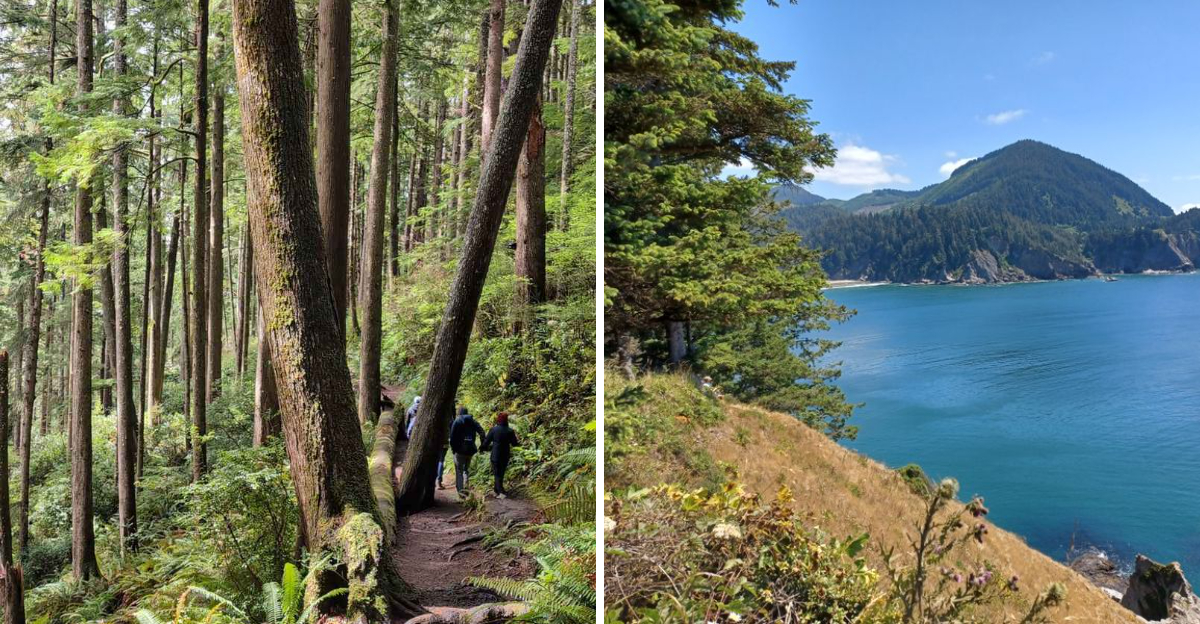
Last February, I thought I was just signing up for another muddy forest walk when I stumbled onto the Cape Falcon Trail in Oswald West State Park.
Tucked quietly off Highway 101 near Arch Cape, this trail gets almost no attention from passersby – most people just zoom past it on their way to bigger, flashier coast destinations.
But I quickly realized I’d struck gold. This 4.8-mile round trip winds through old-growth Sitka spruce, tricky roots, and slippery mud, and then – boom – you reach a 100-foot rocky outcropping that will make your jaw hit the forest floor.
February is prime whale season, and from this very spot, I watched gray whales cruise past without elbowing through summer crowds.
Surfers paddled below, the wind whipped my hair into chaos, and the ocean stretched in every direction.
Muddy boots, sore legs, and all – it was absolutely worth it. Lace up your shoes because this hidden Oregon coast gem is about to steal your heart.
The Trailhead That Doesn’t Show Off
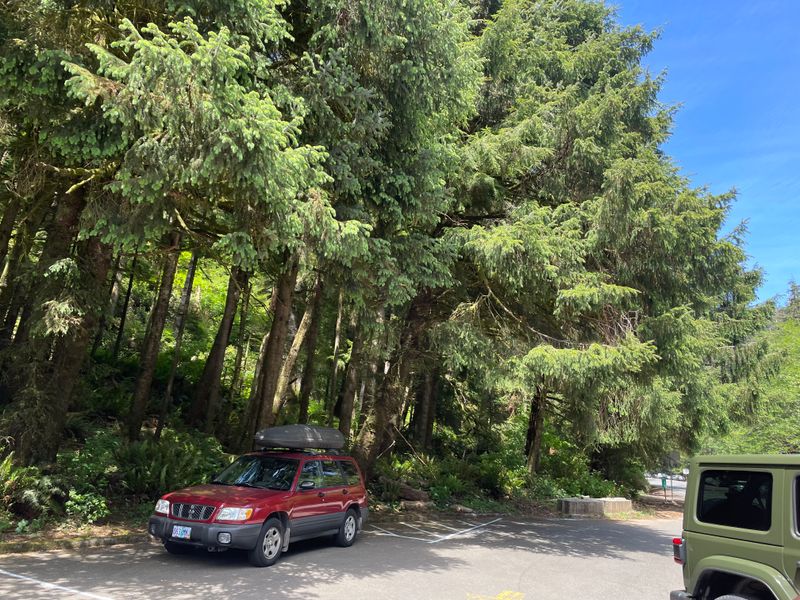
Pulling into the Cape Falcon Trailhead parking lot feels anticlimactic at first. You’ll find a simple paved lot at Arch Cape, OR 97102, with space for maybe 20 vehicles and absolutely no fanfare.
The trailhead sign gives you basic info, but nothing prepares you for what’s coming.
I arrived on a chilly February morning and noticed how quiet everything felt. Most Oregon coast trails scream their beauty from the parking lot, but this one plays it cool.
The forest swallows you immediately, and that unassuming entrance becomes part of the charm.
Restrooms sit across Highway 101 near the Short Sand Beach area, so hit those before you start. Parking fills up fast on sunny weekends, even in winter, because locals know what’s up.
Getting there early means snagging a spot and having the trail mostly to yourself.
The trailhead sits right along one of Oregon’s most scenic highway stretches. Dogs are welcome on leashes, and I passed several happy pups already covered in mud within the first quarter mile.
This low-key start sets the tone for an adventure that builds slowly and rewards patience.
Ancient Forest Cathedral Vibes
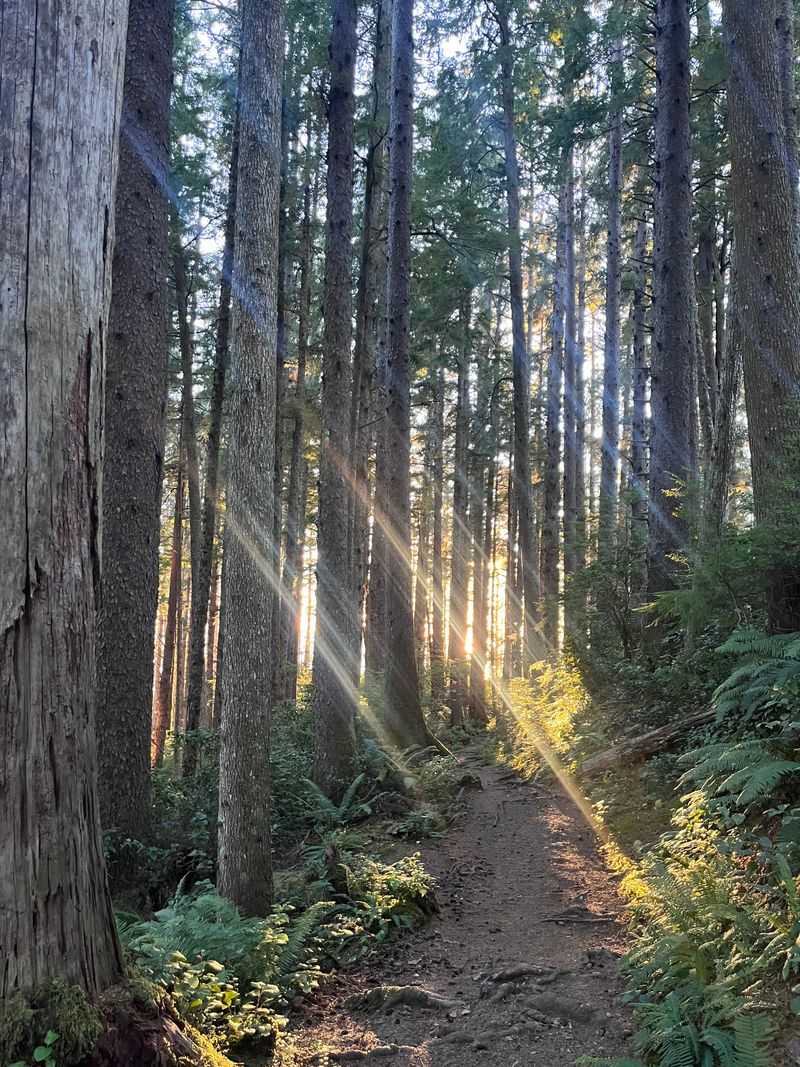
Walking into this coastal forest feels like entering a natural cathedral. Massive Sitka spruce trees tower overhead, some so thick you can’t wrap your arms around them.
The canopy filters February light into soft green beams that make everything glow.
I stopped counting the enormous trees after the first ten minutes because they just kept coming. These old-growth giants have stood here for centuries, creating an ecosystem so lush it feels prehistoric.
Ferns carpet the forest floor, and moss drapes every branch like nature’s own decorations.
The first half mile stays relatively flat, which tricks you into thinking this’ll be an easy stroll. Shadows and sunlight play tricks on the trail, making roots harder to spot than you’d expect.
I nearly tripped twice before learning to watch my footing constantly.
This forest section provides shade year-round, keeping temperatures comfortable even when the coast bakes in summer. February brings extra greenery from winter rains, making the vegetation almost tropical.
Several reviewers mentioned seeing interesting mushrooms, and I spotted bright orange fungi that looked like tiny umbrellas dotting fallen logs throughout this magical stretch.
The Root Maze Challenge
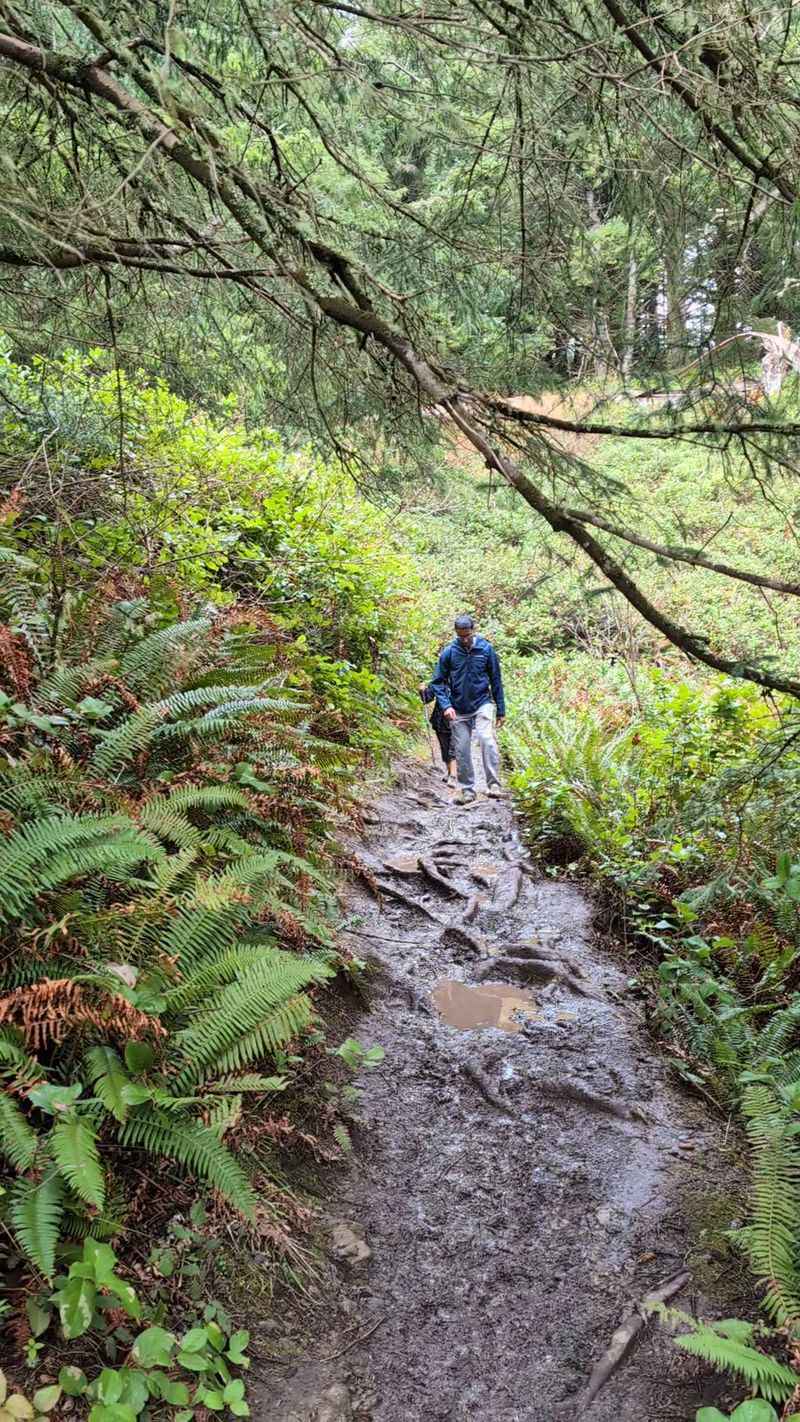
About a mile in, the trail transforms into what I call the root maze. Exposed tree roots crisscross the path like nature’s obstacle course, forcing you to watch every single step.
Some roots stand six inches high, while others hide under leaves waiting to catch your toe.
This section earned the trail its moderate difficulty rating. I watched hikers of all ages navigate these roots, some stepping carefully over them, others walking directly on top like balance beams.
The roots stay slippery when wet, which in Oregon means pretty much always.
My ankles got a serious workout hopping between root gaps and muddy patches. The trail narrows here too, with steep drop-offs on one side that demand respect.
Wooden platforms appear occasionally, built by volunteers to bypass the worst muddy spots, though they’re often covered in mud themselves.
Kids seemed to love the challenge, treating it like a natural playground. I saw a family with preteens laughing as they picked their way through, turning the roots into a game.
This section takes concentration, but it’s also where the hike gets real and you earn that viewpoint waiting ahead in Oregon.
Mud Season Is Every Season
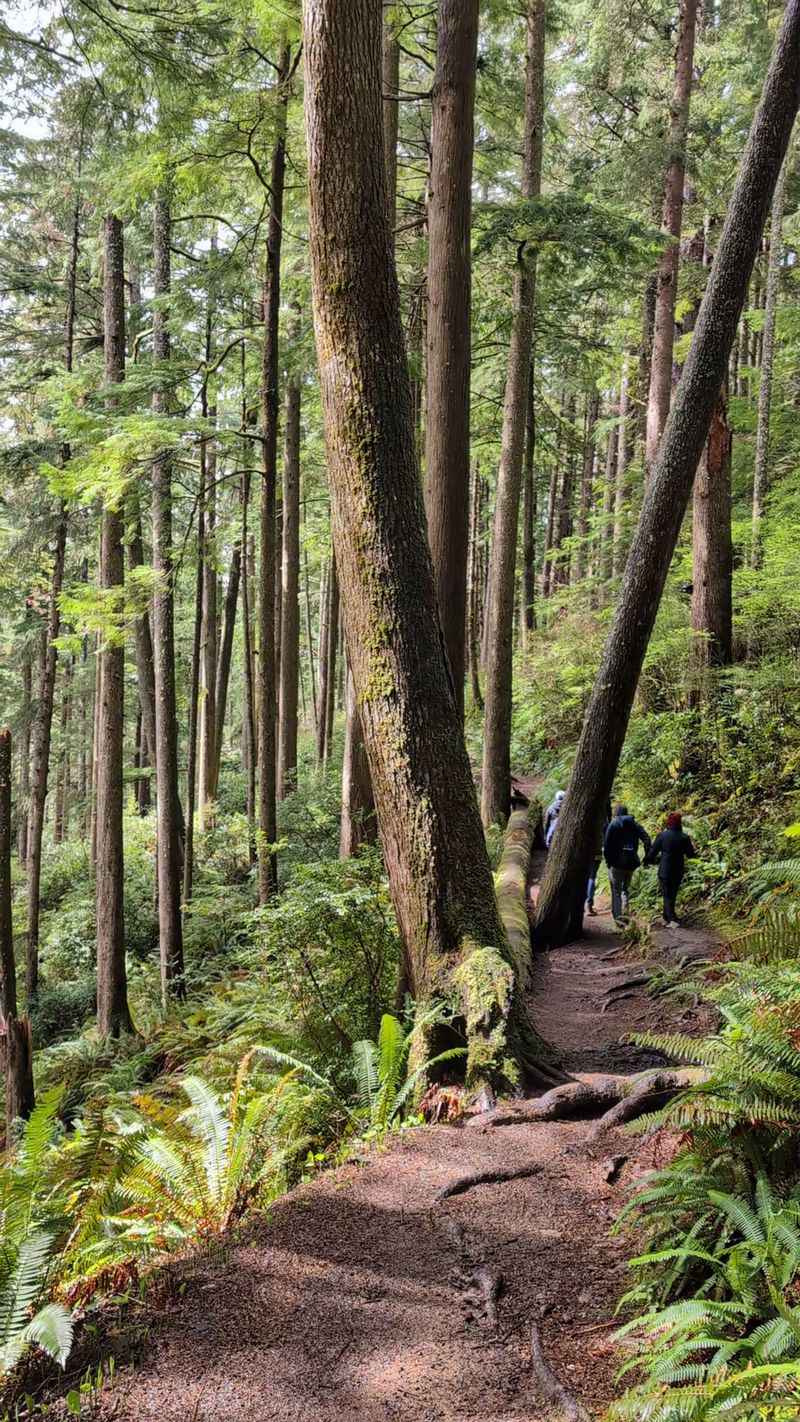
Let me be straight with you about the mud situation. This trail stays muddy year-round, but February cranks it up to expert level.
I’m talking soft, soupy mud that sucks at your boots and tests your balance with every step.
Wearing proper hiking shoes isn’t optional here, it’s survival equipment. I watched someone in sneakers slide around like they were ice skating, while my waterproof boots kept me stable and dry.
The mud coats everything, turning rocks into slip hazards and making those wooden platforms treacherously slick.
Some stretches feature mud so deep you have to choose between going through it or bushwhacking around. I committed to the mud and ended up with boots caked in Oregon coast clay.
Several hikers mentioned bringing spare shoes and bags for the car ride home, which is honestly genius planning.
The mud doesn’t make the trail worse though, it makes it more authentic. This isn’t some manicured park path, it’s raw coastal Oregon showing its true colors.
February rains keep everything saturated, so embrace the mess and focus on the fact that this mucky trail leads to something absolutely spectacular.
Halfway Ocean Peekaboo Views
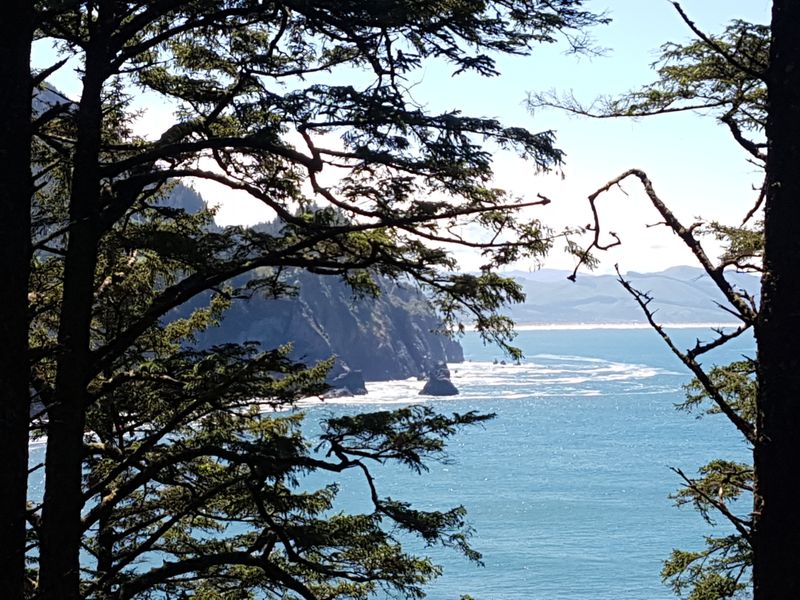
Around the halfway point, the forest opens up just enough to give you teaser views of the Pacific Ocean. These peekaboo moments through the trees reminded me why I was slogging through all that mud.
Blue water sparkles between Sitka spruce trunks, and you can hear waves crashing below.
I found a spot where the trail hugs the cliff edge, offering clear sightlines down to the beach. Surfers bobbed in the water like tiny dots, waiting for waves.
These preview views build anticipation, showing you glimpses of the panorama that’s coming.
A small waterfall trickles off to the left about halfway through, just 15 feet off the main trail. It’s not massive, but the sound of running water adds another sensory layer to the hike.
I stopped there to catch my breath and soak in the coastal atmosphere.
February light hits these viewpoints perfectly, with lower sun angles creating dramatic shadows across the water. The trail stays mostly shaded, but these openings let you feel the ocean breeze and smell the salt air.
These moments kept my energy up for the final push to Cape Falcon’s stunning endpoint in Oregon.
The 100-Foot Outcropping Payoff
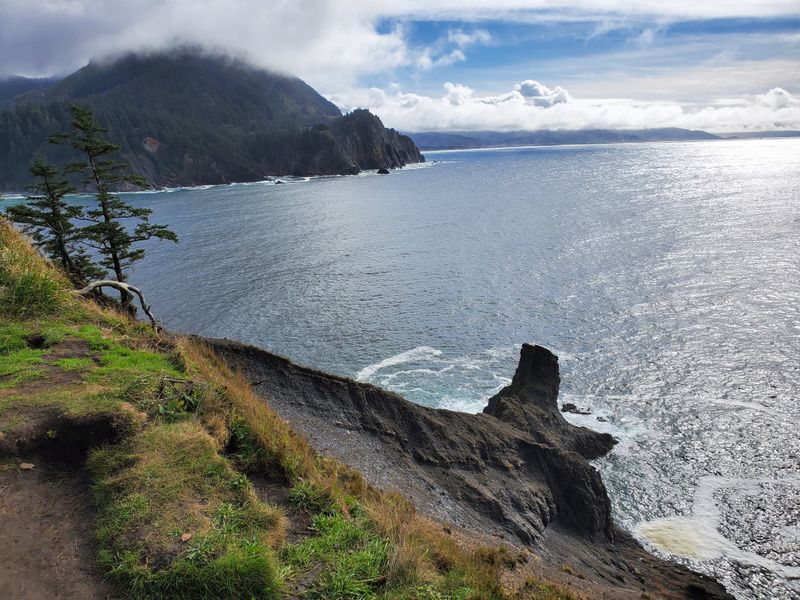
Stepping onto the Cape Falcon outcropping knocked the wind right out of me. This 100-foot rocky promontory juts into the Pacific Ocean, offering 180-degree views that make every muddy step completely worth it.
I stood there speechless, watching waves crash against rocks far below.
The viewpoint spreads across a wind-cleared grassy area with water visible in three directions. To the north, the coastline curves toward Cannon Beach.
South, you can trace the shoreline toward Manzanita. Straight ahead, nothing but endless Pacific Ocean stretches to the horizon.
February wind hits this spot with serious force, but it’s gloriously refreshing after the humid forest hike. I watched the wind flatten the grass and felt it push against me, making me feel tiny against the massive ocean backdrop.
The exposed location means you get unobstructed views without any trees blocking your photos.
Multiple little nooks around the outcropping offer private seating spots. I found a rock shelf perfect for sitting and just absorbing the scene.
This isn’t a quick photo-and-go viewpoint, it’s a place that demands you stay awhile and let the Oregon coast work its magic on your soul.
Gray Whale Migration Front Row Seats
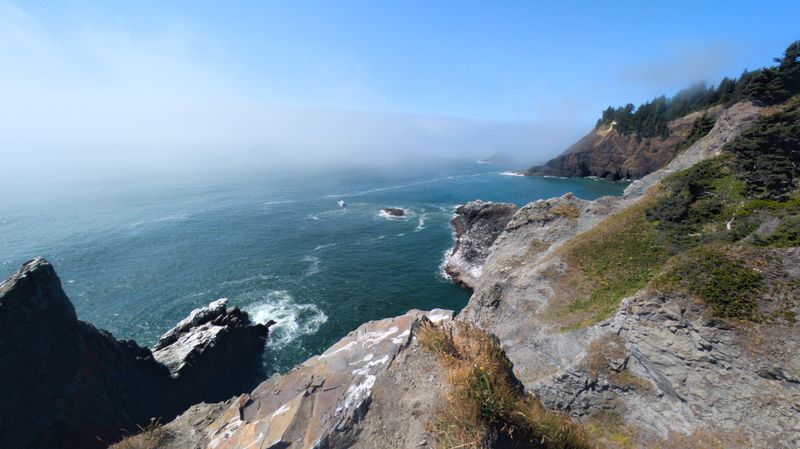
February transforms Cape Falcon into one of the best whale watching spots on the entire Oregon coast. Gray whales migrate south from Alaska to Mexico, and this outcropping puts you at eye level with their journey.
I spent 30 minutes scanning the water and spotted three whales spouting in the distance.
The elevated viewpoint gives you serious advantages over beach-level whale watching. You can see farther out to sea and track whales as they surface and dive.
Binoculars help, but I spotted whales with my naked eye by watching for the telltale spouts of water vapor.
Winter months bring fewer crowds, meaning you’re not fighting hordes of tourists for viewing space. I had the outcropping mostly to myself, which made the whale sightings feel like private performances.
The whales swim relatively close to shore here, following the coastline on their ancient migration route.
Peak migration runs from December through March, but February hits a sweet spot with decent weather and active whale movement. I watched one whale breach partially, its massive body breaking the surface before sliding back under.
These moments make you realize why people trek through mud and roots to reach this exact spot in Oregon.
Surfer Watching From Above
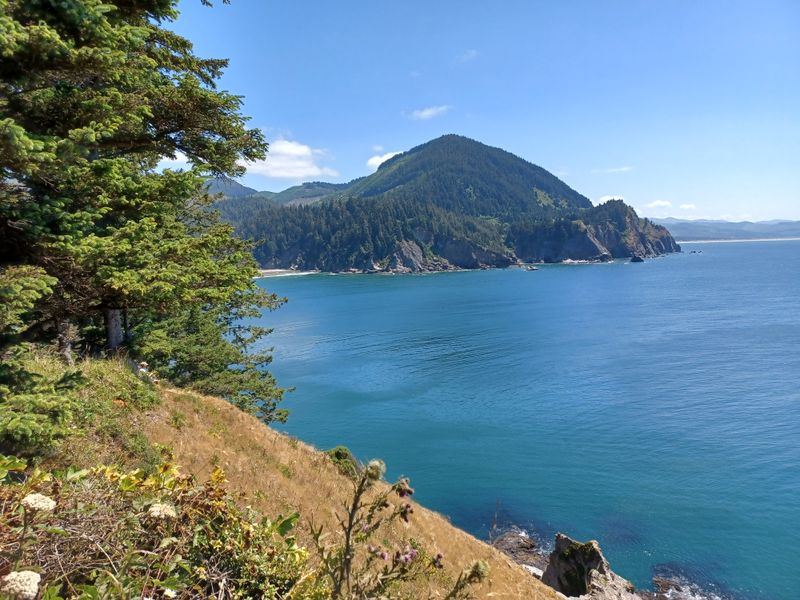
Looking down from Cape Falcon, I discovered an unexpected entertainment bonus watching surfers tackle the waves below. They looked like determined ants bobbing in the swells, paddling out and catching rides back toward shore.
The aerial perspective made their sport look both thrilling and slightly insane.
The waves weren’t huge during my February visit, but several surfers still braved the cold Pacific water. I could see them positioning themselves, waiting for the right swell, then popping up on their boards.
Some rides lasted just seconds before they tumbled, while others carved long lines across the wave face.
This viewpoint gives you a totally different appreciation for surfing. From beach level, you can’t see the patterns and rhythms that surfers navigate.
From 100 feet up, you watch the sets roll in, see the surfers choose their waves, and understand the chess game they’re playing with the ocean.
I sat there mesmerized, watching this dance between humans and water. The surfers probably had no idea they had an audience way up on the cliff.
Their presence added life and movement to the seascape, reminding me that Oregon’s coast is both wild and actively enjoyed by adventurous souls year-round.
The Wind-Powered High
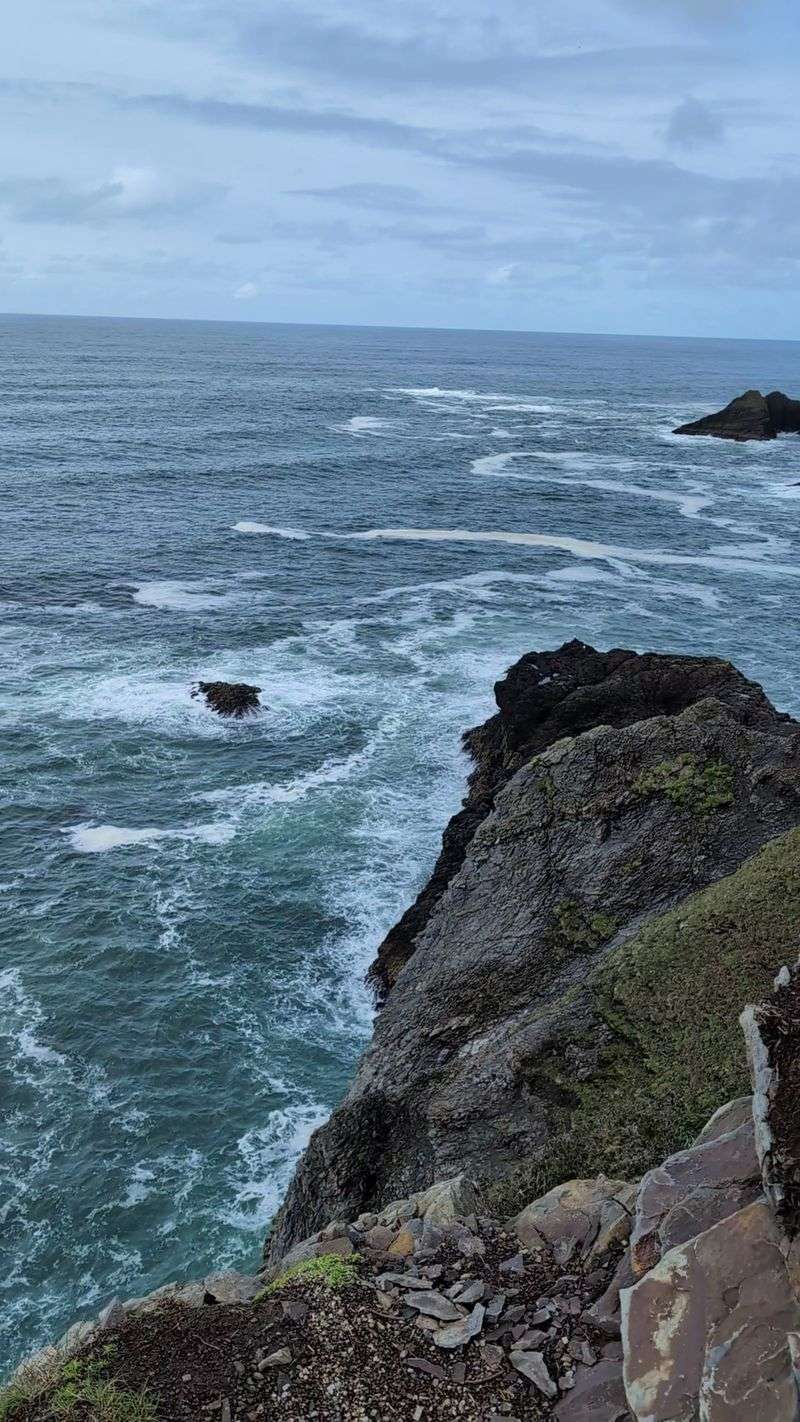
The wind at Cape Falcon deserves its own section because it’s absolutely wild up there. I’m talking sustained gusts that lean you sideways and make you laugh out loud at the sheer power of it.
February brings some of the strongest winds, turning the outcropping into nature’s own thrill ride.
Standing at the edge with wind whipping around me felt exhilarating in a way that’s hard to describe. It’s cool and fresh, carrying ocean spray and the smell of salt and seaweed.
The wind flattens the grass and makes conversation nearly impossible, forcing you into a meditative state of just experiencing the moment.
I watched the wind create patterns on the ocean surface, darkening the water in streaks as gusts raced across the waves. It pushed clouds overhead at dramatic speeds, constantly changing the light and shadows across the seascape.
This dynamic atmosphere makes every visit unique, with conditions shifting by the minute.
The wind actually enhances the experience rather than detracting from it. It reminds you that you’re standing on the edge of the continent, where land meets ocean in a constant battle of elements.
Bundle up, brace yourself, and let Oregon’s coastal wind blow away whatever stress you carried up that muddy trail.
Dear Reader: This page may contain affiliate links which may earn a commission if you click through and make a purchase. Our independent journalism is not influenced by any advertiser or commercial initiative unless it is clearly marked as sponsored content. As travel products change, please be sure to reconfirm all details and stay up to date with current events to ensure a safe and successful trip.
