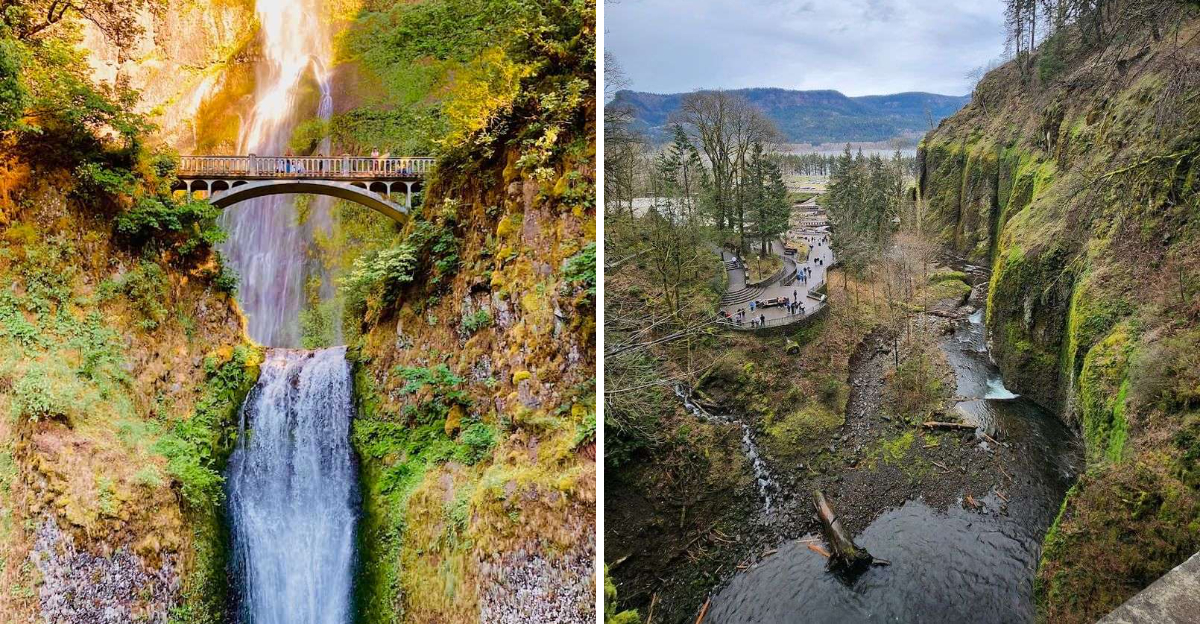
Six hundred twenty feet of water dropping straight down will make your neck hurt from looking up. That is the only complaint anyone has about this Oregon waterfall, the tallest in the entire state by a comfortable margin.
You can hear the roar from the parking lot before you even see it, a deep constant thunder that vibrates in your chest. The bridge crosses right in front of the lower falls and gives you a misty view that photographers chase for years.
If you feel ambitious, a paved trail switchbacks up to the very top where the Columbia River Gorge spreads out below like a green carpet. The waterfall changes with the seasons, a frozen white curtain in winter and a powerful green and blue cascade in summer.
Weekends bring crowds so thick you might wait twenty minutes for a parking spot, but the sight makes the hassle fade quickly. Oregon has plenty of beautiful waterfalls tucked away in the woods, but this one earned its fame for good reason.
Come early in the morning or late in the afternoon when the light hits the water just right. Bring a rain jacket because the mist does not care about your outfit.
The Jaw-Dropping Scale of 620 Feet
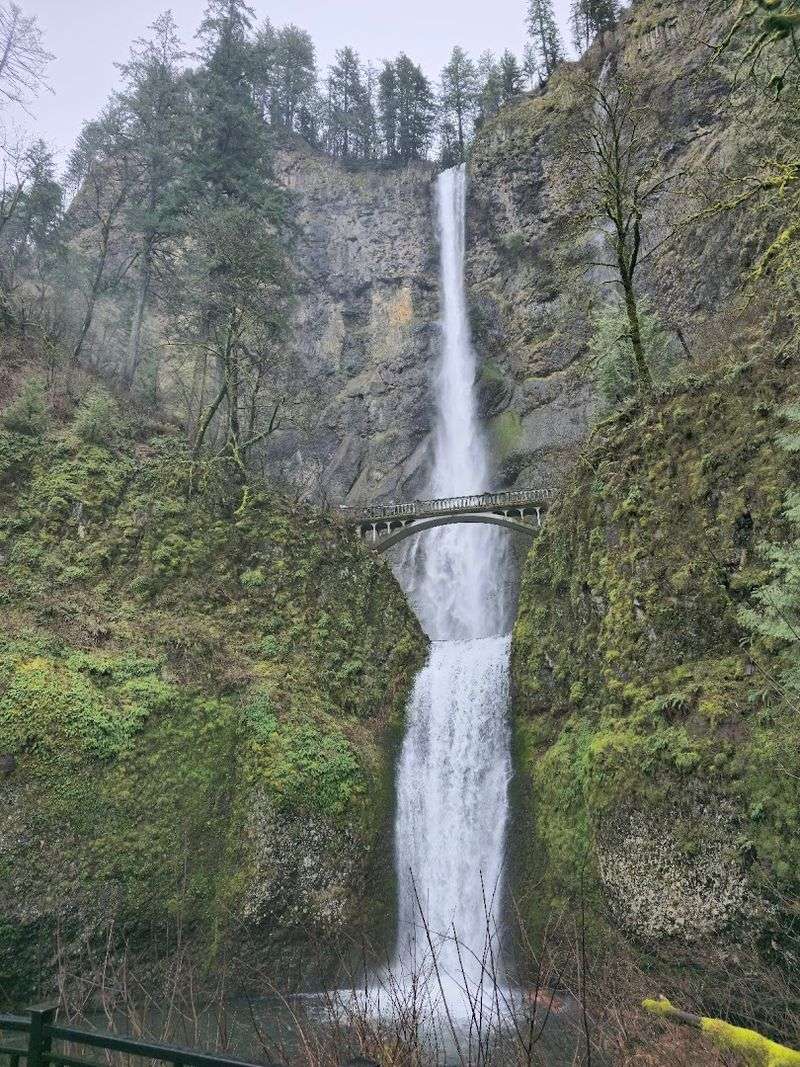
Numbers on a screen never do it justice. When you finally stand at the base and tilt your head all the way back, 620 feet feels almost unreal.
The water tumbles in two distinct tiers, the upper drop being the dramatic one at around 542 feet.
The lower falls adds another 69 feet, and together they create a roar you feel in your chest. Spray drifts constantly outward, coating nearby rocks and ferns in a permanent shimmer.
On sunny days, small rainbows appear in the mist without warning.
Multnomah Falls has held its title as Oregon’s tallest waterfall for as long as records have tracked it. The Columbia River Gorge surrounds it with dark basalt cliffs and thick forest, making the whole scene feel ancient and dramatic.
Many visitors say the photos never match what their eyes actually see. That gap between expectation and reality is exactly what makes this place worth every mile of the drive.
Getting There and Parking Smart
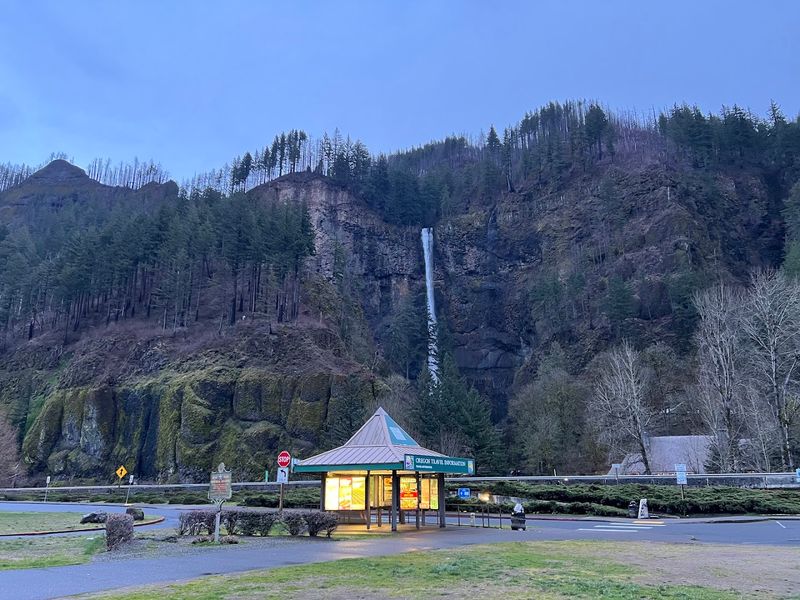
Multnomah Falls sits right off Interstate 84 at exit 31, roughly 30 miles east of Portland. The drive through the Columbia River Gorge is scenic on its own, with cliffs and river views framing the road the whole way.
Parking is the one part that requires a real plan. The small lot directly in front of the falls fills up fast, especially on weekend mornings.
A larger overflow lot sits across the highway, and you access the falls through an underpass tunnel, which is actually kind of fun.
Between Memorial Day and Labor Day, a parking permit is required for the main lot. Shuttle services run from nearby transit points during peak season.
Arriving before 10 a.m. on weekends makes a noticeable difference in crowds and parking stress. Weekday visits are even calmer.
Public transit from Portland is also an option, with bus service connecting Gateway Transit Center to the falls, which makes the whole trip easier than expected.
The Trail to the Top of the Falls
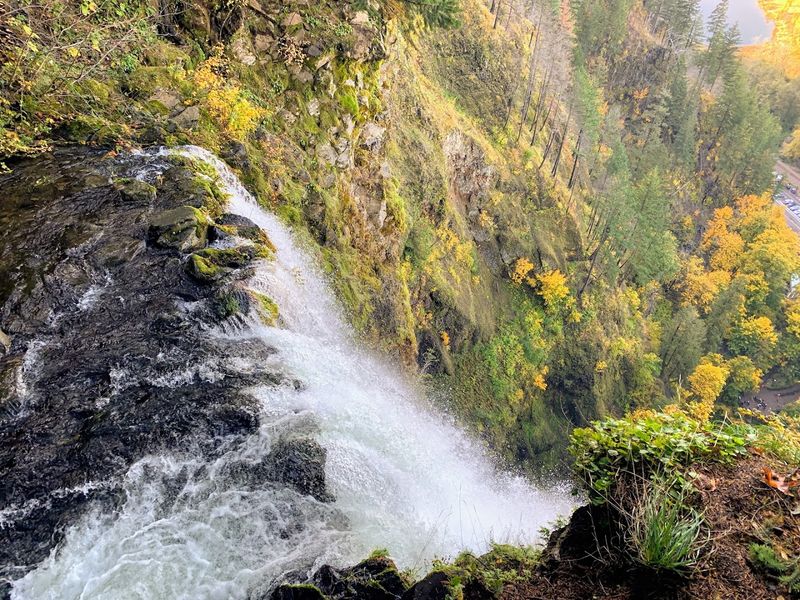
The trail to the top is about one mile from the bridge and climbs through 11 switchbacks. It is paved most of the way, but steep in stretches and genuinely slippery after rain.
Good shoes are not optional here, they are necessary.
Each switchback offers a slightly different view of the gorge and the surrounding forest. The trees are dense and old, filtering light into soft green patches along the trail.
You can hear the water the whole way up, which keeps the hike feeling connected to the falls even when they are out of sight.
At the top, flat rocks extend near the edge and people often sit there to catch their breath and take in the view. The Columbia River Gorge spreads out below in a way that makes the climb feel completely worth it.
Round trip from the bridge takes most visitors about 45 minutes to an hour. Bringing water is smart, the trail is more of a workout than it looks from the bottom.
Multnomah Falls Lodge at the Base
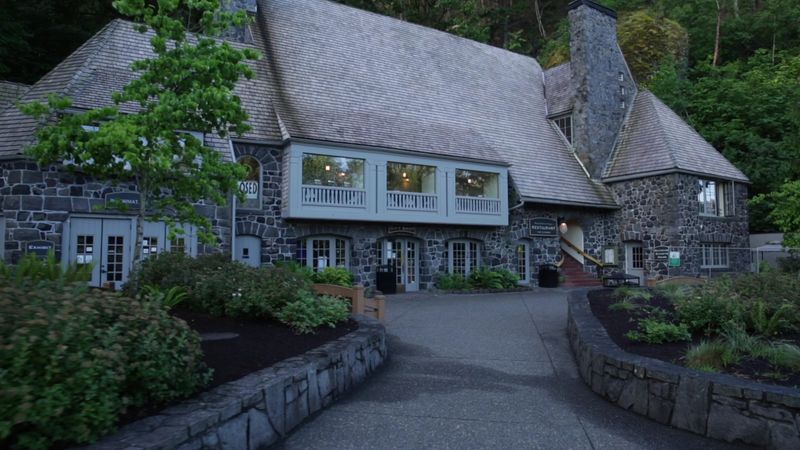
Built in 1925, the Multnomah Falls Lodge is a sturdy stone building that fits naturally into the landscape. It sits right at the base of the falls and serves as the main hub for visitors before and after the hike.
The lodge houses restrooms, a gift shop, a snack bar, and a full restaurant.
The snack bar offers things like hot dogs, pretzels, corn dogs, and milkshakes, solid fuel for a hike or a reward after one. The restaurant inside serves proper meals and has a warm, rustic atmosphere that feels right after a morning in the gorge.
The gift shop carries Oregon-themed souvenirs alongside Multnomah Falls-specific items. It is easy to spend more time browsing than expected.
The lodge also has a coffee stand, which becomes very important on cold or rainy mornings. Many visitors grab a hot drink before starting the trail and it genuinely sets the mood for the whole visit.
The building itself has a quiet, historic charm that adds character to the entire experience.
The Iconic Benson Footbridge
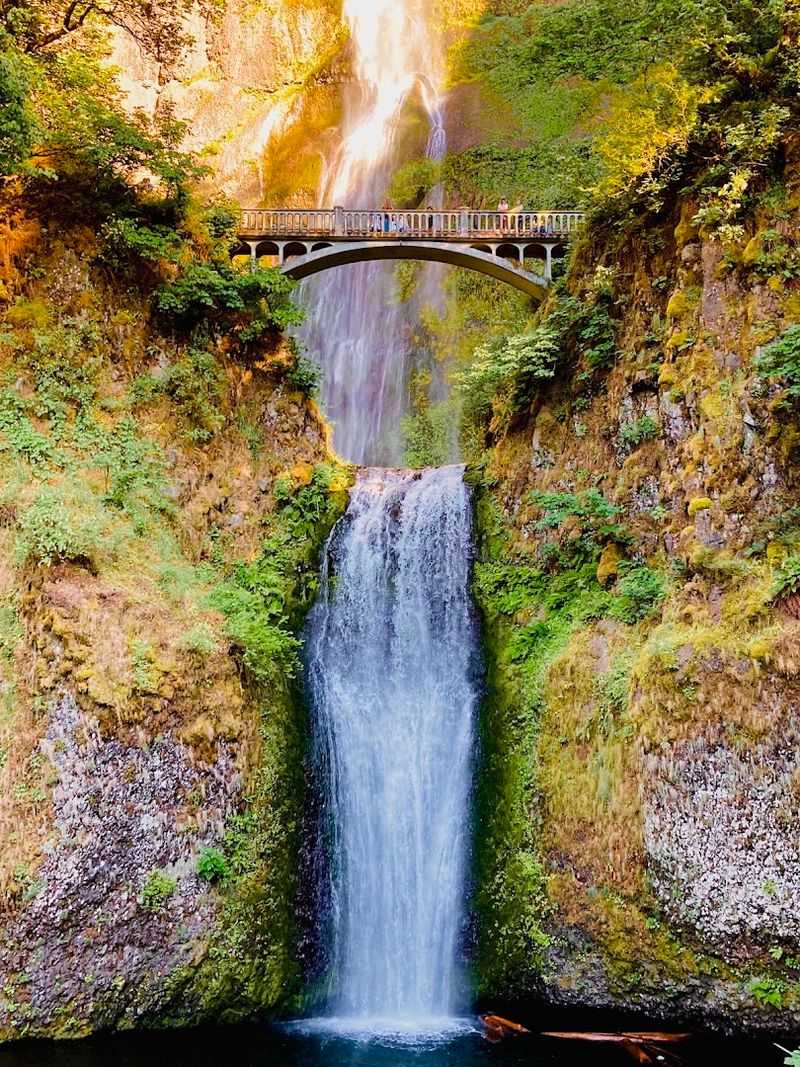
Right in the middle of the falls hangs one of the most photographed bridges in the entire Pacific Northwest. The Benson Footbridge was built in 1914 and sits roughly 105 feet above the lower falls.
Walking across it puts you eye-level with the spray and gives you a completely different sense of the water’s power.
Looking up from the bridge, the upper falls towers above you. Looking down, the creek rushes away through the gorge below.
It is the kind of spot where you stop mid-sentence and just stare.
The bridge gets crowded quickly, especially on weekends. A good tip is to cross early in the morning when the light hits the water at a low angle and most visitors are still in the parking lot.
Spending five minutes on the bridge is plenty for photos, but the view lingers in your memory much longer. It is a small structure that somehow makes a massive waterfall feel even bigger.
What to Wear and What to Pack
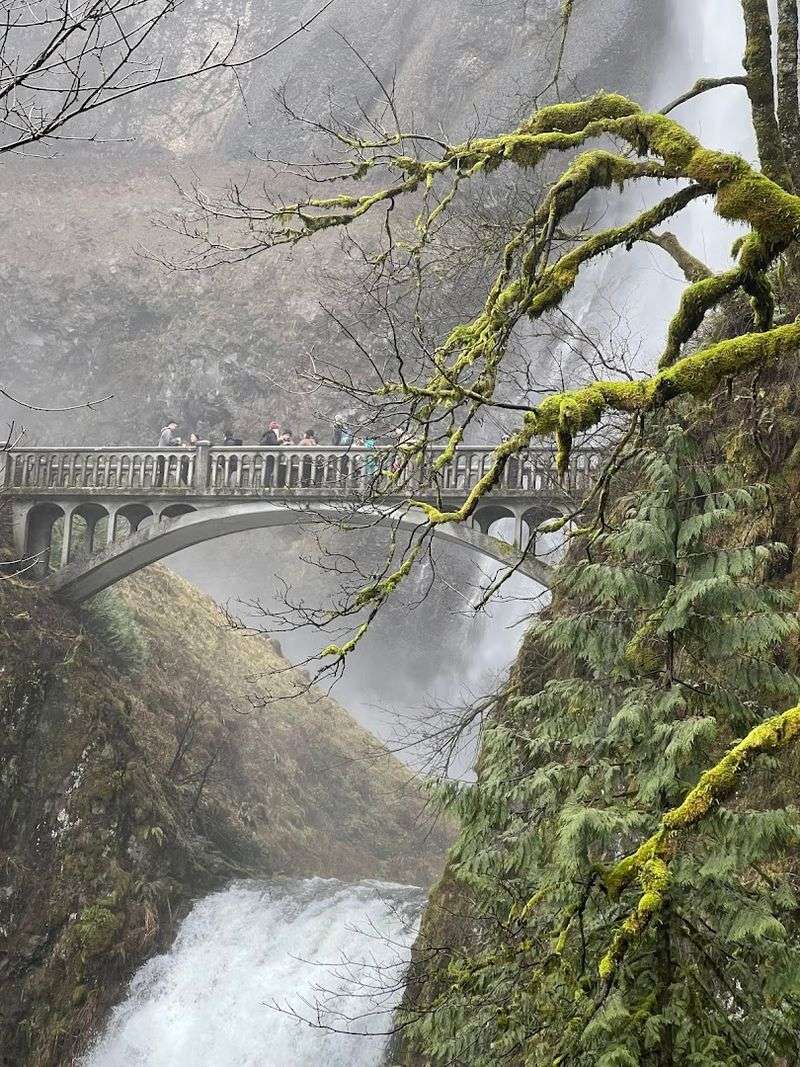
The mist near the falls is constant and surprisingly thorough. A waterproof or water-resistant jacket is one of those things you will be very glad you brought.
Even on dry days, the spray near the base and the bridge will dampen a light shirt quickly.
Trail shoes with real traction make a big difference on the switchbacks. The paved trail gets slick from moisture and foot traffic.
Regular sneakers can work, but anything with worn soles becomes a problem on the steeper sections.
Pack water even if you plan a short visit. The hike to the top is more physical than it looks, and the elevation gain adds up.
Sunscreen matters in summer, especially above the tree line near the top. A small bag with water, snacks, and a jacket covers most situations.
Weather in the gorge can shift faster than expected, especially near the mountains. Rain gear and layers are the difference between a great day and a miserable one.
Preparation here is genuinely simple but really pays off.
Best Times to Visit for Fewer Crowds
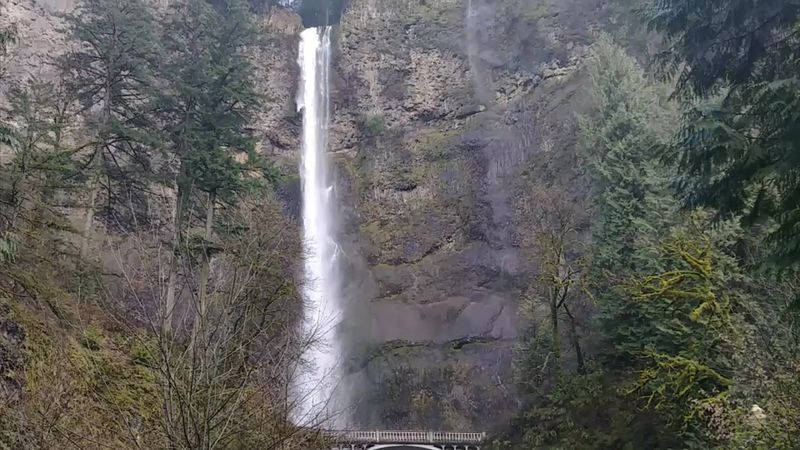
Timing a visit to Multnomah Falls takes a little strategy, but it pays off quickly. Weekday mornings before 10 a.m. are consistently the calmest.
Weekends from 11 a.m. through mid-afternoon bring the largest crowds, especially in summer.
The off-season has a quiet magic to it. Visiting in fall means the surrounding forest turns gold and orange around the falls, which creates a completely different kind of beauty.
Winter visits come with fewer people and sometimes ice formations near the lower falls, which is striking in its own right.
Cold-weather visits require proper layering and careful footing on icy patches. The reward is having the whole place feel almost private.
Spring brings high water flow after winter rains, making the falls louder and more powerful than at any other time of year. Each season genuinely offers something different.
Picking a time based on what you want out of the visit, solitude, color, power, or warmth, helps set the right expectations before you even arrive.
The Columbia River Gorge Setting
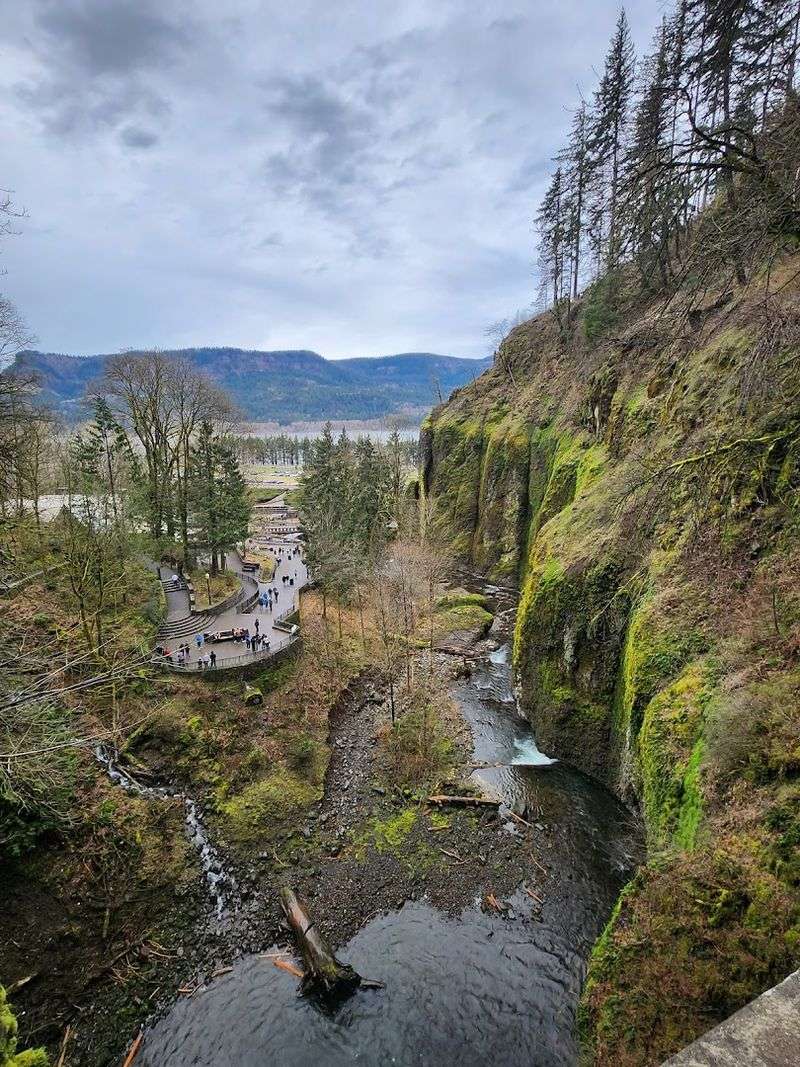
Multnomah Falls does not exist in isolation. It sits inside the Columbia River Gorge National Scenic Area, one of the most geologically dramatic landscapes in the entire country.
The gorge was carved by massive prehistoric floods, and the basalt walls on either side still carry that sense of ancient force.
The Columbia River runs below, wide and steel-blue, visible from higher points on the trail. The whole area is layered with other waterfalls, hiking trails, and viewpoints that extend well beyond Multnomah itself.
A 5.5-mile loop trail connects several smaller falls up the mountain for those wanting more than a single waterfall experience.
The forest here is dense Pacific Northwest growth, mossy and green even in dry months. Ferns cover the cliff bases and the air carries that particular cold-clean smell that only exists near moving water in old-growth forest.
The gorge frames Multnomah Falls in a way that no single park or garden could replicate. The landscape feels earned, not curated, and that is a big part of what makes it memorable.
Photography Tips for Capturing the Falls
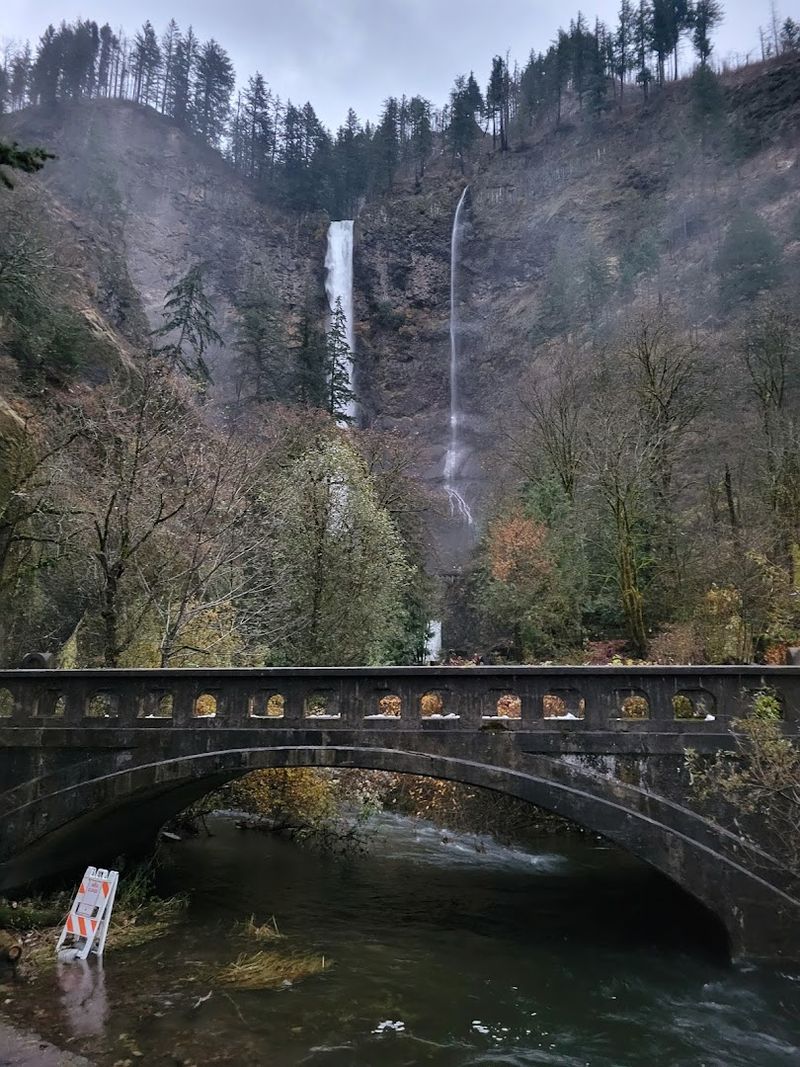
Getting a good photo of Multnomah Falls takes a bit of planning beyond just pointing a phone at the water. The best full-view shot comes from the primary viewing area near the lodge, where the entire two-tiered falls fits into a single frame.
Morning light hits the falls from a favorable angle and the mist catches it beautifully.
The Benson Footbridge offers a completely different composition. From the bridge, you can shoot upward toward the upper falls or downward along the creek.
Both angles are worth trying. A wide lens captures the scale better than a zoom.
Protect your camera or phone from the mist near the base. The spray is persistent and will coat a lens fast.
A lens cloth and a small bag for your gear go a long way. Cloudy days actually produce softer, more even light than direct sun, which can cause harsh shadows on the cliff face.
Overcast skies are genuinely good conditions here, not a reason to reschedule the trip.
Why Multnomah Falls Stays With You Long After You Leave
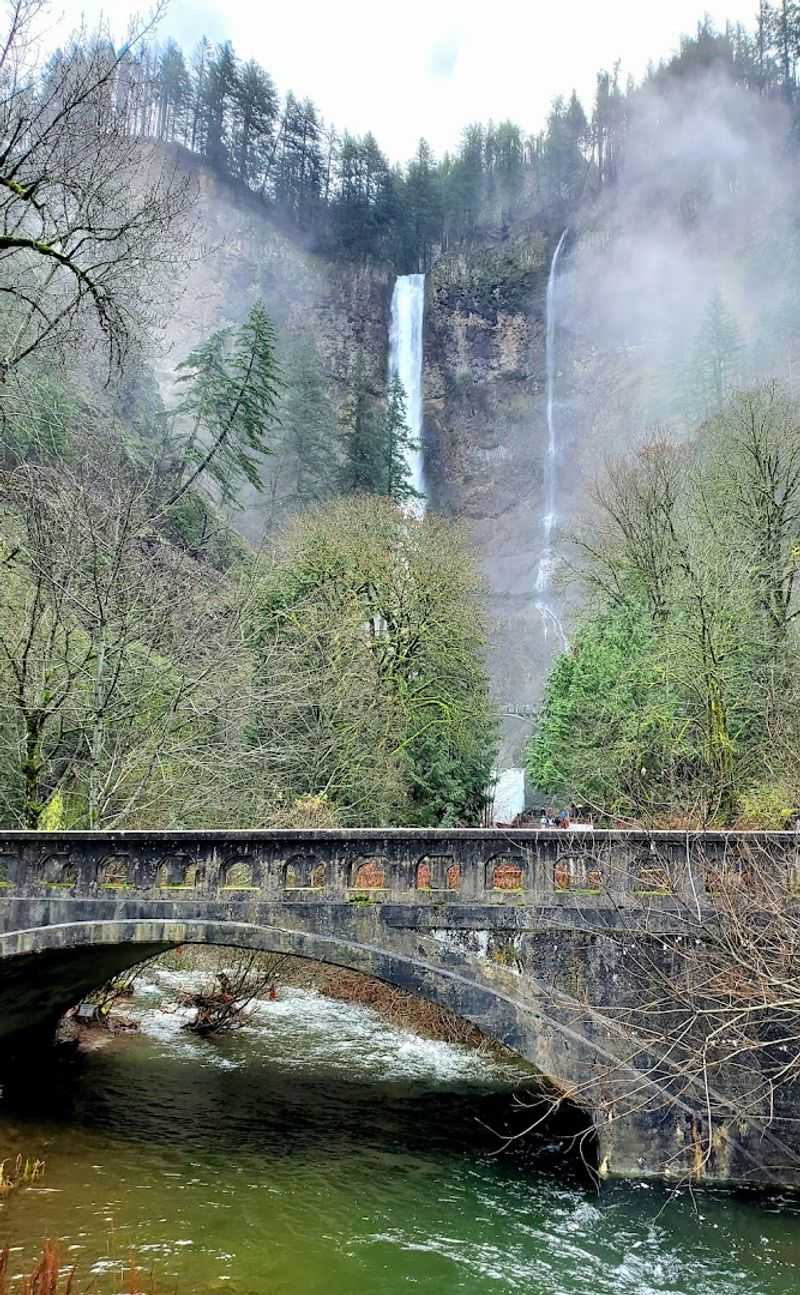
Some places are impressive once and forgettable by the drive home. Multnomah Falls is not that kind of place.
Visitors come back repeatedly, sometimes in different seasons, sometimes years apart, and consistently say it hits differently each time.
Part of it is the scale that never fully normalizes. Part of it is the sound, that low, constant roar that fills the whole valley and makes conversation feel secondary.
The mist, the green cliffs, the bridge, the lodge, the trail above, all of it adds up to something that feels genuinely layered rather than one-dimensional.
The falls have been drawing visitors since the early 1900s and the landscape has absorbed that long human presence without losing any of its wildness. Standing there, it is easy to understand why people return.
It is not just a waterfall you check off a list. It is a place that gets filed somewhere deeper than a travel memory.
