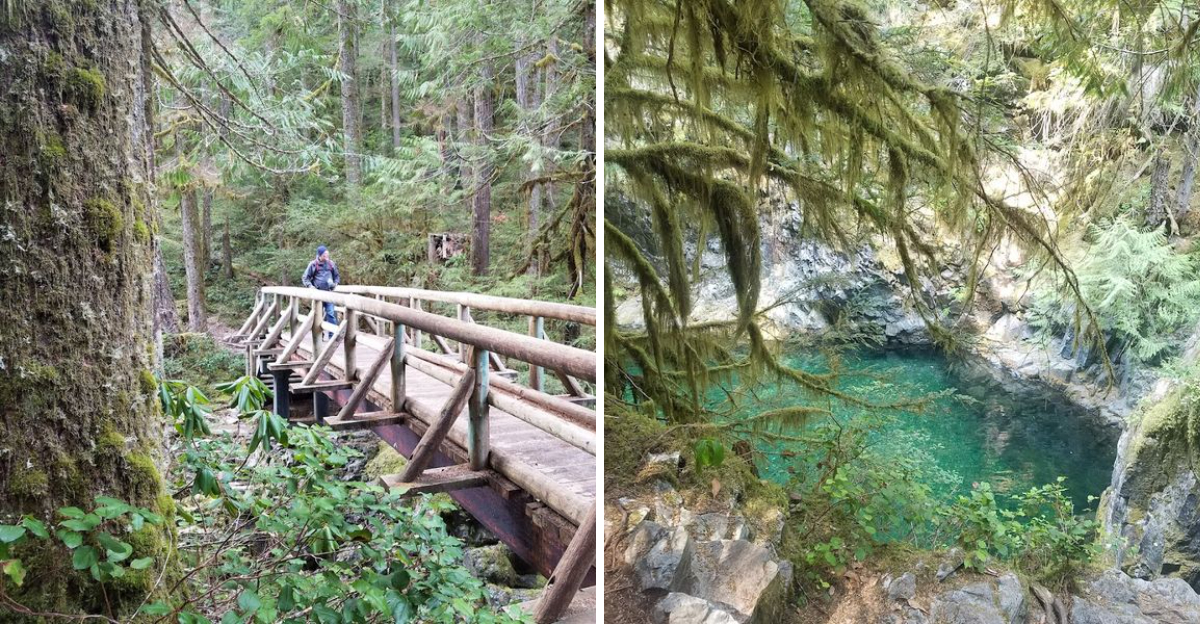
You walk through a grove of trees so massive you feel tiny, like a visitor in a world that has stood for centuries. Ancient firs create a canopy that filters light into a soft, green glow.
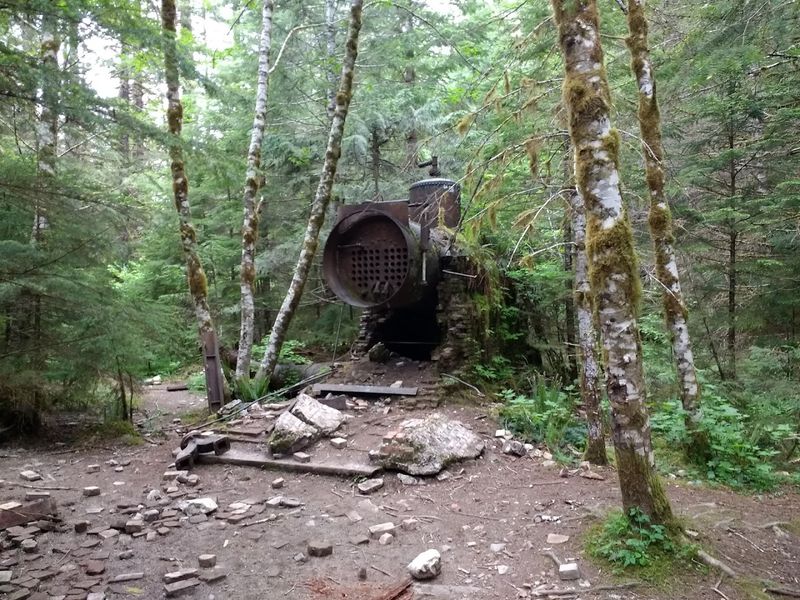
The air smells of moss, damp earth, and pine, with only the sound of rushing water breaking the silence. Deeper in, you notice traces of something else, rusted machinery and weathered cabin frames.
These are remnants of a once bustling mining camp from the 1850s. Prospectors arrived hoping to strike gold, and they found it along with lead, zinc, copper, and silver.
A community grew and thrived until the 1950s, when economics and harsh winters took their toll. The town was eventually abandoned, leaving behind relics of a bygone era.
Today, those ruins are preserved within the wilderness, surrounded by one of the largest intact old growth forests in Oregon. It is a place where the silence of ancient trees whispers stories of a time long gone.
Ancient Old-Growth Forest That Has Stood for Centuries
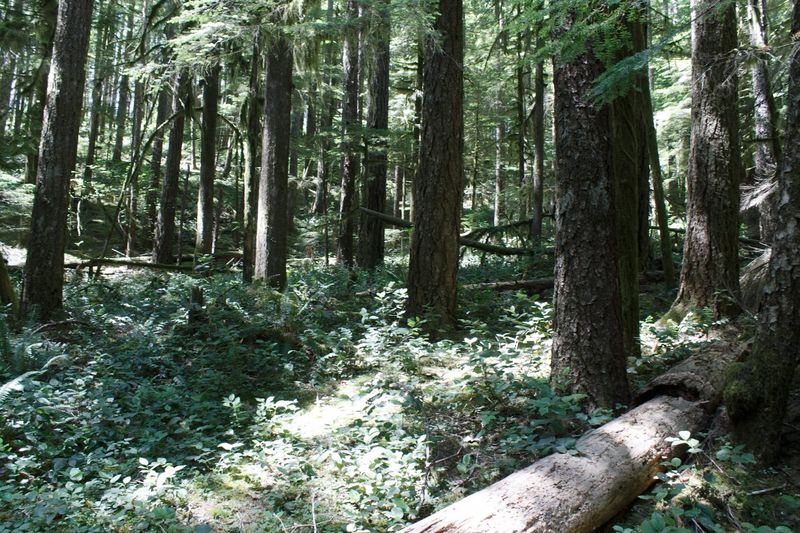
Walking among trees that are over a thousand years old changes your sense of time completely. The old-growth forest at Opal Creek Wilderness is one of the largest intact ancient forests remaining in the Pacific Northwest.
These Douglas firs, western red cedars, and big-leaf maples have never seen a logging saw.
The trunks are enormous, wider than most cars, and covered in thick layers of moss and lichen. Ferns carpet the ground in every direction, and the light filters down in soft green beams.
The forest feels quiet in a deep, settled way that newer forests simply do not have.
Scientists value old-growth forests because they support hundreds of species that cannot survive anywhere else. Spotted owls, marbled murrelets, and countless insects depend on these ancient trees.
Hiking through this forest is not just a pretty walk. It is a rare chance to experience an ecosystem that took a thousand years to build, and that deserves every bit of protection it currently has.
Opal Pool and the Legendary Turquoise Water
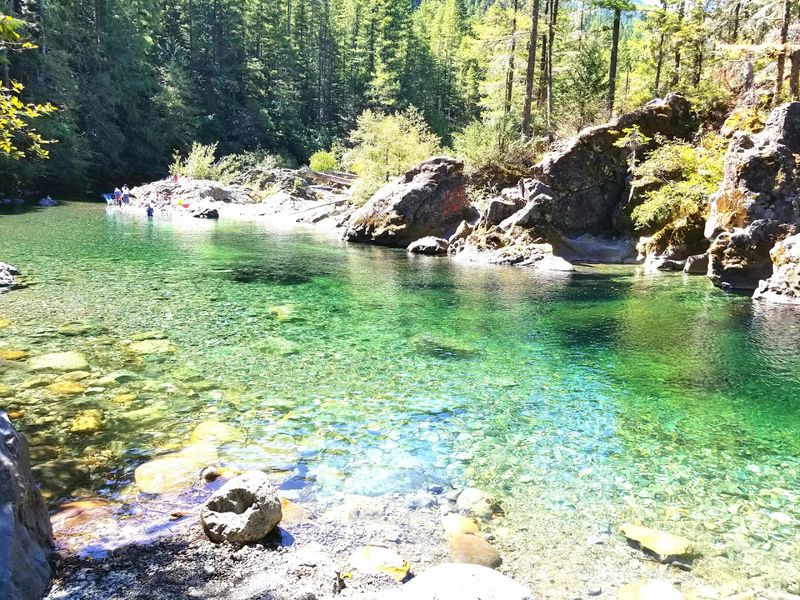
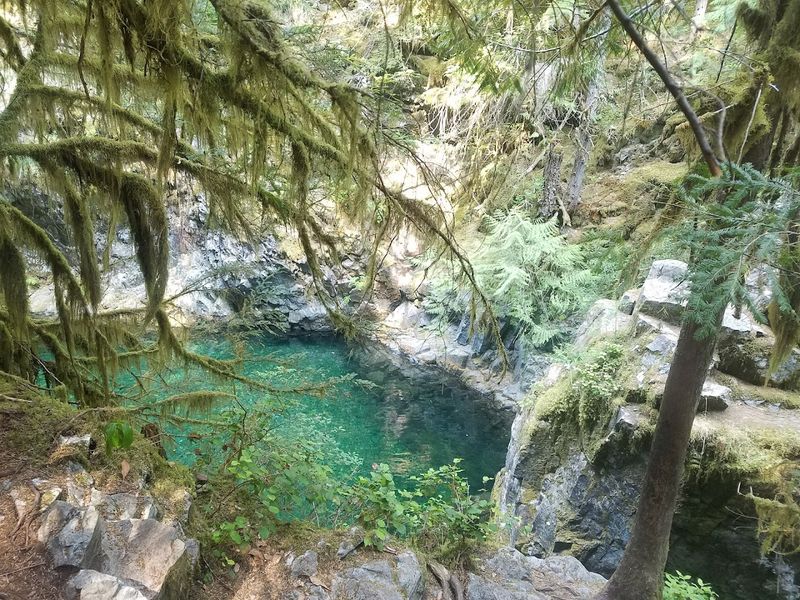
Opal Pool is the kind of place that makes you stop mid-step and just stare. The water is a remarkable turquoise color, almost too vivid to believe, and it stays that way even on overcast days.
The color comes from the mineral-rich clarity of the water itself, not from any trick of light.
I stood at the edge of the pool and could see every pebble on the bottom, even in the deeper sections. The water is cold, genuinely cold, the kind that makes you gasp the moment your foot touches it.
On a warm summer afternoon, that shock feels absolutely perfect.
Opal Pool sits at roughly the six-mile round-trip mark along the main trail, making it a satisfying destination for most hikers. Swimmers brave enough to handle the chill find it incredibly refreshing.
The pool is framed by old cedar trees and mossy cliff walls. It is one of those natural spots that photographs beautifully but still looks better standing right next to it.
The Historic Gold-Mining Village of Jawbone Flats
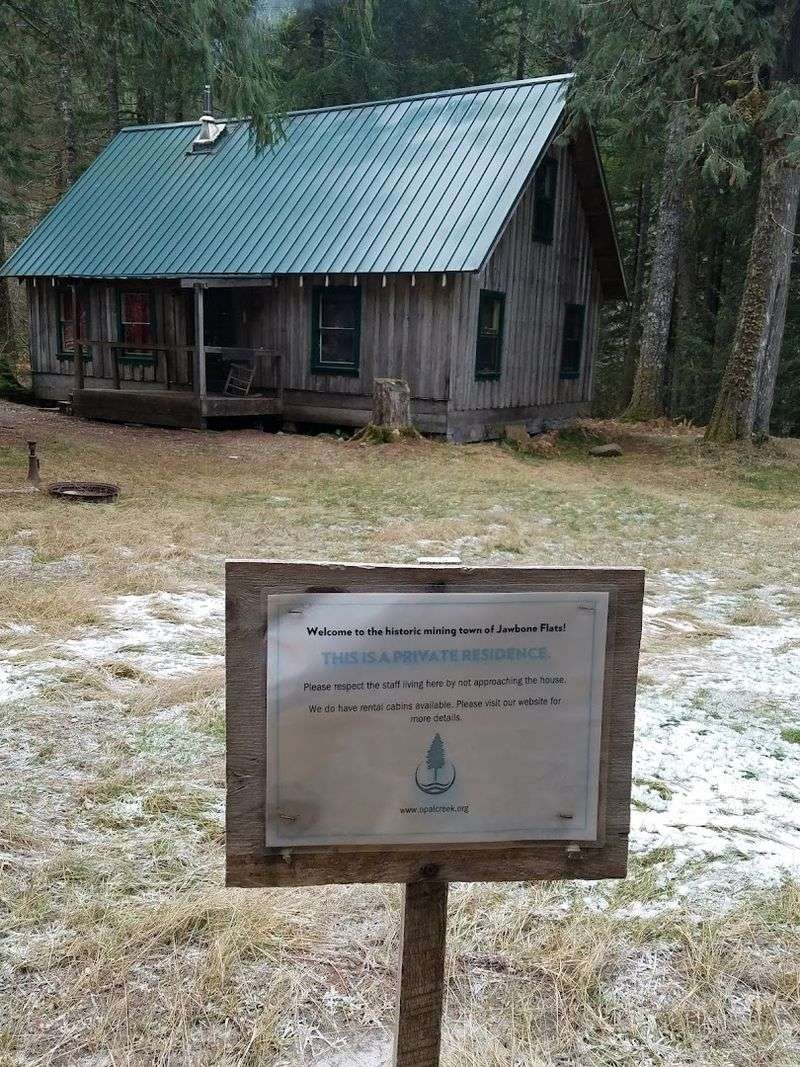
Jawbone Flats is one of the most unexpected discoveries waiting at the end of the Opal Creek trail. This small cluster of historic wooden buildings is a preserved gold and silver mining settlement, tucked right into the heart of the wilderness.
Miners worked this area from the late 1800s through the mid-twentieth century.
The buildings still stand, weathered but intact, and they give the place a quiet, almost eerie energy. Walking through Jawbone Flats feels like stepping into a different era entirely.
The forest has grown right up to the edges of the structures, slowly reclaiming the space around them.
Today, the Friends of Opal Creek organization manages the site and works to preserve both the natural and cultural history of the area. Some of the buildings have been used as educational facilities and rustic overnight accommodations for groups visiting the wilderness.
Jawbone Flats is a reminder that wilderness areas are not just about nature. They also hold the layered, complicated history of the people who came before.
Waterfalls Hidden Along Every Trail
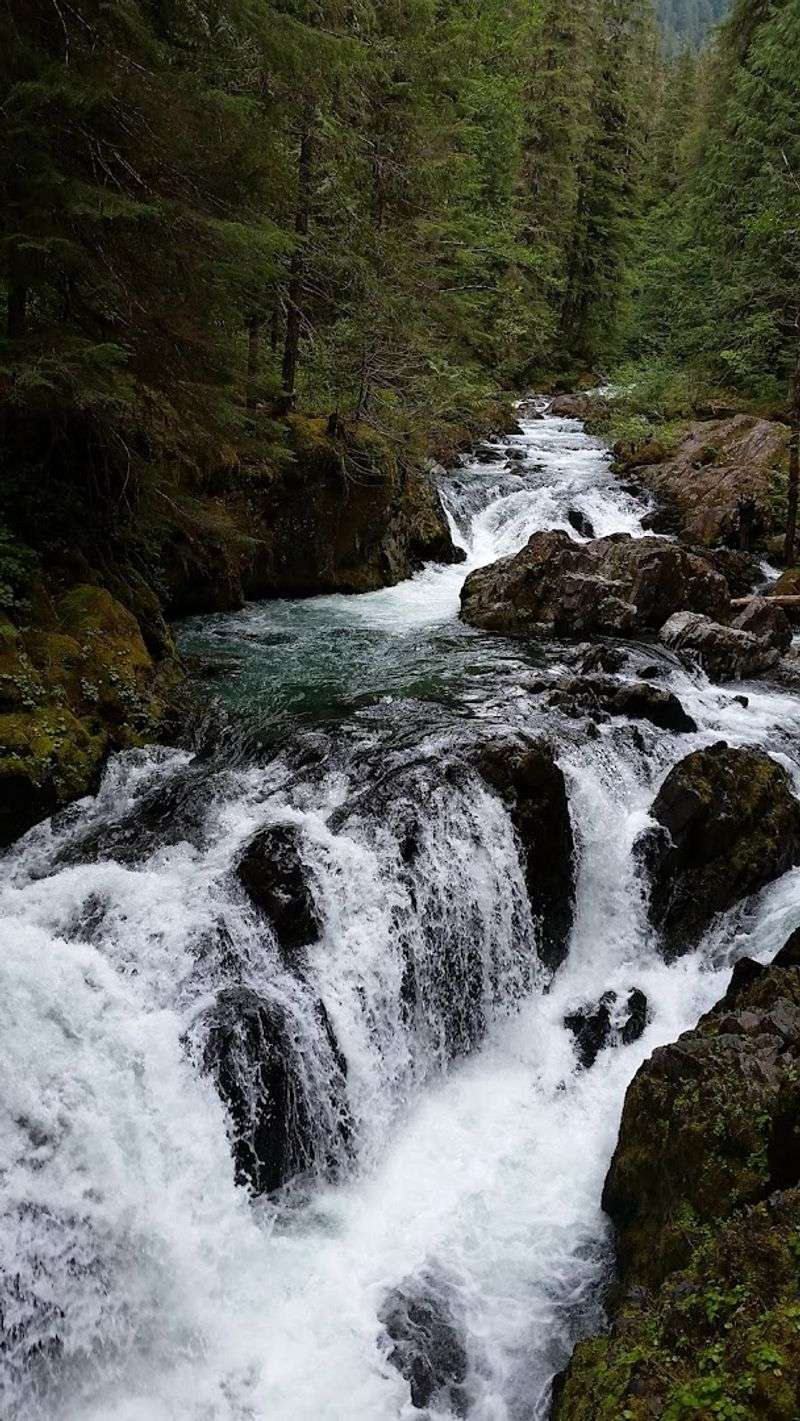
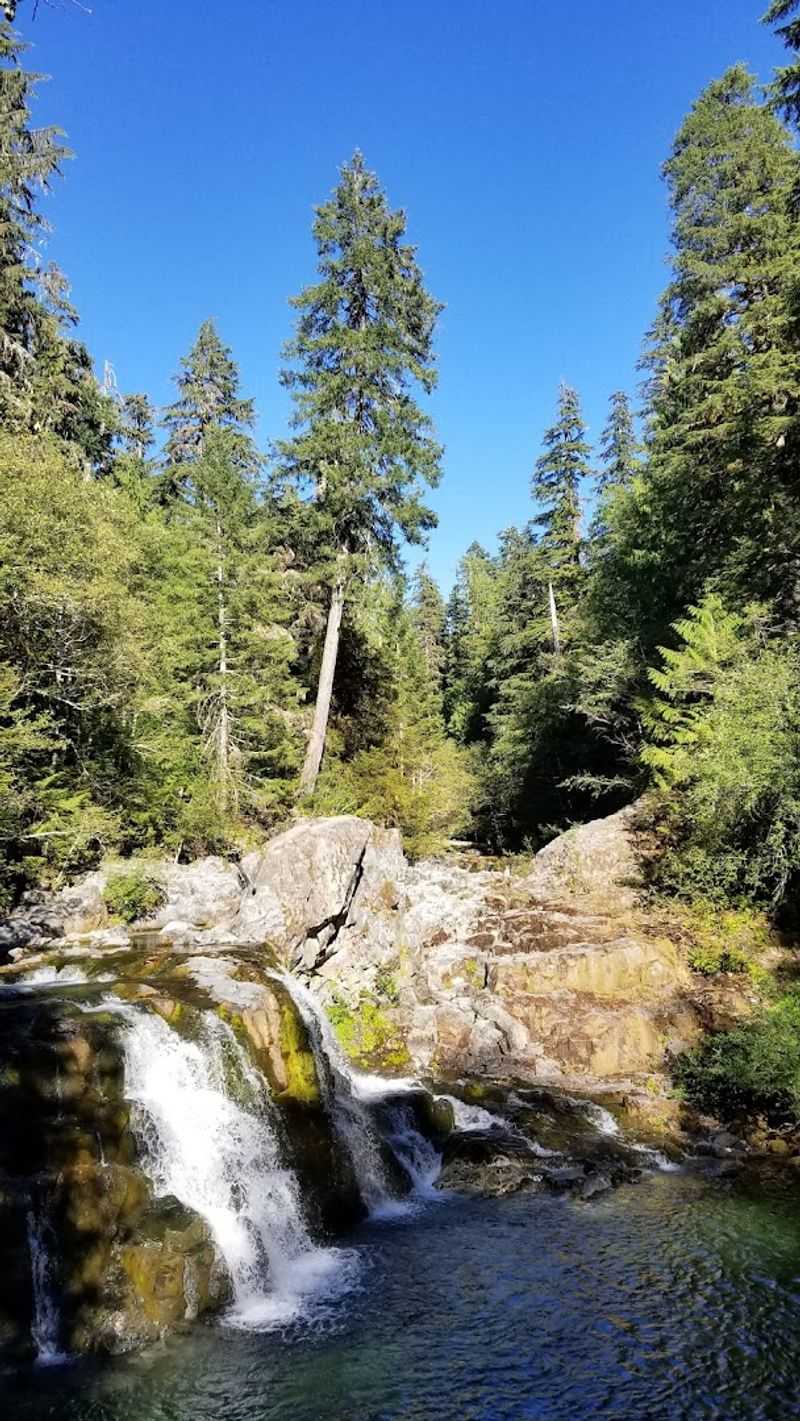
Opal Creek Wilderness has a way of rewarding hikers who keep moving around the next bend. Waterfalls appear throughout the trail system, some modest and gentle, others loud and crashing with serious force.
The variety keeps every hike feeling fresh and full of small surprises.
The cascades along Opal Creek itself are especially beautiful in late spring, when snowmelt pushes the water levels high and the sound fills the entire canyon. Moss grows thick on every rock face near the falls, giving the surroundings that deeply saturated green color that Oregon is famous for.
Even smaller side streams tumble down rocky slopes in ways that catch your eye unexpectedly. I found myself stopping constantly, not because I was tired, but because another waterfall kept appearing around each corner.
Waterfall lovers will find this wilderness deeply satisfying. Bringing a camera with a good lens helps capture the motion blur effect that makes waterfall photos so dramatic.
The light in the forest adds a soft, dreamlike quality to every shot.
The Battle to Protect Opal Creek From Logging
The story of how Opal Creek became protected wilderness is just as remarkable as the forest itself. For years, this area was threatened by logging operations that could have stripped away centuries of old-growth trees in a matter of months.
Conservationists fought hard and long to prevent that from happening.
A man named Jerry Rust and a dedicated group of environmental advocates spent decades pushing for federal protection. Their efforts eventually led to the Opal Creek Wilderness and Scenic Recreation Area Act, signed into law in 1996.
That moment secured the future of over 35,000 acres of ancient forest.
Learning this history while hiking the trails gives the experience a deeper meaning. Every tree you pass represents something that almost disappeared.
The fight for Opal Creek became an important symbol for old-growth forest preservation across the entire Pacific Northwest. It showed that community organizing and persistent advocacy could actually change the outcome for wild places.
That legacy still matters to everyone who visits today.
Hiking Trails for Every Fitness Level
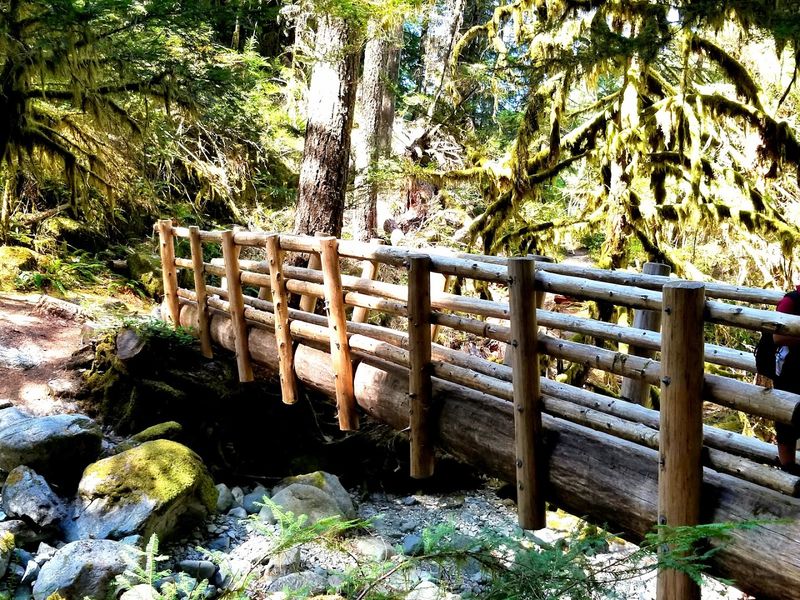
The trail system at Opal Creek Wilderness offers something genuinely useful for hikers at different experience levels. The main Opal Creek Trail is about six miles round trip and follows the creek closely for most of its length.
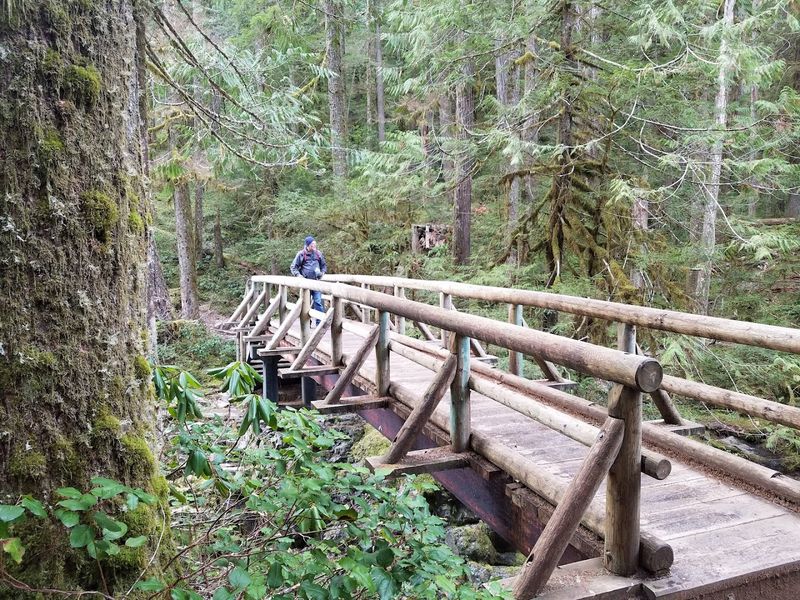
The terrain is mostly manageable, though some sections involve narrow paths and rocky footing.
More experienced hikers can extend their adventure by connecting to additional trails deeper in the wilderness. These routes climb higher into the hills and offer broader views of the surrounding Cascade landscape.
Some trails involve significant elevation gain, so checking a map beforehand is always a smart idea.
Trail conditions vary depending on the season. Snow can linger on higher routes well into spring, and some narrow sections can get slippery after rain.
Wearing sturdy waterproof boots makes a noticeable difference in comfort. Dogs are welcome on the trails, which makes the hike especially popular with pet owners.
The overall experience rewards anyone willing to put in the miles, regardless of whether they are first-time hikers or seasoned backcountry regulars.
Wildlife Watching in an Untouched Ecosystem
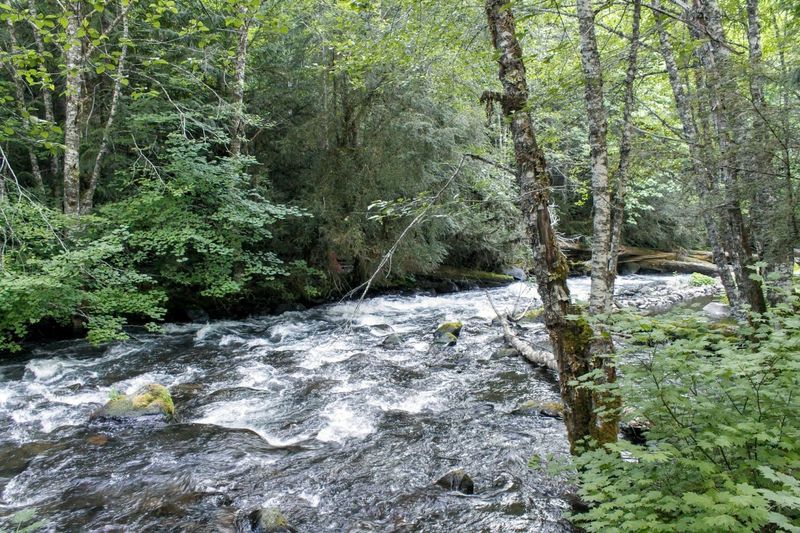
Opal Creek Wilderness is home to a remarkable range of wildlife that thrives in the undisturbed old-growth environment. Black-tailed deer move quietly through the undergrowth, and black bears are known to roam the area, particularly in the berry-rich months of late summer.
Keeping a respectful distance from all wildlife is essential.
The creek itself supports healthy populations of native fish, including steelhead and cutthroat trout. Anglers with the proper Oregon fishing license can try their luck in certain sections of the watershed.
The clear, cold water is a strong indicator of how clean and healthy this ecosystem remains.
Birdwatchers find the forest especially rewarding. Northern spotted owls, a species deeply tied to old-growth habitat, have been documented in this wilderness.
Pileated woodpeckers, dippers, and various warblers add movement and sound to the canopy and creek banks. Paying attention to what you hear, not just what you see, opens up an entirely different layer of the Opal Creek experience that most casual visitors miss.
Camping Overnight in the Heart of the Wilderness
Spending a night inside Opal Creek Wilderness is a completely different experience from a day hike. The forest at night takes on a whole new character, sounds deepen, the darkness becomes total under the thick canopy, and the creek sounds louder and more alive than during the day.
Backcountry camping is available within the wilderness area, giving hikers the option to explore deeper sections that day-trippers rarely reach. Packing light but efficiently matters here, since the trail distances can add up quickly.
A good sleeping bag rated for cool temperatures is essential, even in summer.
Leave No Trace principles are not just encouraged here, they are genuinely important. The fragile old-growth ecosystem is sensitive to human impact, and responsible camping helps preserve it for future visitors.
Burying waste properly, packing out all trash, and camping on durable surfaces are the basics. Waking up to birdsong and the sound of the creek, with no road noise or city hum anywhere near you, makes every bit of the effort worth it completely.
Fall Colors That Transform the Entire Forest
Visiting Opal Creek in early to mid-fall is one of those decisions that pays off immediately. The big-leaf maples that grow throughout the forest turn a brilliant gold and amber, creating a dramatic contrast against the dark green of the surrounding Douglas firs and cedars.
The color combination is genuinely stunning.
The light in October and early November has a softer, lower angle that makes everything glow in the late afternoon. Reflections of the colored leaves appear in the pools and slower sections of the creek, doubling the visual impact.
Photographers tend to arrive early to catch the best light before midday.
Fall also tends to bring fewer crowds than the peak summer months. Trails feel quieter, and the overall atmosphere is more contemplative and relaxed.
The temperatures drop enough to make hiking more comfortable without becoming uncomfortably cold. Layering clothing works well for fall visits, since mornings start cool and afternoons can warm up noticeably.
Fall at Opal Creek is one of Oregon’s most underrated seasonal experiences.
How to Plan Your Visit to Opal Creek Wilderness
Getting to Opal Creek Wilderness requires a bit of preparation, and the drive itself is part of the adventure. The access road along North Fork Road is notoriously rough, with deep potholes that can challenge low-clearance vehicles.
A high-clearance vehicle or at least a sturdy SUV makes the nine-mile stretch significantly easier on everyone.
The wilderness is open twenty-four hours a day, every day of the year, which gives visitors a lot of scheduling flexibility. Summer weekends draw the largest crowds, so arriving early in the morning on a weekday is the best strategy for a quieter experience.
Opal Pool in particular gets very busy on hot summer days.
Bringing plenty of water, snacks, and layers is always the right call for any visit here. Cell service is essentially nonexistent once you leave the main highway, so downloading offline maps beforehand is a practical step.
The Friends of Opal Creek website at opalcreek.org offers current trail and access information. Address: Opal Creek Wilderness, 22985 N Fork Rd, Lyons, OR 97358.
