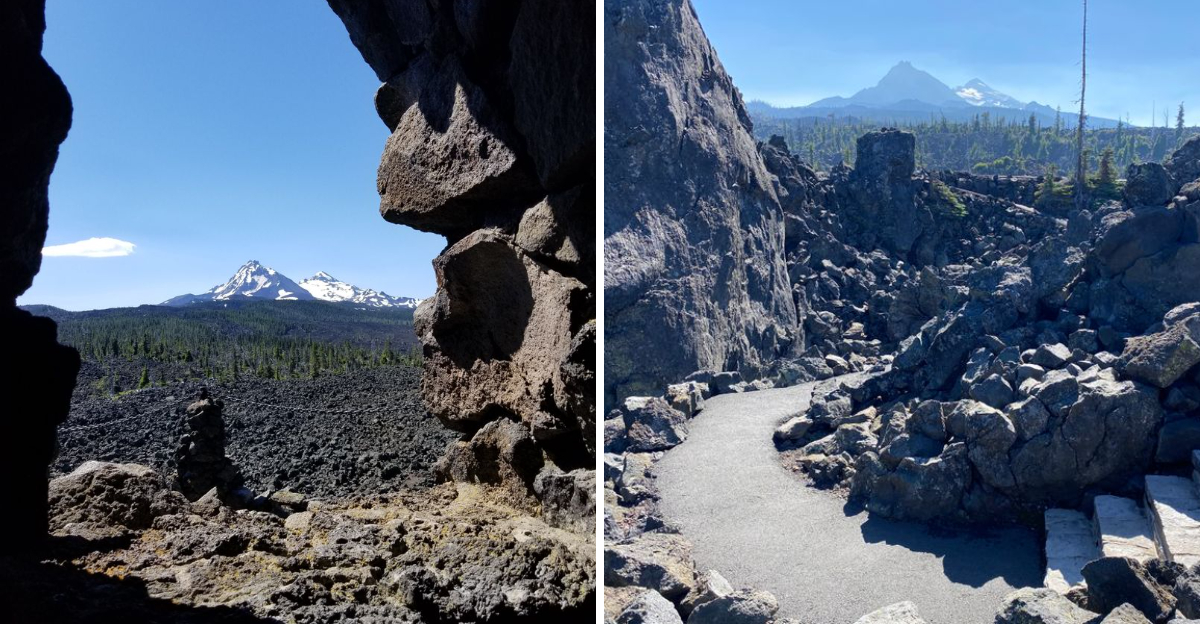
I’ll never forget the first time I drove up McKenzie Pass and spotted what looked like a stone fortress rising out of a sea of black lava. At first I thought I had taken a wrong turn.
The Dee Wright Observatory doesn’t look like anything else I’d seen in Oregon, and that’s saying a lot. Built entirely from volcanic rock back in the 1930s, it sits smack in the middle of this rugged, otherworldly landscape that feels completely unreal.
All around you is ancient lava stretching for miles, with snow-capped peaks framed perfectly through small stone windows.
Standing up there honestly feels like stepping onto another planet without ever leaving Oregon. The wind howls through the carved viewing slots, the air is crisp, and suddenly you’re spotting Mount Hood way off in the distance.
I’ve taken friends, family, even people who claimed they “don’t do viewpoints,” and every single one of them goes quiet the moment they step inside. Just make sure you bring layers because it gets cold fast.
And once you’re there, you’ll realize this strange stone tower has a lot more to show you than you expected.
Built by the CCC During the Great Depression
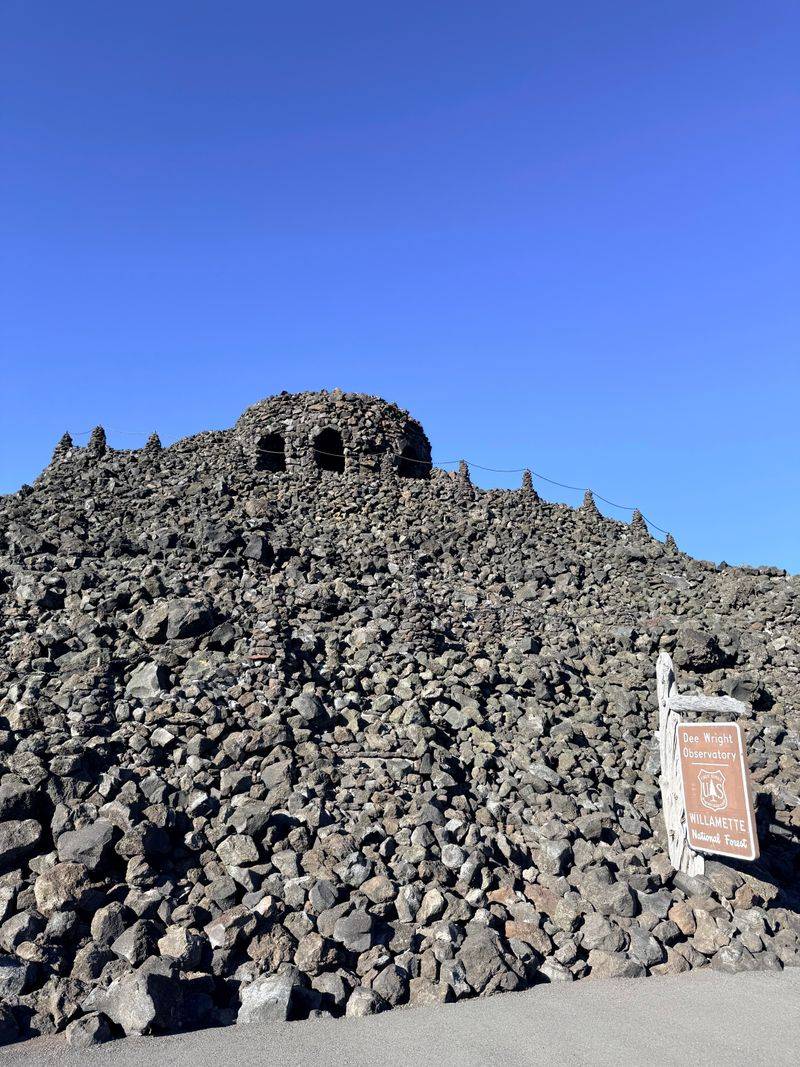
Back in 1935, when America was clawing its way out of the Depression, a crew of Civilian Conservation Corps workers hauled volcanic rock up McKenzie Pass and built something extraordinary. These weren’t architects or engineers with fancy degrees.
They were young men looking for work, and they crafted this observatory stone by stone with nothing but determination and hand tools.
Walking through the structure today, I can still see the craftsmanship in every carefully placed rock. The walls fit together like a giant puzzle, and somehow they’ve withstood nearly 90 years of brutal mountain weather.
Each window was positioned with surgical precision to frame specific peaks in the distance.
What blows my mind is how they hauled all that material up here without modern equipment. The CCC program gave thousands of young Americans jobs during tough times, and this observatory stands as a permanent reminder of their grit.
I always pause to read the dedication plaques inside, thinking about those workers who probably never imagined their project would still be inspiring visitors in 2026.
Constructed Entirely from Lava Rock
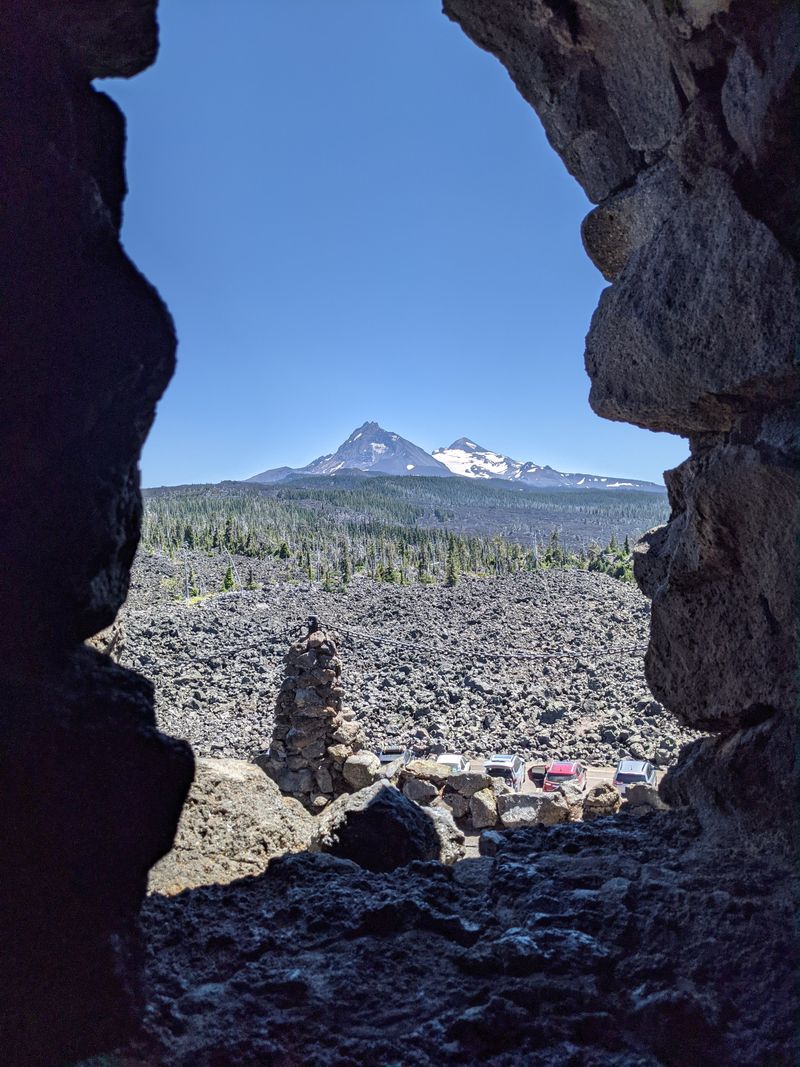
The genius of Dee Wright Observatory lies in its materials. Every single stone came from the surrounding lava field, meaning this structure literally grew from the landscape it sits on.
The builders used basaltic andesite, which is the dark, porous rock you see everywhere around McKenzie Pass.
Running my hands along those rough walls always gives me goosebumps. The rock feels ancient and alive at the same time, like touching history frozen in stone.
These aren’t smooth, polished blocks but raw chunks of volcanic material that erupted from Belknap Crater thousands of years ago.
I love how the observatory blends seamlessly into its environment. From certain angles, it almost disappears against the black lava field.
The architects chose local materials not just for convenience but because they understood the importance of harmony with nature. Standing inside feels like being cradled by the mountain itself.
The thick lava walls provide shelter from the relentless wind while those strategic openings frame the wilderness beyond in ways that take your breath away every single time.
Named After Beloved Foreman Dee Wright
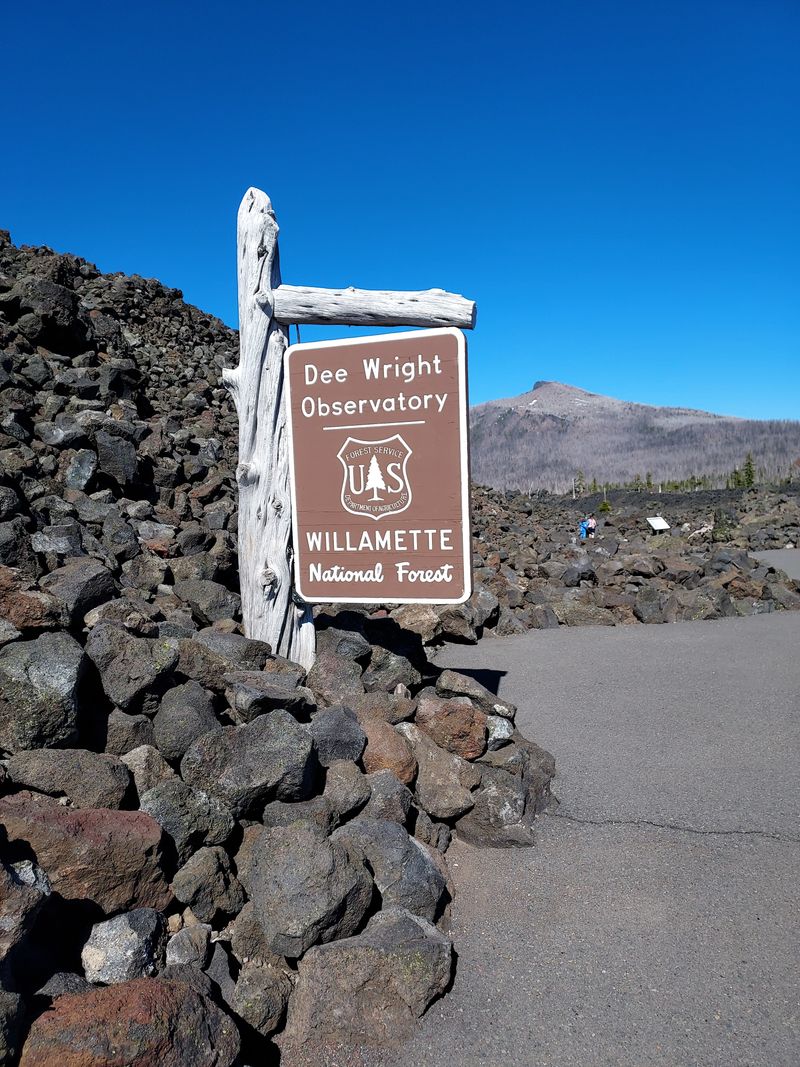
Dee Wright never got to see his namesake completed. This incredible foreman who led the CCC crews through grueling mountain construction passed away in 1934, just a year before the observatory opened.
His crews loved him so much they insisted on naming the structure in his honor.
I’ve tried to imagine what kind of leader inspires that level of devotion. From what I’ve read on the memorial plaques, Wright was tough but fair, the kind of guy who worked alongside his men rather than just barking orders.
He understood that building something lasting required both skill and heart.
Every time I visit, I think about how Wright would feel knowing his legacy lives on almost a century later. Thousands of people climb through his observatory each summer, and his name gets mentioned in countless conversations.
That’s a pretty amazing memorial for a working-class foreman who probably never expected fame. The dedication ceremony must have been emotional, with his former crew members standing among these lava rocks, remembering their friend who pushed them to create something extraordinary.
Strategic Viewport Windows Frame Specific Peaks
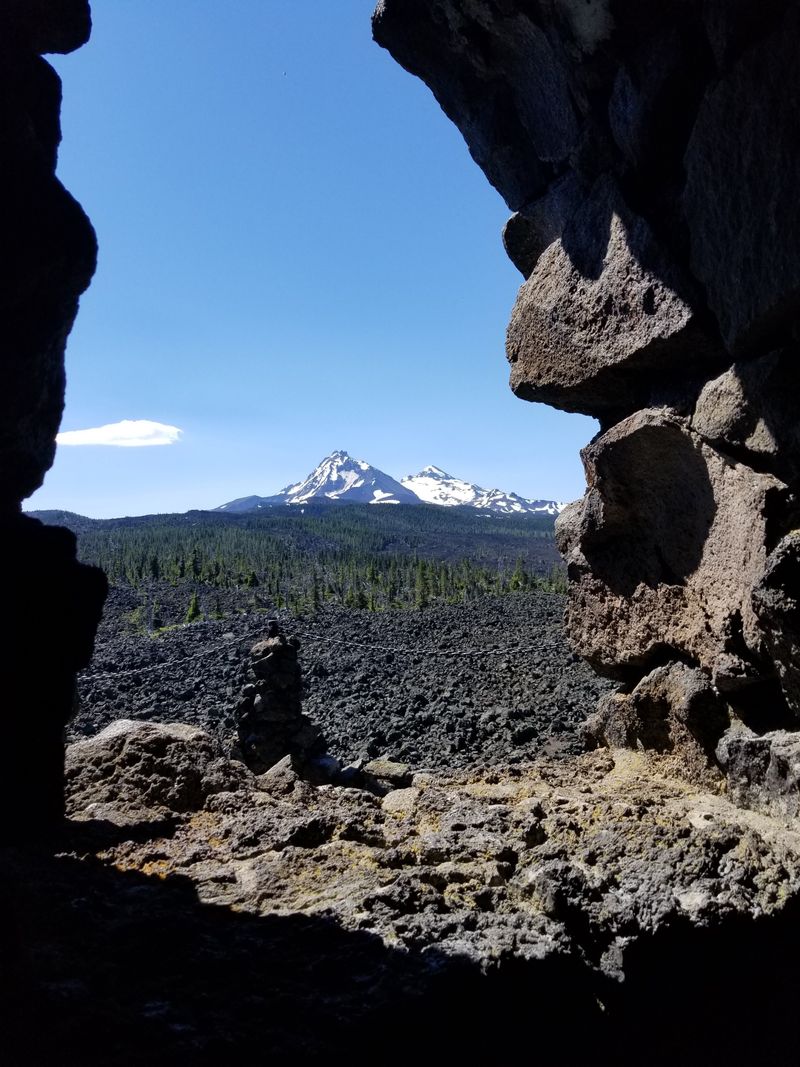
Here’s where the designers showed pure brilliance. The viewing ports aren’t random holes in the wall.
Each window was carefully positioned and shaped to frame a specific mountain or geological feature. When you peek through the slot pointing northeast, Mount Washington fills your view perfectly.
I spent an entire afternoon going from window to window, playing this game of mountain identification. The Three Sisters dominate the southern views, their snowy peaks gleaming against blue sky.
Another opening captures Mount Jefferson in the distance, while yet another frames the gnarly volcanic landscape of Little Belknap.
What makes this so clever is how the thick lava walls block out distractions. Your eyes focus entirely on what’s framed in each window, like nature’s version of a photo gallery.
I’ve brought my camera up here dozens of times, and these windows create natural compositions that make even amateur photographers look professional. The builders understood that sometimes limiting what you see actually enhances the experience.
Instead of overwhelming panoramic chaos, you get curated moments of mountain majesty that stick in your memory forever.
Bronze Peak Finder on the Rooftop
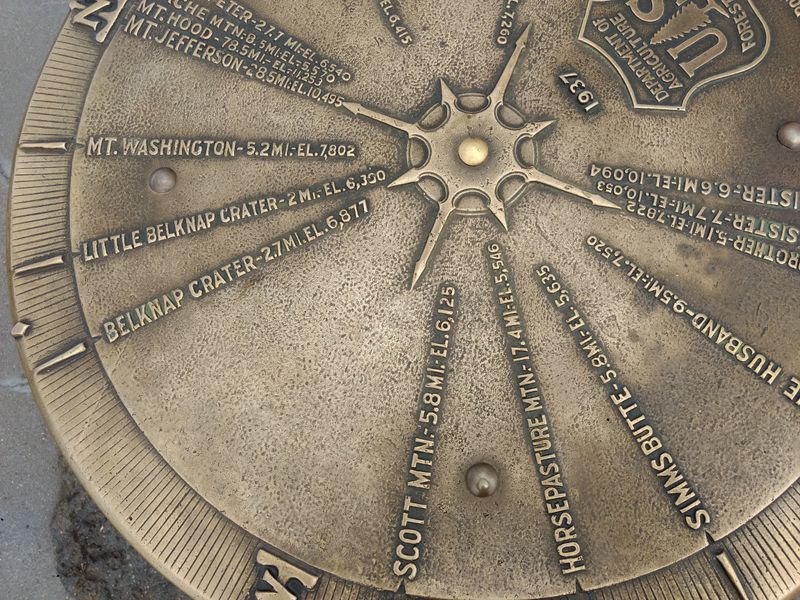
Climbing onto the observatory roof reveals my favorite feature: a 36-inch bronze azimuth table that’s basically a giant compass pointing toward every visible peak. This beautifully crafted disc has withstood decades of weather, and its markings still help visitors identify distant mountains.
I always start by finding the Three Sisters, then work my way around the circle. The bronze pointers indicate not just direction but also elevation and distance to each peak.
On crystal-clear days, you can spot Mount Hood looming 78 miles north, which absolutely blows my mind.
The craftsmanship of this peak finder matches the rest of the observatory. Someone took serious time to calculate exact bearings and engrave them into metal that would last generations.
I’ve watched families gather around it, parents teaching kids about geography and geology while the wind whips their hair around. There’s something timeless about using a physical bronze tool instead of a phone app.
It connects you to all the previous visitors who stood in this exact spot, spinning that same bronze disc, marveling at the same mountains that have watched over Oregon for millennia.
Sitting in a Massive 65-Square-Mile Lava Field
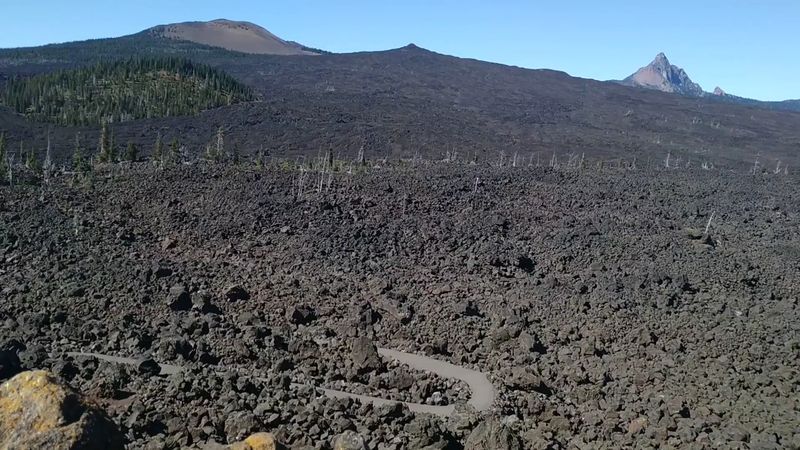
The Belknap Crater erupted roughly 12,000 years ago, and the lava that poured out created this absolutely bonkers landscape. Standing at the observatory, you’re literally surrounded by 65 square miles of frozen volcanic flow.
That’s bigger than many cities, just solid black rock as far as you can see.
What strikes me most is how alien everything looks. Twisted lava formations rise like sculptures, and very little vegetation has managed to reclaim this harsh terrain.
You can trace the flow patterns where molten rock once rushed downhill, leaving behind ripples and waves now frozen in time.
I love spotting the little islands of trees that somehow survived. These patches of green mark high spots the lava flowed around, creating biological refuges.
The contrast between living forest and dead rock field is stark and beautiful. Geologists come here to study volcanic processes because the formations are so well-preserved.
For the rest of us, it’s just an incredible place to wander and imagine the explosive forces that shaped this corner of Oregon into something that belongs on Mars more than the Pacific Northwest.
Highway 242 Closes All Winter Long
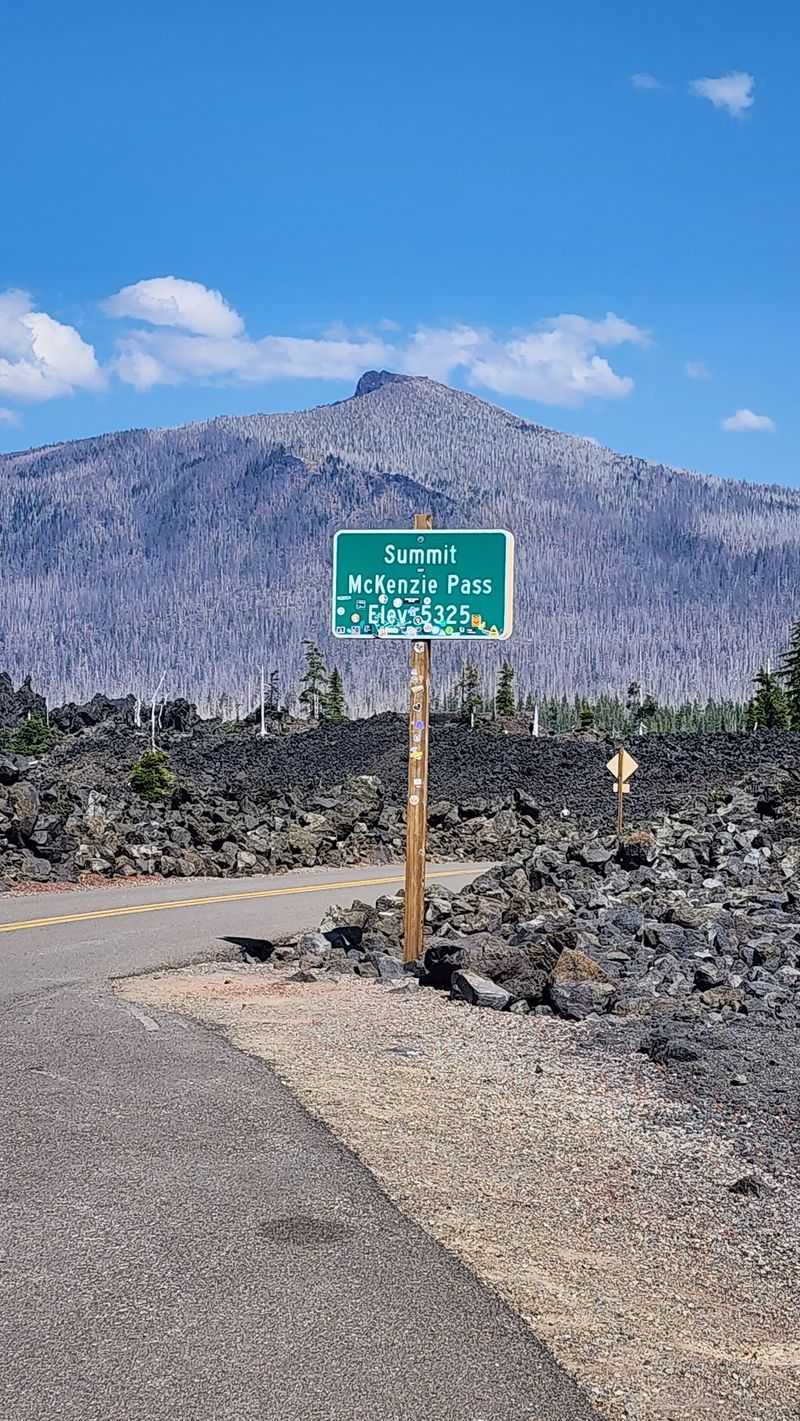
Here’s the catch that keeps this place from being overrun year-round. McKenzie Pass Highway 242 shuts down completely from November through June because of massive snowfall.
We’re talking serious mountain snow that would make the road impassable and dangerous.
I learned this the hard way my first year in Oregon when I tried visiting in April. The gate was locked tight, and I had to turn around after a two-hour drive.
Now I mark my calendar for that magical window between late June and October when the road reopens.
The seasonal closure actually protects the observatory in a way. Winter storms up here are brutal, with howling winds and snow measured in feet rather than inches.
The old stone structure weathers it all alone, buried under white until spring melt reveals it again. This limited access makes summer visits feel more special, like you’re part of an exclusive club.
I always feel a little sad when October rolls around and I know the gate will soon close, cutting off access until next year. But that anticipation makes the first summer visit even sweeter when you finally return.
Lava River Trail Loops Through the Landscape
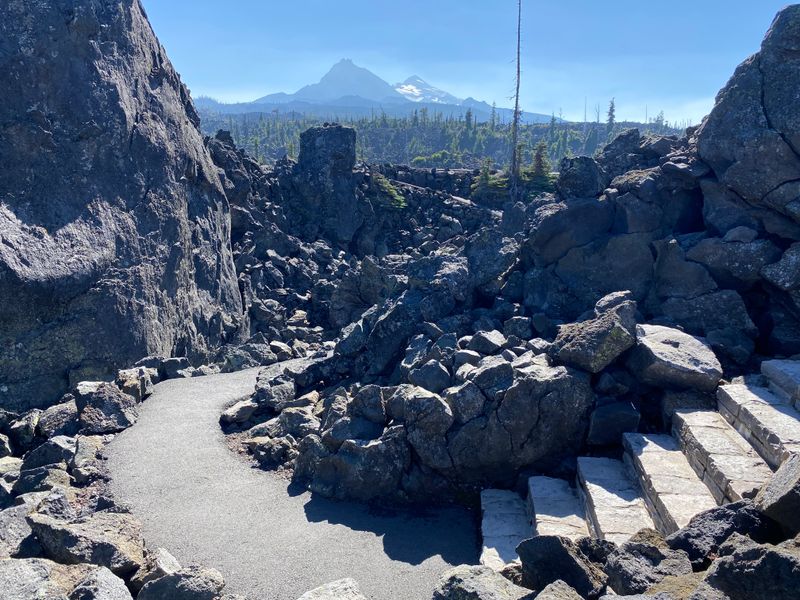
Right outside the observatory parking lot, you’ll find the Lava River National Recreation Trail, a half-mile paved loop that winds through the most spectacular parts of the flow. This isn’t your typical forest hike.
You’re walking through a landscape that looks like it cooled down yesterday.
The pavement makes this trail accessible to almost everyone, which I absolutely love. I’ve seen families with strollers, folks using wheelchairs, and elderly visitors all enjoying this geological wonderland.
Interpretive signs along the route explain how lava flows, why certain formations occur, and what plants are slowly reclaiming the rock.
My favorite section passes through a narrow channel where lava walls rise on both sides like a canyon. The rock formations are wild, with twisted shapes and hollow pockets where gas bubbled through molten stone.
I always take my time on this loop, stopping to read every sign and examine the rocks up close. The trail brings you right back to the parking area, making it perfect for a quick stretch after the scenic drive up.
Even on busy summer days, the trail never feels crowded because that black lava field swallows sound and people alike.
Panoramic Views Stretch Over 78 Miles
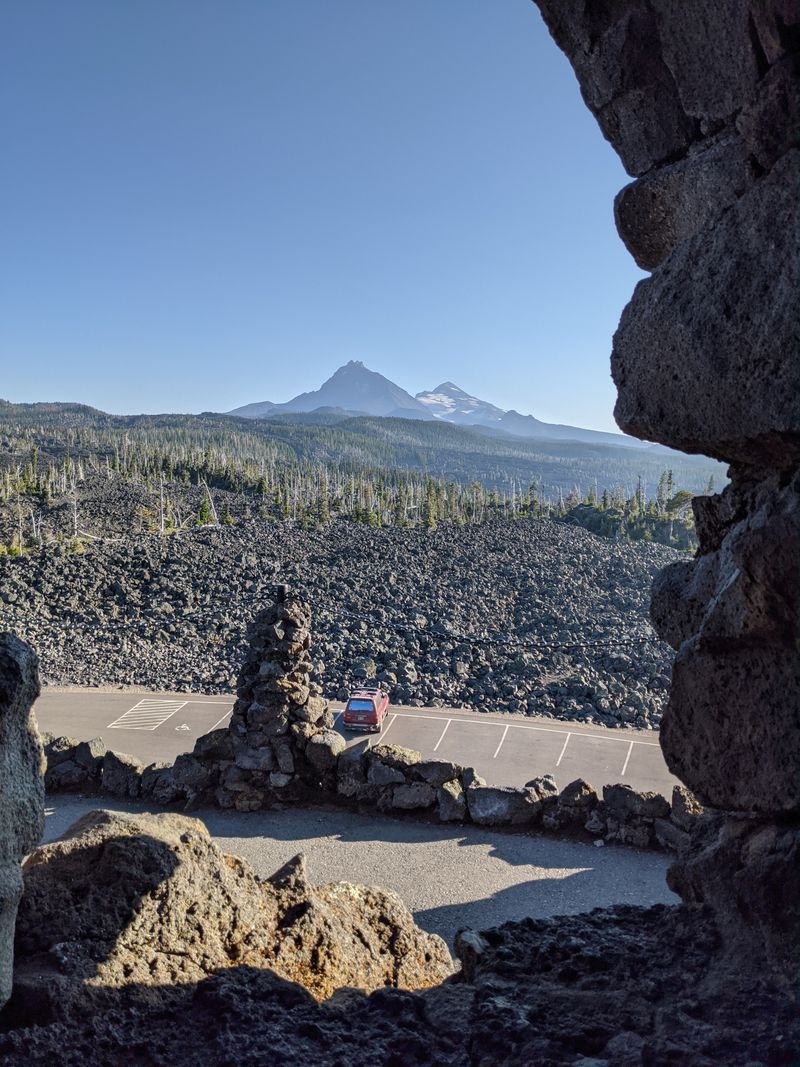
On those rare, perfectly clear days, the view from Dee Wright Observatory is absolutely insane. Mount Hood rises 78 miles to the north, looking close enough to touch despite the massive distance.
The entire Cascade Range spreads out like a textbook diagram of volcanic peaks.
I’ve been up here probably 30 times, and I’ve only had maybe five days with visibility that good. Usually, there’s some haze or clouds partially obscuring distant peaks.
But when conditions align, you can see Mount Jefferson, the Three Sisters, Mount Washington, and countless smaller volcanic features all at once.
What really gets me is the 360-degree perspective. Most viewpoints show you one direction, but here you can spin in a circle and see mountains in literally every direction.
The bronze peak finder becomes essential because there are so many peaks you lose track. I always bring binoculars now because spotting distant details adds another layer to the experience.
Watching the light change as the sun moves across the sky transforms the entire landscape hour by hour. Morning light hits the eastern peaks first, while afternoon sun illuminates the western ranges in golden glory.
Dear Reader: This page may contain affiliate links which may earn a commission if you click through and make a purchase. Our independent journalism is not influenced by any advertiser or commercial initiative unless it is clearly marked as sponsored content. As travel products change, please be sure to reconfirm all details and stay up to date with current events to ensure a safe and successful trip.
