You walk outside and suddenly you are standing where real cattle drives once kicked up dust. This is not an indoor exhibit with glass cases, it is a whole outdoor museum that puts you right in the middle of history.
You can step into a replica frontier fort, wander through a pioneer town, and see how cowboys lived more than a century ago. The Native American section is just as real, with arrowheads and tools that were found right here on this land.
You can almost hear the hoofbeats and the campfire stories. Kids love running between the buildings, and adults get quiet reading the signs about the lives lost and made on these trails.
It is history you can touch, smell, and feel under your boots.
The Life-Size Cattle Drive Silhouette and the Trail That Started It All
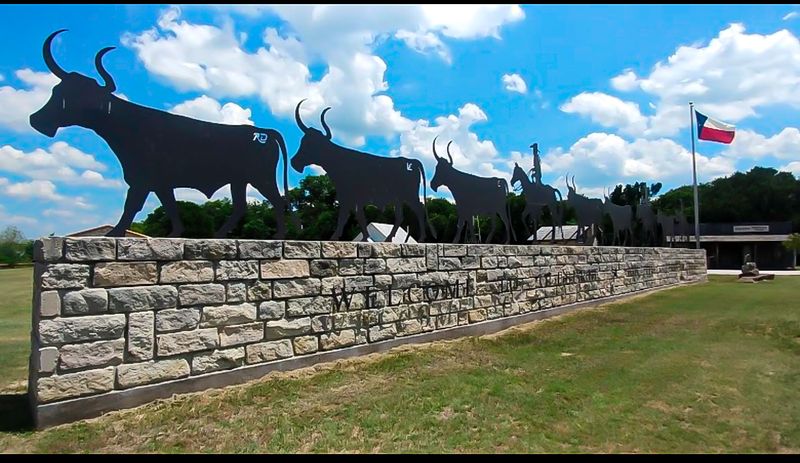
Something about seeing a life-size cattle drive frozen in silhouette stops you cold. The sheer scale of it hits first, the height of the longhorns, the lean posture of the cowboys on horseback, the suggestion of dust and movement captured in still metal.
It sets the tone for everything else you are about to see across this museum complex.
The Chisholm Trail itself was one of the most significant cattle corridors in American history. From the late 1860s through the 1880s, millions of cattle were driven north from Texas through Oklahoma and into Kansas, shaping the economy and culture of the entire region.
Cleburne sat directly along that route, and the town carries that legacy with pride.
This silhouette is more than decoration. It is a visual anchor that reminds you why this museum exists and what it is honoring.
Kids tend to stop and stare at it for a long time, and honestly, adults do too. It photographs beautifully at any time of day, but late afternoon light gives it a dramatic, almost cinematic quality that makes the whole scene feel like a painting come to life.
Johnson County’s 1855 Log Courthouse, the Oldest of Its Kind in Texas
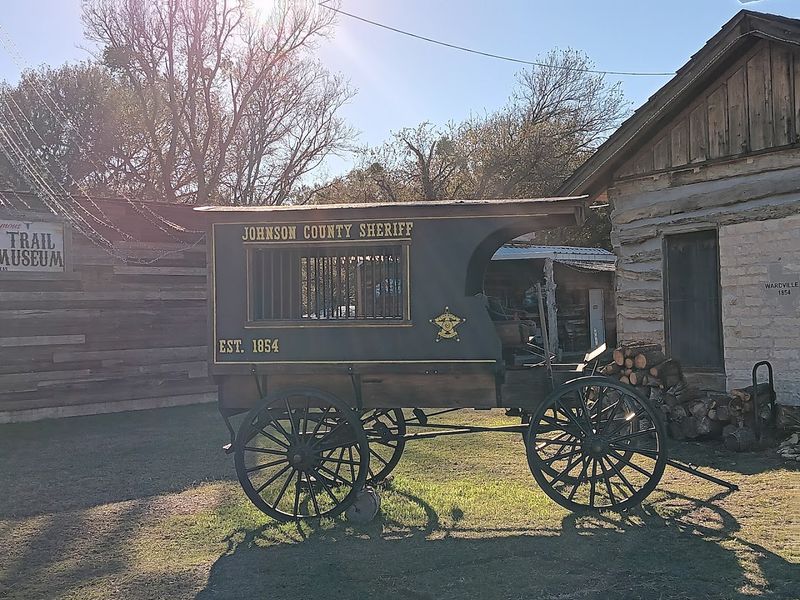
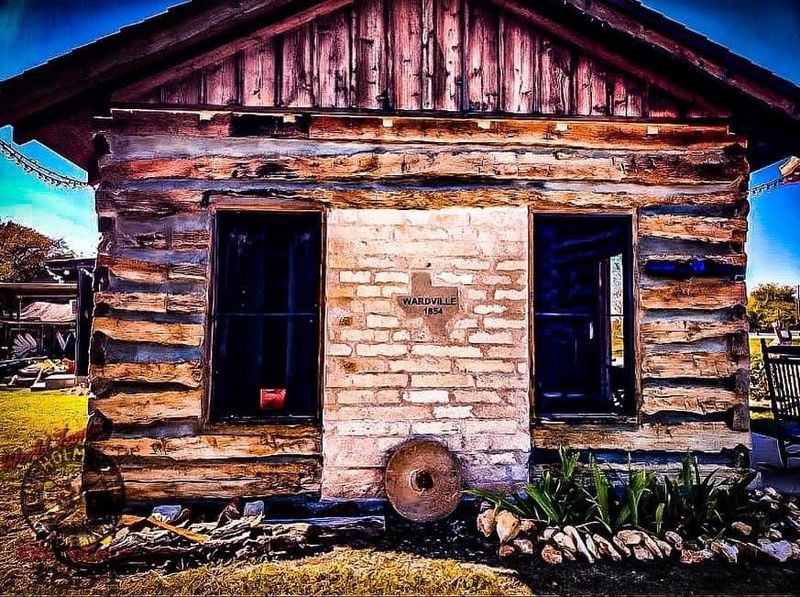
Old courthouses have a way of holding silence differently than other buildings. This one, built in 1855, is the oldest surviving log courthouse in the entire state of Texas, and standing near it feels like pressing your ear to a wall and hearing the past breathe.
It was moved to the museum grounds to preserve it, and the decision to save it was a good one.
The structure is modest by modern standards, built from hand-hewn logs the way frontier builders knew how. But inside that modesty is a remarkable story about early Texas governance, frontier justice, and the kind of resourcefulness that defined Johnson County in its earliest years.
It predates the Civil War, which means it has seen more history than most buildings twice its size.
Visitors who take a moment to really look at the craftsmanship walk away with a different appreciation for what early settlers built with limited tools and enormous determination. The logs are fitted with precision that still holds after more than 170 years.
For history lovers, this courthouse alone is worth the trip to Cleburne. It is the kind of thing you do not expect to find and cannot stop thinking about afterward.
The Working Blacksmith Shop Where History Gets Loud and Hot
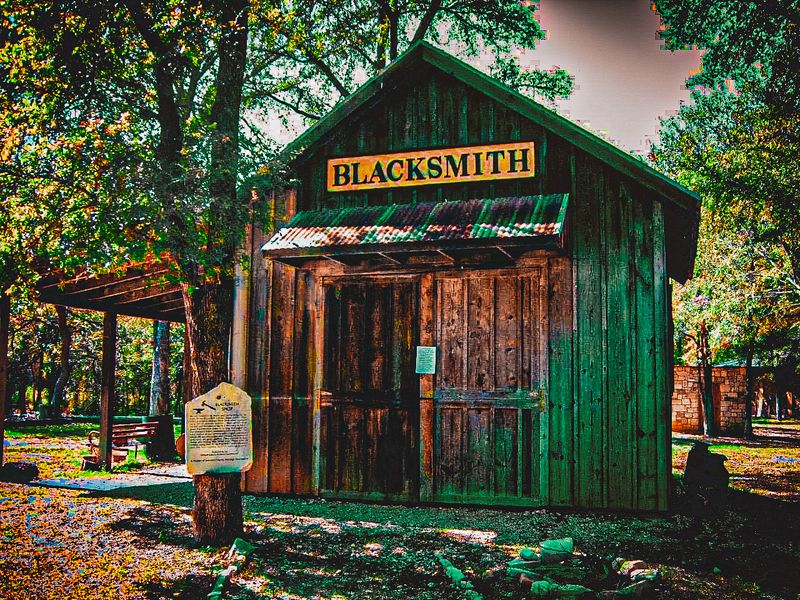
The sound reaches you before the shop does. A steady clang of hammer on metal, the hiss of hot iron meeting air, and the faint smell of coal burning in a forge.
The working blacksmith shop at the Chisholm Trail Outdoor Museum is not a display behind glass. It is a living, breathing demonstration of a craft that kept the frontier moving.
Blacksmiths were essential to trail life. They shod horses, repaired wagon wheels, made tools, and kept the mechanical world of the 1800s from falling apart.
Watching a skilled smith work a piece of iron from rough metal to finished form gives you a real sense of how much physical knowledge went into that trade. It is genuinely impressive to watch up close.
The museum also offers monthly blacksmithing classes for those who want to try it themselves. Whether you are a curious visitor or someone who has always wondered what it feels like to shape metal by hand, the classes are a rare hands-on opportunity.
Even just watching the demo is enough to make you rethink how much you rely on tools you never had to make yourself. It is one of the most memorable stops on the whole property.
The Stagecoach Station with a Hollywood Connection Worth Knowing About
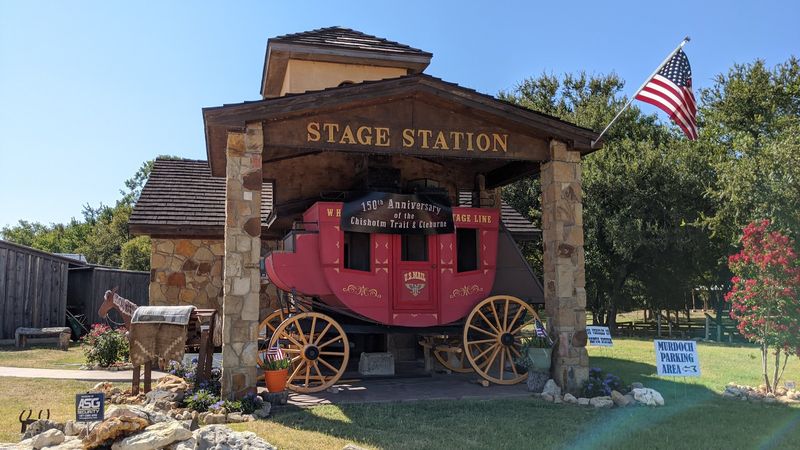
Not many museums can claim a connection to John Wayne, but this one can. The stagecoach station at the Chisholm Trail Outdoor Museum houses a restored Hollywood stagecoach that actually appeared in early John Wayne films.
It is the kind of detail that catches you off guard and makes you look twice.
Stagecoaches were the transportation backbone of the American frontier before railroads took over. They carried passengers, mail, and goods across enormous distances on rough, unpredictable roads.
The station here represents the kind of stop where travelers would rest, change horses, and prepare for the next leg of a journey that was never comfortable and often dangerous.
Seeing the actual coach up close, with its worn wood, aged leather, and the visible history of hard use, brings that era into sharp focus. There is something about a real artifact that no replica can replicate.
The Hollywood angle adds a layer of fun to the visit, especially for anyone who grew up watching Westerns. It opens a conversation about how movies shaped the way Americans imagined and romanticized the frontier, and whether that image was accurate or not.
Either way, the stagecoach is a showstopper.
Replica Teepees and the Stories They Shelter
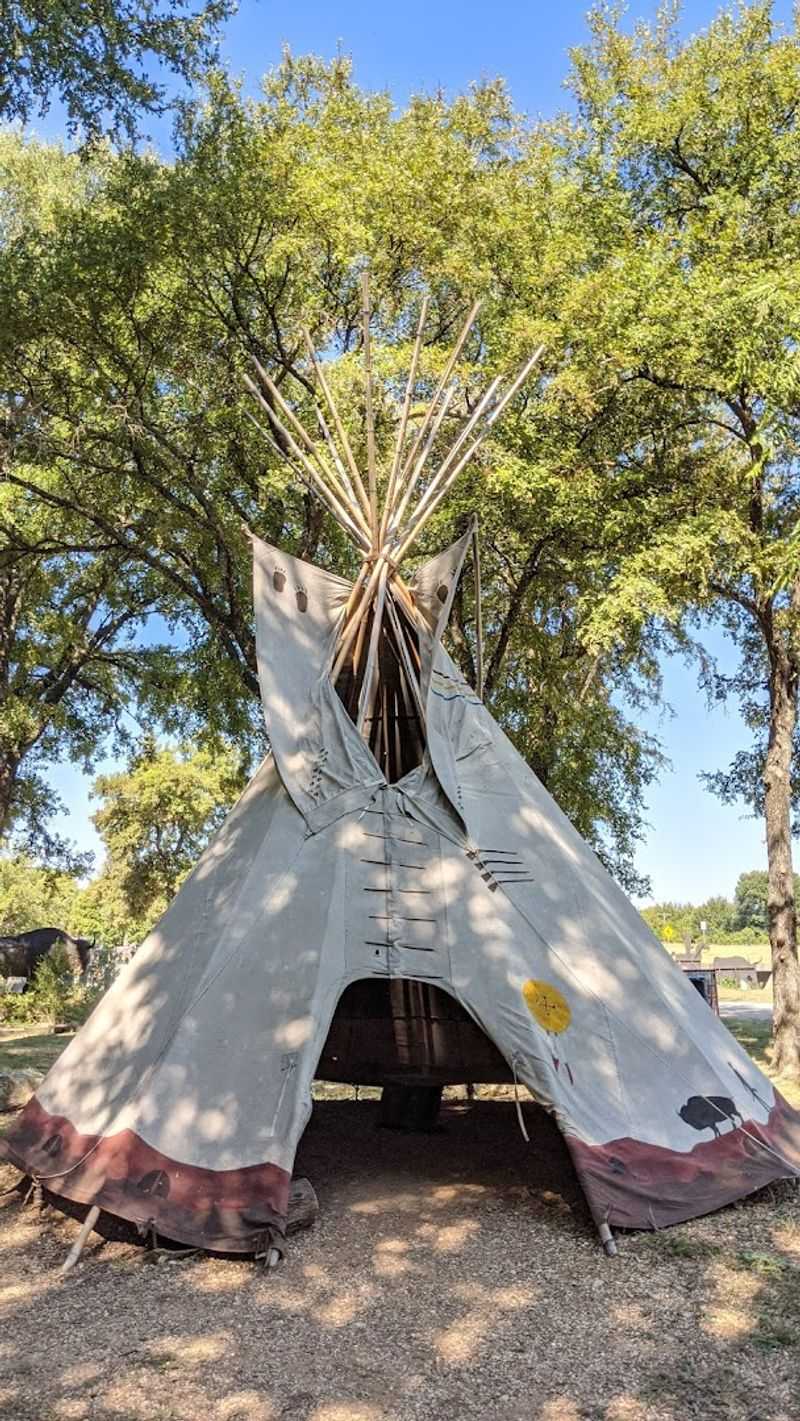
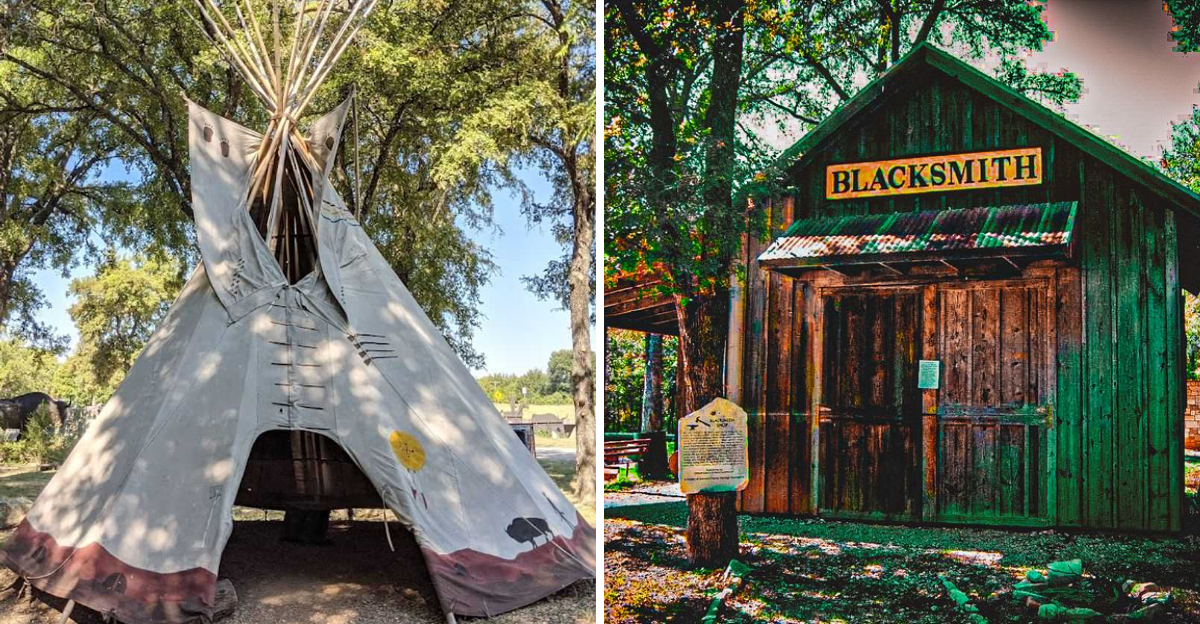
The teepees rise up from the open grounds in a way that feels both striking and quietly dignified. They are replicas, but they are built with care and placed with intention.
They are not props. They are conversation starters about the way millions of people lived across the Great Plains for thousands of years before European settlers arrived.
Teepees were engineering marvels in their own right. Portable, insulated, and designed to be assembled and disassembled quickly as communities followed seasonal patterns and buffalo migrations.
The structure of a teepee reflects a deep understanding of the environment, wind patterns, and the need for both warmth and ventilation. That kind of knowledge took generations to develop and refine.
Placed alongside the Big Bear Native American Museum, the teepees give visitors a physical, three-dimensional sense of what they are learning about inside. Children especially respond to them, and the museum encourages interaction and exploration rather than keeping everything at arm’s length.
It is one of those moments where history stops being abstract and starts feeling real. Pair the teepees with the storytelling areas inside the museum and the experience takes on a whole new depth that stays with you.
The Big Bear Native American Museum and 13,000 Years of History Under One Roof
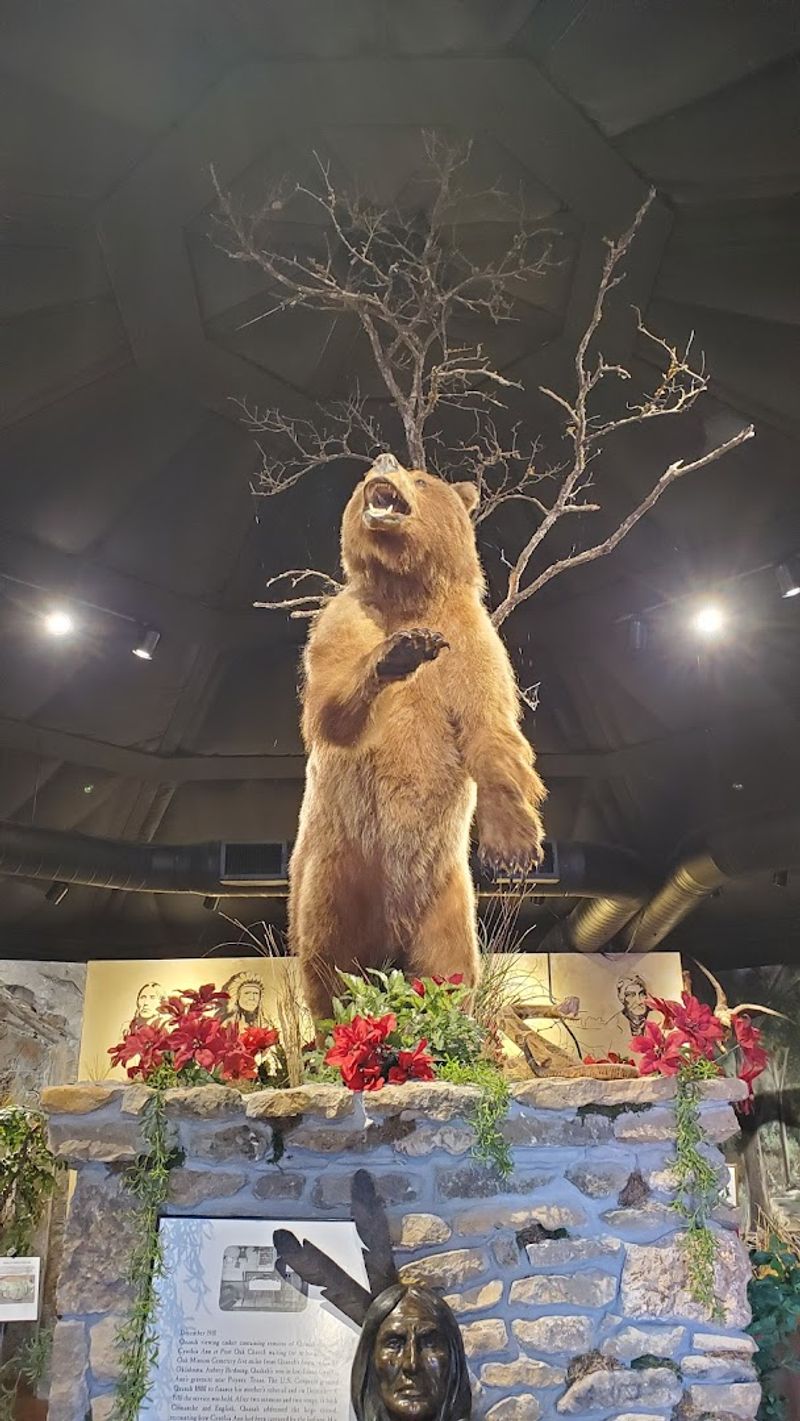
Leonard “Big Bear” Beal spent years collecting artifacts that tell the story of Native American life across North America, and then he donated the entire collection so others could learn from it.
That generosity is what built this museum, and it shows in every carefully arranged display case and every thoughtfully written label.
The collection spans more than 13,000 years of human presence on this continent.
Stone-age tools like Clovis points sit near pottery shards and bone needles, giving you a timeline of ingenuity that stretches further back than most people imagine.
Trade items, ceremonial objects, beadwork, pipes, and drums round out a collection that covers everyday life alongside cultural and spiritual traditions.
Modern expressions of Native American art and identity are also represented, which is important. This is not a museum that treats indigenous culture as something frozen in the past.
Plan to spend at least 60 to 90 minutes here, and that might still feel rushed. There is an artifact scavenger hunt for kids, storytelling areas, and hands-on reproduction tools to explore.
The museum is genuinely comprehensive without ever feeling overwhelming. It manages to be educational and emotionally resonant at the same time, which is not easy to pull off.
This is one of the best museum experiences in Central Texas.
The Douglas Harman Chisholm Trail Artifacts Museum and the Gear That Built the West
Saddles worn smooth from years of trail riding. Spurs with rowels that jangled across dusty plains.
Chaps stitched together by hand to protect a cowboy’s legs from brush, rope burn, and the unpredictable chaos of a cattle drive. The Douglas Harman Chisholm Trail Artifacts and Western Memorabilia Museum holds the kind of objects that make Western history feel tactile and real.
Branding irons are particularly fascinating to look at up close. Each ranch had its own unique design, and those marks were as legally binding as any signature.
Cowboys knew the brands of neighboring ranches the way modern people know logos. The whole system of ranching depended on it, and the irons themselves are beautiful in a purely functional way.
What makes this collection special is its specificity. These are not generic Western props.
They are items tied to real people, real ranches, and real journeys along the Chisholm Trail. The memorabilia tells the story of a working culture, not a mythologized one.
There is grit in these objects, and patience, and a kind of practical artistry that deserves more recognition than it usually gets. Spending time here changes how you think about the cowboys who shaped so much of Texas identity.
The Nolan River Schoolhouse and the Terry Building’s Civil War Exhibits
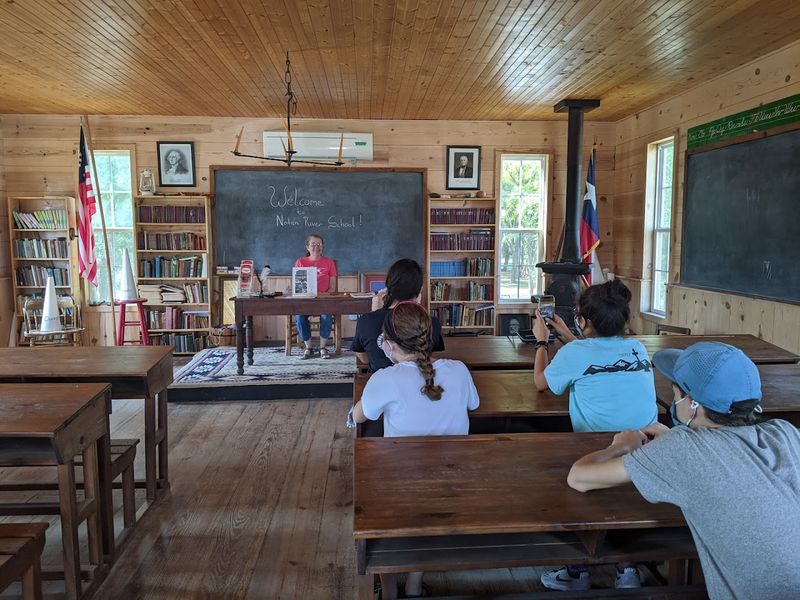
Two buildings on the museum grounds carry very different kinds of weight. The Nolan River Schoolhouse is a reminder of how frontier communities built futures for their children even while everything around them was still being figured out.
Small, simply constructed, and full of quiet purpose, it represents the educational ambitions of early Johnson County settlers.
The Terry Building takes a harder turn. It houses exhibits on the Texas Rangers and the Civil War, two subjects that are complicated, important, and often misunderstood.
The Civil War tore through Texas in ways that shaped the state for generations afterward, and the exhibits here do not shy away from that complexity. The Texas Rangers have a history that is equally layered, with chapters of both heroism and controversy.
Seeing both buildings in the same visit creates an interesting tension. The schoolhouse speaks to hope and community.
The Terry Building speaks to conflict and consequence. Together, they give a fuller picture of what life in 19th century Texas actually looked like beyond the romanticized version most people carry around.
Civil War re-enactments by Terry’s Texas Rangers are also held at the museum, which adds a living history dimension that no static exhibit can fully replace. It is history you can feel.
The Waterfront Birdwatching Deck, Outdoor Stage, and Annual Events That Bring the Museum to Life
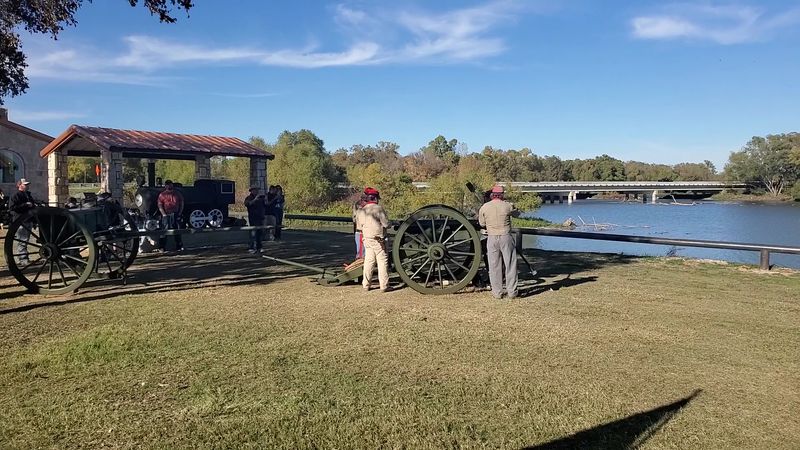
A 90-foot birdwatching deck stretching out over Lake Pat Cleburne is not something you expect to find at a history museum, but it fits perfectly here. The lake views are calming after hours of absorbing so much history, and the birdwatching is genuinely good.
The area around the lake draws a variety of species, and the deck gives you an unobstructed view that birders appreciate.
The outdoor stage hosts concerts and community events throughout the year. Live music on the grounds, with the lake in the background and the historic buildings nearby, creates an atmosphere that is hard to describe without sounding like you are exaggerating.
It just works. The setting does most of the heavy lifting.
The museum’s annual events are worth planning around specifically. An annual pow wow in April celebrates Native American culture with dance, music, and community gathering.
An Indigenous Peoples Day celebration in October brings another layer of programming that connects the Big Bear Museum’s collection to living traditions. Western re-enactments by the Legends of Texas round out a calendar that keeps the museum feeling active and relevant all year long.
Check the schedule before you visit so you can catch one of these events. They transform a great museum visit into something truly unforgettable.
Address: 101 Chisholm Trail, Cleburne, TX 76033
