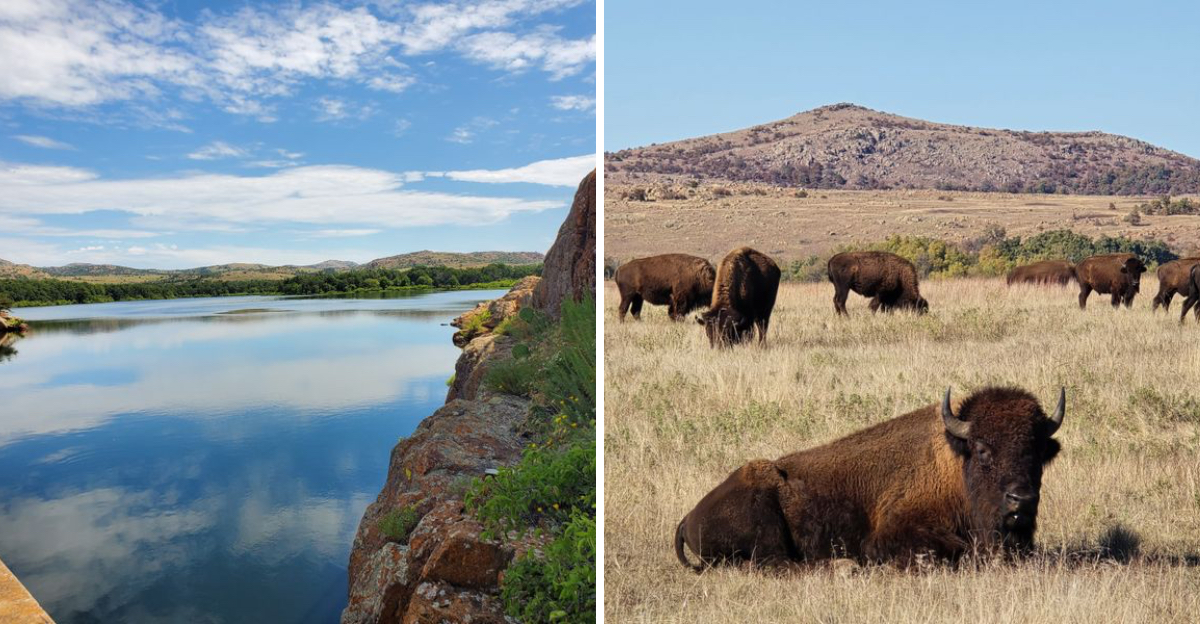
Tucked away in the southwestern corner of Oklahoma lies a landscape so dramatic and unexpected that it stops travelers mid-route.
Wichita Mountains Wildlife Refuge sprawls across nearly 60,000 acres of ancient granite peaks, rolling prairies, and crystal lakes that seem lifted from another time.
The refuge rises abruptly from the plains, its rust-colored boulders catching the early light while herds of bison graze in valleys below.
Long before it became one of the oldest managed wildlife preserves in the country, these mountains held sacred significance for indigenous peoples who recognized the power in their stone formations and sheltered canyons.
Established in 1901, the refuge was created to protect vanishing species like American bison and elk from extinction, and today it stands as a living testament to successful conservation.
What surprises first-time visitors most is the sheer diversity packed into this compact wilderness.
One moment you are watching prairie dogs pop from their burrows, the next you are scrambling up granite outcrops with panoramic views stretching to the horizon.
Longhorn cattle wander the roads as freely as the wind, while hidden waterfalls tumble over ancient rock in shaded canyons.
The refuge offers a rare chance to experience true wilderness without the crowds or fees of many national parks.
Whether you come for the wildlife, the hiking, or simply to stand beneath skies so vast they make you reconsider your place in the world, this corner of Oklahoma delivers an experience that lingers long after you leave.
Roaming Bison Herds That Command Respect
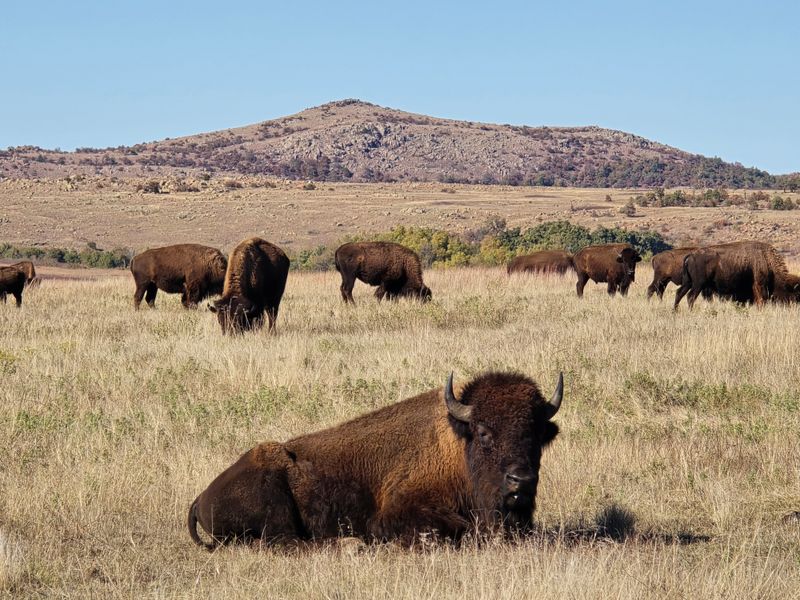
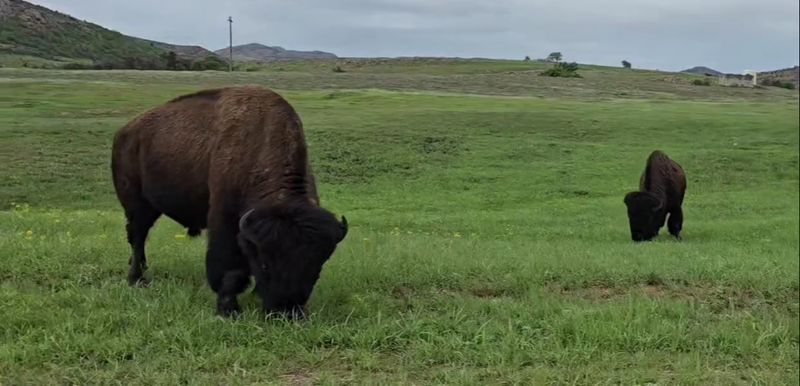
Few wildlife encounters compare to rounding a bend and finding yourself face to face with a massive American bison blocking the road.
These shaggy giants, some weighing over a ton, roam freely throughout Wichita Mountains Wildlife Refuge as they did centuries ago.
The refuge maintains one of the oldest and most genetically pure bison herds in existence, descendants of the original animals brought here in 1907 to save the species from extinction.
Watching them graze peacefully in meadows or lumber across hillsides offers a window into what the Great Plains looked like before settlement.
Their presence feels both majestic and humbling, especially when calves stay close to protective mothers during spring months.
Visitors quickly learn that bison may look docile, but they remain wild and unpredictable animals capable of charging without warning.
Park rangers emphasize keeping a safe distance, yet the thrill of observing them in their natural habitat never diminishes.
Early morning and late afternoon provide the best viewing opportunities when herds move between grazing areas.
The sight of dozens of bison silhouetted against a prairie sunset ranks among the most iconic images Oklahoma has to offer.
Their deep bellows echo across valleys, a sound that connects visitors to a wilder past.
Photography enthusiasts find endless opportunities here, though patience and telephoto lenses prove essential.
Every visit brings different encounters since the herds move freely across thousands of acres.
The refuge demonstrates that conservation efforts, when done right, can bring species back from the brink and restore ecosystems to functional balance.
Address: 32 Refuge Headquarters Road, Indiahoma, Oklahoma
Mount Scott Summit Views That Stretch Forever
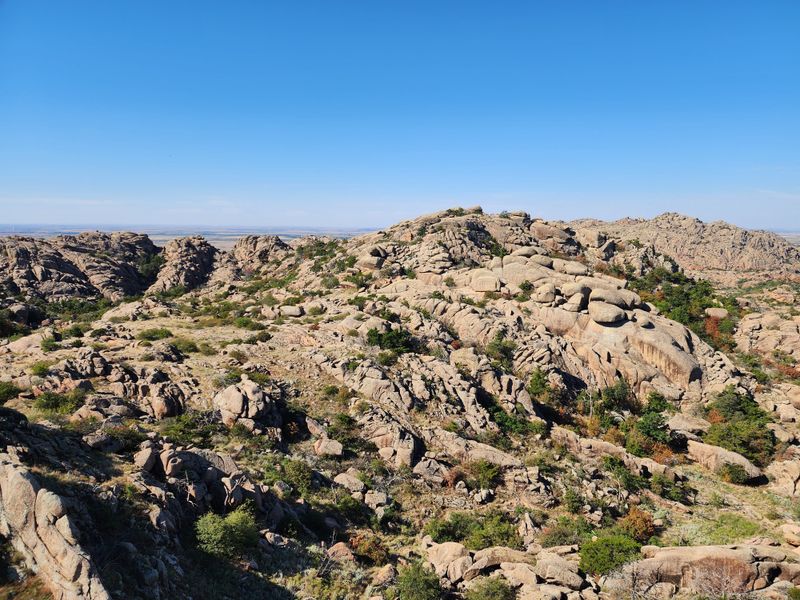
A winding road climbs 2,464 feet to the summit of Mount Scott, the second-highest peak in Oklahoma and the refuge’s most popular destination.
The three-mile drive switchbacks through boulder fields and scrubby vegetation before opening to panoramic views that seem to extend into neighboring states.
On clear days, the vista encompasses rolling prairies, glittering lakes, and the distinctive granite domes that define the Wichita Mountains.
Sunrise brings photographers hoping to capture the moment when golden light floods the valleys below, while sunset paints the western sky in shades of orange and crimson.
The road typically opens at noon to vehicle traffic, a detail that catches some visitors off guard but helps protect wildlife during active morning hours.
Those willing to hike can access the summit trail earlier, though the steep grade challenges even experienced hikers.
Wind sweeps constantly across the exposed summit, carrying the scent of prairie grass and distant rain.
Stone walls provide shelter for picnics while you absorb the landscape spreading in every direction.
Hawks ride thermals overhead, and if you are lucky, you might spot elk or deer moving through the valleys far below.
The mountain’s granite cap formed over 500 million years ago, making it some of the oldest exposed rock in North America.
That geological history adds weight to the experience of standing at the top, knowing countless generations have gazed from this same vantage point.
Families with young children appreciate that the drive makes this spectacular view accessible without strenuous hiking.
The descent offers equally stunning perspectives as the road curves back toward the refuge floor.
Prairie Dog Towns Full of Underground Antics
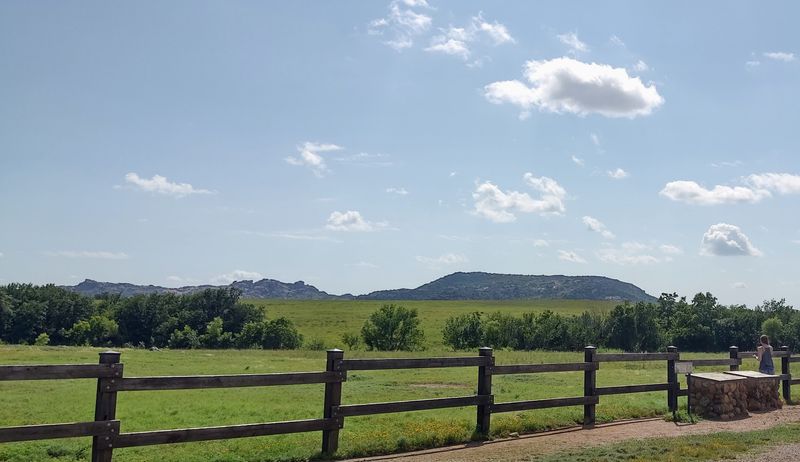
A designated prairie dog town near the refuge entrance provides endless entertainment as these social rodents pop in and out of burrow entrances like a whack-a-mole game come to life.
Black-tailed prairie dogs live in complex underground colonies that can house hundreds of individuals, each burrow entrance marked by a distinctive mound of excavated dirt.
Their high-pitched barks serve as alarm calls when predators approach, creating a wave of sound that ripples through the colony.
Watching them interact reveals a sophisticated social structure complete with greeting kisses, territorial disputes, and cooperative sentry duty.
Young prairie dogs emerge in late spring, tumbling over each other in play that helps develop survival skills.
These charismatic creatures nearly disappeared from Oklahoma during the 20th century, making their presence here all the more significant.
Visitors can park nearby and observe from a comfortable distance without disturbing the colony’s daily routines.
The prairie dogs seem almost accustomed to human observers, continuing their activities with only occasional wary glances.
Their constant vigilance makes sense when you consider the number of predators that view them as prey, including hawks, coyotes, and rattlesnakes.
The town’s location makes it an easy stop for families with small children who might not manage longer hikes.
Binoculars help bring details into focus, revealing the prairie dogs’ expressive faces and surprisingly varied vocalizations.
Interpretive signs explain their ecological importance as a keystone species whose burrows provide homes for other animals.
Photography opportunities abound, especially when prairie dogs stand upright on their mounds scanning for danger.
This single stop often becomes a highlight for visitors who never expected to find such engaging wildlife so easily accessible.
Rocky Trails That Test Your Scrambling Skills
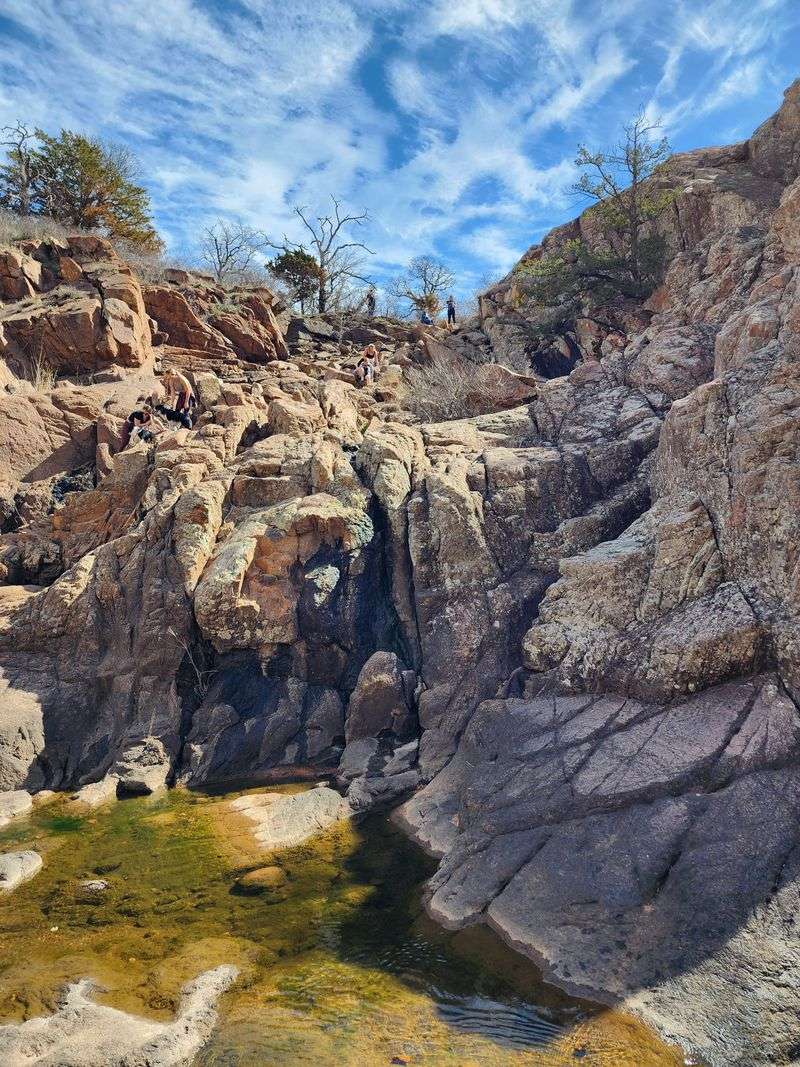
More than 15 miles of maintained trails wind through the refuge, but calling them maintained barely hints at the adventure they provide.
Trails here demand attention as they navigate boulder fields, creek crossings, and granite slabs polished smooth by centuries of weather.
The Elk Mountain Trail challenges hikers with steep elevation gain rewarded by summit views that make the burning legs worthwhile.
Charon’s Garden Trail meanders through a geological wonderland where massive boulders balance impossibly on smaller stones, creating natural sculptures.
Some routes follow creek beds where water flows seasonally, requiring rock-hopping skills and a willingness to get your boots wet.
Trail markers can be sparse in places, adding an element of navigation challenge that appeals to more adventurous hikers.
Rock scramblers find endless opportunities to explore off-trail, climbing granite faces that range from beginner-friendly to genuinely technical.
The rock’s coarse texture provides excellent grip, though the exposure on some routes demands respect and proper footwear.
Wildflowers bloom in crevices each spring, splashing color across the gray stone in unexpected places.
Hikers report that trails often feel overgrown during summer months, with vegetation encroaching on paths and requiring long pants for comfort.
The lack of cell service throughout most of the refuge means carrying physical maps and letting someone know your plans before heading out.
Wildlife encounters happen regularly on trails, from deer bounding away to turkey flocks scratching in leaf litter.
Late afternoon light transforms the landscape as shadows deepen between boulders and the rock takes on warmer tones.
These trails reward those seeking genuine wilderness experience rather than manicured park paths.
Majestic Elk Appearing Like Ghosts at Dawn
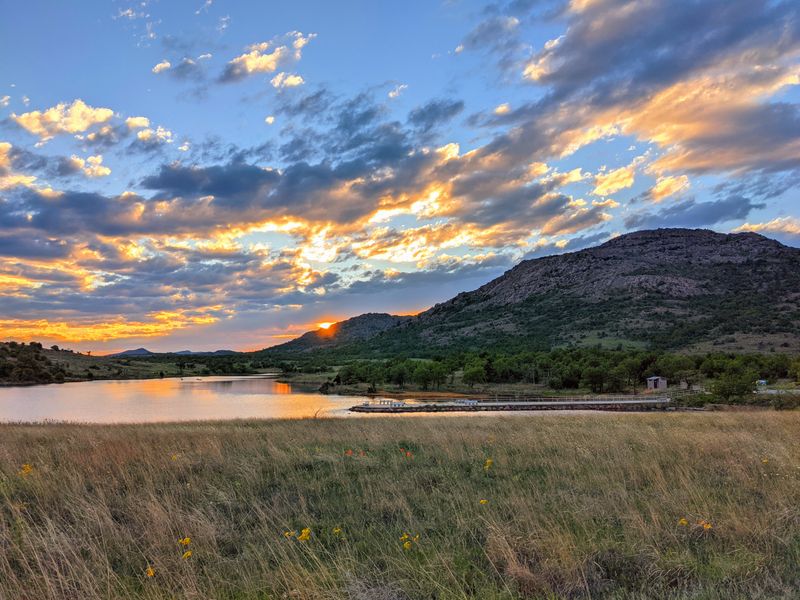
Rocky Mountain elk were reintroduced to the Wichita Mountains in 1911 after being absent from Oklahoma for decades, and today their population thrives.
Bulls can weigh up to 700 pounds with antlers spanning five feet, making them among the most impressive large mammals in the refuge.
During autumn rut, their bugling calls echo across valleys in an eerie, haunting sound that raises goosebumps even from a distance.
Early morning offers the best chance of spotting elk as they emerge from wooded areas to graze in open meadows.
Mist often clings to low areas at dawn, and elk moving through it create ethereal silhouettes that photographers dream about.
Herds typically include cows with their calves, while mature bulls may be solitary outside breeding season.
Their tawny coats blend surprisingly well with prairie grasses despite their size, requiring patient observation to locate them.
Elk trails crisscross the refuge, their tracks pressed deep in muddy areas near water sources.
Visitors driving the scenic loop roads have reported elk crossing directly in front of vehicles, creating memorable if occasionally nerve-wracking encounters.
The refuge’s diverse habitat provides everything elk need, from forested slopes for cover to open grasslands for feeding.
Watching a bull elk in full antler velvet during summer reveals the remarkable growth rate of these bony structures.
By late summer, bulls begin sparring to establish dominance hierarchies that will matter during the breeding season.
Conservation success stories like the elk reintroduction remind us that dedicated efforts can restore wildlife populations to their historic ranges.
Every elk sighting feels like a gift, a glimpse of wildness that once defined all of Oklahoma.
Visitor Center Museum Bringing History Alive
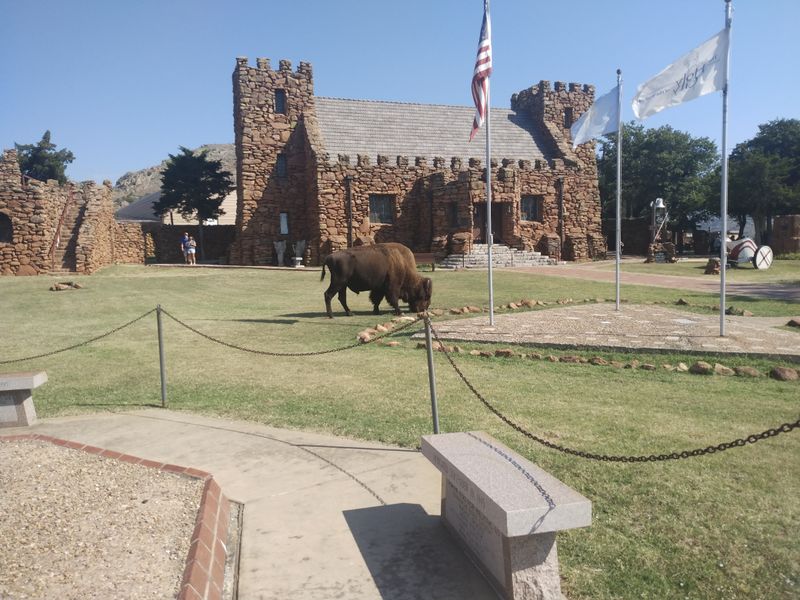
The refuge headquarters and visitor center serves as the perfect starting point for understanding this unique landscape and its conservation mission.
Friendly volunteers and staff provide current information about wildlife sightings, trail conditions, and road closures that can save hours of frustration.
Inside, a small but well-curated museum showcases the refuge’s history through photographs, mounted specimens, and interpretive displays.
Exhibits explain how the refuge came to exist during an era when American bison numbered fewer than a thousand individuals nationwide.
Dioramas depict the various ecosystems found within the refuge boundaries, from mixed-grass prairie to granite outcrops and riparian zones.
Children gravitate toward the touchable displays and animal skulls that help them understand the wildlife they might encounter outside.
Rangers often give informal talks about current conditions, seasonal highlights, and safety considerations for visitors.
The center maintains spotlessly clean restrooms, a welcome amenity before heading into areas without facilities.
Maps available here prove invaluable since cell service disappears quickly once you leave the headquarters area.
Large windows overlook a wildlife viewing area where birds frequent feeders and occasionally deer wander past.
The bookstore offers field guides, refuge-specific publications, and souvenirs that support ongoing conservation programs.
Many visitors report that spending time at the visitor center dramatically improved their refuge experience by helping them know where to go and what to look for.
Staff members share recent wildlife sightings, directing animal enthusiasts toward the most productive areas.
The building itself demonstrates sustainable design principles appropriate for a wildlife refuge.
Address: 32 Refuge Headquarters Road, Indiahoma, Oklahoma
Serene Lakes Reflecting Mountains and Sky
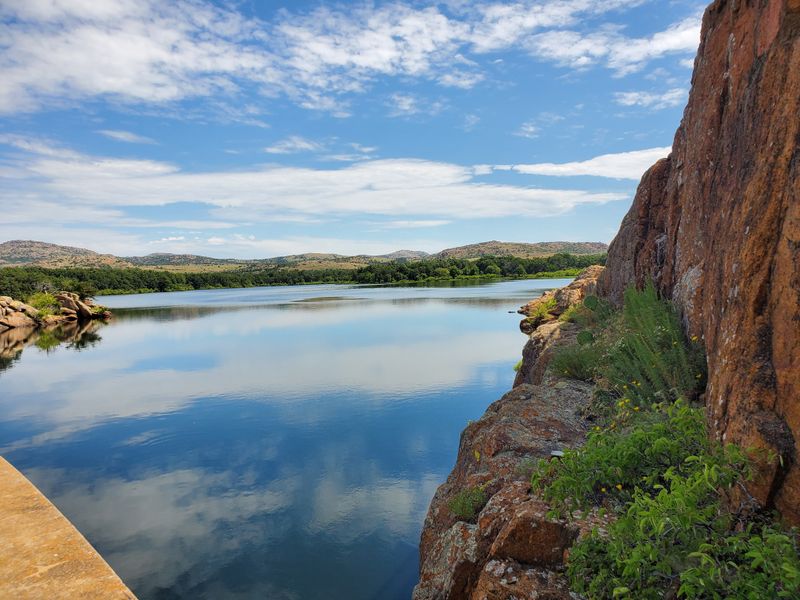
Several lakes dot the refuge landscape, their still waters creating perfect mirrors for the surrounding granite peaks and endless Oklahoma sky.
Quanah Parker Lake, Jed Johnson Lake, and French Lake each offer distinct character and recreational opportunities.
Anglers cast lines for bass, catfish, and sunfish from shorelines and designated fishing areas throughout the refuge.
The lakes were created by damming natural drainages, and their stone dams have become attractions in their own right.
Watching water spill over these structures after heavy rains provides a dynamic contrast to the typically placid surfaces.
Photographers find the lakes irresistible during golden hour when the water glows and wildlife becomes most active along the shores.
Wading birds stalk the shallows while turtles sun themselves on partially submerged logs.
Some visitors come specifically to watch night skies reflected in the water, the refuge’s dark sky status making it exceptional for stargazing.
During a rare geomagnetic storm, visitors have even captured the northern lights dancing above Jed Johnson Lake.
Picnic areas near some lakes provide shaded spots for lunch with water views.
The lakes support diverse aquatic ecosystems that in turn feed the terrestrial wildlife populations throughout the refuge.
Herons and egrets frequent the shores, their patient hunting strategies fascinating to observe.
Seasonal water level fluctuations expose different shoreline features, from rocky beaches to mudflats that attract shorebirds.
The interplay of water, stone, and sky creates compositions that change by the hour as light shifts and weather moves through.
These lakes offer peaceful counterpoints to the rugged mountain terrain, reminding visitors that Oklahoma contains surprising diversity within its borders.
Free-Roaming Longhorns With Impressive Horns
Texas longhorn cattle wander the refuge roads and meadows, their distinctive horns sometimes spanning six feet from tip to tip.
These iconic animals represent a piece of Western heritage, descendants of cattle that once traveled the Chisholm Trail through Oklahoma.
Unlike the bison and elk, longhorns are technically domesticated livestock, yet they live semi-wild lives within the refuge boundaries.
Their varied coloring ranges from solid browns and blacks to striking spotted patterns that make each individual recognizable.
Encountering a longhorn on a narrow refuge road creates a standoff where patience becomes essential since they move on their own schedule.
The cattle graze peacefully most of the time, but their impressive horns serve as a reminder to maintain respectful distance.
Calves appear smaller and more tentative, staying close to protective mothers who watch visitors with wary eyes.
The longhorns help manage vegetation in the refuge, their grazing habits complementing those of bison and elk.
Watching them navigate boulder-strewn hillsides demonstrates surprising agility for animals with such unwieldy headgear.
Photographers love the longhorns for their photogenic qualities and the way they embody Western imagery.
Their presence adds another layer to the refuge’s mission of preserving not just wild species but also heritage breeds with historical significance.
Rangers caution against approaching or attempting to feed them, as even docile-seeming longhorns can become aggressive if they feel threatened.
The cattle have learned the refuge roads and often use them as convenient travel routes, creating traffic jams that locals accept with good humor.
Seeing bison, elk, and longhorns all in one visit feels like stepping into a living museum of American wildlife and ranching history.
Dear Reader: This page may contain affiliate links which may earn a commission if you click through and make a purchase. Our independent journalism is not influenced by any advertiser or commercial initiative unless it is clearly marked as sponsored content. As travel products change, please be sure to reconfirm all details and stay up to date with current events to ensure a safe and successful trip.
