At night, a perfectly normal tree can become suspicious. A branch moves.
Something rustles. You hear wings overhead and immediately decide that whatever made the sound is probably much larger than it actually is.
That is before anyone turns on a flashlight. This Indiana park does something wonderfully backwards with its nighttime hikes.
Instead of lighting the trail, naturalists let the moon do the job and give everyone’s eyes time to adjust. The longer the group walks, the more the darkness starts revealing itself.
Owls call from the trees. Bats cut across the sky.
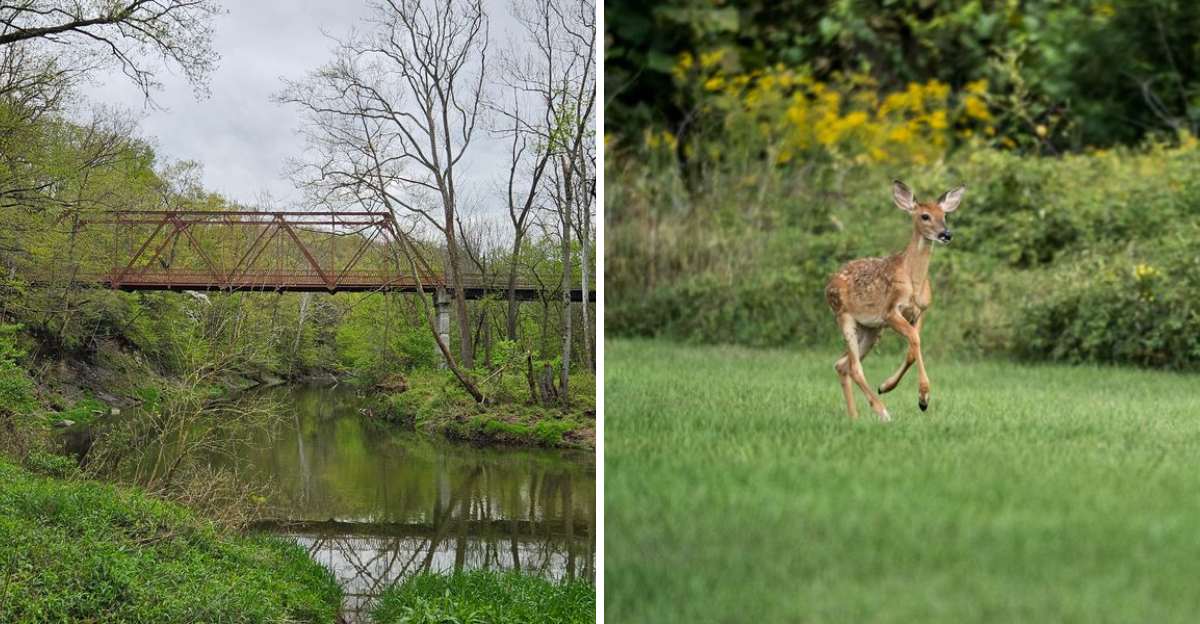
The creek keeps moving somewhere nearby. In daylight, the same 232 acres look much friendlier, with prairie, wooded trails, and an old iron bridge.
After dark, the trees develop personalities.
Moonlight Hikes That Trade Flashlights For Patience
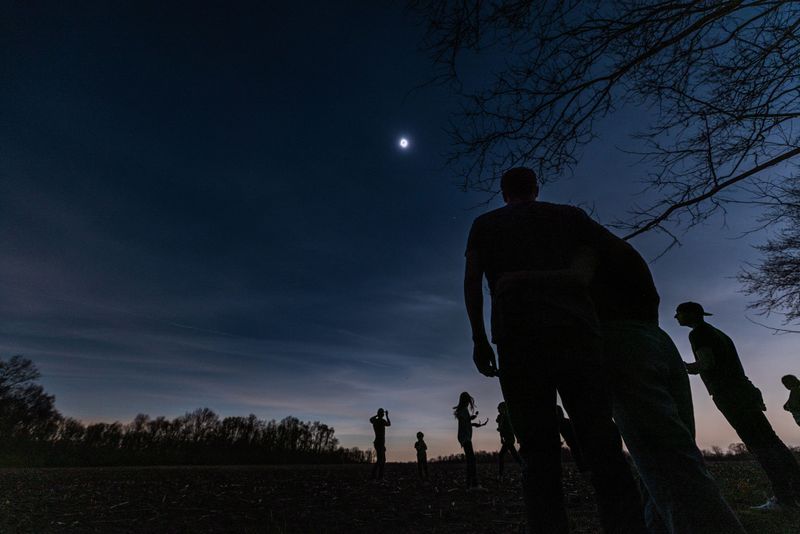
Something shifts when the naturalist asks everyone to switch off their phones. Eyes take about twenty minutes to fully adjust, and once they do, the trail suddenly appears in soft silver outlines.
Guided night hikes at McCloud lean into that adjustment on purpose. Artificial light gets kept to a minimum, partly to protect the experience and partly to avoid startling animals that only come out after dusk.
Naturalists lead the way, pausing to point out the difference between a barred owl call and a screech owl trill. Bats flicker over the open areas, and in early summer, fireflies turn the prairie edges into slow-blinking constellations.
The Halloween Night Hike takes the mood a step further, weaving in stories about the land and the people who worked it long before the park existed. Spooky, sure, but grounded in real history rather than jump scares.
Registration ahead of time is usually required, since group sizes stay small enough that everyone can actually hear the guide. Closed-toe shoes matter more than fancy gear.
Bring a light jacket even in warmer months, because the creek valley holds cool air after sundown. And resist the urge to peek at a screen.
One bright phone resets night vision for the whole group, which is the fastest way to become that person on the trail.
A Sky Dark Enough For Real Stargazing
Rural Hendricks County has one quiet advantage over Indianapolis: almost nothing glows on the horizon. That lack of light pollution turns McCloud into a legitimate stargazing destination rather than a hopeful one.
From May through October, the park runs monthly astronomy programs where high-powered telescopes get wheeled out and pointed at whatever the season offers. Saturn’s rings, lunar craters, star clusters that look like spilled sugar.
Volunteers and naturalists handle the equipment and the explaining, so beginners never feel out of place. Questions are welcome, including the basic ones everybody secretly wonders about.
Clear nights obviously work best, and programs can shift or cancel when clouds move in, so checking ahead saves a wasted drive. Weeknight sessions tend to feel calmer than weekend ones.
A few practical tips make the evening better. Red-filtered flashlights preserve night vision, folding chairs help during longer viewing sessions, and a blanket goes a long way once the temperature drops.
Kids often get the most out of these nights, especially the moment a planet snaps into focus in the eyepiece. Reactions are usually loud.
Even without a scheduled program, simply lying back on the prairie grass and watching satellites drift across the sky feels like a decent use of an evening in Indiana.
The 1913 Warren Truss Bridge Everyone Photographs
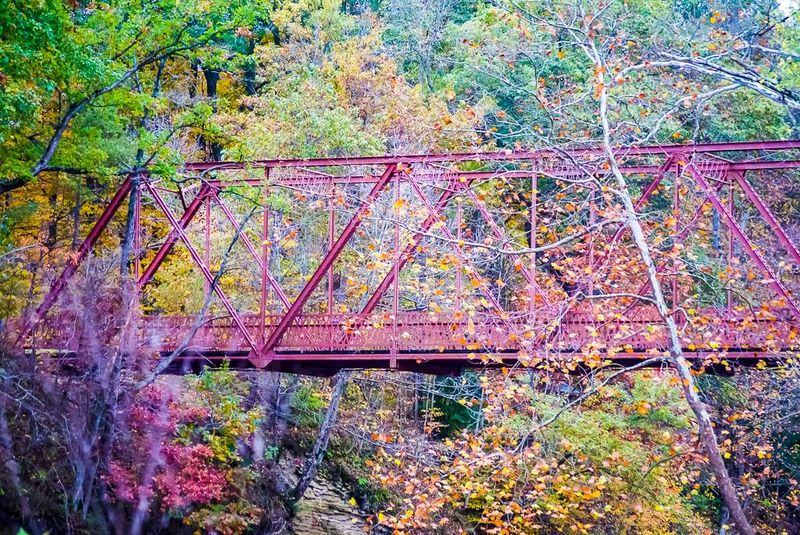
Iron latticework framing a creek in October: that is the shot people drive out here for. The restored Warren truss bridge is easily the park’s most recognizable landmark.
Built back in 1913 over in Pulaski County, the structure was later relocated to McCloud, where it now links the northern and southern halves of the park across Big Walnut Creek. Over a century old and still doing its job.
Walking across it gives a satisfying hollow sound underfoot, and the views up and down the creek open wide in both directions. Water moves fast after heavy rain, slow and glassy in late summer.
Fall turns the whole scene ridiculous in the best way, with gold and rust-colored leaves crowding both banks. Photographers show up early for the softer light and thinner crowds.
Spring has its own appeal, when new leaves are still translucent and wildflowers pop along the banks below. Winter strips it all back to bare geometry.
Take a minute to look at the riveted joints and old fabrication details up close. Bridges like this one were once everywhere across rural Indiana, and very few survived the shift to concrete spans.
Crossing it also happens to be the most practical way to link trail loops on both sides.
Seven Miles Of Trails Through Prairie, Woods And Ravines
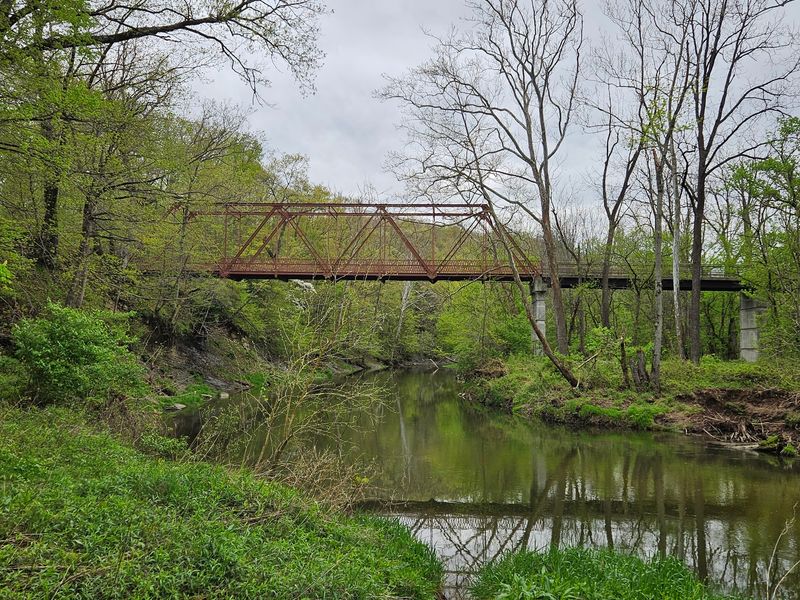
Variety is the real selling point here. Somewhere between six and seven miles of marked trail wind through woodland, a 52-acre prairie, and glacial ravines carved out long before anyone thought to name them.
Surfaces change as often as the scenery does. Wide gravel paths handle strollers and casual walkers well, while narrower natural-surface routes drop into the ravines and demand a bit more attention.
Prairie sections feel completely different from the shaded creek trails, especially in late summer when big bluestem and coneflowers tower over the path. Birds are everywhere in that grass.
Trail markers are clear enough that getting genuinely lost takes real effort, though a quick photo of the map board at the trailhead never hurts. Cell service out here can be spotty.
Distances stay manageable, so a short outing works just as well as a half-day of walking. Loops can be combined or cut short depending on energy levels.
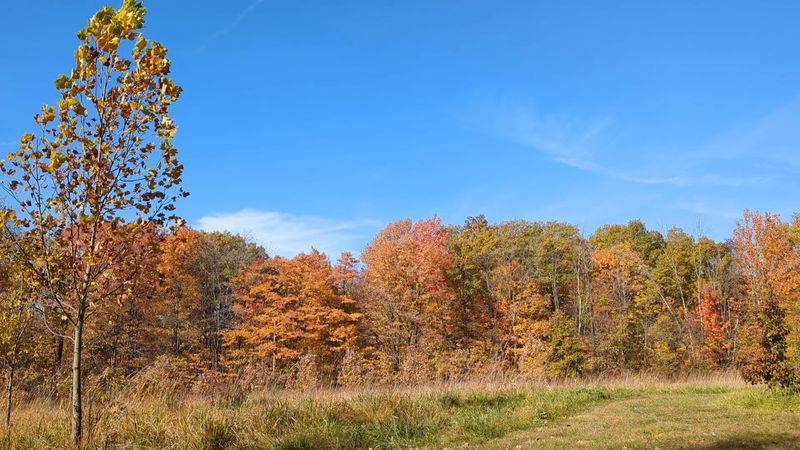
Seasons rewrite the whole place. Spring brings ephemeral wildflowers to the woods, autumn sets the canopy on fire, and winter reveals the shape of the ravines once the leaves are gone.
Sturdy shoes matter after rain, since the low sections near Big Walnut Creek hold mud longer than expected. Water bottles are worth packing.
Wildlife Sightings Without The Crowds
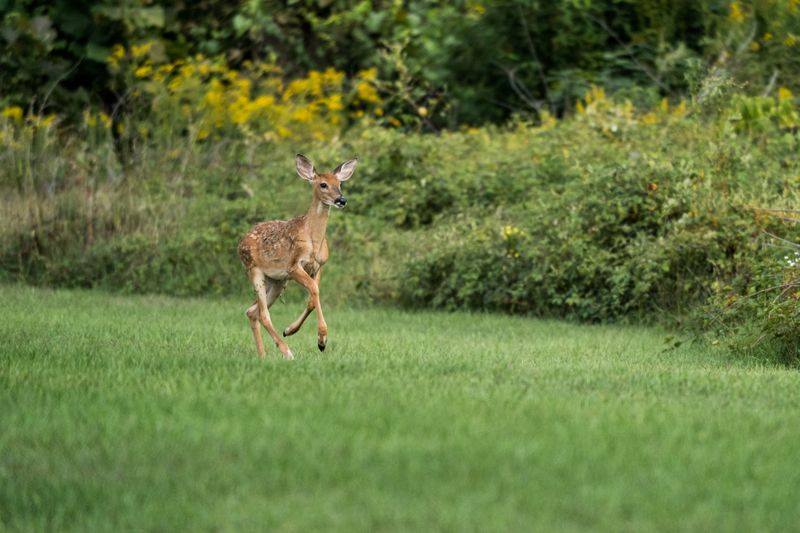
Fewer visitors means bolder animals, and McCloud, located at 8518 Hughes Rd, North Salem, IN 46165, proves it. Foxes trot along trail edges, deer browse near the treeline, and wild turkeys occasionally cross the path with total confidence.
Habitat diversity does most of the heavy lifting. Woodlands, meadows, wetland, and creek corridor all sit within the same 232 acres, which supports a much wider range of species than a single-habitat park could.
Birders do especially well here. Herons stalk the shallows of Big Walnut Creek, bald eagles have been spotted overhead, and songbirds fill the prairie during migration season.
Down near the water, turtles line up on logs and frogs go quiet the moment footsteps get close. Rabbits are practically guaranteed at dawn and dusk.
Timing changes everything. Early mornings and the hour before sunset produce the most activity, while midday tends to be sleepy for most mammals.
Binoculars are worth the pocket space, and moving slowly beats covering distance. Standing still for five minutes often reveals more than another mile of walking.
Nocturnal species take over after dark, which is exactly why the guided night programs feel so different from a daytime visit. Owls, bats, and the occasional rustle in the underbrush belong to a completely separate shift.
Inside The Ray And Mary Benson Nature Center
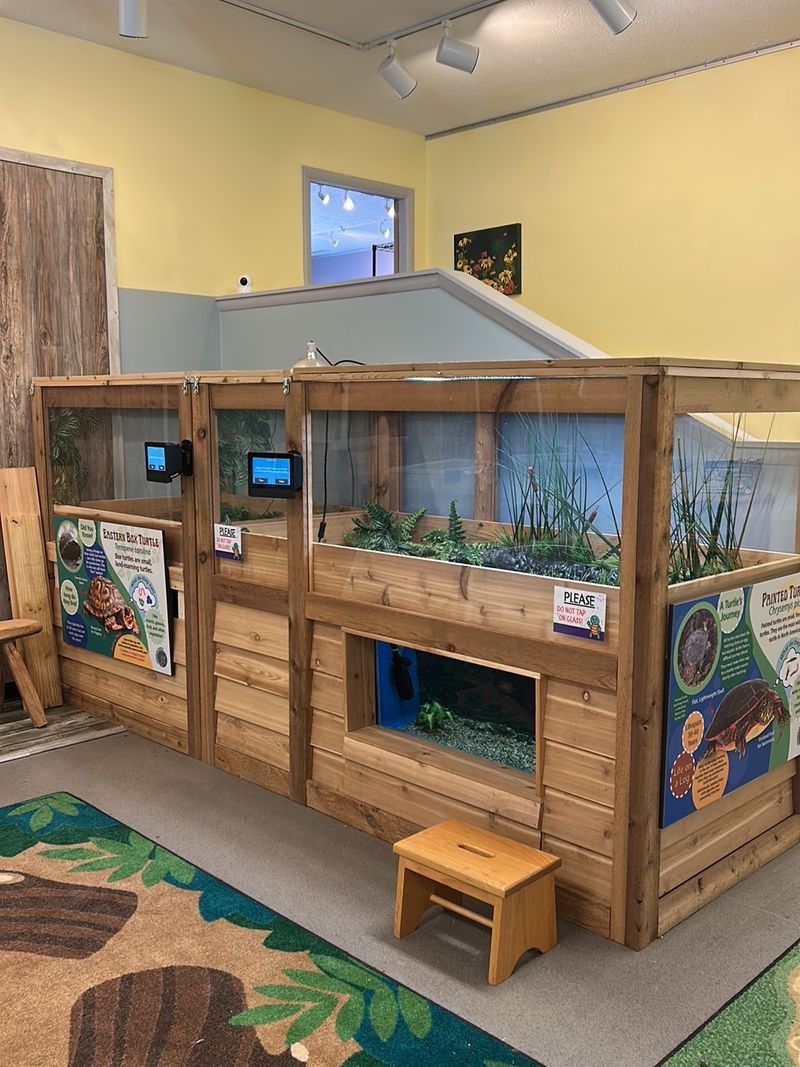
Rainy afternoon? The Ray and Mary Benson Nature Center handles that problem nicely.
Interactive displays, rotating animal exhibits, and a wall of hands-on stations keep younger visitors busy far longer than expected.
Live reptiles are usually the headliner, though the bird-viewing room quietly wins people over. Big windows look out toward feeders, and comfortable seating makes it easy to lose track of time watching cardinals and woodpeckers sort out their pecking order.
An exterior overhaul completed across 2022 and 2023 gave the building a refreshed look. Inside, a library of nature-themed books offers a quiet corner for anyone who wants to slow down.
Naturalists staff the space and genuinely enjoy answering questions, whether the topic is a mystery mushroom or which owl made that sound last night. They also know current trail conditions.
Stopping here first makes the rest of the visit better. Exhibits explain the glacial history behind the ravines and the role the prairie plays in supporting pollinators, which turns a walk into something more informed.
Families with small children often use the center as a warm-up or a cool-down. Restrooms and information about upcoming programs are here too.
Think of it as the park’s front desk, only with turtles.
Bees, Boardwalks And A Creek Made For Wading
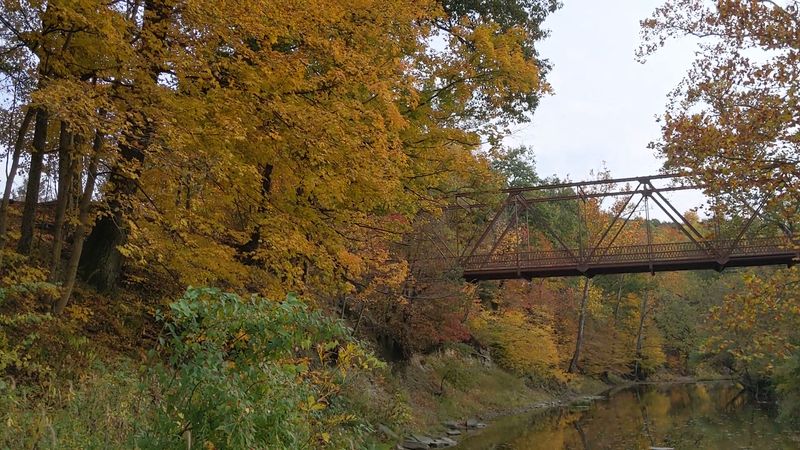
Big Walnut Creek runs like a soundtrack through the whole property. Shallow gravel bars invite wading on hot days, and when water levels cooperate, canoes and kayaks slip through easily.
Anglers find smallmouth bass, panfish, catfish, suckers, and carp in the deeper pools. Nothing fancy, just decent, unhurried fishing in a pretty setting.
Near the truss bridge, a young arboretum shows off a mix of tree species planted for both shade and education. Labels help visitors connect names to bark and leaf shapes.
Summer brings the McCloud Bee House to that same area, where live honeybees work behind plexiglass. Watching them build comb and pass food back and forth explains pollination faster than any poster could.
A wetland boardwalk handles the marshy ground elsewhere in the park, leading to an observation deck above the cattails. Dragonflies patrol the surface, frogs plop out of sight, and the whole scene hums in July.
Accessibility matters here, since the boardwalk lets visitors reach a habitat that would otherwise mean wet boots. Strollers manage it fine.
Seasonal events round things out, from Maple Syrup Days in early March to the Fall Colors Festival each October, plus campfire cooking and critter feedings scattered across the calendar at little or no cost.
