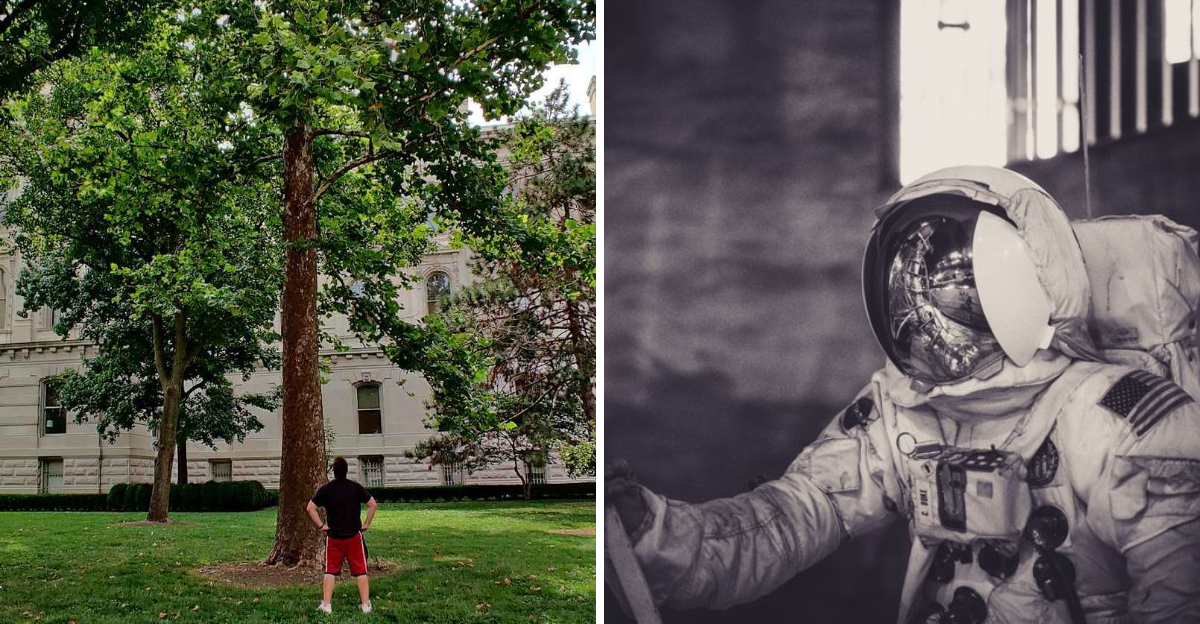
Someone walking past this tree would probably think it had spent its whole life in Indiana. It has not.
Its first big trip was to the moon. Well, almost.
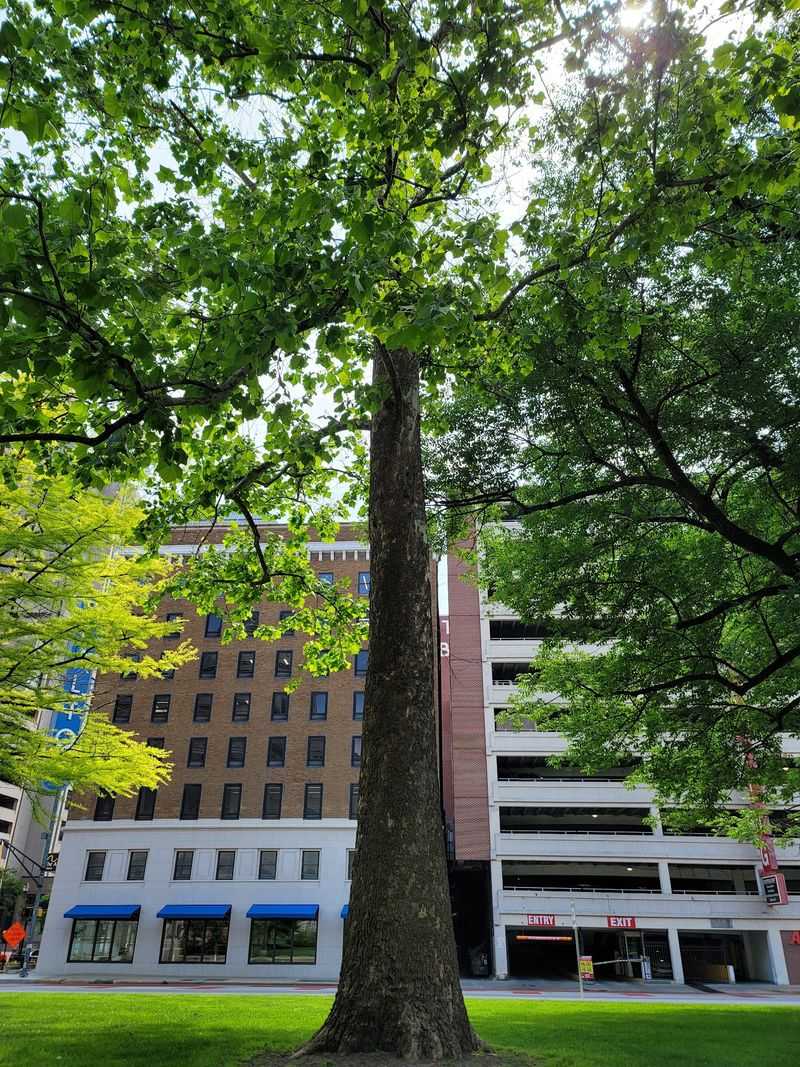
In 1971, a sycamore seed traveled aboard Apollo 14 and orbited the lunar surface before returning to Earth. That seed eventually grew into the tree now standing outside the Statehouse, where it was planted in 1976 and has been quietly getting taller ever since.
There is something wonderfully strange about that. A tree with a space-travel origin story is standing in the middle of an ordinary downtown day, surrounded by pedestrians, traffic, and people who probably have no idea they are walking past something that has technically been to the moon.
A Seed That Circled The Moon 34 Times
The math behind this tree still sounds unbelievable. In 1971, Apollo 14 command module pilot Stuart A.
Roosa carried a small canister of tree seeds in his personal kit while Alan Shepard and Edgar Mitchell worked on the lunar surface below.
Those seeds traveled roughly 270,000 miles and orbited the moon 34 times before heading home.
Inside the canister sat a mix of species, sycamore alongside loblolly pine, sweetgum, redwood, and Douglas fir. The whole point was to see whether a trip through space would change how a tree grew.
Things went sideways during decontamination back on Earth. The bags holding the seeds broke open, species got jumbled together, and researchers worried the entire batch had been ruined.
They were shipped to a Forest Service station in Gulfport, Mississippi anyway. Most of them germinated just fine.
Seedlings from that batch went out across the country in 1975 and 1976, and one of the sycamores landed in Indianapolis. Visitors can find it on the Statehouse grounds at 200 W Washington St, Indianapolis, IN 46204, tucked along the Capitol Street side of the building.
Standing near it, the numbers become strangely physical. Every ring inside that trunk traces back to something that once looked down on the far side of the moon, which is not a sentence most trees can claim.
Planted On Arbor Day During America’s Bicentennial
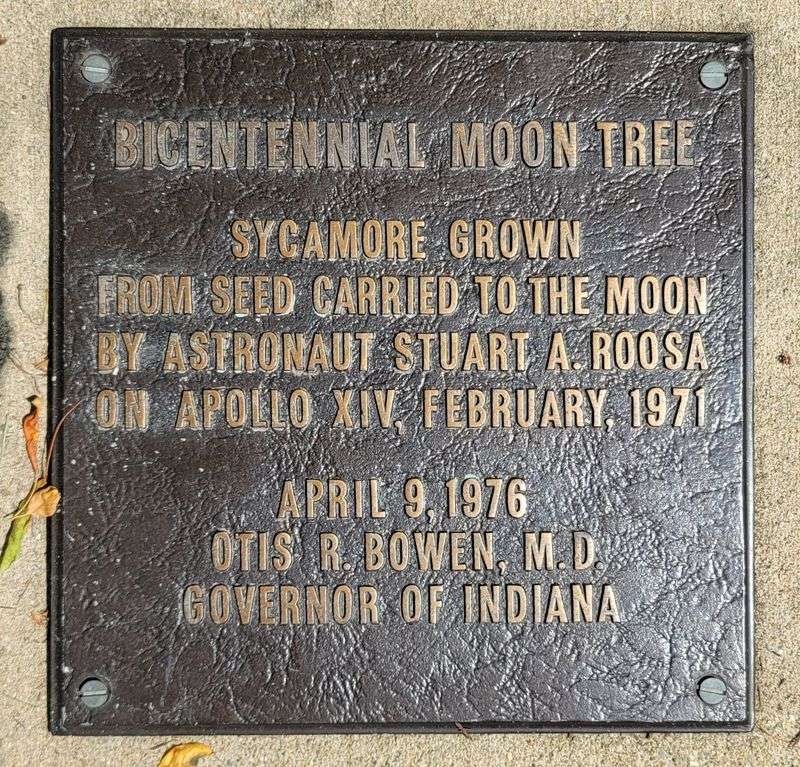
April 9, 1976 was not a random Friday. The date lined up with Arbor Day and fell right in the middle of the nation’s bicentennial celebrations, so Indiana turned a tree planting into something closer to a statement.
Then-Governor Otis R. Bowen helped put the young sycamore in the ground.
Choosing a sycamore made sense for reasons beyond the space angle. Sycamores are native to Indiana, common along rivers and creek bottoms across the state, and they grow into broad, sturdy shade trees that hold their own next to big architecture.
A cosmic seed grown into a local species. That pairing gave the whole thing a nice symmetry.
A commemorative plaque sits near the tree along Washington Street, explaining the Apollo 14 connection and the planting for anyone who stops long enough to read it. Plenty of people do not, which is part of the charm.
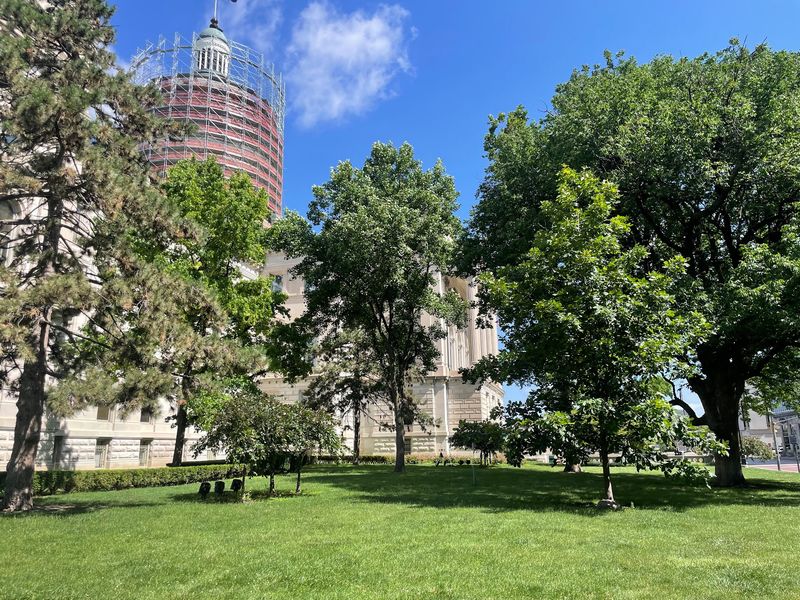
The tree grows on the east side of the Statehouse building, along Capitol Street, where it gets full afternoon sun and a steady stream of foot traffic.
Fifty years on, the sapling from that ceremony has become a full-grown landmark. It has weathered ice storms, summer droughts, and countless legislative sessions, quietly outlasting most of the news cycles that happened just inside those limestone walls.
The Smokejumper Astronaut Behind The Whole Idea

Not every astronaut arrives at NASA by way of a forest fire. Stuart A.
Roosa worked as a U.S. Forest Service smokejumper before he ever flew a spacecraft, parachuting into remote country to fight wildfires.
That background stuck with him long after he traded the drop zone for a command module.
The seed experiment grew out of that history. Roosa proposed carrying tree seeds on Apollo 14 as a personal project, and Ed Cliff, then Chief of the Forest Service, backed the idea.
It was a small addition to an enormous mission. A canister of seeds weighed almost nothing next to the rest of the payload.
What makes the Indianapolis sycamore worth a look is how directly it ties back to one person’s ???? careers colliding. Forestry and spaceflight rarely overlap, and here the overlap is a living thing with bark and roots.
The tree also says something about how the Apollo program worked in practice. Agencies loaned each other expertise, side projects got approved, and occasionally those side projects turned into monuments nobody planned for.
Visitors interested in space history often chase hardware, capsules behind glass, rockets on their sides in museums. Here the artifact grows taller every year, drops leaves in October, and needs nothing but rain and a little attention from the grounds crew.
Only About 50 Of These Trees Are Still Standing
Hundreds of seeds made the trip. Far fewer became trees, and fewer still are alive today, with roughly 50 confirmed Moon Trees remaining from that original Apollo 14 batch.
The Indianapolis sycamore is one of them.
Record keeping in the mid-1970s was casual at best. Seedlings went out to schools, parks, and government buildings, sometimes with paperwork and sometimes with little more than a handshake.
Some were planted and forgotten entirely.
A few met the saddest possible fate, cut down by groundskeepers who had no idea what they were removing. Without a plaque or a file somewhere, a moon-orbiting sycamore looks exactly like every other sycamore on the block.
That is what makes the Statehouse tree such a lucky survivor. Its prominent spot on the capitol lawn, its plaque, and decades of consistent care kept it identified and protected while others slipped through the cracks.
Rarity changes how a place feels. Knowing that only a few dozen of these exist anywhere on Earth turns a two-minute sidewalk stop into something closer to visiting a one-of-a-kind exhibit.
Bring a camera and take the time to walk a full circle around the trunk. The bark flakes in irregular patches of cream, gray, and tan, giving each side of the tree a slightly different look.
Space Travel Changed Absolutely Nothing About It
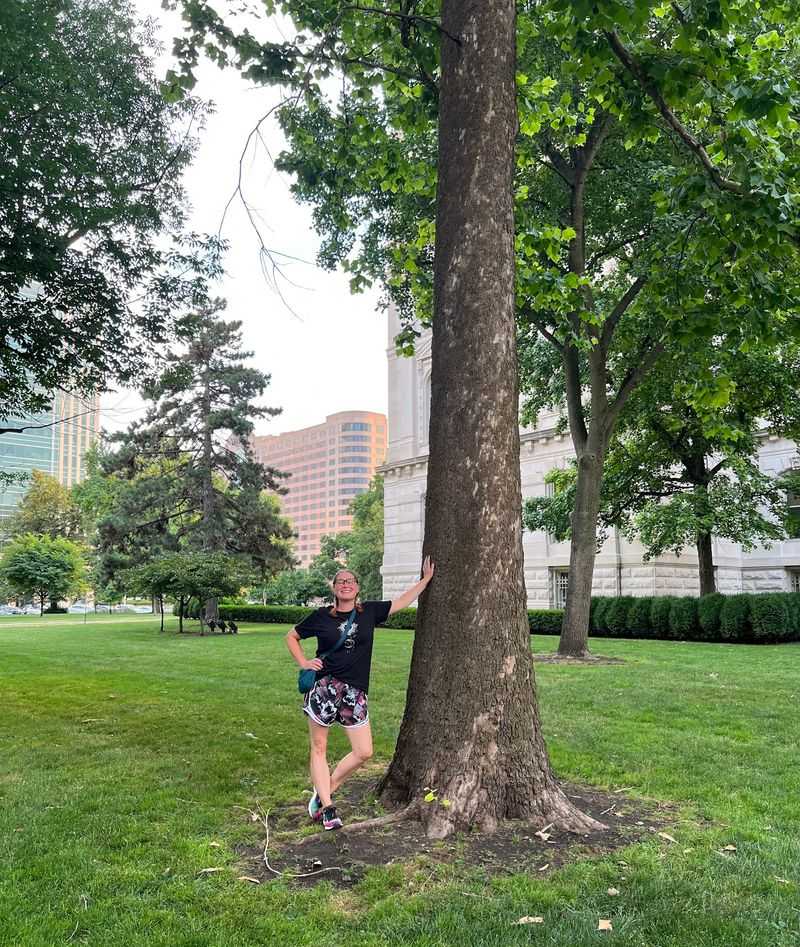
Here is the twist nobody expects. Researchers compared the Moon Trees against control seeds that stayed on Earth, watching growth rates, leaf shape, and general development over years.
No meaningful differences turned up.
Microgravity, cosmic radiation, a 270,000-mile round trip, and the result was a perfectly normal sycamore. The seeds shrugged off the entire experience.
That outcome sounds like a letdown until the meaning sinks in. Life at the seed stage is tougher and more stable than most people assume, which is genuinely useful information for anyone thinking about growing food on long space missions.
For visitors, the effect is a fun little paradox. A tree with an off-planet resume that looks completely at home on a lawn in Indiana, indistinguishable from the sycamores lining the White River a few blocks west.
No glow. No strange fruit.
Just broad palm-shaped leaves and that classic patchy bark.
Kids tend to love this part once it clicks, because it flips the usual expectation of what a space souvenir should look like. Nothing dramatic happened, and that is the discovery.
Standing under the branches, the ordinariness becomes the whole point. The most remarkable thing about the tree is that space did not manage to leave a single visible mark on it.
Turn It Into A Statewide Moon Tree Road Trip
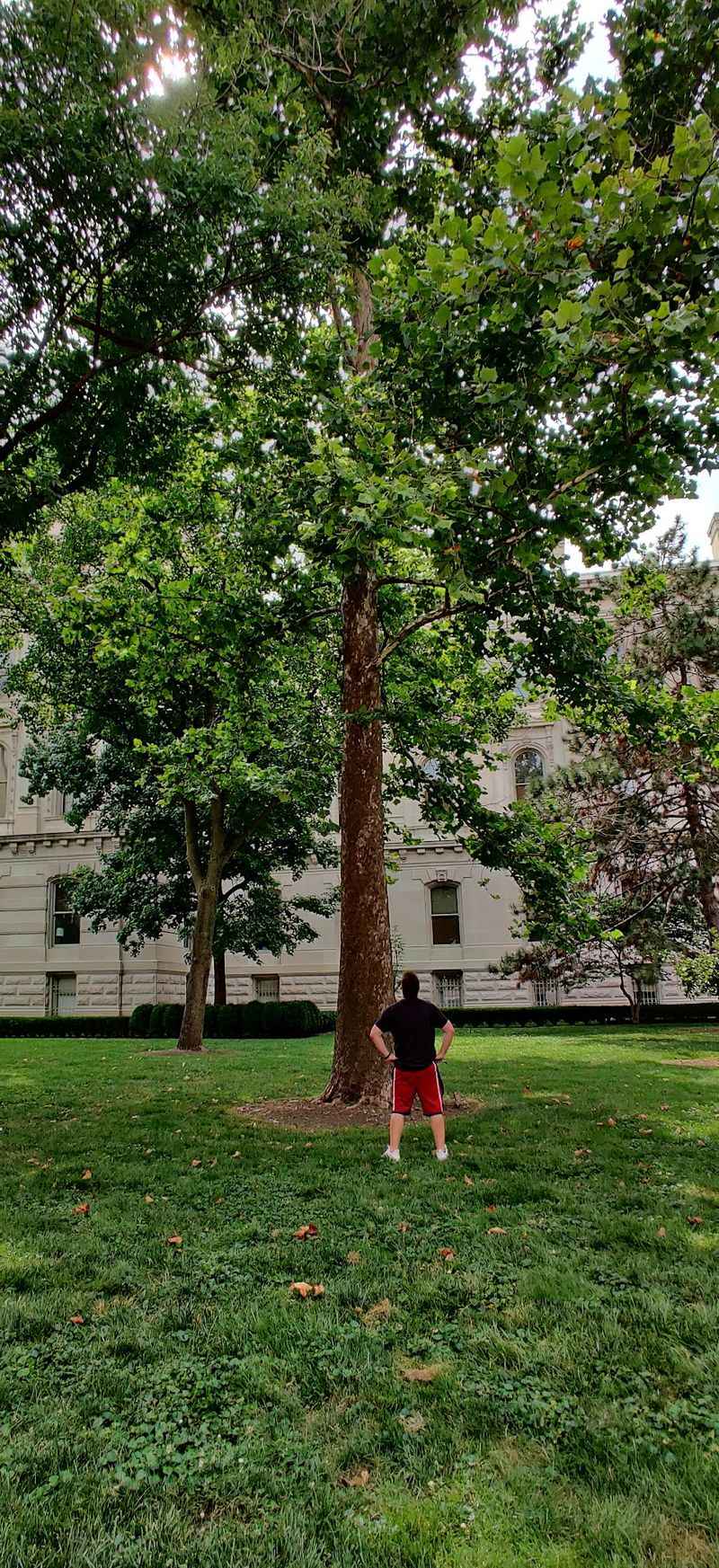
Indiana got more than one. Additional Moon Trees were planted around the state, which means the Indianapolis sycamore can be the first stop rather than the only one.
Lincoln City, Cannelton, and Tell City all figure into the story.
Some of those plantings were sweetgums rather than sycamores, since the Apollo canister held a mix of species. A few of the Tell City sweetgums declined over the decades and eventually had to be removed.
Grafting efforts followed, using twigs from the originals in hopes of keeping the lineage going.
That preservation work adds an unexpected layer to the trip. These are not static monuments, they age, struggle, and sometimes get a second chance through careful horticulture.
A route heading south from Indianapolis toward the Ohio River covers rolling farmland, small river towns, and Lincoln City, where Abraham Lincoln spent much of his boyhood. History stacks up quickly along that drive.
Pack good walking shoes and check locations before setting out, since a couple of the sites sit on public grounds with limited signage. Tracking them down is half the fun.
Strung together, the trees form a loose constellation across the state, connecting a capital city lawn to quiet southern Indiana towns through one very unusual chapter of space history.
Quiet Wonder In The Middle Of A Working Downtown
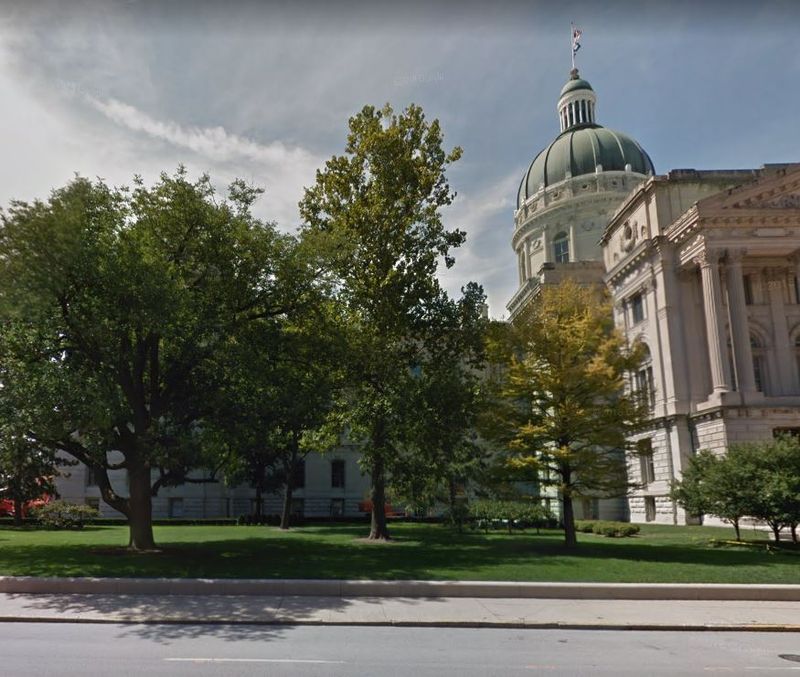
Late afternoon is the best time to show up. Sunlight bounces off the Statehouse limestone, shadows stretch across the lawn, and the sycamore’s upper branches catch the last warm light of the day.
Traffic keeps rolling past on Washington Street, indifferent as ever.
Something about that contrast lands well. A tree tied to one of the boldest adventures in human history spends its days shading a sidewalk where people hurry by carrying coffee and paperwork.
No ticket booth, no gift shop, no line.
The Statehouse grounds sit within easy walking distance of the Indiana State Museum, the canal walk, and Monument Circle, so the tree fits neatly into a larger downtown afternoon. Free tours of the Statehouse interior run on weekdays for anyone wanting to see the rotunda.
Bring a notebook or just sit on the low wall nearby for a few minutes. The rustle overhead sounds like any other tree, which somehow makes the backstory hit harder.
Fifty years of Indiana weather have shaped this sycamore into something solid and unhurried. It grew from a seed that saw the moon up close, then came home and settled into the slow business of being a shade tree.
Worth the detour, worth the pause, worth telling somebody about later.
