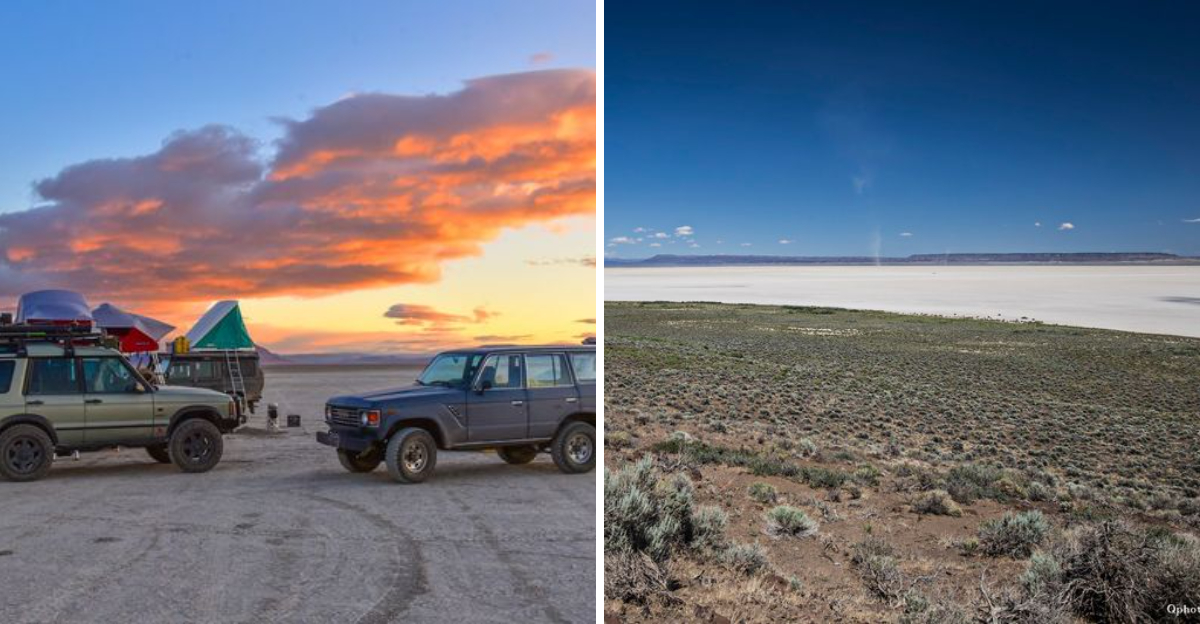
Cracked earth stretches out flat in every direction here, nothing green, nothing typical about what most people picture when they think of this region.
Distances play tricks on the eyes too, mountains sitting miles away yet somehow looking close enough to walk toward. Heat shimmers off the ground during warmer months, adding to the sense that you’ve somehow left the Pacific Northwest entirely without actually going anywhere.
Oregon rarely gets associated with landscapes this stark, overshadowed by greener, wetter images most people already have fixed in their heads. This particular stretch breaks that expectation completely, looking closer to another planet than anywhere nearby.
Oregon photographers chase this exact scenery specifically, knowing how rare it is to find terrain this barren so close to forests and coastline. Some places just don’t match their surroundings at all.
The Cracked Playa That Stretches for Miles
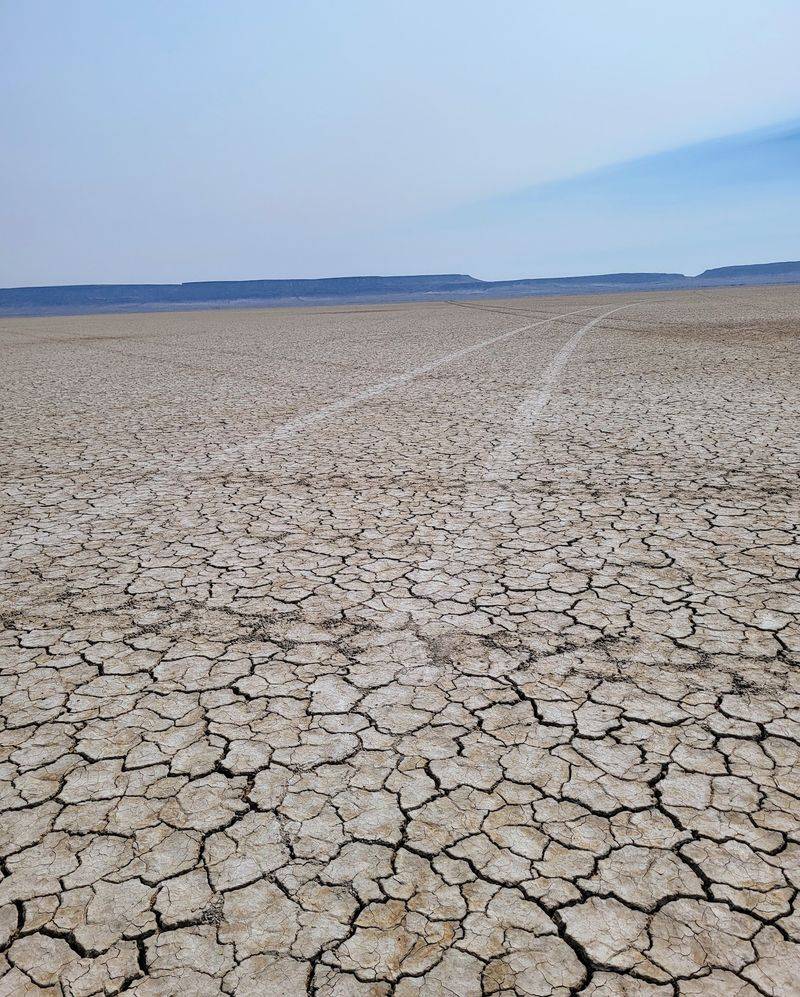
Cracked earth in neat geometric shapes covers the playa like tiles laid by some enormous, careless hand. The surface is a dry lakebed roughly twelve miles long, and in summer it bakes into a hard pale crust that crunches softly underfoot.
Walking out onto it feels oddly weightless. There are no trails, no signs, no fences telling anyone where to go.
Distance stops making sense pretty quickly out here. A parked car can vanish from sight and then reappear as a tiny speck miles later, which sounds impossible until it happens.
Photographers love the surface texture, especially in low light when every crack throws a small shadow. Bring a camera even if photography is not usually the goal, because the patterns look unreal in pictures.
One practical tip that matters more than it sounds: mark the starting point on a GPS before wandering. Everything looks identical in every direction, and getting turned around on flat ground is easier than expected.
Steens Mountain Rising Like a Wall Behind the Sand
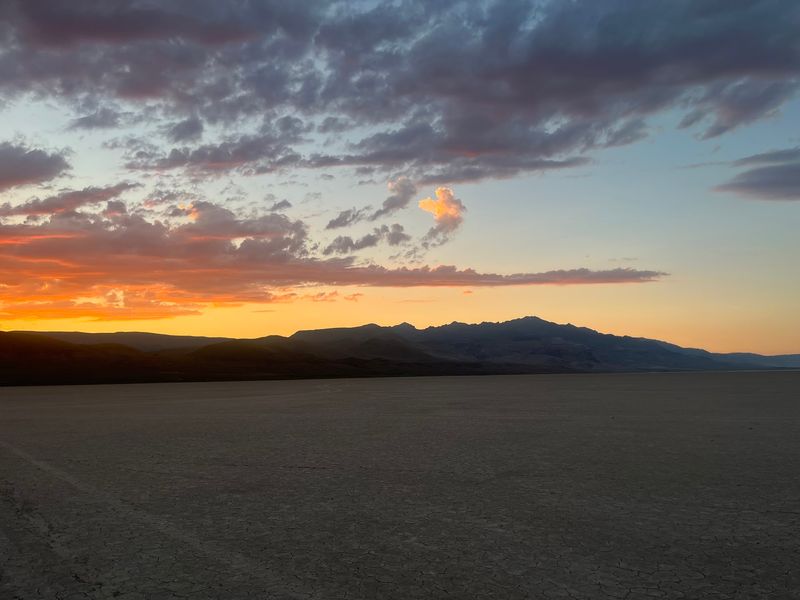
Behind the flats, Steens Mountain climbs thousands of feet almost straight up, and the contrast is honestly a little dramatic. Flat, flat, flat, then a wall of rock.
Snow often lingers on the upper reaches well into late spring, which makes for a strange split-screen view: white peaks above, sun-baked desert below. That mountain is also the reason the desert exists.
Clouds rolling in from the west dump their moisture on the western slopes and arrive on the eastern side with almost nothing left, creating what geographers call a rain shadow.
Late afternoon is when the escarpment really performs. Light slides across the rock face and the whole thing shifts from gray to warm amber in a matter of minutes.
Watching storm clouds move along the ridge from the middle of the playa is a memory that sticks. Nothing blocks the view, so weather approaching from thirty miles away is visible the entire time it travels.
Night Skies Dark Enough to Rival Anywhere in the Country
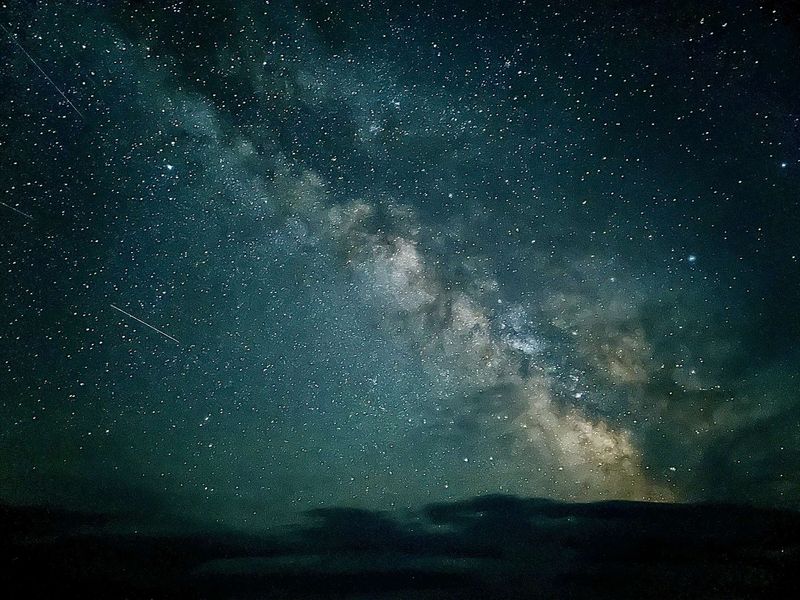
Out here the Milky Way does not need a camera trick or a long exposure to show up. It simply appears, bright and grainy, arching across the whole sky.
Harney County holds some of the darkest skies in the lower forty-eight, and the Alvord sits far enough from any town that light pollution basically does not exist.
Timing makes a huge difference. Checking the calendar for a new moon before planning the trip turns a good night into an unforgettable one.
That said, full moons have their own magic. The playa reflects so much moonlight that driving without headlights becomes possible, which feels slightly illegal even though it is not.
Meteor showers here are ridiculous. With a full horizon in every direction, streaks appear in places nobody thought to look.
Pack warm layers regardless of the season, since temperatures drop hard once the sun goes down and the desert loses its heat fast.
Soaking at Alvord Hot Springs on the Desert Edge
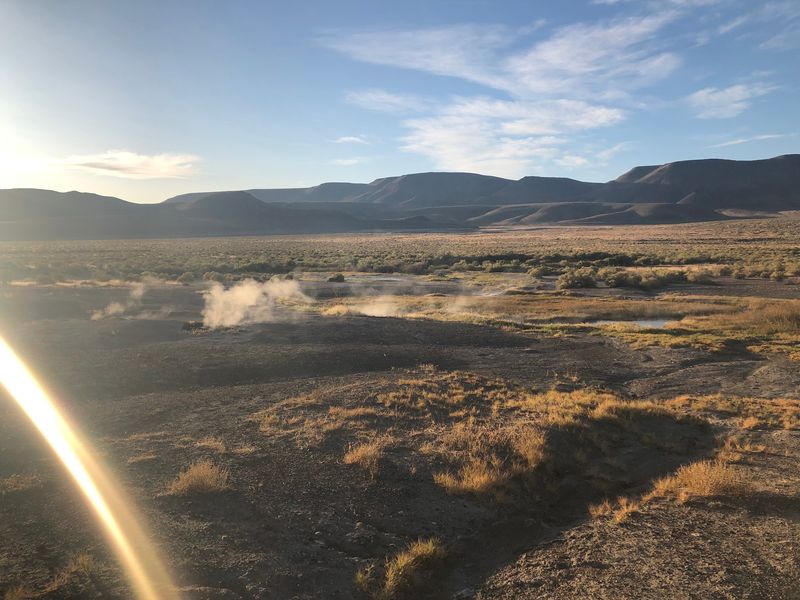
Geothermal water bubbles up right at the edge of the playa, and someone had the good sense to build simple soaking pools around it. Steam drifts sideways whenever the wind picks up.
Sitting chest-deep in warm water while cold high desert air brushes across the shoulders is a specific kind of comfort that is hard to describe.
The springs are privately operated, with a day pass or overnight option that also unlocks a road onto the playa suitable for regular sedans. That access matters if the vehicle sits low.
Alongside the pools there is a primitive campground with picnic tables and fire rings, which offers a bit more structure than camping loose on the lakebed.
A word of caution about the ground near the springs: spring runoff turns it into deep, sticky mud that has trapped bikes and vehicles alike. Staying on firm, dry surfaces saves an expensive tow and a very long wait.
Mirages That Play Tricks on Your Eyes All Day
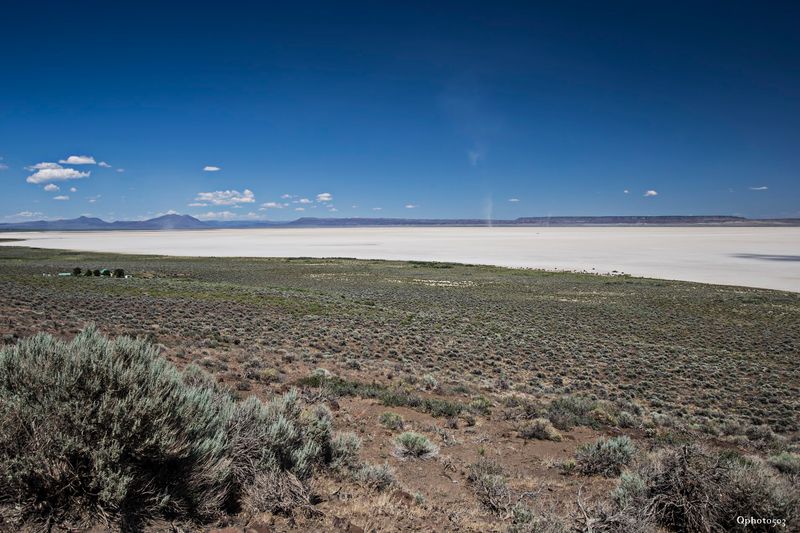
Heat mirages here are not subtle. By late morning the far edge of the playa turns into a shimmering silver lake that simply is not there.
Vehicles parked a few miles away seem to float above the ground, stretched and wobbly like reflections in a funhouse mirror.
The physics behind it is straightforward: hot air near the surface bends light, and the eye interprets that bent light as water or floating objects. Knowing the explanation does not make it any less fun to watch.
Kids find this endlessly entertaining, and honestly so do adults. Half the visitors out there end up squinting into the distance debating whether that shape is a truck, a person, or nothing at all.
Binoculars add another layer to the game. Zooming in on a mirage and watching it dissolve into something ordinary is oddly satisfying. Dust devils spin up too, sometimes tall enough to track across the flats for several minutes.
Camping Where There Are No Sites, Only Space
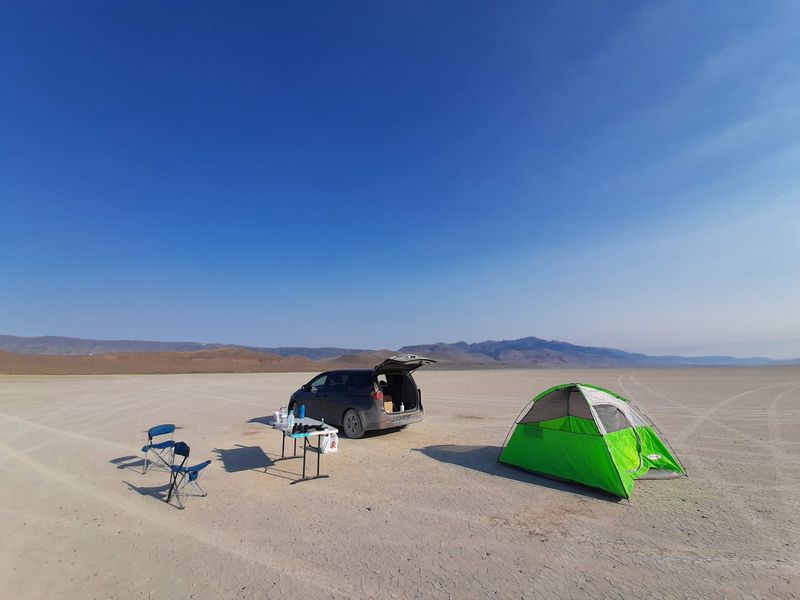
Camp anywhere. That is basically the whole system on the playa, and it takes a minute to adjust to that much freedom.
No numbered sites, no reservations, no neighbor twelve feet away with a loud radio. In quieter months a person might spend several days out there and only see other people on a weekend.
Wind is the biggest variable, and it can be fierce, with gusts strong enough to flatten anything not properly staked. Setting up a windbreak and anchoring gear well makes the difference between a peaceful night and a chaotic one.
Everything has to come along: water, food, fuel, a portable toilet, and far more sunscreen than seems reasonable. There are no facilities, no trash cans, and no shade.
Skin dries out fast in this air, so moisturizer earns its place in the bag. Leaving no trace matters here more than most places, since the flat surface hides nothing and repairs itself slowly.
Silence So Complete It Feels Like a Presence
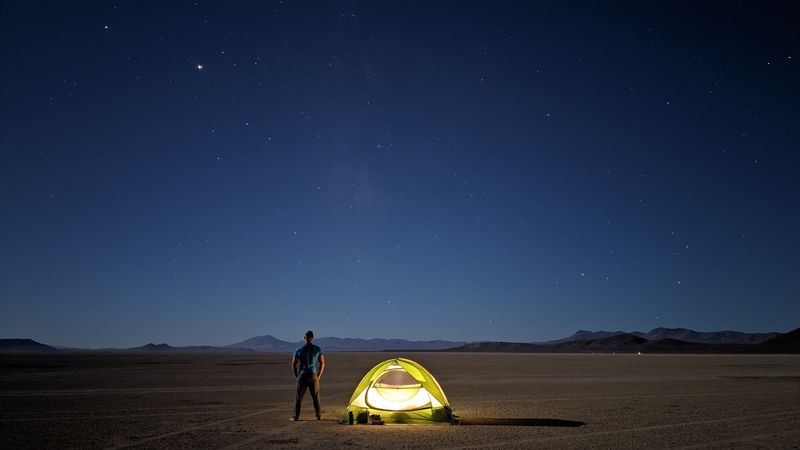
Nothing prepares a person for how quiet it gets once the road noise fades. No birds. No rustling leaves. No hum from a distant highway. Walk far enough from the parking area and the only sound left is breathing and the occasional crunch of a boot on dried mud.
Visitors describe the effect in similar ways: a kind of mental reset that happens without any effort. The brain seems to notice the absence of noise before the ears do.
After dark, the quiet occasionally breaks. Coyotes call from somewhere near the base of the mountains, and cicadas buzz in the warmer months.
Anyone who works in a loud city will feel the contrast immediately. It is the sort of stillness people drive eight hours for and then talk about for years afterward. Give it time, though. The first hour can feel unsettling before it turns into something genuinely restorative.
Driving, Biking and Land Sailing Across the Flats
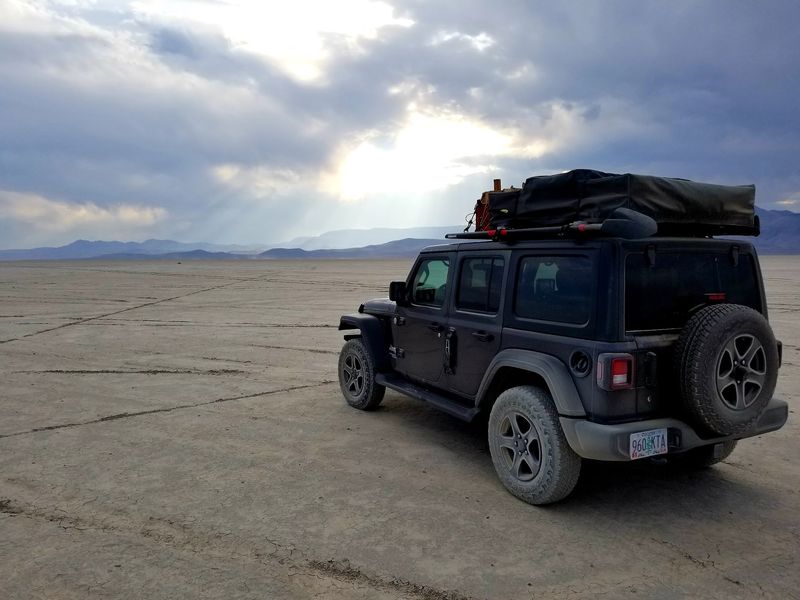
Twelve miles of hard flat surface with no obstacles is basically an invitation, and people take it. Cars, motorcycles, ATVs and land sailing rigs all show up during the dry season.
Riding an e-bike out across the middle is a strange thrill, mostly because there is nothing to steer around and no sense of progress except the shrinking car behind.
Caution is genuinely important here. Visibility distances trick the eye, and pedestrians or cyclists can be nearly invisible against the pale ground until a vehicle is close.
Wind sports have a following on the playa too, since steady gusts and a glass-smooth surface make ideal conditions for wheeled sailing craft.
Only the dry season works for any of this. Once moisture arrives, the crust turns to slick clay that swallows tires and ruins the surface for everyone. Checking the forecast and the recent rainfall before heading out is the single smartest move a visitor can make.
Sunrise and Sunset Colors Over the Lakebed
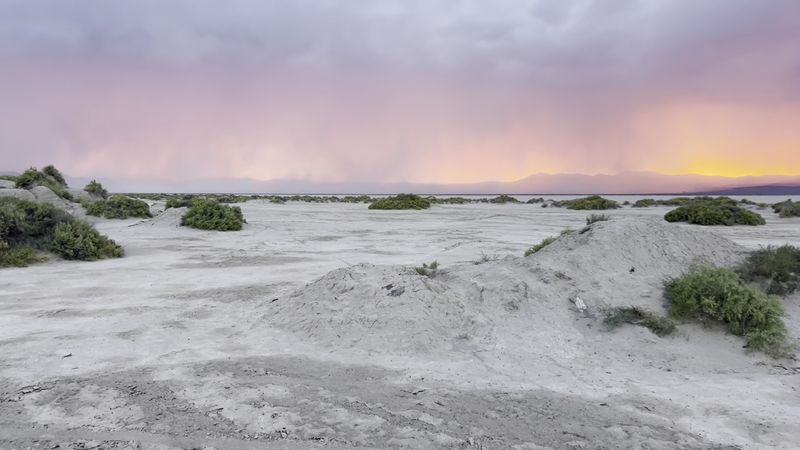
Golden hour lasts longer here than it should, or at least it feels that way. With no trees or buildings to block the light, color spreads across the entire sky at once. Sunsets tend to run through pink, orange and deep violet before the first stars appear, and the pale ground picks up every shade.
Mornings deserve equal attention. Sunrise light hits the Steens escarpment first, lighting the rock face while the playa below still sits in shadow. Arriving in the late afternoon and staying through the following morning captures both shows without any rushing. Many people plan exactly that.
Photographers just starting out will find the conditions forgiving, since the flat foreground and huge sky do most of the compositional work.
Storm evenings are the wild card. Clouds building over the mountains at dusk create layered light that changes every thirty seconds, so keeping the camera handy pays off.
Getting There Without Getting Stuck
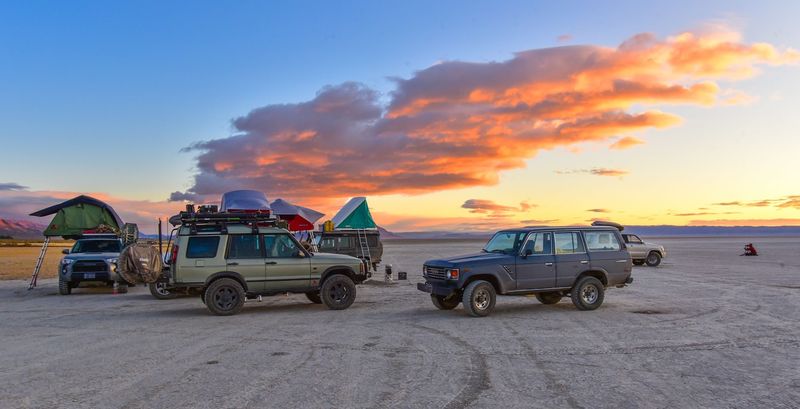
Remote is an understatement. The desert sits roughly 105 miles from Burns, reached by Oregon Route 78 and then Folly Farm Road, which turns to dirt and becomes Fields-Denio Road.
Gravel, washboard and dust are part of the deal, so tires, spares and a full fuel tank all deserve a check before leaving pavement.
Two main entry points serve most visitors. Frog Springs offers free access but wants a bit more ground clearance, while the road at Alvord Hot Springs is gentler on ordinary cars.
Rain changes everything. A wet playa becomes off-limits, and driving on it damages the surface while risking a very costly recovery. Cell service is unreliable, so downloading offline maps ahead of time is smart planning rather than paranoia.
Supplies should be gathered long before the final stretch, because services out this way are scarce. The official location is simply listed as Oregon 97721, Harney County, which tells you plenty about how empty it is.
