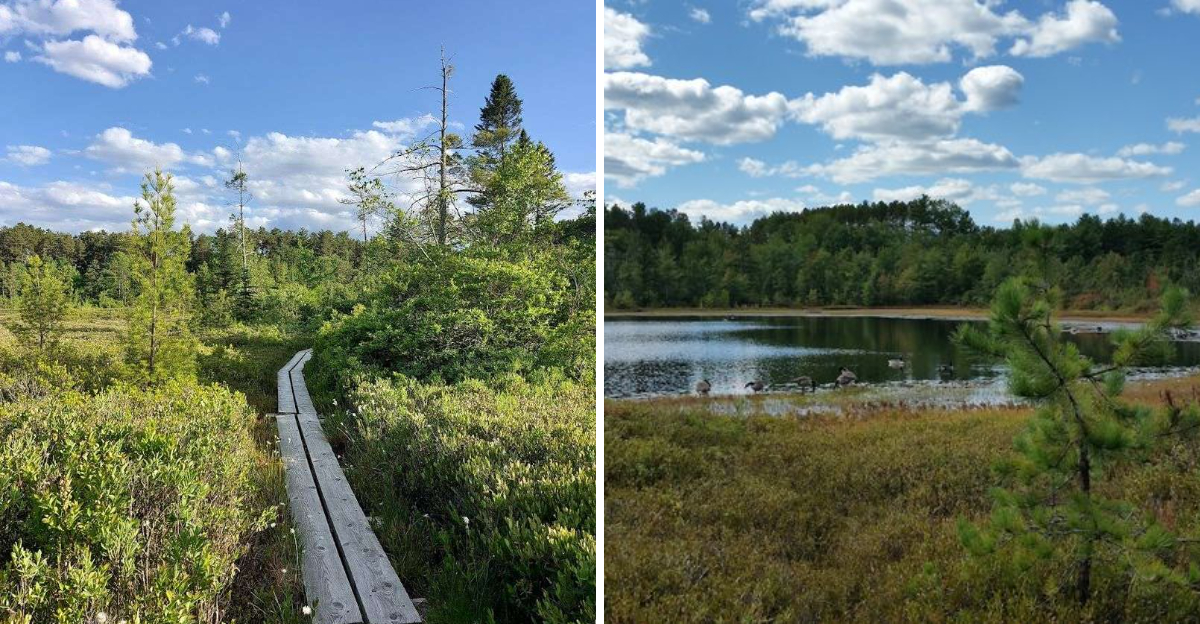
I did not expect to feel like I had stepped back in time when I walked onto a boardwalk in New Hampshire, but this place is different from anything else I have seen in the state. The path floats above a ancient bog that feels almost otherworldly, with strange plants growing in patterns that do not look like normal forest floor and a stillness in the air that makes you lower your voice without realizing it.
You can feel how old this place is, like the ground underneath the boardwalk has been doing its own thing for thousands of years while the rest of the world rushed past. I walked slowly and stopped often, just listening to the quiet and staring at the unusual landscape spreading out on both sides of me.
The Ancient Origins of a Floating World
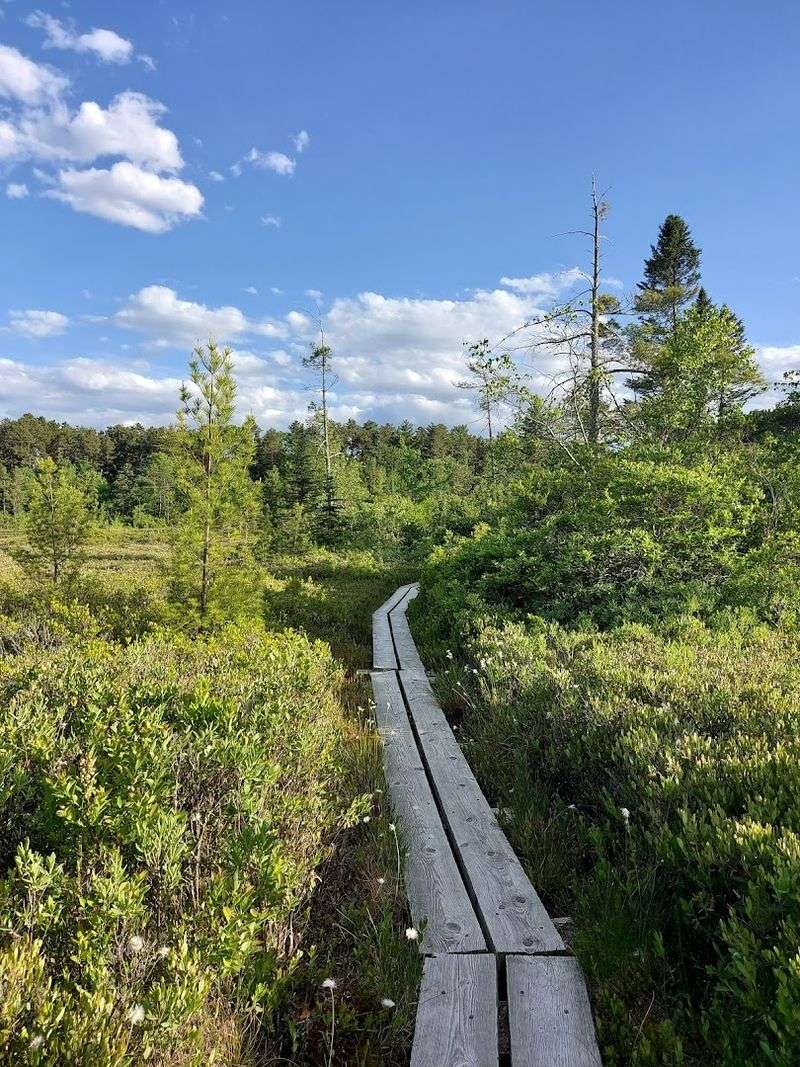
Long before anyone built a boardwalk here, a glacier was doing all the heavy lifting. When the last ice sheet retreated from what is now New Hampshire roughly twelve thousand years ago, it left behind a depression in the earth called a kettle hole.
That hollow slowly filled with water, and over thousands of years, sphagnum moss crept in from the edges and began forming a floating mat over the surface.
The result is what you see today at Ponemah Bog Wildlife Sanctuary in Amherst. That moss mat has been quietly growing and thickening for at least six thousand years, gradually swallowing the open water beneath it.
Peat layers below the surface act like a time capsule, preserving ancient pollen grains that scientists use to trace how the local vegetation has changed over millennia.
The name Ponemah comes from the Ojibwe language and translates to land of the hereafter. That name feels almost poetically accurate when you stand on the boardwalk and realize you are hovering above a living, breathing archive of natural history.
Few places in New Hampshire carry this kind of geological weight in such a compact, walkable package.
What Makes a Bog Different From a Swamp
Most people use the words bog and swamp interchangeably, but a bog is its own very specific and rather extreme thing. The water here is highly acidic, almost completely lacking in nutrients, and very low in oxygen.
Those conditions make it nearly impossible for most plants and animals to survive, which is exactly why the ones that do thrive here are so fascinating.
Technically, Ponemah Bog is classified as a poor fen rather than a true bog, but the distinction is subtle and the experience is anything but dry. The acidic peat locks up nutrients so effectively that the food web inside the sanctuary is remarkably simple compared to a typical forest or wetland.
Plants cannot pull the minerals they need from the soil, so some of them evolved a wildly creative workaround.
New Hampshire has very few ecosystems this extreme, and that rarity is precisely what makes this sanctuary worth protecting. The entire place functions like a living museum, preserving conditions that once covered far larger areas of the northeastern landscape.
Walking through it feels less like a nature stroll and more like a field trip into deep time.
Carnivorous Plants That Actually Eat Bugs
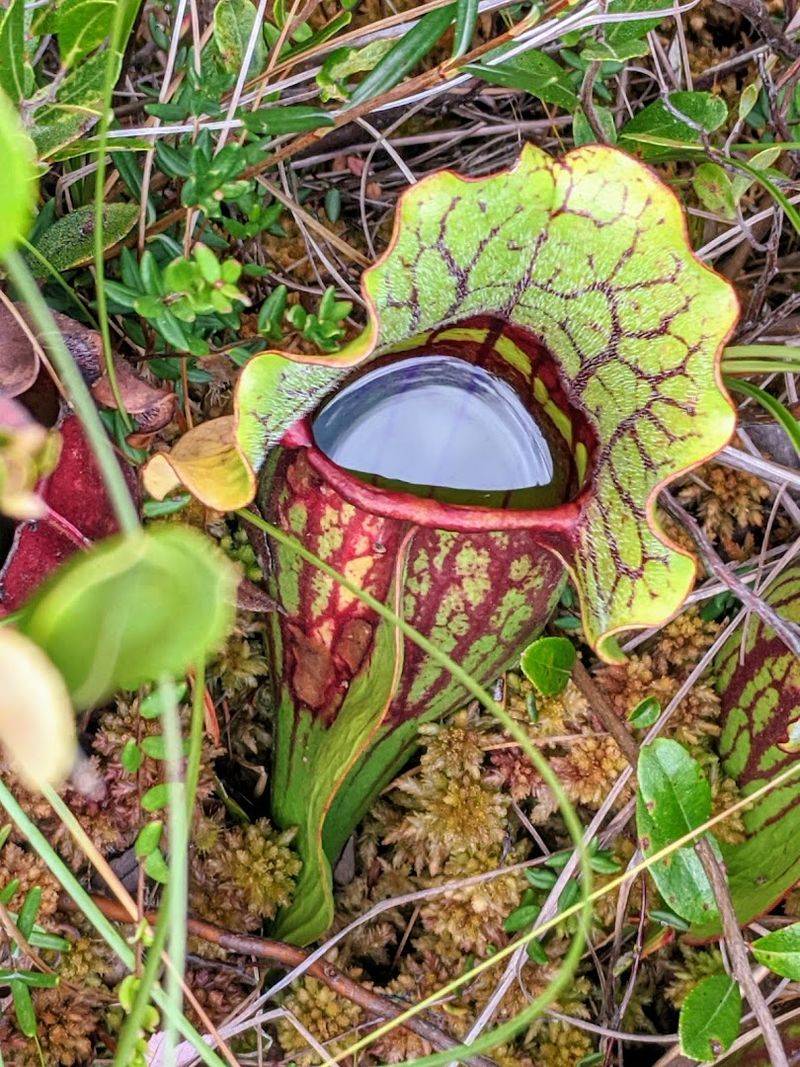
Here is the part that makes every first-time visitor stop and stare. Growing right along the edges of the boardwalk are plants that eat insects for a living.
Three carnivorous species call Ponemah Bog Wildlife Sanctuary home, and spotting all three feels like completing a very satisfying scavenger hunt.
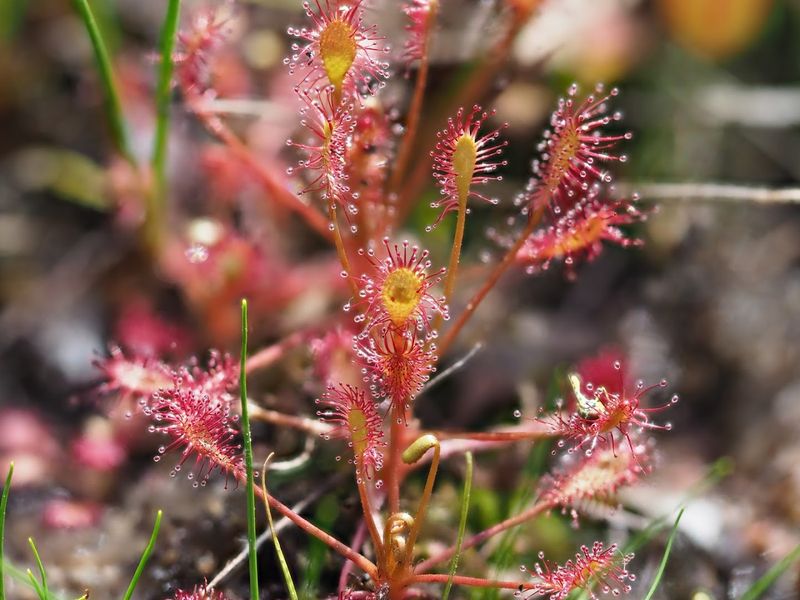
Purple pitcher plants are the easiest to find, with their deep crimson-veined funnels cupped upward to collect rainwater and trap unsuspecting bugs. Sundews are trickier to spot but worth the effort.
Their tiny leaves are covered in sticky red hairs that glisten like morning dew and act like flypaper for anything small enough to land on them. The third species, horned bladderwort, lives underwater and uses microscopic vacuum-like bladders to suck in tiny aquatic organisms.
These plants evolved their carnivorous habits precisely because the bog soil offers almost no usable nitrogen or phosphorus. Catching insects is their clever way of supplementing a very poor diet.
Pitcher plants tend to be out in full bloom by mid-spring, while sundews typically appear later in the summer season. Bringing a hand lens on your visit makes the whole experience dramatically more rewarding.
The Boardwalk That Keeps You Honest
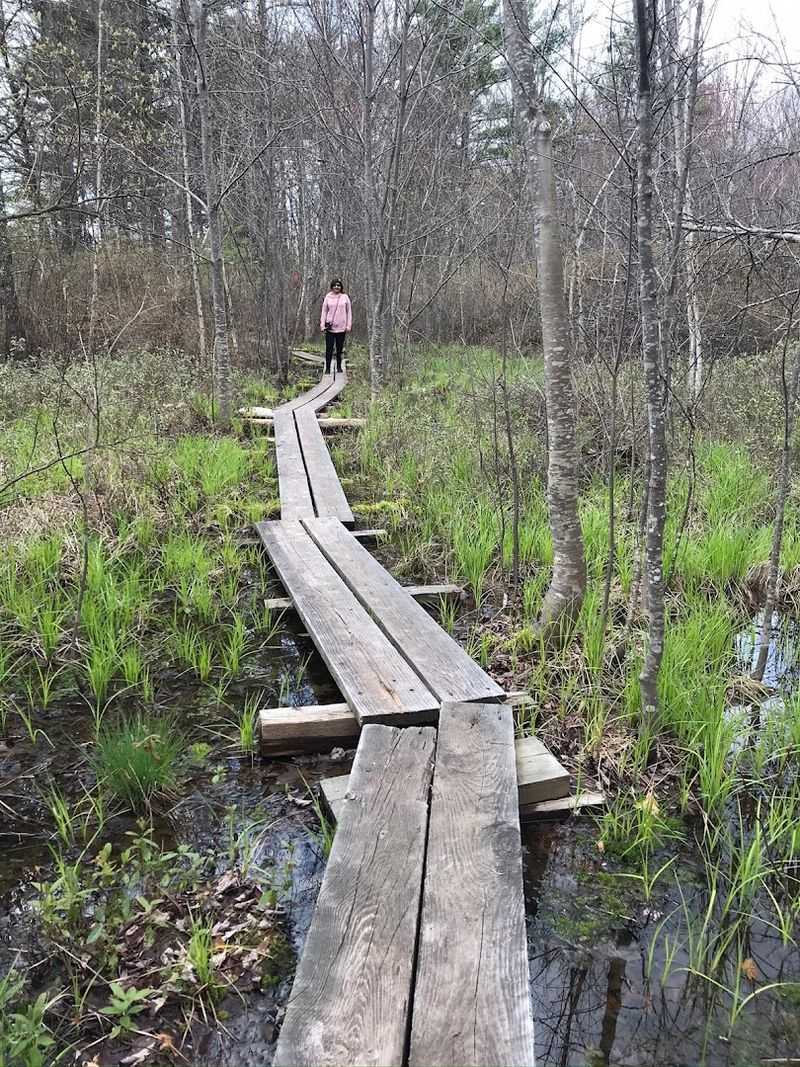
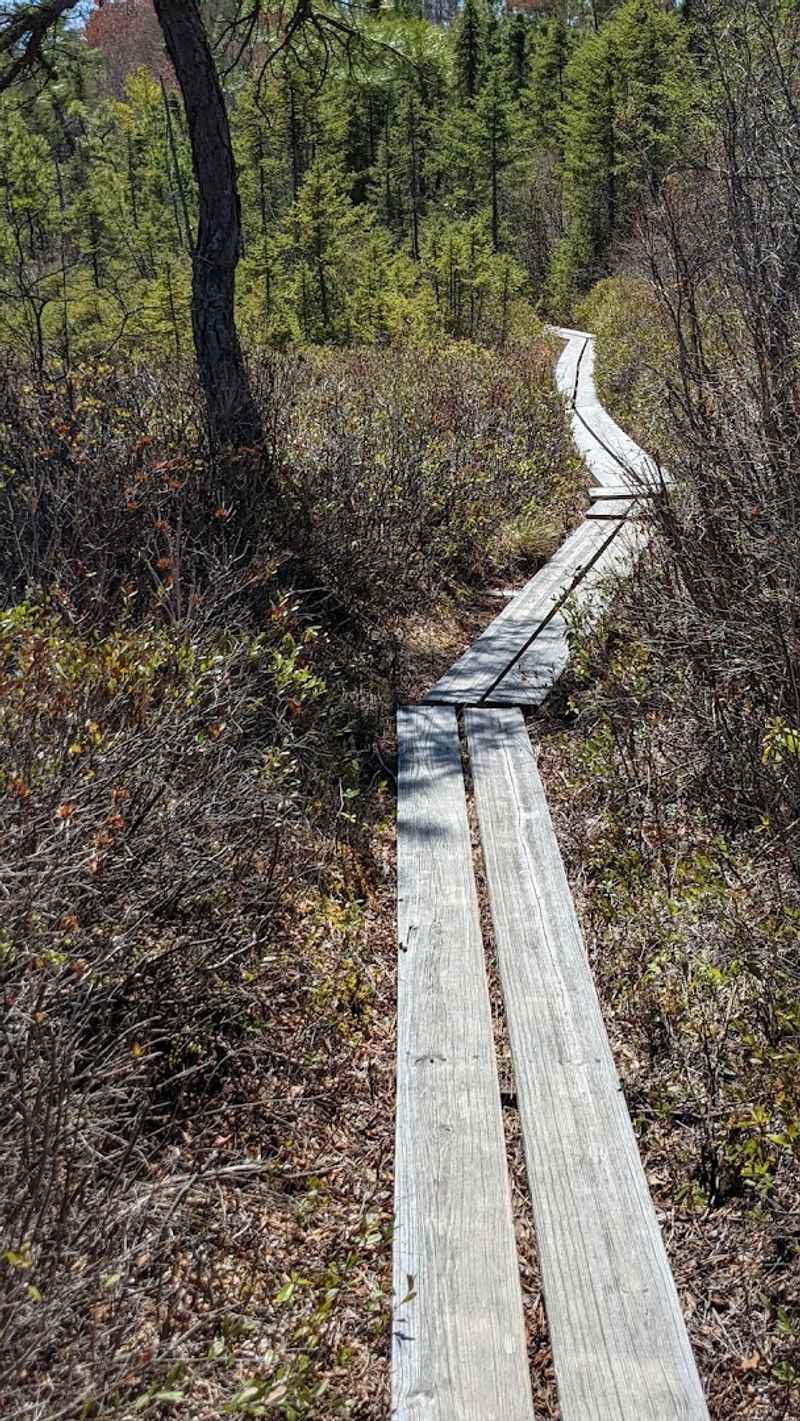
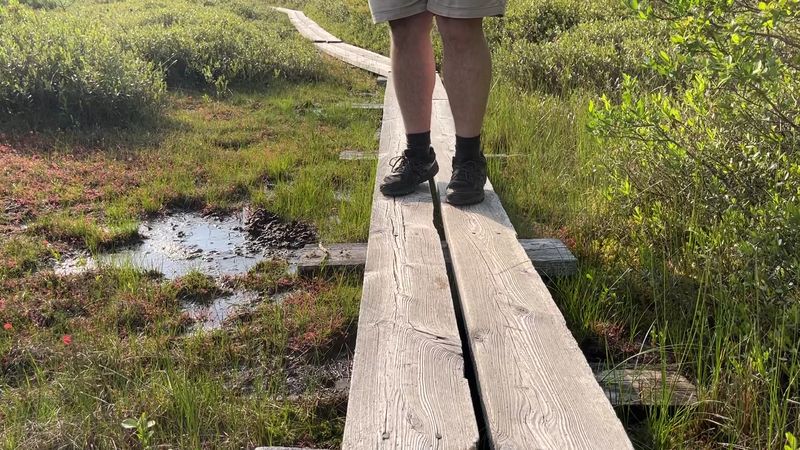
Two boards wide. That is all you get for most of this trail, and honestly, that narrow path is part of what makes the experience so memorable.
The Bog Trail at Ponemah Bog winds for roughly three quarters of a mile, with four viewing platforms branching off as spur trails along the way. A leisurely loop takes about forty minutes, though most people find themselves lingering much longer than planned.
Staying on the boardwalk is not just a polite suggestion. The floating moss mat is incredibly fragile, and a single footstep off the planks can cause damage that takes decades to repair.
The rules here are clear and the reasoning behind them is solid. This is a place where the ecosystem itself is the main attraction, and protecting it is the entire point.
The boards can get slippery when wet, so solid footwear is genuinely useful. Waterproof shoes are even better, since the bog has a habit of making itself known underfoot.
The trail is one-directional, which keeps the flow of foot traffic smooth and prevents awkward standoffs on the narrow planks. Bring binoculars, move slowly, and let the bog set the pace.
Black Spruce, Tamarack, and Trees That Defy Logic
Most trees would simply give up in conditions this harsh. Black spruce and tamarack, however, have made a career out of thriving where nothing else wants to.
These northern species dot the bog with a sparse, almost sculptural quality, their gnarled forms rising from the moss mat in a way that looks more like a Japanese ink painting than a New England woodland.
What makes their presence especially interesting is the ecological company they keep. Right alongside these cold-climate northern species, you will find plants typically associated with far warmer southern environments, including pitcher plants and sundews.
Ponemah Bog Wildlife Sanctuary functions as what ecologists call a relict habitat, a place where plants from widely different geographical ranges ended up coexisting because the unusual conditions here suit them all.
The Black Spruce platform, one of the four viewing areas along the trail, offers a particularly close look at these trees. Visible signs of peat harvesting from the mid-twentieth century are still faintly readable in this area, adding a subtle layer of human history to the landscape.
Standing among those twisted spruces with the bog stretching out behind them is genuinely one of the more atmospheric moments New Hampshire has to offer.
Birdwatching at Its Most Surprisingly Rewarding
Bring binoculars. Seriously, do not leave the car without them.
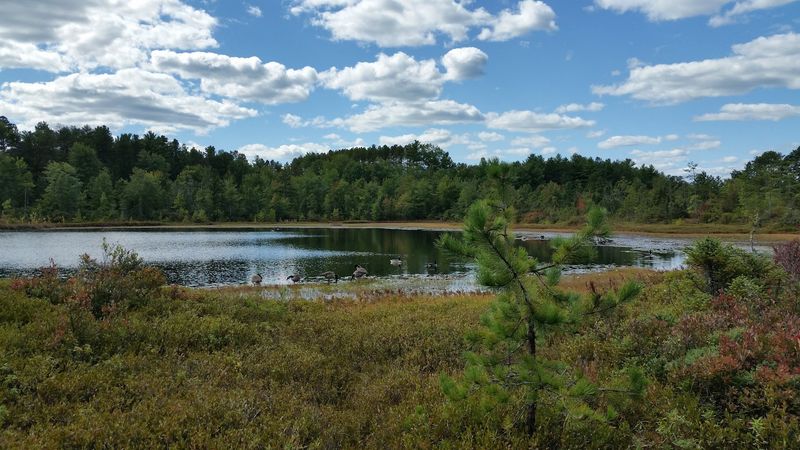
The sanctuary is a genuinely productive birdwatching spot, partly because the bog environment attracts species you would not typically encounter in a standard forest walk. The combination of open water, dense shrubby edges, and mature conifers creates a layered habitat that appeals to a surprisingly wide range of birds.
Wood ducks are among the more celebrated sightings here, their iridescent plumage almost absurdly beautiful against the dark bog water. Various warblers pass through during migration, and the calls echoing across the open moss mat on a still morning can feel almost theatrical in their intensity.
Patience is the most useful skill you can bring to any of the four viewing platforms.
The platforms themselves are well-positioned, each offering a distinct angle on the bog and the surrounding vegetation. Sitting quietly at one of these overlooks for even ten minutes tends to reward the stillness with activity.
New Hampshire is rich in birdwatching destinations, but few offer this particular combination of intimate access, unusual habitat, and almost total quiet. Early morning visits consistently produce the most sightings, so setting the alarm a little earlier than usual is absolutely worth the effort.
Rhodora and the Wildflowers of the Floating Mat
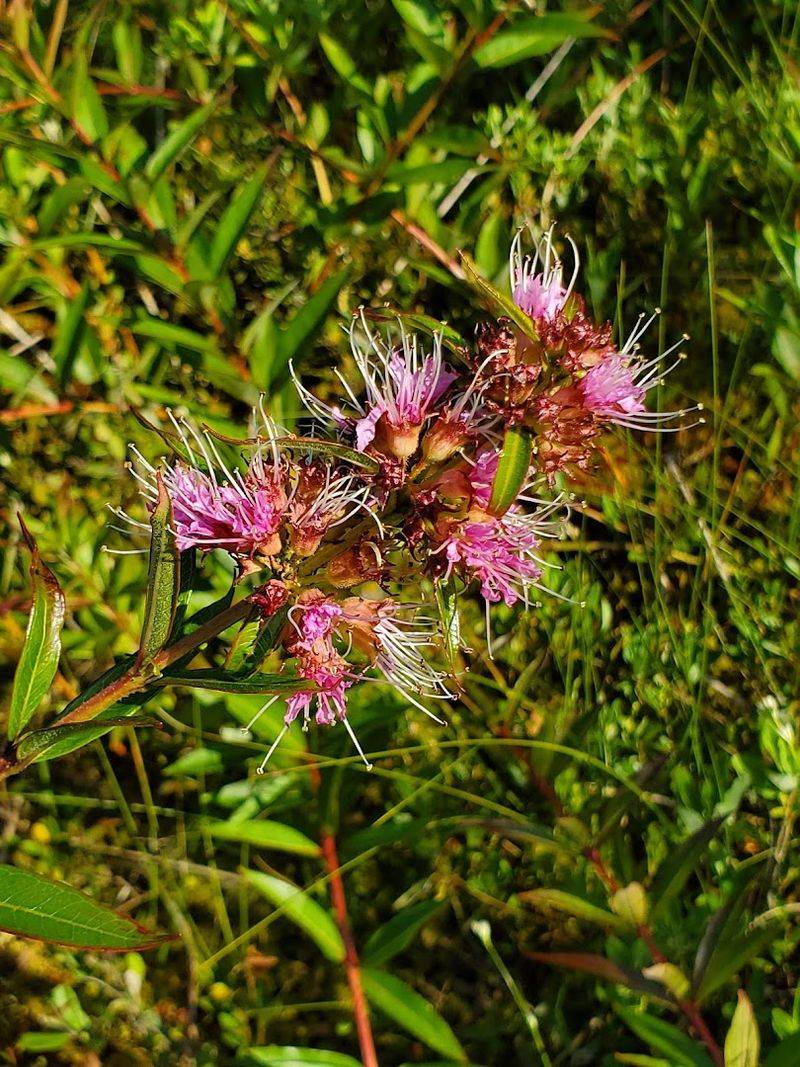
Spring at Ponemah Bog delivers a visual surprise that stops even seasoned hikers mid-step. Rhodora, a native flowering shrub in the heath family, bursts into vivid magenta-pink bloom across the moss mat before its leaves even appear.
The effect is startlingly beautiful, with splashes of hot pink floating above the pale green and rust-colored sphagnum like something from a painting.
Rhodora blooms early in the season and disappears quickly, so timing a visit to catch it requires a little planning and a fair amount of luck. By early summer it is gone, replaced by the quieter textures of leatherleaf, bog rosemary, and the various sedges that fill the mat.
Each season at the sanctuary brings a genuinely different visual experience, which is a big part of why so many people come back repeatedly throughout the year.
The wildflower diversity here reflects the bog’s unique chemistry. Plants that grow on the mat have adapted to low nutrients, high acidity, and waterlogged conditions in ways that produce some genuinely unusual forms.
Ponemah Bog Wildlife Sanctuary rewards close attention. Getting down to eye level with the moss mat, carefully from the boardwalk, reveals a miniature landscape of extraordinary complexity and color.
A Year-Round Destination With a Seasonal Personality
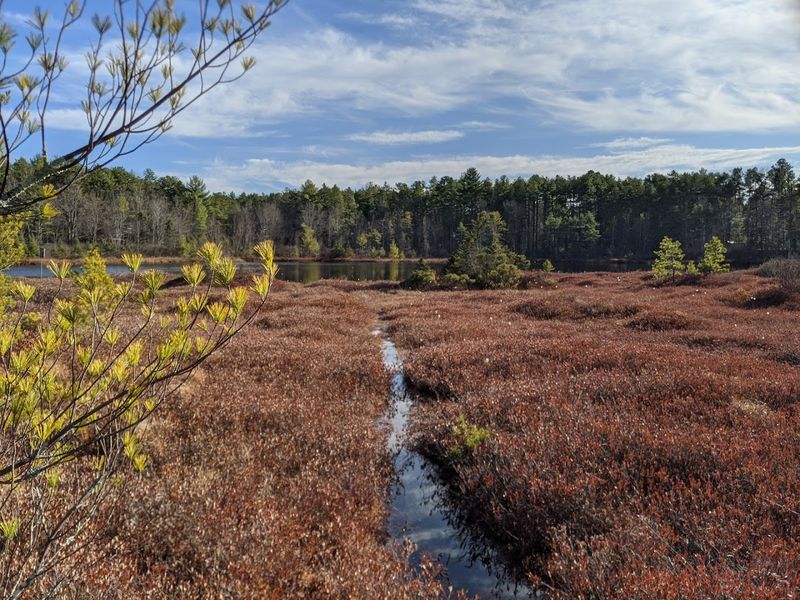
One of the best things about this sanctuary is that it stays open every single day of the year during daylight hours. That means winter visits are absolutely on the table, and the bog in snow is a completely different and equally compelling experience.
The bare black spruces, the frost-edged moss, and the near-total silence create an atmosphere that feels almost otherworldly.
Summer brings the carnivorous plants into full display and fills the air with insect sounds and birdsong. Fall turns the tamaracks golden before they drop their needles, which surprises people who assume all conifers are evergreen.
Spring delivers the Rhodora bloom and the return of migrating birds, while early morning mist over the bog pond in any season makes for genuinely stunning photography.
The sanctuary is managed by New Hampshire Audubon, which schedules guided walks during the warmer months and organizes an annual cleanup day each spring. These organized events are a great way to learn more about the ecosystem from people who know it deeply.
No matter what month you visit, the bog has something to show you. The key is simply to show up, slow down, and pay attention to what is happening at your feet.
Practical Tips for Getting the Most Out of Your Visit
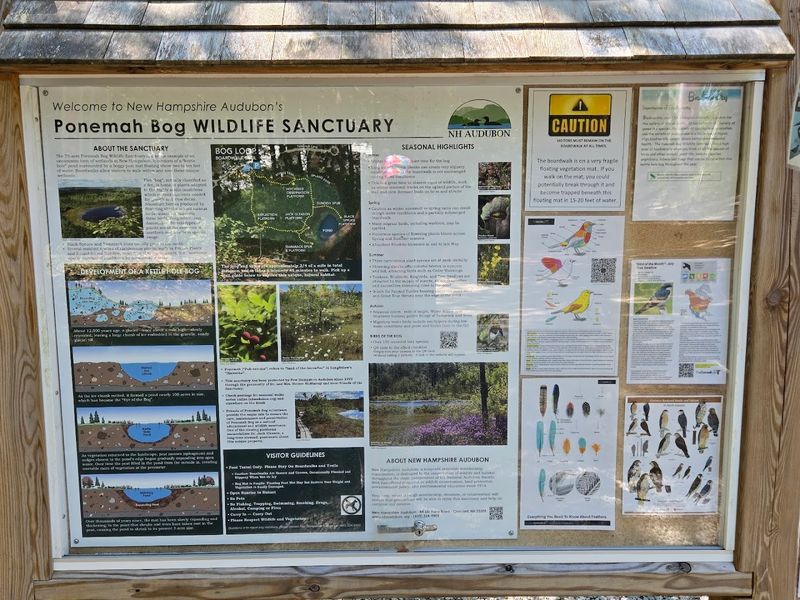
A little preparation goes a long way at this sanctuary. The gravel parking area is located off Rhodora Drive in Amherst, and the information kiosk at the trailhead is genuinely worth reading before you head out.
It covers the key plant species, bird life, and ecosystem basics in a way that makes the walk significantly more meaningful.
Wear waterproof footwear if you have it. The boardwalk can be slippery after rain, and the narrow planks require a reasonable sense of balance.
Bug repellent is a smart addition to your kit during warmer months, though dragonflies tend to handle much of the mosquito population on their own. The trail runs in one direction only, so follow the signs and keep the flow moving smoothly.
Pets are not permitted, and the sanctuary rules also prohibit camping, fires, and any form of collecting. This is a carry-in, carry-out environment, so leave nothing behind.
The trail is not wheelchair accessible, but a standard stroller can navigate most of it. A hand lens for examining the carnivorous plants and binoculars for birdwatching are the two items most likely to upgrade your experience from enjoyable to genuinely unforgettable.
The address is Ponemah Bog Trail, Amherst, NH 03031.
Why This Little Bog Deserves a Spot on Your New Hampshire List
New Hampshire is full of dramatic landscapes, from mountain summits to rushing rivers, but Ponemah Bog Wildlife Sanctuary offers something genuinely rare. It is a place where geological history, ecological oddity, and quiet beauty converge in a package so compact that most people underestimate it until they are actually standing on the boardwalk.
The sanctuary managed by New Hampshire Audubon has been carefully preserved to maintain the exact conditions that make it so unusual. No motorized vehicles, no pets, no disturbance.
Just a narrow wooden path, a floating world of moss and carnivorous plants, and as much time as you want to spend absorbing it. That simplicity is its greatest strength.
Pack a small bag, lace up your waterproof shoes, and make the drive to Amherst. The bog does not ask much of you.
It just asks that you slow down enough to notice what twelve thousand years of uninterrupted natural history actually looks like up close. Few short trails anywhere in New England deliver this much strangeness, this much beauty, and this much genuine scientific wonder in under an hour.
Go soon, go quietly, and go more than once.
