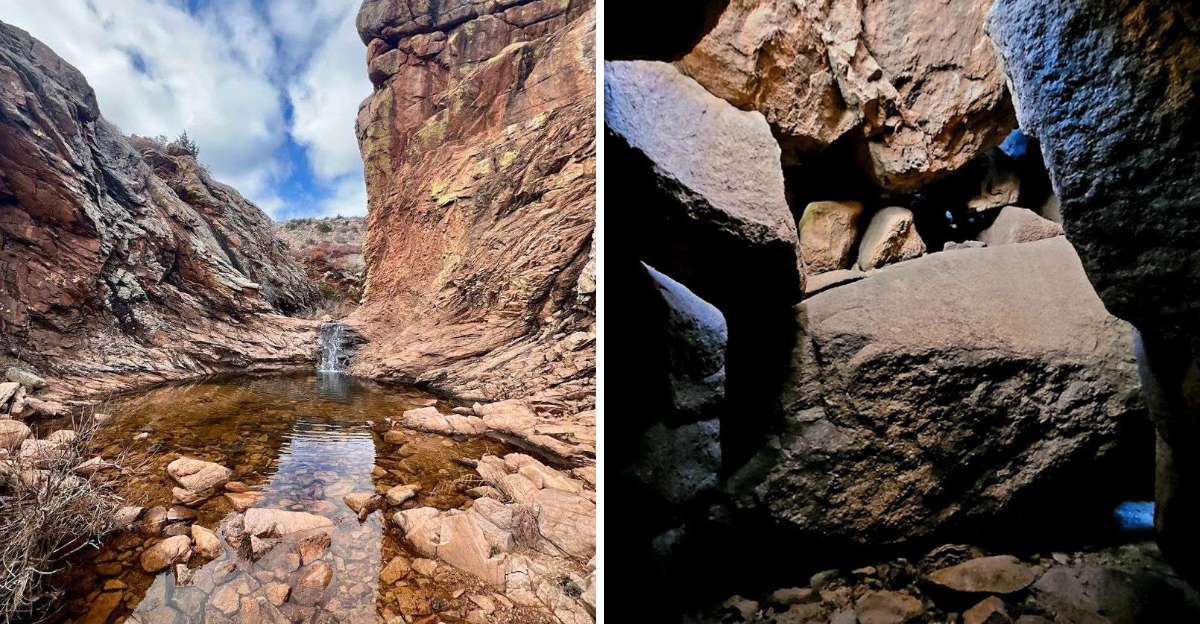
Not every trail in Oklahoma plays nice, and this one makes that clear pretty quickly. Out in the Wichita Mountains, this route throws you straight into a landscape that feels raw and unpredictable.
Massive granite boulders rise up like obstacles you have to figure out, open meadows break things up with bursts of color, and a creek crossing keeps you paying attention to every step. There is no smooth path guiding you the whole way, which is exactly what makes it memorable.
Somewhere along the way, if you are willing to explore a little off track, there is even a tucked-away waterfall that most people walk right past without knowing. It is short on paper, but it demands effort, and every bit of it pays off.
Where the Trail Begins: Sunset Campground
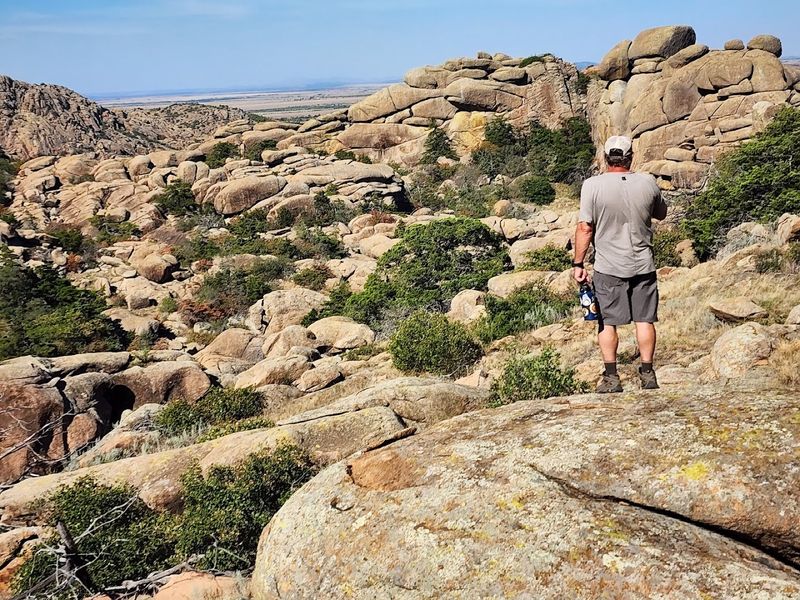
Every great adventure has a starting line, and for Charon’s Garden Trail, that line is drawn at Sunset Campground inside the Wichita Mountains Wildlife Refuge in southwestern Oklahoma.
The trailhead is easy enough to find, with parking available right at the campground. Before you even take your first step, the landscape around you already hints at what is ahead.
Scrubby oak trees frame the path, and the air carries that earthy, sun-baked smell that only open Oklahoma wilderness can produce. The first half mile of the trail is relatively smooth, crossing a small creek and moving through a shaded wooded section.
It feels almost gentle at first, like the trail is luring you into a false sense of ease. That changes fast once you hit the sharp left turn heading south toward Elk Mountain.
Downloading a trail map before you start is genuinely important here. The markings on the ground can be sparse, and without a reference point, it is easy to veer off course without realizing it.
Start prepared and the trail rewards you generously.
The Granite Boulders That Stop You in Your Tracks
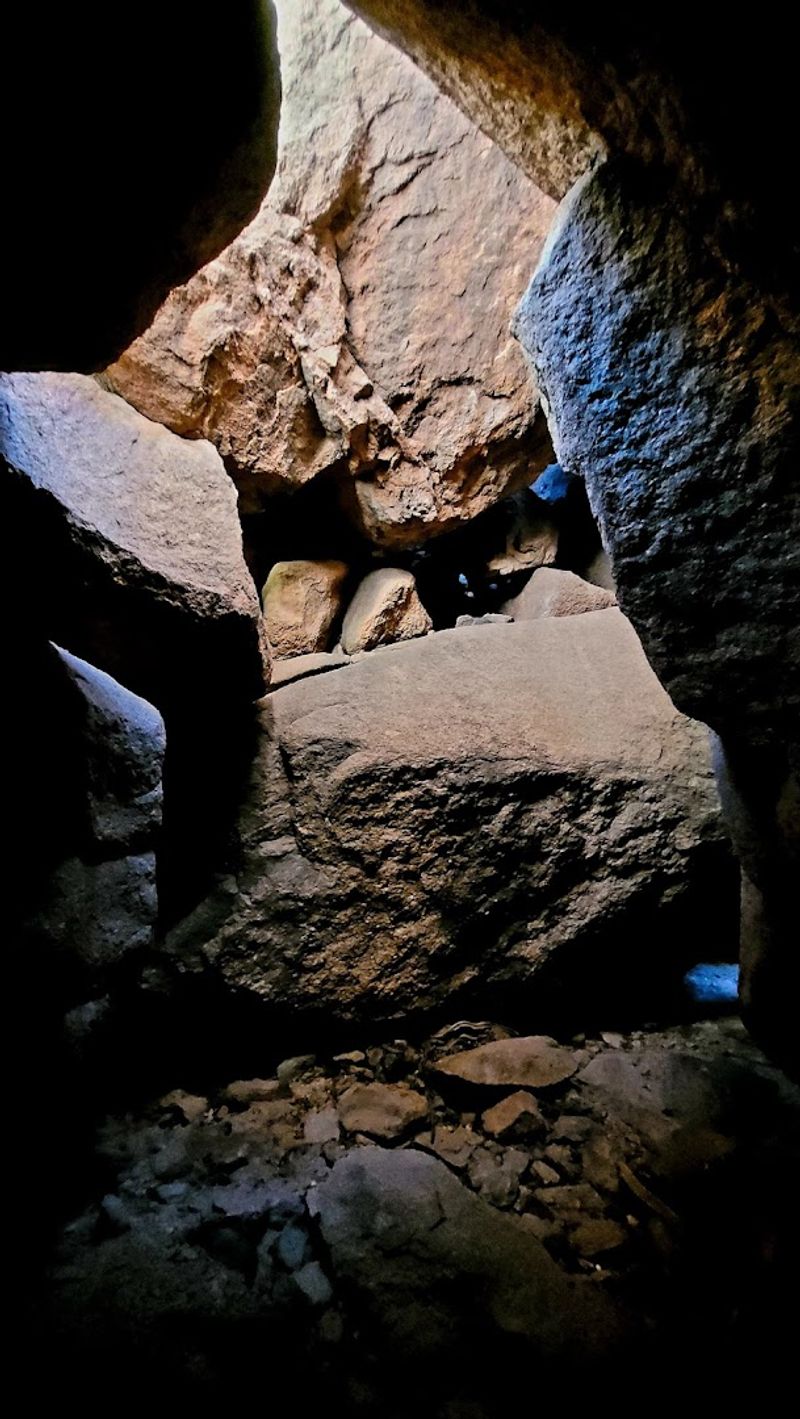
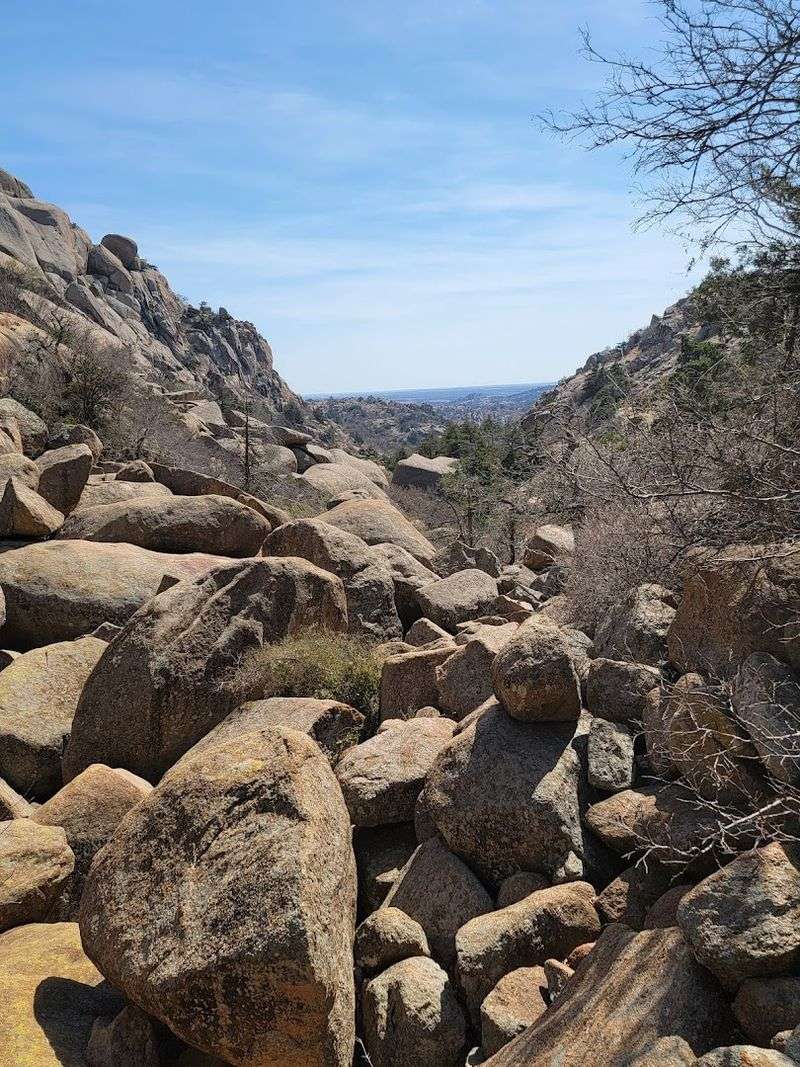
Nothing quite prepares you for the moment the boulder field opens up in front of you. These are not small rocks scattered along a path.
These are enormous, ancient granite formations rising out of the earth like something from another world.
The boulders along Charon’s Garden Trail in Oklahoma are part of what makes this hike genuinely unlike anything else in the state. Some are smooth and rounded, worn down by millions of years of wind and rain.
Others are jagged and stacked in precarious-looking towers that seem like they should not be standing.
Among the most famous formations are the ones known as the Apple and Pear rocks, where boulder hopping becomes not just necessary but actually fun. You will find yourself choosing your footing carefully, using both hands, and looking up in disbelief at how massive everything is.
The scale of this place is hard to capture in a photo, though you will absolutely try. Plan to spend extra time in the boulder field because rushing through it means missing the best part of the whole trail.
Wildflower Meadows That Paint the Hillsides
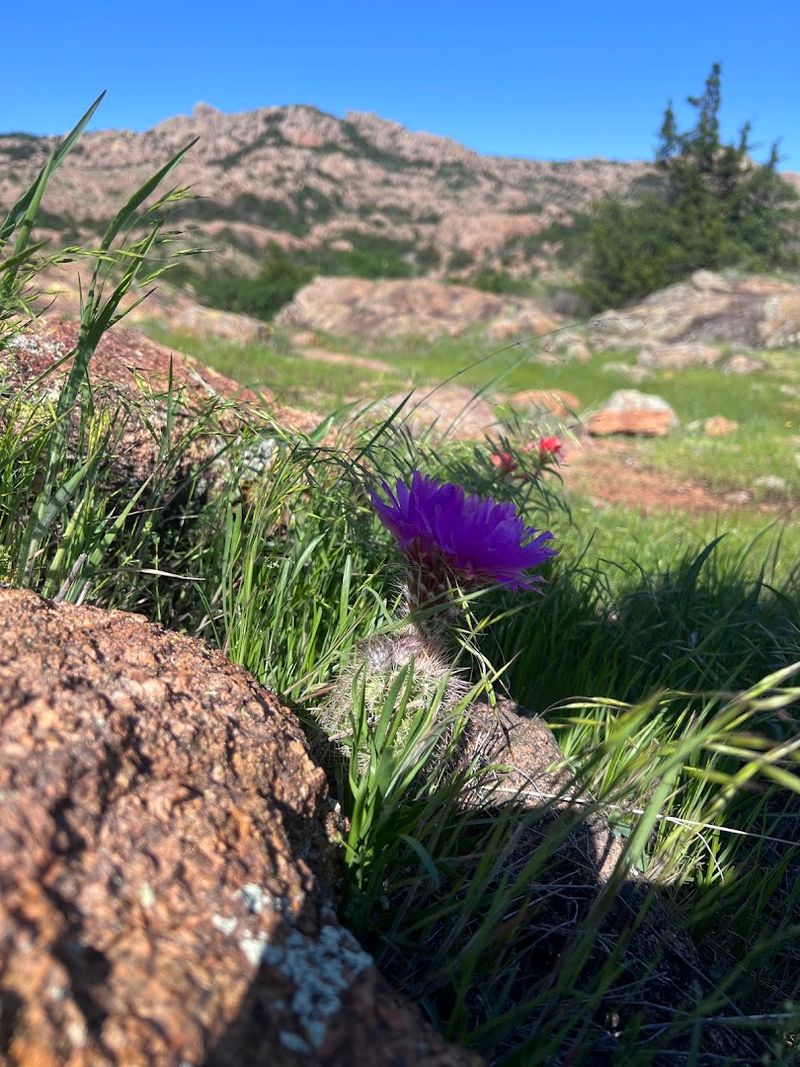
Between the rocky scrambles, the trail opens into stretches of meadow that feel like a completely different world. Wildflowers spread across the hillsides in patches of yellow, purple, and white, filling gaps between the boulders and spilling along the edges of the path.
Spring is when the wildflower display is at its most vivid, turning what is already a dramatic landscape into something almost painterly. The contrast between the rough grey granite and the soft, colorful blooms is striking in a way that genuinely makes you stop walking just to look.
Oklahoma’s Wichita Mountains support a surprisingly rich variety of plant life, and the meadows along this trail reflect that diversity well. You might spot prairie verbena, spiderwort, or Indian paintbrush depending on the season and the year.
Even outside of peak bloom, the grassy open sections offer wide views across the refuge that feel open and freeing after all that boulder scrambling. Bring a camera with a decent lens because the combination of flowers and rocky hills makes for extraordinary photos that no phone filter can improve.
The Hidden Post Oak Waterfall Worth Finding
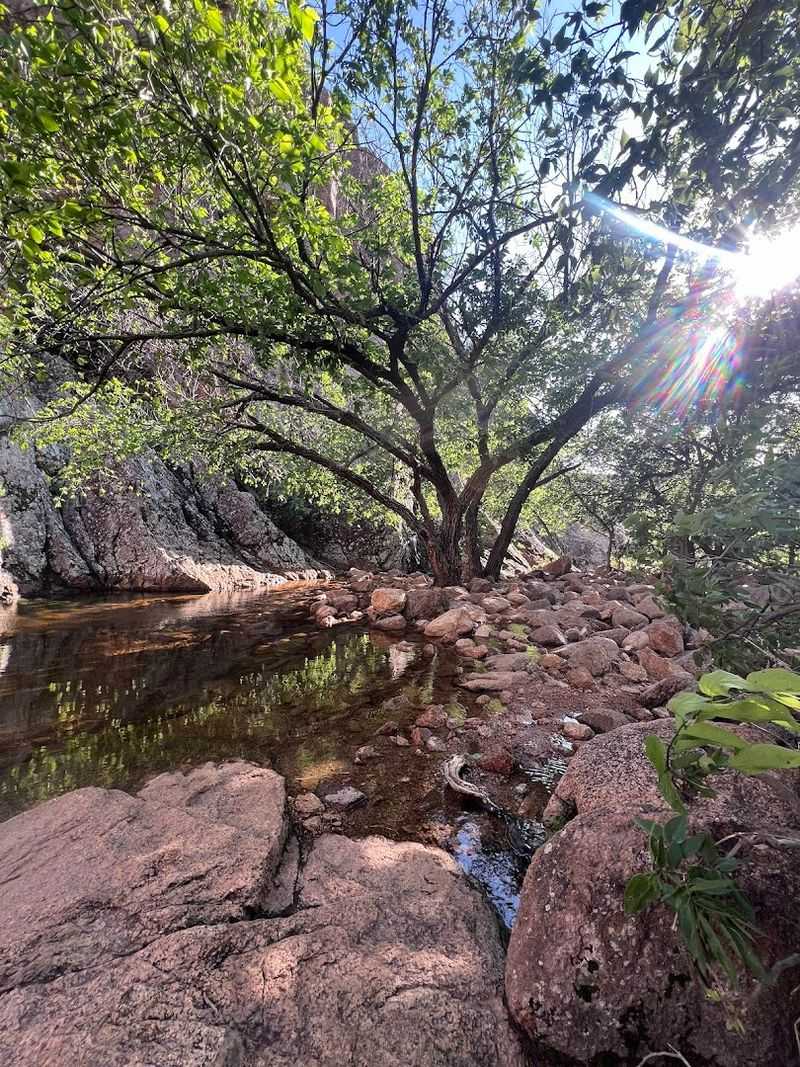
Most people who hike Charon’s Garden Trail never find the waterfall, and that is honestly a little heartbreaking. Post Oak Waterfall sits off the main route, reachable by taking a right turn roughly halfway through the hike.
It is not signposted in an obvious way, which is exactly why downloading a detailed trail map before you go is so important. Miss that turn and you will finish the hike not knowing what you walked right past.
The waterfall itself is a genuinely lovely surprise. Water tumbles over a rocky ledge into a shaded pool below, surrounded by post oak trees that keep the whole area cool and green even on warm days.
The sound of it reaches you before you can see it, which adds to the excitement of the approach.
Getting to Post Oak Waterfall requires navigating some uneven ground, so sturdy footwear is essential for this detour. The extra effort is absolutely worth it.
Standing next to a hidden waterfall deep inside the Oklahoma wilderness, with no crowds and no noise except the water, is the kind of moment that reminds you why you hiked in the first place.
Treasure Lake: The Peaceful Reward at the End
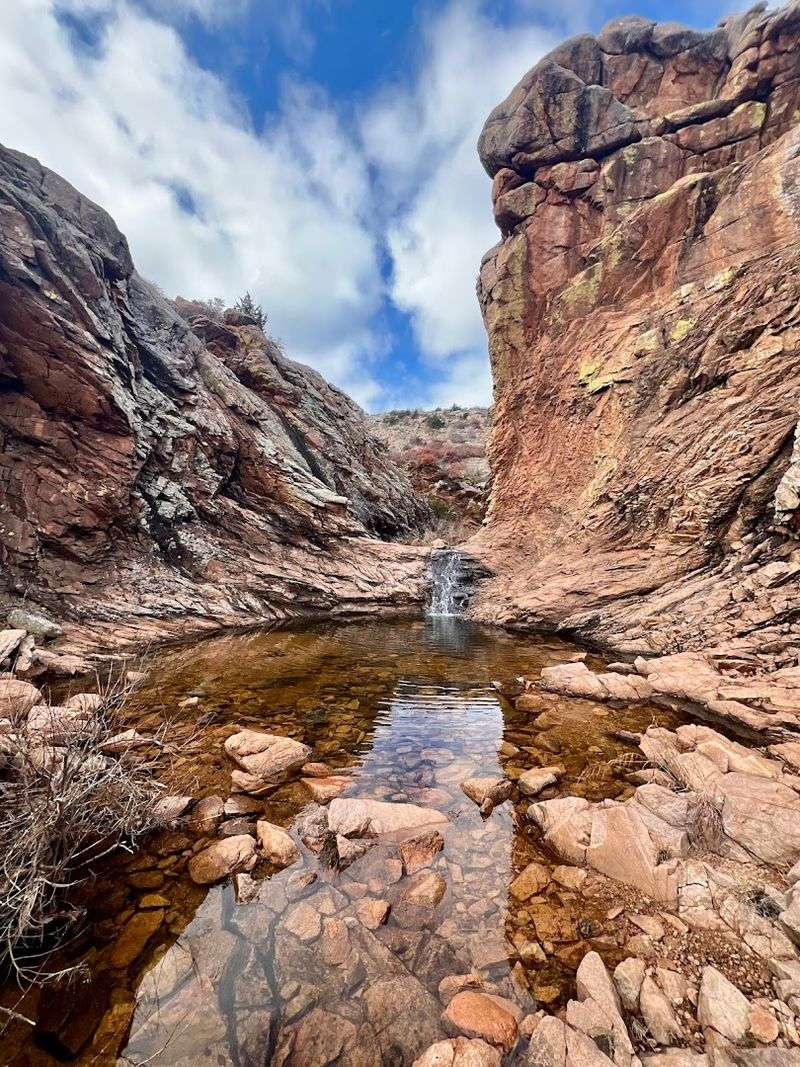
After all the scrambling, creek crossings, and boulder hopping, the trail eventually brings you to Treasure Lake, and the name fits perfectly. The lake sits quietly at the far end of the route, framed by granite ridgelines and oak-covered slopes that reflect in the still water on calm days.
It is the kind of spot where you naturally drop your pack, find a flat rock to sit on, and just breathe for a while. The contrast between the physical effort of the trail and the stillness of the lake is part of what makes the arrival feel so satisfying.
The water is clear and the surrounding area is peaceful, with birds moving through the trees and the occasional lizard darting across the rocks nearby. Wildlife sightings around Treasure Lake are common, so keep your eyes open and your voice low.
This is also a great spot for lunch if you packed one. The views across the lake toward the rocky ridges behind you offer a full panorama of everything the Oklahoma wilderness has to offer in this corner of the refuge.
It is a genuinely earned finish line.
How Difficult the Trail Really Is
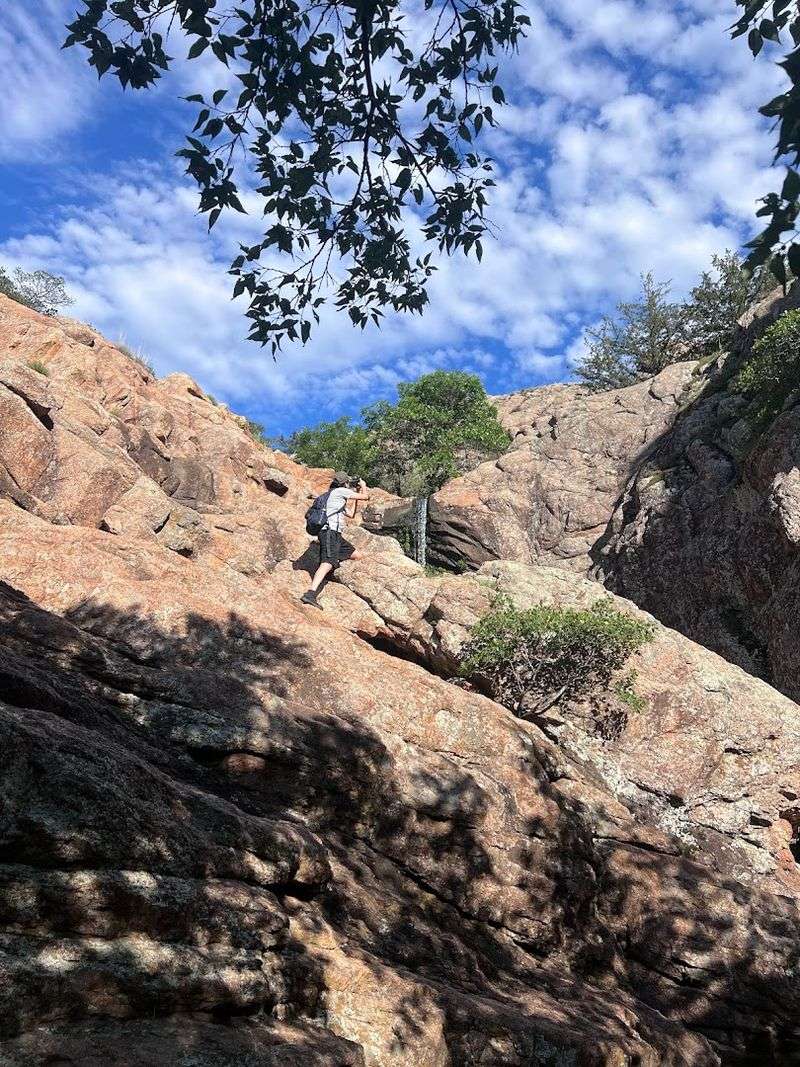
Let’s be straightforward about this: Charon’s Garden Trail is not a casual Sunday stroll. The trail is rated intermediate to expert, and that rating is earned through every rocky, uneven, scramble-heavy section along the route.
The boulder field demands real physical engagement. You will use your hands.
You will need to think about where you are placing your feet. Some sections require pulling yourself up and over granite surfaces that are not exactly ladder-friendly.
The trail is also not clearly marked throughout, which adds a mental challenge on top of the physical one. Without a map, it is genuinely possible to spend more time backtracking than moving forward.
That said, the difficulty is part of what makes completing this hike feel so rewarding.
Fit beginners with good footwear and a downloaded trail map can absolutely handle it, but going in with realistic expectations matters. Wear proper hiking shoes with ankle support, bring plenty of water, and allow more time than you think you will need.
The Wichita Mountains Wildlife Refuge in Oklahoma offers other easier trails nearby if you want to warm up before attempting this one. Know your limits and plan accordingly.
Wildlife You Might Encounter Along the Way
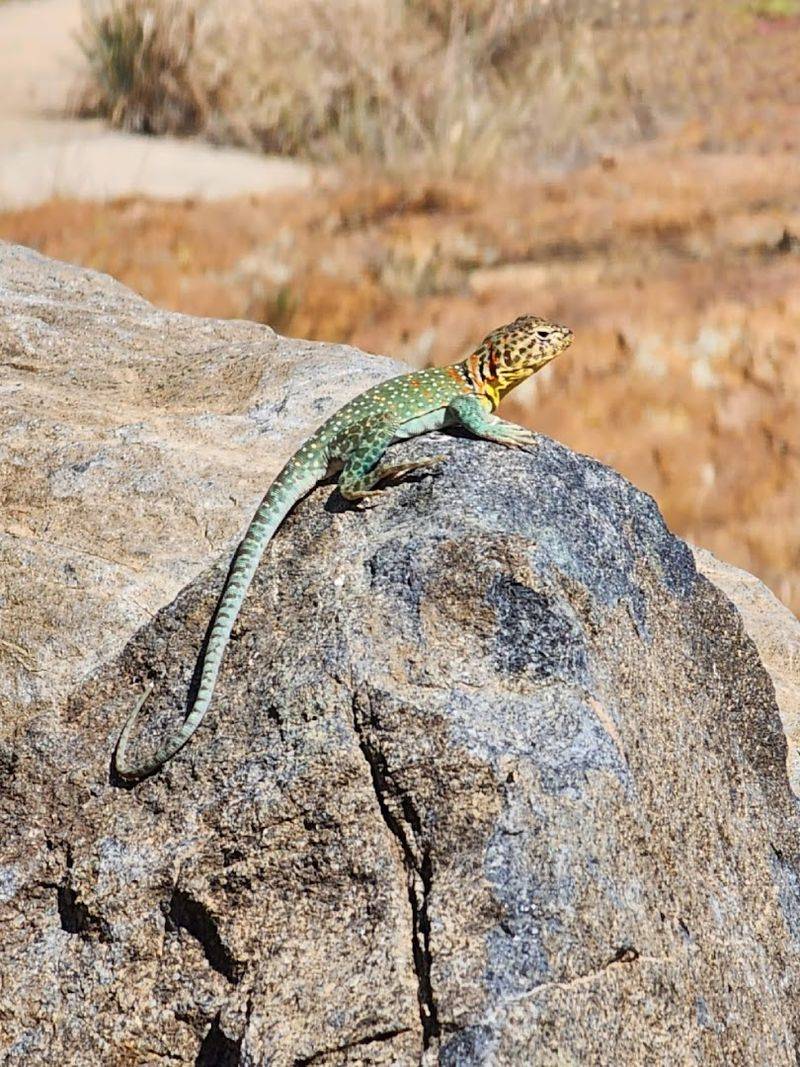
The Wichita Mountains Wildlife Refuge is one of the most biologically rich areas in all of Oklahoma, and the trail runs right through the heart of it. Wildlife encounters here are not rare or lucky moments.
They are simply part of the experience.
Lizards are among the most frequent trail companions, darting between rocks and sunning themselves on warm granite surfaces throughout the day. Bird activity is constant, with various species moving through the oak canopy and calling from the boulder tops above.
The refuge is also home to American bison, white-tailed deer, and longhorn cattle, all of which roam freely across the protected land. You may spot bison grazing in the open meadows visible from certain points on the trail, which is one of those sights that genuinely catches you off guard the first time.
Keep a respectful distance from all wildlife and resist the urge to approach for a closer photo. The animals here are wild and should be treated as such.
Bringing a pair of binoculars adds a lot to the experience, especially for birdwatching near Treasure Lake and through the wooded creek sections of the trail.
The Creek Crossings and Wet Boot Warnings
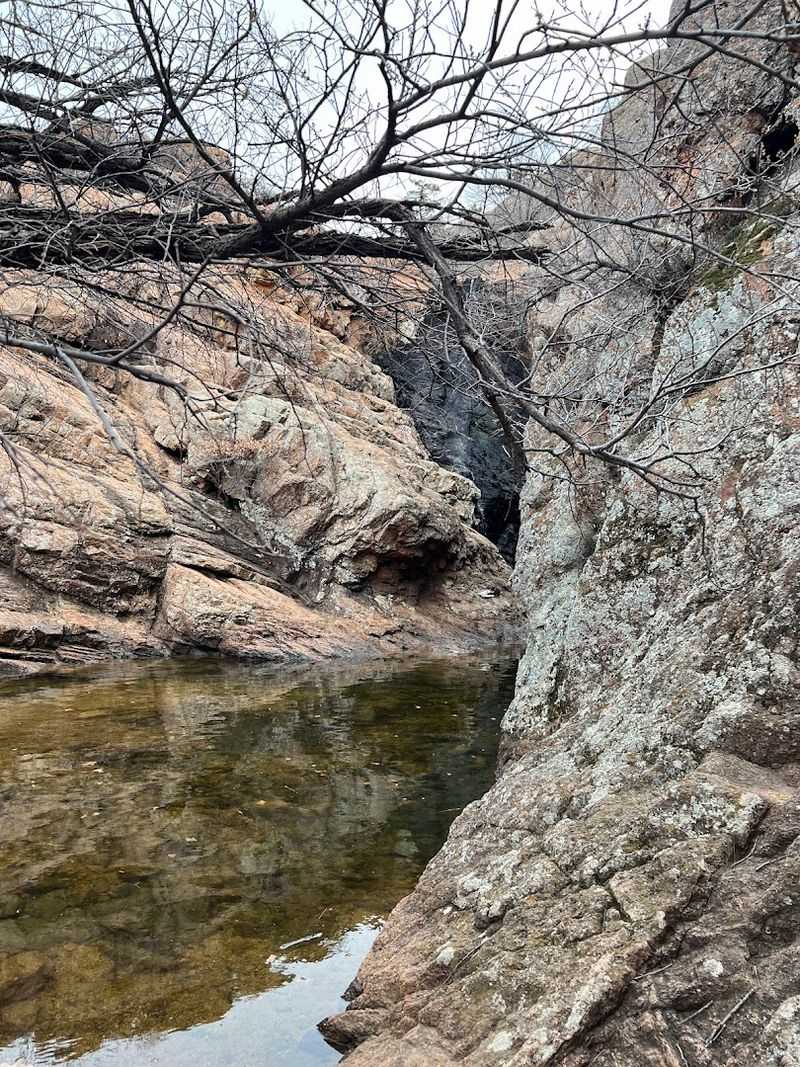
Water is a recurring theme on this trail, and not just at the waterfall or the lake. The route crosses a small creek early on and then follows a winding creek through the dense brush and oak section that leads toward Treasure Lake.
Depending on recent rainfall and the time of year, these crossings can range from a quick hop between dry rocks to a full-on wet boot situation. Either way, waterproof or water-resistant footwear is worth wearing rather than hoping for the best.
The creek sections are actually some of the most atmospheric parts of the trail. The sound of moving water, the shade from overhanging oaks, and the cool air near the water make these stretches feel refreshing after the exposed boulder scrambling.
Wet rocks are slippery, so slow down near any water crossing and test your footing before committing your full weight. It is a simple precaution that prevents a lot of unnecessary slipping.
After heavy rain, the creek levels can rise significantly, so checking conditions before you go is a smart habit. The trail is open year-round, but some seasons make the crossings more challenging than others.
Best Times of Year to Visit the Trail
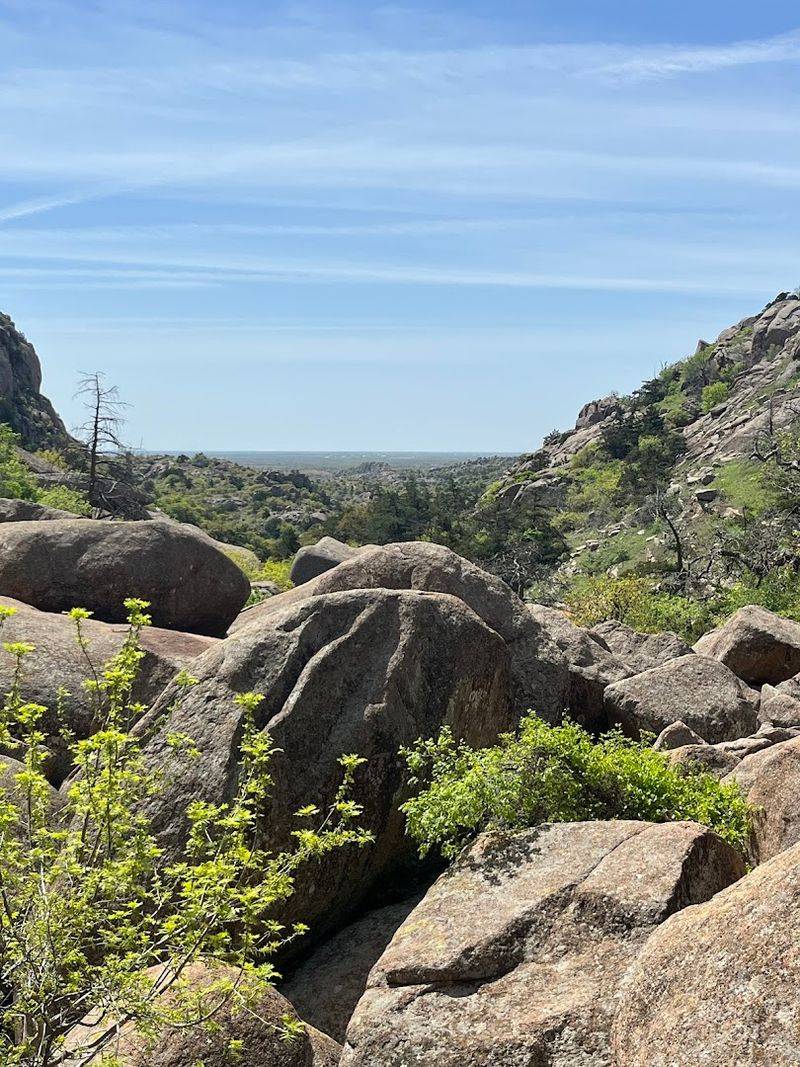
Timing a visit to Charon’s Garden Trail can make a significant difference in the overall experience. The trail is technically accessible year-round, but each season brings its own character to the landscape.
Spring is widely considered the best time for wildflower viewing, with blooms peaking from late March through May depending on rainfall. The temperatures are also more comfortable for physical hiking before the Oklahoma summer heat arrives in full force.
Summer brings intense heat to the Wichita Mountains region, and the exposed granite boulders absorb and radiate that heat significantly. Early morning starts are essential in summer, and carrying extra water is non-negotiable rather than optional.
Fall is a genuinely beautiful time to visit. The oak trees shift to warm amber and russet tones, and the cooler temperatures make the boulder scrambling feel much more manageable.
Wildlife activity also tends to increase in autumn as animals prepare for winter.
Winter visits are possible on mild days, and the bare trees actually open up views that are hidden during leafy months. Snow on the granite boulders creates a striking visual that very few people ever see, making an off-season visit feel like a private discovery.
Navigating the Trail Without Getting Lost
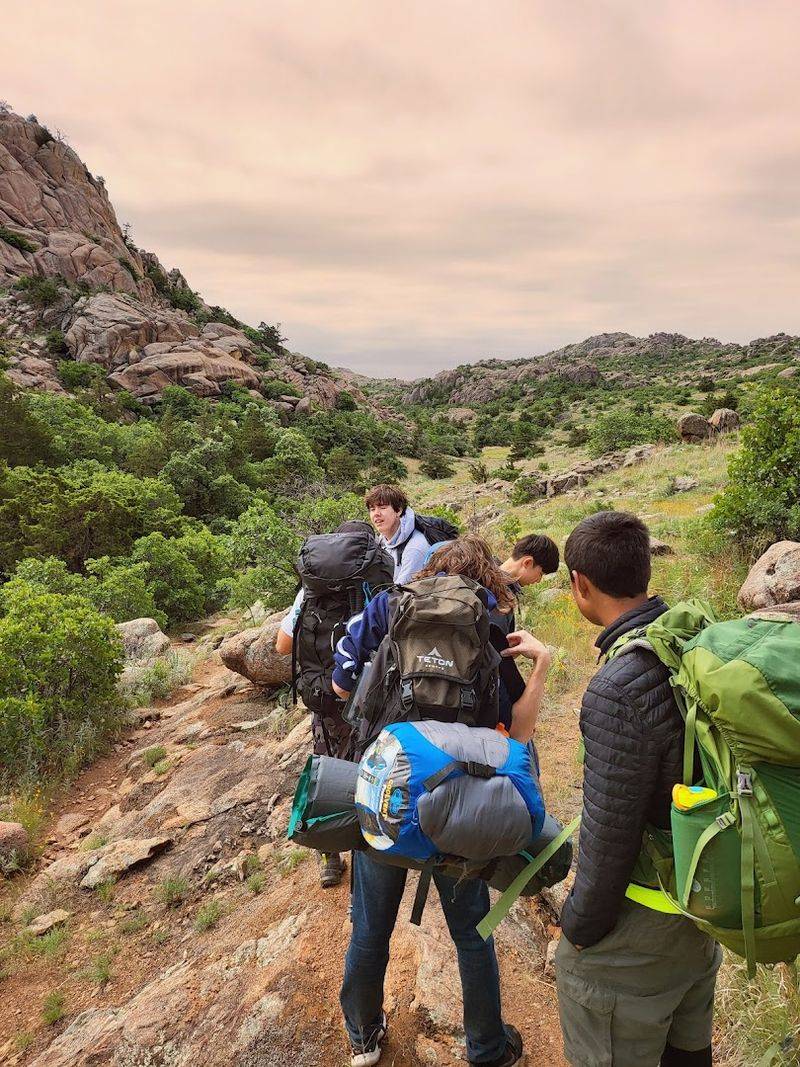
Navigation is one of the genuine challenges of Charon’s Garden Trail, and treating it casually is how people end up spending an extra hour retracing their steps through a boulder field. The trail markings are inconsistent at best, and several unmarked branches can send you in the wrong direction.
Downloading the trail from AllTrails or saving the route in Google Maps before leaving cell service is the single most important preparation step for this hike. Once you are inside the refuge, signal can be unreliable.
The sharp left turn at roughly the half-mile mark is the most critical navigation point on the whole route. Missing it means continuing on the wrong path and bypassing the boulder field entirely, which would mean missing the best part of the trail.
The right-hand turn that leads to Post Oak Waterfall is the second key navigation moment. Mark it on your map before you go so you recognize it when it comes up.
Moving slowly through the boulder section and checking your position regularly keeps things on track. The trail rewards patience, and rushing through unfamiliar terrain without checking your bearings is never a good strategy in Oklahoma’s backcountry.
What to Pack for a Safe and Enjoyable Hike
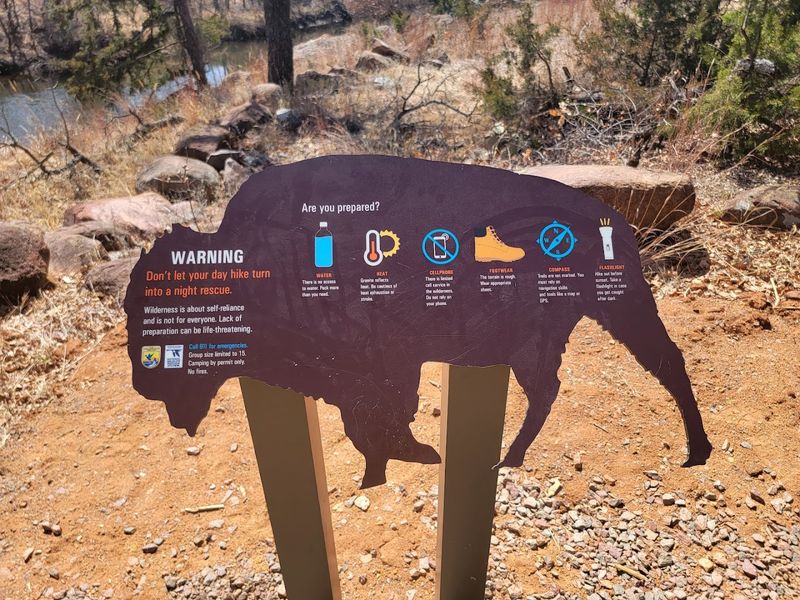
Packing well for Charon’s Garden Trail is not about carrying everything you own. It is about carrying the right things so that the trail stays fun rather than becoming a problem.
Water is the top priority. The hike is about 3-5 miles round-trip, but the physical demands of boulder scrambling in Oklahoma’s heat mean you will go through water faster than you expect.
Carry more than you think you need.
Footwear matters enormously on this trail. Trail running shoes with good grip work, but proper hiking boots with ankle support are better suited for the uneven terrain and the creek crossings.
Sandals or casual sneakers are a recipe for a twisted ankle.
A small first aid kit, sunscreen, and a hat are worth including, especially for the exposed sections near the boulder field where there is little shade. Snacks help maintain energy levels through the more demanding scrambling sections.
A fully charged phone with the trail map downloaded offline is essential rather than optional. Some hikers also bring a portable battery pack to ensure their navigation does not go dark mid-hike.
A light layer for cooler mornings rounds out a solid packing list for this trail.
Why Charon’s Garden Trail Deserves a Spot on Your List
Oklahoma does not always get the credit it deserves as a hiking destination, and Charon’s Garden Trail is a perfect example of why that reputation needs updating. This trail delivers a genuinely varied and physically engaging experience that stands up against hikes in far more famous locations.
Within a single 3-5 mile route, you get ancient boulder fields, wildflower meadows, a hidden waterfall, a winding creek, and a serene lake. That is an impressive amount of landscape variety packed into a relatively short distance.
The Wichita Mountains Wildlife Refuge adds an extra layer of appeal, surrounding the trail with protected wilderness that feels genuinely remote even though it is accessible by car. The presence of bison, deer, and diverse birdlife makes every visit feel like a full nature experience rather than just a walk.
The trail is challenging enough to feel like an accomplishment without requiring technical climbing gear or elite fitness. It sits in that satisfying middle ground where effort meets reward in a way that keeps you thinking about it long after you have driven home.
For anyone who loves wild, textured, and visually dramatic landscapes, this corner of Oklahoma is worth every mile of the drive to get there.
Dear Reader: This page may contain affiliate links which may earn a commission if you click through and make a purchase. Our independent journalism is not influenced by any advertiser or commercial initiative unless it is clearly marked as sponsored content. As travel products change, please be sure to reconfirm all details and stay up to date with current events to ensure a safe and successful trip.
