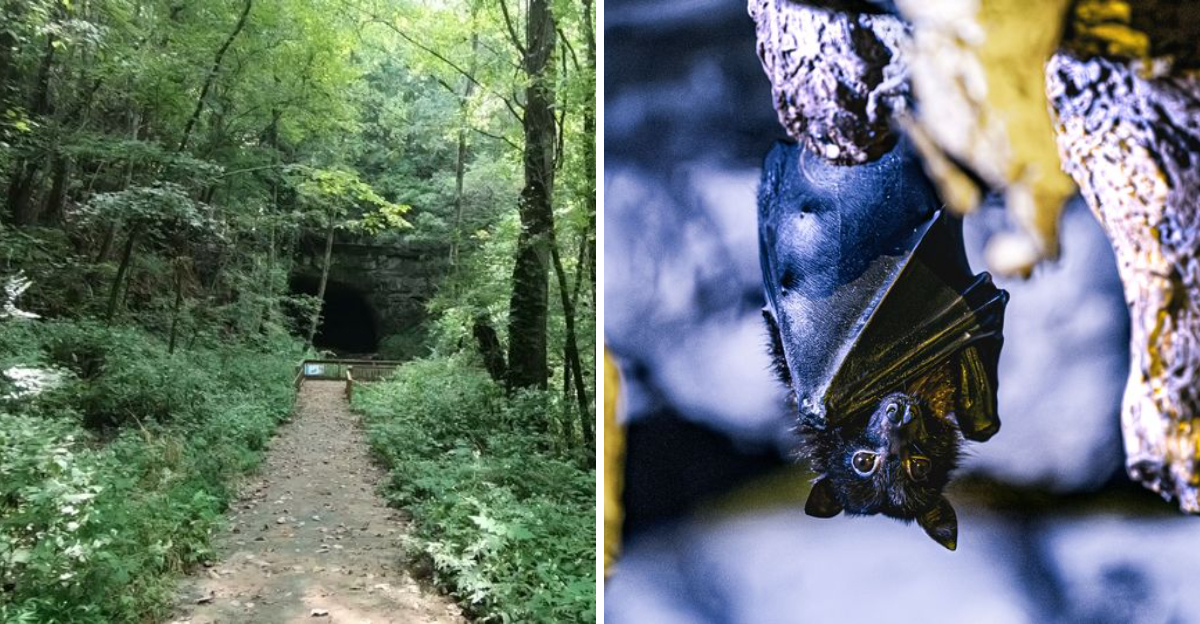
No big sign marks the entrance. Just a chained-off strip of old road, easy to drive past, somewhere in Alabama.
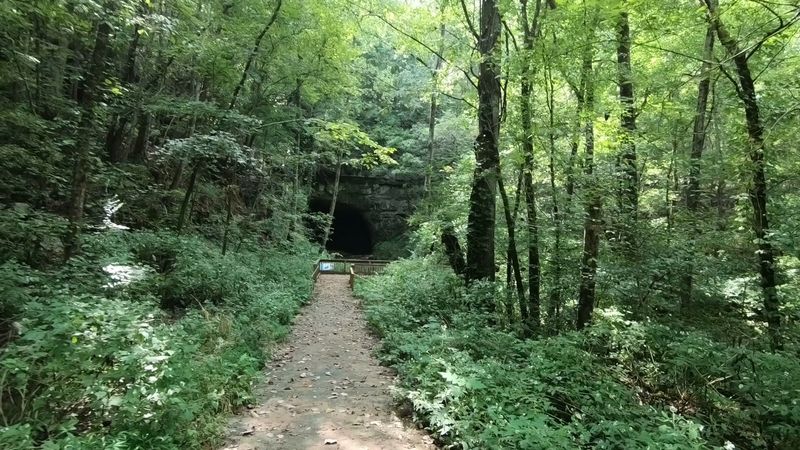
A short walk through green shade drops the temperature several degrees. Then the cave mouth comes into view, vines spilling over a dark opening in the rock.
Regulars say the best time to arrive is just before dusk. That is when the sky starts shifting from peach to gray.
Hundreds of thousands of gray bats begin pouring out in a ribbon with no end in sight. I can’t help but wonder what it felt like to stumble onto this the first time, with no warning of what was about to fill the sky.
This slice of the state delivers one of the strangest, most unforgettable hours anyone could spend outdoors.
The Dusk Emergence That Never Seems To End
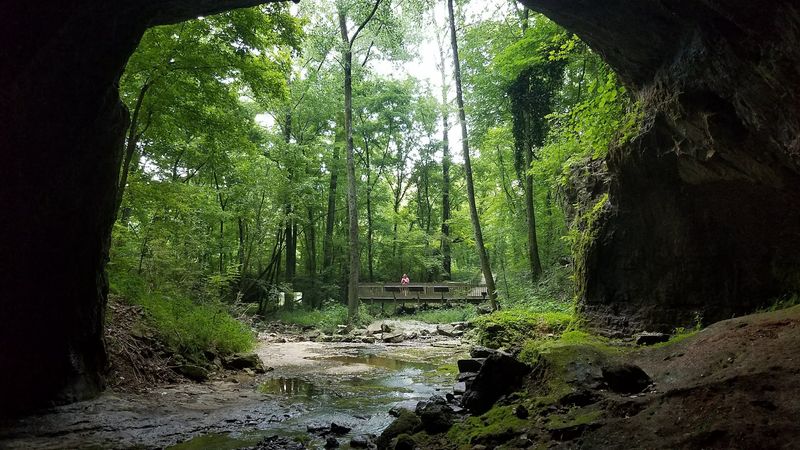
Nothing quite prepares you for the sound before the sight. A dry rustle builds inside the cave, almost like paper being shuffled, and then the first few bats slip out low over the water.
Within minutes the trickle becomes a river. Gray bats leave in a swirling column that curves over the trees and heads out toward the Tennessee River valley to hunt insects all night long.
Sauta Cave hosts an estimated 200,000 to 400,000 gray bats in summer, and it is recognized as the largest bat emergence east of the Mississippi River. Numbers like that sound abstract until you are standing under them.
The show does not happen in one dramatic burst, which surprises a lot of first-timers. It unfolds over roughly an hour, sometimes longer, with waves and pauses and then another surge.
June, July, and August are the strongest months, and the action starts right around sunset. Arriving thirty minutes early gives you time to settle and let your eyes adjust.
I kept looking away to check my phone and kept regretting it, because the biggest waves came when I was not watching. Put the screen down.
Bring a folding chair if you have one. Standing for an hour on a wooden deck gets old fast, and the best viewing means staying patient while the sky drains from gold to black above you.
A Cave Entrance Big Enough To Drive A Car Into
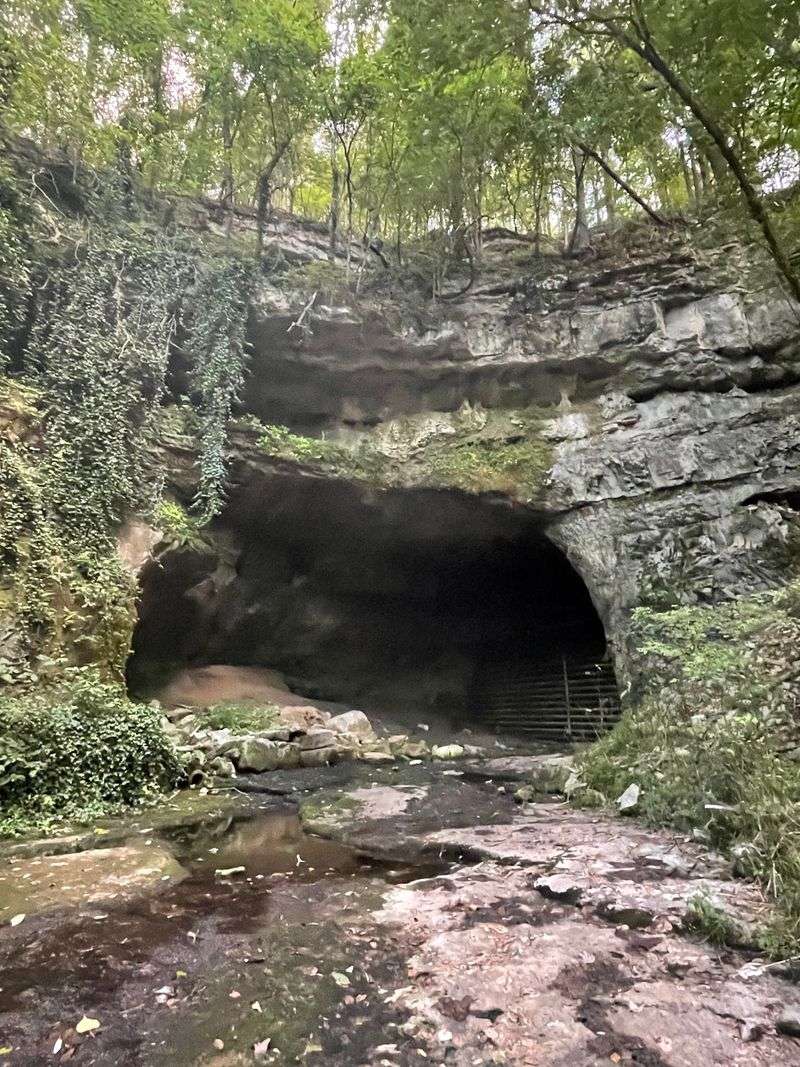
Photos really undersell the scale here. The opening yawns wide and tall, large enough that people often say you could drive a vehicle straight through it, framed by pale limestone and draped with vines.
Water trickles down the upper lip of the rock like a thin curtain, catching whatever light filters through the canopy. On humid summer afternoons the whole entrance looks like it is breathing.
A protective gate blocks entry, and that gate matters. It keeps people out while letting bats fly freely, which is the whole point of the refuge.
You cannot go inside, and honestly the mystery makes it better. Peering through the bars into total darkness, wondering how far back the passages run, is its own small thrill.
The cave has a long human history too, from Civil War era saltpeter mining to a stretch in the twentieth century when part of it operated as a commercial attraction with a dance floor. Hard to picture now with the quiet and the moss.
Stand close and you will feel the airflow, a steady exhale of roughly seventy degree air that acts like natural air conditioning in July.
Fair warning about the smell. Guano has a sharp ammonia bite, and near the platform it can be strong, so sensitive noses may want to hang back a few feet.
Cool Cave Air On A Hot Alabama Evening
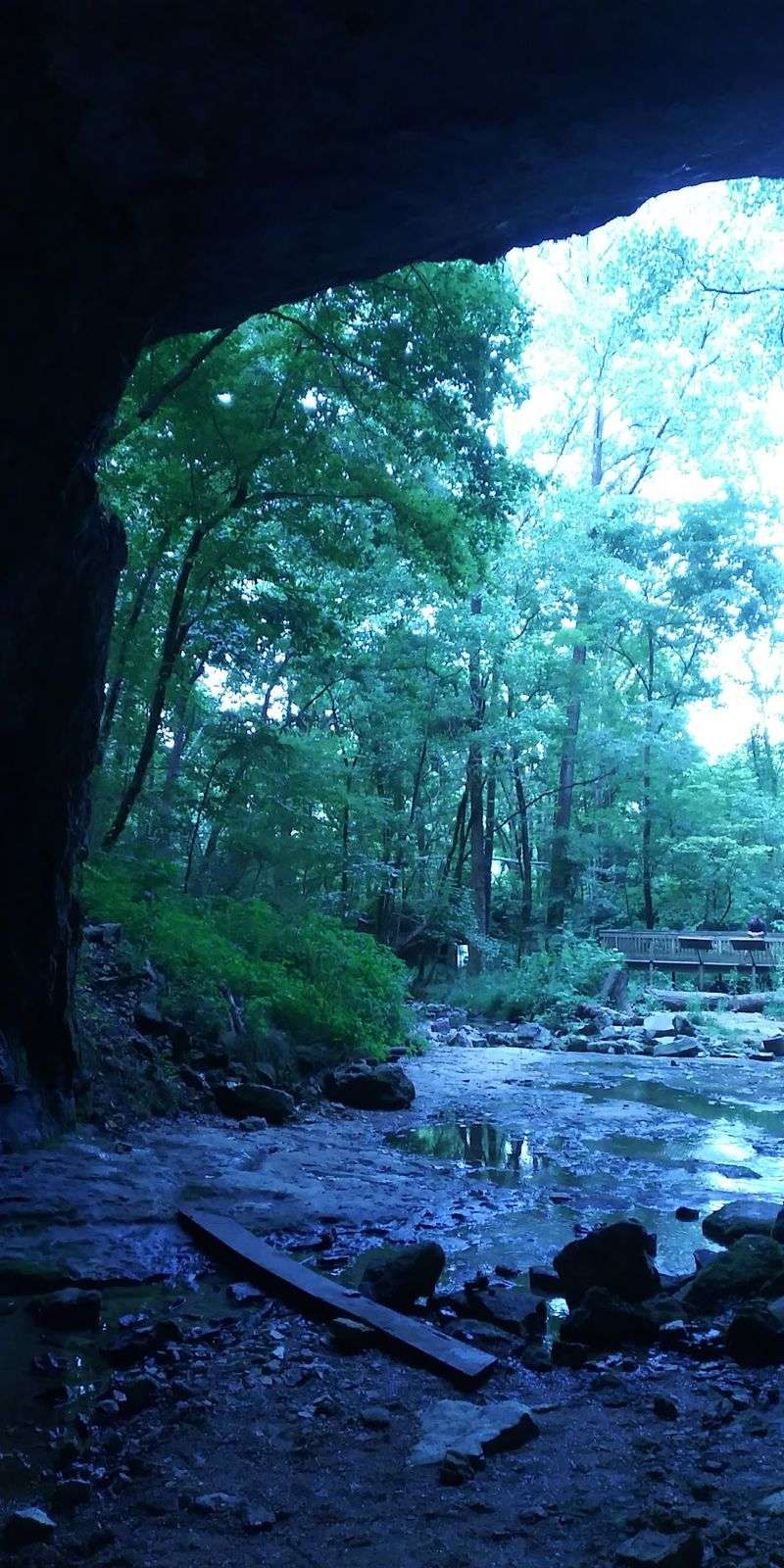
Alabama in midsummer is no joke. The walk in can leave you sticky and swatting, and then something odd happens about fifty yards from the cave.
The temperature drops. Not slightly, either.
It feels like someone left a walk-in cooler open, and the air pushing out of the entrance stays around seventy degrees no matter what the thermometer says outside.
Several visitors describe it as natural air conditioning, and I would agree. After sweating through the approach, I stood in that current for a solid minute just enjoying it.
Here is the practical part. If you plan to sit still on the platform for an hour after sunset, that constant breeze goes from refreshing to genuinely chilly.
Toss a light jacket or long-sleeve shirt in your bag even in July. I did not the first time and regretted it around the forty-minute mark.
The cool zone also creates a little microclimate near the mouth, with ferns, moss, and damp rock that feel more like a mountain hollow than north Alabama farmland.
Kids notice the change immediately and think it is magic, which is a fun reaction to watch.
One more tip. Mosquitoes love this damp, shaded pocket, so bug spray is not optional if you want to enjoy the wait comfortably.
An Easy Quarter-Mile Walk Almost Anyone Can Manage
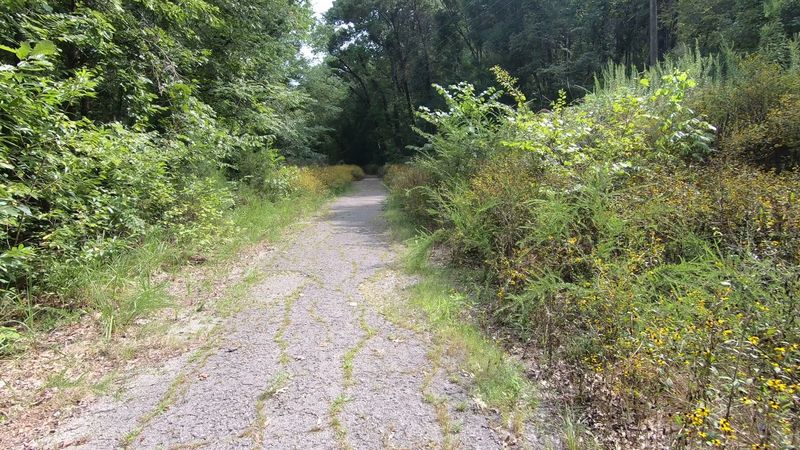
Calling it a hike feels generous. The route in is an old road that runs flat and mostly paved, stretching roughly a quarter mile from the gate to the cave area.
Grass creeps over the edges in places, and a grassy stretch appears here and there, but the surface stays firm and simple. No scrambling, no steep grades, no route-finding.
Because it is so level, this works for strollers, mobility carts, and visitors who would rather not tackle a real trail. A wooden boardwalk carries you the last stretch toward the viewing deck.
Interpretive signs along the way explain gray bat biology and why the refuge exists, which gives kids something to read while the light fades.
Past the cave, the path keeps going by a few bat houses and crosses a small creek, and a gentle uphill continues toward a view of the water. Worth exploring if you arrive early.
That upper section is rougher and less maintained, so wear real shoes if you plan to wander beyond the main deck.
Plan on thirty to sixty minutes total for a typical visit, longer if you stay for the full emergence.
The most important item you can pack is a flashlight or headlamp. You will be walking back in genuine darkness, and phone lights fade fast.
A Global Stronghold For Endangered Gray Bats
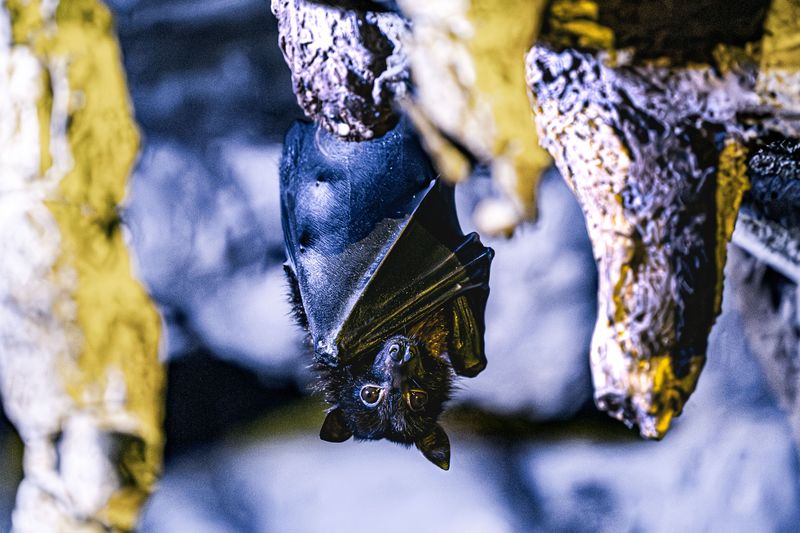
Here is the fact that reframes the whole visit. Sauta Cave shelters the largest known concentration of endangered gray bats on the planet.
The refuge was established in 1978 across 264 acres of hardwood forest specifically to protect these animals and their habitat. It is not a park built for people, and that shows in the best way.
Gray bats and Indiana bats, both federally endangered, use the cave as a winter hibernaculum, meaning they hibernate here through the cold months. In summer, the gray bats return in enormous numbers to roost and raise young.
A single gray bat can eat thousands of insects in one night, which makes them quiet allies for farmers across the Tennessee Valley.
Those mosquitoes bothering you on the walk in? They are dinner.
The closure of the cave interior connects to white-nose syndrome, a fungal disease that has devastated bat populations across North America. People can carry spores on shoes and gear, so keeping humans out reduces the risk.
White-nose syndrome does not affect people at all, which is worth knowing if the topic makes anyone nervous.
Understanding the stakes changed how I watched the emergence. It stopped being a spectacle and started feeling like a fragile thing I was lucky to witness at all.
Birdsong, Wildflowers, And A Creek Worth Slowing Down For
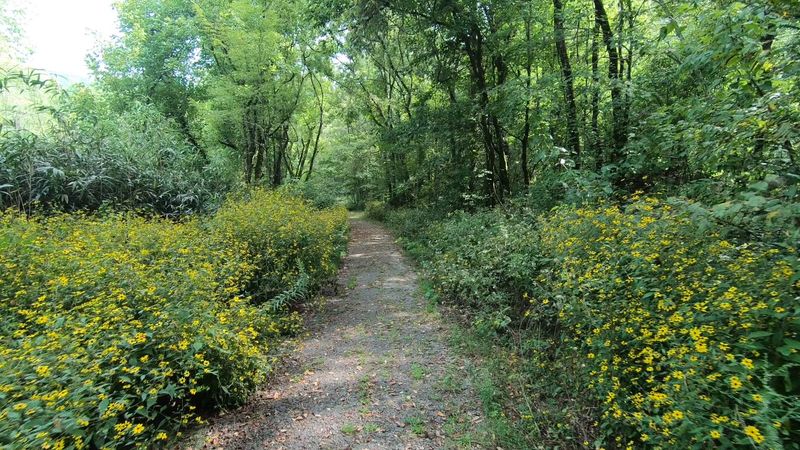
Bats get the headline, but arrive in daylight and the refuge shows a softer side. Hardwood forest lines the path, and in spring the edges fill with wildflowers that make the walk feel unhurried.
Songbirds work the canopy overhead. The property is part of the Alabama birding trail network, and warblers, woodpeckers, and other woodland species turn up regularly.
A small creek runs near the trail, clear and shallow, with a stretch that appears to flow out from the cave system itself. It is a good spot to pause and let kids poke around.
Deer, squirrels, and the occasional turtle round out the cast.
Keep climbing past the bat houses and the ground rises toward a view over the water, since Guntersville Lake sits just south of the refuge boundary.
Late afternoon light through the hardwoods is genuinely lovely, and photographers will find plenty before the sky goes dim.
I liked treating the daylight portion as its own small outing. Wander, listen, read the signs, then settle in for the main event.
Trash cans are not available out here, so pack out whatever you bring in. The place stays pretty because visitors treat it carefully, and that is worth keeping up.
How To Plan Your Visit So You Actually See The Show
A little planning separates a great night from a disappointing one. Timing matters most, and the peak window runs through June, July, and August, with arrival about half an hour before sunset.
Show up too early in the evening and you will see almost nothing. Come in late season or after heavy rain and numbers can drop off noticeably.
Parking is the other quirk. There is no real lot, just a crumbling turn-off directly beside Highway 72 near the locked gate, with space for only a handful of vehicles.
Do not block the gate or the intersection. Pull in tight and be considerate of the cars arriving after you.
Pack list, short and specific: bug spray, a flashlight for the walk out, a light jacket for the cave breeze, a folding chair, and maybe a hat or umbrella if falling guano bothers you.
The refuge stays open around the clock, and there is no visitor center or restroom on site, so handle that in Scottsboro beforehand.
Keep voices low near the platform. Noise and bright lights can disturb the bats as they leave.
Give yourself thirty to sixty minutes minimum, and resist leaving early. The later waves are often the thickest.
Address: Highway 72, Scottsboro, AL 35769
