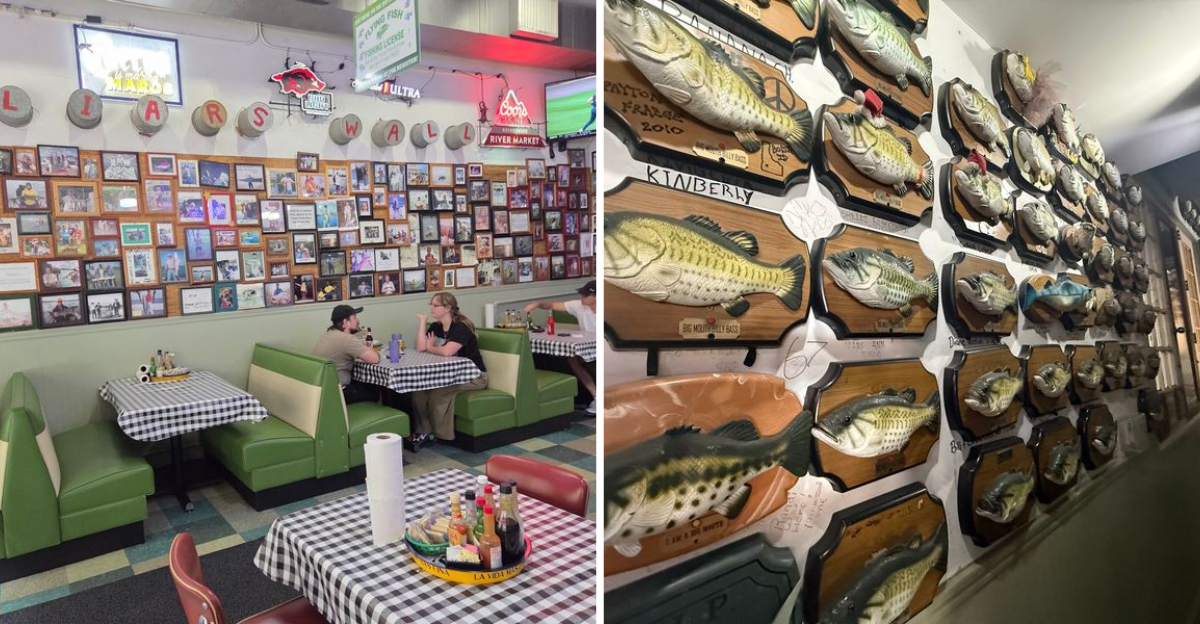
Hundreds of plastic fish staring down from the ceiling, each one frozen mid-song with that same goofy grin. That is what I found when I walked into an Arkansas restaurant expecting nothing more than a basket of fried catfish.
The wall gleams with retired Big Mouth Billy Bass toys, the singing kind your uncle probably owned back in the late 1990s. The place calls it an adoption center, and yes, it works exactly how it sounds: bring in an unwanted singing fish, and it gets a permanent home on the wall.
The collection has grown over the years, and now it covers an entire wall, a glittering tribute to a plastic relic that refuses to fade away. I sat down with a basket of fried catfish and hush puppies, half-watching the street crowd drift past the big windows.
The air smelled like cornmeal and lemon, soul music drifted from the speakers, and the whole place felt like a lake shack that got a little carried away with its collection. I honestly think it might be one of the most charming odd stops in the state.
How the Adoption Center Got Started
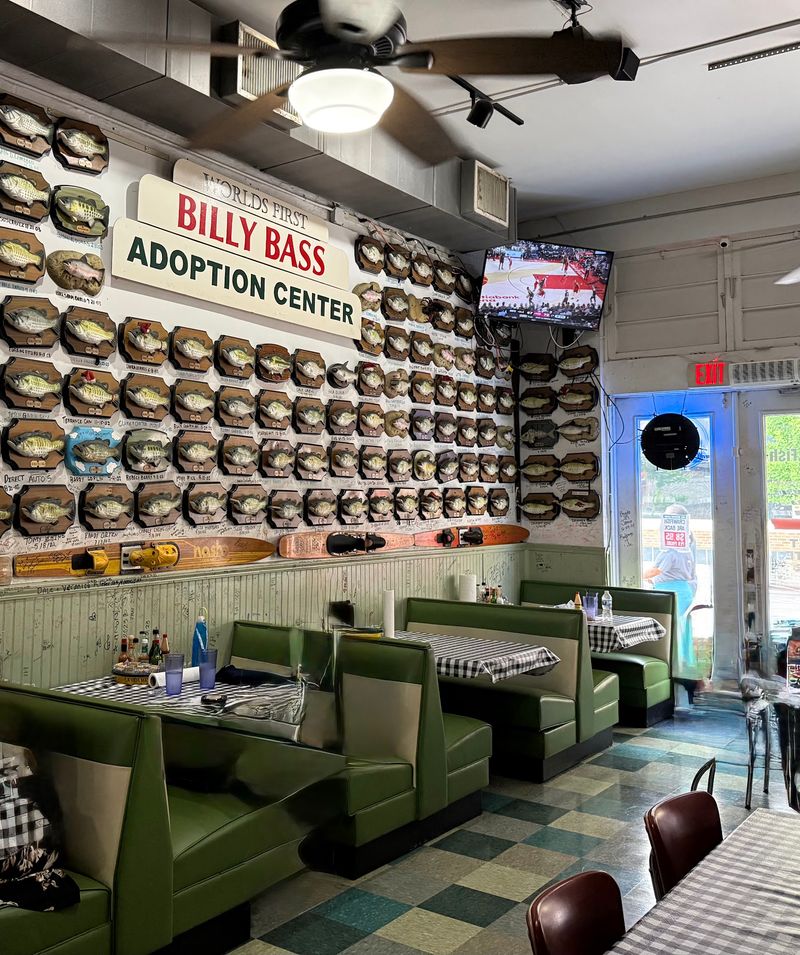
Back in 2002, when the Flying Fish opened its doors in Little Rock, the Big Mouth Billy Bass was still a hot gag gift. Restaurateur Shannon Wynne figured something out early: the singing fish craze would not last forever.
He was right. Within a few years, those animatronic novelties were shoved into attics, garages, and yard sale boxes across the country.
Instead of letting them disappear, Wynne created the Billy Bass Adoption Center inside the restaurant itself. The idea was simple and a little silly, which is exactly why I love it.
People could bring their unwanted singing fish downtown, hand it over, and know it would live on as decor rather than landfill filler. That turned a throwaway toy into part of a restaurant’s personality.
What strikes me is how well the concept fits the space. Flying Fish serves Southern Cajun seafood with a bayou lean, so mounted fish on the walls make sense even when they are made of plastic and battery compartments.
The joke lands because the setting plays it straight. Nobody explains it to you at the counter, and there is no big sign begging for attention.
You order your food, look up, and slowly realize how many fish are watching. That slow-burn discovery is honestly the best part of the whole gimmick.
More than two decades later, the collection keeps growing, which says something about how many of these things were sold in the first place. Little Rock became their retirement town by accident.
Trading a Singing Fish for a Basket of Catfish
Here is the part that makes people laugh out loud: bring in a Big Mouth Billy Bass and the restaurant hands you a free basket of catfish. A plastic fish for a real one, more or less.
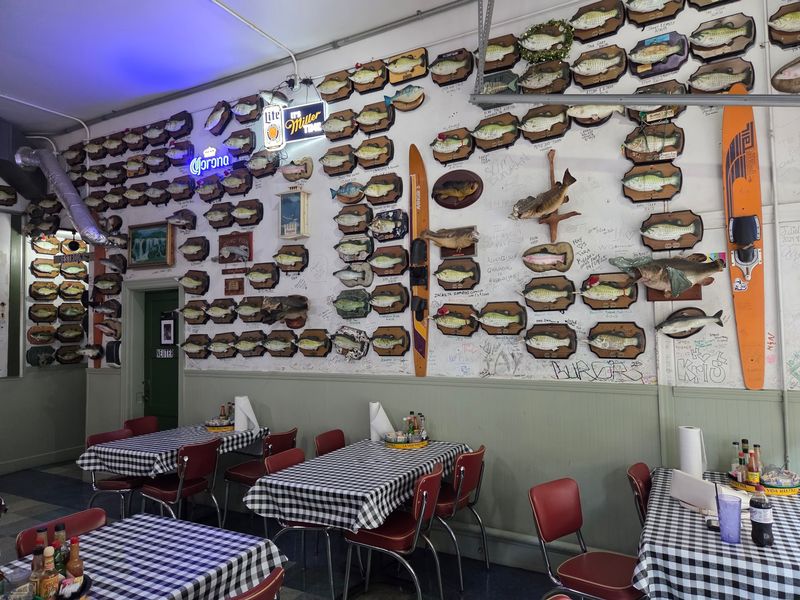
Donors can also get their name written on the wall, which turns the swap into a tiny piece of local history.
I like how uncomplicated the deal is. There is no membership, no app, no long form to fill out.
You walk up with a novelty item nobody in your house wants anymore, and you walk away with lunch and bragging rights. Not a bad afternoon in downtown Little Rock.
The catfish itself deserves a mention because it is genuinely good, not a throwaway reward. Cornmeal crust, hot out of the fryer, served with hush puppies that regulars talk about constantly.
If you are hoping to make the trade, hunt around before your trip. Thrift stores, flea markets, and family garages in Arkansas and beyond still turn up these fish fairly often.
My advice would be to check that the fish is intact, since the point is to display it on the wall rather than repair it. Mounting plaque included is ideal.
Something about the exchange feels very Southern to me, that mix of hospitality and humor with a wink built in. You are not just donating clutter, you are joining a running joke that has been going for over twenty years.
Bring a camera, because the handoff photo is worth having.
Hundreds of Fish, Zero Batteries
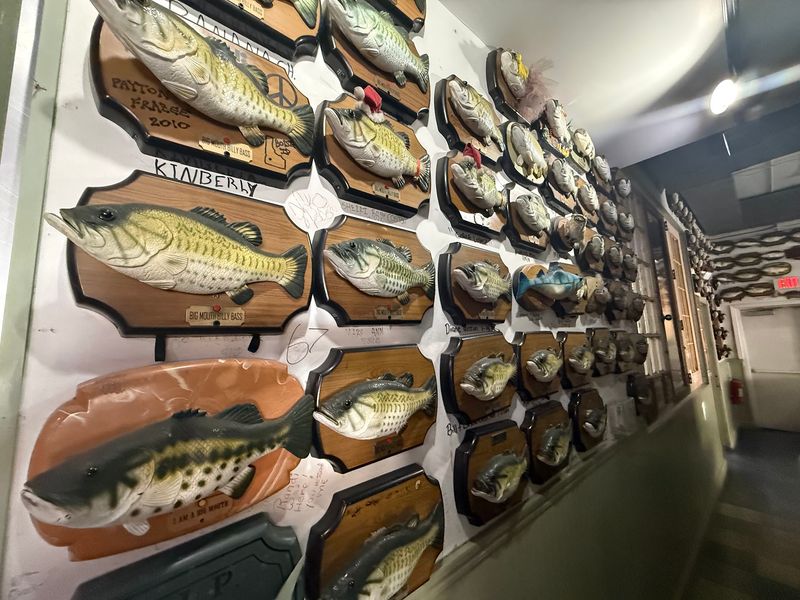
Counting the fish is a losing game, and I tried. Estimates land somewhere between three hundred and more than five hundred, tacked to walls and even dangling from the ceiling.
The smartest detail is one you never notice: every battery has been removed.
That single decision keeps the whole thing charming instead of unbearable. Imagine five hundred fish belting out the same three songs while you try to eat a po’ boy.
The usual repertoire includes tunes like Don’t Worry Be Happy, Take Me to the River, and Pretty Fishy. Silence, it turns out, is a gift.
Looking closely rewards you. Some fish are sun-faded, some have chipped tails, a few are mounted at odd angles that make them look like they are mid-flop.
Handwritten names of donors appear here and there, layered like graffiti in a place that actually encourages you to write on the walls.
Kids go wild for it, and I watched a family spend a solid ten minutes pointing at different fish while their food cooled. Honestly, I understand the impulse.
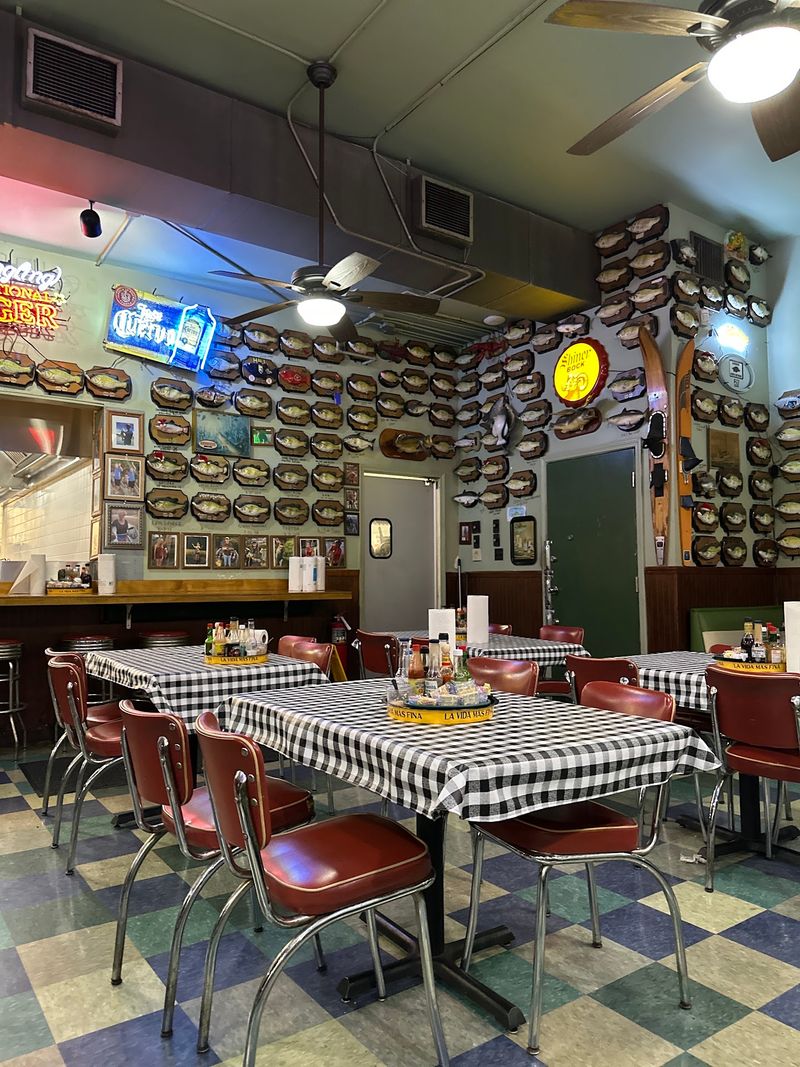
The display spills into the rest of the decor too. Outboard motors, license plates, and fishing photos share the space, so the Billy Bass army feels like part of a bigger collection rather than a stunt.
If you want the best look, grab a table along the wall and give your eyes a minute to adjust. The lighting is dim on purpose, and the fish reveal themselves slowly.
Who Actually Donates These Things
A pattern has shown up over the years at the adoption center, and it is funnier than you would expect. Many of the donations come from women who simply want the singing fish out of the house.
Kids contribute too, sometimes arriving with a fish they quietly liberated from a parent.
I find that detail genuinely delightful. The whole operation runs on gentle household diplomacy, where one person’s beloved novelty becomes another person’s clutter.
Instead of an argument, there is a road trip to downtown Little Rock and a free basket of catfish waiting at the end.
Thinking about it, the adoption framing does a lot of work. Calling it an adoption rather than a donation gives the object a soft landing, like it is going somewhere better.
Nobody wants to throw away a gift, even a goofy one, and the wall solves that problem neatly.
For visitors, the human side is half the fun. Reading donor names scrawled near the fish makes the display feel collaborative, built by thousands of small decisions over two decades.
It is not a curated museum piece. It grew the way a family scrapbook grows, one contribution at a time.
If you have one of these fish sitting in a closet, I would say the trip is worth planning. You get a story, a meal, and a permanent spot on an Arkansas wall.
Few souvenirs work in reverse like that, where you leave something behind instead of hauling something home.
The Liar’s Wall and Other Oddball Decor
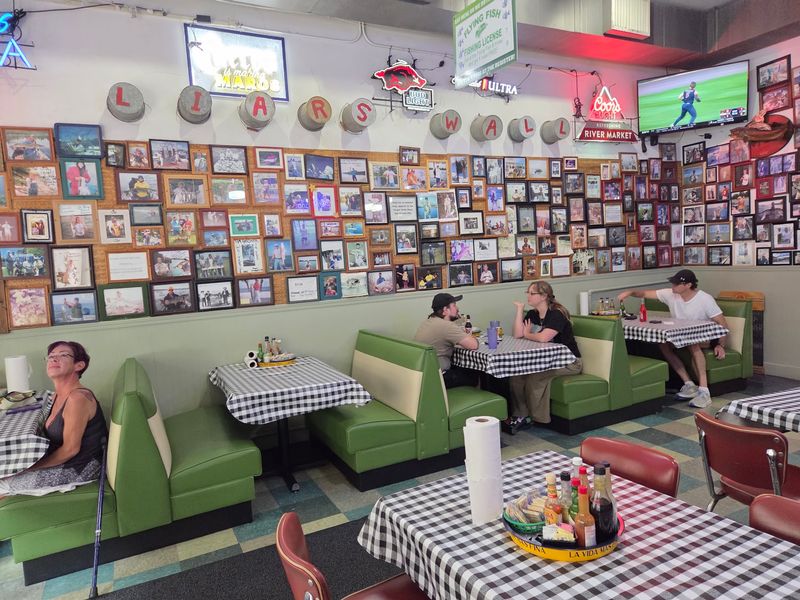
Just past the fish, another wall pulls you in. Called the Liar’s Wall, it is covered with photos of customers holding up their catches, and the name tells you everything about how seriously anyone takes them.
Fishing stories stretch. Everybody knows it, and the restaurant leans into the joke.
Scanning those snapshots became my favorite part of the meal. Some are recent phone prints, others look genuinely old, faded at the edges and curling slightly.
Vintage outboard motors hang nearby, along with license plates and assorted river-country odds and ends.
The layering is what makes the room work. Nothing feels staged by a designer, which is rare in a downtown restaurant sitting in a busy tourist district.
You can also add your name to the wall, since writing on the walls is encouraged here rather than frowned upon.
I would recommend bringing a fishing photo if you have one, printed and ready to go. Contributing to a wall feels different than looking at it, and the whole place is built around that idea.
Between the Billy Bass collection, the Liar’s Wall, and the motors overhead, there is more to look at than any single visit allows.
Families especially seem to benefit from the visual overload, since kids stay busy hunting for details while the food comes out. The three dining rooms give you room to wander a bit and see different corners.
Take your time. The decor is the attraction as much as the menu.
Planning Your Visit to the River Market Spot
Getting the logistics right makes the visit smoother, so here is what I noticed. Ordering happens at the counter in a second room, which catches first-timers off guard, and a buzzer lets you know when your food is ready.
Drinks and sides like crackers, lemons, and sauces are self-serve at a small bar area.
Seating is generous across three rooms, so even a long line moves faster than it looks. Waits of ten or fifteen minutes happen during busy stretches, especially on weekends.
Big garage-door windows face the street, making those tables the best pick for people-watching along the River Market district.
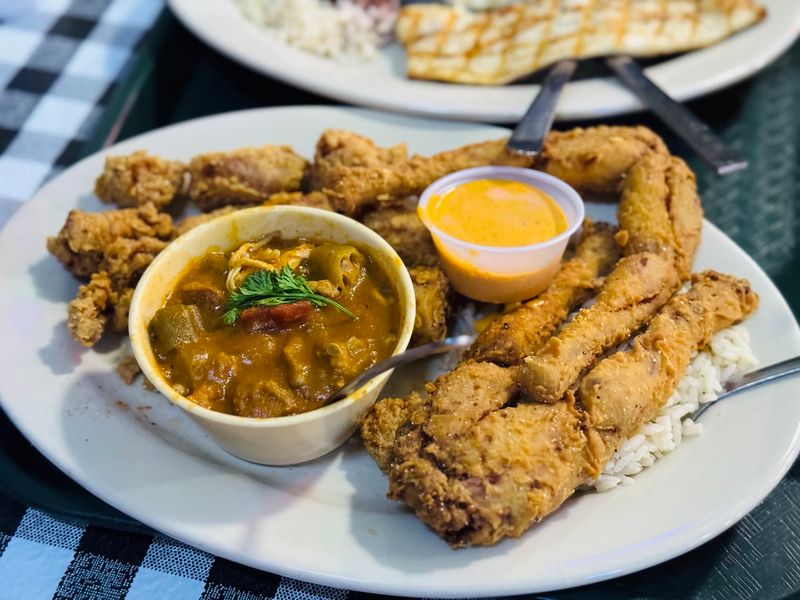
Menu-wise, fried catfish is the signature, but grilled options exist too, including rainbow trout and tilapia. Hush puppies, crawfish chowder, and po’ boy sandwiches come up constantly in conversation.
The vibe is fast-casual and family-friendly, closer to a lake shack than a sit-down dining room, and the space is wheelchair accessible.
Hours run 11 AM to 9 PM most days, stretching to 10 PM on Friday and Saturday. Lunch is a good time to see the fish wall clearly, since the interior stays fairly dim.
Location helps a lot here. The Museum of Discovery and the riverfront sit within easy walking distance, so you can build a whole afternoon around it.
If you plan to adopt out a Billy Bass, bring it in during regular hours and ask at the counter.
Address: 511 President Clinton Ave, Little Rock, AR 72201
