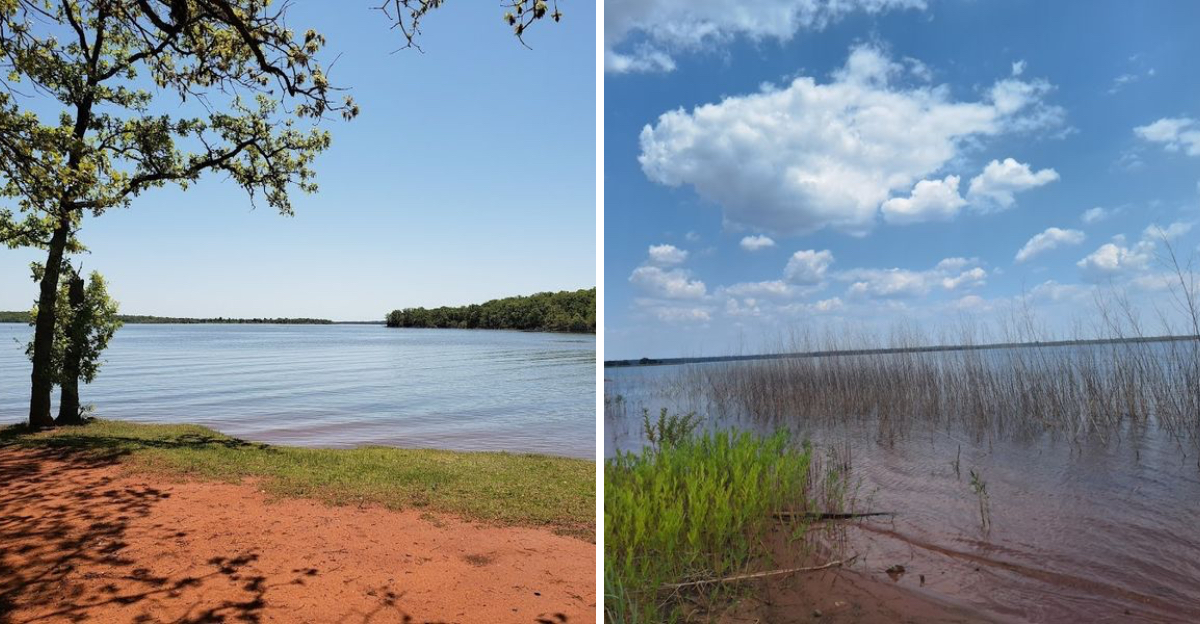
Most lakes have one personality. They fill up, they stay put, and everyone knows what to expect. But this popular Oklahoma lake has a secret that only reveals itself when the water retreats.
When levels drop, the shoreline transforms into something else entirely. Mud flats appear where boats once floated.
Old river channels become visible again, carving paths through exposed earth. Trees that spent years underwater suddenly poke their bare branches toward the sky, looking like ghosts of the forest that came before.
Locals know to visit during these times, not for swimming but for curiosity. The lake shows its bones, and those bones tell a story.
You can walk on ground that was covered just weeks earlier. You can find strange things washed up and left behind. The whole place feels quieter too, as if the lake is resting between breaths.
Then the rains come back and the water rises, hiding everything once more. That is the cycle. That is the magic. This Oklahoma lake does not stay the same for long, and that is exactly why people keep returning.
To see what has changed. To see what has reappeared. To watch the water play its slow, steady game.
The Shoreline Transforms Into a Whole New Landscape
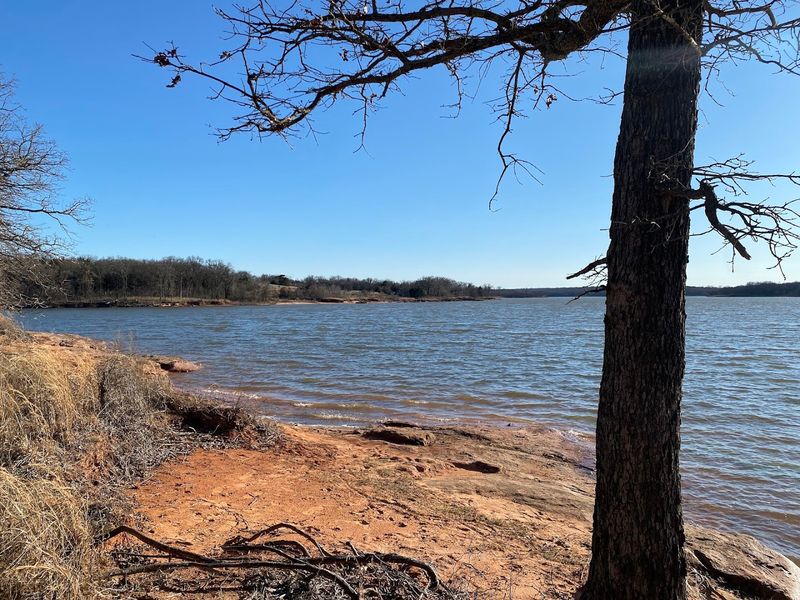
When the water pulls back at Lake Thunderbird, the shoreline does not just shrink. It completely reinvents itself.
Red Oklahoma clay stretches out in wide, cracked flats where boats used to float freely. The color contrast is striking, with rust-red earth meeting the remaining blue-green water in sharp, jagged lines.
Walking along the newly exposed ground feels oddly adventurous. You are stepping on a surface that was fully submerged just weeks or months before.
Patterns in the clay tell the story of where currents once moved and where sediment settled over time.
The exposed soil has a texture that changes as you move further from the waterline. Near the edge, it stays soft and slick.
Further back, it dries and cracks into geometric shapes that look almost artistic.
Photographers absolutely love this time of year at the lake. The unusual terrain creates compositions that look nothing like a typical Oklahoma reservoir scene.
If you want a version of Lake Thunderbird that most people have never seen, visiting during a low-water period is the way to go.
Hidden Creek Beds Reappear After Years Underwater
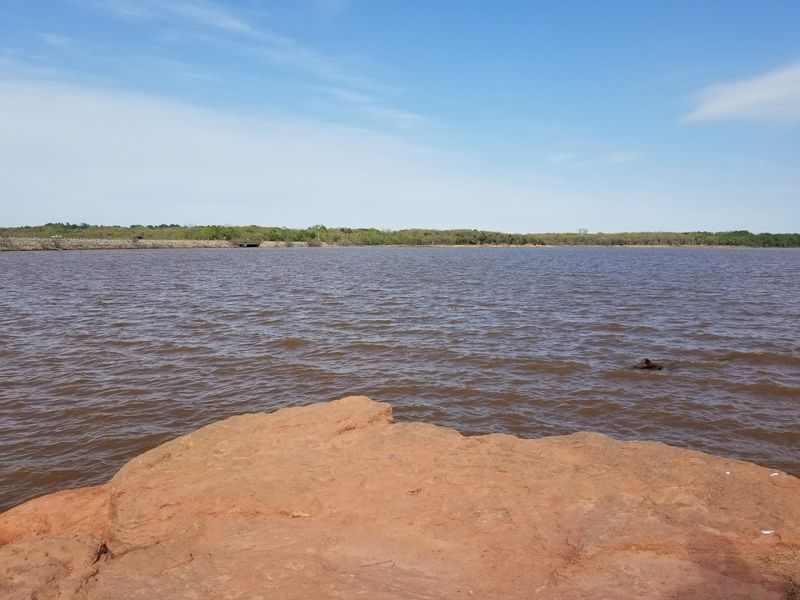
One of the most remarkable things about a low-water event at Lake Thunderbird is watching old creek channels come back into view.
Before the reservoir was filled in the 1960s, several creeks ran through this part of central Oklahoma. Little River and its tributaries carved paths through the land for centuries.
When the dam was built and the water rose, those creek beds disappeared beneath the surface.
During significant drops in water level, the outlines of those old channels start showing again. You can trace the gentle curves and bends of a waterway that has been hidden for decades.
It feels a little like uncovering a secret that the lake has been keeping.
Standing at the edge of one of these exposed channels is a genuinely humbling experience. Oklahoma has a deep geological story, and moments like this make that story visible and touchable.
The creek beds also attract wildlife, since animals follow the receding water and use the shallow remaining pools as drinking spots. Herons, egrets, and deer are common sights along these old channels when the water is low.
The Water Color Shifts in Dramatic Ways
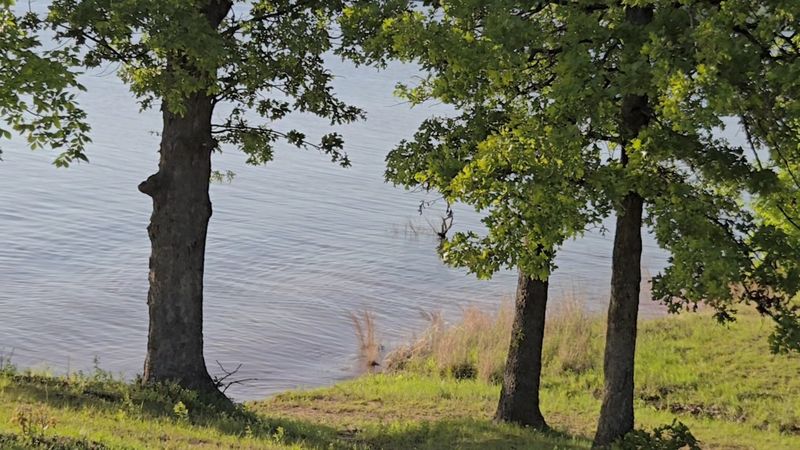
Lake Thunderbird is already known for its reddish water, a side effect of all the red clay that Oklahoma is famous for. But when water levels drop, that color intensifies in ways that genuinely catch you off guard.
The shallower the water gets, the more concentrated the suspended clay particles become. On certain days, the water near the shoreline turns a deep rust color that almost looks like a different substance entirely.
Deeper sections of the lake still hold clearer water, so you end up with this layered visual effect. Dark blue-green in the middle, fading to murky brown, then to bright red near the banks.
It is a color palette that belongs to Oklahoma and nowhere else.
I have seen this lake on rainy days, sunny days, and at golden hour, and the low-water color show is unlike anything the full reservoir offers. The clay-heavy water actually catches afternoon light in a way that makes it glow.
It is not exactly postcard-perfect in the traditional sense, but it is undeniably beautiful in a raw, honest way that feels true to the Oklahoma landscape surrounding it.
Old Structures and Artifacts Emerge From the Depths
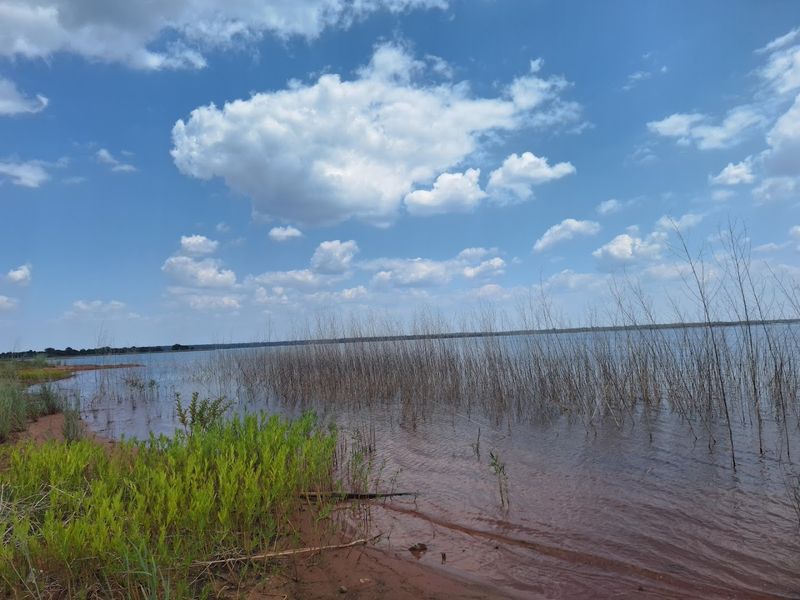
When a reservoir drops low enough, it sometimes gives back pieces of the world that existed before the water arrived. Lake Thunderbird is no exception to this.
Old fence posts, foundation remnants, and the occasional piece of farm equipment have surfaced during particularly low-water periods. These are leftovers from the farms and homesteads that once occupied the land before it was flooded to create the reservoir in the 1960s.
Spotting one of these objects sticking up out of the mud is a genuinely strange feeling. You are looking at something that was part of someone’s everyday life, now preserved in silt and silence for decades.
The state of Oklahoma has a rich agricultural history, and the Little River watershed that feeds Lake Thunderbird was farmland for generations before the dam project changed everything. Finding these remnants connects you directly to that history in a way that no museum exhibit quite replicates.
I always bring a camera when water levels are low for exactly this reason. The combination of red clay, still water, and emerging history makes for some of the most compelling photography opportunities in all of central Oklahoma.
Wildlife Behavior Changes Noticeably Around the Lake
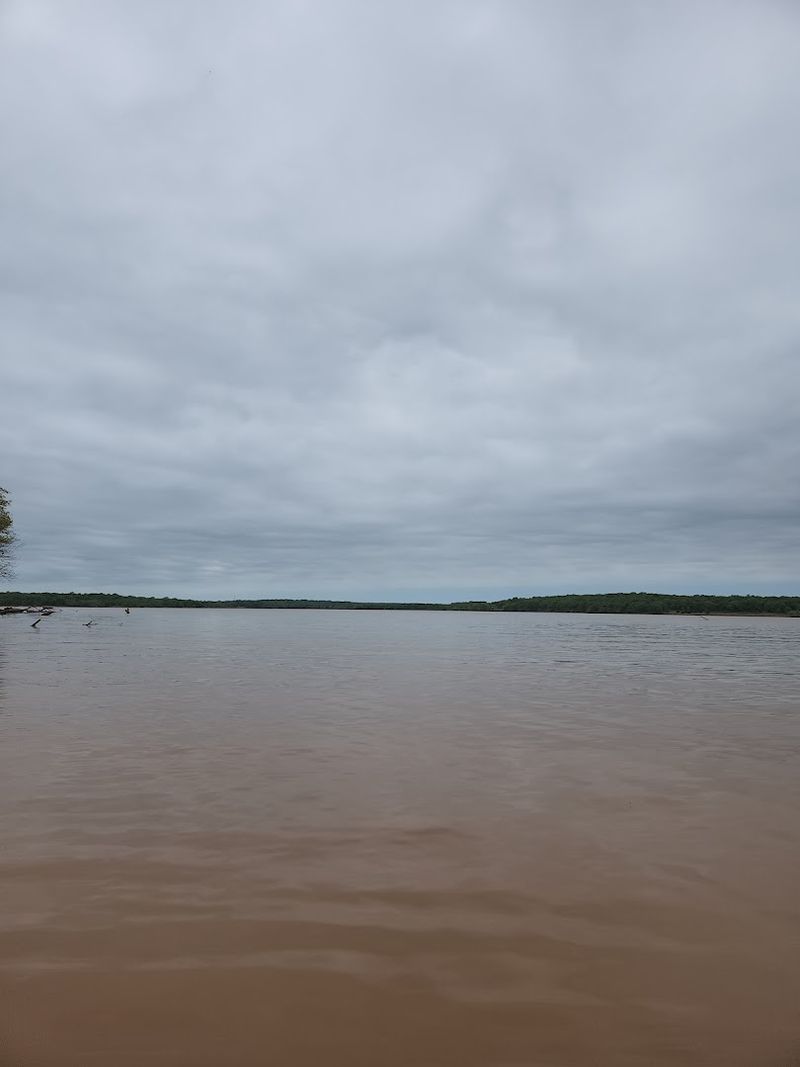
A drop in water level does not just change how the lake looks. It changes who shows up and how they behave.
Shorebirds move in quickly when new mudflats appear. Great blue herons, snowy egrets, and killdeer are among the first to arrive, picking through the exposed sediment for fish, frogs, and invertebrates that the receding water has left behind.
White-tailed deer also become more visible along the new shoreline. With shallow water spread across a wider area, deer can wade in easily and find both water and the soft aquatic plants that grow in the shallows.
Fishing from shore also becomes more interesting during low-water periods. Bass and catfish concentrate in the deeper remaining channels, which means you can often predict exactly where the fish are holding.
Anglers who know the lake well take advantage of this predictability.
Oklahoma is home to a wide variety of bird species that use reservoirs as migration stopover points, and Lake Thunderbird sees a notable increase in unusual bird sightings when the mudflats are exposed.
Birders from across the state make special trips during these periods, binoculars ready for whatever the low water reveals.
Hiking Trails Offer Completely Different Views
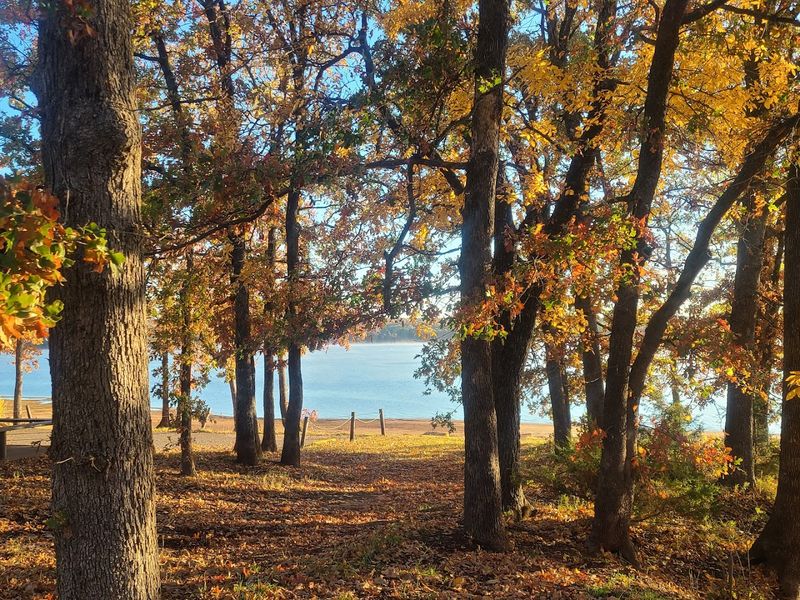
Lake Thunderbird State Park has a solid network of hiking trails that run along the shoreline and through the surrounding woodland. Those trails look and feel entirely different depending on the water level.
When the lake is full, the trails hug a defined shoreline and offer pleasant views across open water. When levels drop, the trail suddenly sits higher above the waterline, and new terrain opens up below.
You can veer off the established path and walk across areas that are normally submerged.
The Clear Bay Trail is one of the most scenic routes in the park, and during low-water periods, it delivers views of the exposed lakebed that are genuinely unlike anything you see on a normal visit. Wide stretches of cracked red clay extend outward from the tree line in every direction.
Wear sturdy shoes if you plan to explore the newly exposed areas. The clay can be slippery near the waterline and uneven further back where it has dried and cracked.
Tick awareness is also important in Oklahoma, especially in the warmer months when you are wandering through grassy or wooded terrain.
The trails themselves are well marked, and the park is kept impressively clean for its size.
The Dam and Spillway Take on New Significance
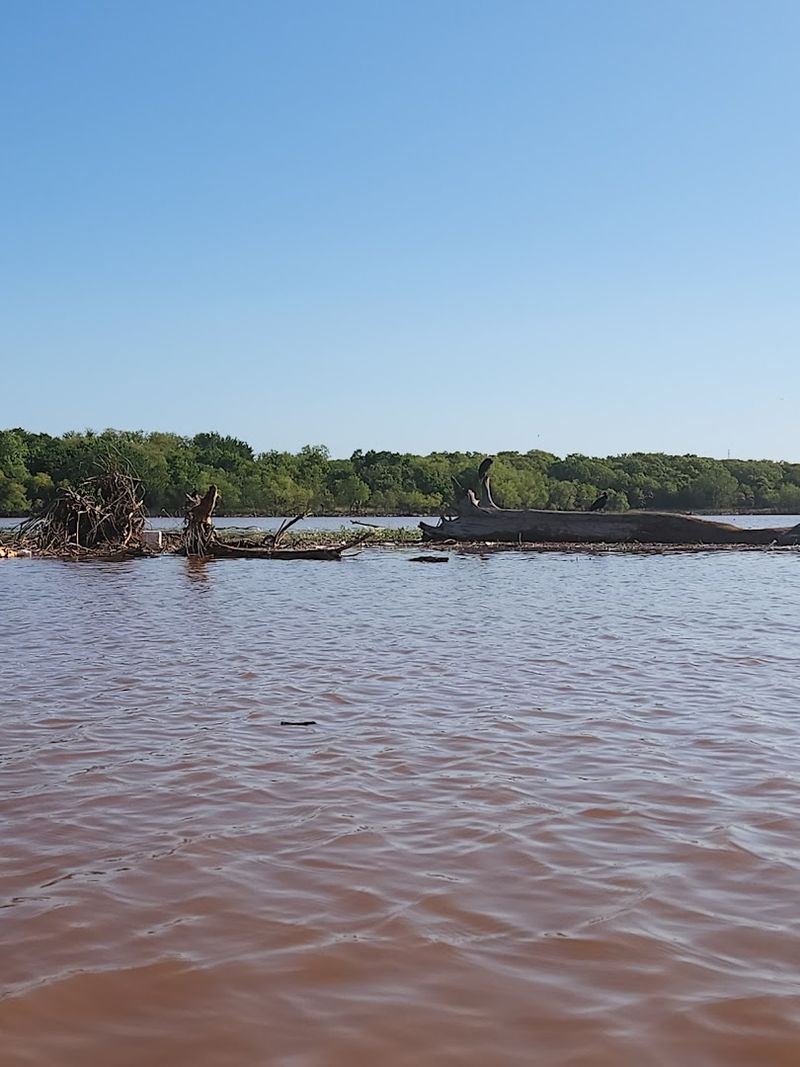
Most visitors to Lake Thunderbird drive past the dam without giving it much thought. When water levels drop significantly, the dam becomes a much more prominent and interesting feature of the landscape.
The Lake Thunderbird dam was completed in 1965 as part of a project to supply water to the cities of Norman, Midwest City, and Del City in Oklahoma. It holds back the waters of Little River and creates the roughly 6,070-acre reservoir that the park is built around.
When the lake is low, more of the dam face is visible, and you get a clearer sense of just how much engineering went into holding this much water in place. The concrete structure stands in sharp contrast to the surrounding red earth and scrubby Oklahoma woodland.
The spillway area also becomes more accessible and visually interesting during low-water periods. Water that does flow through the spillway creates a small but lively cascade that attracts both wildlife and curious visitors.
Standing near the dam with a low lake behind it gives you a perspective on the reservoir that most people never experience. It is a reminder that this natural-looking body of water is, at its core, a carefully engineered piece of Oklahoma infrastructure.
Boating and Marina Access Gets Tricky
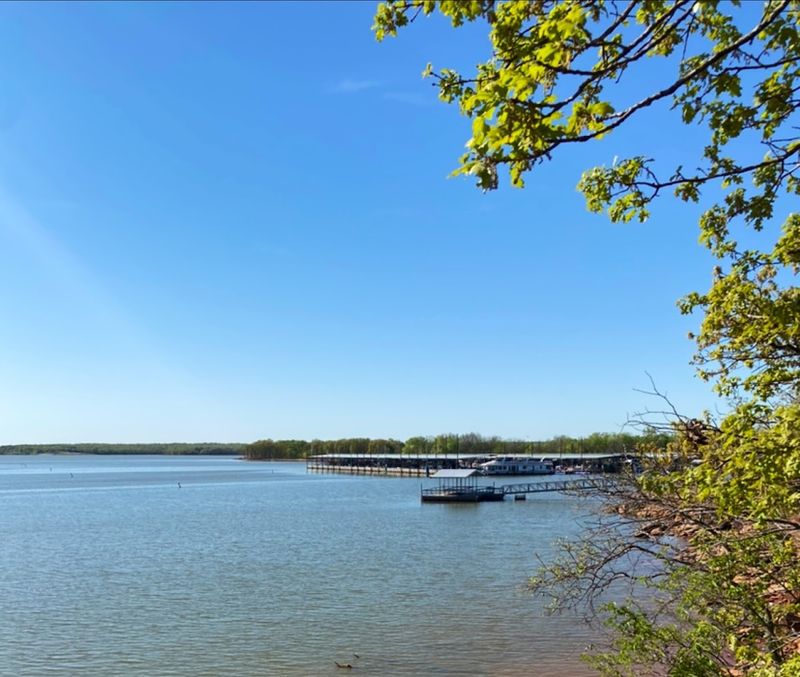
Lake Thunderbird has two marinas that serve the boating community around Norman and the broader Oklahoma City metro area. Both work great when the lake is at or near full pool.
When water levels drop, things get more complicated.
Boat ramps that normally slope gently into deep water can end up sitting high and dry, with only a short stretch of usable launch area at the bottom. Getting a boat into the water requires more patience and sometimes a longer drive to find a ramp that is still functional.
The marinas themselves can look dramatically different during low-water periods. Dock sections that are designed to float may settle awkwardly, and the walkways leading out to them can develop steep angles that make them tricky to navigate.
For experienced boaters, these conditions are manageable with some planning. For first-timers or those with larger vessels, it is worth calling ahead to check current water levels before making the trip.
The Oklahoma Water Resources Board tracks reservoir levels and publishes updates that are easy to find online.
Despite the challenges, plenty of boaters still get out on the water during low-water periods. The open expanse of the lake remains impressive even when it is running below normal capacity.
Swimming Areas Shift and Shrink
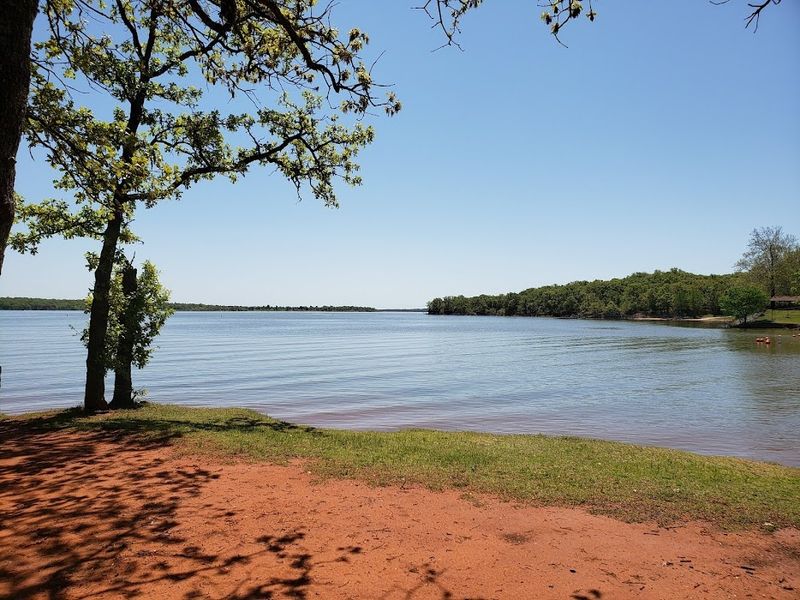
The swim beach at Lake Thunderbird State Park is a major draw during Oklahoma summers. Families spread out on the sandy shore, kids splash in the shallows, and the whole scene has a classic American lake vacation feel to it.
When water levels drop, that beach scene changes noticeably. The sandy swim area can shrink or shift as the waterline pulls back.
Areas that were once comfortably shallow for wading become even shallower, while the drop-off into deeper water moves further from shore.
On the upside, a lower water level sometimes exposes additional sandy or gravelly areas adjacent to the official swim zone. These unofficial patches become impromptu hangout spots for people willing to explore a little.
Water clarity in the swim area can actually improve slightly during stable low-water periods when there is less wave action stirring up the clay bottom. The water still carries that characteristic Oklahoma reddish tint, but it can feel a bit less turbid on calm days.
Always check current conditions and any posted advisories before swimming. Oklahoma summers are intense, and lake conditions can change quickly after heavy rain events, which are common in the spring and early summer months across the state.
Low Water Reveals the True Scale of the Reservoir
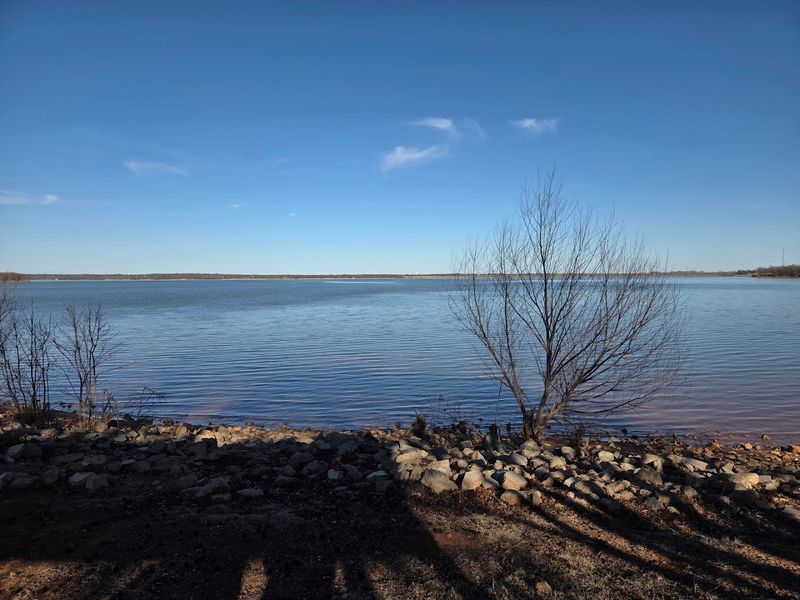
Lake Thunderbird covers roughly 6,070 acres when it is at full pool, making it one of the larger reservoirs in central Oklahoma. That size is impressive on a normal day, but it becomes even more apparent when the water drops.
With the lakebed partially exposed, you can suddenly see the full outline of the basin that the reservoir fills. The scale of the original valley becomes clear in a way that open water actually obscures.
Ridgelines, coves, and creek arms that blend together when submerged become distinct landforms again.
Standing on a high point near the park and looking out over a low lake is one of those perspective-shifting moments that stays with you. Oklahoma is not a state that many people associate with dramatic landscapes, but this view challenges that assumption.
The exposed basin also makes it easier to understand how the lake fills and drains. You can see which areas fill first after rain, where sediment accumulates, and where the deepest channels run through the original creek system.
Lake Thunderbird is a working reservoir, a recreation destination, and a living landscape all at once. Seeing it at low water is like reading the fine print of a place you thought you already knew.
