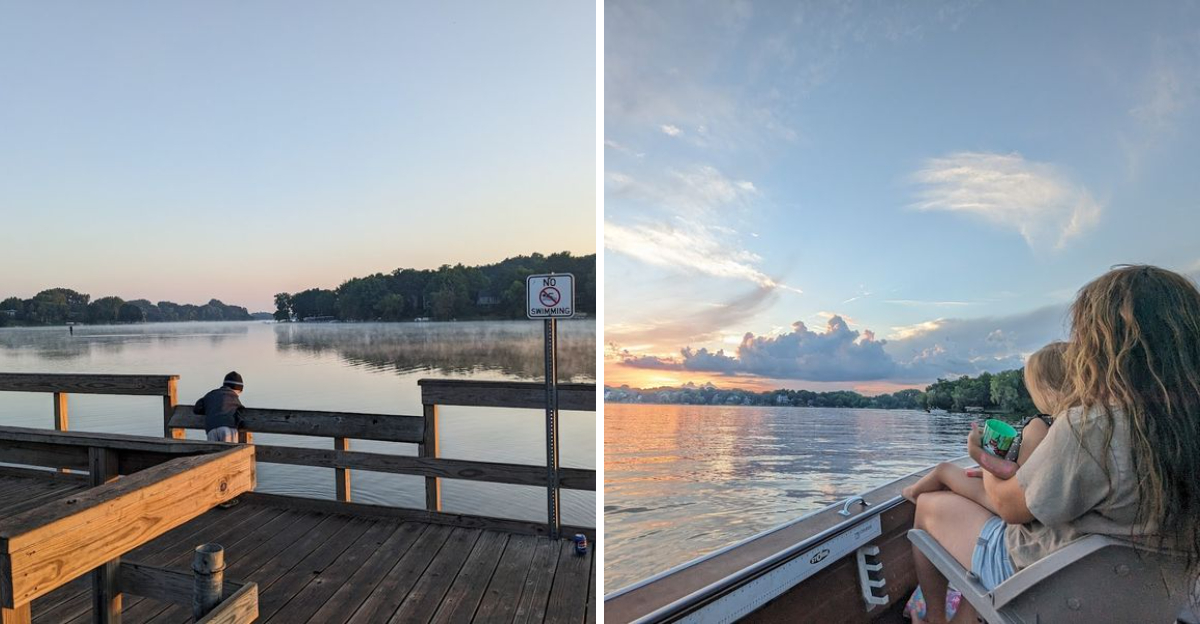
A peaceful lake with walking paths and families fishing off a small dock used to be the whole story, but not anymore. This quiet Minnesota lake has suddenly turned into the center of a very loud debate.
The argument started when developers proposed building luxury apartments and retail space right along the shoreline. Longtime residents say the project will destroy the lake’s character, block views, and bring too much traffic to quiet streets.
Supporters argue the town needs more housing and tax revenue, while pointing out that the lake would get new public access points and upgraded trails as part of the deal. Both sides have shown up at city council meetings with signs, speeches, and strong opinions.
Neighbors who used to wave at each other now argue on social media and the mayor has been asked to break tie votes more than once. Environmentalists worry about storm runoff hurting water quality while business owners want more customers walking through downtown.
Minnesota has seen this pattern before in other towns where growth clashes with preservation and new money pushes against old charm. The lake itself does not take sides and the water still ripples when the wind blows, but the silence around it has been replaced by something much louder.
The Lake That Hides in Plain Sight
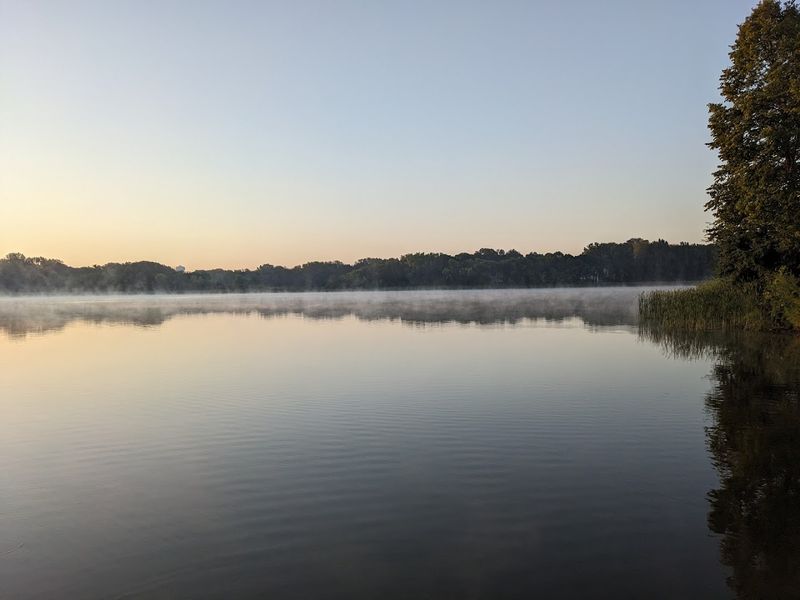
Not every lake announces itself. Fish Lake sits quietly inside Maple Grove, tucked behind neighborhoods and tree lines that make it easy to miss entirely if you do not know where to look.
Three Rivers Park District manages the surrounding Fish Lake Park, keeping the area clean and accessible. Parking is limited by design, which has historically kept crowds manageable.
That limited access has been part of its charm. Regulars describe it as a hidden gem, the kind of place you feel lucky to know about.
But as word spreads and more visitors arrive, that quiet reputation is starting to shift.
The lake covers a solid stretch of water, large enough for boating yet cozy enough that you can see across it clearly. Bass and sunfish are common catches here.
Families spread out on the beach while kayakers glide through the calmer bays. It is a complete little world, and more people want a piece of it every single season.
Access and Parking
Parking at Fish Lake Park has become the loudest flashpoint in the current debate. On peak summer weekends, cars fill the lot fast.
Some visitors arrive early just to guarantee a spot.
Three Rivers Park District restricts parking deliberately to protect the lake environment. But many community members argue that the restrictions feel unfair, especially for families driving in from nearby suburbs.
Some want expanded parking. Others want stricter limits to preserve the natural feel of the space.
Both sides have strong feelings, and both sides show up to public meetings ready to talk.
The tension is not really about parking alone. It is about who gets to use this lake and how often.
Longtime locals feel protective of a place they have visited for decades. Newer residents want equal access to a public resource.
That is a genuinely complicated conversation, and it does not have a simple answer that satisfies everyone at the same time.
A Beach That Families Cannot Stop Talking About
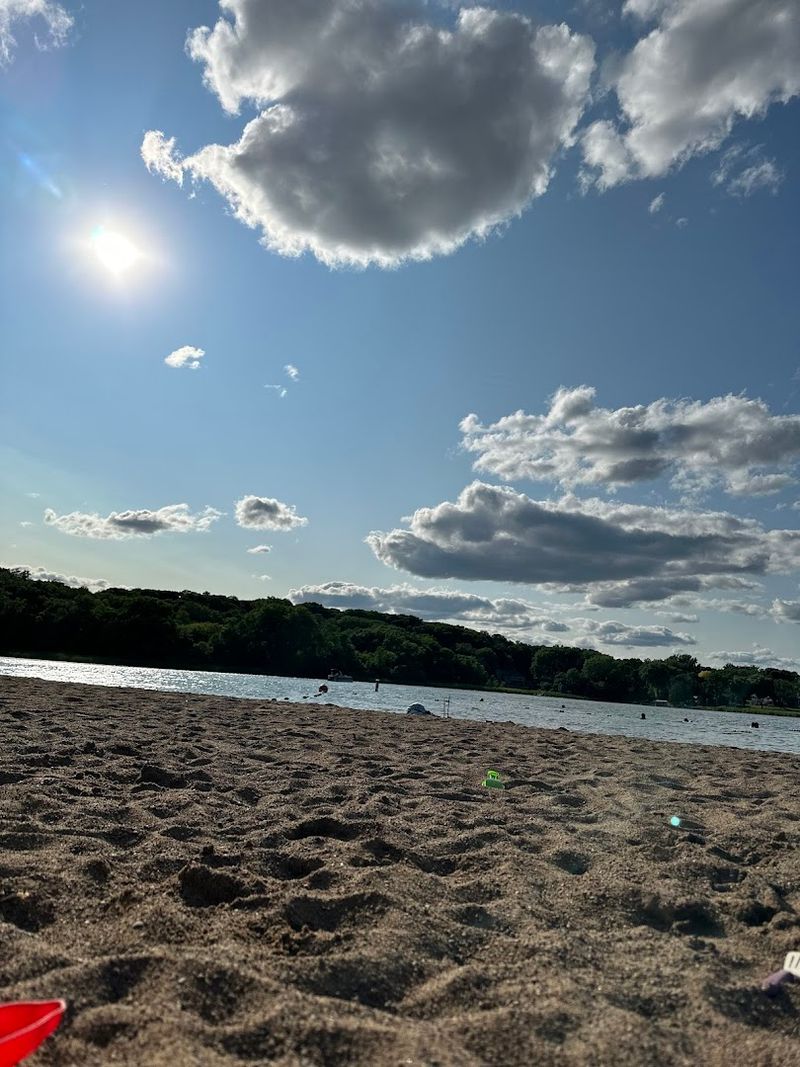
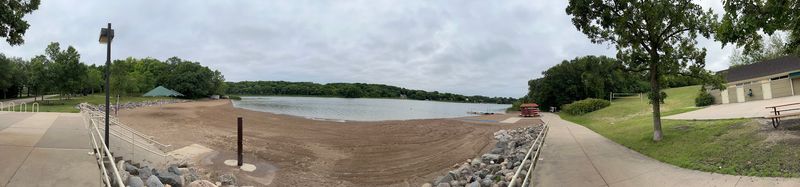
The beach at Fish Lake is a real draw. It is sandy, clean, and shallow enough near the edges to feel safe for younger kids.
Families return every summer like it is a standing appointment.
Sunscreen, towels, and squealing kids are the soundtrack here on a hot July afternoon. The water feels refreshing without being shockingly cold, which is always a bonus in Minnesota summers.
Parents appreciate the no-wake zone near the swimming area. It keeps motorboats at a distance and gives swimmers room to actually enjoy the water without worrying about wave action from passing boats.
The beach has become a community gathering spot in the best possible way. Neighbors run into each other here.
Kids make new friends at the water’s edge. But the beach’s popularity is also part of why debates about capacity and crowding have grown louder.
A beloved space can only hold so many people before the experience starts to change for everyone already there.
Fishing Culture at Fish Lake
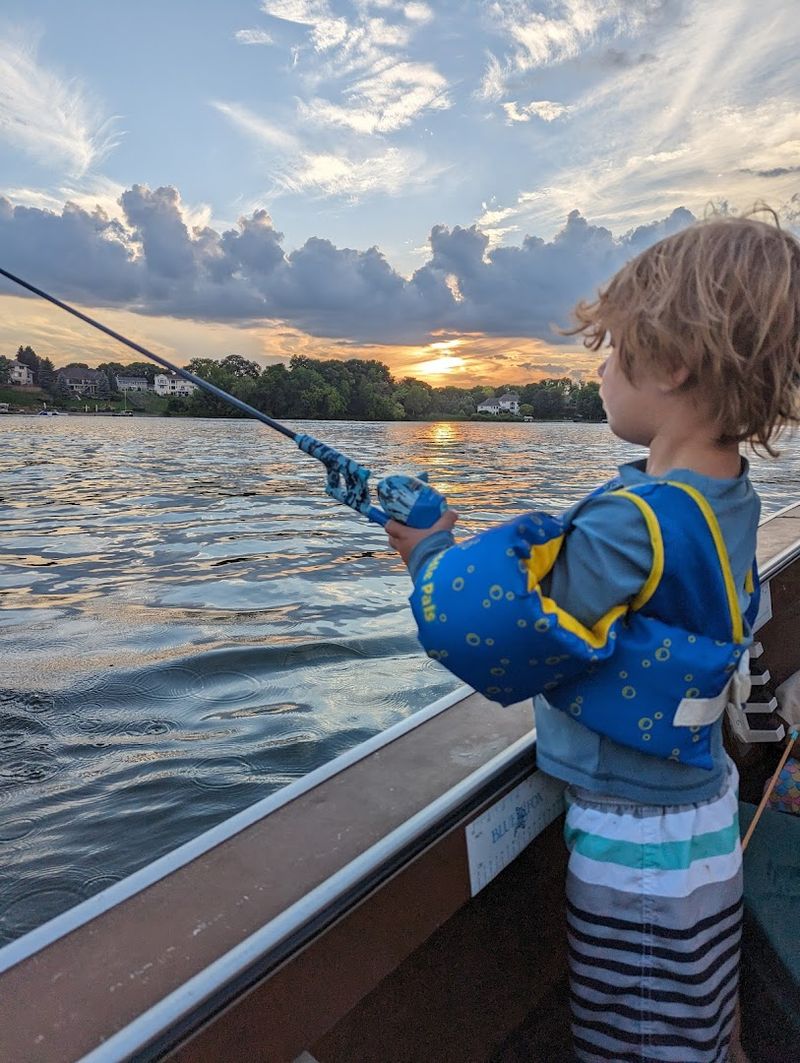
Fishing at Fish Lake has a loyal following. Anglers show up early, set up along the shore or head out on the water, and spend hours chasing bass and bluegill.
It feels unhurried in the best way.
The lake produces solid catches, especially in the bays where aquatic vegetation gives fish good cover. Sunfish are plentiful and fun to catch even on light tackle.
Fishing has been part of Fish Lake’s identity for as long as anyone can remember. Some families have been bringing their kids here to fish for multiple generations.
That kind of history creates a deep attachment to the place.
The debate around lake use directly affects anglers too. More boat traffic means more disturbance to feeding areas.
More swimmers near the shoreline can push fish deeper or further out. Fishermen have been vocal in community discussions, asking for clearer zoning of lake activities.
Their perspective adds another layer to an already complex conversation about how shared natural spaces should be managed and protected.
Kayaking and Paddle Boarding on Calm Water
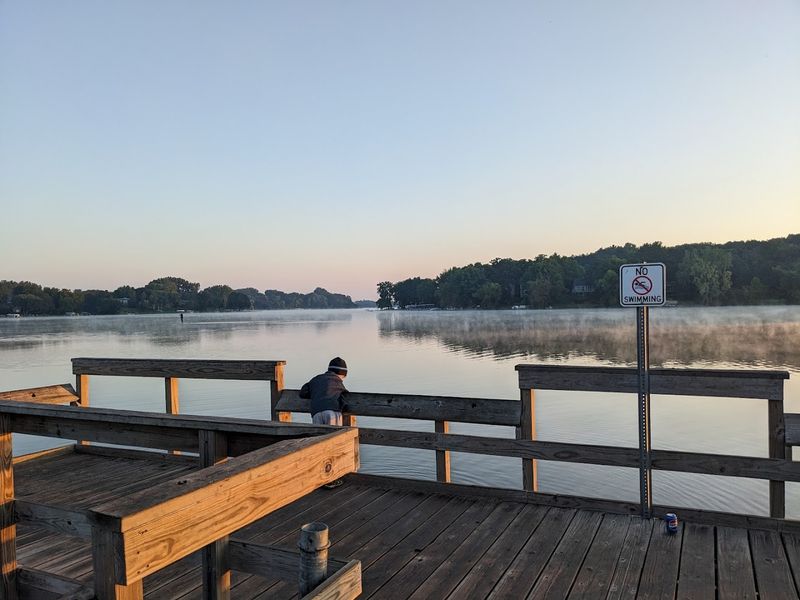
The bays at Fish Lake are genuinely good for paddling. Kayakers and paddleboarders tend to drift into the quieter sections, away from the boat launch area.
The water there stays calm and the scenery is lovely.
Morning paddles here have a meditative quality. The lake reflects the tree line.
Birds move through the reeds. You can hear your paddle dipping into the water more clearly than anything else around you.
Rental options have made this activity accessible to people who do not own their own gear. That has opened the lake up to a broader audience, which is genuinely wonderful for inclusion but has also added to the traffic on the water.
Paddlers sometimes find themselves navigating around motorboats in the main body of the lake, which can feel tense. Advocates for non-motorized recreation have been pushing for better designated zones.
Their argument is straightforward: quieter water sports deserve protected space too. That push is now a real part of the broader Fish Lake conversation happening in Maple Grove.
Boating and Water Sports
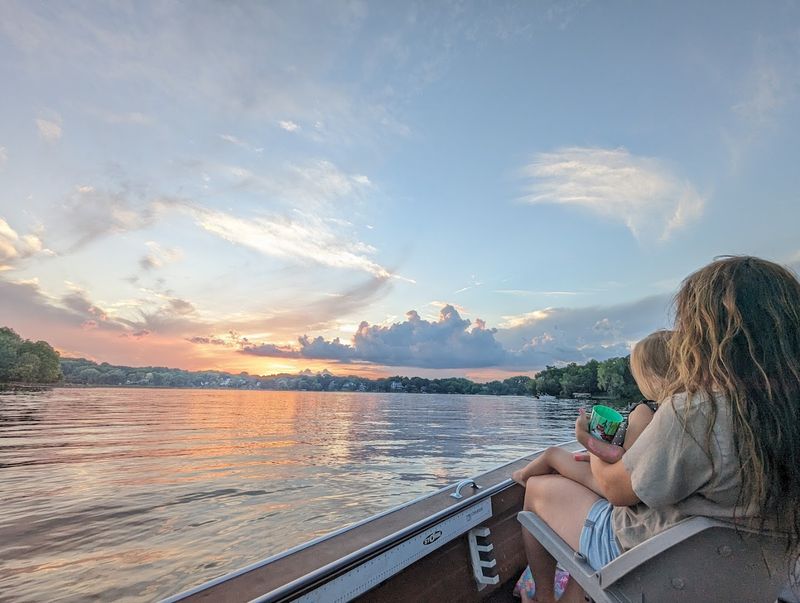
Fish Lake is big enough to support motorized boating and water sports. On warm weekends, the lake fills up fast with boats pulling tubers and skiers across the open water.
The energy is high and the fun is obvious.
But that energy is also at the center of some friction. Boating congestion during summer months has been noted by multiple visitors and park users.
When too many boats share the same stretch of water, it gets complicated quickly.
The no-wake zones help separate activity types to some degree. Still, the main body of the lake can feel busy during peak hours on a Saturday afternoon.
Boaters argue they have just as much right to use the lake as anyone else, and that is absolutely true. The challenge is that the lake has a fixed size.
More users mean more pressure on the same water. Finding a management approach that works for boaters, swimmers, paddlers, and fishermen at the same time is the core puzzle that Maple Grove is actively trying to solve right now.
The Trails Around the Lake That Deserve More Credit
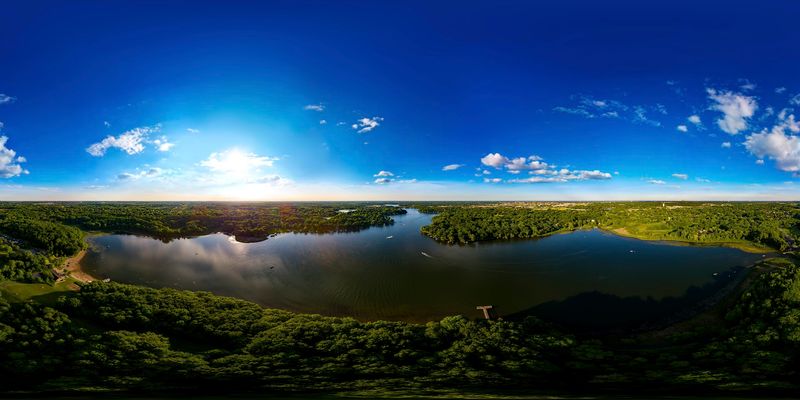
Most people come to Fish Lake for the water, but the trails around the park are genuinely worth your time. They wind through wooded sections and open areas, giving you different views of the lake as you move.
Runners use these paths early in the morning when the park is quiet. Walkers come in the evening to catch the light changing on the water.
The trail system is well-maintained and easy to navigate.
Three Rivers Park District has invested in keeping these paths accessible and clear. Signs are helpful.
The terrain is not overly challenging, making it a comfortable outing for most fitness levels.
The trails offer something the beach and water cannot: solitude. Even on a busy summer day, you can step onto a trail and find yourself alone with the trees and birdsong within minutes.
That contrast is part of what makes Fish Lake Park feel like more than just a swimming hole. It is a layered outdoor experience, and the trails are an underappreciated piece of that whole picture.
Sunset Views That Stop You Cold
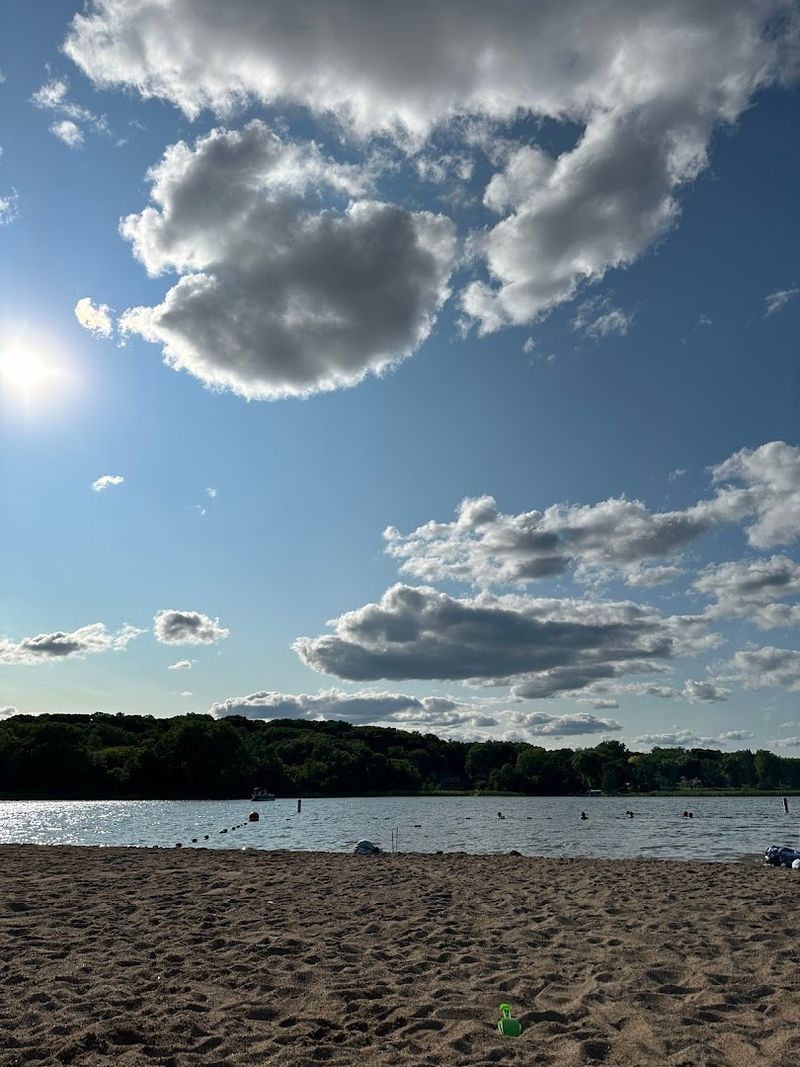
There is a reason people specifically mention sunsets when they talk about Fish Lake. The western sky opens up beautifully from the shoreline, and the water catches every color that comes with it.
I stood at the edge of the lake one evening as the sky turned orange and pink, and I genuinely forgot what I had been thinking about before that moment. It is that kind of view.
Families gather near the beach in the early evening just to watch it happen. Some bring blankets.
Some just sit on the grass and look. It does not require any gear or planning.
Sunsets here feel like a shared community ritual. Strangers nod at each other.
Someone points out a particularly vivid band of color. For a few minutes, everyone is just watching the same sky over the same lake.
That simple, repeatable beauty is part of why people feel so strongly about protecting this place from overuse. Some things are worth being a little protective of.
Wildlife and Nature
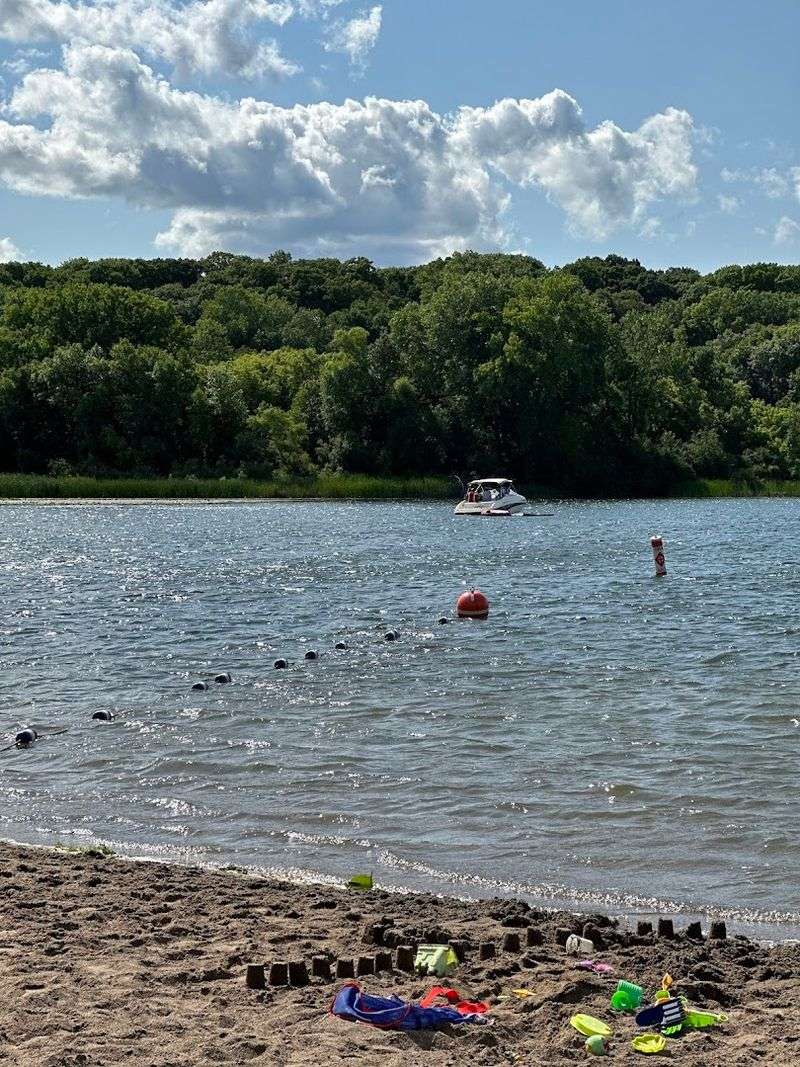
Fish Lake is not just a recreation spot. It is a living ecosystem with real wildlife that depends on the health of the water and surrounding land.
Great blue herons are a common sight near the reeds.
Turtles sun themselves on logs near the quieter bays. Ducks and geese are year-round residents.
In the early morning, the lake feels more like a nature preserve than a suburban park.
The health of that ecosystem is part of what makes the current debate so meaningful. More foot traffic, more boat fuel, and more shoreline disturbance all have real effects on the plants and animals that call this place home.
Environmental advocates have joined the conversation around Fish Lake’s future, adding a voice that goes beyond recreation preferences. Their concern is about long-term sustainability.
A lake that gets loved too hard can start to show the strain. Protecting the wildlife habitat while keeping the park open and enjoyable for people is a balance that requires honest, ongoing community attention and smart management decisions.
