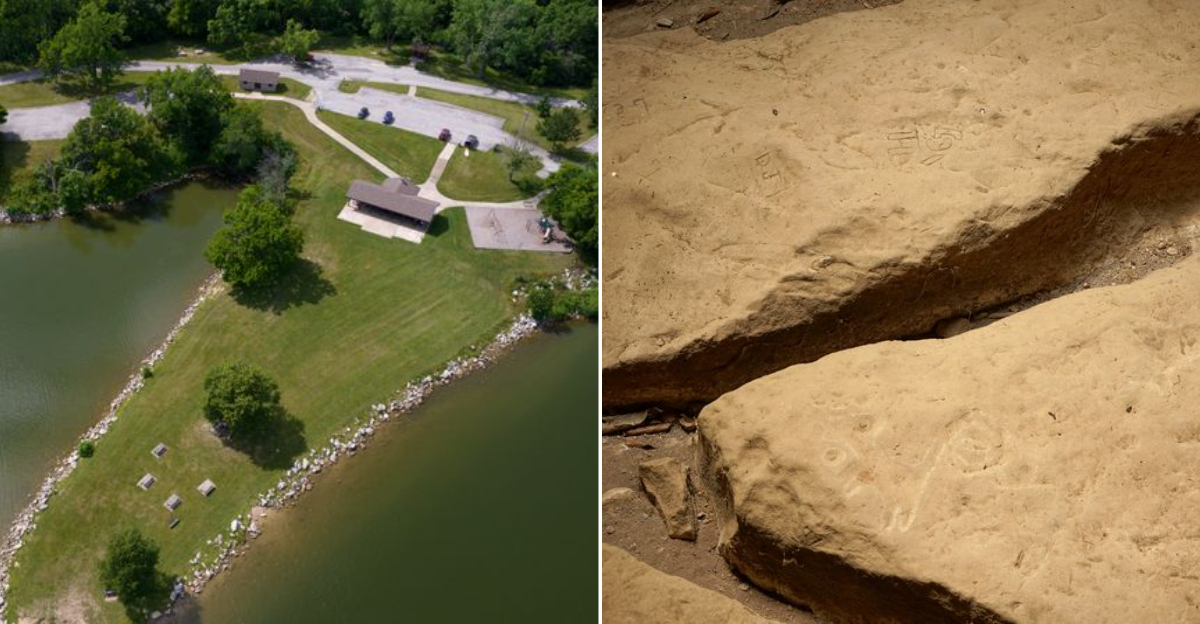
The carvings have been there for over a thousand years, waiting for someone to notice them again. A quiet lake in Missouri holds ancient messages etched into stone, left by people who lived here long before the first roads were built.
The petroglyphs are protected under a shelter, and you can walk right up to them and look through the glass. Some symbols are clear, others are worn and faded.
The park around the lake is peaceful, and the history is right there in front of you. It is not a crowded attraction or a polished museum.
It is a real place where the past feels close enough to touch. A stop here is a chance to see something that has survived centuries of weather and time. You just have to show up and look.
The Lake That Changes Once You Know
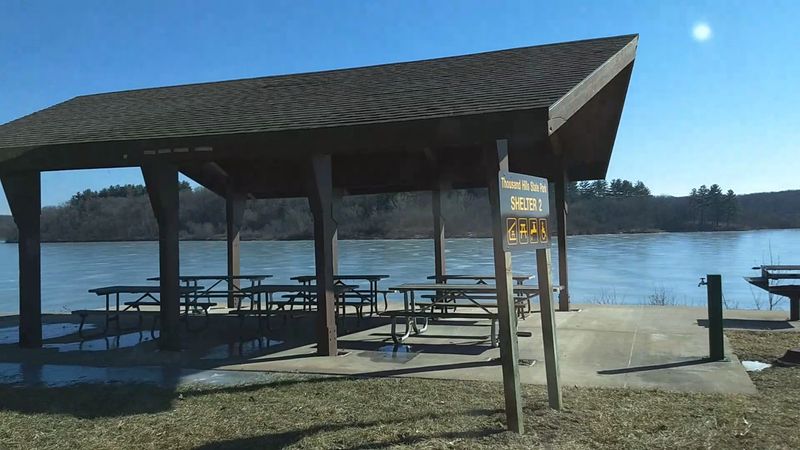
The first thing you notice here is how easy the lake feels on your nerves, like it has already decided you can relax before you even find a place to stand. Forest Lake sits inside Thousand Hills State Park with this calm, tucked-in mood that makes the whole corner of Missouri feel farther away from everyday noise than it really is.
I love places that do not beg for attention, and this one absolutely does not.
Then somebody tells you there are ancient carvings nearby, and suddenly every rocky edge and tree-shadowed path starts to feel charged with a little more meaning. You stop seeing it as just a pretty shoreline and start feeling the age of the land under everything, which honestly changes the whole visit in the best way.
It is still peaceful, but now it is peaceful with a pulse.
That mix is what makes the park stick with you after you leave, because the lake gives you the slow, quiet part while the history keeps your mind awake. If you are the kind of traveler who likes a place to reveal itself in layers instead of all at once, this is exactly that kind of day.
You come for the water, and stay for the feeling that something older is still speaking nearby.
Where You Actually Need To Go
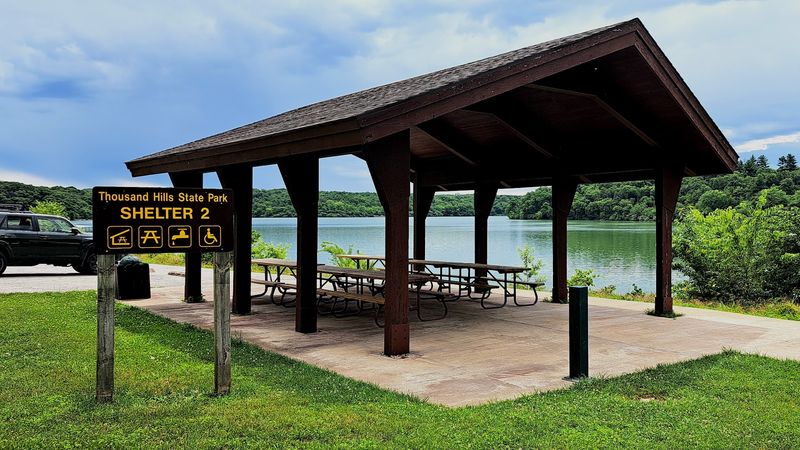
Let me make this easy, because this is one of those places you will want to plug in before you start driving around northeast Missouri. Thousand Hills State Park is at 20431 State Highway 157, Kirksville, MO 63501, and once you turn in, the whole mood shifts from everyday errands to lake air and trees.
It does not feel flashy when you arrive, which is part of why it works so well.
Kirksville gives you a useful anchor point, but the park itself feels nicely removed from town once you are inside. That little bit of separation matters, because the quiet is part of the experience and it lets the lake, woods, and historic areas breathe on their own terms.
You are not racing from attraction to attraction here, and that is honestly a relief.
I would treat this as a place to settle into rather than speed through, especially if you want the petroglyph area to land the way it should. Give yourself room to wander, look around, and let the setting do its thing before you start checking off stops.
This park in Missouri works best when you stop expecting a big dramatic reveal and just let it unfold naturally around you.
The Ancient Marks In The Stone
Honestly, standing near the petroglyphs is the moment when the whole trip stops being casual and gets quietly serious in a way I really liked. These carvings were made by Native people long ago, and you can feel that weight without anybody needing to dramatize it for you.
The stone does enough on its own.
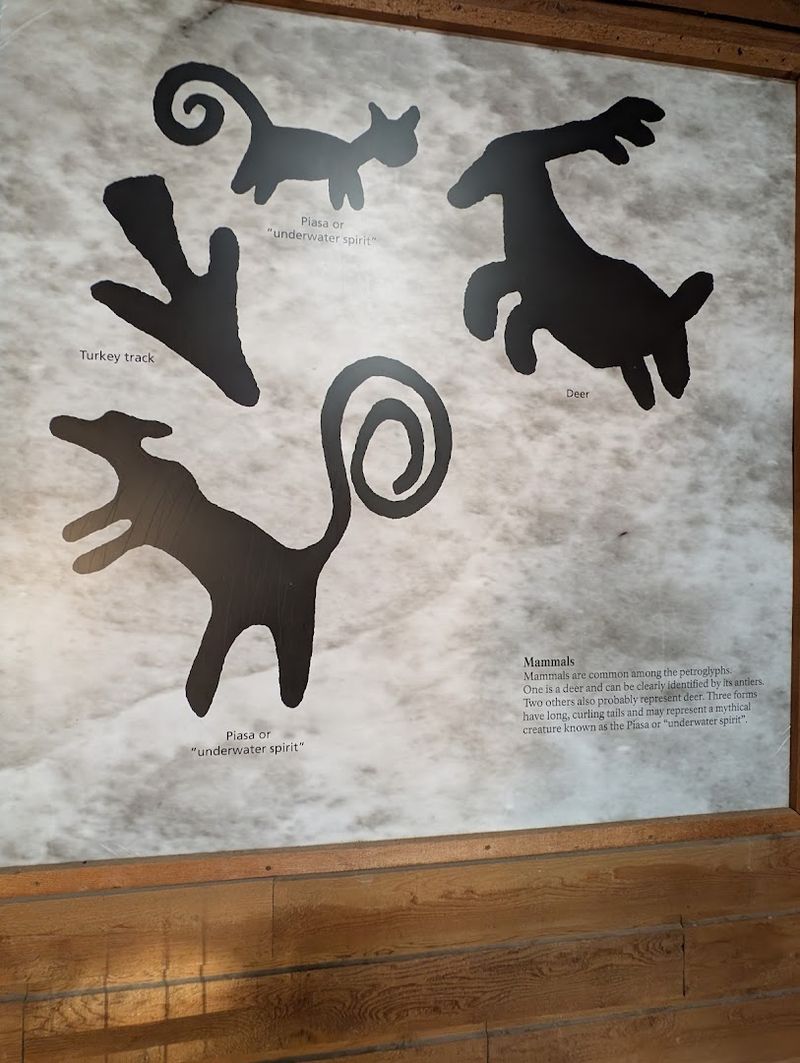
You start picking out shapes and lines, and the strange part is how immediate they feel even after so much time has passed. Deer, arrows, and other forms have been described here, and seeing them in person makes history stop acting like a school subject and start feeling like a human message that simply outlasted its makers.
That is the part that stayed with me.
I think what moved me most was how the site asks for your attention without demanding it, because nothing about it is loud or overproduced. You just stand there in the Missouri air, listening to leaves move and looking at marks pressed into sandstone by hands you will never know, and that quiet does a lot of work.
If you ever want a reminder that landscapes can hold memory in plain sight, this is a very real one, and it is worth slowing down long enough to feel it.
The Shelter That Lets You Really See
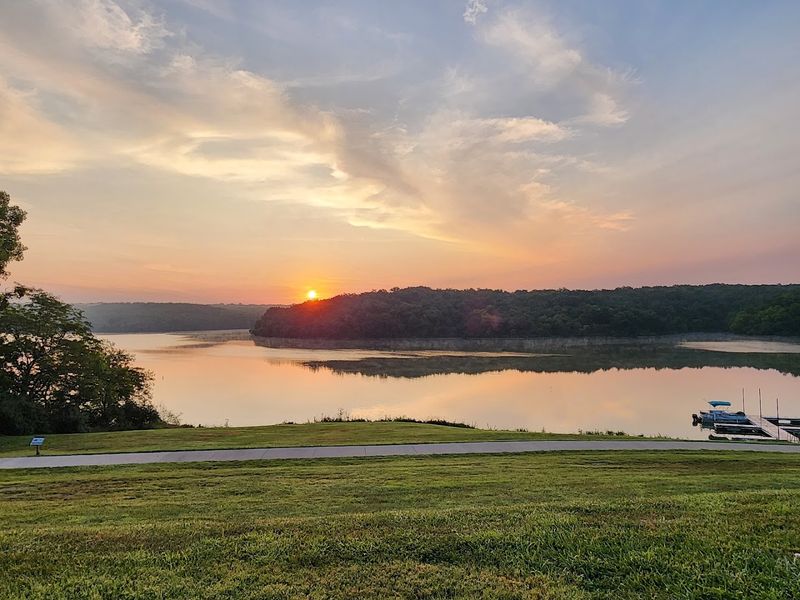
What I appreciated right away was that the park does not leave you squinting at a rock and guessing whether you are looking at history or just weathered stone. The Petroglyph Shelter gives the carvings a protected setting, and that simple bit of structure makes it much easier to focus on what is actually there.
You can look closely without the whole thing feeling inaccessible or confusing.
There is something surprisingly intimate about the shelter too, because it narrows your attention and cuts out a little of the surrounding distraction. Instead of glancing and moving on, you end up lingering, tracing lines with your eyes and trying to imagine the choices behind each mark.
It becomes less about checking off a sight and more about sitting with a question that does not have a tidy answer.
I also liked that the shelter does not turn the site into a spectacle, which would have felt wrong for a place carrying this much cultural meaning. It gives the carvings a respectful frame while still letting the land around them stay present, and that balance matters.
You leave understanding a little more than when you arrived, but also aware that some of the power comes from what remains unknown, and that is a rare feeling at a historic stop.
The Signs That Make The Past Click
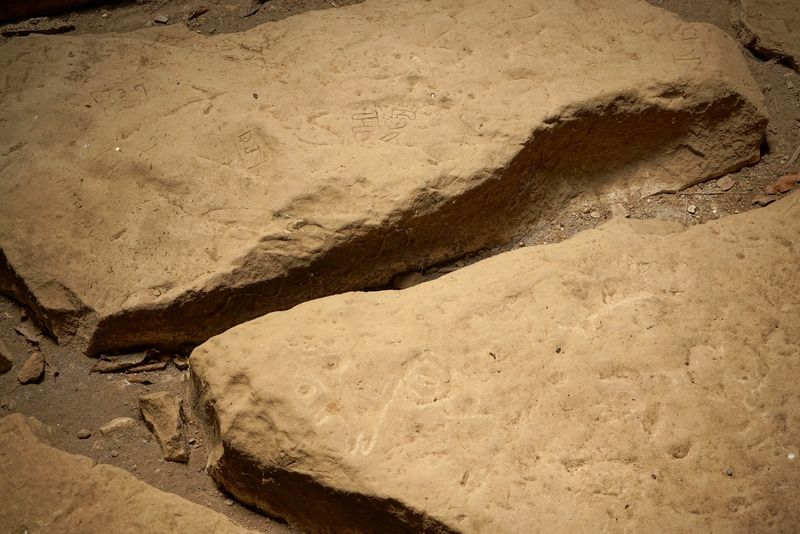
You know how interpretive signs can sometimes feel like homework taped to a railing? These are not like that, and I was grateful, because the petroglyph area deserves context that helps instead of getting in the way.
The signs near the shelter give you enough history to understand why the carvings matter without flattening the mystery that makes them so compelling.
That balance is harder to pull off than it sounds, because too little information leaves people detached, and too much can make the whole thing feel overexplained. Here, the background works like a steady voice beside you, pointing out significance, cultural importance, and the care this site requires.
It lets you build a fuller picture while still making space for your own reaction.
I found myself reading a section, looking back at the stone, and then reading again, which is usually a good sign that a place has been interpreted well. The site is recognized for its historical importance, and knowing that adds another layer without making the visit feel formal or stiff.
If you travel for those moments when a place suddenly sharpens into focus and you realize you are standing in a story much older than your own, this part of the park does that beautifully.
The Water Part Is Genuinely Good
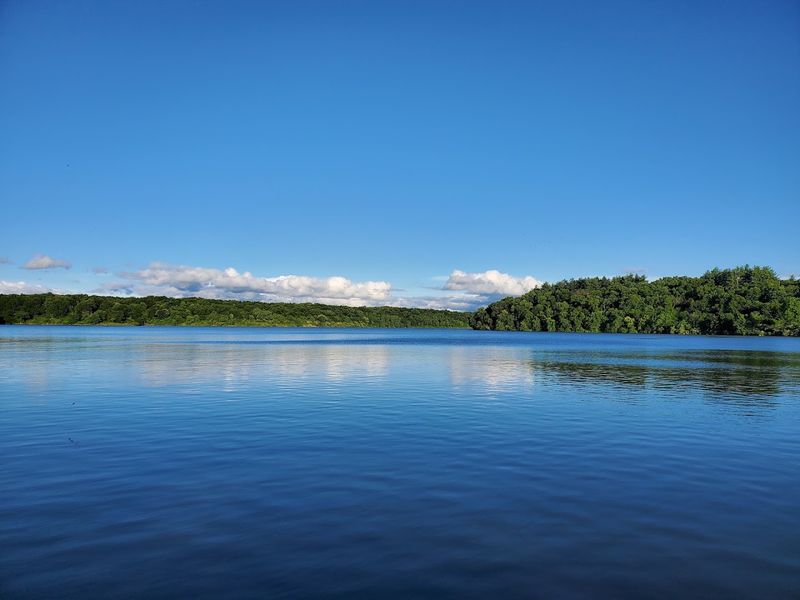
After all that history, it is kind of nice that the lake itself is not just background scenery pretending to be useful. Forest Lake is genuinely enjoyable to spend time around, whether you want to fish, swim, paddle, or just sit somewhere shady and watch the light change on the water.
It keeps the trip from feeling too solemn, which I think makes the historic side land even better.
The shoreline curves through the park in a way that gives you lots of different moods, from open water views to quieter edges where everything feels softened by trees. I like that you can let the day drift here without getting bored, because the lake invites activity without pushing you into constant motion.
Some places feel like they need an itinerary, but this one lets you breathe.
That easy rhythm is part of why Thousand Hills works so well for a full day or longer, especially if you are traveling with someone who wants nature but not a punishing schedule. You can spend a thoughtful morning with the petroglyphs, then shift into a slower lakeside afternoon that feels almost restorative.
Missouri has plenty of pretty water, sure, but this one carries an extra layer of meaning that keeps it from blending into the usual memory of boats and shoreline photos.
The Trails Feel Like A Reset Button
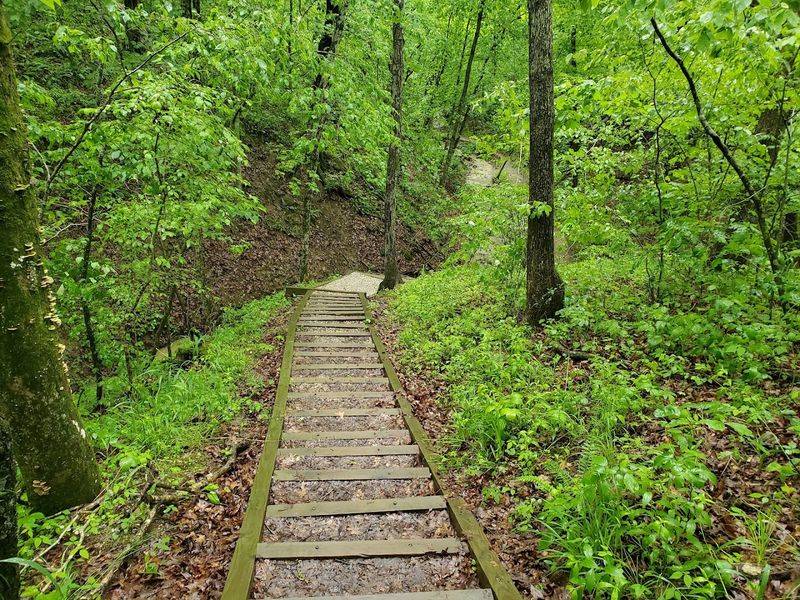
If you need to walk after sitting in a car or standing still with your thoughts at the petroglyphs, the trails here are a really nice shift. They move through woods and along parts of the lake with that soft, rolling Missouri landscape that makes you loosen your shoulders without even noticing it.
Nothing feels forced or overly manicured, which I mean as a compliment.
I always like a park more when the paths feel connected to the place instead of added on as an obligation, and that is the case here. The trails let you keep the same quiet mood you get near the water while giving you a different angle on the hills, trees, and shoreline.
You can hear birds, catch glimpses of the lake through branches, and settle into that simple walking rhythm that makes conversations better.
Even if you are not setting out to cover a lot of ground, it is worth taking at least one trail just to feel the park open up around you. The history may be what first pulls you in, but the walking helps the whole day feel rounded and lived in rather than observed from a distance.
By the time you loop back, you are not just visiting Thousand Hills anymore, you have actually moved through it, and that makes a difference.
Why This Place Stays With You
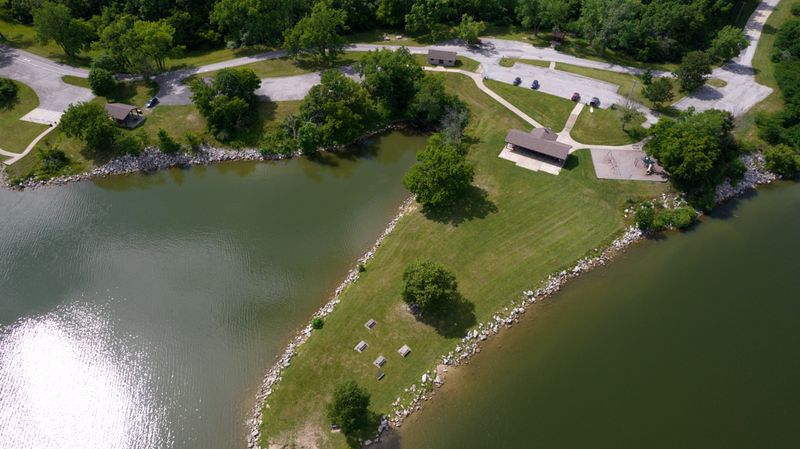
By the time I left, what stuck with me was not one single feature so much as the way everything at Thousand Hills folds together. You get the calm of a lake day, the texture of wooded trails, and the strange privilege of standing near carvings that have outlasted more lifetimes than any of us can really picture.
That combination gives the park a depth that is easy to feel and hard to summarize quickly.
I think a lot of travel spots show you exactly what they are in the first five minutes, and then the rest is just confirmation. This one does the opposite, because it keeps unfolding as you move through it, and each part quietly changes the meaning of the next.
The petroglyphs make the shoreline feel older, the lake softens the seriousness, and the whole visit ends up feeling more personal than you expected.
If you are wondering whether it is worth making the drive, I would say yes, especially if you like places that leave room for thought instead of filling every second with noise. You do not need a huge agenda here, just a little curiosity and enough time to let the setting work on you.
Thousand Hills is the kind of Missouri place you bring up later in conversation because you are still trying to explain why it felt so different.
