Some places hide their stories behind a quiet gravel road and a stand of tall trees. You pull in expecting a nice picnic spot, and you leave feeling like you just walked through a family photo album that belongs to all of West Virginia.
Long before festival crowds and wedding guests found it, this mountaintop camp was where Black families spread out blankets, cooked big meals, and watched their kids learn to swim when few other places would welcome them. Pack a sandwich and some curiosity, because this one sticks with you.
A Mountaintop Camp With a Big Story
Up in the high country of southern West Virginia, tucked among thick hardwood forest, sits a cluster of old buildings that most drivers would pass without a second glance. That would be a mistake.
The grounds hold one of the most meaningful chapters in Mountain State history.
Camp Washington-Carver opened in 1942 as the first 4-H camp for African American youth in the entire United States. For decades, it served as a summer home for Black children, a gathering place for church groups and scouts, and a picnic ground where whole families came together on warm weekends.
Today the camp is a state-run cultural arts center and a historic landmark. Visitors come for music festivals, weddings, family reunions, and simple quiet walks across the lawns.
Some folks stop for just a few minutes and end up staying an hour, reading signs and peeking at the log work.
Over the next sections, we will walk through how the camp came to be, what makes its buildings so special, and what you can expect if you visit. Think of it as a front porch conversation about a place that reportedly shaped thousands of young lives across West Virginia.
Forty-Four Camps and Not One for Black Children
Picture West Virginia in the late 1920s. According to historical accounts, 44 counties had 4-H camps for white children, yet there was not a single one for African American youth.
That gap did not sit well with community leaders.
Dr. John W. Davis, then president of West Virginia State College, became one of the strongest voices pushing for change.
He and others argued that Black children deserved the same chance to learn farming, homemaking, leadership, and outdoor skills in a real camp setting.
Their persistence paid off. The West Virginia legislature officially established the camp in 1937, which opened the door for construction to begin.
It was a hard-won victory during a time when segregation shaped nearly every part of daily life.
Many older West Virginians still remember how much these spaces mattered. A camp was more than cabins and campfires.
It was proof that a community’s children counted, and that someone in Charleston had listened.
The name chosen honored two famous African American educators, Booker T. Washington and George Washington Carver.
Both men stood for learning, hard work, and practical skills, which fit the 4-H spirit beautifully. Fittingly, Washington spent his boyhood in the Kanawha Valley.
Depression-Era Hands and Hard Work
Great things often come from tough times. Construction of the camp happened during the Great Depression era, when the federal government put people to work building roads, parks, and public buildings across the country.
Workers from the Works Progress Administration and the Civilian Conservation Corps helped raise the camp. Historical sources also note that prison laborers took part in the effort.
Together they cleared land, cut timber, and shaped the buildings that still stand today.
You can almost feel that sweat and patience when you look at the log walls. Every notch and joint was done by hand, long before power tools made the job easier.
Folks who grew up around CCC projects in places like Babcock or Watoga will recognize the same sturdy style.
The camp was first called The West Virginia Negro 4-H Camp. Locals, though, simply called it Clifftop, after the little community nearby.
That nickname stuck for generations.
On July 26, 1942, the camp held its grand dedication. It was a proud day for Black West Virginians, who finally had a place built just for their children.
The doors opened to campers, and a whole new tradition of summer memories began.
Summer Days in the Busy 1950s
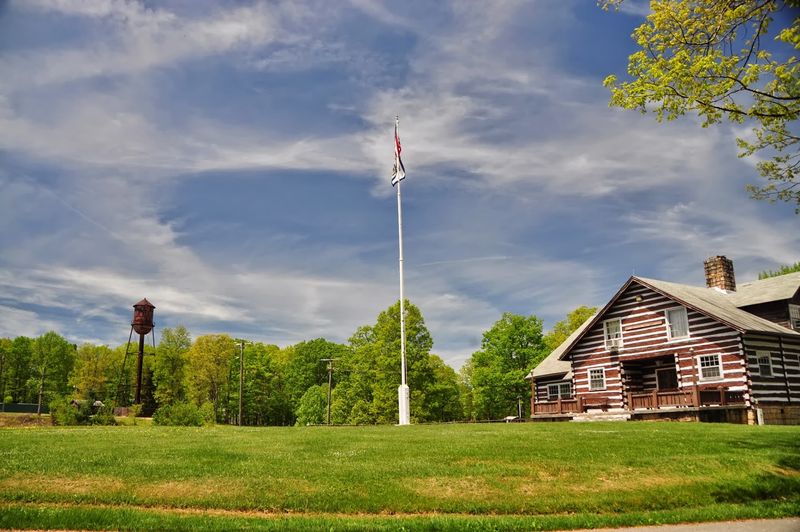
Close your eyes and imagine around 1,600 kids arriving each year. The 1950s were reportedly the camp’s busiest decade, and the days were packed from sunrise to lights out.
Mornings started with an early breakfast, then everyone pitched in on cabin cleaning. Nobody got out of chores, and that was part of the lesson.
After that came a whirlwind of activities designed to build both mind and body.
Children studied nature in the surrounding woods, sang, acted in plays, and worked on arts and crafts. Instructors also taught practical skills like swimming, first aid, basic healthcare, and nutrition.
Those lessons followed many campers home and lasted a lifetime.
Afternoons belonged to fun. Swimming was the favorite by far, and baseball games filled the fields with cheering and good-natured trash talk.
You can just hear the crack of the bat echoing off the hills.
After supper came free time, then evening plays, vespers, and the campfire. Ask anyone who sat around a camp fire as a kid, and they will tell you that is where the real friendships formed.
Plenty of grandparents in West Virginia today may still hum the songs they learned here.
Picnics, Reunions, and Sunday Gatherings
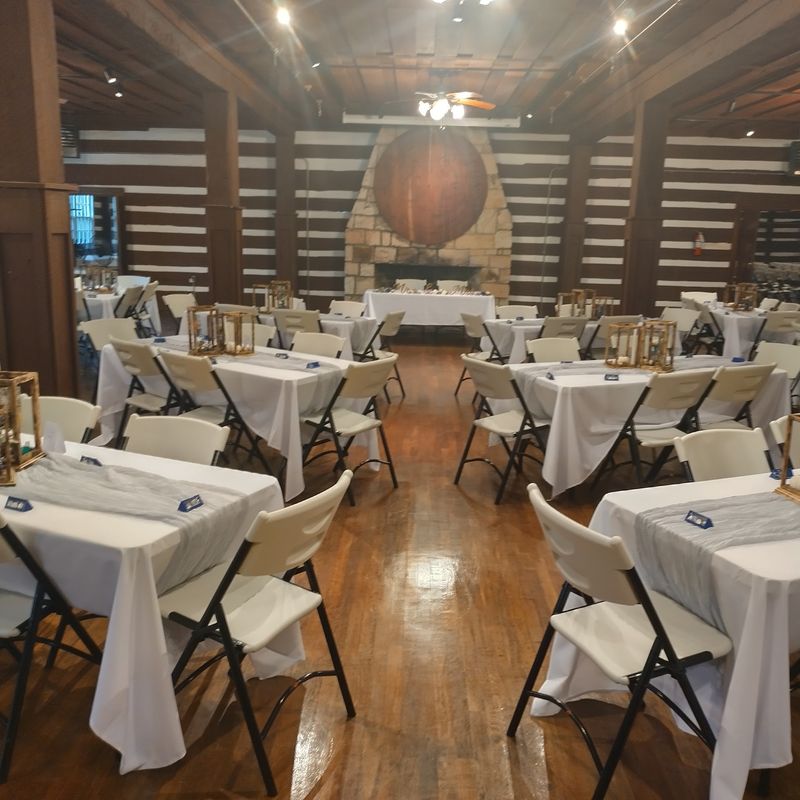
Here is the heart of the story. During segregation, Black families in West Virginia were often shut out of public pools, parks, and picnic grounds.
Camp Washington-Carver became one of the few places where they could relax without worry.
The dining hall, the swimming pool, and the wide lawns were frequently rented for private gatherings. Families hauled in coolers, fried chicken, potato salad, and homemade pies.
Kids splashed in the pool while the grown-ups caught up on news from Beckley, Bluefield, and beyond.
Weddings and big reunions took place here too. Generations returned year after year, and that tradition never fully faded.
One visitor mentions their family still holds a reunion at the camp every single year.
Think about what that means. Grandmothers who picnicked here as girls may now watch their great-grandchildren run across the same grass.
Few places in the state can claim that kind of unbroken thread.
If your own family has a story tied to Clifftop, you are part of something special. These gatherings reportedly helped keep communities close through some very hard decades, and they remind us that a shared meal can be a powerful thing.
Scouts, Church Camps, and Football Practice
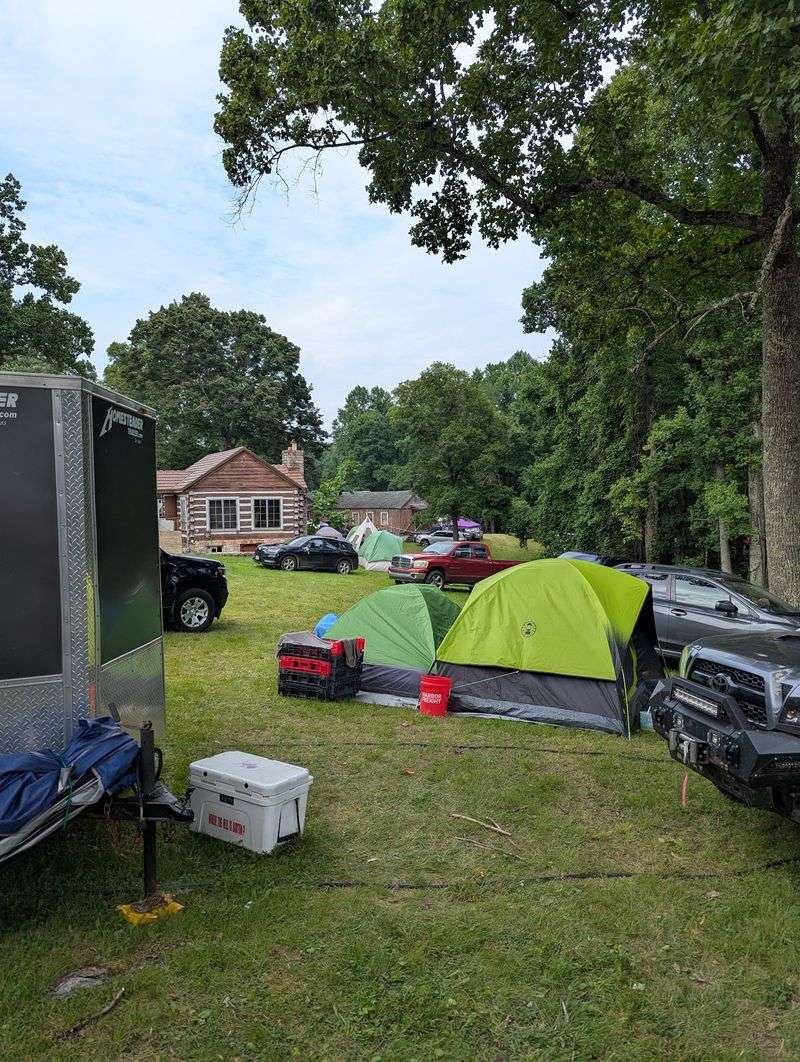
Not every group came for 4-H. Over the years, the camp turned into a true community crossroads for Black West Virginians of all ages and interests.
Boy Scout and Girl Scout troops held encampments here, learning knots, leadership, and outdoor skills. Church camps brought fellowship and worship to the woods.
There were even special mining encampments and home economics encampments that served the needs of working families.
Sports fans might enjoy this detail. Black schools used the grounds for pre-season band and football conditioning.
Imagine drum lines warming up while linemen ran drills on the field, all with mountain air filling their lungs.
The camp also served as an off-campus learning center for West Virginia State College until 1979. Students and faculty stretched their studies beyond the classroom walls, using the forests and buildings as a living lab.
All of this activity made the camp busy nearly year-round. It was a place where a young person could grow up through stages, maybe a 4-H camper first, then a scout, then a band member, and finally a parent bringing their own kids to a family picnic.
That kind of layered history is rare.
The Great Chestnut Lodge
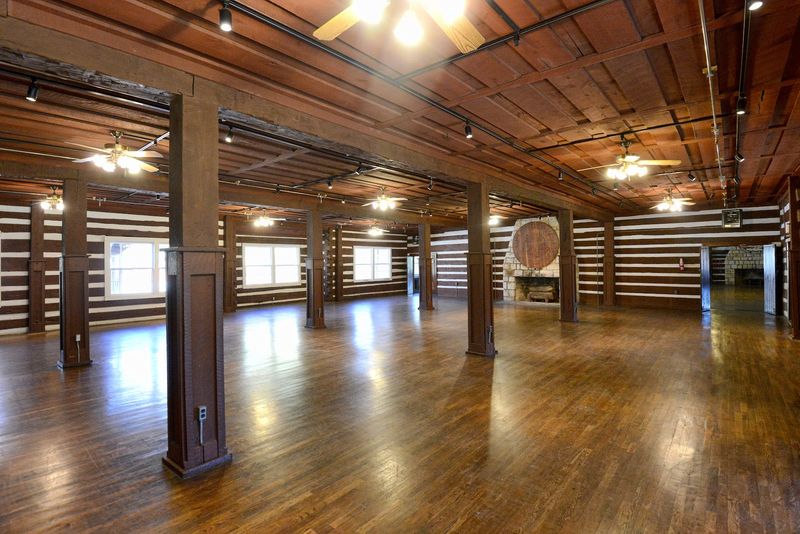
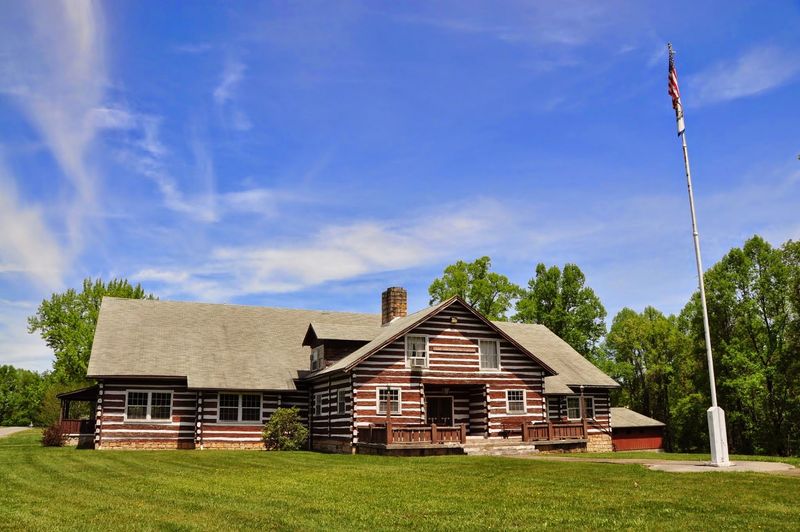
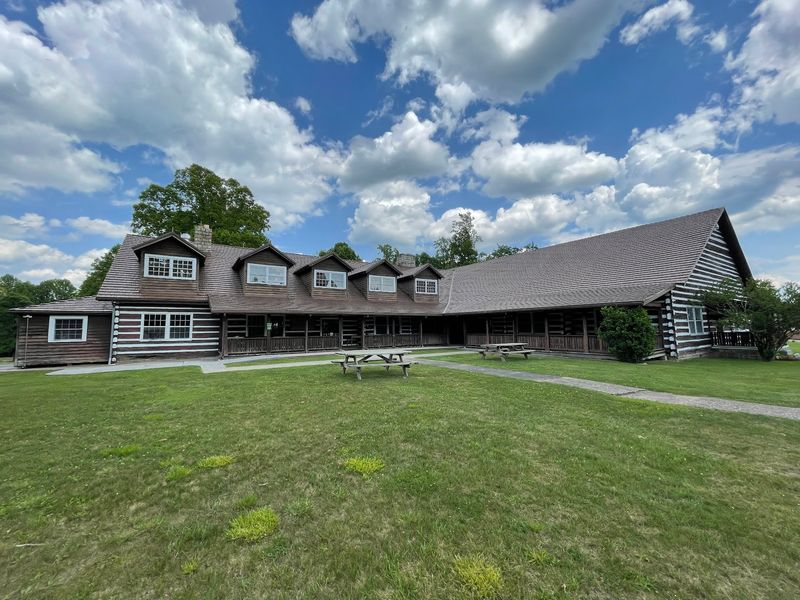
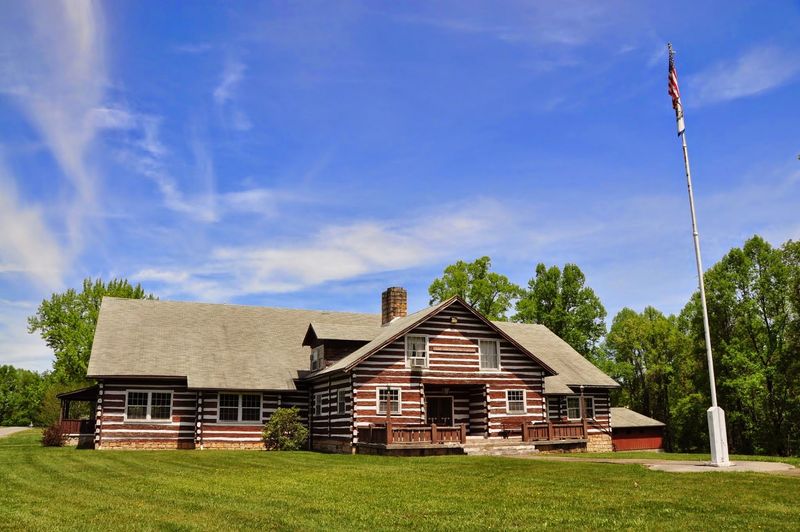
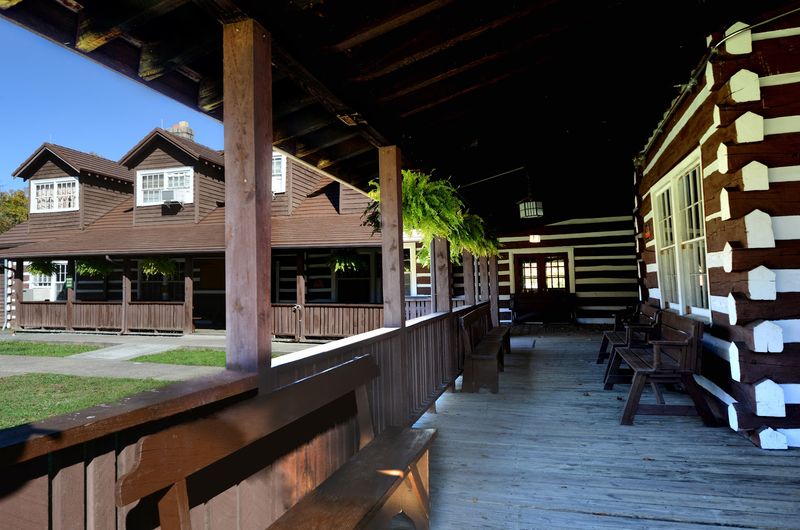
Wood lovers, prepare to be amazed. The star of the camp is the Great Chestnut Lodge, built between 1941 and 1942.
It is said to be the largest log structure made entirely of chestnut in West Virginia, and one of the largest in the nation. Some visitors go further and call it the largest chestnut building in the country.
Why does that matter? American chestnut trees once covered Appalachian ridges, but a blight wiped most of them out in the early 1900s.
Finding this much chestnut timber in one building today feels like stepping into a lost forest.
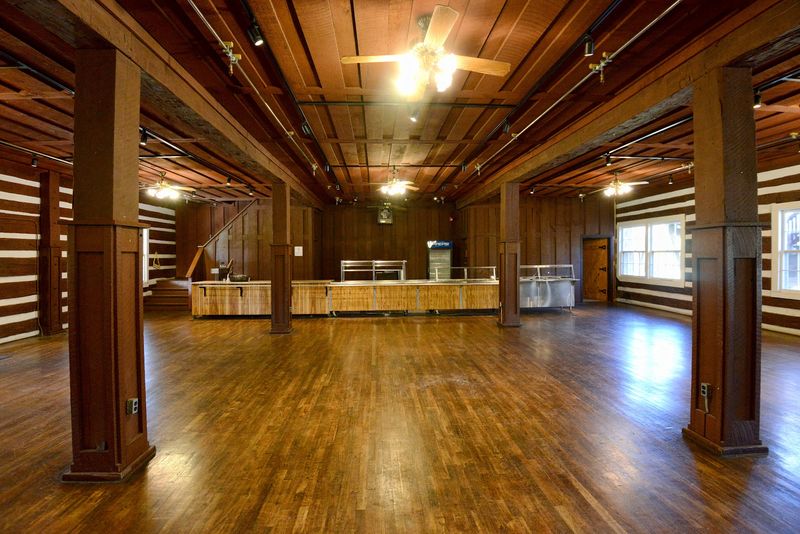
Inside, the lodge held the assembly hall, the dining hall, and the kitchen. It was the true center of camp life, where meals were shared and programs were held.
The dining hall is still roomy. A wedding guest noted it could easily hold about 100 people in comfort, and others describe the building as lively and well preserved.
Stand inside for a moment and look up at those beams. You get a real sense of the care and skill that went into every log, and why folks drive a long way just to see it.
Cottage, Water Tower, and a Quiet Pond
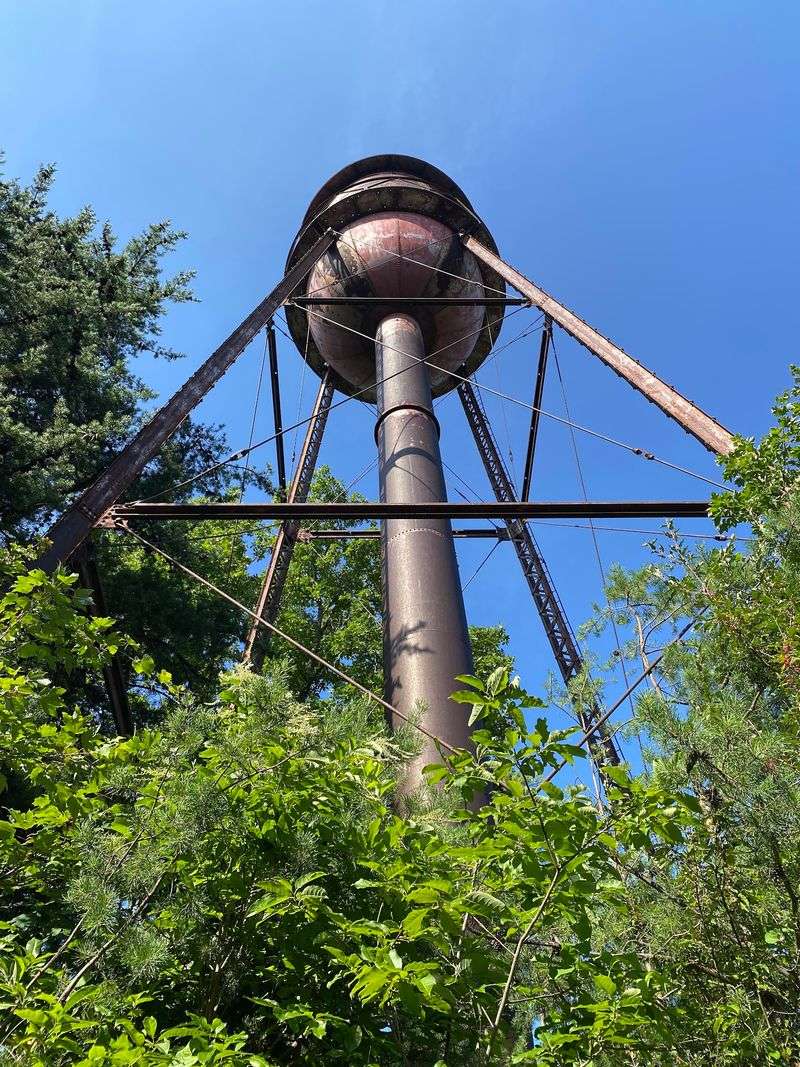
Wander past the lodge and the smaller treasures start to appear. Each one adds a piece to the puzzle of camp life in the 1940s.
There is a charming log cottage built in 1940, plus two frame dormitories from 1942 where campers once slept. A water tower dating to 1940 still stands, along with a small pond from the same year.
The swimming pool and bathhouse round out the historic group.
Together, these buildings form a historic district that earned a place on the National Register of Historic Places in 1980. That honor recognizes both the architecture and the camp’s deep importance to African American history in West Virginia.
The grounds themselves get plenty of praise. Visitors describe them as well maintained, with facilities that suit their purpose just fine.
One guest called it a gorgeous spot to let a dog stretch its legs, and the staff has said there is ample room to roam.
Bring comfortable shoes and take your time. The pond is a peaceful spot to sit, and the old water tower makes a fine photo against a blue sky.
Little details like these turn a quick stop into a full afternoon.
Fiddles Under the Trees
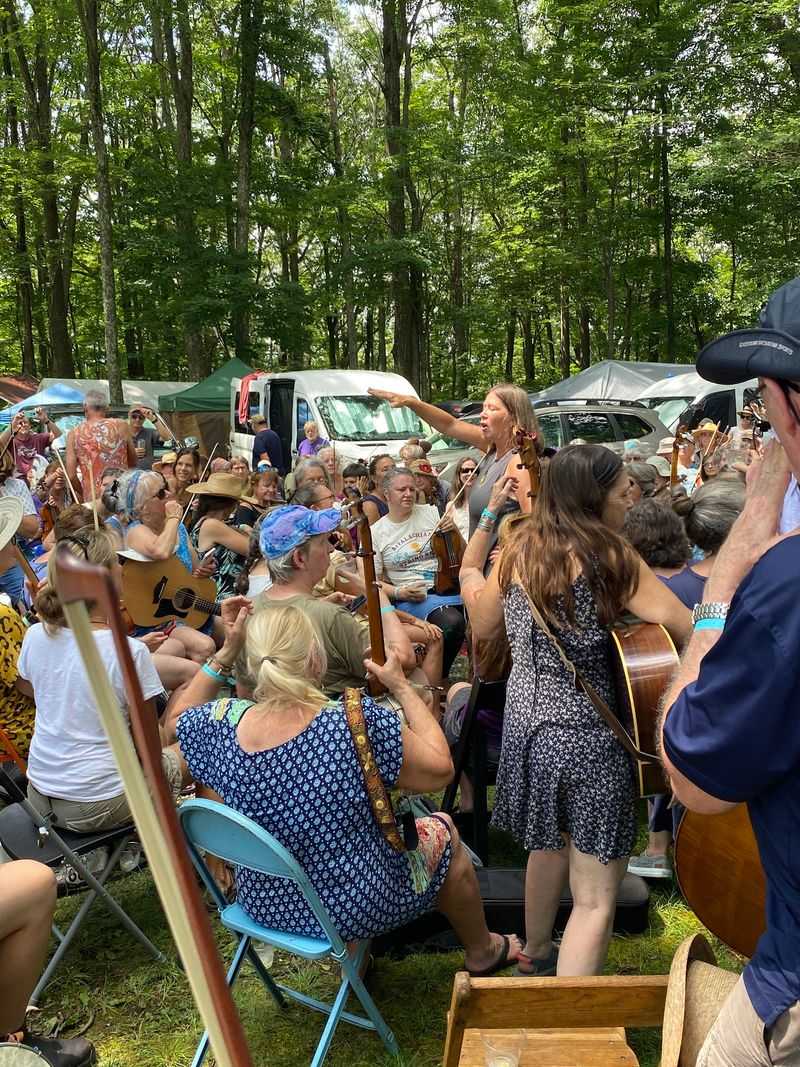
Hear that? Somewhere on the grounds, a fiddle is tuning up, and a banjo is answering back.
Each summer, the camp hosts the Appalachian String Band Music Festival, easily its most famous event.
The festival runs about a week and draws thousands of musicians and fans. People camp out, form jam circles under the trees, and play old-time tunes late into the evening.
It feels like a giant family reunion with a soundtrack.
Festival-goers rave about the talent, which comes from all over. One day-tripper loved it so much they planned to come back for the whole week.
Another longtime visitor called old-time music week a must for every folk and old-time musician.
Even if you cannot play a note, you will find plenty to enjoy. Wander from circle to circle, tap your foot, and soak up the mountain music that has deep roots in these hills.
Check the West Virginia Department of Arts, Culture and History website for this year’s dates before you go. Summer weekends fill up fast, so planning ahead may help you snag a good spot.
Pack a lawn chair and a hat for the sunny afternoons.
A New Life as a Cultural Arts Center
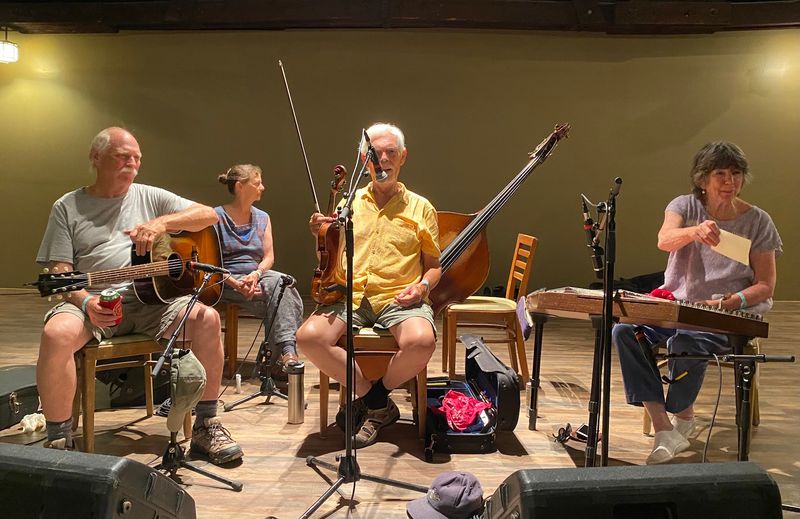
Change came in 1979. Ownership passed to the West Virginia Department of Culture and History, which turned the old camp into a rural cultural arts center.
That move kept the buildings alive and gave them a fresh purpose.
Programs like the African-American Heritage Arts Camp help preserve and pass down artistic traditions. The camp also appears as a stop on the African American Heritage Tour, and one visitor called it a must-see for anyone interested in that history.
Reports suggest the site welcomes more than 10,000 visitors each year.
Weddings have become a popular use too. Guests describe it as a beautiful setting and a great venue, with a dining hall big enough for a good crowd.
Company picnics and family reunions still book the grounds as well.
There is something sweet about a couple saying their vows where children once learned to swim and sing. The camp keeps doing what it always did best, bringing people together.
If you are planning an event, reach out through the official state culture website for rental details. Spaces reportedly include the lodge, the lawns, and other historic facilities, perfect for a celebration with real character.
Planning Your Trip to Clifftop
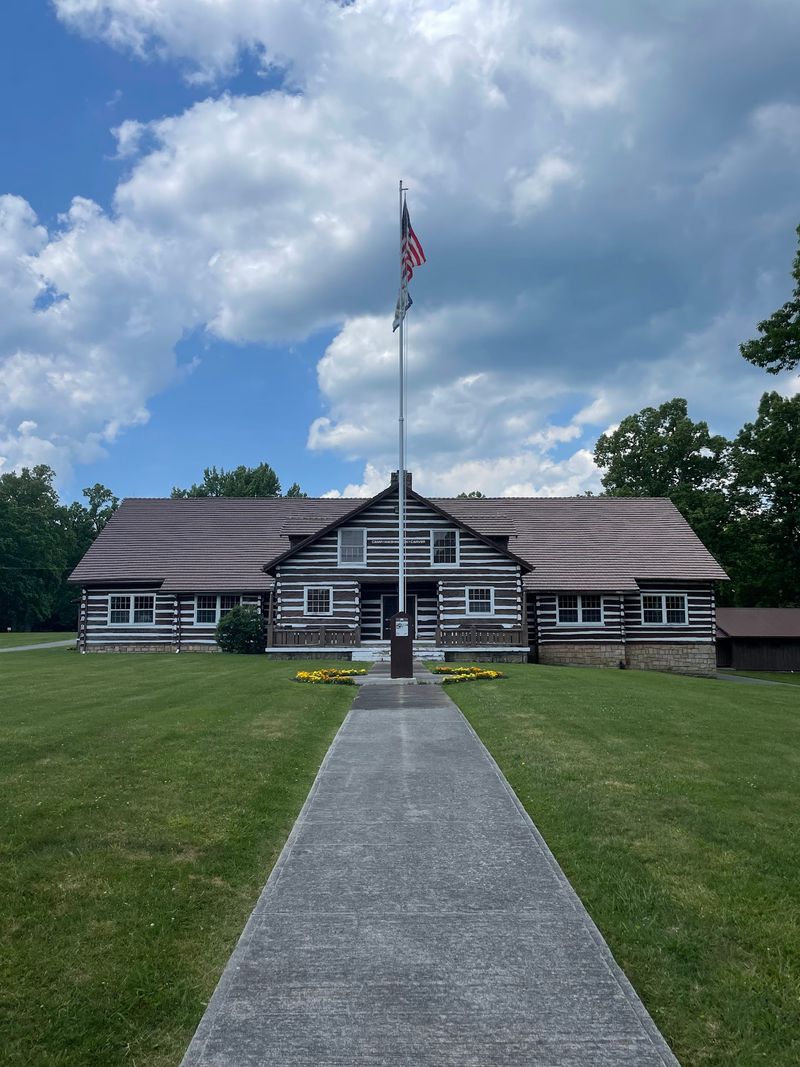
Ready to see it for yourself? You will find the camp at 1277 Washington Carver Rd, Clifftop, WV 25831, in Fayette County.
It sits close to Babcock State Park, so you can easily pair a visit with that famous gristmill and its hiking trails.
Timing matters. The camp operates on a seasonal schedule, and one visitor in late April found it closed for the season.
Another traveler showed up too late in the day, with cold winds and temperatures near 36 degrees. Late spring through early fall is generally the best bet.
Buildings may be locked when no event is happening. One group simply checked in at the office, and the staff happily let them inside and shared a bit about the lodge.
A friendly ask can go a long way.
Hikers and runners like the nearby trails, and some park at the camp to reach them. Admission details and hours can change, so check the official state culture website before heading out.
Bring a picnic, of course. It feels only right to spread a blanket on the same lawns where so many families gathered before you.
Why the Old Camp Still Matters
Some places are pretty. Others are pretty and important, and Camp Washington-Carver lands firmly in that second group.
It started because a group of determined leaders refused to accept that Black children in West Virginia had no camp of their own. It grew into a summer home for thousands of kids, a picnic ground for families, and a meeting place for scouts, churches, bands, and football teams.
Now it hums with fiddle music and wedding toasts.
Visitors often leave a little moved. One person reflected that places like this helped shape the people who built the America we sometimes take for granted.
Another called it phenomenal yet still largely unknown, which might be the best reason to go now.
For West Virginians who love our hometown history, this is a spot to be proud of. It shows our state at its best, with neighbors working hard to make room for everyone at the table.
So the next time you are near Babcock, take the turn toward Clifftop. Walk the grounds, admire the chestnut logs, and maybe share a sandwich on the lawn.
Did your family ever picnic here? Those memories deserve to be told.
