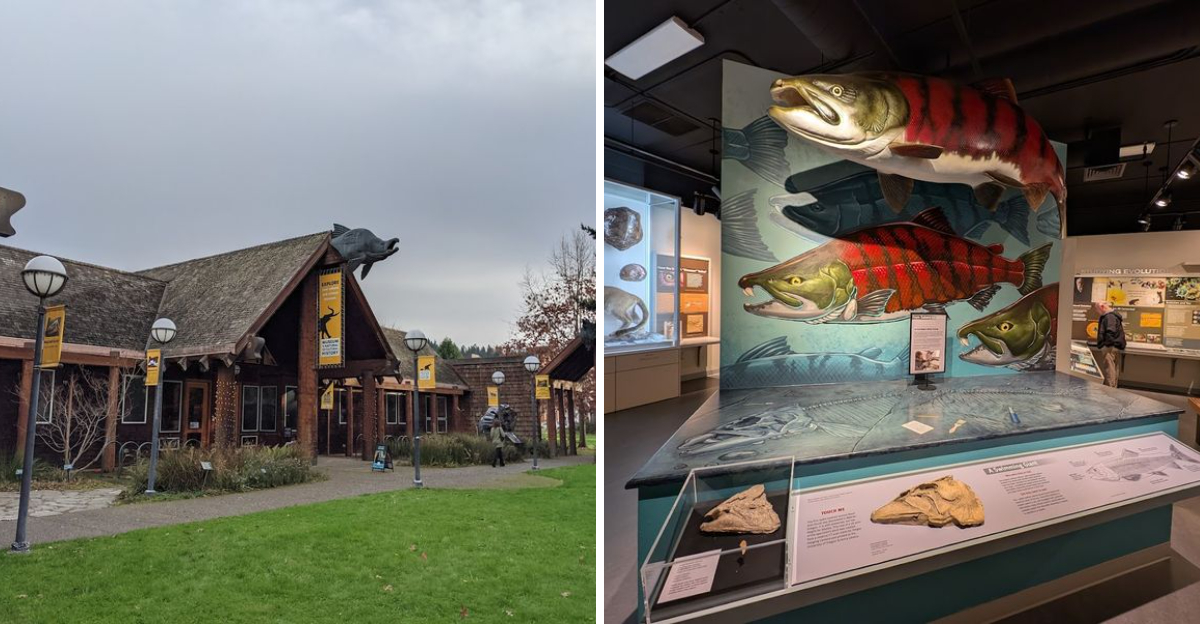
This Oregon museum is like a time capsule on turbo mode – and yes, it’s mesmerizing. I stepped inside and suddenly I was face-to-face with artifacts that survived thousands of years, each one whispering secrets of America’s first people.
Every corner is packed with jaw-dropping objects, from ancient tools to art that looks shockingly modern for its age. Locals glide through like they’ve unlocked a secret level of history, while I flailed slightly in awe and wonder.
Even tiny details – the carvings, the textures, the stories – hit harder than any textbook ever could. It’s quiet, it’s powerful, and somehow it makes you feel connected to a world that existed long before ours.
Walking out, I couldn’t stop thinking: how is this place not the coolest hidden gem in Oregon?
The Indigenous History Exhibits That Anchor Everything
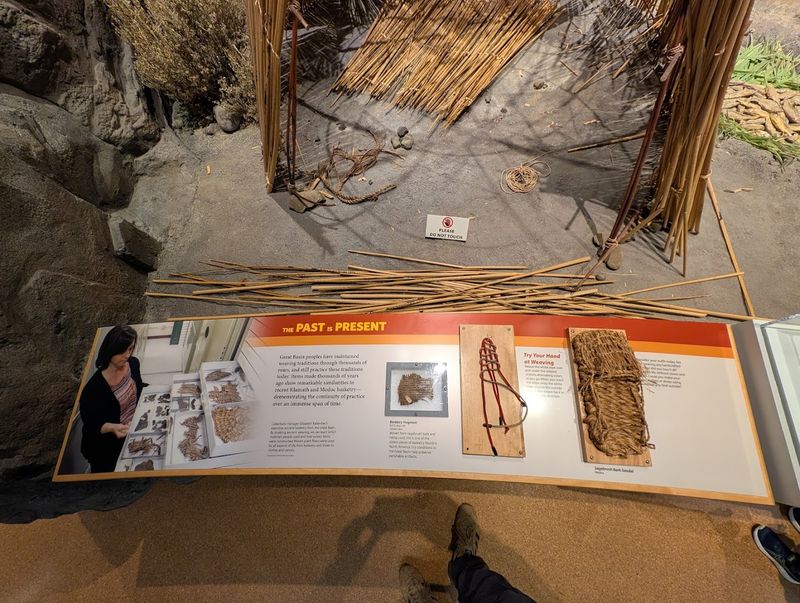
Standing in front of the Indigenous history section, I felt the weight of thousands of years pressing gently against the present. The museum opens its loop with this collection, and that choice feels intentional.
It is not a footnote. It is the foundation.
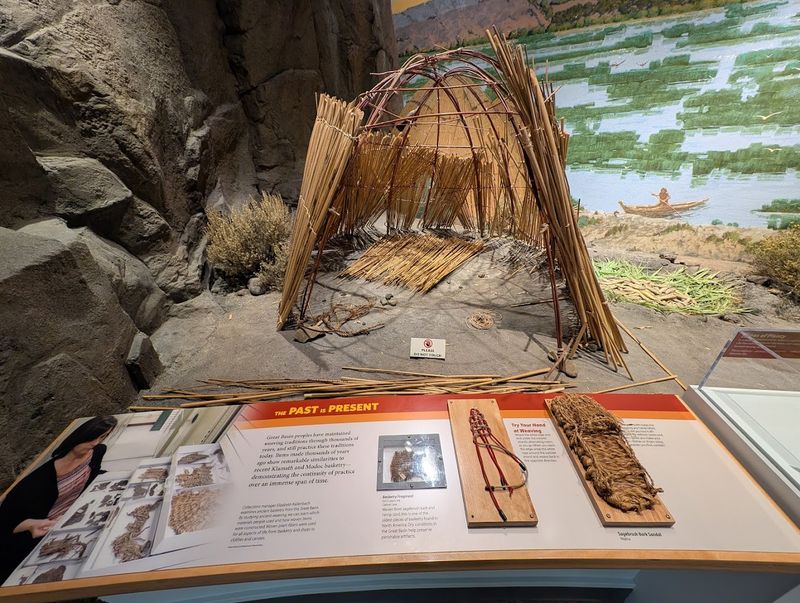
Artifacts made and used by Native Americans over the last 15,000 years fill the cases. Stone tools, woven objects, and carved pieces sit alongside clear descriptions.
Each label notes approximate dates and explains the methods behind them in accessible, non-technical language.
The tone throughout is culturally sensitive and historically grounded. You do not just look at objects.
You think about the people who made them, the land they lived on, and the knowledge they carried. It invites reflection rather than passive observation.
For visitors of any age, this section sets a respectful and thoughtful mood. It is the kind of exhibit that lingers with you long after you have left the building.
Start here, and let it reshape how you experience everything that follows.
Ancient Salmon and the Surprising Aquatic Story of Oregon
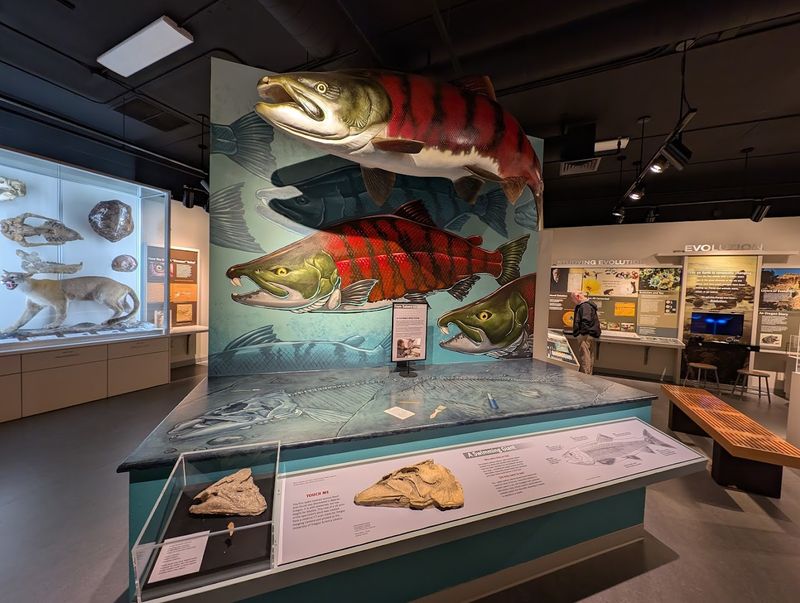
One visitor described learning about ancient salmon as their favorite moment in the entire museum, and honestly, I understand why. The exhibit on Oregon’s ancient fish history catches you completely off guard.
You do not expect it, and that surprise is part of what makes it so memorable.
Oregon’s rivers have been home to salmon for an extraordinary stretch of time. The museum traces this relationship between people and fish across centuries.
It shows how deeply woven salmon were into the daily lives and cultural practices of Indigenous communities in the region.
The storytelling here is layered. Scientific facts blend with cultural context in a way that feels respectful and engaging.
Younger visitors especially connect with this section because it feels tangible and real.
Seeing how one species shaped an entire civilization’s diet, trade, and spiritual life is genuinely eye-opening. It also makes you think differently about modern rivers and conservation.
This is the kind of exhibit that sneaks up on you and stays with you for days afterward.
Geology Displays That Make Deep Time Feel Real
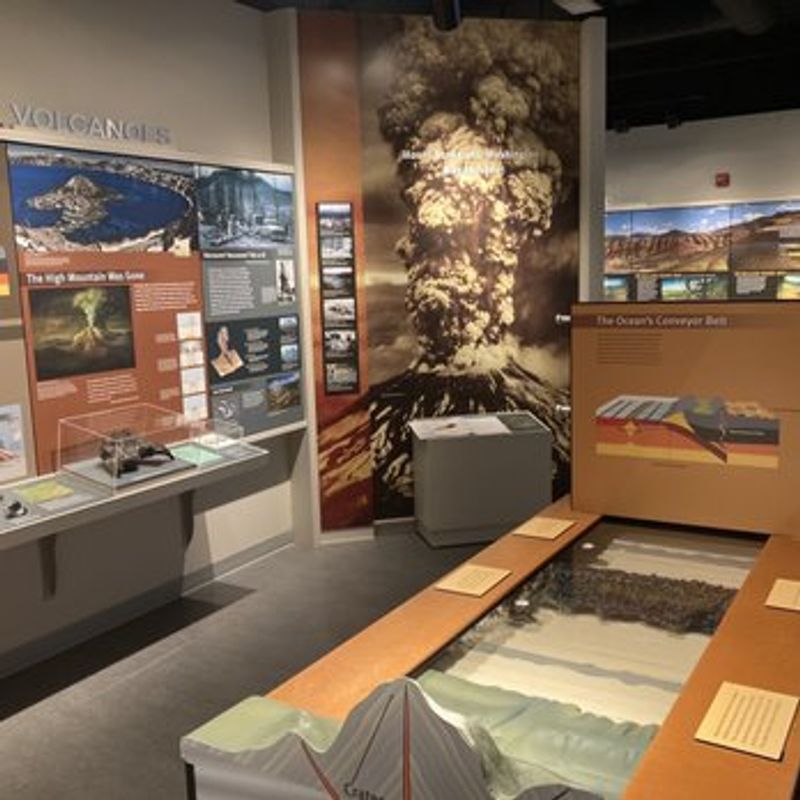
Geology can feel abstract until someone hands you a 30-million-year-old stone and says, this came from right here. The geology section of this museum does something close to that.
It grounds deep time in the specific landscape of Oregon, and that makes all the difference.
Charts, diagrams, and physical specimens work together to explain plate tectonics, volcanic activity, and earthquakes. The language is accessible.
Even if you have never taken a science class, the signs walk you through complex processes without talking down to you.
I lingered here longer than I planned. There is something almost meditative about staring at rock layers that predate human existence by millions of years.
It reshapes your sense of scale in a quiet, profound way.
Someone described seeing evidence of life from 30 million years ago as mind-changing, and that tracks. The exhibit does not just teach facts.
It shifts your perspective on time itself. For anyone who has ever looked at a cliff face and wondered what it holds, this section delivers real answers.
The Bull Kelp Exhibit and Its Bilingual Brilliance
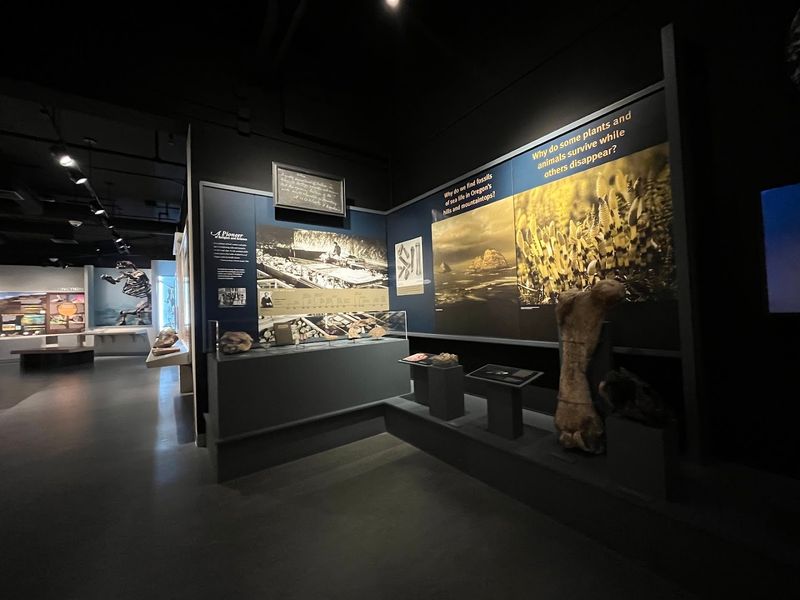
Not every museum thinks carefully about who walks through its doors. This one does.
The bull kelp exhibit stood out to me not just for its content, but for a small and significant detail: every sign is written in both English and Spanish.
That choice matters. It signals that this museum belongs to everyone in the community, not just those who already feel comfortable in academic spaces.
The exhibit itself is lush and visually engaging, with large panels illustrating the towering underwater forests of the Oregon coast.
Bull kelp ecosystems are fascinating and often overlooked. They support enormous biodiversity and play a critical role in the health of Pacific coastal waters.
The museum explains this in terms that kids can follow and adults can appreciate.
Interactive elements make this section especially good for younger visitors. There is plenty to touch, read, and explore.
It is one of those rare exhibits that manages to be scientifically rich and genuinely fun at the same time. The bilingual signage is a quiet act of inclusion that deserves recognition.
The Wolves of Yellowstone Visual Narrative
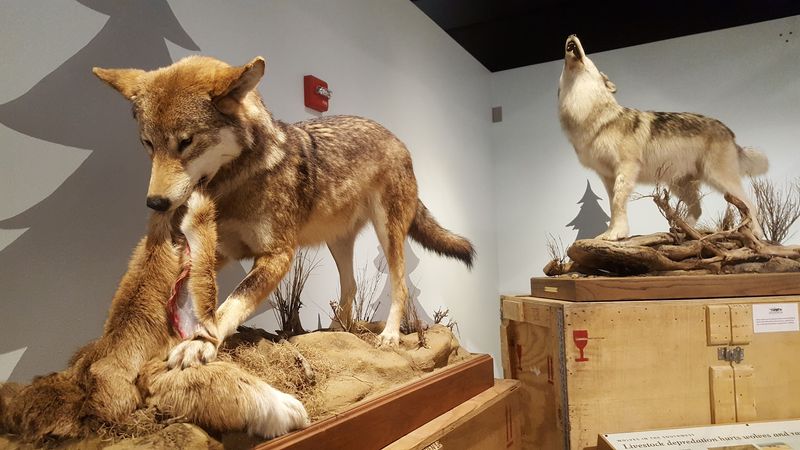
Photographs can tell stories that words sometimes cannot. The wolves of Yellowstone exhibit leans fully into that idea.
Large, striking images fill the space, and the result feels more like an art installation than a traditional museum display.
The exhibit traces the story of wolf reintroduction in Yellowstone and its ripple effects across an entire ecosystem. It is a compelling case study in how one species can reshape rivers, forests, and animal populations.
The concept, sometimes called a trophic cascade, is explained visually and clearly.
I found myself moving slowly through this section, studying each photograph. The wolves look powerful and alive.
The landscape images are sweeping. It does not feel like a science lesson.
It feels like a story unfolding.
This exhibit works particularly well for visitors who are more visually oriented. There is a lot to absorb without reading dense paragraphs.
The images carry the narrative, and the supporting text deepens it without overwhelming. It is a thoughtful and emotionally resonant addition to the museum’s permanent collection.
Copper Sculptures Outside That Set the Tone Before You Enter
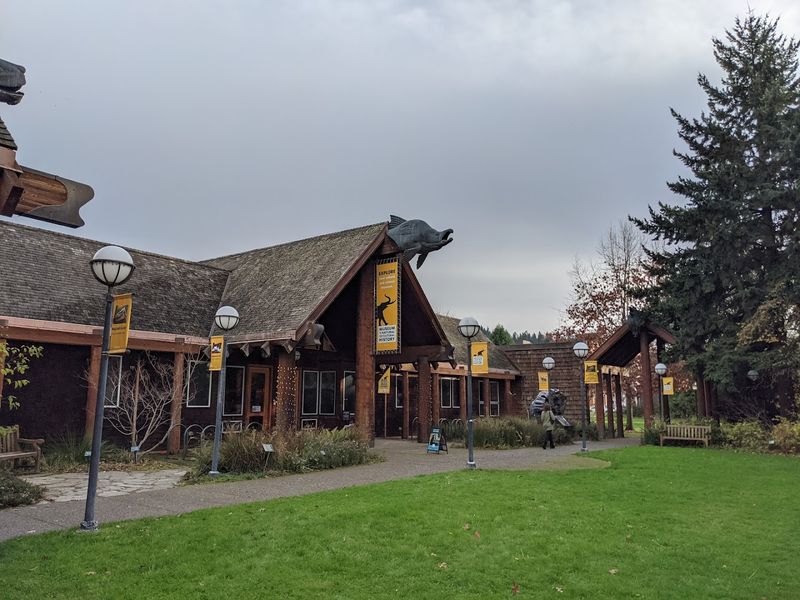
Before you even step inside, the museum gives you something worth pausing for. Copper sculptures wrap around the exterior of the building, and they are genuinely breathtaking.
Several visitors have mentioned them specifically, and once you see them, you understand why.
The sculptures draw on natural and cultural themes. They feel like a visual introduction to everything waiting inside.
Standing outside on a gray Oregon morning, looking at those oxidized copper forms, I felt a quiet anticipation building.
Art on the outside of a museum sends a message. It says that beauty and meaning do not begin at the ticket counter.
They start the moment you arrive. This museum understands that.
If you visit, give yourself a few extra minutes to walk around the exterior before going in. The building is modest in size, but the sculptural details give it a presence that punches well above its square footage.
It is a small thing, but small things add up. This one adds warmth and intention to the entire visit from the very first moment.
The Gift Shop That Locals Actually Love
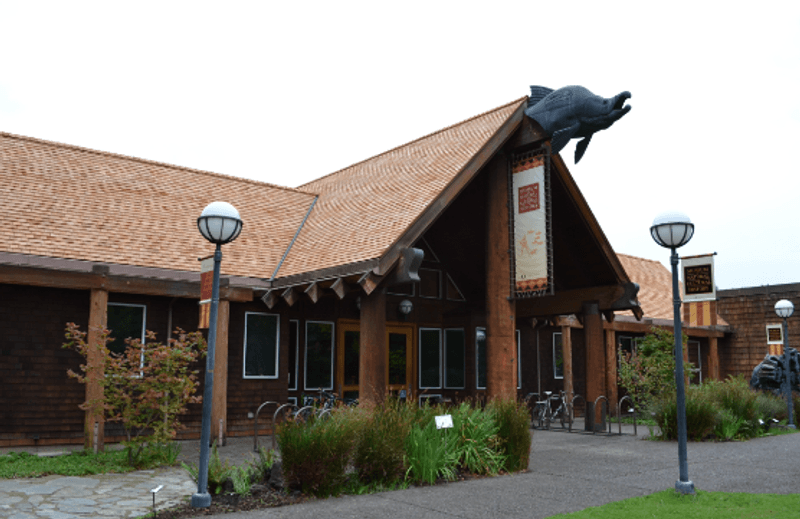
Museum gift shops can feel like afterthoughts. This one does not.
The store at the Museum of Natural and Cultural History has developed a genuine reputation among visitors, and it earns that reputation with a well-chosen selection of items.
Books are a highlight. The collection leans toward Pacific Northwest history, natural science, and Indigenous culture.
Veterans and active-duty military receive free admission to the museum year-round, and many of them specifically head to the bookshop to spend what they saved on entry.
Local offerings dominate the shelves. You will not find generic tourist trinkets here.
The items feel curated and connected to the museum’s mission. Shopping here feels like an extension of the learning experience rather than a commercial interruption.
Budget a little extra time before you leave, because the shop genuinely rewards browsing.
How the Museum Handles Climate and Modern Environmental Change
History does not stop at the past. The museum makes that point clearly in its section on modern environmental change.
After walking through thousands of years of geological and cultural history, the exhibit loops forward into the present, and it does so without flinching.
Climate, shifting landscapes, and ecological transformation are addressed through accessible charts and diagrams. The tone is informative rather than alarming, but the message is honest.
Oregon’s environment is changing, and the museum connects that change to the deep historical patterns visitors have already explored.
This section felt particularly relevant to me. After spending time with artifacts and fossils from thousands of years ago, seeing modern data in the same space carries more weight.
The continuity is intentional and effective.
The museum does not preach. It presents.
Visitors are invited to draw their own conclusions after absorbing the evidence laid out in front of them. That approach respects the intelligence of the audience and trusts the material to speak for itself.
It is a mature and confident way to handle a complex and urgent topic.
Visiting With Kids and Making It Work for All Ages
Taking kids to a museum can go one of two ways. Either they engage and light up, or they drag their feet past every display case.
At this museum, the former is far more likely. The space was clearly designed with multiple generations in mind.
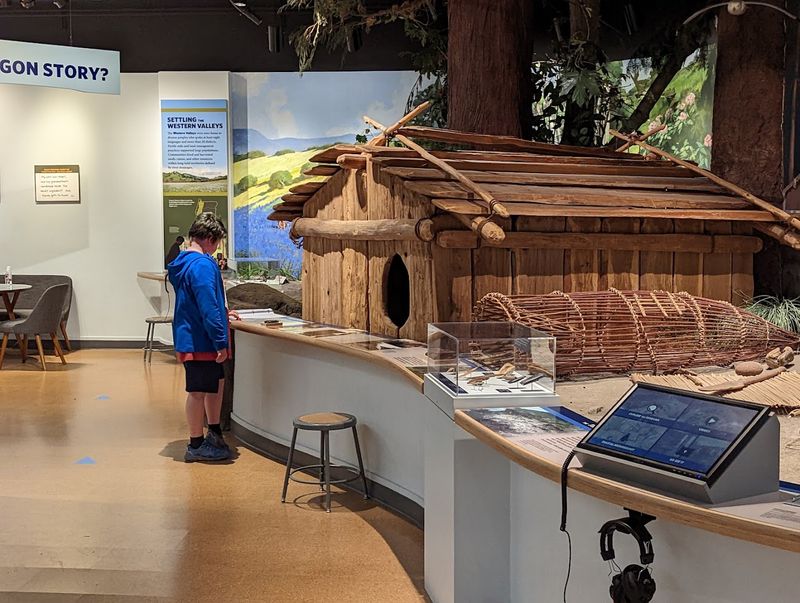
Hands-on elements appear throughout the exhibits. Children can interact, touch certain specimens, and watch videos embedded into the displays.
The bull kelp section is especially strong for younger visitors, with bilingual signage and tactile components that hold attention.
For families planning a visit, setting aside two hours is a smart move. One hour feels slightly rushed if you want to read and explore properly.
The layout flows in a clear loop, which helps keep groups together without anyone getting lost or overwhelmed. It is an easy, rewarding outing that leaves kids with real questions and real curiosity.
Practical Tips for Getting the Most From Your Visit
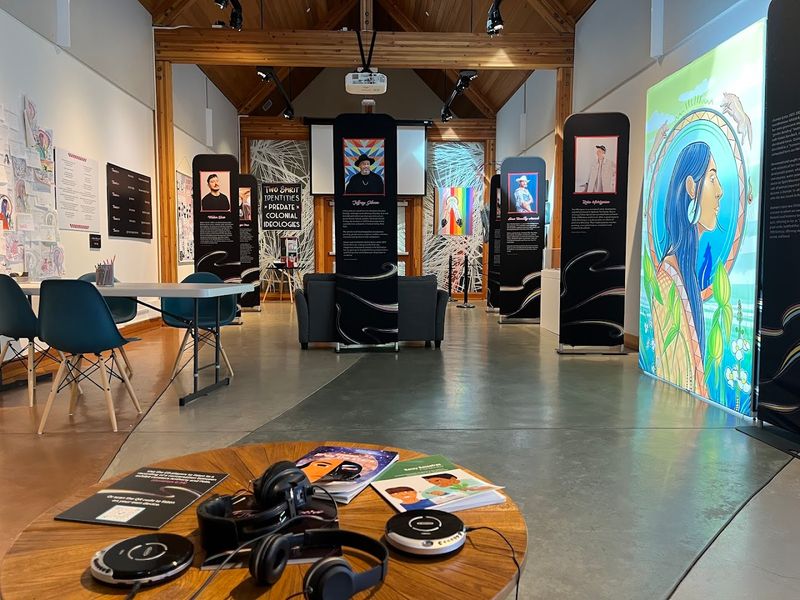
A few small details can make a big difference when visiting this museum. The building sits at 1680 E 15th Ave in Eugene, right on the University of Oregon campus.
Parking is limited in the surrounding area, but the museum has a small lot just off 15th Avenue labeled Lot 34A.
If the lot looks permit-only, do not be discouraged. The front desk staff can issue a temporary parking permit when you check in.
That is a useful detail that not every visitor knows going in.
The museum is open Wednesday through Sunday from 10 AM to 5 PM. Thursday hours extend to 8 PM, which is great for a weekday evening visit.
Monday and Tuesday are closed, so plan accordingly.
Veterans and active-duty military receive free admission year-round. University of Oregon students also get in free.
For everyone else, the entry cost is modest and widely considered well worth it. Arriving close to opening time gives you the best chance of exploring at your own pace without crowds.
Two hours is the sweet spot for a thorough and unhurried visit.
Address: 1680 E 15th Ave, Eugene, Oregon
Dear Reader: This page may contain affiliate links which may earn a commission if you click through and make a purchase. Our independent journalism is not influenced by any advertiser or commercial initiative unless it is clearly marked as sponsored content. As travel products change, please be sure to reconfirm all details and stay up to date with current events to ensure a safe and successful trip.
