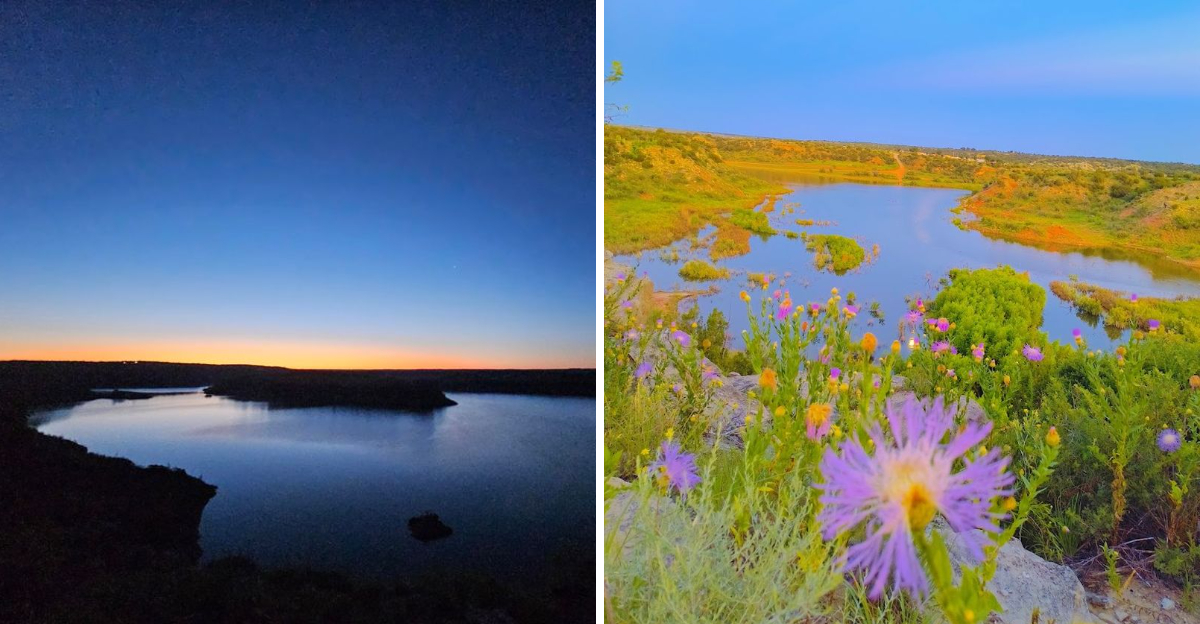
Some lakes have jet skis, loud music, and crowds fighting for parking spots. This is not one of those lakes.
The water sits quietly below a dam, surrounded by canyon walls that block out the noise of the outside world. No boat ramps full of traffic, no party coves, just peace and the occasional fisherman casting a line.
A person could spend an afternoon here and see maybe two other people, both of whom look just as grateful for the silence. The Texas Panhandle is not known for its water, but this spot is an exception.
The views are dramatic, the water is calm, and the whole place feels like a secret someone forgot to share. Texas has plenty of big lakes with big crowds, but this one belongs to the quiet seekers.
Bring a picnic, a fishing pole, and a willingness to do absolutely nothing for a few hours.
A Canyon Setting That Catches You Off Guard
Nothing on the drive out to Mackenzie Lake hints at what is waiting for you. The land around Silverton is flat and wide open, the kind of Texas scenery that stretches endlessly toward the horizon.
Then the canyon appears, and the ground just falls away beneath you.
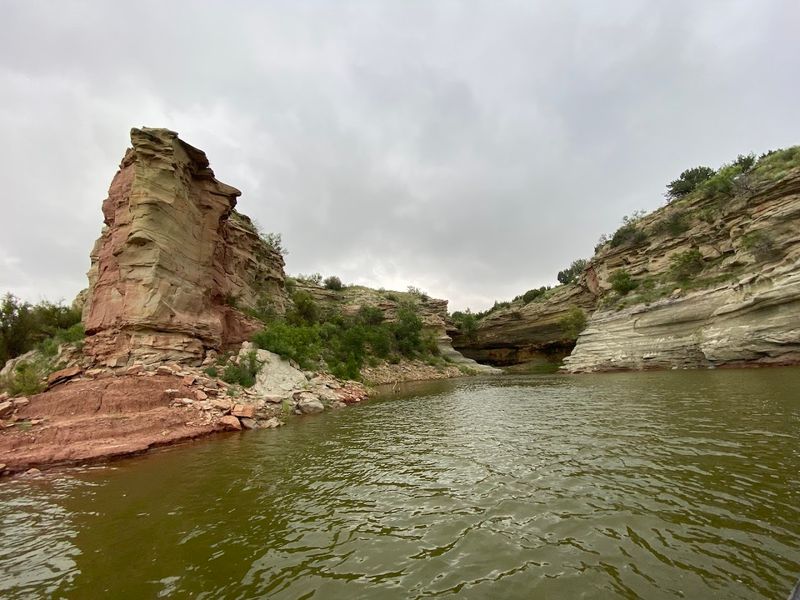
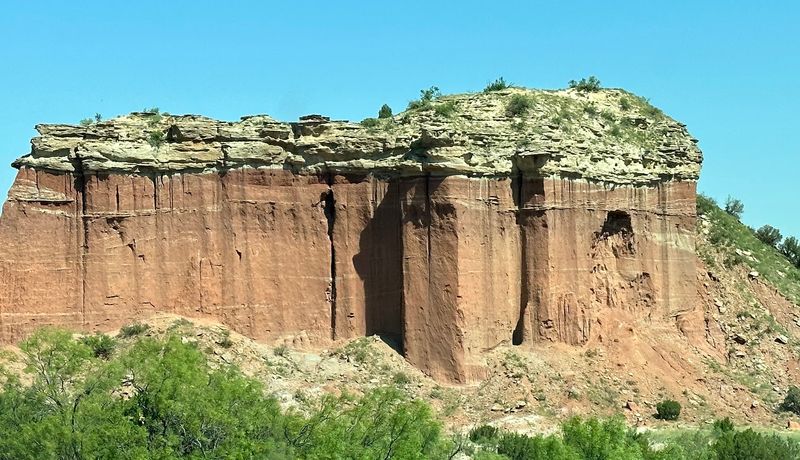
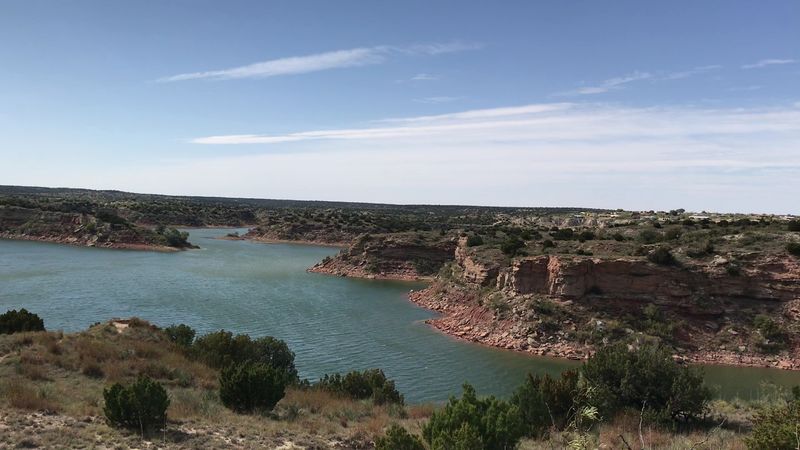
The reservoir was built right into a steep canyon off the Caprock, which means the walls rise dramatically on either side of the water. Those canyon walls are not just impressive for their height.
They are layered in colors that shift from deep red at the base to orange, yellow, and even soft lavender higher up, like someone painted them in slow motion over millions of years.
Two large islands sit in the center of the lake, ancient rock formations that survived the flooding of the canyon when the dam was completed in 1974. They give the whole scene a wild, almost prehistoric feel.
The water itself is remarkably clear, with visibility typically reaching four to six feet down, which is unusual for a Texas reservoir. The steep canyon walls also act as a natural windbreak, so even on blustery West Texas days, the surface of the lake stays calmer than you might expect.
Rock enthusiasts will find the geological formations endlessly fascinating. Whether you are standing at the overlook or paddling near the shoreline, the scenery feels genuinely dramatic in a way that is hard to describe without sounding like you are exaggerating.
The Fishing Here Is Something Else Entirely
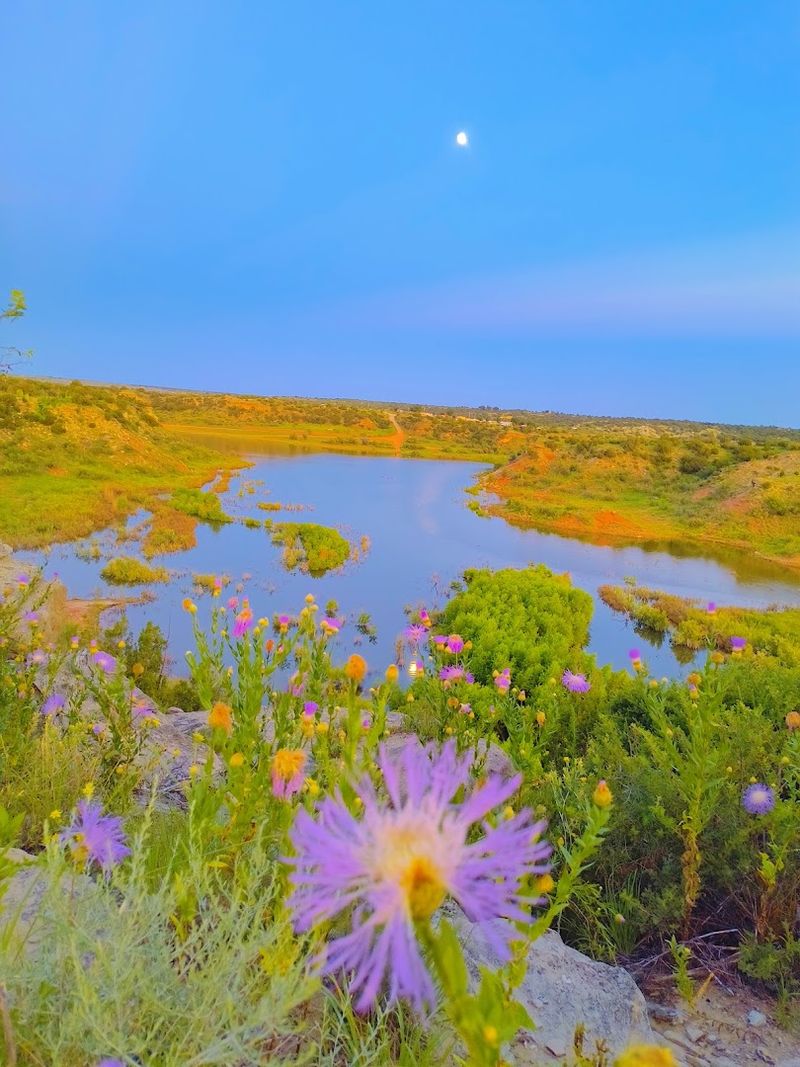
Fishing at Mackenzie Lake feels like finding a secret that most anglers have somehow overlooked. The lake is known for having very low fishing pressure, meaning you can cast your line without bumping into a crowd of boats or fighting for a good spot along the bank.
Largemouth bass are the most popular catch here, typically running between two and four pounds. Spring is the prime season, particularly when water temperatures hover around 55 to 60 degrees Fahrenheit.
That is when the bass get active and the fishing gets genuinely exciting.
Beyond bass, the lake holds a solid population of crappie, which locals say are quite abundant. Channel catfish, white bass, hybrid striped bass, flathead catfish, and sunfish round out the mix, giving anglers plenty of variety depending on the season and their preferred technique.
Walleye have also been stocked in the lake, which adds an interesting dimension that you do not see at most Texas reservoirs. The steep canyon sides create natural shelter from the wind, so even when conditions are rough elsewhere, Mackenzie can stay surprisingly fishable.
Water clarity in the four to six foot range also means you can sometimes spot fish near structure before you even cast. It is the kind of lake where patience pays off and where a quiet morning on the water can turn into one of those fishing days you end up telling people about for years.
Wildlife That Roams Freely and Without Apology
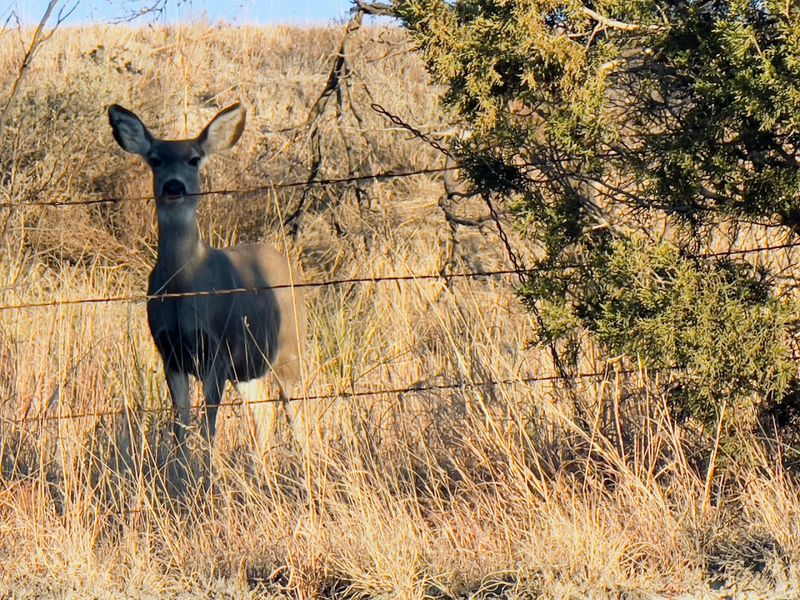
The wildlife situation at Mackenzie Lake is genuinely impressive, and it caught me completely off guard on my first visit. Mule deer move through the canyon with a calm confidence that suggests they know this land belongs to them just as much as it does to anyone else.
Bobcats have been spotted on the property, along with aoudad sheep, which are a type of North African wild sheep that have established a strong presence in the canyon country of West Texas. Raccoons, possums, and porcupines round out the mammal list, while the bird life above the lake is equally rich.
Wild turkeys, quail, pheasant, ducks, and geese all make appearances throughout the year.
Bald eagles have been seen at the lake as well, which is one of those sightings that genuinely stops you mid-sentence when it happens. The combination of rugged canyon habitat, open water, and relatively low human disturbance makes Mackenzie Lake a surprisingly productive spot for wildlife watching.
You do not need to be a dedicated birder or naturalist to enjoy it. Simply sitting quietly near the water at dusk or dawn puts you in the middle of something that feels far more remote than a public reservoir in the Texas Panhandle has any right to feel.
Bring binoculars if you have them. The views across the canyon give you sightlines that stretch far enough to make even a casual observer feel like a serious naturalist.
Camping With a View That Most Campgrounds Cannot Match
Camping at Mackenzie Lake Park is the kind of experience that reminds you why sleeping outdoors was a good idea in the first place. The park offers a range of options, from RV sites with full hookups to primitive camping spots on the south side of the reservoir beyond the marina.
There are also two cabins available for overnight guests, which is a welcome option when the West Texas wind picks up unexpectedly. A recently renovated shower house serves the camping area, which makes a longer stay considerably more comfortable.
Picnic tables, grills, sun shades, and fire rings are spread throughout the park, giving each site a functional and relaxed setup.
What sets this campground apart from most is simply the setting. Waking up inside a canyon, with those layered rock walls catching the early morning light, is an experience that does not get old quickly.
The sound environment is also different here. There is no highway noise, no suburban hum, just wind, birds, and water.
Fees are required for lake access and camping, so it is worth checking current rates before you go. Drought conditions in recent years have affected water levels at times, which can impact boat ramp access, so calling ahead is always a smart move.
But for campers who value genuine solitude combined with a landscape that feels actively alive around them, Mackenzie Lake Park consistently delivers something that more famous campgrounds rarely manage.
Boating on Water That Feels Like a Well-Kept Secret
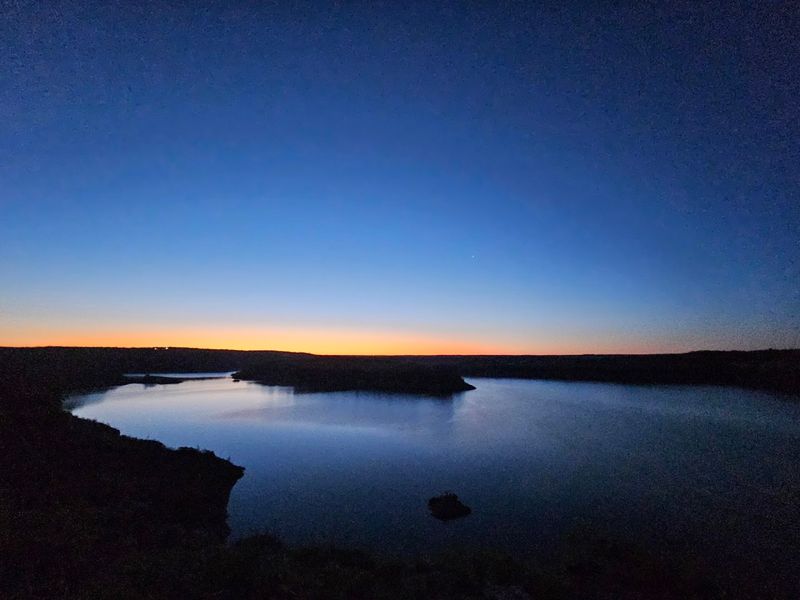
Getting out on the water at Mackenzie Lake feels different from boating on most Texas reservoirs, and the canyon setting is a big part of why.
The steep walls on either side of the lake create a sense of enclosure that is more intimate than overwhelming, like the canyon is holding the water gently rather than just surrounding it.
Boating, fishing from boats, and general paddling are all permitted on the lake. It is worth noting that current drought conditions have led to restrictions on skiing, jet-skis, speedboats, and jet-boats due to lower water levels.
That restriction actually works in the lake’s favor in terms of atmosphere. Without the roar of high-powered watercraft, the surface stays calm and the overall experience feels quieter and more connected to the landscape.
Canoes, kayaks, and small motorized fishing boats are ideal here. The two islands in the center of the lake are worth paddling around, and the rocky shoreline offers plenty of interesting spots to explore at a slow pace.
Water clarity being what it is, you can often see the bottom in shallower areas, which adds a surprising visual element to any boat trip. The canyon walls reflect in the water on still mornings in a way that makes the whole scene feel almost doubled.
It is the kind of boating experience where the destination is not really a destination at all. The lake itself is the whole point.
History Buried Beneath the Water and Written in Stone
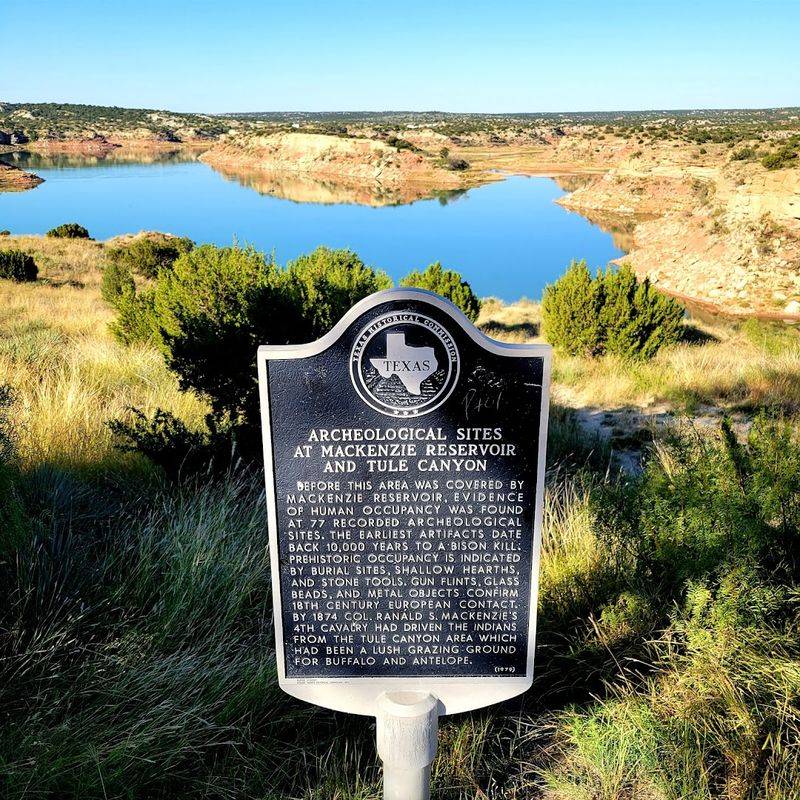
Mackenzie Lake sits on ground that holds an extraordinary amount of human history, and the scale of it is genuinely humbling once you understand what is down there.
During the construction of the dam, which was completed in 1974, archaeologists excavated more than seventy sites where humans lived approximately 10,000 years ago.
That is not a small number. Seventy separate sites, each one a window into a world that existed here on the Caprock long before any of the surrounding towns were even imagined.
The lake itself is recognized as a Texas Historic Landmark, which reflects the significance of what was found during those excavations.
Fossils of the Equus Scotti, an extinct horse from the Pleistocene era, have also been discovered on the lake property. These are not replicas or museum pieces brought in from elsewhere.
They came directly from the ground beneath and around the lake, which adds a layer of meaning to the landscape that you feel even if you are not consciously thinking about it.
The canyon walls themselves are a kind of geological record, their layered colors corresponding to different periods of time stretching back far beyond human history.
Rock enthusiasts find the formations endlessly interesting for exactly this reason. Visiting Mackenzie Lake is not just a recreational trip.
It is a quiet encounter with deep time, the kind of place where the ground beneath your feet has more stories than most books.
The Silence Out Here Is Its Own Kind of Attraction
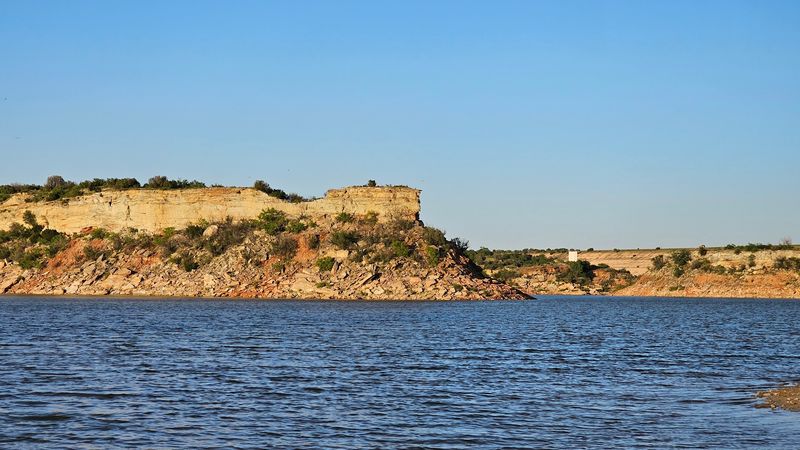
There is a particular quality to the quiet at Mackenzie Lake that is hard to find anywhere near a city, or even near most small towns.
The Caprock region of West Texas is already one of the less populated corners of the state, and the canyon setting of the lake adds another layer of acoustic insulation that feels almost physical.
Sound travels differently inside a canyon. Wind moves along the walls rather than across open ground, and the absence of traffic noise is complete enough that you start noticing things you would normally tune out.
The way water laps against rock. The distant call of a turkey somewhere up on the rim.
The soft splash of a fish breaking the surface near one of the islands.
I found myself sitting still for longer stretches than I usually do at any outdoor destination, not because there was nothing to do, but because the silence itself was doing something. It was resetting something that gets worn down in everyday life without you noticing until it is gone.
Mackenzie Lake is not a destination built around entertainment or amenities. It is a place that offers something rarer, genuine stillness in a landscape that feels like it has been waiting quietly for you to show up and pay attention.
The drive out from Silverton takes you through open rangeland that extends the experience. By the time the canyon comes into view, the transition from ordinary life to something slower and more grounded is already well underway.
Hiking and ATV Trails Through Canyon Country
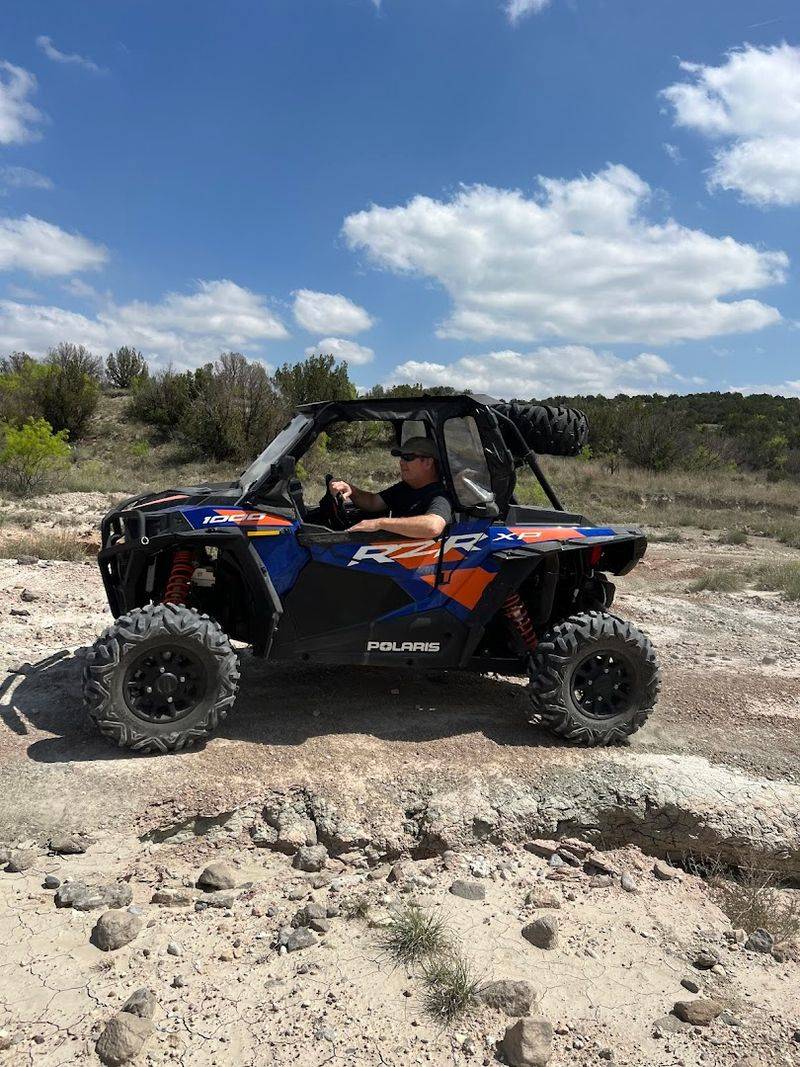
The terrain around Mackenzie Lake is not the kind of flat, easy walking you might associate with other parts of the Texas Panhandle. The canyon environment creates natural trails along ridgelines and down toward the water that reward hikers with views that shift dramatically with every change in elevation.
ATV trails are also available on the lake property, which opens up the experience for visitors who prefer a motorized way to cover the rugged ground.
The combination of rocky outcrops, canyon walls, and open high-desert vegetation gives the landscape a texture that keeps things visually interesting throughout any trail.
There are no manicured paths with interpretive signs every hundred yards. The experience here is more raw and self-directed, which suits the overall character of the place perfectly.
Hiking is best done in the cooler months, since West Texas summers can be genuinely punishing in terms of heat and sun exposure. Spring and fall offer the most comfortable conditions, and those seasons also align well with the best wildlife activity and fishing.
Wearing sturdy footwear is a practical necessity given the rocky ground, and carrying water is non-negotiable regardless of the season. The geological formations visible along the trails are worth slowing down to look at closely.
The layers of sediment compressed into canyon walls represent millions of years of accumulated time, and walking alongside them gives any hike a sense of scale that goes well beyond the physical distance covered.
A Water Supply Story That Shaped Four Communities
Mackenzie Lake was not built primarily as a recreational destination, and understanding its original purpose adds something meaningful to a visit there.
The dam was completed in 1974 and the lake opened to the public in May 1976, but its core function has always been to supply water to the cities of Floydada, Lockney, Silverton, and Tulia.
The Mackenzie Municipal Water Authority manages the reservoir, and that arrangement reflects the cooperative nature of water management in a region where reliable water sources are genuinely scarce.
Four separate communities depend on this canyon lake for their water supply, which gives the place a practical significance that extends well beyond weekend recreation.
At conservation pool, the lake holds a surface area of roughly 896 to 910 acres and reaches a maximum depth of 150 feet, with a mean depth of 52 feet. Those numbers make it a substantial reservoir by any measure.
The annual water level fluctuation can range from four to ten feet, which explains why drought conditions have such a visible impact on the lake and why boat ramp access is occasionally affected.
Knowing that the water you are fishing in or paddling across is also the water that fills glasses and feeds farms across a wide stretch of West Texas gives the lake a kind of weight.
It is not just a beautiful place. It is a working piece of regional infrastructure that also happens to be one of the most scenic spots in the entire Panhandle.
Getting There and Making the Most of Your Visit
Mackenzie Lake sits about 10 to 12 miles northwest of Silverton, Texas, which is itself a small town that most people drive past without stopping. Getting there requires a bit of commitment, and that commitment is part of what keeps the lake feeling the way it does.
The road out through Briscoe County is straight and quiet, passing through open rangeland that gives no hint of the canyon waiting ahead.
Fees are required for lake access and camping, so arriving with some cash or checking payment options in advance is a practical step. Given the ongoing drought conditions that have affected water levels in recent years, calling the Mackenzie Municipal Water Authority ahead of your visit is genuinely worthwhile.
Current conditions can affect what is accessible, particularly for boaters.
The best seasons for a visit are spring and fall, when temperatures are manageable, wildlife is active, and the fishing is at its most productive. Summer visits are possible but require serious preparation for heat.
Winter can be cold and windy on the Caprock, but the lake takes on a stark, dramatic beauty in those months that has its own quiet appeal. Pack more water than you think you need, bring layers regardless of the season, and plan to stay at least one night if you can.
A single day at Mackenzie Lake is better than nothing, but the place reveals itself slowly and rewards those who are willing to slow down along with it.
Address: S Mackenzie Rd, Silverton, TX 79257
