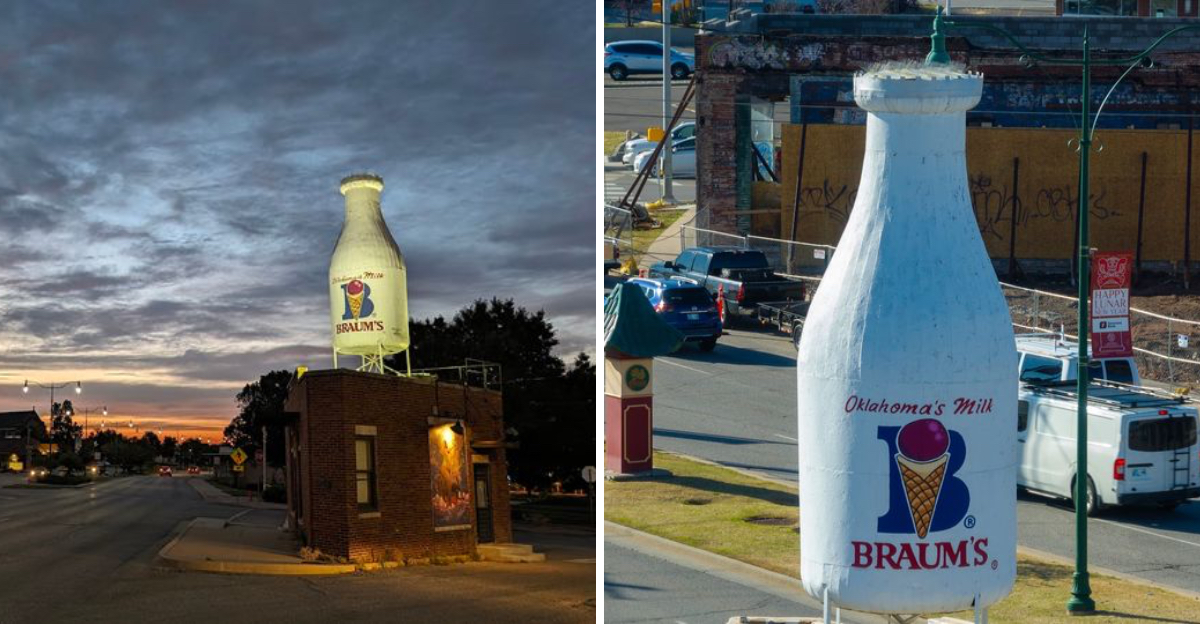
There’s something about old roadside attractions that just hits different. You know the kind: those wonderfully odd structures that made families slam on the brakes back when road trips meant adventure, not just highway monotony.
The Milk Bottle Grocery in Oklahoma City is exactly that kind of place. Standing at a busy intersection with a giant milk bottle perched on its roof, this tiny triangular building has been stopping traffic since the 1930s.
It’s pure Americana, the kind of landmark that makes you grin and reach for your camera before you even realize what you’re doing. Sure, it’s small and you can’t go inside anymore, but that’s not really the point.
This little survivor represents an era when creativity and charm could turn a simple grocery store into something unforgettable. And honestly, in a world of cookie-cutter gas stations and identical chain restaurants, we need more places like this.
A Survivor from Oklahoma’s Road Trip Golden Age
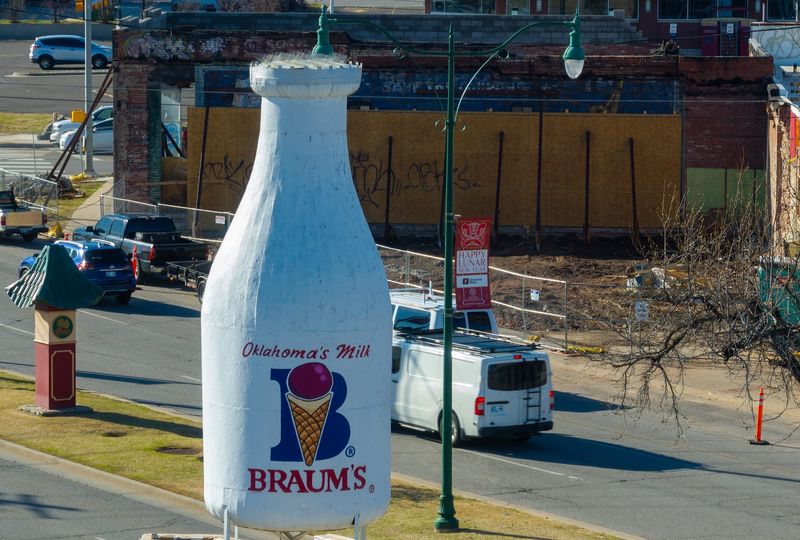
Route 66 used to be lined with these quirky roadside gems, each one competing for the attention of travelers cruising cross-country in their Chevys and Fords. Most of them are gone now, bulldozed for parking lots or left to crumble into dust.
But the Milk Bottle Grocery? It refused to disappear.
Built in the 1930s, this tiny building with its oversized milk bottle served as a neighborhood grocery store for decades. Back then, trolley lines ran right past it, and folks would stop in for supplies, magazines, and cold treats.
The bottle itself became a beacon, visible from blocks away, turning a simple store into a landmark.
What makes this place special isn’t just its age or its oddball design. It’s that someone cared enough to save it.
When the local dairy company Braum’s stepped in to preserve this piece of history, they ensured that future generations could still experience that jolt of joy you get when you spot something genuinely unexpected on an ordinary street corner.
Standing at just 392 square feet on a triangular lot, this building shouldn’t have survived. But it did, and now it stands as a reminder that the best things in life are often the ones that make absolutely no practical sense but bring a smile to your face anyway.
The Giant Milk Bottle That Stops Traffic
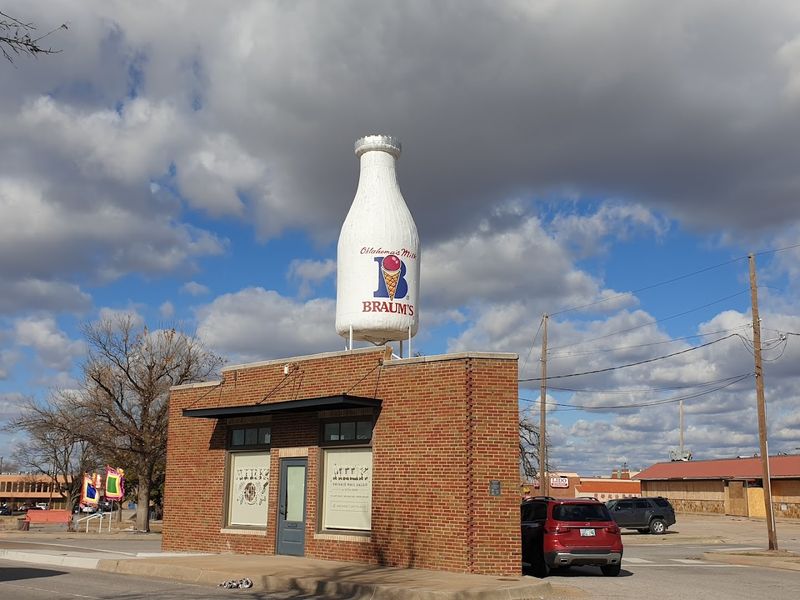
Let’s be honest: you don’t expect to see a two-story milk bottle sitting on top of a building when you’re driving through Oklahoma City. And that’s exactly why it works.
The bottle itself is beautifully simple, painted in classic cream and red, looking exactly like the glass bottles that used to show up on doorsteps every morning. It’s not trying to be fancy or modern.
It’s just unapologetically itself, a relic from when advertising meant creativity instead of algorithms.
People love this thing. You’ll see cars slow down as they approach the intersection, passengers pointing and laughing with delight.
Some folks park in nearby lots just to snap photos, treating it like the Instagram opportunity it absolutely is, even though it existed decades before social media made everything about the photo op.
The bottle has become such an icon that locals use it as a landmark when giving directions. It’s part of the neighborhood’s identity now, a shared piece of visual culture that connects generations.
Grandparents remember buying treats there as kids, while today’s visitors discover it fresh and find it just as charming.
And sure, it’s just a big fake milk bottle. But in a city full of regular buildings doing regular things, this playful structure reminds us that sometimes the best architecture is the kind that makes you do a double-take and grin.
The Triangular Building That Defied Development
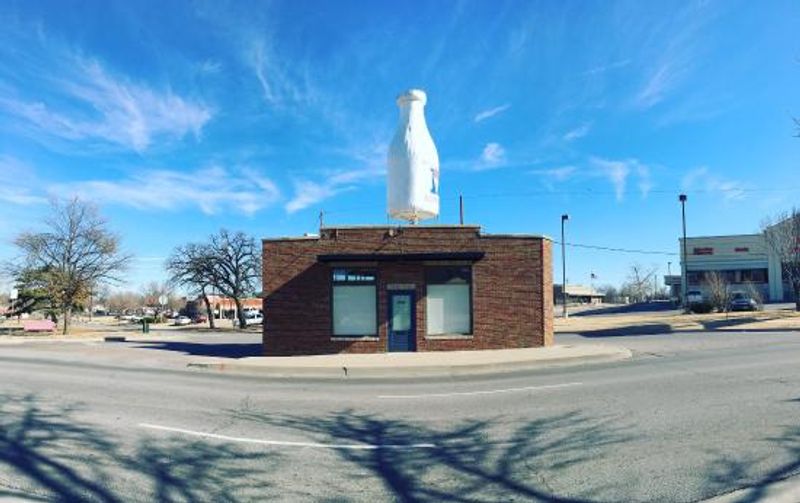
Real estate developers must have looked at this property and seen nothing but problems. A tiny triangular lot at a busy intersection with no parking and barely enough room for a closet, let alone a functioning business.
Any logical person would have torn it down decades ago.
Thank goodness logic didn’t win this time.
The building’s awkward shape is actually part of its charm. It sits on what’s essentially a traffic island, wedged into a space that modern zoning laws would never allow.
The brick exterior has weathered beautifully, showing its age without looking decrepit, and the whole structure feels like it grew organically from the intersection rather than being plopped there by a developer.
Over the years, different businesses occupied this cramped space. For a while, it housed a Vietnamese sandwich shop that became a beloved neighborhood spot, proving that good things really do come in small packages.
People would walk over from nearby blocks, dodging traffic to grab affordable and delicious food from this unlikely location.
Now it stands empty, but that hasn’t diminished its appeal. If anything, its status as a purely visual landmark has elevated it to something more permanent.
It doesn’t need to serve a commercial purpose anymore. Its purpose now is simply to exist, to surprise, to delight, to remind us that cities need character as much as they need efficiency.
A Perfect Photo Op With Traffic Complications
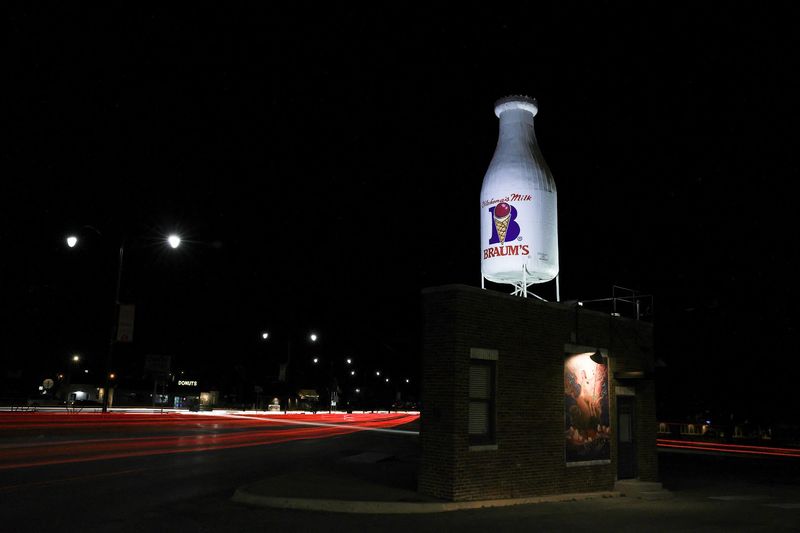
Here’s the thing about photographing the Milk Bottle Grocery: it’s simultaneously easy and challenging. Easy because the building is visually striking and photogenic from every angle.
Challenging because it sits at a busy intersection where slowing down too much might earn you some honking.
Most visitors park at the nearby pharmacy or other businesses and walk over for their shots. This is smart for many reasons: photos from a moving car rarely turn out well, and stopping in the middle of Classen Boulevard is a bad idea for everyone.
The best approach is treating it like a quick urban adventure. Park safely, walk to a good vantage point, snap your photos, and move on.
The whole experience takes maybe ten minutes, which is perfect for a road trip pit stop. You get your quirky landmark photo without committing your entire afternoon.
Different times of day offer different vibes. Morning light makes the bottle glow warmly, while evening creates dramatic shadows that emphasize the building’s unique shape.
Some photographers love capturing it with traffic streaming past, adding motion and context. Others prefer waiting for a quiet moment when the building can stand alone in the frame.
And yes, you’ll probably see other people doing exactly the same thing, cameras raised, smiles on their faces. That’s part of the fun.
This little building has been bringing people joy for generations, and being part of that tradition feels good.
The Mural That Sweetens the Deal
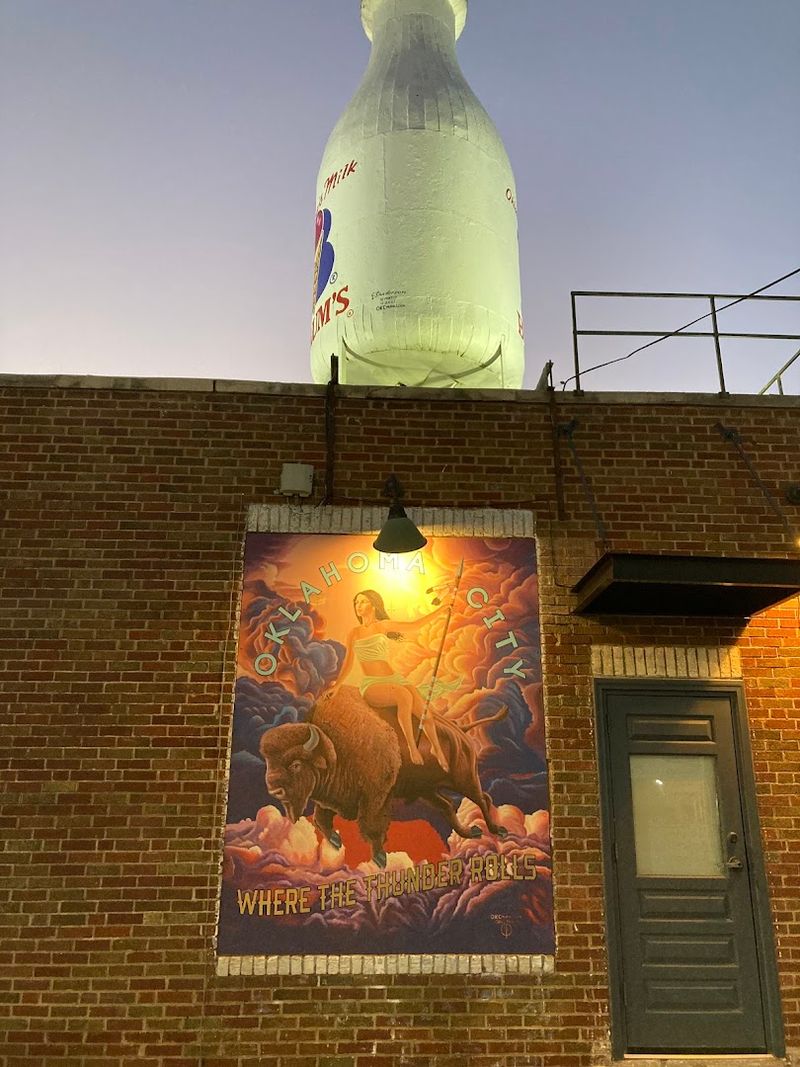
As if a giant milk bottle weren’t enough, someone decided this building needed even more visual interest. Enter the Oklahoma City mural, a colorful addition that celebrates local pride and adds another layer of charm to an already charming landmark.
Murals have become a big deal in Oklahoma City over the past decade or so, with the city embracing street art as a way to add personality to urban spaces.
This particular mural fits perfectly with the building’s playful spirit, creating a double feature for visitors who come expecting one quirky thing and discover two.
The mural changes the dynamic of the building, transforming it from a pure nostalgia piece into something that bridges past and present. It shows that this isn’t just a preserved relic but a living part of the city’s cultural landscape, still relevant and still inspiring creativity.
For photographers, the mural offers composition options beyond the obvious milk bottle shot. You can frame the building to show both elements, creating an image that tells a more complete story about Oklahoma City’s commitment to both preserving history and celebrating contemporary art.
What’s really cool is how naturally these two elements coexist. The vintage milk bottle and the modern mural shouldn’t work together, but they absolutely do.
It’s like the building is having a conversation between eras, proving that respecting the past doesn’t mean being stuck there. You can honor history while still making room for new expressions of creativity and community pride.
Memories Layered Like Paint
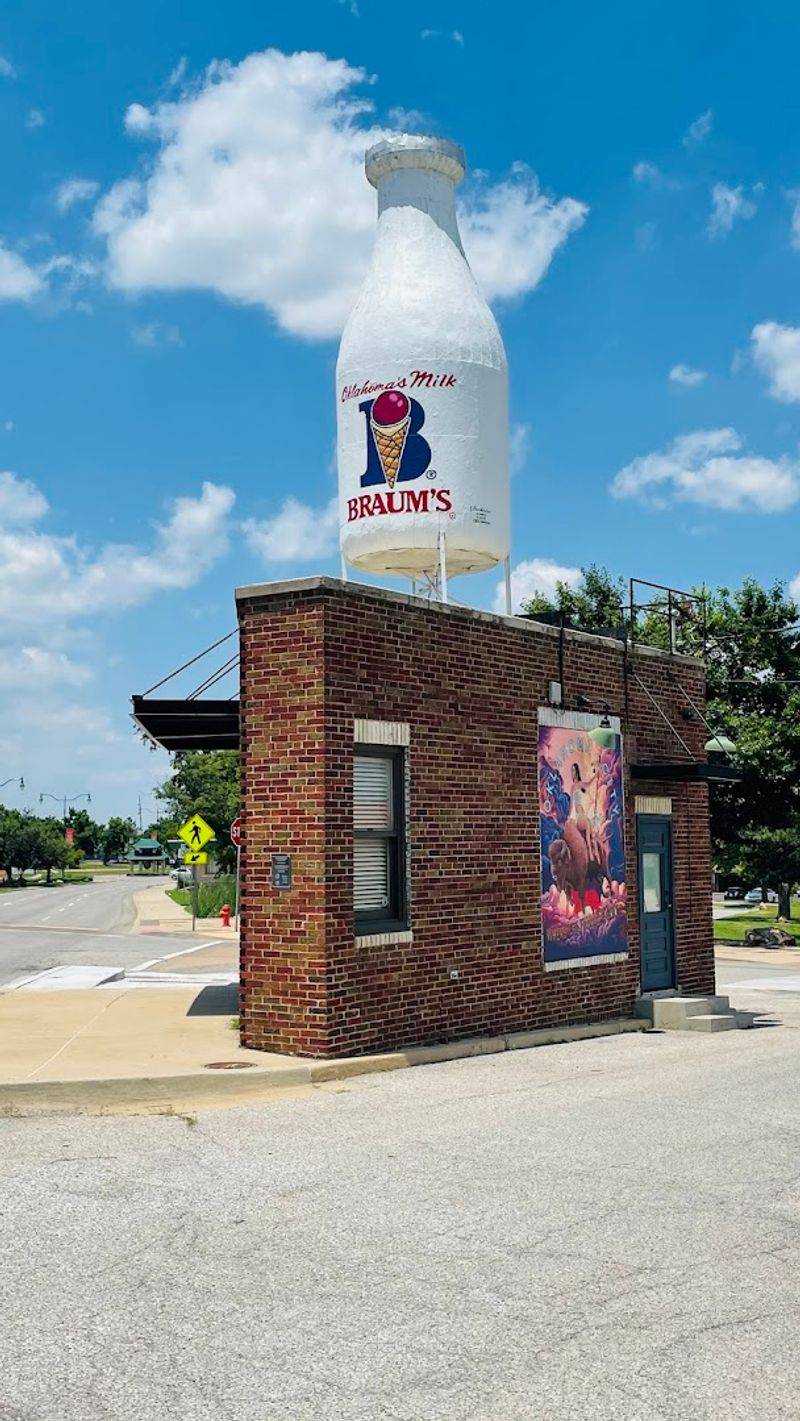
One of the most touching things about reading reviews of this place is discovering how many memories are attached to it. People remember coming here as children in the 1940s and 50s, buying Eskimo pies with their mothers before heading to a nearby playground that no longer exists.
Others recall the building during its Vietnamese sandwich shop era, when you could get an incredible meal for a couple of dollars and feel like you’d discovered a secret that only locals knew about.
Those sandwiches apparently achieved legendary status among people who lived in the area, creating a whole new generation of memories tied to this tiny structure.
What’s beautiful about these layered memories is how they demonstrate a building’s ability to mean different things to different people across time. For some, it represents childhood innocence and simpler times.
For others, it’s about discovering authentic food in an unlikely place. For today’s visitors, it’s a fun roadside attraction and a connection to Route 66 history.
All of these meanings are valid, and they all exist simultaneously. The building holds them all without contradiction, serving as a kind of emotional landmark as much as a physical one.
When you stand in front of it, you’re not just looking at bricks and a bottle. You’re looking at decades of human experience, countless small moments that added up to something significant.
That’s the real magic of places like this. They anchor us to the past while remaining accessible in the present, proving that history isn’t something dusty and distant but something alive and personal.
Braum’s Unexpected Role as Historic Preservationist
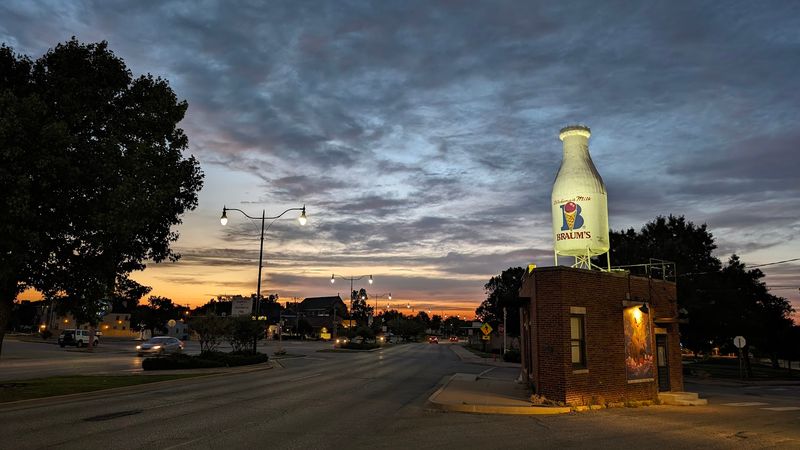
Not all heroes wear capes. Some run regional dairy chains and apparently have a soft spot for quirky old buildings with milk bottles on top.
When Braum’s Ice Cream and Dairy Store stepped in to preserve the Milk Bottle Grocery, they weren’t just saving a building. They were making a statement about what matters beyond profit margins and development potential.
In a business landscape where old structures usually get demolished to make room for something newer and more profitable, this decision stood out.
Braum’s connection to the building makes perfect sense when you think about it. They’re a dairy company, the building features a giant milk bottle, and both represent a certain kind of wholesome Americana that feels increasingly rare.
The company saw something worth saving and had the resources to make it happen, which is exactly the kind of corporate stewardship we need more of.
The preservation effort wasn’t about turning the building into a functioning Braum’s location or finding some way to monetize it. It was simply about keeping it standing so that future generations could experience this piece of roadside history.
That’s genuinely admirable, especially in an era when every square foot of real estate is expected to generate revenue.
So while you’re snapping your photos and enjoying this odd little landmark, take a moment to appreciate the company that made sure it would still be here for you to discover. Good preservation takes both passion and resources, and Braum’s brought both to the table.
Finding It on Classen Boulevard
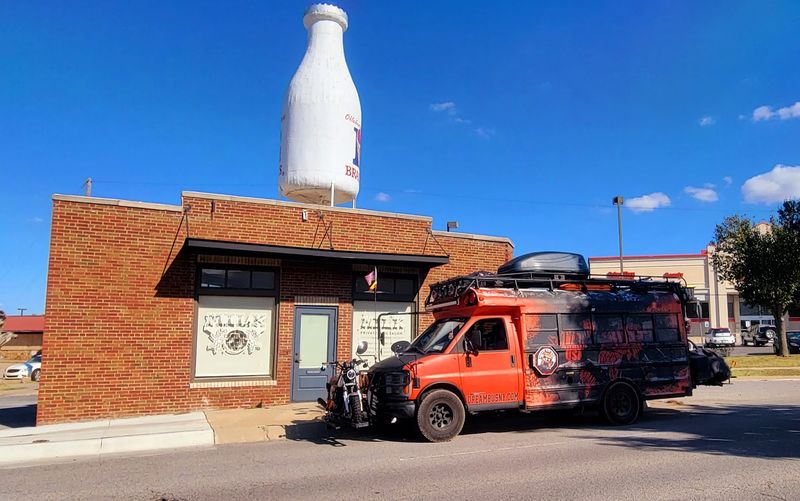
Ready to see this charming oddity for yourself? The Milk Bottle Grocery sits at 2426 North Classen Boulevard in Oklahoma City, Oklahoma, right in the heart of the city.
You can’t miss it if you’re driving along Classen, though you might do a double-take the first time that milk bottle comes into view.
The building is technically open 24 hours, which is a funny way of saying you can look at it anytime you want since you can’t actually go inside.
But that round-the-clock accessibility is actually perfect for travelers who are passing through at odd hours or locals who want to show visiting friends this piece of Oklahoma City character without worrying about business hours.
The intersection can get busy, so plan your visit with traffic in mind. Weekday mornings and afternoons bring commuter traffic, while midday or weekends might offer slightly calmer conditions for photography.
But honestly, the traffic is part of the authentic experience. This building has been watching cars pass by for nearly a century, so the hustle and bustle around it feels appropriate.
Nearby parking is available at surrounding businesses, and the whole area has other interesting spots worth exploring if you’re in a wandering mood. Oklahoma City has invested heavily in revitalizing its urban core, so you’ll find good food, local shops, and other attractions within a short drive.
But start with the milk bottle. Let it be your introduction to a city that clearly appreciates its quirky history and isn’t afraid to celebrate the weird and wonderful.
Dear Reader: This page may contain affiliate links which may earn a commission if you click through and make a purchase. Our independent journalism is not influenced by any advertiser or commercial initiative unless it is clearly marked as sponsored content. As travel products change, please be sure to reconfirm all details and stay up to date with current events to ensure a safe and successful trip.
